What kind of movie do you feel like?

Ask Movie Mom

Find the Perfect Movie

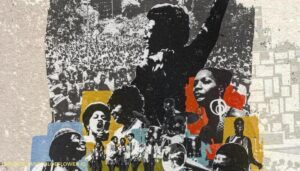
Summer of Soul (…Or When the Revolution Could Not Be Televised)

Posted on June 24, 2021 at 8:00 am

A-
Lowest Recommended Age: 4th - 6th Grade
MPAA Rating: Rated PG-13 for brief drug material, some disturbing images, and smoking
Profanity: Some strong language
Nudity/ Sex: None
Alcohol/ Drugs: Brief drug material
Violence/ Scariness: Archival images of violence
Diversity Issues: A theme of the movie
Date Released to Theaters: June 25, 2021

Copyright 2021 Hulu
It felt like the United States had never been more angry and divided. Protests over the treatment of Black Americans erupted into riots. Not last year; this was just over half a century ago, in 1969. The same summer that an outdoor music festival near Woodstock New York became a cultural icon in part because everything went wrong and in part because it was the subject of an Oscar-winning documentary, there was a festival in Harlem of equal star power and impact on the community. But it was all but forgotten because unlike Woodstock, pretty much everything went right, because it was spread out over the whole summer, because the concert footage was hidden away in a basement for five decades, and because the performers and the audience were Black.

And now Questlove, whose expansive knowledge of music is is reflected in his work with The Roots on the Tonight Show and his book Music is History has combined the archival footage with contemporary interviews in directing (as Ahmir-Khalib Thompson) “Summer of Soul,” which deserves to be every bit the cultural touchstone of the other big concert of the year.

There’s even some overlap. Sly and the Family Stone, whose “I Want to Take You Higher” is a highlight of “Woodstock,” is every bit as incendiary in this film as well, though one participant jokes that Sly was so unreliable that you could not be sure he was coming on stage even after his name was announced. The sheer variety is pure joy and every performance is thrilling, from the Edwin Hawkins Singers to Mahalia Jackson to Hugh Masekela and Nina Simone, blues legend B.B. King to supper club legend Abbey Lincoln. David Ruffin of The Temptations shows up as a solo singer. A 19-year-old Stevie Wonder! Gladys Knight and the Pips! The just-breaking-through Fifth Dimension performs in bright yellow shirts with orange fringed vests. They talk about how their pop sound made audiences think they were white and when some discovered that they were not, accused them of being “not Black enough.” Sweetly, they say it meant the world to them to be welcomed by the audience in Harlem.

Questlove/Thompson skillfully blends the archival footage to include the recollections of those who were there with historical context and contemporary perspective. I would happily watch an entire documentary about the host and promoter, night club singer Tony Lawrence, and learn more about how it all came together. Most moving are the comments about how much it meant to the community, especially the people who were there as performers and audience members. The pure joy that radiates from the venue, those on stage and those who were listening, some grilling chicken, some hanging from the trees to get a better view, is like a jolt of optimism and a powerful reminder of the power of music to bring people together.

Parents should know there is some historical footage with violent images and a drug reference, along with some strong language and smoking.

Family discussion: Which was your favorite performance and why? Could an event like this free concert series happen today?

If you like this, try: “Woodstock,” “What Happened, Miss Simone?” the “1971” series about the music of that transitional moment, and another recently restored concert film from archival footage, “Amazing Grace,” with Aretha Franklin
F9

Posted on June 22, 2021 at 8:47 pm

B +
Lowest Recommended Age: Middle School
MPAA Rating: Rated PG-13 for language, action, sequences of violence
Profanity: Some strong language
Nudity/ Sex: None
Alcohol/ Drugs: Beer
Violence/ Scariness: Extended peril ad violence, shooting, explosions, martial arts, many people killed or injured
Diversity Issues: None
Date Released to Theaters: June 25, 2021
Date Released to DVD: September 21, 2021

Copyright 2021 Universal
Let’s be real about F9. If we can use a word like “real” to describe a series of films that parted ways with reality at least six or seven movies ago. But, knowing that, if you’re still here and I’m still here, we’ve pretty much agreed that’s okay and so the usual information potential ticket-buyers look for in a movie review is not really relevant. So, we can do what this movie does, and cut to the chase.

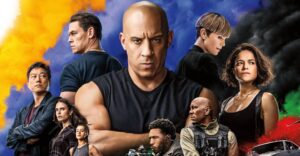
Here’s what you need to know. Director Justin Lin and his co-producer/star Vin Diesel know why we’re here; we want to see some crazy action scenes with characters we know so well that when Dom says once again that he doesn’t have friends; he has family, we almost feel that we’re part of the family now, too. So, “F9” delivers what the fans want, which is more and wilder action, and a bit more family, too. In fact, this time we get some backstory, with teenage brother and sister Dom (Diesel) and Mia (Jordana Brewster) and their dad, race car driver Jack Toretto (JD Pardo). It turns out there’s another brother, too, Jakob (Finn Cole). And we get to see how a tragedy on the racecourse leads to the brothers going in different directions. Jakob comes back into the story as John Cena.

If you’re a casual fan, all you need to know is that this movie has a lot of fun, if highly improbable, action scenes, including Vin Diesel as a passenger in a crazy car chase through London with none other than Dame Helen Mirren at the wheel. If you’re really into the series, you’ll want to know that many other favorite characters return, some more surprisingly than others. Also, if you’re really into the series you already know that the third movie in the series is the eighth in the chronology (also the first directed by Lin). That movie ended with another tragic exploding car death, of a mentor named Han (Sung Kang). But if we’ve learned one thing from this series, it is that sometimes people you think were either dead or bad turn out to be neither.

Two scenes I particularly loved will be the best litmus test for your decision on whether to buy a ticket (and if you do, please make it the Dolby experience). We’ve all seen fights before. We’ve seen fights where our two guys take on six bad guys. We’ve probably seen fights in the back of a big moving van, but here’s where the “Fast and Furious” franchise says to themselves, “How can we make things even more interesting?” And at some point someone says, “Let’s have the fight take place when the van is being (a) being chased by more bad guys, (b) being driven by someone who has never driven before, and (c) carrying the world’s most powerful electro-magnet, which is being turned on and off, sometimes on purpose and sometimes not. Wow.

The other scene has Roman, the comic relief character played by the almost-impossibly handsome Tyrese, says something that does not quite break the fourth wall between the characters and the audience but bends it a little. He mentions the un-mentionable — somehow no matter how many of the most lethal weapons ever conceived are shooting and exploding all around them, no matter how outnumbered they are, no matter how many impossible jumps they attempt to make in vehicles, somehow they all walk away without a scratch. Could it be, he wonders, that they’re not human? The real-life answer is that they’re not; they’re fictional characters. His conjecture is, maybe, that they could be un-killable? The real-life answer to that one is yes, as long as people keep buying tickets to the sequels.

In another scene, a character says, “If this was a movie, this would be when….” just to remind us that they know we know.

They can’t make the title any shorter. What’s the next one going to be called, just F? Will there be another “Hobbs & Shaw?” A spin-off about Dom’s early days? If they feature Helen Mirren and a Pontiac Fiero shot into space or whatever even crazier stuff they can dream up, I’m in.

NOTE: Stay for the mid-credits sequence for another familiar face.

Parents should know that this film includes constant action and peril including teenagers witnessing the death of a parent in a fiery crash and endless shoot-outs and chases, one through a minefield. Characters use strong language and drink beer. Bad guys plot world domination.

Family discussion: When does someone deserve a second chance? Should Letty have called Mia?

If you like this, try: the other films in the series, especially “Tokyo Drift” and “Hobbs & Shaw.”

For Father’s Day: Great Movie Dads

Posted on June 18, 2021 at 8:00 am

Reminder: My ebook about 50 great movie fathers is available free this weekend. Some of my favorites:

Boyz n the Hood: Furious Styles

Laurence Fishburne plays a devoted father who wants his son to know about the challenges he will face.

To Kill a Mockingbird: Atticus Finch

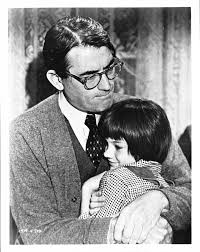
Gregory Peck plays a lawyer who teaches his daughter about empathy.

Father of the Bride: Stanley Banks

Spencer Tracy plays the devoted but befuddled father who is emotionally and financially overwhelmed by his daughter’s wedding. (See also the remake with Steve Martin.)

Riding Alone for Thousands of Miles: Gou-ichi Takata

Ken Takakura plays an estranged father who pays tribute to his son by trying to complete his film.

Finding Nemo: Marlin

Albert Brooks provides the voice for the fish who swims through the ocean to find his son.

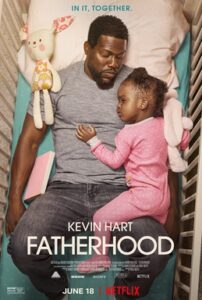
Fatherhood

Posted on June 17, 2021 at 5:32 pm

B
Lowest Recommended Age: Middle School
MPAA Rating: Rated PG-13 for some strong language and suggestive material
Profanity: Some strong language
Nudity/ Sex: Some suggestive references
Alcohol/ Drugs: Social drinking
Violence/ Scariness: Sad death of a parent
Diversity Issues: Diverse characters
Date Released to Theaters: June 18, 2021

Copyright Netflix 2021
Matt Logelin became a father and a widower at the same time. His wife died suddenly after their daughter was born and he told the story of his life as a single dad in a book called Two Kisses for Maddy: A Memoir of Loss & Love. And now his story has been adapted into a film, with Kevin Hart as Matt, the sometimes terrified, often-befuddled, frequently exhausted, and always devoted father of an adorable little girl.

Anyone who has ever raised a child or seen a movie has a pretty good idea of where this is going. See the reference to terror, befuddlement, exhaustion, and devotion above, which every parent knows well, along with the daunting challenges of many, many diapers, installing a car seat, and trimming an infant’s fingernails. Matt also has to face the well-meaning strangers who ask, “And where is her mother?” And the most daunting challenge of all: “You just have to do what’s best for her for the rest of her life.”

Like all parents do, he makes mistakes. Probably not too bad that he has Maddy play poker with his friends. On the other hand, letting her watch an animated series because he figures all cartoons are safe is not a good idea. “If you could have had one parent,” he sighs, “I wish it could have been your mom.” And while Maddy adores her dad, sometimes she wishes for more. “Other people have more people,” she says.

Kevin Hart gives a sincere and heartfelt performance as Matt, who gives his baby Maddy two kisses every night, one from him and one from her mother. He is clear that Maddy is is number one priority and that he will not allow her well-meaning grandmothers to take over just because they do not think he can take care of her.

But he can. Yes, he has a lot to learn. He shows up at an otherwise all-female “parent” support group because he cannot get Maddy to stop crying. And then there is the issue of her hair. He talks his boss into letting him bring her to the office. And he backs her up when she wants to wear pants instead of the skirt of her parochial school uniform.

Matt has two close friends who provide some encouragement, played by Lil Rel Howrey and Anthony Carrigan, who might as well be named Comic and Relief. Hart, who usually has that role, is not an actor of wide range, but his distinctive delivery works well here, especially with the irresistibly charming Melody Hurd as the school-age Maddy. Almost as irresistible is DeWanda Wise as a charming animator who provides the possibility of some adult companionship for Matt, a prospect that is appealing and scary.

The fact that everyone who has ever had or even spent serious time with a child can predict the touchstones in the film is not necessarily a bad thing. These events are touchstones because they are universal. Matt does not struggle with them because he is a man bu because he is Matt, and because these are things every parent finds difficult, the heartwarming depiction of in this film will be touching because it is familiar and resonant.

Parents should know that this film deals with the very sad death of a mother and the struggles of a single father. The film includes potty humor, some sexual references and non-explicit situations, a child being injured, family conflicts, and some strong language.

Family discussion: What was Matt’s most difficult moment? Who gave him the best advice and support?

If you like this, try: “Three Men and a Baby” and the Bryce Dallas Howard documentary “Dads”

Best Movie Fathers Book — Free for Father’s Day June 17-21

Posted on June 17, 2021 at 12:05 am

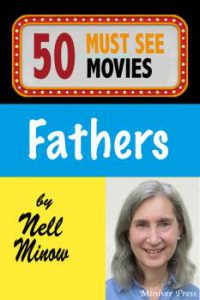
In honor of Father’s Day, my eBook, 50 Must-See Movies: Fathers is FREE today through Father’s Day, this weekend, June 17-21, 2020.

What do “Wall Street” and the “Star Wars” saga and, seemingly, about half the movies ever made have in common? They are about fathers. In “Wall Street,” Charlie Sheen plays the ambitious Bud, who respects the integrity of his blue-collar father, played by his real-life father, Martin Sheen. But Bud is dazzled by the money and power and energy of Gordon Gekko (Michael Douglas). The movie will up the ante with Bud’s father’s heart attack as we see him struggle between the examples and guidance of these two male role models.
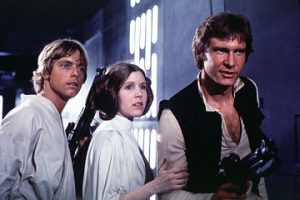
Copyright 20th Century Fox 1977

In “Star Wars,” Luke (Mark Hamill) does not know until halfway through the original trilogy that (spoiler alert) the evil Darth Vader is his father. He was raised by his aunt and uncle, who are killed very early in the first film, but the father figures who are most meaningful in his life are the Jedi masters Obi-Wan Kenobi and Yoda. Like Bud in “Wall Street,” Luke must choose between the good and bad father figures. Like Luke, Harry Potter is raised by an aunt and uncle, but he finds a true father figure later. For Harry, it is headmaster Albus Dumbledore. In opposition is He Who Must Not Be Named. Like Luke, Harry has the opportunity for great power on the dark side, but he lives up to the example set for him by Dumbledore.

The first stories ever recorded are about fathers. The central human struggle to reconcile the need for a father’s approval and the need to out-do him is reflected in the “hero of a thousand faces” myths that occur in every culture. In Greek mythology, Zeus is the son of a god who swallowed his children to prevent them from besting him. Zeus, hidden by his mother, grows up to defeat his father and become the king of the gods. Ancient Greece also produced the story of Oedipus, who killed his father and married his mother, and The Odyssey, whose narrator tells us “it is a wise man who knows his own father.”

These themes continue to be reflected in contemporary storytelling, including films that explore every aspect of the relationship between fathers and their children. There are kind, understanding fathers whose guidance and example is foundation for the way their children see the world. There are cruel, withholding fathers who leave scars and pain that their children spend the rest of their lives trying to heal. There are movies that reflect the off-screen real-life father-child relationships. Martin Sheen not only played his son’s father in “Wall Street;” he played the father of his other son, Emilio Estevez, in “The Way,” which was written and directed by Estevez, and which is about a father’s loss of his son. Will Smith has appeared with his son Jaden in “The Pursuit of Happyness” and “After Earth.” John Mills appeared with his daughter Hayley in “Tiger Bay,” “The Truth About Spring,” and “The Chalk Garden.” Ryan and Tatum O’Neill memorably appeared together in “Paper Moon.” Jane Fonda produced and starred in “On Golden Pond” and cast her father Henry as the estranged father of her character. Jon Voight played the father of his real-life daughter Angelina Jolie in “Tomb Raider.” And Mario Van Peebles, whose father cast him as the younger version of the character he played in “Sweet Sweetback’s Badasssss Song” made a movie about the making of that film when he grew up. It is called “Badasssss!” In the role of Melvin Van Peebles he cast himself.

Director John Huston deserves some sort of Father’s Day award. He directed both his father and his daughter in Oscar-winning performances, Walter Huston in “The Treasure of the Sierra Madre” and Anjelica Huston in “Prizzi’s Honor.”

Some actors known for very non-paternal roles have delivered very touching performances as fathers. Edward G. Robinson is best remembered for playing tough guys, but in “Our Vines Have Tender Grapes” he gave a beautiful performance as a farmer who loves his daughter (Margaret O’Brien) deeply. Cary Grant, known for sophisticated romance, played loving – if often frustrated — fathers in “Houseboat” and “Room for One More.” “Batman” and “Beetlejuice” star Michael Keaton was also “Mr. Mom.” Comedian Albert Brooks is a devoted father in “Finding Nemo” and “Finding Dory.”

There are memorable movie fathers in comedies (“Austin Powers,” “A Christmas Story”) and dramas (“To Kill a Mockingbird,” “Boyz N the Hood”), in classics (“Gone With the Wind”), documentaries (“Chimpanzee,” “The Other F Word”), and animation (“The Lion King,” “The Incredibles”). There are great fathers (“Andy Hardy,” “Call Me By Your Name”) and terrible fathers (“The Shining,” “Winter’s Bone,” “The Spectacular Now,” “The Barretts of Wimpole Street”). There are fathers who take care of us, as well as they can (“John Q,” “Toni Erdnmann,” “Lorenzo’s Oil,” “Leave No Trace,” “The Road,” “Extraordinary Measures”) and fathers we have to take care of (“I Never Sang for My Father,” “Nothing in Common”). All of these stories are ways to try to understand, to reconcile, and to pay tribute to the men who, for better or worse, set our first example of how to decide who we are and what we will mean in the world.