Birdman (The Unexpected Virtue of Ignorance)

Posted on October 23, 2014 at 5:59 pm
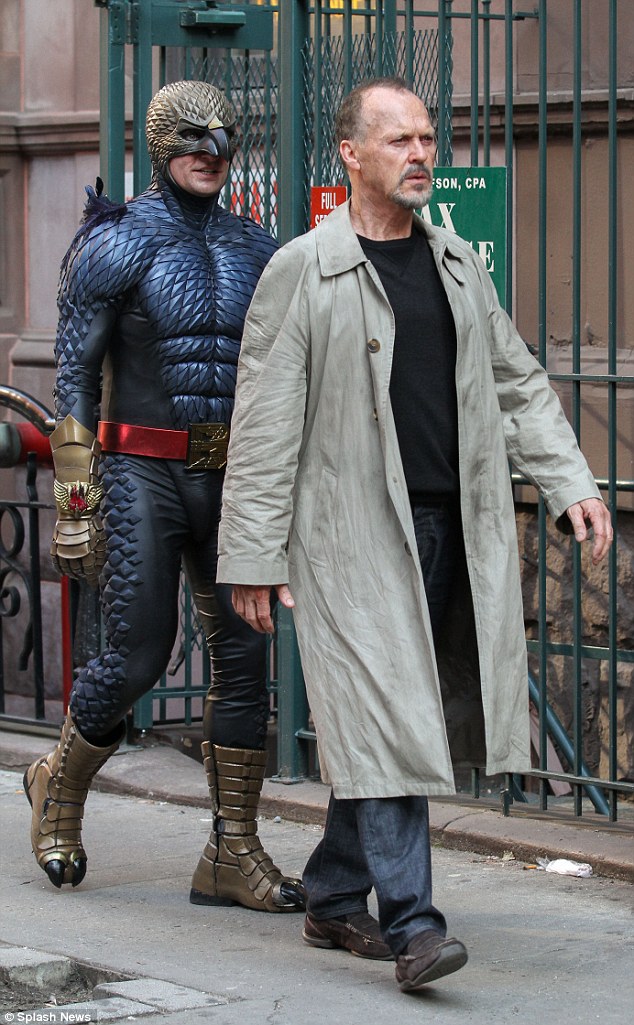
michael-keaton-birdman (1)Filmed as though it was almost entirely one long, stunning, audacious, breathless and breathtaking shot, “Birdman” (subtitled “The Unexpected Virtue of Ignorance”) explodes with ideas and visions, adopting the language of dreams to explore and upend the very idea of storytelling.

Michael Keaton plays a character in superficial ways like Keaton himself. He is Riggan, an actor who has undertaken at least three impossible tasks at once. He has adapted the acclaimed but notoriously difficult and difficult to adapt Raymond Carver collection of short stories, What We Talk About When We Talk About Love, into a Broadway play. The translation of stories whose art is in the spareness and lyricism of the prose into a theatrical production is at best ambitious, at worst impossible. But Riggan is not just the writer. He is also the director and star. He has put his last dime into the show. If it fails, he loses everything. And there is more. His estranged and angry daughter Sam (Emma Stone), just out of rehab, is working as his assistant so he can keep an eye on her and perhaps repair their relationship. One of the actresses (Andrea Riseborough), may be pregnant with his child. And a piece of equipment has just fallen on the head of one of the actors. They are about to go into previews and he cannot perform.

Riggan and Jake, his best friend/lawyer/producer (a slimmed down and pitch-perfect Zach Galifianakis), throw out (real-life) names of possible actor replacements. The best of their generation: Michael Fassbender, Jeremy Renner, Robert Downey, Jr — but they are all in Hollywood playing superheroes. Riggan knows something about that. He played a superhero called Birdman in a series of wildly popular films. He had money, fame, success, and the kind of power all of that brings. But now he has an ex-wife (Amy Ryan), an angry daughter, a possible new child on the way, and he is risking his future on the longest of longshots, a serious play in the high-pressure world of Broadway theater, between the vicious barbs of dyspeptic, despotic critics and audiences who would rather be at the latest musical based on a movie.

Riggan and Jake argue about what to do next.  The understudy? No! “It’s not like the perfect actor is just going to knock on the door!”  Cue knock on the door.  It is Lesley, the non-possibly pregnant actress in the show (Naomi Watts), volunteering her boyfriend, Michael (Edward Norton), who is available (he just got fired or quit or both) and wants to do it.  He is a Broadway darling, a Serious Actor with a lot of fans.  Jake is ecstatic.  This will sell a lot of tickets.

Michael shows up with the script already memorized and able to give a dazzling performance that pushes Riggan to do his best. But Michael is also narcissistic and arrogant. His relationship with Lesley is deteriorating and he is hitting on Sam. Worse, he is sending her mixed signals, making her feel even more insecure and putting her recovery at risk. Riggan is under even more pressure externally and internally as a voice — his Birdman persona? His younger self? His future self? — is urging him, taunting him, distracting him.

It is a high wire act, the endless, dreamlike take festooned with farce-style slamming doors, fantasy interludes with monsters and explosions, sharp satire, poignant drama, and across the board performances of superb precision. As sheer, no-net, bravura filmmaking it is pure wonder, and if it raises more questions than it answers, at least they are the big questions of meaning, identity, work, love, art, and, of course, superheroes.

Parents should know that this film includes very strong and crude language, explicit sexual references and situation, gun violence, drinking, smoking, and drug use.

Family discussion: How much of what we see in this film is “real” and how can you tell? What do you think is happening in the final scene?

If you like this, try: “All That Jazz” and Woody Allen’s “Stardust Memories”

Related Tags:


Comedy Drama Fantasy

John Wick

Posted on October 23, 2014 at 5:44 pm

Copyright Summit Entertainment 2014

This is a movie directed by two stunt men, which means it is pretty much a first-person shooter video game projected onto a movie screen. But that also means that it is directed by people who really know stunts and the kills on screen (reportedly more than 80) are on display for maximum effect. It delivers exactly what it promises, with a couple of surprisingly sharp and witty touches that lift it above the usual bang bang. There aren’t many movies where the funniest line is the way a character says, “Oh.” And I loved the idea of a very high-end, very specialized safe house/hotel just for assassins. Of course the only currency accepted is gold coins. And of course there is a doctor on duty 24/7 to sew up wounds without any pesky questions.

Keanu Reeves plays the title character and we know from the beginning of the film that he is not having a good day. We see him very badly, maybe mortally wounded, lying out in the rain, watching a video of his wife on his phone. And then we go back a couple of days to see what got him there.

His wife (Bridget Moynahan) is dying. At the funeral, he has an cryptic and uneasy conversation with Marcus (Willem Dafoe), a former colleague. That night, alone in his beautiful but spare home, John accepts delivery of a package. It is an adorable puppy, a gift from his late wife, with a note telling him that “you still need something, someone to love.” She urges him, “now that I’ve found my peace, find yours.”

When he goes out to get food for the dog, he stops to fill up his vintage ’69 Mustang with gas. An arrogant, hot-headed young Russian thug (Alfie Allen) wants to buy the car, snarling that everything has its price. His handler/bodyguard apologizes courteously and they go their separate ways. But that night, when John is asleep, they break into his house, brutally attack him, kill his puppy, and steal the car.

But they have stolen from the wrong person. Before he left the business to live blissfully with his wife, John Wick was employed as a killer and he was very, very good at it. “He was the one you sent to kill the boogeyman,” Viggo, the crime kingpin (Michael Nyqvist) says grimly. He has reason to know, as he was John’s employer. Viggo once saw him kill three guys with a pencil. And Viggo has reason to be grim; the hothead who stole John’s car was Viggo’s own spoiled son.

John gets out his sledgehammer to break the concrete floor and get to the weapons and stash of gold coins he had hidden there. He suits up (bulletproof vest and impeccably tailored grey duds), and off he goes, dodging the attacks from Viggo’s goons and then from the open contract Viggo puts out on him for any hitman (or women) who is willing to take him on, mowing down everyone, and I mean everyone (well, everyone male) who gets in his way.

Reeves is well cast as the implacable, unstoppable John Wicks, and Nyqvist (“Mission Impossible: Ghost Protocol” and the Swedish “Girl With the Dragon Tattoo” series) is outstanding as the wily Viggo. There are some nice darkly comic moments (trust me about that “Oh,” and a later reprise), but this is all about the stunts, and as pure adrenaline action fodder, this movie delivers the goods.

Parents should know that this film includes extremely graphic and intense violence with many characters (and a dog) injured and killed, disturbing images including spurting blood, wounds, stabbing, assault weapons, and explosives, strong language, smoking, drinking, drugs, skimpy clothes

Family discussion: Does everything have a price? Why did Viggo decide to make a deal? What did he mean when he said “this life follows you?”

If you like this, try: “Shoot ‘Em Up” and “Point Break”

Related Tags:


Action/Adventure Crime Thriller

Fury

Posted on October 16, 2014 at 5:58 pm

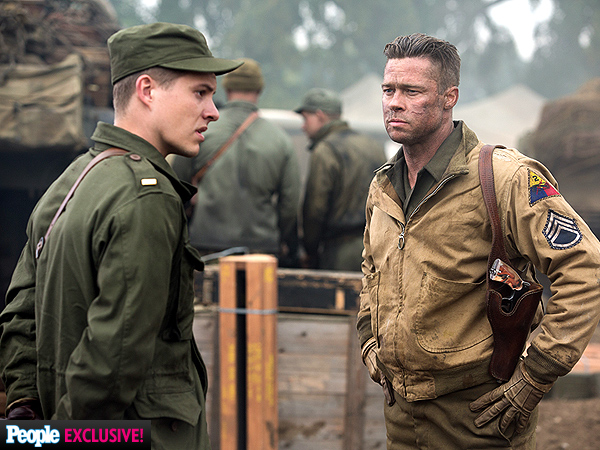
fury brad pittHistory, Winston Churchill reminds us, is written by the victors. But sometimes those victors have some second thoughts, more complex thoughts, about the nature of heroism, patriotism, and the spoils (in both senses) of war. And sometimes people want to comment on contemporary conflicts but find that it is more compelling in an historical framework. That is how we get “Fury,” a fictional story set in the last days of WWII, with Brad Pitt as “Wardaddy” (everyone gets a “war name”), the leader of a tank team pushing through an increasingly desperate Germany.

“Fury” is what is painted on the gun barrel of the tank. Death, both German and Allied Forces, is everywhere. Our forces, we are told at the beginning, are “outgunned and out-armored,” with “staggering losses.”

The first person we see looks like a cowboy hero, a lone figure on a horse, silhouetted against the sun.  He is not a cowboy and he is not a hero.  He is about to be killed, and not in a Hollywood, glamorized, bang bang way.

“It will end, soon,” Wardaddy tells Norman (Logan Lerman), his fresh-faced and terrified new driver, a kid fresh from the typing pool who has never been in a tank or fired a gun in combat. “But before it does, a lot more people have to die.”

I’m in favor of movies that show war as brutal, morally compromised, and horrific. Ultimately, though, it has to have more to say than that.  It is a movie, a work of drama, and if it is not going to be about something bigger than how terrible war is, it runs the risk of making the very horrors it depicts turn into entertainment and have exactly the opposite impact from the original intention.  Steven Spielberg did it with “Saving Private Ryan,” making both the personal story of the individual characters and the larger story about sacrifice and honor compelling and meaningful.

But writer/director David Ayer, whose previous films included the pulpish law-and-order “SWAT,” “Sabotage,” and “End of Watch,” is no Spielberg (though this film borrows a lot from “Saving Private Ryan”).  This film tells us very little about history, war, or the human experience.

Parents should know that this film includes very intense and graphic wartime violence with many characters injured and killed, executions, disturbing images, sexual assault, looting, constant very strong and crude language, drinking, smoking

Family discussion: How does this differ from other portrayals of WWII combat? What are the different ways the men in this movie cope with the moral compromises of war? Why did the men choose “war names” and what did they signify?

If you like this, try: WWII dramas “Saving Private Ryan” and “The Big Red One” and the Israeli film “Beaufort”

Related Tags:


Action/Adventure Drama War

The Judge

Posted on October 9, 2014 at 6:00 pm

Copyright Warner Brothers 2014

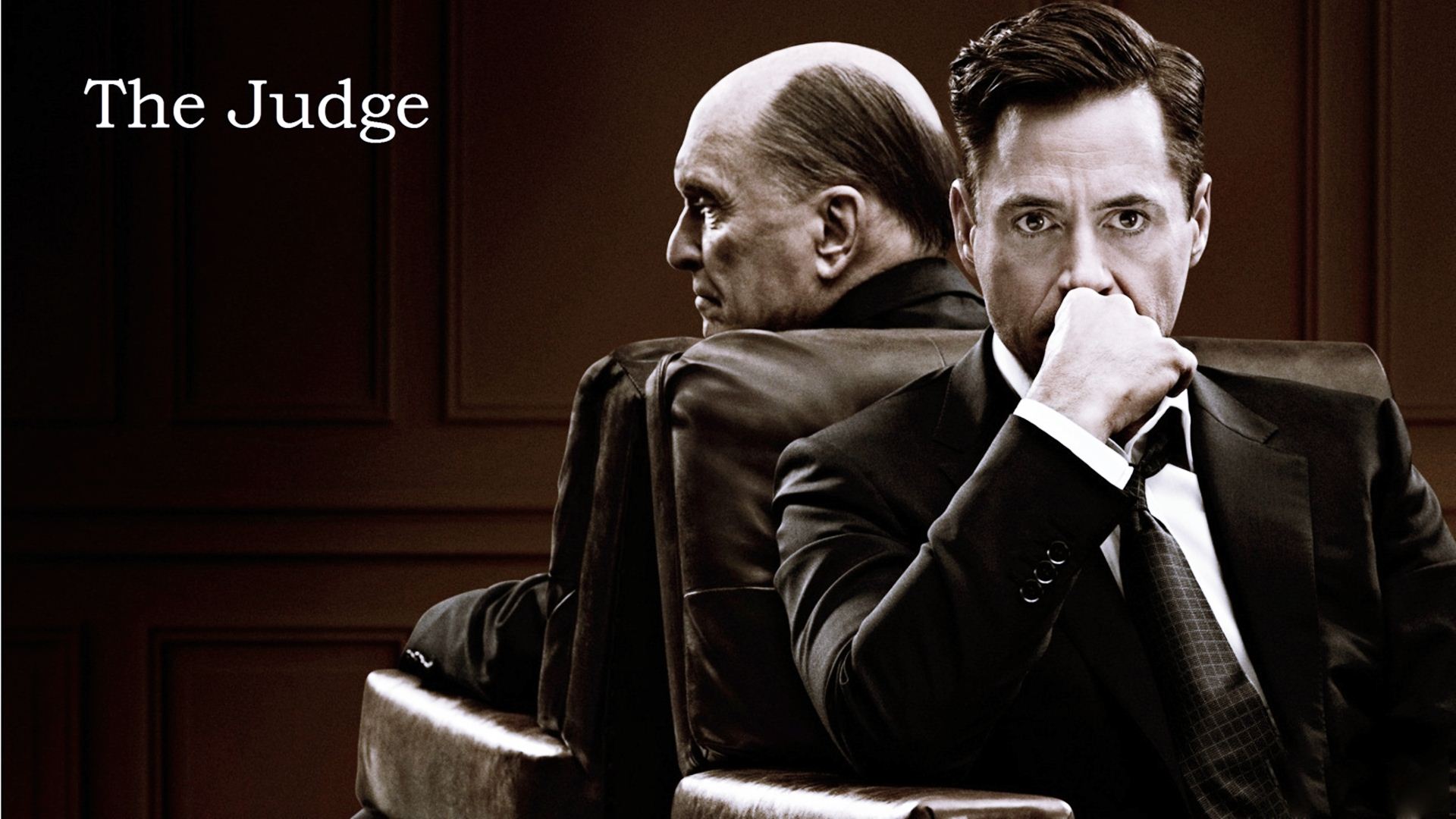
Robert Downey Jr. gives his best performance since “Chaplin” in “The Judge,” an absorbing story of family, redemption and home.

Downey co-produced and stars as Hank Palmer, a Chicago criminal defense attorney known for doing whatever it takes to get his clients a “not guilty” verdict. Hank relies on his two strengths and his belief in a third.  He has a restless intelligence that operates like a perpetual random radar signal going off in every direction at once.  As we will see in a sensational bar scene where he sizes up some guys heading towards him with fight in their eyes, Hank can size up a situation and formulate a dazzling verbal response in an instant.  But that same intelligence also makes him impatient and dismissive.

Hank also has a coping mechanism for keeping him focused that has worked very effectively.  It is basically not to think too much about anything but winning.  Other lawyers in the movie will talk about their view of the law — that it is a mechanism for making sure individuals take responsibility for the consequences of their actions, that it is the one place where everyone is equal.  Hank’s professional career has been dedicated pretty much to proving the opposite.

And Hank thinks of himself as a devoted father to his little girl, Lauren (Emma Tremblay of “The Giver”) because he loves her dearly, though, as his estranged wife points out, he cannot name her teachers, best friends, or favorite color.

These two skills and one inflated idea are what sustain Hank, and over the next seven months, he will have to give up all three to explore who he is, where he came from, and how these protective mechanisms are no longer keeping him safe but keeping him stuck. The greatest pleasure of this film is seeing Downey’s responses as a man who is very, very good at what he does learn that none of that is of any help to him.

We first see Hank taunting his opposing counsel in the courthouse men’s room. “I respect the law,” he says. “I’m just not encumbered by it.” He is representing a man he knows to be guilty of massive financial fraud. As the trial begins, he gets a message that his mother has died. Hank, who has assembled the life he thought would make him happy, a fancy home, a fancy car, a beautiful wife, will have to do something he has been avoiding for years. He will have to return to his small hometown, Carlinville, Indiana.  While it is his father who is a judge by profession, either could be the title character.  Hank has done a lot of judging of those around him and, like his father, he has found just about everyone not up to his standard.

The golden, elegiac tones provided by master cinematographer Janusz Kaminski and steeped in tradition, slightly formal soundtrack from Thomas Newman introduce us to the town. Hank pays his respects to his mother with his brothers, sweet-natured, developmentally disabled Dale (Jeremy Strong), who always carries his Super 8 movie camera, and Glen (Vincent D’Onofrio), a once-promising athlete who was injured and stayed in town to run a tire store. His father, the judge (Robert Duvall), is presiding.  Hank watches from the balcony.  Some things never change.  His father still tells defendants that “Yeah” is not the way to speak in a courtroom.

But some things have changed.  The judge cannot remember the name of his longtime bailiff.  Hank suspects his father, sober for many years, may have started drinking again.

Hank is uncomfortable and feels unwelcome.  His old room has been used for storage.  He can barely find his bed.  His father and brothers barely speak to him.  Even an encounter with his high school girlfriend Samantha (Vera Farmiga, wonderfully earthy) cannot make him anything but out of place and eager to get away.

And then the judge is accused of murder.  The night of the funeral, he was driving in the rain.  A man riding a bicycle is dead, his blood on the judge’s fender. The dead man and the judge had a history.  Hank wants to defend his father, mostly because he is still hungry for his father’s approval and this will give him a chance to show the judge what he does best.  He may not be much to brag about outside the courtroom, but inside the court is where he lives.  That is something Hank and his dad share.

Co-writer and director David Dobkin is best known for wild, raunchy comedies like “The Wedding Crashers.”  Like Hank, and like the man who plays him, Dobkin here moves to the grown-up table with a rich, thoughtful, beautifully structured film, with moments of humor that are among the funniest you will see this year.  The jury selection scene is a treat all its own.

It would be enough just to get a chance to see Downey show how much more he is capable of than even his brilliant work as Tony Stark or in small gems like “Kiss Kiss Bang Bang” and “The Wonder Boys.”  Here he gives a master class in acting, never less than fully present in showing us Hank’s layers of protection and the deep yearning for connection they cannot hide.  The open-heartedness and vulnerability of this performance are deeply moving, a gift from Hank the character and from the man who plays him.  But this is an enormously wise and moving story, beautifully told.

Parents should know that this film has strong and crude language, sad deaths of parents, infidelity and divorce, serious car accidents with injuries and death (nothing explicit), graphic depiction of various bodily functions and fluids, gastrointestinal distress foilowing cancer treatment, sexual references, drinking and discussions of alcohol abuse and drug use

Family discussion: How were Hank and his father alike? What made it hard for them to get along?

If you like this, try: “The Client” and more films from Robert Downey, Jr. (“Chaplin,” “The Avengers”) and Robert Duvall (“The Apostle,” “Tender Mercies”)

Related Tags:


Courtroom Drama Family Issues

Alexander and the Terrible, Horrible, No Good, Very Bad Day

Posted on October 9, 2014 at 5:50 pm

alexander_and_the_terrible_horrible_no_good_very_bad_day_ver2
Copyright Disney Studios 2014

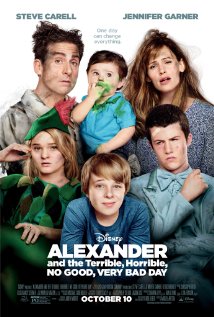
We’ve all had them. Some days, nothing goes right. The classic children’s book from Judith Viorst is about a little boy who wakes up with gum in his hair to a day that includes a dentist appointment, kissing on television, and losing his favorite marble down the bathtub drain has inspired a sweet and gently wacky comedy about an entire family having terrible, horrible, no good, very bad days, all at the same time.
Copyright Walt Disney Studios 2014

In this version, Alexander is about to turn 12, and, as I am pretty sure everyone will agree, that is the age when the most excruciating bad days happen.

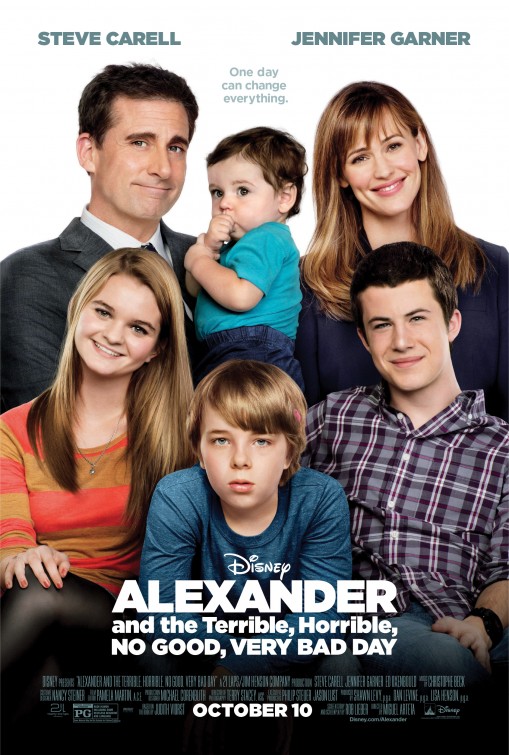
In a nod to the original, Alexander (Ed Oxenbould) wakes up on his last day of being eleven with gum in his hair. He trips over the sprinkler in front of the girl he likes Becky (Sidney Fullmer), and later sets her lab notes on fire in science class. It looks like no one will be going to his birthday party because the most popular boy in his class is having a party the same night — with a trampoline and frozen yoghurt cart. To make things worse, everyone else in his family seems to be having nothing but wonderful, beautiful, all-good, very-great days. His mother (Jennifer Garner) is about to get a promotion at the book publishing company for her good work on a book for toddlers about potty training. His father (Steve Carell), a stay-at-home dad since losing his job as an aerospace engineer, has a promising job interview.

His brother Anthony (Dylan Minnette), is about to get his driver’s license and take his dream girl to the prom. “Hashtag blessed,” he smiles, telling the family there’s a rumor that he and his girlfriend will be crowned Prom Duke and Duchess. And Alexander’s sister Emily (the terrific Kerris Dorsey of “Ray Donovan” and “Moneyball”) is starring as Peter Pan in the 8th grade play (in a movie that is both cheeky and charming, the song she sings in the play is not from the stage version that starred Mary Martin but from the Disney animated version, which definitely deserves a family viewing — with one caution for some insensitive racial and gender humor). Alexander also has a baby brother who gets a lot of attention just by being adorable. Everyone’s happiness just makes Alexander feel more isolated and miserable.

That night, Alexander makes himself a birthday sundae at midnight and as he blows out a candle, he can’t help wishing that everyone in the family would know what it was like to have a terrible, horrible, etc. etc. day. And the next day, everything goes wrong for everyone. Catastrophically wrong. Cataclysmically wrong. Monumentally wrong. And, yes, hilariously wrong. Don’t think too hard.  This day would have to be about 72 hours long, and there’s no way some of these disasters could be fixed so easily.  Just go with the goofy fun. There’s a lot of silliness and slapstick, and some gross-out bodily function humor, but the kids in the audience roared with laughter and both kids and adults loved the way the family stayed — most of the time — optimistic and warmly supportive of each other. There are delightful appearances by Dick van Dyke as himself and Jennifer Coolidge as the driver’s license examiner who shares Anthony’s terrible, horrible test drive. I especially got a kick out of the way the movie pays tribute to the book version of Alexander’s wish to be far away from his terrible, horrible, etc. by going to Australia. (In a coincidence, the real-life actor who plays Alexander is in fact Australian, though his American accent is impeccable.)

It does not have the gentle lyricism of the classic book, but it is a warm-hearted story that is less about bad days than it is about good families.

Parents should know that this film includes some bodily function humor and schoolyard language, comic peril and violence (no one hurt), accidental ingestion of too much cough syrup with attendant consequences, family chaos

Family discussion: Which family member had the worst day? What was your worst day and why? What’s the best thing to do on a bad day?

If you like this, try; the book by Judith Viorst and the two short DVD versions, and all three versions of “Freaky Friday”

Related Tags:


Based on a book Comedy
THE MOVIE MOM® is a registered trademark of Nell Minow. Use of the mark without express consent from Nell Minow constitutes trademark infringement and unfair competition in violation of federal and state laws. All material © Nell Minow 1995-2026, all rights reserved, and no use or republication is permitted without explicit permission. This site hosts Nell Minow’s Movie Mom® archive, with material that originally appeared on Yahoo! Movies, Beliefnet, and other sources. Much of her new material can be found at Rogerebert.com, Huffington Post, and WheretoWatch. Her books include The Movie Mom’s Guide to Family Movies and 101 Must-See Movie Moments, and she can be heard each week on radio stations across the country.

Website Designed by Max LaZebnik