Roger Michell is the director of beloved films like “Notting Hill” and “Persuasion.” His latest is this week’s “Hyde Park on Hudson,” based on the real-life visit of the King and Queen of England to the home of President Franklin Roosevelt (beautifully played by Bill Murray) in Hyde Park, New York, where they were famously treated to a hot dog picnic. The movie also deals with Roosevelt’s relationship with his cousin Daisy and the other women in his life. When Daisy died at 99 years old, a suitcase full of letters was discovered that indicated she had a much more intimate relationship with Roosevelt than previously known. I spoke to Michell about the film. 
Oliver Wendell Holmes famously said that Franklin Roosevelt had “a second-class intellect but a first-class temperament.” Tell me how you see him, not as a historical figure but as a character in this story.
I’ve never heard that description before, but having read about him quite a lot, he seemed to have had various strategies for governance which involved making people feel enormously relaxed around him, triangulating brilliantly between people. Often avoiding the issue at hand, but making his personality kind of glue people together or kind of get over difficulties simply by wafting his personality at them, and of course, that’s what he does in the film. That’s precisely what he does in this film, he creates a little bit of magic around this sort of gauche king. He makes the king feel a foot taller and at the same time, he scores this tiny—but enormous—political point by getting the king to eat a sausage. What could be better?
Please—a hotdog! That is a famous story, often quoted in books about entertaining.
You see, that’s amazing, that’s very unknown in England—that idea. But you still often see stage-managed pictures of presidents eating street food, don’t you? Eating a hotdog at the ball game or something. And it created quite a stir at the time, it was reported upon and it became a political tool, a political lever.
I like your use of the term “strategies,” because I think that’s a very apt one, and it seemed to me that his relationship with his cousin was in a way, a strategy for management of himself, and a sort of compensation. So tell me a little bit about what you think about that relationship, and what it meant to both of them.
What’s striking about the letters is their banality, you know. Well, they’re published and they’re expurgated—she didn’t really release all the letters, she destroyed tantalizing passages of letters and of diaries—but they’re very affectionate letters, they’re usually letters about dogs or little bits of gossip or about the countryside. They share an intimacy which feels like it’s not intellectually demanding for either of them, and I think maybe that touches on what you just said, that she was strategically…restful, deeply restful, undemanding, sweet-natured and like a sort of human stamp album, you know? And their relationship went on for much longer than it’s depicted in our film had started much earlier and it survived for much longer; after he died, she held this clutched the secret joy to herself until her death at the age of 99.
That’s not the way people do it these days, is it?
No, it’s not.
There’s a great dignity to that.
Enormously dignified. And he asked her to become the first curator of his library, which she did for many years. She took the only two photographs in existence of him in a wheelchair, for example. She, along with other members of his harem, were at his bedside when he died. So, it was very sustained and successful—I imagine, on both sides—successful relationship, amongst many others. He clearly had this incredible ability to sustain without necessarily compartmentalizing all these women who often knew each other and sort of got along and okay with each other, like a Mormon with several wives.
And tell me your thoughts on Eleanor, FDR’s wife (and another distant cousin).
Well, she was obviously an extraordinary woman, but I think that their marriage was so, even after all the complications of his terrible betrayal of her very early in their married life, and to go off with her social secretary, her best friend…in spite of all that, they seemed to enjoy this fabulous relationship, and to feed each other, basically, very considerably. You get the sort of sense of Eleanor’s touch in a lot of what he did, and I think she was constantly kind of throwing memos and letters and ideas and suggestions and demands at his desk.
Olivia Williams gives a beautiful performance as Eleanor, and one of my favorite moments in the movie was the look on her face as she does this sort of half curtsy, doing it but not really doing it.
She doesn’t want to do it.
And you did a good job of making a very beautiful actress look not so beautiful.
Yes, I know. And we cast an English actress because Eleanor, she sounded virtually English.
Right, that’s what upper-class people sounded like in those days.
I went to see Olivia in a play in London, I know Olivia—and it was an American play, actually, but I was suddenly struck by the fact that she was facially not totally dissimilar to Eleanor. She’s too young for the part, but with some teeth and some hair, she did it brilliantly.
I want to talk to you a little bit about casting, because I thought you did a brilliant job with casting, but certainly not the obvious choice for FDR, Bill Murray, for a lot of reasons.
Roger: Well, that was a big stretch for Bill—he was frightened. He had never done anything like this before, and he was aware that he was taking on a big responsibility to, as he puts it, to portray somebody who’s on a dime, who’s really sort of embedded as an icon, but he put in the work. He spent time with polio survivors, he had diction coaches both here and there, we had people who’d advise him on how to walk with the crutches, how FDR had this enormous upper-body strength because of learning how to grapple himself around desks and objects and things. And he did a lot of reading, and he was very thoughtful about it and really committed to it. And I cast him because I really—and this is for real, I know people say this, but—I didn’t think I wanted to make the film without him, because I couldn’t think of another actor who would be as forgivable as Bill and as mischievous and as playful. Because he does things in the film which are bad, and I didn’t want it to feel like the Dominic Strauss-Kahn story, or even the Bill Clinton story. It’s more delicate than that and it’s more miraculous, in a way, that he was able to sustain all these relationships without imperiling people, and I didn’t think I could do that with nearly every other actor I thought of. There would be something predatory or just frankly downright bad about the behavior; whereas with Bill it is bad behavior, but it’s kind of sweet-natured and it’s forgivable. The film forgives, anyway.
We understand this movie is not a history lesson; it’s a story about people, and how do you think that it relates to today’s life? Obviously we look at presidents and celebrities very differently now, so what lessons do you want people to take home?
Well, I think there are questions raised about secrecy which are interesting. I think that, and I don’t know the answer, as to whether the current fetish for transparency is going to remain a productive one. Will it mean that only the dullest of the dull will be joining to politics? Because they have nothing to hide, see what I mean? Or is it for the common good that now we seem to need to know everything about everybody before they can do anything? Probably a bit of both. I think the conundrum with the special relationship remains very complex between our countries. I’ve worked with Richard Nelson a lot, I’ve done lots of plays by Richard, so that was a kind of ongoing relationship. He always writes about our two countries in one respect or another. I always find that…well, in England, we’re stuck between Europe and America, and most of the big political meltdowns in England since the war have been about whether we really join you guys or whether we’ve really become European, which is why we haven’t joined the monetary system, but he have joined the EU. So that’s the kind of cultural enigma of our times, and in England we felt supplicant to you, and adoring of everything that you can offer, and yet resentful. And there was a big switch after the war, I mean, before the war, England really did cover the globe and had the kind of moral superiority and cultural superiority, and after the war, Britain was so badly hit.
After the war, Soviet Union sort of did a massive land grab on Eastern Europe, but in a way, you guys did the same in the west. We suddenly found our economies were linked with yours, we had your weapon systems all over our country and we had your army still over West Germany, so how different was it, really? I mean, it was different, but culturally, it was a kind of enforced hegemony, and we all worshiped your movies and we all started wearing jeans and we started wearing your clothes. It’s full of rivalry and will continue to be complicated and interesting. I mean, we bask in this fiction of the special relationship, it is is not really special. It can’t be.

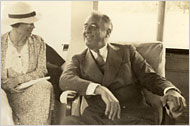
 by historian Geoffrey Ward, and there is more information in
  . The only man to be elected President four times and one of the towering historical figures of the 20th century, Roosevelt has been portrayed in movies like
  and
and 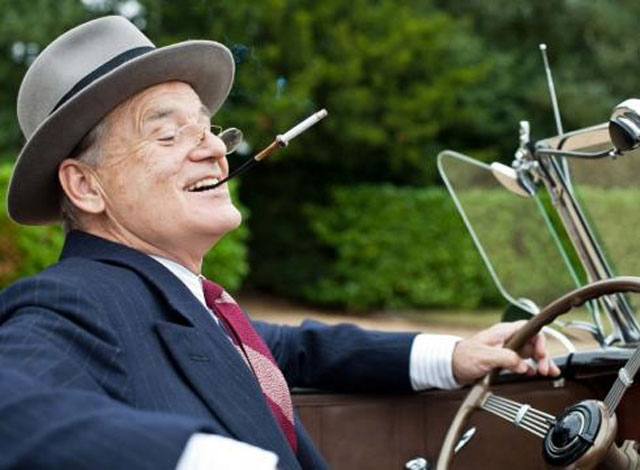
 and the
  .
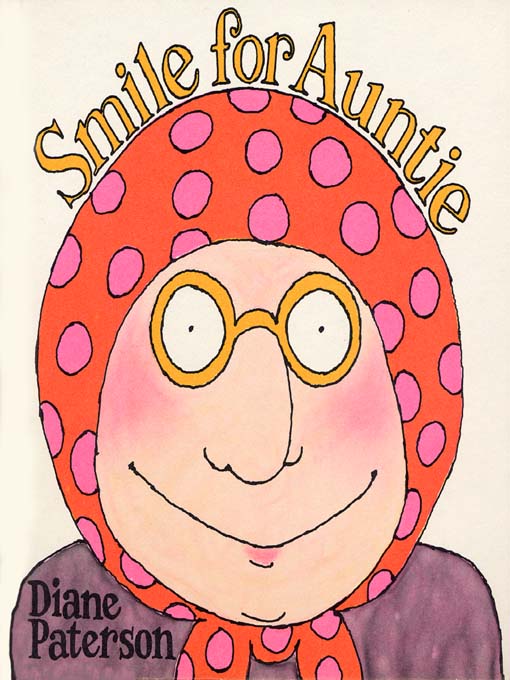
. features 13 stories on three DVDs, including That New Animal, Is Your Mama A Llama?, the hilarious Smile for Auntie and the classic Blueberries For Sal. I also love
 and
and  . Bonus: I have one copy of each of the Nickelodeon DVDs to give away to the first person who writes to me at moviemom@moviemom.com with the name of the DVD you want in the subject line. Don’t forget your address! (US addresses only) Good luck!