“I thought it was a closed circuit —it was everything I had wanted to say,” admitted Stanton in Monterey, just a block away from the Monterey Bay Aquarium, which inspired the main location in “Finding Dory.” “And the brain works in mysterious ways. I couldn’t stop thinking about Dory and how she didn’t have the ability to find her way home if she ever got lost again. And she found this wonderful family. And I always knew she was a tragic figure in my mind when I created her. And I couldn’t drop it….for Stanton, the biggest challenge was wrapping his head around Dory, who went from endearing sidekick to conflicted protagonist. “She’s driven by an internal fear of being alone and she deserves to not be driven by fear anymore and to embrace that,” he said. “And to know that that’s her superpower, not her weakness. But it took about two years to realize that self-reflection is necessary to track growth in a main character.”
It has been a great pleasure to feel the audience grow up with Pixar and the idea of giving the new undersea adventure more layers of emotional resonance means that this will be a journey of the spirit I am excited to experience.
Tonight and tomorrow, watch the extraordinary story of Jackie Robinson, the first African-American to play major league baseball, on PBS: April 11-12, 2016, 9:00-11:00 p.m. ET. It’s also the story of his wife, Rachel. As Michelle Obama points out in this clip, he could not have done it without her guidance and support.
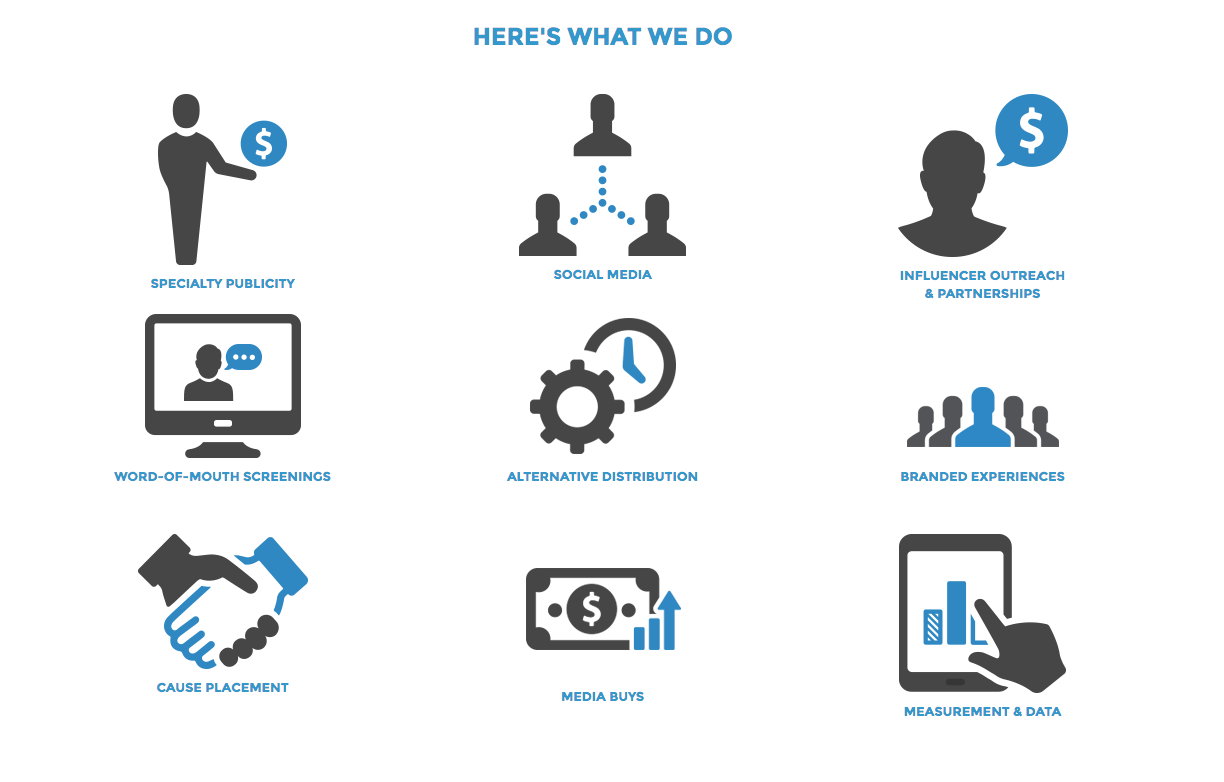
I saw Erik Lokkesmoe of Different Drummer at a screening of “Last Days in the Desert,” a moving, gorgeously photographed film with Ewan McGregeor as Jesus. I have been very impressed with his firm’s commitment to quality, inspiring media so I asked him to tell me more about his company and his projects. Here’s what he had to say:
There are three challenges for movie marketing today:
1. The inability to prove that activity leads to sales
2. The growing inefficiency and ineffectiveness of traditional advertising and marketing tactics.
3. The most cluttered marketplace in history.
All of this is causing great confusion and chaos within the industry. Most marketing, from our view, is like a car alarm in a mall parking lot; people hear the noise but ignore it.
Marketing used to be about awareness. But audiences today are not lacking awareness. That is not a motivating factor. There has to be more. What will lead people to action? We’ve always believed that there is a cycle of engagement that begins with personalizing the content, then creates meaningful participation for the audience — more than just being asked to buy a ticket. That is not enough anymore. Fans want to be part of the process.
Copyright Different Drummer 20018
That is one of the key distinctions of Different Drummer. Everything we do is about culminating into a single moment — its more about the mobilizing of people than marketing to people. If audiences don’t tune in or show up at the right moment, everything was a waste of time and resources. It’s the election day model. In political campaigns, as you know, its all about getting millions of people to do that one thing at the right time: vote. In entertainment, it’s the same thing: getting millions of people to do that one at the right time: watch on a screen.
This is especially true when it comes to theatrical. We all are seeing the end of the “middle-class” movie — it’s big or small now. Theatrical has to be about appealing to fans, creating a shared experience in theaters with like-minded people. Think Star Wars on one end of the spectrum and The Great Alone on the other, a small but incredible documentary about the Iditarod Race. Both have fans. Both want to be in the theater together. The films that are in no-mans-land will not work. Those films that don’t have a particular fan base. Sadly, as the world becomes more divided and insecure, people don’t want to be in places with strangers. The theater now is a rally. That is one reason we created TheatriCast — to eventize content in theater for specific fanbases.
So on one hand, Different Drummer is known for a type of marketing and eventizing. On the other hand, we are known for the type of content we work on. Our “brand” means something to the “middle-space audience” — defined as a smart, soulful audience that wants more than just entertainment. They are aspirational in their choices. They believe art creates margins for people to ask big questions and create new conversations. They want to lean forward in their seats, and leave the screen to participate with others around something beyond the screen. We promoted The Tree of Life, Calvary, To the Wonder, Selma, National Geographic Television’s The Story of God, Chasing Ice, Noble, and now are moving into executive producing projects like Last Days In The Desert. There is an audience that exists between “mass and crass” and “teach and preach” — and we serve them better than anyone because that is who we are. We often say we are the Christians Who Drink Beer. That means we see story differently. We want the audience to be haunted by amazing acting, cinematography, storylines, and experiences. If what we do helps films and shows become profitable and popular, then more will be made.
For me, after my time at Walden Media, Different Drummer was the perfect name for what I hoped to build — the famous Thoreau line from his book Walden Pond that describes an audience that is emerging quickly. Smart, globally minded, aspirational, looking for content that is honest, gritty, true to what is not what should be. In the “faith” category, we are seeing a massive film fatigue happening because of the sheer number of projects coming at the target audience. But no one is talking to the “middle space audience” — those who would never go to something like “God’s Not Dead,” as it is a violation of everything they stand for. They are deeply spiritual, connected to the traditions of faith, but are not found in the Christian nonsense. They read Anne Lamott, listen to KCRW, have Alt-J on their playlist, shop on Etsy, and binge watch Breaking Bad. This is where things are headed, and we are the only ones that I know of spending our resources and time with this growing audience.
Conversion: Films/TV designed to reach those OUTSIDE of the faith. It’s a tool. A strategy that uses content for some non-monetary purpose.
Confirmation: Films/TV designed to show the strength/size of the audience. Buying a ticket is sending a message. It’s a posture of fear and retreat, and the audience wants to use the content and the release as a reaffirmation of its power.
Commercialization: Films/TV created by networks and studios designed to secure the butts and eyeballs of the faith audience. Historically, these can prove successful but more likely the project is so large that it creates controversy that satisfies no one.
Causation: Films/TV creating content that has wide aspirations appeal, but draws upon the faith/belief of the main character. These capture a wider aspirational and inspirational audience while allowing the core faith audience to participate in an appropriate way.
Conversation: Films/TV designed to create large margins for smart, soulful audiences that want more than just mere entertainment. The goal is conversation, awards, an audience that is unlikely to watch “teach and preach” content or “mass and crass” entertainment.
Our focus is on the last two, if you had to place us in a category. Causation from belief and conversation around belief. And those will grow over the coming years. Commercialization of belief is not worth the squeeze for a studio. And the conversion and confirmation films (also knows as bumper-sticker content) are going to fade in significance and revenue.
What most people don’t understand is that the audiences for films in the confirmation and conversion category want these “watershed” moments that provide big victories. We all like winning — and so elections, movie releases, and tv ratings become one way to show others that you are winning. Your movie or candidate won! But the future will be what Fox Searchlight and Participant have done so well — the “droplet” strategy. Just a steady drip … drip … drip of creating content that has found an audience, built a trusted brand, and will be a reliable model for the future. Our entire model is about droplets … slow and steady wins the race. As the old proverb says, steady plodding brings wealth — hasty speculation brings ruin.
Of course Audrey Hepburn’s Ascot dress is on the list.
But I had forgotten all about Christina Ricci’s black and white striped dress in “Sleepy Hollow” (it reminded me of Beetlejuice’s outfit in another Tim Burton film). And I’d never seen this one, from the 1997 “Anna Karenina.”
Copyright Warner Brothers 2016
I love what Kendra wrote:
first, you’ve got this AMAZING bodice. Not only do we have stripes, but the combination of narrow and wide stripe makes things more sophisticated than if the two stripes were of equivalent widths. Next, you’ve got that stripe placed in about a million amazing directions: diagonal on the bodice and sleeves, horizontal on the cuffs, and those chevrons in back! I could probably come up with that on my own, but the solid white waistcoat, solid black lapels, and the solid black turnbacks on the cuffs and skirting-in-back? G.E.N.I.U.S.
Taking the genius to astronomical levels is the skirt. I could imagine pairing this with a skirt in the same stripe. I could also see putting it with a skirt in a solid white or black in a similar weight fabric. But the genius (sorry, I can’t stop!) of the sheer ruffled skirt, with all those teeny tiny black edgings? And the black sash tying the train back? That clunk you heard is every right-thinking person in the world falling over dead from fabulosity.