
Interview: Stephen Apkon and Marcina Hales on “Disturbing the Peace,” a Moving and Inspiring Documentary about Israelis and Palestinians Working Together

Posted on November 17, 2016 at 3:28 pm

The song from “South Pacific” gets it right. Fear, bigotry, don’t come naturally. “You have to be carefully taught.” The moving and inspiring new documentary, “Disturbing the Peace,” tells the story of people who were “carefully taught” to hate each other, Israelis and Palestinians, but have learned that they share more than they could imagine, especially when it comes to to devastating grief and a deep sense of responsibility for causing grief to others. I first saw the film at Ebertfest last spring and have not stopped thinking about it. So I was especially grateful to get a chance to speak with the filmmakers, Stephen Apkon and Marcina Hales.

The title of the film refers to the irony that the activists portrayed in the film are often arrested at their non-violent demonstrations for “disturbing the peace” when what they are trying to do is send a message of peace to stop the killing that has been going on for decades. And it is a reference to the charges filed against Rosa Parks, Martin Luther King, Nelson Mandela, and others who have protested to make a more just world. “The really good question,” Apkon said, “is ‘Whose peace are they disturbing?’ That was a really profound one for us. And it also speaks to the idea that the first peace we need to disturb is our own and to really challenge the stories and the narratives that we accept as reality. One of the things one of the characters in the film told us that is not in the movie but he often talks about how if you want to grow up in a society with the mythology of the hero you have to create the villain. Hollywood films don’t exist without the hero and the villain and so we constantly do that within our own minds.” Hales added, “One of the narratives that we have to really pay attention to, to begin with, is the narrative of there being a hero and then a villain. I think that that is one of the ones that is predominant. You’ll see it in a narrative right here in America and all across the world.” Apkon said If you ask how those narratives get conveyed, it strikes me that it’s less in what we’re taught didactically than the soup that we swim in. I remember I was living in the region and my daughter was five years old at the time and she went off to kindergarten knowing not a word of Hebrew and some girl followed her all around the schoolyard and became her friend. And a few months into it my daughter was fluent in Hebrew. Her friend was sitting at dinner with her one night and she looks at her and said in Hebrew, ‘Who taught you to speak Hebrew?’ So my daughter, she looks at her and she said, ‘You did.’ She had no awareness of learning. She just absorbed it. So we pick up these narratives in the air that we breathe. It’s how memes are perpetuated and communicated throughout our society. ‘You can’t trust them.’ You do not know who taught you. It is all around you so it feels like the truth. It is not just in a book. It’s in our songs, it’s in our culture, it’s in what we say at the dinner table, it’s in our media.”

Hales said that one of the things they most wanted the film to do was “to actually get below the stories, the content and actually look at how it functions because it functions on a lot of levels. It functions on the individual level, just take a look at our own lives, and it functions at different levels having to do with our cities and our towns and in our political systems everywhere. So if we can see and show how it works, once you know you cannot not know, and it becomes apparent and we can look for them and actually create a different story.”

The film had its premiere at Ebertfest and was given the festival’s first-ever Ebertfest Humanitarian Award. Apkon said, “She was actually one of our first disturbers of the peace in a sense that, we were over in Israel finishing the edit and had an experience over there that we both wrote about in social media. Chaz immediately picked up on it and wrote us a letter saying, ‘When can I see this film?’ We literally finished the film around a window where Chaz could see the it. And so having her turn around and having at Ebertfest, having the courage to do that before it had been in any other festival was huge and she has really been an amazing.”

One especially affecting scene in the film is an argument, thoughtful, not heated, but reflecting real pain felt by both of them. I asked how they were able to film that very intimate conversation, which feels as though the couple is unaware of any cameras. Hales said that kind of honesty was their goal. “The idea was to get people comfortable enough to actually feel that vulnerability, that authenticity, that real conversation, and it is being able to hold that space of confidence and trust and admiration that Steve does.” The wife in that conversation was the last of the people in that film to see it, and Hales and Apkon were apprehensive about how she would respond to it. “When the film ended she was very emotional and she was really thankful that the film had been made. There was a sense of a tremendous relief in her ability to express where her angers came from, where her hurt came from. And as she talked about how her mother raised her with this hope that her children wouldn’t know an occupation and now here she is, her children are growing up that way. She wishes the same for them but understands the realities are different that they have never known a day not under occupation. And I think that’s a reality that very few can even imagine.”

Apkon said, “Two questions that come up quite often. First, ‘Is it Pro-Israeli or is it Pro-Palestinian?’ Our answer is yes. It’s pro humanity. As one person says at the end of the film, ‘Each person’s freedom and dignity is based on the other person’s.’ So we want for the other what we want for ourselves. The second thing is this question that comes up around balance people would often watch the film and they would be asking themselves especially in the first half of the film, ‘Is it balanced?’ We always look at that from our own cultural framework. For us it’s not a question of balance; it’s really the question of integration. The question is, can we integrate? Can we not look at the balance and the extreme but can we recognize our capacity for both extreme? Can we recognize as says in the film, “When we first find each other we found we have something in common, our willingness to kill people we don’t know” and she thought in essence we find that we both share the desire for peace?”
Related Tags:


Documentary Interview

Sing Saturday! A Family Treat for Thanksgiving Weekend

Posted on November 17, 2016 at 3:00 pm

A treat for the whole family — a free preview of “Sing” the Saturday after Thanksgiving. The new animated film from the creators of “Despicable Me” features the voices of Reese Witherspoon and Matthew McConaughey.

Illumination Entertainment, Universal Pictures and AMC Theatres today announced a Thanksgiving weekend event for audiences of all ages: “SingSaturday,” a celebration of free screenings of the new event film from Illumination at 200 AMC Theatres nationwide, on November 26, 2016.

Tickets for “Sing Saturday” screenings are available on a first-come, first-served basis to the first 200 moviegoers in line at participating AMC Theatres on Saturday, November 26 (10 a.m. local time). Moviegoers must be in line to receive a ticket for the screening.

“For the past several years, Sing has been a labor of love for everyone at Illumination, as well as the tireless performers who have poured their hearts into this movie,” said Chris Meledandri, Founder and CEO of Illumination. “We know audiences of all ages will embrace the heart and the humor of this extraordinary film and can’t wait for movie lovers to experience ‘Sing’ over Thanksgiving weekend, throughout the holiday season and beyond.”

The film opens nationwide on December 21.

Related Tags:


For the Whole Family

A Short Film From Sand Artist Ilana Yahav

Posted on November 17, 2016 at 8:00 am

Israeli “sand artist” Ilana Yahav creates works that are part art, part ballet, part animation, with story/pictures accompanied by music that draw in the viewer.  The original soundtrack for this film is composed, played and sung by Jeanne Rabin.

Related Tags:


Animation Shorts
Interview: Eddie Redmayne, Star of “Fantastic Beasts and Where to Find Them”

Interview: Eddie Redmayne, Star of “Fantastic Beasts and Where to Find Them”

Posted on November 16, 2016 at 8:00 am

Copyright 2016 Warner Brothers
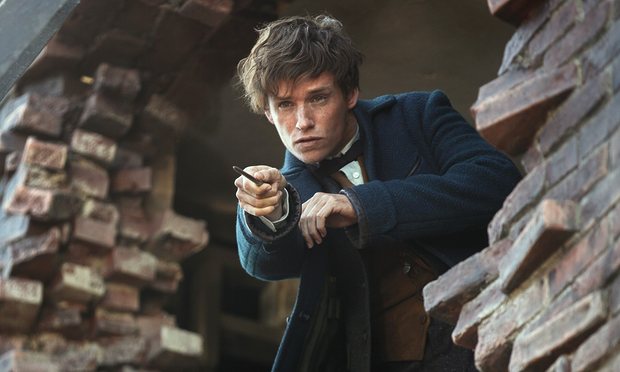
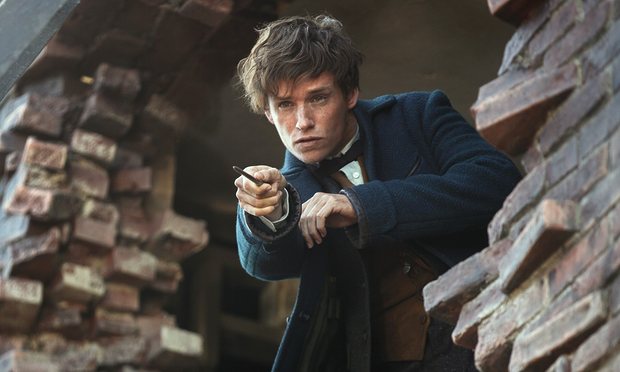
Eddie Redmayne stars in the first film from the Harry Potter universe to be set the the past, the first to be set in the United States, and the first with a screenplay by author J.K. Rowling, who has promised that this film will be followed by four sequels. In an interview, Redmayne talked about creating his character, Newt Scamander, a Magizoologist. “One of the things I love is Newt, perhaps at the beginning of this film is certainly more capable of interacting with creatures than he is with human beings. A lot of that is about observing and listening and there is an empathy that comes in life through really listening rather than just sort of cosmetically listening that is super important. But sometimes life is so noisy and there is so much distress, everyone is shouting to be heard. Those people that truly listen, of which Newt is one, it’s an amazing quality.” His wife is an expert on antiques, so I asked which of the century items in the film she would like to bring home. “There was kind of a wizarding antique in there, in the Magical Congress of America, as Newt and Tina walked in there, there is a wand shiner which is a kind of feather-boa-ed antique machine that polishes wands and she had her eye on that.” As for him, he said he “thought long and hard” about which of the magical creatures he would like to bring home and “I couldn’t possibly say anyone other than Pickett who is the bowtruckle stick insect that has attachment issues and Newt knows he shouldn’t have favorites but he sort of can’t help it.”

While the first film in a series is often an introduction with a lot of exposition, “whetting one’s appetite, but what I loved about this script is it always stood alone for me. I found it very moving and cathartic and a whole piece. I love the character of Newt and I would love to get to re-visit him again but I suppose that will only happen if people enjoy this film so hopefully we’ll get to make more.”

He was especially grateful for a chance to work with costume design legend Colleen Atwood, and consulted with her “massively. I loved all of my wardrobe. Colleen Atwood is extraordinary. I think it was Newt’s coat that is my favorite. It was an amazing color and also I thought it was amazing how the coat could look very kind of sort of eccentric and English but then also when he whipped up the collar, he could turn into a bit of an action man. So I found that kind of cool. It’s always something that I use as part of the process of discovering who a character is. Often when you go and meet a costume designer they will have whole pages of inspiration, of photos from the period, of people’s different items of clothing. Sometimes it can be one little thing that makes a difference. In fact, in this film Newt has a little pocket watch that sits in his waistcoat that you never even see in this film but on the chain hangs a tiny little thing that Colleen found which has a little bird on it and somehow that clock, that little watch became a key into who he was, I don’t quite know how, but it was really wonderful. So I love that process and I find it a massively important part of discovering who a character is. We spoke quite a lot about the character, how the clothes would frame Newt. What I love is he hides quite a lot and it is almost as if everything is a size or two too small for him and that really affected his physicality. So when I first put the clothes on fully, I was sort of playing with his physicality and the two things merged in a good way, so that was quite reassuring.”

He had just made two period films, “The Theory of Everything” and “The Danish Girl,” and loved going back in time again. “Because of ‘The Danish Girl,’ which is also set in the 1920’s, I was kind of familiar with that period. I listened to some jazz and I got some amazing books. David Heymann, the producer of the film, give us a book of New York over the years from the 19th century into the early 20th century, sort of as photographs arrived, and so that was source material that was really useful.”

Related Tags:


Actors Interview
THE MOVIE MOM® is a registered trademark of Nell Minow. Use of the mark without express consent from Nell Minow constitutes trademark infringement and unfair competition in violation of federal and state laws. All material © Nell Minow 1995-2025, all rights reserved, and no use or republication is permitted without explicit permission. This site hosts Nell Minow’s Movie Mom® archive, with material that originally appeared on Yahoo! Movies, Beliefnet, and other sources. Much of her new material can be found at Rogerebert.com, Huffington Post, and WheretoWatch. Her books include The Movie Mom’s Guide to Family Movies and 101 Must-See Movie Moments, and she can be heard each week on radio stations across the country.

Website Designed by Max LaZebnik