Nell Minow has been reviewing movies online as The Movie Mom since 1995, with over 3000 published reviews. Her books include 101 Must-See Movie Moments and The Movie Mom's Guide to Family Movies, and she appears on radio stations each week to talk about new releases in theaters and on DVD/Blu-Ray/streaming. Mastodon NOTE: Purchases from my links to Amazon pay me a small fee, usually well under one dollar.
In a Digital Movie World, Projectionists Still Matter
Posted on April 2, 2018 at 10:31 am
One of the great pleasures of seeing movies at the magnificent Virginia Theater each year for Ebertfest is the superb work of projectionist James Bond (yes, that is his name). These days, most movies are digitally projected and remote controlled. But for some films, projectionists still make all the difference. It was great to see Vanity Fair profile Mike Katz, one of the best, sought after by perfectionist filmmakers like P.T. Anderson and Martin Scorsese. My favorite professor in film school started as a teenage projectionist, and that led him to go back to school to study film.
For the first time in years, specialists like him have once again become a hot commodity, thanks to fussy filmmakers like Phantom Thread’s Paul Thomas Anderson and others—“Batman guy, Scorsese guy, Tarantino guy”—who want to present their new films the way they believe they deserve to be seen, on 35mm or 70mm, in a handful of big-city markets. They’re frantically seeking projectionists like Katz to get the job done, even turning to those who have retired or moved on from the profession…Katz—like those film-nerds-turned-directors who are breathing new life into his industry—is hyper-aware of the differences between a D.C.P., or digital cinema package, and a film print. (He actually installed BAM’s first two digital projectors about 12 and 8 years ago.) He credits his father and uncle Louie, both of whom worked as projectionists and were proud members of New York’s still-thriving projectionists union, with giving him vital on-the-job training; he started working for them as a “reelboy,” rethreading just-screened film prints, and handing them back to the projectionist.
Interview: Drew Fellman and Jake Owens on the new IMAX Film “Pandas”
Posted on April 1, 2018 at 10:15 pm
Copyright Warner Brothers 2018
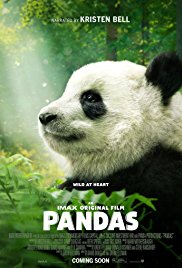
Pandas are, as someone notes in the adorable new IMAX documentary simply called “Pandas,” “the King Kong of cuteness.” Kristen Bell narrates the story of an ambitious and daunting Chinese project, to take panda babies bred in captivity and release them into the wild, to repopulate the endangered species. The Chinese panda specialists consult with an American from New Hampshire who has a similar program for bears. And we get to watch as a panda named Qian Qian leaves the only home she has ever known. I spoke to director Drew Fellman and American panda expert Jacob Owens, who worked with Qian Qian and appears in the film.
Why are humans so drawn to pandas?
Fellman: I know, it’s a mystery, isn’t it? There is so much about that that really is so unknown, part of it I think is that pandas are still so new to us. Pandas were unknown to the West until about the 1860’s and the first panda showed up in the U.S. in 1920. Once people were introduced to pandas there has been a panda mania of some sort. From the very beginning they just captured the public imagination and I think part of that was because they seemingly came out of nowhere and they’re so big and so adorable and they look so unlike any other animal. The physical answer as to why they’re so adorable is because they have the strongest jaws you can imagine so they can bite through solid bamboo and that gives them these huge jaw muscles which give them a big round head like a giant baby.
Owens: Yes, babies are cute because they have big eyes and they have round heads, they’ve got disproportionate ears; and so you look at the pandas and it’s got big black spots that look like big eyes and big ears and a big round head, also they roll around more than any other animal I’ve ever seen. They love rolling. So not only do they do look really cute, they’re also really silly goofy animals.
In the film you say that the three qualities you were looking for in finding the right panda for the release program were courage, curiosity, and climbing ability. Why were those were the key skills and how do you look for them?
Owens: There is a lot of research that goes into this that we can draw from. It starts off with genetics and health; we want healthy individuals who have the right genetics for the places that we’re looking to release them. The next thing is looking at the behavior. We introduce novel stimuli to see how they respond. If an individual panda sees something new and instantly runs towards it that’s not necessarily the quality we need because we want them to be curious but also careful but you also don’t them to be so wary of everything that they won’t explore. They’ll need to explore their habitat, being able to find food on their own; things like this, so having in moderation being exploratory but also being cautious, being really vigilant; vigilance is a big thing always looking out for new dangers, those are the key features. And they have to climb well because they have to spend a lot of time in trees. They flee predators up trees and so being able to walk around and climb and do that well at a young age is a good indicator.
Did it feel like leaving a child at school to say goodbye that way?
Owens: Yeah, worse. As scientists you try not to get attached to the animals that you’re studying but this is very different than just strict science; this is reintroduction and release of individual animals and so we are doing all this research but then you’re also dealing with an individual and their own personality that’s unique and so you can’t help but personify and you can’t help but get very attached. You really care about them as an individual and also what they represent for the species. As a conservation biologist, I’m focused on making sure that there are individuals of species in the future. But at the same time just like anybody else, just like if you have a human child you want them to go off on their own and be able to be successful. It’s just that how you prepare them is a bit different. I don’t ever refer to it as training because I can’t train a panda to be a panda because I’m not one. So I call it conditioning or preparing, letting their natural instincts come out progressively through increasingly wild conditions and eventually to the point when they are ready to go out. We open the gate and she can make that decision when she wants to go out and when she wants to come back and, when she’s ready, just to be out fully.
What was the most important thing that the project learned from Ben Kilham, the man who has been raising bear cubs and releasing them successfully in New Hampshire?
Owens: Ben has been doing black bear rehabilitation for more than 20 years and so he’s just got a huge amount of knowledge about bears in general and pandas are bears. They are very different bears but they’re still bears. He also knows so much about rehabilitating and releasing animals. I’ve worked on reintroduction programs before with different species. People think that you should avoid all human interactions. Ben takes the opposite approach. He says there’s no real way to do that because these black bears don’t have a mom so you have to hand raise these cubs and you have to give them a safe environment to progress into the wild. Our pandas are born in captive care. Their mothers are also captive-born individuals so they don’t have the wild skills to teach their cubs. So for Ben the biggest thing is that human interaction has a real advantage, because once they trust you that provides us the access to keep on learning more about their biology, to keep on learning more about their conservation and also monitor them. I can change Qian Qian’s GPS collar just as Ben can with Squirty as you see in the film, and that’s a huge advantage because we can monitor her, we can follow her, we can see where she’s at, see how she’s doing. As technology increases we can do a lot more with that technology but if you don’t have access to them and they don’t trust you, then you’ll have to take other measures. You have to capture them in some kind of trap or use sedation and so because they know and trust us it’s a lot easier for us to do those things. Using those human interactions for those advantages is the biggest thing that I have learned from Ben in terms of our project.
Fellman: Also from the panda’s point of view is the positive interaction with the humans as opposed to being trapped or tranquilized which can be dangerous and can frighten them.
Owens: There is also the misconception that I had coming into this that if a panda or black bear gets used to one individual or a handful of individuals then they’re used to people and then they’re going to be a nuisance animal then there’s going to be a real problem and they’re not going to do well when they go out. But pandas and black bears are really smart and they can identify individual people very easily by the sound of their voice, by the smell and also by vision somewhat when you get close. It was a big learning thing for me to learn that we were wrong in thinking that this risk of them trusting a few human individuals is going to lead to touching every human. My dogs don’t do that in the States and most people’s dogs don’t do that in the States. Most animals just don’t do that.
What’s the most important thing that you want families to learn about pandas when they watch this movie?
Owens: I want people, especially families with young kids, that people around the world can work together really successfully and use their own combined strengths to work on an endeavor that’s really challenging. We’re really dedicated and I think that’s the big point — all of us globally working together to achieve a difficult goal.
Fellman: And another important message is that pandas are much more than just adorable animals; they are very smart, occasionally fierce, a bear with a mind of their own and they’re all individuals. It’s going to take a lot to create a better future for them and it’s something that’s really worth fighting for.
Women on Women: Emma Piper-Burket Shows Us A Woman’s Life Through Women’s Eyes
Posted on March 30, 2018 at 8:41 am
For rogerebert.com’s Women Writers Week, filmmaker Emma Piper-Burket assembled an extraordinary compilation, the life of a woman as seen by female directors.
Interview: Andre Borschberg of “Planet Power” and Solar Impulse
Posted on March 29, 2018 at 2:54 pm
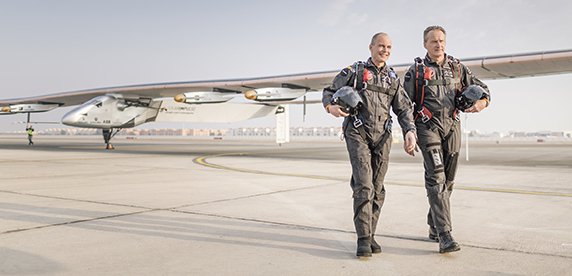
“Planet Power,” is a stunning documentary about the round-the-world flight of the Solar Impulse, the first-ever plane completely powered by sunlight to circle the globe. It is now in IMAX theaters across the country. It was developed and piloted by two Frenchmen, Andre Borschberg and Bertrand Piccard.
What did you learn about the world by flying over it that way that you didn’t know before?
Lots of things! But first of all it’s an incredible experience when you look about the airplane and you see the sun and you see the sun rays and then you start thinking that these rays and this radiation is sufficient to make the airplane fly, to climb and fly through the night. It’s absolutely incredible. Normally you always have an eye on the fuel gauge and then you know you only have a few minutes to go and then you have to land. So to think that you have an indefinite unlimited endurance, it’s a totally different world. Of course the entire project was incredible in the sense that we were told by the aviation industry that to build such an airplane was not possible. We were convinced on our side that there was a solution so we decided to do it ourselves. These fifteen years were a sequence of hurdles, of success, of difficulties and all this done with a fantastic team; so it’s a life experience.
I imagine that it was very quiet there because you didn’t have the humming of the engines. Is that right?
It is. If you have a chance to fly in an electric airplane, you will see how quiet it is because you don’t hear much, there’s no vibration. It’s like being in a glider which suddenly can climb like a normal plane. And in this plane I was alone. We will have a two-seater flying this summer in Switzerland and my goal is really to take lots of people in this airplane just to see the difference. The experience is something else.
One of the things that really captured my attention in the movie was that while a passenger plane can tip to a degree of 30 degrees this plane because of the size of its wings was much more limited. Did that make it difficult to maneuver?
What was tricky was the sensitivity of the airplane towards turbulence and this is why we also always try to take off very early and land late at night so we’re away from the turbulences created by the sun during the day. So that is certainly one characteristic of the airplane. On the other side, as I said, we have this freedom to be away from the clock and having the possibility if necessary to be one more day in the air when I flew across the Pacific from Japan to Hawaii, we thought it would take 5 days than have taken 6; I would say even so much the better because of the incredible experience but to have this feeling of no limit on the energy, of course, it’s a major plus.
The movie explains that you come from a family with a history of innovation. What did they do to influence you to become an innovator yourself?
When I was a really young kid I was taken by the books I read about the aviation pioneers, about what they did, about their lives, about the way they went about trying, exploring, building something that nobody did and then flying without having been coached by a flight instructor on how to do that. For me this created a strong dream and appeal in fact to be part of this world as well; so when I met in fact Bertrand a few years later, it was like getting into this world I’ve been dreaming about when I was a young boy.
Tell me a little bit about more about the partnership with Mr. Piccard, what is it that each of you contribute to that partnership?
Bertrand and I basically had different educations; we have different backgrounds and skills and at the end we were extremely complementary as a partnership through these differences. It’s one plus one equals three; one for each and one when we’re together. In that sense we are truly different but we understood that this difference was a source of creativity so very early we gave up basically the tendency to argue and to try to defend own ideas and we were more interested when we were not having basically the same understanding of a situation. I think we were always interested to understand what the other was thinking, knowing that at the end the solutions would be neither his solution nor mine. So regularly once every two weeks, once every month we would sit down and expose our feelings to the other one to try to find a common ground. We had a clear understanding that it’s only by sticking together that we could have a chance to succeed.
What of the innovations in the plane do you think will be most useful to consumers?
I think very simply electric propulsion. It is not just that solar energy is renewable. It is also much more efficient than a combustion engine. If you take your car, two liters or two gallons out of three that you put in the tank are lost for heat so it’s a totally inefficient technology. With electric propulsion we’ve changed the world of aviation for a lot of reasons but it will make aviation quieter, cleaner, safer and more affordable and you can use it not only for propulsion but also to stabilize the airplane. There are few moving parts, it’s only software, it’s only electronics, which are (things we know how to produce very cheaply and very safe today, so you can start imagining that you will have new ways to transport people, for example from one side of Los Angeles to the other side. There are many projects aiming in fact to provide this added value that will all use electric propulsion. I didn’t want basically to do a commercial project after flying around the world but I couldn’t resist to continue and develop this technology because I think it will be a game changer.
Kristen Lopez on Movie Theater Accessibility for Rogerebert.com
Posted on March 29, 2018 at 9:27 am
Bravo to Kristen Lopez for her outstanding piece on rogerebert.com about the accessibility — or inaccessibility — of movie theaters for people with disabilities.
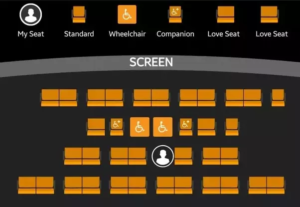
A movie theater should be a peaceful, relaxing place, and I’m sure it is for most in light of reserved seating. Movie theaters have gussied the concept up as the perfect way for all audiences to get the best seat in the house. But movie fans with wheelchairs or other limited mobility don’t get the best seat—they get the only seat. Theaters are mandated to make approximately 10% of the theater seats accessible, so obtaining the two to four wheelchair spaces in my theater can be like a terrible game of musical chairs. The outdated, ableist thinking is wheelchair users bring their own seat, like a lawn chair you plant on a soccer field. It gives them access, but how is this effective with such a small field to play on? Wheelchair users are often stuck sitting in the front rows, on flat ground with no elevation to keep a clear view. The changeover to wider, recliner-style chairs has actually decreased the number of handicap seats, and many of these new chairs come with oversized footrests or outward facing tray tables that prevent wheelchair users from transferring into them to begin with. The same Cinemark I was in has one presumably handicap seat that requires a wheelchair user to climb over the armrest to transfer into. All so you can find a place to set down your popcorn.
This is especially meaningful because Roger Ebert himself used a wheelchair for the last years of his life, and well understood the barriers — physical, logistical, and ignorant — that keep people out of movies, the very art form he called “an empathy machine.”