Nell Minow has been reviewing movies online as The Movie Mom since 1995, with over 3000 published reviews. Her books include 101 Must-See Movie Moments and The Movie Mom's Guide to Family Movies, and she appears on radio stations each week to talk about new releases in theaters and on DVD/Blu-Ray/streaming. Mastodon NOTE: Purchases from my links to Amazon pay me a small fee, usually well under one dollar.
Trailer: Finding Your Feet
Posted on January 30, 2018 at 2:00 am
This year’s cuddly British film is “Finding Your Feet” and I have to admit I can’t wait. The cast is sublime, with Timothy Spall, Imelda Staunton, Celia Imrie (of “Marigold Hotel,” in a similar vein), and the divine Joanna Lumley.
Mae Abdulbaki on Representation of Middle Eastern People In Movies
Posted on January 29, 2018 at 2:54 pm
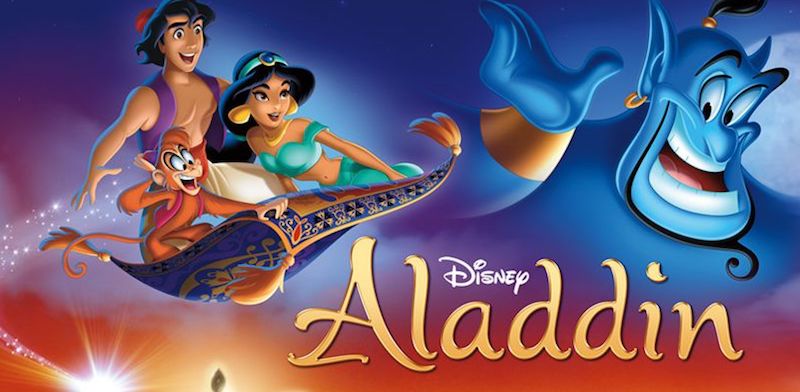
Copyright Disney
My friend and fellow critic Mae Abdulbaki has a very thoughtful piece on The Young Folks about the portrayal of Middle Eastern characters and the appearance of actors of Middle Eastern origin in films. Hollywood has a shameful tradition of “browning” white actors for roles in Biblical and historical epics.
To this day, there is still very little representation of Middle Eastern people who aren’t stereotypical terrorists and, if they ever do appear, they’re background characters or there to help white people (sometimes in their own land, see: “Indiana Jones,” “The Mummy” as examples). So when it was announced that there would be a live-action “Aladdin,” I was beyond ecstatic. Finally, a movie that had once been one of the only positive representations of Middle Eastern people on screen was now getting the live-action treatment. But Disney’s adaptation of the beloved animated classic has already hit several bumps in the road–from rumors of not being able to find a Middle Eastern cast, to “browning up” the extras on set–Disney’s inability to properly understand the importance of representation and the need to self-insert a white character where he doesn’t belong proves that the studio, and Hollywood in general, still struggles.
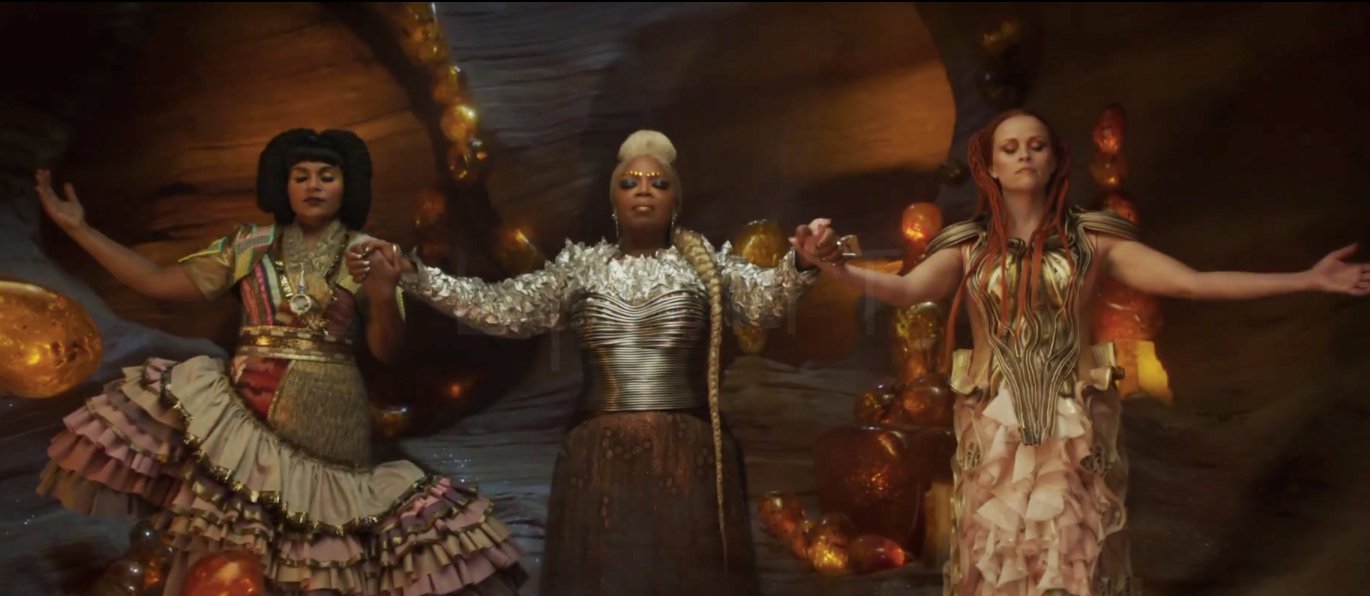
Film School Rejects has an enticing list of 81 movies by woman directors scheduled for release in 2018, including one of this year’s most anticipated big-budget studio films, “A Wrinkle in Time,” directed by “Selma’s” Ava Duvernay. The topics range from thrillers (“The Strange Ones,” “Blame,” “The Turning”) to comedies (“I Feel Pretty”) to documentaries (“On the Basis of Sex,” one of two films about Justice Ruth Bader Ginsburg coming out this year). I’m especially looking forward to “Freak Show,” directed by Trudie Styler, “Oh Lucy!,” directed by Atsuko Hirayanagi, and “Valley Girl,” a musical remake of the 1980’s cult classic, directed by Rachel Goldenberg.
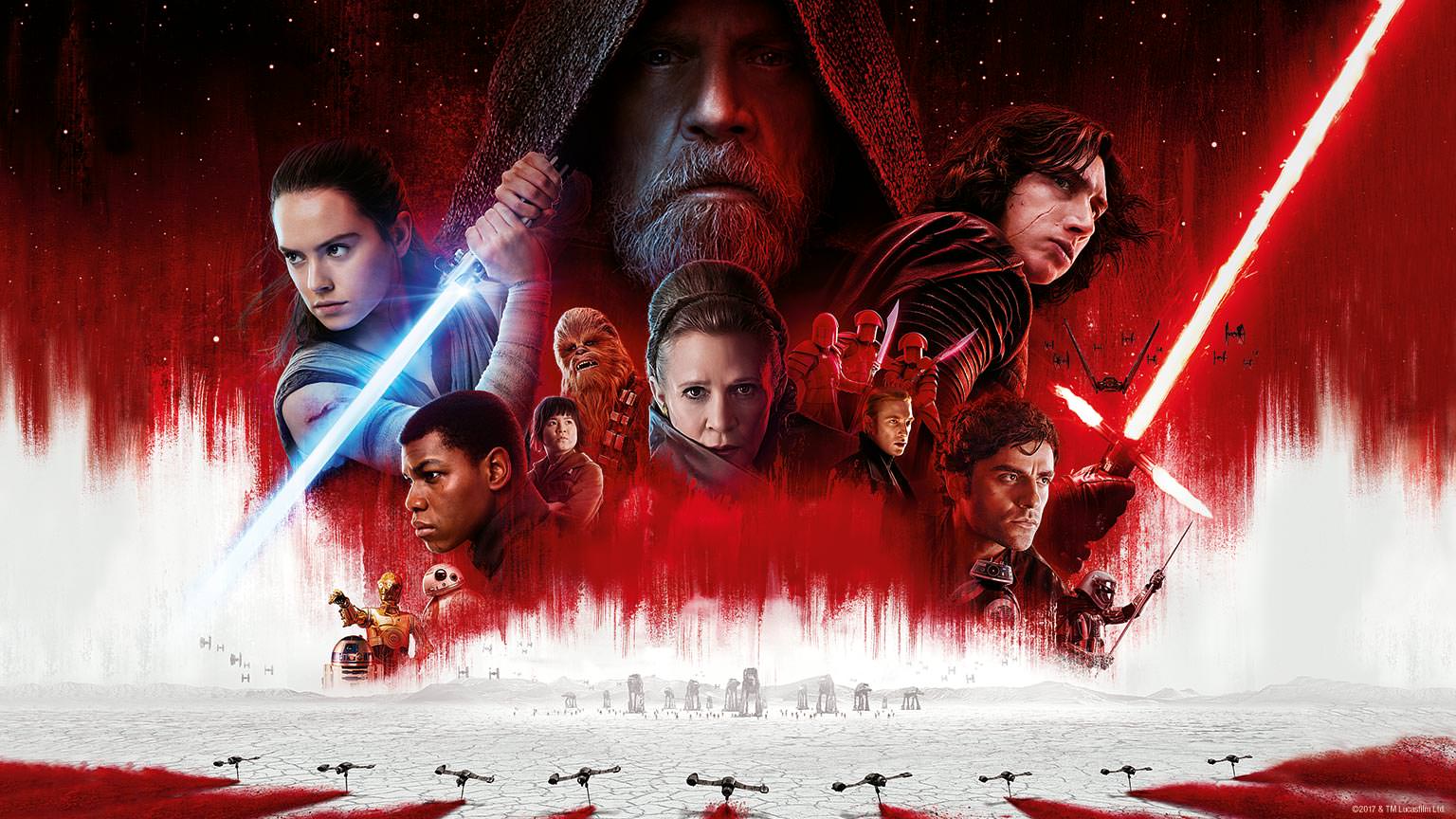
The most recent “Star Wars” movie has inspired some thoughtful responses and some fascinating behind-the-scenes insights about all of the elements, choices, technologies, and expertise that were included. As visual effects supervisor Ben Morris said, “It’s just a remarkable piece of filmmaking and action, and I think it started off with the stunts, but the visuals and the sounds are what made it in the end.”
Crafting the Throne Room One of “The Last Jedi’s” most striking scenes takes place in Snoke’s throne room, and SlashFilm takes us behind the scenes to explain how it was done and what it means. It is fascinating to see how many From production designer Rick Heinrichs:
When you look toward the throne, you see this almost spinal and rib-like structure above Snoke. So as part of this very elegant, simple shape, there was also an incredibly important sense of power and strength in almost a metaphorically organic way as well…The most important thing for me is that we took the language of the First Order/Empire architecture, and we were able to bend it to our specific use and created something that feels both familiar and novel at the same time.
From writer/director Rian Johnson:
The first thing to say is coming into writing this or any story, the object is not to subvert expectation. The object is not surprise. I think that would lead to some contrived places. The object is drama. And in this case, the object was figuring out a path for each one of these characters where we challenge them and thus learn more about each of them by the end of the movie. So that having been said, Kylo’s arc in this movie I saw as – besides his relationship with Rey – the big arc for Kylo in this movie was breaking down this kind of unstable foundation that he’s on and then building him to where by the end of the film he’s no longer just a Vader wannabe, but he’s stepped into his own as kind of a quote unquote villain, but a complicated villain that you understand, right?
Star Wars has always had its finger on the pulse of the cultural fear of the moment. In the original trilogy in the 1970s and early 80s, it was The Man– an evil establishment that needed to be purified by a younger generation. In the prequels of the 90s, it was evil corporations secretly colluding with a corrupt government to create endless war.
Now, in early 21st century America, the villain is an unstable young white man who had every privilege in life, yet feels like the world has wronged him. Unbeknownst to his family, he finds and communicates with a faraway mentor who radicalizes him with a horrific, authoritarian ideology. By the time his family finds out, it’s too late, and now this unstable young white man has this horrific ideology, access to far too many weapons, and the desperate desire to demolish anything that he perceives as a threat– or is told to perceive as a threat…The Resistance is impressive in its casual diversity. Women and people of color are valued for their expertise as a matter of course; nowhere does the film congratulate itself on its diversity by making a huge point of highlighting it, demonstrating white male benevolence by the generous inclusion of women and people of color, positing a white male audience nodding along, agreeing that we are so wonderful for allowing our White Male World to donate a very small corner for the Less Fortunate. The Resistance is naturally diverse, and no one even seems to notice. That is masterfully subversive.
Among the approving voices is Annalise Ophelian, a documentary film-maker and psychologist whose current project, Looking for Leia, is about girls and women in Star Wars fandom. “The Last Jedi depicts women as multi-faceted, multi-generational, multi-racial. There are women in strong leadership positions and women who occupy student/learner positions,” she says.
The Last Jedi also contains what Ophelian says is the “first truly Bechdel Test passing scene” in the history of the franchise. “Female heroes are traditionally presented in cinematic isolation. This film gives us women working side by side, women in technical positions, and of course women learning the ways of the Force.”
Patheos has a new Docs/Ology section with recommended documentaries like two of 2017’s best, “Jane” and “Faces Places.”
And Daily Dot has a great guide to the best documentaries on Amazon Prime. Some of my favorites on the list include “Gleason,” the “Paradise Lost” trilogy, and “I Am Not Your Negro.”
Both are terrific sources for making sure you can find the best of the real stories made by the best filmmakers.