Interview: Ed Asner of ‘The Gathering’ (and ‘Up’)

Interview: Ed Asner of ‘The Gathering’ (and ‘Up’)

Posted on December 22, 2009 at 12:04 pm

It was a thrill to get a chance to talk to Ed Asner — best known as Lou Grant on the “Mary Tyler Moore Show” and its spin-off and having a very big year as the voice star of one of the biggest critical and box office successes of 2009, “Up” from Pixar and Disney. Asner is a talented actor with a wide range who has played everything from Santa Claus (in “Elf”) to real-life mobster Meyer Lansky (“Donzi: The Legend”) and Franklin Roosevelt (on stage). But his best-remembered roles have him playing tough, sometimes irascible, forceful characters who may, somewhere, have some hidden tenderness. That quality links his roles as the powerful industrialist estranged from his family in The Gathering and the grumpy widower in Up. Mr. Asner spoke to me by phone from his office.gathering.jpg
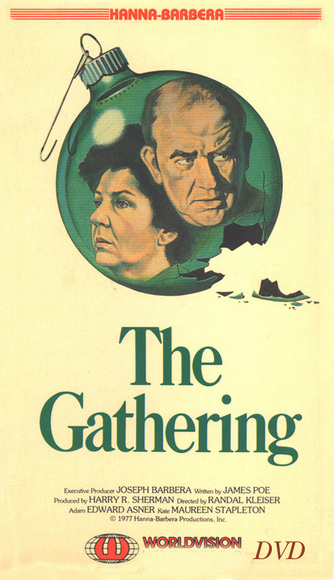
NM: I am so happy that The Gathering is available on DVD! It is one of my favorite holiday films. What led you to accept the role?
EA: I had a choice between two Christmas films, one about a rich family and one about a poor family. I liked this script better and it had nothing to do with riches, it was the story and the characters. So I opted for this one and came to Chagrin Falls in Hudson, Ohio and it was a stellar cast.
NM: You got to work with one of the truly great actresses, Oscar-winner Maureen Stapleton, who played your ex-wife. What was it like working with her?
EA: She was a doll. She gained a little weight during the show so towards the end of the filming we had to pin the wardrobe together but I loved working with her. She was a tough broad but sweet as she could be. And she gave me the nicest compliment in the world. She said that working with me as as good or better as she hoped it would be.
NM: She was famously a method actor. Did your styles as performers work well together?
EA: I am not a method actor, though I studied for a year with Lee Strasburg. But our styles had no conflict; we meshed as actors. We did not need to work out a whole history about what drove our characters apart. I didn’t know it the time but since have realized that people can get bored with each other unless they have the most profound belief in each other. As a powerful executive he may have wanted to play around or whatever and finally discovers that he is going to die. So he makes the plans — that was the most outspoken scene between us, when she realizes what I’m hiding, it was a delicious moment.
NM: I know it was a long time ago, but what do you remember about working on “The Gathering?”
EA: I loved getting to Chagrin Falls, being by the falls, what a cute place it is. I loved working with all the people I had to work with, and the story — the dissensions and dislikes but also the rapprochement when people are willing to open up to each other. The script had good highs and lows. Everything else is all cushioned by his wealth, so all that is left is the person to person contact and the person to person love. And the cast was outstanding: John Randolph, Laurence Pressman, Veronica Hamel, Bruce Davison, Gregory Harrison, Rebecca Balding. And I was delighted at the reception it got. A friend of mine, an award-winning journalist, led a vigilante group to bludgeon the network to put it on every year. And she succeeded most of the time!
NM: I have to ask you about “Up.”
EA: It was a lovely experience for me. The directors, Pete Docter and Bob Peterson, are unbelievably talented. They created a menacing phalanx to have to survive under in the story and we had a marvelous time just making it — the genius is all theirs!


Related Tags:


Actors Behind the Scenes Interview
Tribute: Brittany Murphy

Tribute: Brittany Murphy

Posted on December 20, 2009 at 6:25 pm

The news about actress Brittany Murphy is shocking and very sad. She died today at age 32. brittanymurphy.jpg
Murphy made her first real impression as the suggestible Tai who got a makeover from Cher (Alicia Sliverstone) in “Clueless.” She had an engaging openness and, when she sang along to a Mentos commercial, a surprisingly supple singing voice. She had better luck with small roles in movies carried by others (“Sin City,” “Girl, Interrupted”) than in films where she had the leading role (“Uptown Girls” and “Little Black Book”). But even in her lesser films like “Don’t Say a Word” she always showed commitment and a certain fearlessness in her portrayals. I know the movie is too dark for younger children, but I am fond of “Happy Feet” and enjoyed her voice as the penguin, Gloria, especially when she performed the Queen song, “Somebody to Love” and Earth, Wind & Fire’s “Boogie Wonderland.” That’s how I am thinking of her now.

Related Tags:


Actors Tribute

Victorian MVP: Mark Strong

Posted on December 17, 2009 at 8:33 am

I’ve been listening to a lot of carriage wheels on cobblestones lately, with three films set in Victorian London. And two of them feature one of my favorite actors, Mark Strong. You may not recognize his name. You may not even recognize his face because he appears different in every film. That’s not make-up; it’s acting. Here he is in the marvelous fantasy, Stardust:

He is truly astonishing in the scene shortly after, when he has to swordfight as a corpse manipulated by a sort of puppetry enchantment (trust me, it’s great). He was a silky Jordanian secret service director in “Body of Lies” (out-acting co-stars Leonardo DiCaprio and Russell Crowe) and a thug in “RocknRolla.” And now he is plays nemesis to both the teenage Queen Victoria (Sir John Conroy) and Sherlock Holmes (Lord Blackwood). It’s worth seeing both movies just to see how good Strong is when he is bad.

Related Tags:


Actors Breakthrough Perfomers
Interview: Columbus Short

Interview: Columbus Short

Posted on December 2, 2009 at 9:13 pm

NM: You have not made many films but each one has been a real departure from what you’ve done before. Is that important to you?
CS: It is. The point of acting is to hide yourself and get lost in character. To play the same character in eighteen movies would be defeating the purpose I believe so I try to keep a little bit of diversity.
NM: Is this your first full-on action movie?180full-columbus-short.jpg
CS: This is the first I hope of many. It was fun to do but it wasn’t about the action. I don’t want to do action that doesn’t mean anything. Everything I do I want to have character development and three-dimensional characters, fallible humans, and this is definitely one of them.
NM: Have you worked with weapons before?
CS: I have! But in this movie my character doesn’t use weapons at all. He’s like McGuyver. I use my brain, no iron.

NM: Do you remember when you first decided that this was want you wanted to do?

CS: I don’t know if it was a defining moment. I knew it as soon as I could comprehend the possibility of having a career. I knew very young I wanted to be a movie star. As much as I grew into love of the craft. As soon as I could speak I was auditioning and going to classes every day. It was my life.
NM: Did you work with the costume designer to create this role?
CS: Every movie I work with the costume designer to see what feels like the character, not what Columbus would wear but what is right for the character. Outside of the armored truck standard issue security guard uniform, this guy is trying to make ends meet. He might have one pair of jeans, the same boot, maybe changes his shirt but he doesn’t have a walk-in closet full of things, so I wanted something comfortable that felt like the character.
NM: Who is the director who has taught you the most?
CS: I take bits and pieces from every director. I’d say Sylvain and Nimrod . They were more about teaching me lens sizes and depth of field and how to move the camera and lighting. I do want to direct and I didn’t go to film school, so having a director that are very much hands on that way and looking to let me learn, that is a key factor.
NM: Are there actors who inspire you?
CS: Absolutely. I just saw “Inglourious Basterds” and that actor Christoph Waltz, he was phenomenal, Daniel Day-Lewis, the work that these guys do is amazing. But I try to carve my own way so the actors who come after me will say, “I want to do it like Columbus did it.”
NM: Are you the kind of actor who writes out pages and pages of background for the character?
CS: Not at all. I’m the complete antithesis of that guy. I want it to be as organic as possible, as least thought out as possible. I want to be there on the day and be present and listen and respond in a true way as the character. “Cadillac Records” was the most work that I did. Not just the physical aspect but learning the dialect and delving into the blues and learning how to play harmonica — those were all tools I wanted to have in the bag that I could pull from at any point as the character. But as far as pre-thinking out — you never know what is going to happen with that other actor in front of you. I just want to be a vessel to receive whatever is happening.
NM: So do you deliberately try a range of ideas in different takes?
CS: Absolutely! You stay with the foundation and then you just try different things because you don’t know how the director will cut it and you want to give him, what will work, and you want to give him some options, give yourself some options, discover some things when you start to play. That’s what we do; we get paid to play.
NM: I heard you get paid to wait; you act for free.
CS: That’s exactly true. Tom Hanks said that. You get paid to wait. But the job is to have fun, to play.
NM: Do you develop your own projects?
CS: As we speak, that is what we are doing. Projects that come to you are not written for you. We have to take a lesson from Will Smith, who develops projects he can shine in. We’re trying to develop things from the ground up.
NM: Do you have a dream project?
CS: I want to play Martin Luther King. I want to tell the real story, his demons, his struggles as a man, not just as a hero but fallible, I want to show that side.
NM: What makes you laugh?
I’m a silly guy, I love wit and cynicism and sarcasm.
NM: You are such a gifted musical performer. Do you think dancers and singers are naturally good actors?
CS: No, absolutely not true. What dancing has helped me with is blocking; it makes me comfortable with my body. You know how to hit your mark, you know how to embody a swagger. But sitting down and looking across the table at another actor and being able to go to battle on screen is nothing to do with singing or dancing.
NM: What inspires you?
CS: First of all, God inspires me, where he’s brought me, it blows my mind. To know that He brought me this far, it could not have been an accident, to go forward, I’m excited to leap into the void, I’m excited about tomorrow, the unknown, excited to see what else He has for me.

Related Tags:


Actors Interview
Interview: Zac Efron, Claire Danes, and Richard Linklater

Interview: Zac Efron, Claire Danes, and Richard Linklater

Posted on December 2, 2009 at 3:59 pm

IMG_6267.JPG
Director Richard Linklater (“School of Rock,” “Dazed and Confused,” “Before Sunrise”) and stars Claire Danes and Zac Efron talked to a small group of reporters here in Washington DC about their new film, “Me and Orson Welles.” It is a fictional story based on the real-life production Mercury Theater production of “Julius Caesar” in 1937. Welles, then a theatrical and radio prodigy and general enfant terrible was a few years from making “Citizen Kane” but already considered both brilliant and impossible. In this movie, based on the book by Robert Kaplow, a high school student (Efron of “Hairspray” and “High School Musical”) almost accidentally gets a bit part in the chaotic production and falls for a young woman (Danes) working on the production. When we saw them, they had just come back from a visit to the White House.
Q: What got you interested in this script?
ZE: Rick talked to me about it and that was probably the most flattering thing in the world, I was kind of floored. Although it appears on the surface to be more serious or dramatic, I think for the kids who did see “High School Musical” and “17 Again,” for a younger audience, its an interesting transition. At a first glance theater in the 30s might appear a more stuffy, boring kind of story, but what the audience will find out is that it is every bit as fun as “High School Musical” and even more real world and practical. It doesn’t just have to be a fantasy land in which theater can be fun. It’s probably more exciting — the stakes are higher and it’s real.
Q: You just came back from the White House! What was that like? Were the Obama girls there?
RL: I secretly suspected that’s why we were invited but Sasha and Malia did not play sick. They were in school — Michelle would not allow it. We were meeting with the policy advisor on behalf of the Americans for the Arts. They’re hosting the screening tonight. It’s about arts education.
CD: We had our meeting in the “war room.” They do real things in that building!
ZE: It’s just a meeting room — no buttons to push! But it was still really cool.
RL: George Washington is on the wall — that war. It’s like Hollywood — all of the people are really smart! So how can they make such bad stuff?
Q: You created the tone of the book beautifully. Can you talk a little bit about doing a period piece because the details are so evocative.
RL: That’s the magic of cinema, you can re-create a moment in time like this. It’s November 1937, this theater, this stage design. But beyond the specifics, you try to create a mood, an atmosphere. That’s not just the history but also the genre. This movie has elements of screwball comedy, if you think of the films of the 1930’s, just in film history terms, to get that tone. This is a genre Orson Welles would never act in or make a film about! We put him in a film he would never put himself in for a fun ride through a week in his life. It’s one thing to make a period piece about something you remember intimately, which I have done. It’s another thing to go back in time.

Is there a politician you admire?

CD: Obama’s the man!
ZE: Abraham Lincoln!
Q: Did you grow up in homes where politics was talked about?
CD: I grew up in New York, we talked about politics. I am curious, but I do not follow it avidly. I am not a news or politics junkie like my husband.
RL: I admire anyone who has devoted their lives to public service. Someone who’s truly a public servant.
CD: We try to make movies that are going to influence people in positive ways. We want to entertain them but we also want them to empathize and understand themselves in a new way. It’s exciting to talk to people who are working on a more practical level.
RL: It is exciting to have a President who has such vast empathy. You can read his books and you can see he really has this bigger vision and really cares about people. You see how tough that job is and you have to be patient. But we felt like these people get it.
Q: How would you like to be remembered?
RL: We hope people will like it, we’d like them to see it in a theater preferably. There might be some kid who’s too young for it now but will catch up with it later on DVD. These stories travel.
ZE: Orson Welles was so ahead of his time and took a lot of risks, so unafraid. I think that’s something that is a great way to be remembered. He pushed mediums forward; he reinvented three mediums before he was 26 years old.
CD: I love that line of Bowie’s, “It doesn’t matter who does it first; it matters who does it second.” The innovators are often overlooked because they prepare people to appreciate that idea later on.
Q: You achieved such an authentic backstage feeling in the movie.
ZE: Putting on a play and being part of a show, there’s no way to explain or condense it. You live the highest highs and lowest lows. You feel on top of the world. It was interesting living in that world and re-creating the highlights of those moments, especially being directed by Orson Welles.
RL: But Christian McKay (who plays Welles) was the least experienced actor in the whole cast! He was the top dog but he would ask the most innocent questions.
ZE: He would even ask me questions!
RL: But it never seems out of the realm of possibility that even with so little film experience he would have a lead role in the film. That’s the Welles-ian element. And it’s not an imitation; it is a real performance.
Q: Did you do much research about Welles or the era?
CD: Like so many people, I discovered Welles in college, “Citizen Kane” in class. I definitely had an appreciation for him. And Rick made a care package for us of slang terms, a great compilation of songs from that time. I didn’t have to do a lot of research. My character was very relatable. But I was not the performer, more the Girl Friday, though she is starring in her own epic drama.
ZE: We had a pretty exciting time re-creating 1937 New York City in Pinewood Studios and we kind of felt we were living in that era. And we did talk about how my character would have admired Fred Astaire.

Related Tags:


Actors Behind the Scenes Directors Interview
THE MOVIE MOM® is a registered trademark of Nell Minow. Use of the mark without express consent from Nell Minow constitutes trademark infringement and unfair competition in violation of federal and state laws. All material © Nell Minow 1995-2026, all rights reserved, and no use or republication is permitted without explicit permission. This site hosts Nell Minow’s Movie Mom® archive, with material that originally appeared on Yahoo! Movies, Beliefnet, and other sources. Much of her new material can be found at Rogerebert.com, Huffington Post, and WheretoWatch. Her books include The Movie Mom’s Guide to Family Movies and 101 Must-See Movie Moments, and she can be heard each week on radio stations across the country.

Website Designed by Max LaZebnik