Interview: Joey King of “Oz the Great and Powerful”

Posted on June 10, 2013 at 8:00 am

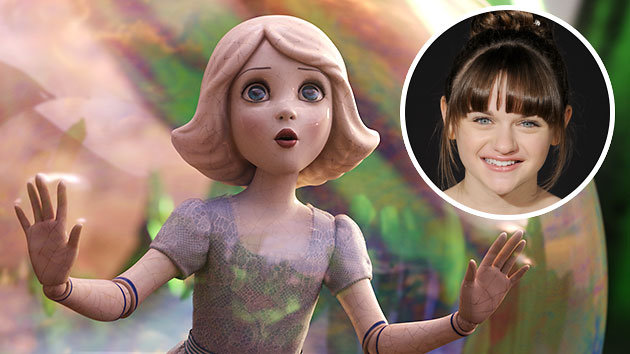
I loved Joey King in “Beezus and Ramona” and very much enjoyed her performance as China Girl and the girl in the wheelchair in “Oz the Great and Powerful,” which is out on DVD and Blu-Ray this week.  She talked to me about walking on the Yellow Brick Road and what it was like to play a girl made out of porcelain.

You played two different but parallel characters in this film.  How did you work on that?

I thought it was really cool that I got to play two different characters that were connected, like the original “Wizard of Oz,” where there was a connection between the characters in Kansas and the characters in Oz.  Sam was so great.  He really wanted me to bring my own perspective, flair, and personality to the roles.  Wheelchair girl was a little more vulnerable and sad and you don’t see much of her.  With China Girl, I didn’t want her just to be this delicate, fragile little creature.  I wanted her to have some sass and feistiness about her.  When you’re fragile like that, you need a little bit of that spice!

Did you get to work with the other actors or were you alone when you recorded your performance?china-girl-joey-king-jpg_005256

Zach Braff and me were in this little booth together and we got to read lines together and have the cameras on our faces so they could use that in the animation. But we got to be on the set and interact with the other actors more than you’d think, getting to act with them and too them.  They used motion capture to film our faces and get our reactions.  So we could be on set a lot of the time.  Sam really wanted us to interact with each other so we could get a nice clean performance.

The set looked really magical on screen.  What was it like in person?

Of course there is that blue screen and green screen part of it but they built so much of it.  The Emerald City set was amazing, the Yellow Brick Road, Porcelain Town, the forest — it was so beautiful and magical.  It was amazing — the castle!  I can’t even describe how beautiful it was.  Oh, my gosh, me and my mom got so excited when we walked on the Yellow Brick Road.  I was so privileged to be a part of that.

If you could bring one piece of the set home with you, what would it be?

At the end of the shoot, everyone got a little piece of the Yellow Brick Road, engraved with “Oz the Great and Powerful,” so that was really nice!

What made you decide that you wanted to act?

I was four when I started.  My older sisters were in acting and of course I wanted to be just like them!  We put on plays together and I did commercials.  It’s what I want to do for the rest of my life and I’ve always wanted to do it.  It’s my passion!

What was the biggest challenge?

To convey what the character is feeling  and the emotions through the voice alone.  You have to show the character is confused or scared or happy through your voice instead of with your face and body.

What’s the best advice you got about acting?

Never get it get to your head and always stay humble.  Don’t get discouraged from all the rejection.  You have to keep going and pursue your dreams.

And what do you want people to talk about when they see this movie?

The importance of friendship and staying close to people.  Family really matters — Oz creates his own family in this story.  And I want people to think it’s the most magical thing they’ve ever seen!


Related Tags:


Actors Interview

Interview: Nick Robinson of “The Kings of Summer” (and the Hilarious Cox Commercials)

Posted on June 9, 2013 at 3:59 pm

I love the hilarious Cox commercials, with Nick Robinson as the perpetually-humiliated teenager whose father thinks he is super-cool as he shows off all of the great features of Cox television, internet, and phone.  And I love “The Kings of Summer,” the hit independent film about three boys who run away and build a house in the woods.  He also appears on “Melissa and Joey” and is getting ready to go to college.  So I was especially pleased to get a chance to talk with Nick Robinson about the movie.

http://www.youtube.com/watch?v=zuLH6P2PE7I

It must have been really hot filming in the woods in the summer.

It was hot and it was the humidity that killed me.  But the natural beauty in Ohio made up for it.  The locations were amazing.  The best day was when we got to swim around in the quarry.

What made you want to play this role?

I fell in love with the sensibility of the script.  It really captured the experience of being 15, stuck in that weird no-man’s-land between childhood and adulthood.  It’s awkward, no one really knows how to treat you, you’re aware of the world and know all kinds of things but still have this childlike wonder and imagination and creativity.

It looked like you guys really were friends who had known each other forever.

It’s hard to fake chemistry.  Everything you saw on screen was very real.  Jordan Vogt-Roberts gave us improv training beforehand to let us get to know one another and get ready to go toe-to-toe with some of the funniest people on the planet.  Have of the film is improv.  Jordan would just take us out to the woods with the camera.  The pipe scene, where we’re all banging on the pipe, that was completely improvised.  They just said, “Go for it,” and we stared messing around.  The sound is just iPhone sound.

How do you keep a straight face acting opposite Nick Offerman, who plays your dad?

I don’t!  I ruined I don’t know how many takes.  It was intimidating when I first met him, but once you get to know him he’s a complete teddy bear.  Also, just one of the most talented and funniest people I’ve ever worked with.  He has that stonewall, straight-drive delivery and it just kills me.  I could hardly keep it together.  That was me biting my tongue to keep from laughing.

What did your character, Joe, and the other boys want to find when they went to the woods?

They really just wanted to be independent for once in their lives, to be free from their parents, who were overbearing or in Joe’s case downright mean sometimes, to be their own men and kind of find themselves and find their potential.  They wanted to live off the land free from any societal pressures and free from their parents especially.

But not free from Boston Market!

No, thank goodness!  Without Boston Market it would have been more like “Lord of the Flies.”

What would you bring if you were going to live in the woods?

A tent, a pocket-knife, and some matches or flint, just the essentials.  You can find water and food.

What’s the best advice you ever got about acting?

Acting’s not particularly complicated.  But the great thing is you can step into somebody else’s shoes without dealing with the consequences.  It’s very therapeutic in that way.

Related Tags:


Actors Interview

Interview: Steve Taravella, Author of a New Book about Mary Wickes

Posted on June 9, 2013 at 8:00 am

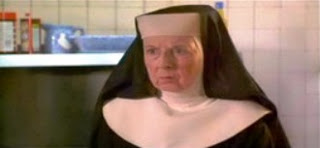
I love the great character actress Mary Wickes, who was the nun who was replaced by Whoopi Goldberg as choir director in “Sister Act,” the nurse who was “a treasure” opposite Bette Davis in “Now Voyager,” and the hotel staff who operated the switchboard in “White Christmas.”  And it was a very great pleasure to read the new biography about Wickes by Steve Taravella called Mary Wickes: I Know I’ve Seen That Face Before, the meticulously researched and beautifully written story of her life on and off camera.  As an actress, she had impeccable comic timing.  She appeared on Broadway, on radio, and on television as well as in the movies, appearing with some of Hollywood’s brightest stars.  Off-screen, she was for decades the closest friend of Lucille Ball.  Taravella generously took time to answer my questions about the book.wickes nun
How did you decide to write about Mary Wickes?

As a former journalist who likes researching people’s lives, I always thought I’d enjoy preparing a proper biography some day, though certainly I never had Mary in mind. When I found myself moving from San Francisco to Washington DC without a job lined up, I decided this was my opportunity to try. Since I’d often considered writing a magazine profile of Mary, I turned to her life first, to determine if it might be interesting enough to justify a book treatment. I mean, would readers find her life genuinely intriguing or was my interest in her unusual?  I quickly decided there was indeed a book in Mary’s story. It wasn’t generally known that she had been the original Mary Poppins, the animator’s model for Cruella de Vil, and a member of Orson Welles’ groundbreaking Mercury Theatre. There were interesting stories in each of these things – and many more, like her close friendship with Lucille Ball.

I began in spring of 1998, giving myself a year to research and write full-time. I was naïve to think I could finish this in a year. Twelve months became thirteen and, not wanting to incur debt to complete this, I returned to the workforce. My new job required frequent travel to the developing world – mostly Ethiopia, Kenya and South Africa, but also Uganda, India and other places – so the book lost some momentum.  I’d pull it out on vacation to work on a chapter here or there, but was far from done.  When I took a job with the UN in Italy four years ago, I decided that if I didn’t finish the book now, I’d never complete it, and I didn’t want all that effort to have been wasted. So my time in Rome became extraordinarily single-focused – not the typical ex-pat experience.mary wickes cover
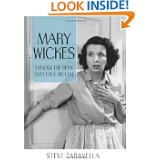
Your breadth and depth of research is remarkable.  What or who was toughest to track down?

Hardest to track down were former child stars, who often leave the business, form social circles outside the entertainment industry and, especially with women, build lives under different names. I had great trouble finding Anne Whitfield, who played a teenager in White Christmas and would have been the only surviving member of the film’s principle cast. Finally, after several hundred pages in a Google search, I found her name in a PDF of promotional materials for an “old radio days” festival in the Pacific Northwest in the 1980s. I tracked down the organizer of the event, who agreed to pass my contact information to her husband. When we finally spoke, Whitfield was very helpful. She long ago stopped performing, became a grandmother, and worked in environmental programs in Washington State under her new last name, Phillips.

One of the biggest stars quoted in the book keeps her personal address and phone number private. My requests to her public PO box went unanswered. Since I knew the city she lived in, I searched public records available online in hopes that her name would be recorded with her residential address somewhere. I discovered a recent permit approval for a home construction project under a name that jumped out at me – that of the actress’ long-deceased mother. Female stars of a certain generation sometimes used their mother’s name to preserve their privacy (just as Mary used her grandmother’s name (Mary Shannon) whenever she was hospitalized, and I recognized this name from the actress’ own memoir years before. I sent a letter by International DHL to this address, and received the reply I needed.

In the end, I interviewed almost 300 people. In some ways, I had an easier time than expected because people sort of figure, If he’s going to all this trouble about Mary Wickes, it’s got to be for a legitimate effort, and they agree to cooperate. If I’d been preparing, say, yet another biography of Elizabeth Taylor, I don’t think doors would have opened so easily.

What surprised you the most in what you found out?

That for her entire life, Mary knowingly kept a man in Ohio from learning that they were first cousins. Discovering this episode of her life was stunning. Even though Mary had very little family herself — she was an only child, as was her father, and her mother had only one sibling – she always professed great devotion to family ties and family history. Mary knew everything about this man, one of her only two cousins – yet he knew nothing of Mary Wickes until I reached out to him for this book after her death, showing him personal family papers of hers that were clearly about him. This was a powerful family secret for her, and a painful one for him, even in his 80s. For instance, his whole life, he was unable to learn where his mother was buried; meanwhile, Mary visited her gravesite often.

She appeared in one of her signature roles, the nurse in “The Man Who Came to Dinner,” on stage, film, TV and radio — which did she prefer and why?  Why was that role one of her favorites?

No doubt, she preferred the stage version. The Broadway run was her big break, gave her steady, high-profile work for almost two years, brought her to the attention of casting directors and pushed her into social circles she wouldn’t otherwise have been part of. It cemented her as a performer who could deliver – and it reassured her that she could in fact make it as an actress. She got one of the show’s longest, loudest laughs every night. On the other hand, a TV version 30 years later was a disappointment for all involved, even with Orson Welles as star and the Hallmark Hall of Fame people behind it.

What was the change made from the theatrical to film version for “taste” reasons?

We forget today the power that Hayes Office censors once had over film releases. In this case, the play’s central character – arrogant, abrasive and over-bearing – refers to Mary’s character, a nurse, as “Miss Bedpan.”  That was changed to “Miss Stomach Pump,” which censors felt would offend filmgoers less.

Mary Wickes worked with a range of top directors and actors.  Who did she admire most? 

She adored George S. Kaufman, the playwright who also directed her on stage often. The two of them developed a strong rapport; he didn’t just understand her comic gifts, he celebrated them. The director George Seaton (“Miracle on 34th Street”) was another favorite. Years later, she also really admired Mike Nichols, who directed her in “Postcards from the Edge” with Meryl Streep and Shirley MacLaine. Nichols won her over at the start by hiring her without asking for an audition or reading of any kind; this was during a particularly dry spell in her career, and she never forgot the gesture. As to performers, it’s hard to know who she most admired because Mary spoke so little about work. But she did on several occasions mention the respect she had for Bette Davis; no doubt Mary admired Davis’ directness on the set. They worked together in three films and one television show.

She was a close friend of Lucille Ball’s.  What made their friendship so enduring?wickes and ball
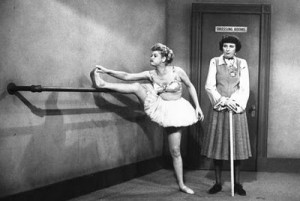
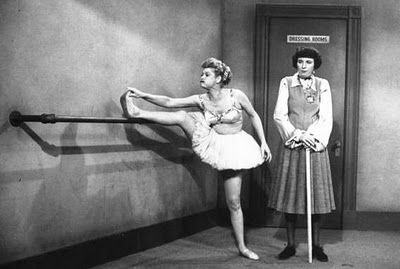
Yes, Mary was inarguably Lucille Ball’s best friend for some 30 years, and was virtually a member of the family. Both women were both bold and direct and a little ‘in-your-face.’  They both loved to laugh, and neither had much patience for ineptness. Because they started working about the same time (Mary was 14 months older), they had experiences in common. Lucy appeared in the film version of Stage Door, while Mary appeared in the original Broadway production, for which Lucy had auditioned.  They had deep affection for each other, evidenced by never-before-published letters that I excerpt in the book.

How did she get Cary Grant’s trunk?

An interesting story. In the 1930s, while Mary was a young amateur performer in St. Louis, an actor performing in a touring stage show there got a film contract offer and left quickly for Los Angeles. His name was Archie Leach and, when he left, he gave his theatrical costume trunk to a friend of Mary’s, Clifford Newdahl, who asked Mary’s family to store it for him when he entered World War II. It sat in their basement until after the war, when Newdahl decided he no longer needed it. So the trunk became Mary’s . . . and Leach, of course, became Cary Grant. Mary loved the trunk and made great use of it, like during her national tour of Oklahoma! in 1979.

What problem did she face on the set of “The Trouble With Angels?”

This was one of the few moments in her career where she let others down, and she no doubt agonized over it. Playing a nun at a Catholic girl’s school, she was to jump in a swimming pool in full habit to help two young girls flailing in the water. Mary had never learned to swim, so producers arranged for her to receive lessons at the YMCA in advance. The day of the shoot, without any warning to producer or director, Mary refused to enter the water, saying she was afraid she’d drown. In reality, she’d never showed up for the lessons that Columbia paid for – not out of fear of drowning, but out of fear that others would learn from her swimsuit and swollen arm that she had undergone a mastectomy. Mary went to great lengths to hide her breast cancer. So this consummate professional made a conscious decision to let her co-workers down rather than risk revealing her condition, since the production was now forced to hire a stuntman, incur additional costs and delay shooting. Both the cancer and the stigma surrounding it in the 1960s shaped many of her interactions with people later.

What role did her faith play in her life?

Mary’s faith was profoundly important to her. To her, church was not a place merely to spend Sunday mornings; it was the very center of her community. She was completely engaged in the life of her church (All Saints’ Episcopal Church in Beverly Hills, Calif.), serving on various committees, helping to organize special events, and even teaching Sunday School when in town. More than this, Mary put her faith into practice. She had a strong sense of service to others that was rooted in her faith. She was a longtime hospital volunteer in Los Angeles. She did not just providing comfort to patients, keep them company, arrange interpreters or assist the chaplain, but advocate on patient care issues to management. She spoke on public occasions about the importance of volunteerism and about her faith, often citing a verse from First Corinthians about having faith strong enough to move mountains not being enough without charity.

 

Related Tags:


Actors Books Great Characters Interview Writers

Interview: “The Nun Who Kissed Elvis” — Actress Turned Nun R.M. Delores Hart O.S.B.

Posted on June 8, 2013 at 4:35 pm

How could I throw away a promising acting career for the monastic life of a cloistered nun?

I left the world I knew in order to reenter it on a more profound level. Many people don’t understand the difference between a vocation and your own idea about something. A vocation is a call—one you don’t necessarily want. The only thing I ever wanted to be was an actress. But I was called by God.
Mother Prioress Dolores Hart in the Preface to The Ear of the Heart

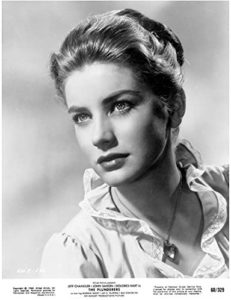
Delores Hart was one of the most successful young actresses of the early 1960’s.  She starred in ten movies, with directors like George Cukor and Michael Curtiz, co-starring with George Hamilton, Montgomery Clift, and Elvis Presley.  She appeared on Broadway and starred in the classic “Where the Boys Are.”  And then she walked away from Hollywood and her fiancé to become a nun, joining the Abbey of Regina Laudis in Connecticut, a community of contemplative Benedictine women dedicated to the praise of God through prayer and work. The nuns of the abbey chant the Mass and full Divine office each day, while expressing the traditional Benedictine commitment to manual work and scholarship through various contemporary media and professional disciplines. The mission to praise God at all times is symbolized by the lyre on the abbey’s crest and by our motto, taken from the book of Judith – Non recedat laus: “Let praise never cease!”

Last year, a documentary about her called “God is the Bigger Elvis” was nominated for an Oscar.  Now she has written a book about her life called The Ear of the Heart.  It was a great honor to speak with her about her life and her book, and I was deeply touched by her open-hearted generosity of spirit.  She speaks quietly, but she still has that lovely voice that was so captivating in her films.

She talked about how being in one place, with the same routine and the same people, can expand the spirit.  “You have to start with how one perceives the world, reality.  You can be in the same place, a place that is given for hospitality, for prayer, for finding God.  Change comes because there is a mentality of looking for something different that will interest them, that will be more real — a new bauble, a new place to eat.  But in a monastery, the continuity is such a blessing.  You are going to the same place every day, sitting with the same people. The changes are the inner light of a person’s experience.  The inner grasp of what life means.  Every day you meet a new dimension — it may be the same person but you meet a new aspect of them.”

She quoted St. Teresa, who said that “prayer is the light of love between persons.  God is love. Therefore, wherever you find God, you find the human experience of God. That’s why I carry my camera,” she said.  She wanted to bring back to the convent the place and people she saw on her travels.  She laughed when I asked her if nuns were funny.  “A sense of humor is the top-notch gift for nuns.  They always have a new take on something.  You don’t have to be ugly or mean or dirty to have a funny sense of humor.  The capacity to see the elements of humor in life itself.  Finding the humor in life itself is what is funny.”

She spoke very warmly of Elvis.  “I was 18 and he was 20 when we first worked together in “King Creole,” she said.  He had so many fans that they had to say inside the hotel.  He would take out the Gideon Bible and ask her what she thought about different passages.  After she decided to become a nun he called to tell her he supported her choice and he continued to send greetings to her through a mutual friend who wrote to her regularly.  “I did not have an in-depth relationship with him.  We were too young.  He wanted to be a really good actor.  He wanted to be like James Dean. But Colonel Parker wanted the moola.”  I told her of my fondness for the movie “Come to the Stable,” with Loretta Young and Celeste Holm as nuns.  She told me that movie is inspired by the true story behind her order, and that Celeste Holm came to speak at the convent not long before she died.

She studied with two of the greatest acting teachers of the 20th century, Sanford Meisner and Uta Hagen.  Their advice, to find the truth and be true to yourself, was important for acting and for life.

She was surprised and happy that people still know her films.  “It was like I was moving completely out of any relationship with the movies,” she said.  She never anticipated the technology — or the interest.  “The experience of living in a monastic community allows you to see that every single moment is all you’ve got.”

Related Tags:


Actors Books Interview

Interview: Rama Burshtein and Hadas Yaron of “Fill the Void”

Posted on June 3, 2013 at 2:23 pm

“Fill the Void” is an Israeli film with a rare, intimate, and very sympathetic portrayal of a very observant Orthodox Jewish community.  It is the story of a young woman, still in her teens, who is under pressure to marry the husband of her sister, who died in childbirth.  If this was an American movie, it would be about the girl’s rebellion.  But this is a far more complex, layered, sensitive exploration of the girl and her world, and therefore a much more fascinating  story.  The lead role is played by Hadas Yaron and the writer-director is an Orthodox woman born in America and raised in Israel, named Rama Burshtein.  We met at a hotel in Washington to talk about the movie.

What makes a good marriage?

RB: You’re good.  What makes a good marriage?  This is not a quite popular view I would say but I think it’s about defining men and women and knowing how they’re different.  Okay, this is how it works for me.  I need my husband to be a little bit more, for me to hold more, to hold that passion…to feel that sexiness.  This is what I need.  He needs to be a little more open and it’s me making that.  I have to make him want me.  Like especially if I’m like dominant and a strong person than I really have to work hard to make him more than me.  In a deeper way.  He’s got the stamina.  I know it is so not popular and some want to crucify me for saying that because it’s very not feminist to say.  For me, it’s only about being in love and being passionate so I don’t care about being equal.  I really care about really liking him for the rest of my life you know and really being attracted to him and that he’s going to be the center of my life.  It doesn’t mean I don’t do other things, I’m sitting here and yet when I ever, ever have to make a choice it will be him. It will always be him.

Okay, and what about you, Hadas?  What do you think makes a good marriage?

HY:Well, I’m not married.  It’s funny because I’ve been listening to Rama.  I have a boyfriend and the words you said really stayed in my head, the words you said to me about how God’s journey is planned in relationships and I really remember that.  The whole thing with two weeks of not touching and then two weeks of this and so holding it and bringing it back.  I remember I told him; maybe we can do that, like for one week to be a bride again after being separate.  I think it’s about being real with him and so that’s hard sometimes…to be really exposed and then feel that the other person really gets you.

One part of the most striking parts of the movie are these very structured “dates” where the couple essentially has just one meeting to decide if they can spend their lives together.  There’s this plate of cookies that no one ever touches.

RB:  No one ever touches it. You know if she asks her mother for more time, she will have more.  It’s about seeing if there’s chemistry and if you can go to the next date.  Actually, the first one is just to know if you can go to the next one.  And, by us we come and sit for three hours or four hours and some of that’s him being a man for the rest of my life and her being the woman for him for the rest of his life.  They’re both tuned in on it and the concentration is on that.  So, everything he says is very important and everything she says is critical and the concentration is so strong.  I got married like this.  When I sat with him for the first time every answer he gave was to tell me if he could be there for me forever or not.  It is amazing!  It’s so strong that when you decide to get married you actually nourish it from that first meeting for a long time.  Because like I said everything is there now it’s just puppy love but you felt everything there and you know what kind of home you can have.  How do you see life but in such a way you say that’s all I ever wanted, for him to really want me forever from the first time.  This is it!  This is what you want.

Did you intend the final scene of the film to be open to interpretation?

RB: The weird thing about this film is that people read it the way they read it.  Some people think her mother pressures her to marry her late sister’s husband, but the mother never pressured her.  She speaks to the father.  She speaks to the matchmaker.  The only time she speaks about it is when the mother and the father are in front of her telling her the offer and the father doesn’t want it.  We get the feeling that she’s pressured but there was not real pressure on her.  People really read into something that is not there.

I think she knew what her mother wanted.

RB: Wanted is not pressure.  Wanted is fine. For me it was really intentional that she will not pressure her, that she would keep her feelings to herself.  The mother is in sorrow.  She is mourning and she is trying to do her best and yet she does not really pressure.  The only one that she is a bit manipulative with is her husband, which is always what women do to their husbands.  She tells him “You have to ask her, I would die to go.”  This is what I believe.  I believe that everything at the end comes together and you see it in life.  There’s like a big plan because it’s really far out from what we want to feel.  It happens with feelings and emotions and then suddenly you are realizing things…it’s like combining with the big plan.  The big plan was for her to marry him.  Something had to be done…an offer had to be made.  The mother had to really push the father for everyone to actually get there.  First of all her husband is gorgeous and sexy…he’s there…he’s a man…why not?  In terms of the film of course.

And, then she’s beautiful and young and everything and all the complications and intentions are strong to say a true love story is not that complicated…and at that moment at the end where you don’t know what you’re feeling and you’re comfortable because it combines everything.  It’s easy for us to say just make it like a love scene.  It’s how you feel and wanting and not knowing where you’re going and the whole thing together …this is real.  It doesn’t mean it’s not about love.  It’s just a little different language, which is a true language because it is the way you experience it in your life.  Not Hollywood.

The last shot is a shot that says see the real thing…it’s real.  You can go all the way with everything in it.  Sometimes you use too many emotions and then the viewer doesn’t see all that.  They didn’t see the feel and they see the confusion.  They just went with her being excited towards that night.

So, how do you talk to Hadas about portraying all of that, without any lines of dialogue?

RB:  I think that when we did the film and we got prepared for it the one thing I knew is that it’s going to be a mixture of feelings of emotions and we were talking a lot about it…about trying to hold two different emotions together.  On the one hand you want that aand it’s not just doing that it’s just jumping from one emotion to another.  Right?  We talked a lot about that.  For me, this is being Jewish.  A good example for that is when I just got into the religion a friend of mine was about to marry her eldest son in the evening and in the morning her mother passed away very suddenly.  So, about 12 o’clock in the afternoon we buried her mom and then 7 o’clock that night her son got married.  And, I was looking at her because she was just for the ceremony then she had to go but, that moment he got married she was there, she was happy and like a few hours ago she was really sad because her mom in a very surprising way just passed away.  And, looking at that and looking at her, you think this is incredible…you can just jump from those feelings.  This is from me being Jewish…really this is Judaism to be able to hold two things together.

And, what do you want people to take away from the film?

HY: I guess it’s just about being real.  That’s something I learned.  It’s the most difficult place to get to…like the most real, deepest, and the best place to be.


Related Tags:


Actors Directors Interview Writers
THE MOVIE MOM® is a registered trademark of Nell Minow. Use of the mark without express consent from Nell Minow constitutes trademark infringement and unfair competition in violation of federal and state laws. All material © Nell Minow 1995-2026, all rights reserved, and no use or republication is permitted without explicit permission. This site hosts Nell Minow’s Movie Mom® archive, with material that originally appeared on Yahoo! Movies, Beliefnet, and other sources. Much of her new material can be found at Rogerebert.com, Huffington Post, and WheretoWatch. Her books include The Movie Mom’s Guide to Family Movies and 101 Must-See Movie Moments, and she can be heard each week on radio stations across the country.

Website Designed by Max LaZebnik