MVPs of the Month: Charlize Theron and “Anyway You Want It”
Posted on June 8, 2012 at 8:00 am
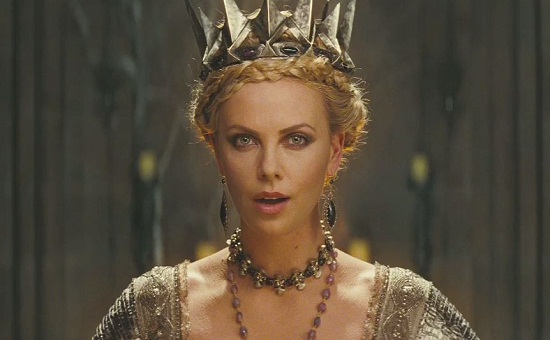
Oscar-winner Charlize Theron is the most valuable performer of the month with back-to-back releases. In Snow White and the Huntsman, she plays the evil queen who wants to eat the heroine’s heart. And in “Prometheus,” she plays the determined and highly authoritative person in charge of the eponymous spaceship and its mission to find the origins of life on earth.
And we have a song MVP this week, too, Journey’s “Anyway You Want It.” It appears in today’s release of “Madagascar 3: Europe’s Most Wanted” and in next week’s tribute to the 80’s, a decade of stadium rock and big, big hair, “Rock of Ages.” We’ll try to overlook the fact that it is also featured in State Farm’s current television commercials.
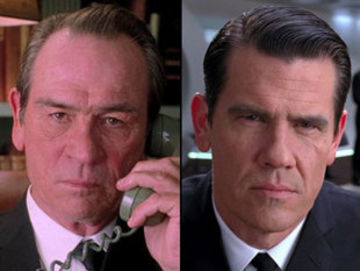
The Daily Beast was inspired by Josh Brolin’s spot on performance as the 1969-era version of the character played by Tommy Lee Jones in “Men in Black 3” to create a gallery of movies with two actors playing younger and older versions of the same character. The most acclaimed are Robert De Niro and Marlon Brando as Don Corleone in the first and second Godfather movies. I liked Ewan McGregor in Star Wars: The Prequel Trilogy but was never convinced he was the same character played by Alec Guiness in The Original Trilogy. The one who comes closest to Brolin’s feat in replicating the older actor’s vocal patterns and movement was Rob Lowe, who nailed the young Robert Wagner in Goldmember.
It’s a cheat, but my favorite example is Peter O’Toole, who played the same historical character, the British King Henry II in 1964’s Becket and The Lion in Winter.
“A Buddy Story” is an endearing road trip movie written and directed by Marc Erlbaum. It is the story of a touring musician who is used to being alone and his neighbor who impulsively comes with him. The neighbor is played by “Mad Men’s” Elisabeth Moss and the musician is played by real-life musician and actor Gavin Bellour who talked to me about preparing for the role and what he learned. The movie also features real-life reggae star Matisyahu and is now available on iTunes.
How did you come to play this part?
I saw the breakdown and it was something I was really interested in — singer/songwriter, story of love, pursuit of one’s dreams — and the opportunity to do some music. There was not a completed script yet so it was great that I could contribute to helping shape the character and put more of myself into it, blur the lines a bit between Buddy and Gavin. The perception of acting is that it is all a put-on and in a sense it is but any truly good performance is going to bring as much of the actor to it. You can only draw from your experiences. Two amazing actors can read the same role and give amazing performances but each one of them will bring what’s best about them and what they have experienced. Casting can be like putting together the pieces of a puzzle.
What experiences did you bring?
I’ve been in bands and I’ve been on the van. I’ve been on the road, playing shows t for tons of people, one night for nobody where you booked the wrong thing or didn’t promote it right and nobody knows you’re there. I’ve lived in that world, where one night you’re opening for someone you really , so to take that experience of going back to the hotel room and having someone you can go out with and joke with and share it with. It can be incredibly fun sometimes when you have a great show and a great location but it can also have enormous lows as well as highs. Buddy was this poor guy demonstrating his belief in himself and what he did but being alone all the time. I like to read the lines and see what the scene brings and not overthink it. The script was written well enough and the environment and truth of the scenes was so real it was a very fun kind of project to work on. I brought my own experience and twisted in a way to make it more like Buddy. A bit more neurotic here, more shyness to make it more Buddy and less Gavin, and almost an element of desperation that I love about Buddy. He’s willing to do whatever just because he wants to keep playing.
Tell me about working with Marc Erlbaum.
He’s very hands-off, but he is there when you need him. He doesn’t do line readings, which I like a lot. He is a very deep guy, very spiritual. People sometimes exude that and it’s a bit of a put-on and they have to try to be serious but he has a rootedness that allows him to be very playful, and he brings a lot of joy with his depth. One day after I had to go to LA and was stressed out and I had to do the monologue and was under a lot of pressure because we had to finish before the light changed, and we were shooting things out of sequence and I snapped a little bit and just lost it. I was having a hard time wrapping my head around the whole thing but he made it he took me aside and took the responsiblity off of me and told me to just be in the scene. He allowed me to be in that moment and do what was in front of me and it made it tremendously easier to make a mistake — and when you’re not worried about it you don’t really make them, you know?
What does Buddy learn?
I think of that scene with him and Matisyahu. He likes doing what he is doing but he wasn’t really helping anyone. He has a dark night of the soul. But when he realizes he did help one person, that helps him to understand that if he inspired someone else he does have an impact and that inspires him to reconnect with his dreams. He did have some power — even if it is small, it is impactful, and sometimes that is the most important.
This week’s Most Valuable Performer is clearly Sports Illustrated Swimsuit model Brooklyn Decker, who stars in two big nationwide releases. In “Battleship,” she plays the hero’s plucky and supportive love interest and in “What to Expect When You’re Expecting” she is the movie’s high point and comic relief as the much-younger wife of a very competitive former NASCAR champion played by Dennis Quaid.
Interview: Oscar-winner Louis Gossett, Jr., Star of “Smitty”
Posted on May 15, 2012 at 8:00 am
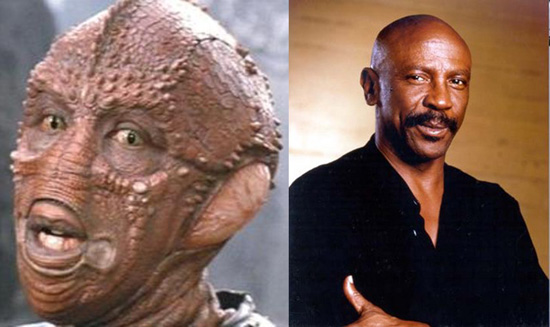
It was a great thrill and an honor to speak with Oscar-winner Louis Gossett, Jr., star of “An Officer and a Gentleman,” about his new movie, “Smitty.” He talked to me about starring in the original Broadway production of “A Raisin in the Sun” when he was still a teenager, about studying at the legendary Actor’s Studio with Marilyn Monroe (and what she smelled like), and about the trick he played on the medical assistant who came to treat his skin rash on “Enemy Mine.”
I’m such a big fan, and before we talk about this movie, I have to talk to you about one of my favorites, “Enemy Mine.”
Copyright 1985 20th Century Fox
Gurgling sound — the “Drac voice”
Oh you’re doing your lines! That’s wonderful. I love that movie and your performance is amazing, that must have been an incredible challenge because you were covered in the lizard alien make-up.
Before Wolfgang Petersen took over and we were in Vestmannaeyjar, Iceland with Richard Loncraine directing, after about the first couple of weeks, there was a little rash happening because of the make-up, right up to my ear, and they were going to get some salve or something to put on it, because they have to rub the stuff off with the spirit gum. It was harder to get something than they thought because we were in the isolated area where the volcano is. So, they can’t find a skin doctor in Iceland, so they finally found a lady, she’s a freshman, and she’s just studying anatomy, and they call her and have to helicopter her from Reykjavik to this place. So you see this young, impressionable young lady with her little small purse, scared to death, in my dressing room. And I come out with the make-up on, and I say, “Hi, Doc, I’m the one with the skin problem…” She ran for her life!
All the way back to Reykjavik! It is one of my favorite movies and it’s such a touching story. A lot had to happen with the eyes and you really made it happen.
Very challenging. That’s why I took it, because it was a challenge. There’s a lot of Jerry in me.
Speaking of challenges, I understand that there are two rules about acting: no children, no dogs. And yet in this movie…
Here I am.
There you are, so tell me a little bit about it.
I love children and I love dogs, so it’s okay. We hit it off, I like the kid a lot. I was there to help him be better, and he took it.
Well, you got started very young, too, didn’t you?
Started at 17 in the theater, still in high-school. There was a blacklist scare, it happened to the actors and it happened all across America and the intellectual cream of the crop ran from the universities and they changed their names and they settled in my neighborhood and others. As a result, all the Barbara Streisands and the Arthur Millers and the Neil Simons and the Harvey Keitels, and the Neil Diamonds, and Jackie Robinson and all of us, we got the benefit of those intellectual teachers. One of those teachers, who ran from the theater, who knew the trades, was saying, “They’re looking for somebody to play this lead in this Broadway show, I know you have never seen a play, but, tell your mother to take you down there Sunday, what could you lose?” And that’s how I got the part.
Wow, that was “Raisin in the Sun?”
No, that was “Take a Giant Step” in 1953. Then I was in “Raisin in the Sun.”
That’s one of my all-time favorite plays, I’m a big Lorraine Hansberry fan, I also like “The Sign in Sidney Brustein’s Window” and of course, “To Be Young, Gifted, and Black.”
During that particular time, they called her one of those rebels, and they figured she was a communist, so she had to run and write. Now, she’s just part of society.
Isn’t that the way that it always goes with artists? They’re perceived as destabilizing and subversive and then they become canon.
Right, they become part of America, that’s what America stands for.
You got started as a professional actor very young. Who were your great teachers?
My teachers were of course Paul Robeson and Josephine Baker, whom I didn’t know but who inspired me. My immediate teacher was Frederic O’Neil, the first black president of Actor’s Equity, and Estelle Hemsley and Estelle Devans, and Maxine Sullivan, who was a singer—and then of course among my immediate teachers was the late Peggy Fury, who was married to the writer Lou Peterson, he was black and she was white and she married him because he was brilliant, and she turned out to be the best teacher for Lee Strasburg, who started in the Actor’s Studio with her and all of her contemporaries. The first people who so honored me to teach me were Lou Peterson, Peggy Fury, Maureen Stapleton, John Stix, Frank Corsaro, and my main teacher was a man by the name of Frank Silvera. Frank was one of the few blacks in the actor studios, but he always played Italians and Greeks, he was in “Viva Zapata!” playing Huerta, he was in the Appaloosa, he was a great actor. And after that he created the American Theatre of Being. He was my main teacher.
Those are all method actors, aren’t they?
Yes. So I went to New York University—but at the Actor’s Studio, I was the kid at the back of the room. In the front of the room was Sydney Poitier, but there was Brando and Anthony Quinn and Lee J. Cobb and Nehemiah Persoff, I remember. I remember all of those great actors and actresses that I rubbed elbows with, Julie Harris, Lee Grant, and of course, the late Marilyn Monroe when she was married to Arthur Miller. She smelled like Lifebuoy soap. She took a liking to me, came in with her husband’s oxford shirt tied at the waist, with some jeans and some flip-flops, preceded by this aroma. I’d come in the room and she’d be going, “Where’s Lou?” I couldn’t do any scenes with her, she was just one of the most sexiest, most wonderful women I’ve ever met. I almost had to quit the class because of her. If she had stayed with Arthur Miller she would’ve had Oscars and Tonys and everything else. That’s how natural she was. She wasn’t Marilyn Monroe there, she was Norma Jean.
Do you have a favorite of her performances?
“River of No Return .and of course, I loved “The Misfits.”
What was your first film?
My first film was done in Africa, called “The Bush Baby,” during the time when Jomo Kenyatta was the president, and it was the year of the first national television network, and they imported films from England and America and at the time, the television and movie industry was in New York, so that there was of course, “I Love Lucy,” “Honeymooners,” and of course there was “Judd for the Defense,” and then there was “The Nurses.” When I did an episode of “The Nurses,” I played a juvenile delinquent. I was shot in the stomach and at the end of the movie I ran, the stitches broke and I died. So fade out, fade in, here I’m landing in Nairobi airport and I feel like a pied piper with people following me all over the place. So, I finally get to the Nairobi Hilton, and finally a brave young man comes up to me, “Would you please excuse me, sir,” I said, “of course, why?” He said, “Will you open your shirt?” And I said, “Why?” So I open my shirt and they started speaking in Swahili, and the translator says, “They want to know how you did that. How did you come back to life? We saw you die!”
Copyright 2012 TruCoast
What led you to take on this role in “Smitty”?
It’s a feel-good movie. I’m not offered any of the big ones for some reasons, but I take the job and I have to pick and choose, and sometimes those low-budget movies are better. Now they’re getting better, they’re not spending as much money and they’re getting into the quality of the movie rather than the money.
I saw “The Grace Card” also, I thought that was a very nice movie.
That’s a faith-based movie, but it speaks volumes.
What is it that you think families who see this movie should learn from it or take from it?
To be responsible for our children. More responsible than the media. To give them what they’re asking for, but they don’t know how to ask. Sometimes they go crazy trying to get our attention, it’s like a child in a high-chair in the kitchen with the food on the tray, and the momma’s on the phone talking about anything and all of a sudden, the child pushes the food on the floor. The child wants some attention. These children want some attention, and that kind of leads me to the subject of my foundation.
It’s called the Eracism foundation. I think the anatomy of the gang-banger and the young rebel is because we don’t get those lessons that we used to get in the family, they don’t get them; and they’re left to the recourses of television and themselves, and they make immature decisions. But we step in and teach them those lessons, their self-respect, their pride, their dress code, their respect for the elders and the knowledge of their culture, respect for the opposite sex, their hygiene, their disciplines, what they’re asking for. It doesn’t sound like it, but they’re asking for it. Then they go out the door and they have something to use to combat the evils of the streets and the public. By the time they get to school, there are more ladies and gentleman ready to learn. And the results of those kinds of children who have had it, like the Magic Johnson’s, they have to go through turmoil but they come out better, as opposed to the Daryl Strawberries who didn’t, but he’s also getting better. There’s a difference in the child, they’ve got that family support and learning those lessons, they can seek a higher knowledge. Our president is one of those people who did get that full family support.Our responsibility to give those children that, if we don’t know it, we send them some place where they can get it…supplying that compass.
What are you doing now?
I’m trying to get the first center built, and seven or eight mayors want me to start a center, so we’re talking to them. I’m setting up a state-of-the-art place where the kids can learn their physical fitness, spirituality, whatever you choose, but you need it, you need a dress code, your pride, why you’re important and why there are certain things about the law, certain respects for the elders and the opposite sex, the ladies and gentleman creation, the physical fitness, all of those things, apart outside from school, is what they learn hopefully, and when they come out of there and go into the workplace, and grow to be 18, 19, 20, 21 to be responsible adults, that’s their foundation. So if you do that to that generation, starting at about seven or eight years old, but the time they get to be responsible, even the issues of Congress and the things you read in the politics becomes a different thing. You’ve got more compassion for one another and your decisions are different, That’s what America should be about, and that’s what it originally wanted to be about, and to give kids that responsibility. Racism is a cancer, it comes from the old days, and things change and things are evolved and America looked differently from what we see on television these days. I take a lesson from Nelson Mandela, if anyone has a reason to go get revenge, it would be him, for he had a chance to go in there or either suffer or evolve, and he evolved, and as a result, South Africa is one of the greatest countries of the world.


 movies. I liked Ewan McGregor in
  but was never convinced he was the same character played by Alec Guiness in
  . The one who comes closest to Brolin’s feat in replicating the older actor’s vocal patterns and movement was Rob Lowe, who nailed the young Robert Wagner in
  .
. and
and  .
.