It was an honor to speak with show business legend Della Reese, who stars in the the heartwarming film, Me Again, the story of an unhappy minister who gets to find out what it is like to be someone else, and learns to appreciate being himself. Earlier I spoke to Ali Landry, who plays the minister’s wife.
How did you come to this project?
The script was submitted to me and it gave me a chance to be involved with something I espouse. It’s done in movie form but we’re all trying to regain ourselves and prove who we really are. That’s how you get to know who you are by identifying who you are not.
Why do stories touch us so deeply?
The Bible is an allegory. The stories say to us, “These things have happened before” and “With the proper understanding of your relationship with God, you can handle anything.” The Bible is my directions, a how-to book for me. Depends what valley I’m in or what mountain I’m on. There’s healing in the Bible. You have to find the one that speaks to you. The lady who touched the hem of his garment knew she did not want to be what she was. The man was sitting by the pool and could not get in the healing water. The nice thing about a direction book is there’s different directions for different people and everyone can find what he needs.
What is your character’s role in the film?
She is giving him love and understanding. She is the bridge over troubled water to him. She understands him and she wants what is best for him.
You have succeeded in every aspect of show business. When your fans come up to greet you, what do most of them talk about first?
All of them! People come to bring me love and I am receptive to them. It’s really a love affair between my audience and I.
In a way, you are a performer as a member of the clergy, too. Is that a different way of reaching people with the same message?
If you’re open to being reached, anything can reach you. There’s a little girl at the church and her mother has been taking classes and straightening out her life. But one day she was nervous and too involved and her six-year-old daughter said, “Why don’t you stop and sing something and you’ll feel better?” And she did. If you are open, the message will come. God supplies everything you need if you will be consciously aware of him. You can learn to do it.
The clergy’s job is to tell the truth. God doesn’t need fixing. He isn’t broken. We need to speak it in a way that people understand it so they can apply it and benefit from it. It’s not what I want them to get. Whatever part you need it is there for you.
You began as a singer. Why is music so important in church?
Music is important to our lives – the way we can speak the things we can’t speak without the music. Some people can’t say they’re in love but there’s a song that says it, some happiness you want to share, some music that’s good for you. You can just hum or stnap your fingers. Music is a great force in our lives. The first songs I sang were part of the church service. And I love all of the people who write music that says something. I’m not too much for only the rhythm and repetitiousness, I’m a lyricist, so I like lyrics. It all comes down to telling the story.
Interview: Genie Francis of “Notes from the Heart Healer”
Posted on May 7, 2012 at 8:00 am
Genie Francis co-stars in “Notes from the Heart Healer,” the third installment in Hallmark’s popular series about the mid-life romance of an advice columnist named Peyton and a sportswriter named King. It will be on the Hallmark Channel Saturday May 12 8/7c & 10/9c and Sunday May 13 12/11c & 8/7c. Francis became an international phenomenon as Laura on “General Hospital.” The Luke and Laura wedding was the highest rated soap episodes in history with 30 million viewers. I talked with her about her chemistry with co-star Ted McGinley, working with directors, and why audiences feel such a connection to the “Notes” love story.
Was it a big change to move from soap opera to a made-for-TV movie?
Most of my work was in a three camera show, but I’ve also worked on stage and in film, so I am comfortable with one camera films. But it’s not like breathing to me as three camera is—I’m as comfortable as that as I am in my living room sofa.
What makes this story so popular with audiences?
Hallmark has an older audience and a lot of older people would love to believe they could have a second chance at love. It’s a really big and powerful message. It’s a romance that is slowly built. They were working in the same place for five years. They noticed each other right away but didn’t act on it for five years. It’s a sweet love story that’s mid-life and their love for each other makes them young again.
What happens in this third chapter?
Peyton has a baby dropped at her doorstep and it brings up all of her guilt and unresolved issues about the baby she did not raise, even though her daughter did come back in her life. She first thinks she is not worthy and then realizes she can do this and wants to do this and she gets to see King as a father. And they both start to fall in love with the baby. It causes an issue in the marriage.
Ted told me he was very impressed by how well you were able to respond to direction because you have such control over your performance.
I take notes well because I don’t cling to my way. I have an idea of how I want to do something but I come to the set very malleable, not overly investing in doing things my way. That way I can bring what good I’ve brought and they can take me a bit further. I welcome it. The people who have taught me the most about acting were Denise Alexander and Tony Geary on “General Hospital” and my acting teachers, Michael Howard and Bill Esper.
How old were you when you started acting?
I was 14. The first thing I did was “Family,” a two-part episode with Kristy McNichol. Then three months laeter I got “General Hospital.” “Family” came back and wanted me again but by then I was already booked. “General Hospital” told me that they were using me to catch the young audience. We were on at a time when kids could see us after school. They get to live with the character every day for an hour so they get very invested in you. The character gets delved into more deeply because there’s so much time to fill. You are a permanent fixture, on every day. And the character of Laura was really based on my own need to be loved, to find someone to love me, and that was pretty strong for an ingénue. Luke and Laura – the audience really believed that when you put these two people together they were better off than they were before. She wasn’t lonely and sad, he wasn’t in the Mafia. Their union makes each of them whole and better in a new way.
It’s the same thing with Peyton and King – can two older people really have a chance at a happy love life?
How did you like filming in Victoria?
It’s a beautiful part of the world and I really enjoyed being there. My daughter came and we went whale watching. We saw so many whales, many of them jumping out of the water. I ziplined through the forest with my daughter. I am half Canadian and I am seriously considering reclaiming those Canadian roots.
Is your mom a heart healer? Hallmark Channel is looking for inspirational, poignant or funny stories about moms who have healed a heart. Post your tributes to Facebook.com/hallmarkchannel #HeartHealer #HallmarkChannelCountdown
Interview: Ted McGinley of “Notes from the Heart Healer”
Posted on May 3, 2012 at 8:00 am
Ted McGinley talked to me about re-teaming with Genie Francis for the third in the Hallmark series of films about an advice columnist known as “The Heart Healer.” In The Note, Peyton (Francis) discovers a note she thinks is from someone who was killed in a plane crash. Struggling with her own grief, including the loss of her husband, she tries to find the intended recipient of the note. The movie was Hallmark’s top rated for 2007 and led to a sequel, The Note II: Taking a Chance on Love, which brings Peyton closer to writer King (McGinley). Now in chapter three, “Notes from the Heart Healer,” the couple care for an abandoned baby. McGinley spoke to me about what he likes best about his co-star, filming in Victoria, Canada, and about his first real acting job replacing the star of the top television series of the decade. It will be on the Hallmark Channel Saturday May 12 8/7c & 10/9c and Sunday May 13 12/11c & 8/7c.
How does it feel to come back to this story and these characters?
I was excited to revisit it myself. First, to work opposite Genie is fantastic. We have a strange chemistry. Like an old glove, we just fit into each other. I loved this script, the best of the three. And every time we do these movies we go somewhere. It’s like an adventure. King’s a nice guy to put on, a nice guy to hang out with.
What is it like to work with Genie Francis?
She’s so skilled that you could lay out a deck of cards and read through all 52 as quickly as possible and have her read it back to you. She’s that sharp. She’s just a very open soul. That’s what she has in common with her character. When she first started doing this she had done the soap and had not had much experience with single-camera filming, but now she can move into this different formula. She is like silk when she works, so smooth. She is so in control of her emotions and how she uses them. I like her because she is very giving and very honest. The chemistry is good and it’s a fun place to be.
And what is it that draws people into these characters?
It’s a great story. I think the shame is that it is not a week to week series — Hallmark should make it a show you could sit down to watch with your family and get a heartwarming story every week, like “Touched by an Angel.” We are all touched by the fantasy of “what if.” Peyton reaches out through the newspaper to uncover stories. Each one is a fun little fantasy and it’s okay by the end. All you have to do is read the newspaper and there are 20 stories every morning that you could write an episode around. The first one was such a fun journey and very well done. The second one was not as well thought out. The third is the best. The relationship between King and Peyton is so strong, like she’s the dock he is heading for. The story is compelling and the guest cast is amazing. It felt like a little piece of magic up there.
Tell me about playing King.
King had a family previous to this and was addicted to his work. He just got old enough to realize that just having work and being successful at work and being a Pulitzer prize winner doesn’t do anything for your soul. You have to have a more well-rounded life. He lost his marriage and ruined his relationship with his son. He had climbed into this cave and was trying to do his work but had lost the passion of his life. He had blinders on. When he ran into Peyton, she had been in her own cave to protect herself and felt guilty. They were two wounded warriors who worked near each other but never knew each other, so it is a very healing process as they come together. He’s an easy person to be around. Not highly judgmental. I’m a sports fanatic and he is a sports writer but we never delve into that. All of that has to be in his background. Sometimes there are characters that are fun because they are nasty and shoot people but some are fun and comfortable and easy to get into, and that’s King; he’s a trustworthy, reliable, decent, smart character.
This chapter adds some new characters.
Laci J. Mailey stole the movie, just phenomenal, as the baby’s mother. The twins who took turns playing the baby were so great. When I’m away I miss my family so much and it was so great to have these babies to hang onto.
Where was it filmed?
Victoria. I spent half my time looking for places to live if I didn’t live where I do now. We were in Brentwood Victoria, and it is just spectacular. It is one of the great family vacation spots. You can do 50 different things almost every day, watch the planes come in and land on the water, whales, museums, the Community Gardens.
How did you decide to pursue acting?
I was playing water polo at USC, and a girlfriend told me I should do some modeling. I didn’t know what that was. I started modeling and someone was there casting a movie called “Valentine” with Jack Albertson and Mary Martin and they needed a guy to run on the beach. It was supposed to be a one-day deal and they paid my modeling fee. It rained for 13 straight days and I ended up being the 3rd highest paid, because they had to pay me for all those days. I spent 13 days hanging out with Jack Albertson and watching him. This is a fun job, and exciting job. I still thought I was going to go into commercial real estate or having my own advertising company. But this kept tugging at me and I ended up on “Happy Days” while I was still doing commercials, without any training. I had on-the-job training — with the Fonz. Ron Howard left because they wouldn’t let him direct, so I call it “the Chachi years.” It was a great learning ground. I made a lot of mistakes, publicly, coming from being very successful in polo to being a beginner. I’m never the guy who got in for the attention; I still don’t like getting up in front of a crowd. In some ways Roger on “Happy Days” was my most challenging role because I didn’t have a clue what I was doing. I didn’t know timing, rhythms. I played a murderer/rapist in a TV movie and that was very challenging. But there’s always a couple of moments in every show — the key is to find those moments and allow them to be challenging. There’s a lot of jobs you can’t say no to, and you say, how am I going to do this, to get through those kinds of scripts and live with yourself.
What are some of your family’s favorite movies to watch together?
“Kicking and Screaming,” the soccer movie with Will Ferrell — we love that as family. My house is that house that all the kids go to. We still howl laughing at it. On the way to a soccer tournament, we’ll watch it, too. And “Elf” — it’s fun when you watch it with a group of teenagers and watch them laugh hysterically. That’s the best.
STAY TUNED FOR AN INTERVIEW WITH MCGINLEY’S CO-STAR, GENIE FRANCIS, COMING NEXT WEEK.
Is your mom a heart healer? Hallmark Channel is looking for inspirational, poignant or funny stories about moms who have healed a heart. Post your tributes to Facebook.com/hallmarkchannel
Michael Madsen is a favorite actor of writer/director Quentin Tarantino (Reservoir Dogs, Kill Bill: Volume One). He appeared in Thelma & Louise and on the television series “24.” And he is a published poet, about to release his second collection. I had a wonderful time talking to him about growing up in Chicago, meeting his idols, and the two movies he just made back to back. In “Loosies” he plays a cop chasing a pickpocket played by writer/director Peter Facinelli of “Twilight.” And “Infected” is about the spread of a deadly Lyme disease-like virus.
Copyright 2012 IFC Films
We both grew up in Chicago — do you get back there often?
Well my father still lives in Chicago. He’s a retired fire-fighter. He was a Chicago fireman for thirty years…and he made lieutenant and he retired, so I go once in a while to visit him.
As an actor, you are especially good at the quiet moments, at listening and at waiting. Is that something that comes naturally or are you very conscious of it?
I think what it is, is that I don’t know. If I knew what it was, I might not be able to do it. I don’t think it’s an actable quality. I just think it’s something that is or isn’t. I can tell you that when I was a kid, I noticed that in Steve McQueen, and I read a lot of books about Steve, and I know he used to cut a lot of dialogue out of his movie scripts because he didn’t like to talk a lot. And I noticed that in Robert Mitchum. I met Mitchum and I know he was very much like that in real life. Humphrey Bogart had that. I don’t know, but I consider it a compliment.
You remind me of Mitchum. What was it like to meet him?
Well, he was making a picture with my sister, he was doing that Hearst and Davies thing in Toronto, and I really wanted to meet him, because he made this movie called Heaven Knows Mr. Allison directed by John Huston, with Deborah Kerr, he played a marine that gets washed up on an island.
And she’s a nun.
I don’t know, his performance in that movie is about—I would say—75% responsible for my even fantasizing about being a film actor. And I had always wanted to meet him because of that movie, and I actually went to Toronto under the guise of visiting my sister, but the real reason I went is because I wanted to meet Robert. And so, you know, there he was, eating breakfast and he was sitting there eating his waffles, and my sister brought me over and introduced me, and I sat down—and he kept eating… and he didn’t even look up at me! And I was sitting there thinking, “Well, ok, that’s it,” and I was just starting to get up to leave and I suddenly heard him say, “What are you going to do with yourself, son?” And I realized, he was actually talking to me, and I sat back down and I looked at him and I said like an idiot of all the things in the world I could’ve said, I said, “Oh well, I was thinking about…I’m an auto-mechanic and I’ve been doing a few things here and there, but I’m working on a film-career. I was thinking maybe I could make it as a film actor.” And he put his fork down, put his knife on the plate, and he looked up at me and leaned forward and he said, ‘Why?” It was kind of funny, I started laughing. It was just so ironic that he was so much the way that the character that he plays—he really was like that! And we had a good laugh about it, and I’m just glad that I got to meet him that day.
Oh, he was good. He was really nice to me. I asked him if he had any advice for me, and he said, “Yeah…Smirnoff!” Ok, alright. And he goes, “Forget about all that working out stuff, don’t start trying to turn yourself into Hercules, just get a padded jacket.”
Tell me about the characters that you played in “Loosies” and “Infected.”
I did “Loosies” because of the kid Peter Facinelli, from Twilight. He wrote the part for me, and when I met him he was such a great kid, I couldn’t turn it down. I mean, I’m a New York detective, and he plays a pickpocket, and he gets my gold shield, and he’s running around New York with a gold shield, and kind of making a fool out of me in the newspapers, because I’m the pretty big-time New York detective. So, I’m basically chasing him throughout the movie trying to get my shield back. Vincent Gallo is in the movie, and he’s a great, great kid, a good actor, and it was great to have him on the set and Michael Corrente directed it and we shot in Rhode Island. The fact that he wrote the role for me, and I’m not a villain in the picture — it worked out pretty good and I ended up making “Infected,” another film for the same production company.
Well, it’s a first-time director, Glenn Ciano, and Quentin Tarantino was a first-time director, and a lot of times, they don’t want you to get involved in movies with first-time directors because you never know, but if you don’t give somebody a chance, you’re never going to know. Like if I had turned down “Reservoir Dogs” because Quentin was a first-time director…you know, that would’ve been a big mistake. And so, it taught me a lesson. You never know the way that these things are going to go, and Glenn Ciano, it was his first shot…and I had never done a horror picture before and it was a horror genre of movie about a family that goes off into the woods and stay in a cabin and everybody gets this crazy Lyme disease that turns everybody into cannibals. I end up having to shotgun everybody with a Winchester pump.
Oh my gosh!
Yeah. It sounded exciting and I wanted to give Glenn a shot as a first time director, and it was the same production company that produced “Loosies,” and so there was no reason not to do it.
And plus you get to shoot everybody!
Yeah, plus I get the pump. It was a nice gun, it was an older shotgun, it was really a highly effective weapon, let’s put it that way. I don’t know if you saw Vice, but there was some shotgun action in that movie—it was my idea—I rewrote the whole beginning, I rewrote the whole ending of that movie. I like shotguns.
Would you like to write an entire screen play? Would you like to direct?
Well, I’m going to do a movie with a woman director, her name is Heather Ferreira. She used to work with Quentin a few years ago, and we’re doing a picture in New York City, it’s called “The Little Matchstick Boy,” and it’s about a Vietnam vet, and I’m excited. I’ve wanted to work with a woman director, I think it really kind of changes things up a little bit. I’m looking at stuff all the time, now, for directing and producing. I produced “Vice,” and you know, most people can write it off as a B-genre movie, but if you really watch it closely with attention to boot, maybe watch it twice…there’s a lot going on in that movie. There are a lot of subliminal, subtle things that are happening in that film that could easily be not recognized because it wasn’t theatrically released. I was really involved in locations, I wrote and rewrote the beginning and the ending, I cast the whole thing. Getting involved in all this other stuff, just besides playing a character—it makes it a lot more fun. It makes me feel a lot more responsible for the end product. I can’t take responsibility for some picture that’s horrible, that people wouldn’t take my advice on certain things, you know?
What got you started writing poetry?
When I was still in Chicago, I was painting houses and working at a car wash. Like I told you, I saw “Heaven Knows Mr. Allison” I must’ve been around seventeen or eighteen years old. So, I got curious about actors and I was in a library with a friend of mine and I found myself in the biography section so I read the biography of Clark Gable, I read Spencer Tracy’s biography. That’s the first time I read Hemingway. While I was there I got For Whom the Bell Tolls, which was Hemingway, and I guess after reading the biographies and reading the Hemingway book, I realized that I think about a lot of stuff. I started writing it down. When you’re making pictures, you’re often on an airplane or in a motel, and you have a lot of down-time in travel, or sitting around in your camper waiting for something to get set-up, and I would just start writing down poems and short stories and events that have happened in my life. I never really intended for it to be a book, but I spoke to a publisher and now I’ve just finished another one—it’s coming out in September. It’s called, Expecting Rain. It’s a book of photographs and short stories and poems. Jerry Hopkins, who wrote the biography of Jim Morrison, he wrote The Lizard King—he’s going to write the foreword.
Are there poets that you like, that inspired you the way that Robert Mitchum inspired you as an actor?
I would say Loren Eiseley and Hemingway was a terrible poet, but some of his books, though, his way of writing inspired me, his early stuff. And of course, Charlie Bukowski, you know, I can’t really think of anybody else. Robert Frost, maybe a few of those. Kerouac—I’d love to play Jack in a movie, but nobody’s ever asked me, which is bewildering, because I think I’d make a pretty good jack.
What else would you like to do?
To be honest with you? A long time ago, what I really wanted to do was drive in Nascar. Richard Petty was my big hero, I wanted to drive a Nascar and that’s what I wanted to do, and that’s what I was thinking I was going to do. I built a couple of cars, and I actually ran a few quarter-mile drag cars, and I drove a Nascar when I was making The Getaway. James Woods’ character has a race car, and we shot a couple of scenes up in Phoenix International raceway, and I got to drive the Citgo Dirt-Devil Nascar. I did five laps in that thing on an open track and it was one of the highlights of my acting experience. By the third lap, I did about 160, and the car is so well-built and balanced that it really does all the work for you. I was so happy I got to do that. It was so exciting. I was having a lot more fun doing that than I was shooting the movie. I’ve been convinced for years that some day I’ll be able to take advantage of that, but as time goes by it seems less and less likely that that’s going to happen. I would like to do a movie about a Nascar driver.

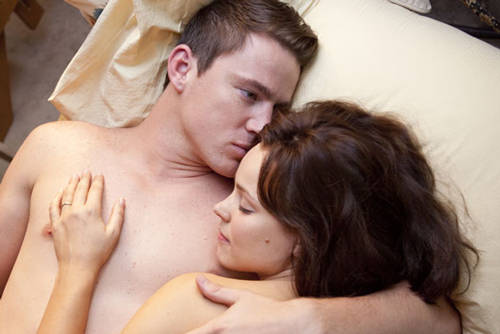 Note the revised time: Channing Tatum will be doing a live interactive online webcam chat with his fans to discuss “The Vow” on May 13th at 6:00 pm Eastern/3 pm Pacific. Tatum is having quite a year with this film, “21 Jump Street,” and the upcoming “Magic Mike,” based on his real-life experiences as a stripper.


 , Peyton (Francis) discovers a note she thinks is from someone who was killed in a plane crash. Struggling with her own grief, including the loss of her husband, she tries to find the intended recipient of the note. The movie was Hallmark’s top rated for 2007 and led to a sequel,
  , which brings Peyton closer to writer King (McGinley). Now in chapter three, “Notes from the Heart Healer,” the couple care for an abandoned baby. McGinley spoke to me about what he likes best about his co-star, filming in Victoria, Canada, and about his first real acting job replacing the star of the top television series of the decade. It will be on the Hallmark Channel
 ,
,  ). He appeared in
  and on the television series “24.” And he is a
  thing in Toronto, and I really wanted to meet him, because he made this movie called
  directed by John Huston, with Deborah Kerr, he played a marine that gets washed up on an island.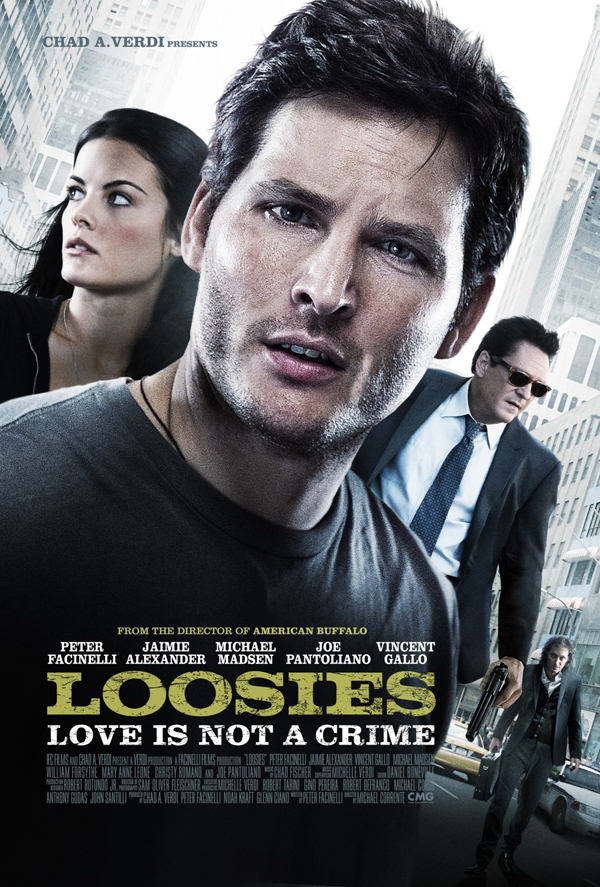
 , but there was some shotgun action in that movie—it was my idea—I rewrote the whole beginning, I rewrote the whole ending of that movie. I like shotguns.
 —he’s going to write the foreword.
 . James Woods’ character has a race car, and we shot a couple of scenes up in Phoenix International raceway, and I got to drive the Citgo Dirt-Devil Nascar. I did five laps in that thing on an open track and it was one of the highlights of my acting experience. By the third lap, I did about 160, and the car is so well-built and balanced that it really does all the work for you. I was so happy I got to do that. It was so exciting. I was having a lot more fun doing that than I was shooting the movie. I’ve been convinced for years that some day I’ll be able to take advantage of that, but as time goes by it seems less and less likely that that’s going to happen. I would like to do a movie about a Nascar driver.