Book: Gotta Dance! The Art of the Dance Movie Poster
Posted on February 3, 2015 at 8:00 am
Copyright 2015 Lagoon Press
Copyright 2015 Lagoon Press
Copyright 2015 Lagoon Press
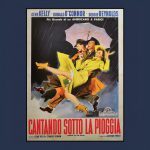
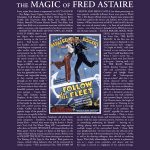
Fans of classic movie musicals will love Gotta Dance! The Art of the Movie Poster, a gorgeous new book from Lagoon Press. It is available both in spiral bound and spine and coil formats. The book is based on the exhibit of classic movie musical posters from the collection of Mike Kaplan. It features 102 lavishly colored images of dance movie posters from twelve countries — the United States, Great Britain, France, Germany, Italy, Sweden, Denmark, Belgium, Argentina, Spain, Poland and Japan, representing represent the most vivid, enticing, and dynamic images for films like “Singin’ in the Rain,” “The Band Wagon,” and “Poor Little Rich Girl.” These posters are works of art in themselves, paying tribute to works of art featuring Fred Astaire, Gene Kelly, and Shirley Temple.
Interview: Rabbi Evan Moffic on What Every Christian Needs to Know About Passover
Posted on February 2, 2015 at 3:58 pm
Rabbi Evan Moffic’s latest book is What Every Christian Needs to Know about Passover: What It Means and Why It Matters, a guide for Christians to the celebration observed by Jesus at the Last Supper. It will be published tomorrow, and is already a seller on Amazon in the categories of Jewish holidays and ritual. Rabbi Moffic is one of my favorite thinkers about our connection to the divine and the meaning of religious traditions, and I am a big fan of his earlier book, Wisdom for People of all Faiths: Ten Ways to Connect with God. He very generously took time to answer my questions about the book.
What would Jews and Christians be most surprised to learn about each other’s beliefs?
I think Christians will be surprised to learn some of the Jewish legends surrounding the exodus. For example, the story about the angels singing when God drowned the Egyptians, but then God telling the angels that the Egyptians are God’s children as well. Or some of the Jewish interpretations of why God hardened Pharaoh’s heart.
I think Jews will be interested to know why many more Christians are holding seders and will be fascinating by some of the interpretations and meanings Christians draw.
Was there ever a time when Christians observed Passover or held seders?
Definitely in the first century where most Christians saw themselves as Jews. It faded away as Easter replaced it. But over the last three decades, as Christians have embraced Jesus’s Jewishness and tried to recover first century practices, more and more have been conducting seder.
Copyright 1999 Convent of Santa Maria delle Grazie
Which of the traditions of the Passover seder were practiced at the time of Jesus?
It’s unclear. Certainly it was not the same kind of seder we do today. That was not finalized until after the destruction of the Jerusalem Temple in 70 C.E. But we do know communities and families held Passover meals in which special foods were shared and the Exodus story was told during the time of Jesus.
Are there any depictions of the Last Supper that include matzah or other symbols of Passover?
No. The last supper was definitely a Passover meal but not a seder—with its precise order and ritual foods that we understood today.
Which elements of the Haggadah are of most relevance to Christians?
The story of the Exodus. It is so universal. We all search for freedom in our lives—from addictions, from unhealthy relationships, from idols like success or perfection. Passover tells us God wants to grow and escape the narrowness that traps us.
Why do you call this a “holiday we share?”
Because the Hebrew Bible is part of Christian scripture as well. The Exodus is part of the Christian story as well. It is a story of redemption that Jesus certainly knew and whose meanings are universal.
Do some Jews express concern about sharing this celebration with non-Jews? How do you respond?
Absolutely. Some Jews feel Christians may be appropriating and misinterpreting a Jewish ritual. People have said to me, “How do you think Christians would feel if synagogues did some sort of communion or eucharist?” My answer is always the same. Yes, some people or communities could abuse the ritual and interpret it in ways that make the Jewish part of it irrelevant or superseded by Christianity. That’s why we need this book. It gives an authentic traditional Jewish interpretation that can educate and guide Christians in observing Passover in a meaningful way. It will prevent abuse rather than encourage it. And truthfully, we live in a free society. Our own religious sensibilities should not be threatened by those of others, even if they are deeply consistent with our own. The fact that others celebrate Passover in ways different than our own does not threaten the meaning and truth of our own.
What is the most important lesson you want readers to understand from your book?
Celebrating Passover can change your life. It can help you see your life as an ongoing journey to freedom and purpose. The story of the Bible is also the story of ourselves.
Each year, Mark Zuckerberg shares his new year’s resolution. I was a big fan of his 2014 resolution to write a thank you note every day, a practice I highly recommend to all. This year, he is inviting the world (or at least the 1/4 of the world who use Facebook) to join him in a book club, with the discussions taking place on a new FB page set up for that purpose. Every two weeks, he will pick a book that “will emphasize learning about new cultures, beliefs, histories and technologies.” The first book, The End of Power: From Boardrooms to Battlefields and Churches to States, Why Being In Charge Isnt What It Used to Be by Moses Naim, has already sold out on Amazon (he has to learn from Oprah, who alerted publishers to have extra print runs before she announced her book club selections). It has been recommended by Bill Clinton, Arianna Huffington, GE CEO Jeff Immelt, and a range of intellectual powerhouses. This is how the publisher describes it.
We know that power is shifting: From West to East and North to South, from presidential palaces to public squares, from once formidable corporate behemoths to nimble startups and, slowly but surely, from men to women. But power is not merely shifting and dispersing. It is also decaying. Those in power today are more constrained in what they can do with it and more at risk of losing it than ever before.
In The End of Power, award-winning columnist and former Foreign Policy editor Moisés Naím illuminates the struggle between once-dominant megaplayers and the new micropowers challenging them in every field of human endeavor. Drawing on provocative, original research, Naím shows how the antiestablishment drive of micropowers can topple tyrants, dislodge monopolies, and open remarkable new opportunities, but it can also lead to chaos and paralysis. Naím deftly covers the seismic changes underway in business, religion, education, within families, and in all matters of war and peace. Examples abound in all walks of life: In 1977, eighty-nine countries were ruled by autocrats while today more than half the world’s population lives in democracies. CEO’s are more constrained and have shorter tenures than their predecessors. Modern tools of war, cheaper and more accessible, make it possible for groups like Hezbollah to afford their own drones. In the second half of 2010, the top ten hedge funds earned more than the world’s largest six banks combined.
Those in power retain it by erecting powerful barriers to keep challengers at bay. Today, insurgent forces dismantle those barriers more quickly and easily than ever, only to find that they themselves become vulnerable in the process. Accessible and captivating, Naím offers a revolutionary look at the inevitable end of power—and how it will change your world.
I’m signing up and have ordered the book. Sounds like a great adventure.
I have a Divergent DVD/Book to give away! Send me an email at moviemom@moviemom.com with “Divergent” in the subject line and tell me about the best gift you ever GAVE. Don’t forget your address! (US addresses only.) I’ll pick a winner at random on January 2, 2015.
Here’s how it happens: You take a book (it can be new or a favorite from your own childhood).
You wrap it. On Christmas Eve (or whatever holiday you celebrate), you leave the book in a place where Santa is likely to find it. When I communicated with David McCullough about borrowing his idea, he was very clear: Santa handles the delivery and places the book on a child’s bed.
In the morning, the children in your household will awaken to a gift that will far outlast any toy: a guided path into the world of stories.
Every family should establish this tradition. If you’re lucky, the child will insist on finishing the book before opening the rest of the presents!


 , a guide for Christians to the celebration observed by Jesus at the Last Supper. It will be published tomorrow, and is already a seller on Amazon in the categories of Jewish holidays and ritual. Rabbi Moffic is one of my favorite thinkers about our connection to the divine and the meaning of religious traditions, and I am a big fan of his earlier book,
  . He very generously took time to answer my questions about the book.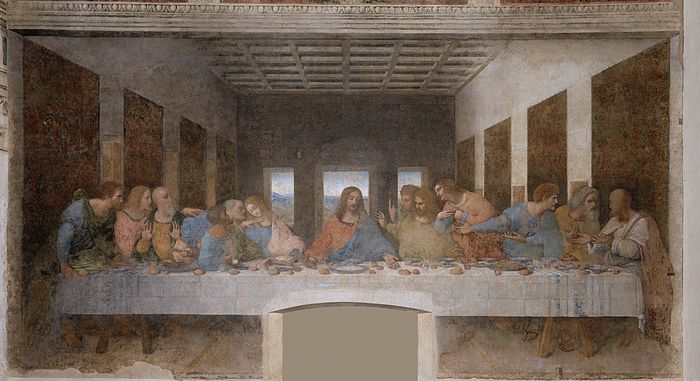
 by Moses Naim, has already sold out on Amazon (he has to learn from Oprah, who alerted publishers to have extra print runs before she announced her book club selections). It has been recommended by Bill Clinton, Arianna Huffington, GE CEO Jeff Immelt, and a range of intellectual powerhouses. This is how the publisher describes it.
 DVD/Book to give away! Send me an email at moviemom@moviemom.com with “Divergent” in the subject line and tell me about the best gift you ever GAVE. Don’t forget your address! (US addresses only.) I’ll pick a winner at random on January 2, 2015.