Interview: Breckin Meyer and Mark-Paul Gosselaar of “Franklin & Bash”

Posted on May 31, 2011 at 3:36 pm

Franklin & Bash” is a new lawyer show on TNT.  It is about two brash, rule-breaking best friend lawyers who join a very conservative, old-school law firm.  It is sometimes silly but it is sexy, funny, and fun.  And it stars two guys who have been acting since their teens, Breckin Meyer (“The Craft,” “Clueless,” “Garfield,” “Robot Chicken”) and Mark-Paul Gosselaar (“Saved By the Bell,” “NYPD Blue,” “Passing the Bar”).  Like the characters they play, they do not take themselves seriously, but they take their work seriously.

I spoke to them about what they learned as child actors and how practicing law is like being in show business.

What did you do to get comfortable with the legal language and procedures?

Gosselaar: I was on a show called “Raising the Bar” for two seasons.  The creator of that show was a public defender in the South Bronx.  That was much more letter of the law — he was on set all the time and tried to make sure we stayed as true as possible because it was so important for him.  He wanted to teach America about what it was really like.  I interned for a week at the Bronx defenders’ office.  So the set-up was not at all like what we’re working with now but Bill Chase, one of the co-creators is an attorney and we have questions or don’t understand something or a pronunciation he is there.

Meyer: Yeah, like “objection” — how do you say that?  And this word, “law…..”

Gosselaar: We’re much looser on this show, of course, but the law is the catalyst for the stories.  You get the great stories of struggle and conflict and the way our characters relate to the clients.  And in a way, putting on a trial is like putting on a play.

You play long-time friends but you did not know each other before the show.  How do you create that sense of history and chemistry?

Meyer: You always cross your fingers that first you even get along with the other actor, second that you have something in common.  Mark-Paul and I had more in common with each other than we even knew.  We both started acting very young and have consistently worked.  We’re both family guys, both have kids.

Gosselaar: Our personal lives parallel each other, too.

Meyer: And our work styles.  We both show up knowing our stuff, and then we will have fun with it.  We take the work seriously but not each other at all.  That’s where the fun comes from on the show — the drama comes from the cases and having now been bought up by this white-shoe law firm, how do you stay true to fighting for the underdog when your firm is working for the corporation you are fighting against?  But the fun is in these two guys and we were lucky that we really get along.  We are shooting in LA but we shot the pilot in Atlanta and it helped a lot, being “sequestered” there away from our families.  Normally we finish and go to our houses.  In Atlanta we’d have dinner and work on the script — part was we had nothing else to do but part of it was we loved the show and wanted it to work.  The script was so good — if we could elevate that, it would be amazing.  We worked non-stop, more than on anything else I can think of, around the clock, and neither one of us ever said, “Uncle.”

Tell me about working with the wonderful Malcolm McDowell (“Clockwork Orange,” “If…”), who plays the head of the law firm.

Meyer: He’s everything you want Malcolm McDowell to be.  He’s funny, he’s intense, he’s terrifying, and he is so sweet!  He is a living legend. He’s done a thousand movies and is 287 years old.  If anyone has earned the right to be a diva, it’s him.  But he showed up on set exactly the way we do, knowing his stuff and wanting to have fun.  It sets the bar for everyone.  It sets the tone for a really nice set where everyone’s free to try and fail.  And he has the greatest stories known to men.  He’s worked with everybody.

I’ve seen the first episode, but tell me about what’s coming up later in the season.

Meyer: Beau Bridges comes in as my dad, a litigator.  James Van Der Beek comes on as the ADA’s fiance, who needs a lawyer.  We go into the backstory.

Gosselaar: Our characters evolve.  We began with the personal injury and smaller-time pot cases.  Now we’re doing more corporate, some murder trials, and in the third episode a woman who was fired for being too hot, but it isn’t your conventional vision of what hot would be.

Meyer: That’s one of our favorites.

Gosselaar: And Jason Alexander comes on as a Bernie Madoff-type character.

You both began as child actors so you have had a lot of opportunities to observe the way that movies and television work.  What did you learn from watching the grown-ups around you?

Gosselaar: Don’t be an ass.

Meyer: Don’t be a jackass. It’s a job. Know your stuff.

Gosselaar:  Take pride in what you do.  It has to stem from what we saw around us at home. Our parents instilled in us how important it is to take pride in what you do.

Meyer: No one in my family is in the business, no one in his family is in the business.  That helps, too.  Even though we were in the business, we grew up out of the business.  There are times to have fun and goof off and we were kids, but it was a job and we saw it that way.  We were looking at the work, so we avoided the sense of entitlement.  There’s a lot of luck to it, too, but you have to be determined, and we both were.  And it’s the only I knew that I am mildly good at.


Related Tags:


Actors Courtroom Interview Television

Interview: The Actor Who Plays Jesus in “The Encounter”

Posted on May 27, 2011 at 3:56 pm

Bruce Marchiano spoke to me about playing Jesus in a touching new film called “The Encounter.”  A group of stranded travelers come to the “Last Chance Diner” out in the woods.  The man behind the counter tells them he is Jesus.  It takes some of them longer than others to hear him.  He has also played Jesus in “The Visual Bible.”

It’s quite a challenge for an actor, isn’t it?

It is in the sense of the responsibility, but it isn’t in the sense of the simplicity of it.  When you’re Jesus, what you do is you just LOVE people!  No matter who they are, what their circumstances, their arguments against you, you just pour love into their lives, along with all the truth and the holiness and everything.

That relates to my favorite part of the performance — the way you listened.  Not all actors can show that, but for Jesus, I think it is very important.

If anybody listened, it was Jesus.  We think of him as talking all the time but there is nothing more fundamental than his ear for people’s hearts.  A woman once asked me if I get tired of playing Jesus.  No!  I’d do it all day long every day.

How did you come to this project?

As a hired actor it all happened very quickly for me.  I had played Jesus before.  Out of the blue I got an email from the director, who I had never met before, asking me if I’d be interested in playing Jesus in this film.  He sent me the script and we met for coffee.  I always have to say, “I have a different angle on this thing.”  For me, it’s about all the love and heartbreak over people’s pain, that’s the most important thing to get across.  David said, “Amen” and the next thing I knew we were working together.  So often we get a man who’s detached and a little bit aloof.  But as evidenced by the choices He made in his life, there’s nothing aloof about Him.

I laughed when one of the characters said it was like a “Twilight Zone” episode because I was thinking the same thing.

That was David’s concept, to make it almost “Twilight-Zone-ish” — so it worked!

Movies like this are like modern-day parables, a different mechanism for delivering the same message.

You’re exactly right.  As Christian movies often go, we’re all working for pennies on the dollar but with a passion for bringing the gospel to people in new and savvy ways.  One of the things I appreciated about it was that unusually for Christian movies there was a grittiness and realness to the setting.  I don’t like it when they look Hallmark card-ish and not real.  And Jesus was a blue collar guy with a scruffy beard.

And Jesus serves in it, too.  Does it spill over into your daily life?

I sure hope so!  When I did the first one I had remarkable experiences, not weird and supernatural, just understanding His heart in a new and unique way.  And the same thing happened with “The Encounter.”  At the end of the film when the guy makes the choice to go his own way, I just spontaneously broke down weeping, profusely.  It was a little uncomfortable for a lot of the crew!  Some of them had a hard time picturing Jesus being affected like that but it helped me to understand the depth of his heart in a fresh and unique way.  There were two projects I turned down.  Jesus has to be loving people and crying tears over their pain.  If people don’t understand that, they’re missing the point.  In another one they hired a director who didn’t know the Lord.  How can someone direct that story if he doesn’t have access to the spirit of God?

Related Tags:


Actors Interview Spiritual films

Interview: the Brother and Sister Behind ‘Discover the Gift’

Posted on May 27, 2011 at 8:00 am

Discover the Gift” is an extraordinary new documentary, book, blog, and CD that reaches from the broadest universal dreams to the most intimate, personal insights, with appearances from powerful lessons from authors, educators, activists, artists, and icons including His Holiness the Dalai Lama, His Holiness Sri Sri Ravi Shankar, Jack Canfield, Janet Attwood, Terry Tillman, David `Avocado` Wolfe, Michael Bernard Beckwith, Mark Victor Hansen, and Niurka and more.

It is the passion project of a brother and sister, filmmaker Demian Lichtenstein and educator Shajen Joy Aziz. Part of the pleasure of speaking to them was the way they brought all they have learned about recognizing and respecting the gifts in others as well as ourselves to the conversation. And it is impossible not to feel privileged by the way they have opened up their own lives as a part of their quest to bring this message to everyone.

This movie is unusual because you shared your personal story to illuminate and demonstrate the broader themes.  What made you decide to do that? How did you decide how to balance the two?

Demian Lichtenstein: The entire project began with a question from my sister: “When is the man I know going to match the work he is doing in the world?”  So from the beginning there was a personal, family reality to the project.  When we began making the movie our thought was to interview and speak with many of the great teachers, luminaries and masters that had influenced our lives on a global and personal level.  But as we progressed something became very evident — when Shajen and the editor and I sat down with the rough cut and realized the movie didn’t work.  Suddenly you’re like — wow, everything we were working on isn’t working.  It was because there was not enough of our true story in it.  At that point we realized we needed to open ourselves up to sharing our personal lives on an even deeper level.

Shajen Joy Aziz: We had multiple reasons for choosing to share that much.  One was because authenticity is the key to everything.  We needed to be authentic and real and share what was really happening in our lives.  And we’re a metaphor for everyone’s life. We’ve all been there in some way or another.  People could access their own learning by being engaged in someone else’s process.  As an educator and a mental health professional, we think a lot about the best way to share what we have to say to everyone.

In the film, you put your findings into eight steps.  Did those steps become a part of your film-making as well as in other parts of your lives?

Step #1: Receptivity
Step #2: Intention
Step #3: Activation
Step #4: Infinite Feedback
Step #5: Vibration
Step #6: Adversity and Transformation
Step #7: Creating a Conscious & Compassionate World
Step #8: Love

DL: Every day!  For me, it’s like, “Oh, no, that’s step 4!” or “I’d better go back to step 1!”

SJA: Yes  — it all informed the book, the film-making, and our lives.  Demian and I and all our crew sat down to ask ourselves, and we really looked at what really happens to us in our life, what needs to happen, what needs to change.  We really hashed it out. What needs to get clear?  That’s receptivity!  You have to be open before anything else can happen.  It came about through the real conversation about what had to happen before we could become the best selves we could become at this point in our lives because we’re always a work in progress.

Why are these concepts so scary for people?

DL: I have an answer and then my sister will probably give you a better one.  We become so stuck on a particular paradigm.  The fear of the unknown is so much greater than what we’ve got.  So we remain so closed off to what’s possible because there’s an identity that’s running the show.  That is not our higher self.  If you’ve ever been driving home and gotten off the freeway and looked up and found yourself in your garage and can’t remember even getting off the freeway?  So who’s driving?  There’s an identity that is not that interested in a higher state of consciousness.  It likes the status quo and being open to what’s possible is not what it wants.

SJA: Language really creates much of our world.  The old paradigm tells us to face our fears.  The shift that has worked for us is rather than facing them, we think we should step through them.  Instead of “I’m afraid and I’m facing them, good for me, ” you’re still there, facing them.  That’s where people get stuck, on taking that step, shifting that gear.  What people really lack and need is permission — it seems so silly and simple.  The thousands of people people I’ve talked to tell me over and over again that they want to know it’s okay to change, to go deeper.

Where do those messages come from?

SJA: From our parents, society, school, conditioning.  We focus so much on what we do wrong, and so we become a fear-based, crisis-driven society.

Did you find that the experts you spoke to used different language to express the same kinds of insights?

DL: They all had different vocabularies based on their background and culture, religion, race, creed.  But we found as we literally traveled the world that underneath it all human being share the same underlying principles and desires.  We all have unique and individual gifts seeking to express themselves, but it often boils down to a past-based paradigm that does not give permission for someone to discover what it is they have to share with the world.  Many cultures demand a certain way of being that does not support who we are at our highest levels.

SJA: Agreed.  And for me as an educator and school-based mental health professional, we focus on what’s wrong with our kids, how many answers they got wrong instead of what they got right.  We want to show people what is right about them, those pieces that want to emerge.  The possibilities seem endless if you focus on what’s right about you.

What led you to present this in such a multi-formated way, with a book, movie, workshops, soundtrack?

SJA: There are so many different learning styles: visual, tactile, auditory, kinesthetic, through emotions, spirituality, nature, Howard Gardner’s multiple intelligence theory.  We wanted to make access possible for anyone who wanted it.

DL: A great way to say it, Shajen.  Everyone we spoke to had an opinion about where they felt they were best able to learn.  On a global level, the motion picture is the greatest collaborative art form on the planet today.  Though we are the leaders of a team of unbelieveably passionate and creative people from all over the planet in the support of the creation of a multi-media project.  We’re also going to do “Discover the Gifts of Kids” for and about the children of the earth.  People learn in a multitude of ways and there are many ways to reach people.

So you are saying that it is incumbent on each of us to be receptive but it is also incumbent on us to respect and try to respond to the way that those around us are most receptive.

DL: Watch the video we did at Agape.  In the Agape space there are drummers and dancers and color and light and sound — a shared communal experience connecting people on a spiritual and inspirational level. And then we have the movie and we’re open to the tears and laughter and hugs.  And then we have a panel and then the experience of photography and interviews.  People had so many ways to experience “Discover the Gift” and our intention is not just to deliver you a book, and a movie, and a web portal, but to engage people in every way possible to help people discover the gifts in themselves.  As much as we share of ourselves, the focus is on you.


Related Tags:


Documentary Interview Spiritual films
Interview: Chad Ahrendt of ‘Reconciliation’ (Part 2)

Interview: Chad Ahrendt of ‘Reconciliation’ (Part 2)

Posted on May 16, 2011 at 3:55 pm

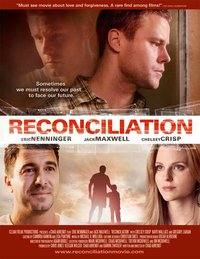
Part 2 of my interview with writer/director/producer/editor Chad Ahrendt of “Reconciliation,” a faith-inspired film about a man who reaches out to the gay father who abandoned him.

7.  For those who consider homosexuality a sin, what is the greatest barrier to finding a loving way to stay connected to friends and family who are gay and those who feel differently?

Every situation is different so it’s hard to pinpoint what the barrier might be for a particular individual, family or circumstance.  It’s important to remember we can’t change anyone else, nor are we called to change others.  We are called to share the Gospel.  God changes people.  Sanctification (becoming more Christ like) is a process of growing in holiness and obedience to the Lord and we only have control over our self and the choices we make.  So, is that Christian living a holy life or are there areas where he or she is “picking and choosing” what to follow and obey in God’s Word?  How might “picking and choosing” be viewed from a non-believer?  Does that Christian truly understand the Gospel and if so is he or she being a proper example of it?  Does that Christian remember the grace, love, patience and compassion with which the Lord dealt with him or her before coming to know the Lord and the times when they stumble?  Over and over again scripture talks about love – loving God, loving our neighbors, loving our enemies, love covering a multitude of sins, and let us never forget it is love that drew each of us to Christ.  Scripture equally talks about God’s hatred for all sin and so we should never condone any sin, but the question becomes is that Christian winking at other sins while holding homosexuality to an unbiblical hierarchy of sin?  Does a family have the same rules and standard for their daughter and her boyfriend as they do with their son and his boyfriend?

Secondly, does that Christian realize his or her sexual brokenness?  We are all tempted by sexual sin and many, even within the church body, struggle with various sexual sins daily.  The fact that we are all sexually broken apart from God’s original intention should not only humble us, it should also make us more compassionate and understanding.  As Christians we shouldn’t feel condemned by our brokenness, rather look to the Cross and praise the Lord for He has defeated sin and given us a way to no longer be in bondage to sexual immorality.  With God’s Word, Spirit and strength we can fight sin, flee temptation and press on in pursuit of holiness.  

Thirdly, while the Lord only truly knows a person’s heart He does say we can know people by the fruit they are bearing – fruit of the Spirit or fruit of the flesh.  Billions profess to follow Christ and if that were true our world would look radically different. Read 1 Corinthians 5 if one wants to see how sexual immorality of any kind defiles the church and destroys families and read verses 9-13 carefully to see how God calls the church not to judge non-believers, but to judge believers and “purge” the sexually immoral from the church.  If the church obeyed these verses we’d either see repentance on a grand scale or the church pews would almost be empty.  As a church body I encourage us to get back to the Gospel, raise up men and women to be obedient in the Lord’s ways, take the plank out of our own eye when it comes to sexual immorality, and humbly fall on our face before the Cross and repent of the judgment, hatred and condemnation we’ve cast upon those with same-sex attraction – and then start loving them as Christ loves them and desires to be reconciled to them.

8.  Is the forgiver or the forgiven the primary beneficiary of forgiveness?

Every situation is different, but speaking of forgiveness from a purely broken world perspective I think both can equally be the primary beneficiaries for different reasons.  Take the examples of forgiveness in the movie between father and son.  The father abandoned his family causing the son to say some very hateful things to his father, even denying his dad’s existence.  Their choice to sin against one another brought about guilt, shame and loneliness.  Through love, compassion, and listening that brought about better understanding of the circumstances they were able to extend grace and forgiveness and reconciliation was possible.  Each benefited equally as father and son reunited.  The bondage to shame and guilt were broken as love and grace abounded.

In the situation of the Cross there is only one offended and sinned against party – God.  God, being perfectly holy and blameless, is entirely dedicated to reconciliation with the offender – all of humanity.  Mankind, irrefutably guilty, rejects God and His holiness instead choosing to seek their own path.  Injustice cannot just be overlooked, there must be a price paid.  In God’s steadfast love for His disobedient creation He takes that penalty upon Himself by sending his Son, Jesus Christ, who voluntarily took mankind’s punishment as the perfect intermediary.  At the Cross God’s wrath for sin meets God’s love for mankind.  Who is the primary beneficiary in this instance?

9.  Why is forgiveness so difficult?

Usually when we are sinned against there is a consequence whether it be financial, emotional or both.  We want the other person to pay a price for the damage done.   We want them to feel similar heartache as they caused us.  We think, “Why should the offender get a free pass?”  The irony is that’s exactly what God gives each of us – in essence a “free pass,” because Christ took our penalty upon Himself.  Christ took the wrath each of us deserves.  Jesus, completely innocent, was made guilty for our sake.

In our judicial system if we are caught breaking the law we expect there will be a penalty to pay depending on the crime.  In the situation with God, He excuses our sin because the price has been paid, but this is hard for many to accept because they want to “repay their debt.”  God gives it as a free gift, knowing there is nothing we could do to ever repay and if we could then we would feel entitled.  That’s love.  That’s true forgiveness.  That’s the example we should never forget.

10.  What is the importance of the chaplain’s comments?

The chaplain’s words are very challenging for everyone, because they make everyone stop and think.  The chaplain is a man that has been transformed by God and His word, and he does not cater to the left or right wing agenda.  His only agenda is to share the Gospel and God’s transforming power which is counter intuitive to the American culture that is increasingly becoming more and more all about “self.”  If one really listens to all his words they will have a better understanding of the Gospel, the brokenness of this world, and how we can better become the hands and feet of Christ to a broken and lost world.  There are two kinds of people in the world: those that are broken and following Christ, and those that are broken apart from Christ.

11.  What did you learn from making this film and what do you hope people will learn from watching it?

Homosexuality is a polarizing topic that isn’t going away so Christians need to educate themselves properly from a Biblical and Gospel point of view.  Today we see major denominations straying from God’s Word to appease the masses.  As individuals we must decide where we stand on God’s Word, even when it means opposition from the world.  As Christians we must ask ourselves if we are living a holy life and being a Christ like example or is their sexual sin we need to repent of?  The church has been losing the battle on sexual purity for a long time now.  Pastors must be proactive and talk about the difficult topics and educate their congregations on God’s standard.

We have two hopes for the movie:  First, is that people will be reminded or introduced for the first time to the true essentials of the Gospel:  God created all of us.  He loves all of us.  We have all rejected and turned away from Him and despite our rejection and disobedience He loves us so much and desires to be reconciled with each of us that He took our penalty upon Himself.  It’s our choice to accept or continue rejecting what Christ has done for us and then because of our gratitude for what He has done we will gladly learn to walk in obedience to His ways.  We must remember it is Christ that heals and changes a person and these changes begin after a person has surrendered his or her life back to the Creator.  If people could truly change themselves what was the purpose of the Cross?  Secondly, that as we all start to realize our own sexual brokenness apart from God’s original design we will repent of it and turn to the Lord and become more understanding and compassionate to those that don’t know the Lord.  God did not intend for mankind to be in bondage to all the sexual immorality listed in the Bible.  God does not call people to be straight, gay, or bisexual.  In Leviticus 11 and 1 Peter 1 God says “Be holy, for I am holy.”  We have all missed God’s mark for “Holy Sexuality.”  Lets not be condemned of our sin, rather repent and turn to the Lord’s ways and walk in obedience to His calling on our life.  Lets stop identifying ourselves with all these man made labels that only separate us and instead look at the Cross that unites us.


People can watch the trailer & find out more or follow the film on FacebookBuy “Reconciliation” on DVD.

I have one copy to give away to the first person to send me an email at moviemom@moviemom.com with “Reconciliation” in the subject line — don’t forget to include your address.


Related Tags:


Directors Interview Writers

Interview: Chad Ahrendt of ‘Reconciliation’ (Part 1)

Posted on May 15, 2011 at 8:00 am

Chad Ahrendt is the writer/director/producer and editor of a new film called “Reconciliation,” about a man named Grant whose impending fatherhood causes him to think about repairing the rift with his gay father.  He was kind enough to answer my questions about the film and its messages of love, compassion, and forgiveness.

1.  How did the project begin?

In some respects the project began four years ago when I surrendered my life to Christ, but really it began when my parents starting dating in the early 70’s and had me soon after.  I didn’t grow up in a Christian home, nor did we talk about God often.  In college I was introduced to Christianity, but I didn’t come to know the Lord and fully surrender my life to Him until four years ago.  Prior to that I had been working at Columbia Pictures for over a decade on 15 big budget studio films from “Jerry MaGuire,” “As Good As It Gets,” to “Dreamgirls.”

After coming to know the Lord, He started revealing His desire for me to make this movie.  People have said this before, but I truly mean He wanted this story to be told – because I had ZERO interest in making this movie knowing what a polarizing topic homosexuality is and the repercussions that might come of it.  The movie is loosely based on my own life and the reaction I had when I found out in the late 70’s that my dad was gay.  I was teased and bullied at school when a few friends found out about my dad and I remember rumors being spread that I too was gay.  I’ve never had same-sex attractions, but I surely didn’t want to be guilty by association so when my mom and I moved away I made sure nobody would know about my dad.  Then in the 80’s I started hearing homosexuality wasn’t genetic, but it was a choice and my fear turned to anger because he left my mother and I to pursue his desires, in my mind making the conscious choice I was less important.  Often we hear “Christians or God hate(s) homosexuals,” but the irony in my case is it wasn’t until I surrendered my life to the Lord was I finally able to fully love my dad.  The Lord was very clear that He wanted me to love and forgive my dad as God has loved and forgiven me of all my messiness…not only that, but as I read and researched all of Scripture the Lord exposed my own sexual brokenness as a “heterosexual.”

After much research I finally sat down and began writing the script, praying daily for the Lord’s supervision over every word.

2.  Did you have difficulty getting support for it?

Absolutely.  Although the story mainly follows an estranged father and son struggling to overcome the heartbreaking consequences of their past as they seek forgiveness and reconciliation, all everyone could concentrate on was the homosexual aspects in the movie and whether homosexuality is perceived as a sin or not.  Studio and faith-based production companies enjoyed the script, but didn’t want to touch the project for very different reasons.  Secular executives were more interested in a form of “universalism” and not talking about “sin,” whereas faith-based companies were excited the movie clearly presented the Gospel they had concerns about alienating a portion of their fans who might have varying opinions about homosexuality being a sin or not.

I knew the Lord wanted the movie made which gave me confidence He’d open the right doors at the right time to get the project financed and distributed – and He blew the doors wide open bringing together an amazing cast, crew, locations, and independent financing that allowed us to tell the story He wanted to tell, a story focused on the Gospel and no other agenda.  The Lord’s ways are so much better then our ways!

3.  Why was it so hard for Grant to forgive his father?

Jeff’s choice to pursue his sexual desires over his family set off a chain of events that would leave lasting repercussions and ultimately break the father/son bond.  Divorce, no matter the reason is very difficult for a child to understand.  Jeff lied to Grant about the reason for the divorce causing Grant to feel even more betrayed, ultimately losing trust in his father.  Jeff’s sexual desires being exposed at Grant’s 10th birthday party, caused Grant to be bullied and teased at school.  Grant already felt the consequences emotionally, now he experienced them physically from his peers.  What had Grant done to deserve this?  He didn’t choose his father and mother, but nevertheless he paid for their choices.  Consider all the emotions of abandonment, deceit, embarrassment, shame, confusion, fear, anger, physical abuse and teasing from peers, the era of the 1970’s and one starts to empathize with Grant’s broken and hardened heart.  One might even begin to understand, not condone, Grant’s unchecked anger that festered into hatred.  Grant’s choices to hate and disown his father were also sinful and led him to deceive others.  Grant’s lies and hatred of his dad were confronted when he came to know Christ.  As the Lord exposed areas of Grant’s life that needed to be brought to the Cross and repented of, He also softened Grant’s heart by pouring out His unconditional love and forgiveness upon Grant – a Father’s true love that Grant had never known growing up.  The hatred and anger were being transformed by God’s Word and the Holy Spirit, but because Grant didn’t come clean to his wife about his dad Grant felt shame and guilt for the way he treated his dad and the lies he told, instead of God’s intention for grace and freedom that comes from repentance.  Eventually, the Lord made a way for everything to be worked out for good.  Grant really needed to forgive himself and truly understand God’s grace and forgiveness, and once he did he could extend the same forgiveness.

Life is messy and it takes work, sometimes-uncomfortable work, for reconciliation to be possible.  Yes, reconciliation will look differently for everyone depending on the wound and situation, but no matter what we are called to forgive as we have been forgiven.  Let us never forget the amount of grace, compassion, patience, love and Truth with which the Lord has dealt with each of us.

(more…)

Related Tags:


Directors Interview Writers
THE MOVIE MOM® is a registered trademark of Nell Minow. Use of the mark without express consent from Nell Minow constitutes trademark infringement and unfair competition in violation of federal and state laws. All material © Nell Minow 1995-2026, all rights reserved, and no use or republication is permitted without explicit permission. This site hosts Nell Minow’s Movie Mom® archive, with material that originally appeared on Yahoo! Movies, Beliefnet, and other sources. Much of her new material can be found at Rogerebert.com, Huffington Post, and WheretoWatch. Her books include The Movie Mom’s Guide to Family Movies and 101 Must-See Movie Moments, and she can be heard each week on radio stations across the country.

Website Designed by Max LaZebnik