Interview: Director David Batty on “The Gospel of Mark”

Interview: Director David Batty on “The Gospel of Mark”

Posted on March 23, 2017 at 3:40 pm
Copyright LionsGate 2016

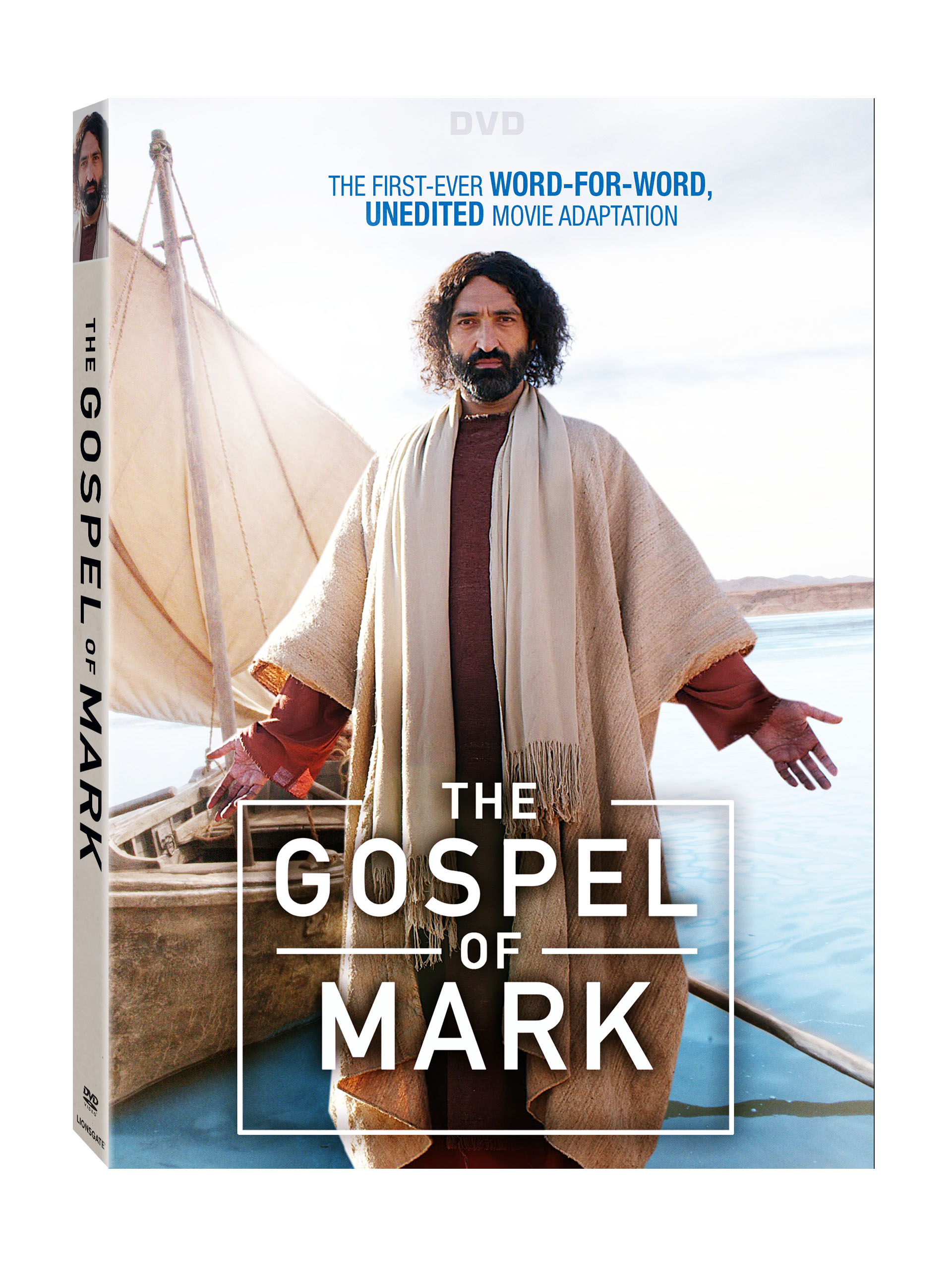
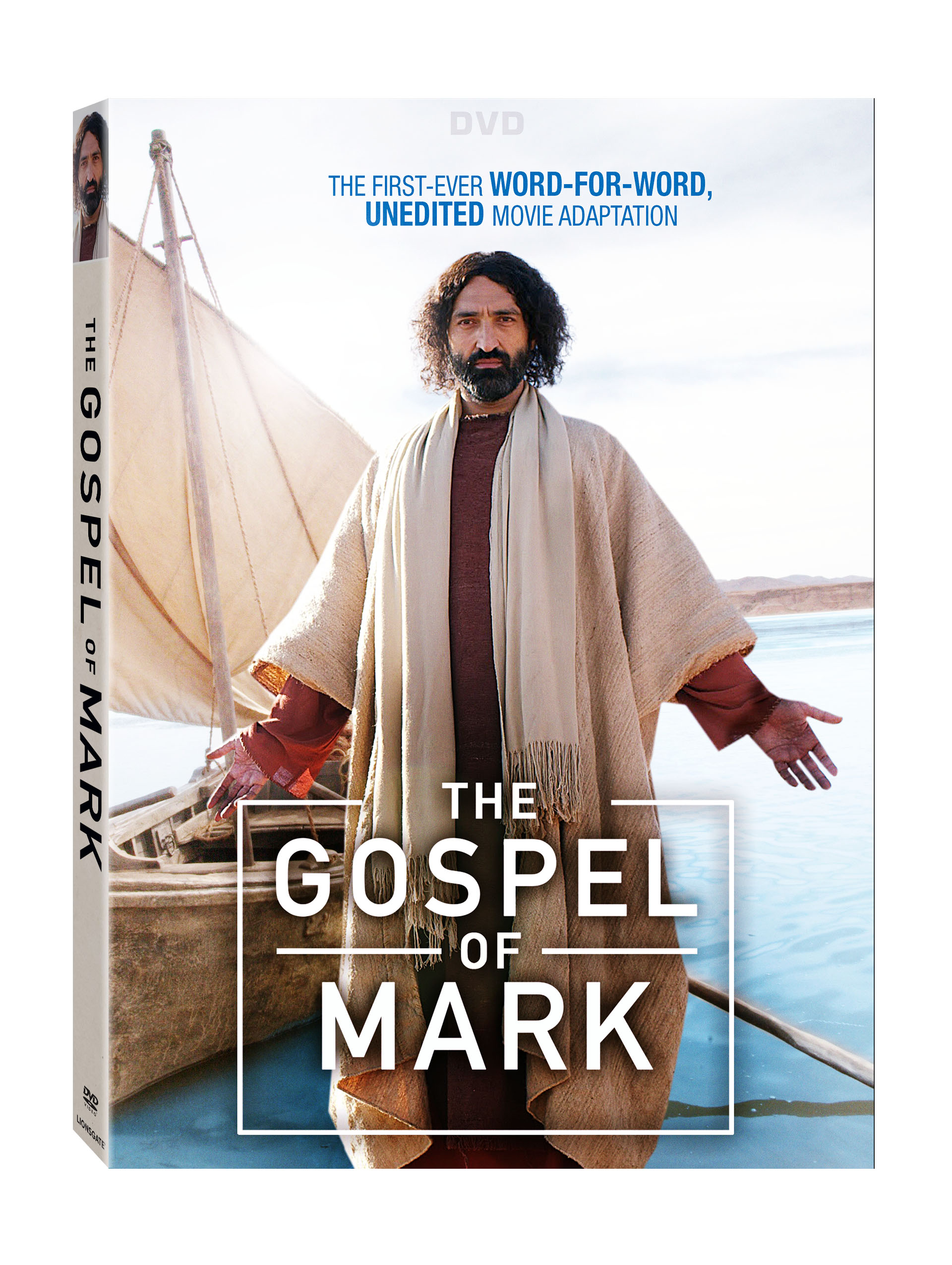
Director David Batty is best known for documentaries, but he also made four simultaneous films about the life of Jesus (played by Selva Rasalingam) with every word from each of the gospels. I spoke to him about “The Gospel of Mark,” now available on DVD.

What is the most important thing you look for when you’re casting someone to play the role of Jesus?

Well, it’s somebody who looks and feels like Jesus. That’s the sort of silly, obvious thing. I think itm means somebody who has a presence. There are two things that for me you need to have for Jesus: one, he’s got to have physical presence so that if he’s in a room or a large scene with a lot of people you know immediately who Jesus is. And secondly, you’ve got to have a bit of a spiritual presence and that comes from being a good actor I think. I think the other thing actually which is important as well is the one thing that has always bugged me about other films about Jesus is that you often go for a sort of very Aryan white guys. There’s a sort of perception that Jesus was born in Europe or America. Well, he wasn’t. He was Jewish and he was Middle Eastern and so I wanted somebody who felt Middle Eastern. Bizarrely the actor that we used, Selva Rasalingam, who has now become a good friend of mine actually, he’s British but his background is actually Tamil. I think his father was Tamil, his mother was English or the other way around, but he has that Semitic feel to him, Selva, Semitic being Jewish, Middle East and that was very important to me.

How is the Gospel of Mark different from the other Gospels?

This is one film of four. What sort of fascinated me about the gospels is that it’s probably the only time in history where you have four full biographies of the same guy. They’ve all got similarities but they’ve all got differences and that’s what makes them interesting. The way I’ve always looked at it is a bit like four witnesses to an accident. If you ask four people who witnessed an accident to describe it they would all describe it in a slightly different way because they’ve each got a different angle and that’s what makes it interesting because you then get four different takes on the same life.

Now when we come specifically to Mark — it is obviously the shortest of the Gospels, it’s the first that’s generally thought by scholars to be the earliest although we always say “Matthew, Mark, Luke and John,” it should actually Mark first and John the latest. Mark for me is sort of “action man Jesus.” It’s the sort of Jesus as superhero if you like because it’s a very quite breathless gospel. Things just happen bang, bang, bang, bang, one after another. It has its own pace. It’s got a lot of detail about his ministry but it keeps the story really quite short and sharp. I think that’s really what distinguishes it from the others. It was quite refreshing doing it from the others because it was so short and sharp because you know some of the others, they can get quite long and because parts of the ethos of the project that we were doing was that we could not take anything out. We have to do everything. With some of the longer ones after a while it gets a little tough but I think Mark was nice to come to because it was just woof, straight off, go.

Mark has a lot of focus on the miracles and not much on the origin story, isn’t that right?

That’s true; that’s what I mean when I say He is sort of an action man. He’s constantly going from one miracle, one event, to another; it’s like a series of very short sharp events building up this character who is a miracle worker.

Tell me a little bit about some of the research you did to ground it in history as well as in the text.

My background is documentaries and I’ve done a lot of films about the history of the Bible and such like so I knew the territory quite well. Our aim was always we wanted to be as authentic as we possibly could, hence when we were choosing the locations and so forth, one of the big things was “Where do you shoot this to be as authentic as possible?” A lot of people say, “Why don’t you shoot it in Israel itself? Well, Israel is quite a small country, very much a modern country now, a lot of the sites are sort of polluted by modern stuff. We looked through other countries that looked very similar. North Africa had a very similar vibe to Israel and we eventually hit home Morocco. A lot of Bible films have been shot there so there were a lot of sets that were already built. That was handy for us but more importantly I think the landscape really does look like what most people say first century Palestine looked like. It’s dusty and hot but it still has got olive groves. A lot of the villages particularly when you get out to the wilder parts of Morocco are still mud built, very simple. And also the people there looked very Biblical.

Everybody else apart from Selva was cast in Morocco and one worry I had was that we would bring an outside actor in and he would stick out like a sore thumb, he just wouldn’t feel like part of this community but they felt very much like he looked and because Morocco is not a Western country, a lot of the people look very natural, not polished. They have blemishes, bad teeth, they have sort of little tics and things that you’d spend a lot of time trying to create but they were already there. That was very nice.

The other big thing in terms of research that I wanted to do — as I understood it all the gospels originally were oral documents. They were passed down orally and then they were written down fairly late, some of them 100 years after the events and the more I talk to experts they say the reason why they were passed down orally is they were actually performed. People would have a story of a miracle or healing or something and around the campfire they would sit down and they would tell the story and it would be performed. And so, what I wanted to do was sort of bring that sense to it, trying to make it as authentic as possible. That is the way we should consume the Bible, as a performance not as a sort of read document. It’s something that needs to be done in public and experienced. And that was one of the things I would have in my mind when I was making the film.

Did you film all four at once?

We made a decision early on that we weren’t going to do four separate shoots. Jesus only had one life but it was four different perspectives on that life. So, what I didn’t want to do was to take each event and then film it four times.

We would film it once and some of the times we would have two cameras because that is the nature of how movies are made with multiple takes until you’ve got the particular one you wanted. I tried to replicate takes so that when I came to edit I would always have slightly different views depending on which gospel we were telling. So I re-cut each piece slightly differently, to make the scene shorter, longer, maybe try and alter the angle at which we see something happen just to sort of give that sense that the point of view that you were getting whether you were watching Matthew Mark Luke or John was slightly different, because presumably that is what happened with Jesus supposedly based on first-hand witnesses who were supposedly at these events but it was not the same one for each.

Tell me what you wanted from the music.

It was all composed. We tried to give it a different feel, with Mark because Mark has a sort of pacier feel to it and the music should add that. If you’ve got John which was sort of a much more cerebral character study, it’s sort of slower and bigger and maybe grander music. I think that was always my thinking on each of them, is that what we decided from the beginning — what’s the character of this gospel? Well then each of the elements needs to conform to that character.


Related Tags:


Interview
Interview: Matthew Faraci on His New Series About Faith, “Frankly Faraci”

Interview: Matthew Faraci on His New Series About Faith, “Frankly Faraci”

Posted on March 20, 2017 at 8:00 am

Copyright Matthew Faraci 2016
The first episode of Frankly Faraci is premiering March 21, 2017 on Dove Channel, Featuring The Piano Guys. In each episode, Matthew Faraci talks with someone who is doing great things in the world because of their Christian faith. Guest from the arts, sports, politics, and other disciplines talk about their faith and how it inspires their choices. The series is available on Roku, Amazon Prime, Apple TV, iOS, and Google Play.

In an interview, Matthew Faraci told me how he finds guests and makes them comfortable talking about their beliefs, and what he has learned.

Where do you find the guests for the show?

I am an avid researcher, and Dove Channel also has a very sharp team who knows how to dig. We’re looking for very specific voices—we want people who are well-known, doing amazing things in the world, and driven to do so by their faith. When we find personalities that fit these criteria, we reach out and ask for an interview.

What faiths and faith traditions do you include?

All good people who follow the Good Book.

How do you make your guests feel comfortable talking about faith?

To begin, we don’t select people who are shy about their faith. If a guest comes on Frankly Faraci, he or she is happy to discuss it. Then there’s a deeper answer. We sit down with people in environments where they are most comfortable and feel most at home, and then have a conversation almost as if the cameras aren’t there. This “magic formula” creates the right conditions for an interview that really delves into what ’s inside our guests.

Do the guests discuss their own faith journeys? For most of them, did it begin with their families when they were children or was it something they came to as adults?

The most beautiful thing—to me—is to see the wide ranges of people’s stories. Everyone has their own journey and their own story, the best part of the job is to get to ask those questions.

What Bible verses do you find most quoted by your guests as inspirational?

I most often quote a verse which sums up the show. Matthew 5:16 says “…let your light shine before men so they may see your good works and glorify your Father in heaven.” That’s the common thread, that’s what all each and every one of these people are doing. As they shine their light, our job is to shine a light on them!

In your homeschooling, how do you connect lessons of faith to opportunities to solve problems and help others for your children?

Our educational approach is to mirror as closely as we can the education that many of America’s Founders received through the Noah Plan. This Biblical-centric approach informs us that faith is not a supplement to dealing with life’s challenges but rather the very foundation. In this sense, every challenge and every opportunity can be approached through that lens.

How can parents set a good example of showing how faith connects their beliefs and their actions?

I don’t believe kids listen to what parents say as much as they watch what we do. If you want your kids to be faithful, you have to live out your faith in your own life. When they see that you are authentic and that you mean it, as Proverbs says “Train up a child in the way he should go, And when he is old he will not depart from it.” In the 2nd episode of season one, we interviewed Bryan and Diane Schwartz who have a group called FamilyGoals.co. Their approach is amazing! They are empowering parents to win at home, and to have the kind of family they’ve always hoped for!

What have you learned from your guests?

Biggest Lesson: diversity was God’s invention, and it’s mind-blowing to see the way He uses different people to bless the world. For example, Studio C reaches families and kids through their amazingly funny, family-friendly comedy, The Piano Guys do the same but through their music, and Propaganda is reaching young people in a way that I never could. That blesses me so much.

I often sit back and pinch myself and ask, why do I get to do this show? How is it that I have the opportunity to interview these people? It is an absolute thrill to be a part of this show, and I believe that people will see my passion and excitement and getting excited right along with me. Joy is infectious, positivity is infectious!

I want people to take two things away from this show. First, for people who don’t come from a faith background, I want them to see that faithful people are cool, fun-loving, carefree, and amazing…because that is my own experience. And for people that do come from a faith background, I want them to be inspired, to understand that they can climb to new heights and there are no limits. As the Good Book says, with God, all things are possible.

Related Tags:


Interview Television

Interview: Jon Manning on the Burlesque Documentary “The Glitter Tribe”

Posted on February 28, 2017 at 7:50 am

Jon Manning is the director of Burlesque: Heart of the Glitter Tribe, an engaging and enlightening new film about modern-day burlesque performers who, as one of them says, combine “dancing, sexy, pretty, funny” in their performances. They have great passion for their work, their audience, and their fellow performers and they love what they do. Another one says in the film that when people tell her she will end up a spinster because of her burlesque lifestyle, she says, “I’m going to be a spinster that was a showgirl so I’m okay with it.” The film is in limited release March 3, 2017 and on VOD/Itunes March 7, 2017.

In an interview, Manning talked about what he saw and what he learned.

What makes someone a great burlesque performer?

You might want to ask a performer that question but here goes – a great burlesque performer is one that takes seriously their artform, their performance, their costume, their music, their family of performers, their audience – in the playful presentation of a sexy, sometimes funny 5 minutes of performance art. For, generally, almost no money.

These are the 98% of burlesque performers around the country that are bank tellers, graphic artists and chefs during the day.

This is not relative to (and this film is not about) the small handful of international performers such as Dita Von Tease that create big extravagant Las Vegas style shows, and have major international sponsors.

What goes into the song selection? What makes a song right for burlesque?

I have found that usually bsq performers select a piece of music that is very specific to the routine they are doing – either bc of it’s irony, specific singer or that they are exploring in their performance.

Our film explores “neo-burlesque” which is generally different than “classic” often in the types and styles of music the performers choose.

How does a burlesque performer develop her or his on-stage persona?

It’s usually an outgrowth from an aspect of their own personality. They then begin to see what works on-stage with the audience and slowly they begin to create their own persona that is unique and different than other performers.

Are burlesque performers competitive with each other? Do they enjoy watching each other perform?

I can’t speak to whether or not they are competitive with each other. As dancers and performers I image that they are. We looked very closely at one troupe that works intimately with each other in their chosen burlesque family.

My experience is that they love to watch other dancers/performers – especially if those other performers are at the top of their game!

Some of the performers in the film have always been outgoing and enjoyed being on stage. Others were originally shy and found the freedom to perform very liberating. How does that affect their acts and their relationship to the audience?

No doubt that their fears or assets are front and center in their comfort on-stage. Remember that these dancers are also actors for those few minutes on stage – with narrative and persona being adapted to their routine. So there may be a lot to overcome in who they actually are to what they want to be on-stage.

This is why most bsq performers find it empowering to be on-stage and getting immediate feedback from their audiences.

Who is the audience for burlesque? Is it different from the audience for strip shows?

Everyone can enjoy a burlesque show! A strip club usually has a completely different vibe and intention of from the audience. My experience of a strip club is that it is also very carnal and mostly attended by men. Bsq is kind of the opposite. The sexual aspect is usually done with a lot of fun and tease and usually only at the very end of the performance and my shows I have ever attended are at least 50% women in the audience.

In an era where everything is available online, what is it that brings the audience to a burlesque show?

People are realizing that life is bigger than their phones. There is a whole vibe and excitement at a bsq show. You have to be in the audience to feel it. You can also usually talk with the performers afterward a show.

So many of the performers have day jobs and other commitments. Why is burlesque so important to them?

Love of performance, empowerment, chosen family. Did I mention that is was a bawdy and raucus good time?!

Related Tags:


Behind the Scenes Directors Documentary Interview

Interview: Arthur Rasco on the Ebola Documentary “Facing Darkness”

Posted on February 27, 2017 at 8:00 am

Arthur Rasco  directed the extraordinary documentary “Facing Darkness,” about the efforts of the humanitarian group Samaritan’s Purse and their fight against Ebola, one that became very personal when their own doctor and nurse, Kent Brantly and Nancy Writebol, became infected. It was an honor to speak to Mr. Rasco about the film.

When did you start filming? It seems like you were there right from the beginning.

Samaritan’s Purse has been covering the Ebola epidemic since 2014. We have people on the ground in Liberia and some of those folks had cameras and were filming. The Deputy Country Director, Joni Byker, was filming, trying to get some clips and we were trying to get a video team off the ground to go but then late July happened and Dr. Kent Brantly was diagnosed with Ebola. And then so that changed things dramatically and then all of a sudden that threw all of us into a tailspin so it was all hands on deck to try and take care of Kent and Nancy Writebol. So we filmed bits and pieces along the way as we could, their arrivals at Emory, and then we did send our crews back in late October 2014. Once we re-engaged and sent supplies to the airlift with two 747s loaded with supplies, we sent a video crew. And then we were green lit to do the documentary in about April 2015, so that’s when we really begun in earnest putting together the film. The film will be in theaters on March 30, 2017.

How did you shape your production schedule and your approach as the story developed?

We had a great team that was involved in putting the film together. I’m just one piece among a great team of people here at Samaritan’s Purse and so we documented quite a bit of the stories of several people that had been involved. Some of the people like Bev and Kendell Kauffeldt and Dr. Lance Plyler we debriefed and recorded those interviews. So we had an idea of how we wanted to shape the story and then you go and you go there on the ground and then you also start meeting people like the nationals, the Liberians who had such amazing stories that we were able to work into the film.

We talked to people like Joseph Gbembo who lost 17 family members. We knew that he had lost quite a few and when we were interviewing him and then he says in the film, “When I look at the kids, the nieces and nephews, the children of those family members that passed away that gives me hope.” Okay, how many are we talking about? And then he says, “16.” And that moment was just so real and so we put that into the film just as it was because it was just such a dramatic earth shattering moment for all of us. We didn’t quite know that aspect of the story and so that was just amazing. Meeting people like Barbara Bono, who was a Liberian Ebola survivor and having her tell the story was just so powerful. Filming many interviews with everybody, I am crying and all of us are just in tears as we’re hearing the stories of what she went through and what she was afraid of during the time.

How do you maintain the distance that you need in order to make the film and yet to reach out to them as a human to get them to open up the way they do?

Well, I don’t know if I’m too good at keeping distance. I really enjoy and I want to engage with the folks, with people because their stories are just so amazing, they have been through some things that I am just trying to reflect, I’m just trying to share. I wasn’t able to be on the ground in 2014 when all of this happened and yet you know that these folks have been through something pretty earth shattering and so you want to respect that and you want to be able to let them tell their story openly and honestly. And so I laughed at when they laughed, I cried when they cried. I’m just trying to have them tell their story.

In America people went a little crazy on the subject of Ebola and didn’t listen to what the experts and the scientists had to say about the threat that it posed. How did that complicate things to bring back Kent to the US in the midst of all of that fear?

We as an organization as Samaritan Purse knew that we had to do everything, all that was possible to try and take care of Kent and Nancy. As you saw in the film it’s just a miraculous set of events that’s really unfolded. You almost can’t write this as a script. You just see God working in these ways. We took all the precautions that we could and Samaritan’s Purse put in place its own set of protocols to try and take care of our remaining staff. We were in touch with the CBC during this time, too. They gave us their instructions and we said, “Well, we’re going to step it up a notch because we want to keep our people safe and do the best that we can.”

What do you want people to learn from the film?

Our hope is that this is a story that will inspire young people, inspire a new generation of missionaries to set out in bold faith and go out to the mission field, to go out and serve, and serve in the name of Christ and putting their life on the line if that’s what they are called to because that’s where the need is. The need is out there and you can go out, you can make a difference. And that’s what the movie is about right? It’s letting compassion fuel a courage that will conquer fear and so that’s what we want to be able to do to encourage, to inspire a new generation of missionaries to head out there. I hope that people will feel challenged after watching this movie.

Related Tags:


Documentary Illness, Medicine, and Health Care Interview Spiritual films
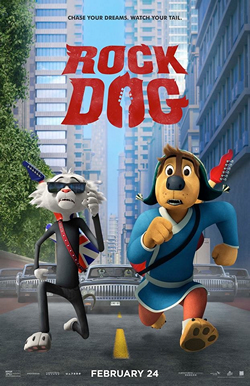
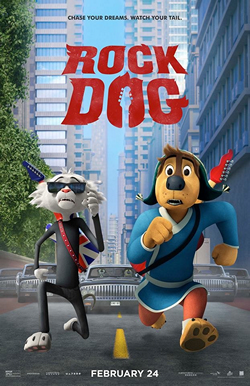
Interview: Ash Brannon, Director of “Rock Dog”

Interview: Ash Brannon, Director of “Rock Dog”

Posted on February 24, 2017 at 2:42 pm

Ash Brannon directed “Surf’s Up” and co-directed “Toy Story 2,” two of my favorite animated films. He took on quite a challenge writing and directing the endearing new international production “Rock Dog,” inspired by a Chinese graphic novel about a sheepdog from Tibet who wants to be a musician. I was lucky to get a chance to talk to him about it.

Like the surfing penguin story “Surf’s Up,” “Rock Dog” is the story of an animal character who is passionate about something unusual for his species. “Characters with big dreams, impossible dreams, those are always a place to start when you are making the movie, aren’t they?” Brannon said.

He especially enjoyed working on an international production that came from China. “I hadn’t heard of the comic book. It was very big in China but not outside of China so the producer on the show told me about it and I was kind of intrigued by the challenges of the show. Doing something with fewer resources of time and money and a chance to build my own front-end team to put the story together. Also, I thought it would be fun just to work with some different cultures and discover what we have in common, what we don’t have in common when it comes to making movies, and so that’s kind of the long and short of it. The pleasant surprise was that stories like this work pretty much all over the world. Especially the musical theme shows music as universal, a thing we all have in common. It’s a really magical story, too. When you see a kid bang on pots and pans or strum a guitar or play the keys on a piano for the first time and discover that they can make sounds and eventually pleasing sounds that can really touch the hearts of people, that’s an amazing magical thing. And so, I wanted to tap into that and I discovered in working with the Chinese artists that they feel the same way. So, it was nice to kind of transcend some boundaries in making this movie.”

Copyright Lionsgate 2016

The film is inspired in part by the real life of the rock star who wrote the graphic novel. “He’s pretty much like Bodi in this story. He was going to go into international finance. He was in business school and then he heard a Bruce Springsteen song one day in college. This is back in the 80s or 90s, so you can imagine what kind of bootleg it takes to get Springsteen songs into China, but he fell in love with music and asked permission from his mom and she said, ‘Yes, go follow your dream.” He went off to Beijing, taught himself music. He was busking in the parks and he went from a very, very modest beginning to quite a fortunate career.”

The look of the movie is also very different from the graphic novel. “One great gift that Michael gave the team, because it was entirely an American team of artists who put the movie together, was his generosity and his trust in letting us go where we thought we needed to go and adapting the graphic novel and that extended to the designs. One reason we had to kind of depart from it was to simplify the characters because of our budget and make sure that nothing was too complicated so everything went in a simplified direction for that reason.”

One of my favorite things in the movie was the opening sequence, done in a dreamlike collage style. “It was something that the partners in China really wanted. I think they liked the opening of ‘Kung Fu Panda,’ for example, kind of a 2D graphic style. We really wanted to set up very quickly and bring you into the story almost like a book to help you understand the setup of this village of sheep and the guard dog and how Bodi’s father ended up locking up these musical instruments away for fear that his son would stray from the path of making sure he grew up and became the next guard to protect the sheep. So, it was a nice shorthand way of doing that and that’s kind of how we approached the opening.”

The rock star voiced by Eddie Izzard in the film lives in a fabulous mansion, and Brannon explained that they took advantage of one of the benefits of animation — there is no limit to imagination because what they create does not have to built. “We had a fantastic art director named Christian Schellewald who I met at DreamWorks and I let him run with the concept of what a rock star’s house must look like when money is no object. So we went outlandish with the enormous waterbed and the massive living room and the over-the-top music recording room. It was fun just to do things you can only do in animation that would look kind of crazy in live action.”

He said that in casting the voice actors, who include Sam Elliott, Luke Wilson, and JK Simmons, “naturalism is key. I really like actors who embrace improvisation and who can really act through their voice only. I mean when you think about it, live action actors bring so much to their performances visually, right? Their facial expressions, gestures, and so forth and their looks. When you take all that away sometimes actors don’t have anything left. So I look for actors who can really bring a texture that is interesting to listen to, people who can emote entirely with the voice alone.”

The movie features a rock ‘n’ roll park based on a real-life park in Japan. “These kids are amazing, as talented as anybody who’s getting record label deals. They are singing their hearts out. You can go anywhere even in America and you find these musicians in New York or LA, San Francisco, anywhere they have such passion for making music you almost feel like if they could not make music they wouldn’t survive, it’s like breathing for them or eating or drinking. So, that was the thing that struck me and its universal. People need to make music. It’s part of what sustains us on earth. And that’s the feeling I wanted in our movie.”

Related Tags:


Behind the Scenes Directors Interview Writers
THE MOVIE MOM® is a registered trademark of Nell Minow. Use of the mark without express consent from Nell Minow constitutes trademark infringement and unfair competition in violation of federal and state laws. All material © Nell Minow 1995-2026, all rights reserved, and no use or republication is permitted without explicit permission. This site hosts Nell Minow’s Movie Mom® archive, with material that originally appeared on Yahoo! Movies, Beliefnet, and other sources. Much of her new material can be found at Rogerebert.com, Huffington Post, and WheretoWatch. Her books include The Movie Mom’s Guide to Family Movies and 101 Must-See Movie Moments, and she can be heard each week on radio stations across the country.

Website Designed by Max LaZebnik