Interview with Kara Holden of “Middle School: The Worst Years of My Life”

Interview with Kara Holden of “Middle School: The Worst Years of My Life”

Posted on October 14, 2016 at 3:01 pm
Copyright Lionsgate 2016
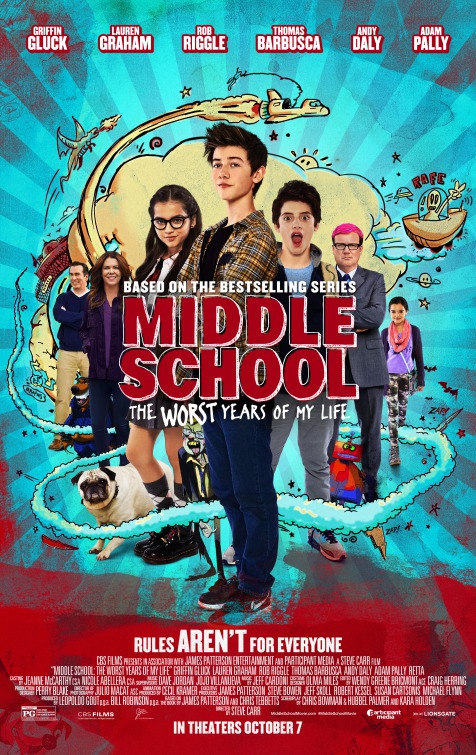
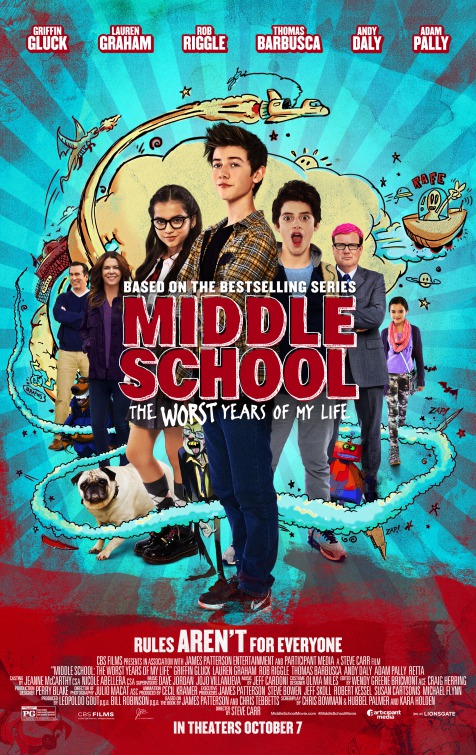
Writer Kara Holden says middle school is when “your eyes are being opened to the world and you’re not as sheltered as you once were able to be. You’re growing up. That’s a part of growing up, being disappointed and coming across difficulties unfortunately. But there’s also the turmoil of hormones and changing and feeling the difference between boy and girls. It is just so many changes at once that just reaches a boiling point.” That’s the setting for her new film, “Middle School: The Worst Years of My Life,” a comic revenge fantasy with a lot of insight and a lot of heart. It is based on James Patterson’s novel about Rafe Khachaturian, who rebels against a tyrannical middle school principal with a series of pranks. In an interview, Holden spoke about her own middle school experience and what she does to keep her focus when she’s writing.

Did you ever play any pranks or engage in any rebellions when you were in middle school?

I wish, no. I was definitely goody two shoes for sure but in my head. I had a rich imaginative life much like Rafe but I wasn’t able to act on much of it. So I would write stories or I would write things in my journal about what I wish I could do. And I was never was quite bold enough to go as far as he went which was what was fun about writing this. It’s very much wishful filming.

Of all the pranks in the film, which is the one that you vicariously fantasized the most about doing yourself?

I love the sprinkler one. It’s definitely my favorite. I just love the idea of everyone getting out of class, dancing in the hall. There was something about it that just made everyone loosen up and have fun and have a huge party in the middle of a school. I would love to have that happen. No matter who you are, you are going to love a crazy experience like that.

It’s refreshing that the girl characters in the film are complicated, real characters.

That was incredibly important to me. I did want not want them to be the boilerplate girl character, the annoying sister character. I definitely wanted them to be full of life like the girls that I know and to have that spunk. Actually my niece Jane, not that she is Georgia, but she has a lot of that fun, spunk and spirit. She will stand up for herself and I wanted that message to come across. At the same time there this that tenderness. Georgia is bold and strong but she’s not afraid to show her vulnerability which I think is very important also, that we could be well-rounded. And I love Jeanne, she’s my alter ego of what I wished I could be. She’s smart and she’s cool and I love that she’s the one who runs the audio-visual club, that she was doing the investigating, and she’s tenacious. She had a voice and she wasn’t afraid to use it and I loved that. I just enjoyed writing them both and of course the mom as well. I think that more people need to speak up, boys and girls really to speak up for what they believe is right. And that’s what Rafe did as well, he uses his gift for art to raise awareness of what was right. So that’s great.

The movie has some great comedy and fantasy revenge, but it is grounded in a reality that acknowledges some very real losses and problems.

It was really important to me that all of these characters are grounded in the heart and in a reality that can feel real. Every person, especially kids, we all experience hardship and there are some things that can’t “be fixed.” But we can grow, we can learn from these things and we can move on in a positive direction and I wanted that to really be a part of it. And truly hats off to the actors who were able to play all so well, to do the comedy and the drama, I think that added to it but really the comedy stemmed from the base of the bedrock of the movie, which is a very heartfelt thing. I don’t want to give away any spoilers but I think that was underneath in my head in every scene I knew why the things were happening that were happening and I was grounded in character and that is I think what makes it work. If the humour comes from the character, from where they are and not just on top of a bunch of jokes, then it’s going to feel cohesive when you move from comedy to drama.

Leo is a wonderful character, too.

I mean I’m amazed by all of them I think they all did incredible work but Leo gives Rafe the confidence that he needs to pull off these things. Leo believes in him so Rafe discovers and learns to believe in himself. I think the fact that Leo has good intentions in all that he does is what makes him so great. He is a hellraiser for good. So I think that’s what makes him so likable and that’s why you care about him and the relationship between Leo and Rafe. It feels real and you root for them. I think it’s important that we see that they are there for each other.

Tell me about your writing day. What’s the first thing that you do when you wake up in the morning?

The first thing I do is, I go in and I wake up my son, he’s a year and a half. I don’t wake him, he usually wakes me up. I hear him in his room, and I can take care of him and I take care of my animals and then I get ready and I go to an office outside of my house. Actually before I leave I do a little bit of my emailing and things because I don’t have Wi-Fi at my office on purpose. It’s the most perfect place. It has no windows. It’s just a room with a desk and a computer and I have to work and that’s good for me because like most writers I’m very procrastination-prone. Once I get to my office it’s all good.

You’ve worked in a variety of genres. As a writer, how do you locate the audience in the world they will be entering?

That’s a good question because for me pretty much the connecting fibre from all of the films I’ve done, whether it be inspirational sports or more of a drama or is also a comedy and a drama as well, is that they all have humor hopefully and heart. I try to do that in all of them even though they are in different genres from family to more adult or the inspirational world. I try and get the characters up front. With “Middle School” I immediately had the idea that I wanted to just get into how much his art meant to him and having that fun little animation bit at the beginning clued us in that this is going to be fun and a little bit of a wishful film and have some fantasy right on the very first page. You just set it up from the get-go what you are in store for by some sort of a visual or an action that a character is taking that you recognize as either funny or more serious. In a comedy it feels good to get a surprise, to switch things up a little, to give you something serious. Sometimes you just need a break in a drama so it feels good to laugh. And by the way that’s life. It’s a great combination — comedy and sentimentality and difficulty all mixed up. So I like to have something sort of heightened but the reflection of life so we can recognize ourselves in it when we see it and that’s what makes us love it.
Related Tags:


Based on a book Interview Writers
Interview: Director Barnet Bain on “Milton’s Secret”

Interview: Director Barnet Bain on “Milton’s Secret”

Posted on October 10, 2016 at 3:50 pm

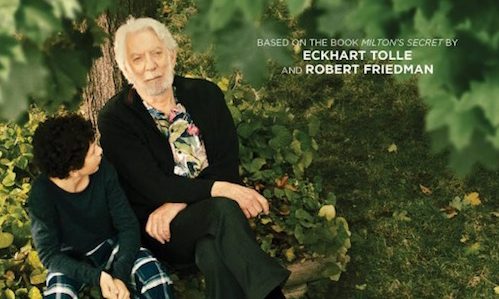
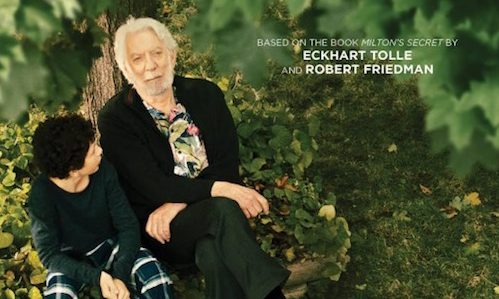
Barnet Bain co-wrote and directed “Milton’s Secret,” based on Eckhart Tolle’s book about a bullied boy who learns some strategies for coping with his anxiety from his grandfather, played in the film by Donald Sutherland. In an interview, Bain talked about using classic Donovan songs on the soundtrack and dealing with the “internal bully.”

Copyright Riverside Entertainment 2016

Why did you decide to use Donovan songs from the 1960’s on the soundtrack?

Well you know the character played by Donald Sutherland is a guy of that era. So it is the soundtrack of his life. And all of those Donovan songs, they are all love songs to the divine.

Really? I thought Season Of The Witch was about being arrested for marijuana or something. Wasn’t it?

That may be the story that was told back in the day but to me that’s a song about egos and being flung out of the moment.

One of the biggest challenges that any director faces is in casting children, so tell me a little bit about how you went about that and what you were looking for.

I looked at a lot, a lot, a lot, a lot of really fabulous actors, just so many of them. I was looking for, first of all children that were real in their bodies, not in their head, so that they inhabited their bodies, they were more grounded and were not so cut off by over -thinking or by attachment to their devices that they were inaccessible to their feelings. And so I found these incredibly beautiful kids who are so sophisticated precisely because they are so in touch with their emotions.

That’s a challenge to find in people, I would say actors of any age but people at any age.

It is such a challenge and that is one of the themes of the movie. We have so many strategies for splitting off from being connected to ourselves and to each other and just in our bodies. And one of the ways is to be overly attached to our devices, to our virtual world. They are just extensions of our minds, not a bad thing, beautiful, beautiful tools but we become addicted to them in the same way that we become addicted to over-thinking.

It’s a concept, it’s an idea, a mental idea and real connection doesn’t happen in the head, it happens in the body. When we are only operating there it doesn’t have the ability to deliver on the promise of what makes us human, we cannot connect through a device.

Milton in the film is a little older than the boy in the book. I loved the portrayal of that moment on the brink of adolescence when they are old enough to begin to ask big questions but still young enough to believe in alchemy.

There is that moment right before puberty that is just right for a movie about uncertainty, the uncertain times that kids, adults, communities, families that we are all living in. And so at that time of puberty there’s a whole bunch more issues, just a whole other range of issues that get laid on. So at around puberty, as challenging as life already is there’s a whole other bunch of preset challenges that get loaded on. And so I thought it would be a more complicated story to tell, a wonderful story but a more complicated story to tell and that we would be able to see through the veil a little more simply.

That’s why it happened there and so there is a certain kind of purity in his ability to perceive and conceive what’s going on in the world. It’s a period that you can look at it and say, “Well it’s overly simple,” and that’s a legitimate point of view, but on the other hand these are very, very complicated ideas about self witnessing and finding a boundary between yourself and what’s going on in your world and your parents and when you add on other things it starts to become so chaotic, it pulls us into our heads. Life is already such an invitation to be a head trip, so that was the investigation that went into that decision.

It was such a pleasure to see Donald Sutherland — he is perfect as Milton’s grandfather.

He is such a good guy, I know. He’s been in 180 movies with a leading role with everyone, from Fellini to Robert Altman. He is absolutely masterful and one of the beautiful things about him, one of the reasons that I was so grateful that he fall in love with the role is that when you have an actor with those skills they become present. And so it’s only a really masterful actor that has the ability to both self witness and not engage and that is a level of consciousness that I am exploring in my own life and that I wanted to make the movie about.

That’s the theme of the film but I know as a filmmaker that the very, very finest actors among us operate that way. They are aware of themselves and they are aware of the inclination to want to observe and ask “Am I doing well? Could I have done it better? How is somebody else responding to me?” They are aware of their inner voice. They are aware of what they’re feeling but they are relating to it and identify with it. And so to have an actor of such skill play someone who is more in touch with, more conscious than he might’ve been in earlier parts of his life, he is certainly more consciously self-aware than the others in his family and he is able to pull it off. If it was somebody less skilled they would be triggered, they would be caught up by their own inner self talk and it would not have been as generous a performance.

You seem to gravitate towards spiritual themes in your work, is that right? Do you do that consciously?

I do. I don’t really make any distinction between my work life and my family life and my life as a member of the community, it’s all one big martini. There’s only one thing going on; I don’t see anything else going on and so it would be hard for me to make a choice in my personal life that was suddenly out of character. It would be hard for me to make a choice in my professional life to make a movie about psychotics unless there was something in that story that pulled back the veils that reduced a little more of the clutter that stands between who I am now and who I could become.

What do you want families to talk about when they see this movie?

I realize that everybody comes to movies and everything from their own developmental place, so nothing in life is a one size fits all. So there will be people who come to this story and see themselves in it in different ways. Somebody might say, “Maybe it would create a better environment in my home if I put down the phone, my device.” Or “Maybe I can create a healthier environment for my children by being a little bit more aware of how much ruminating about the future and anxiety and worry I project and maybe I am creating an environment where my kids are picking up on that, but these are self bullying thoughts and maybe I can be aware of them,” and put the question on them just a little bit. So maybe some people will see that.

The themes that I’m investigating in the movie are themes of the impact that we have on our children as parents in subtle ways, how bullying is not only a physical violence but is the end product of an internal self bullying that we do to ourselves in our thoughts about ourselves that we begin to project on others. We begin to become either reactive or are responsive along a spectrum. I’m willing to allow people to come to it however they come to it. I have hopes that however people come to it they will slow down a little bit and find something in it that touches their hearts and opens their minds, at least breathe if nothing else, at least breathe. We learn to bully ourselves long before we start to either become bullies or be bullied but everybody in my movie is bullied, or feels bullied. The parents are bullied by their fears, they are bullied by the financial markets. And we’re in a world today where lots of uncertainty and chaos is going on politically. Some people say one candidate or the other bullies or feels that the rules don’t apply to them. The real question of our movie is where are you coming from and what is it that formed your perspective of where we’re coming from? We think our thoughts are our own and they are never our own until we ask the question, where have these come from? And only then can we begin to sort through to see what is our own. Everything about this little boy, Milton, all his anxious behaviors were trained. Even though his parents love him, they were trained. And we learn from examples. That’s the conversation I had with Eckhart going in because we have lots and lots of fine teachers and tutorials are an effective way of teaching but the more powerful way of teaching is when we see it modeled. If we could see it modeled in real life, in our family life, in our environments that’s great. If we see modeled in art and on film that’s great, it has a much greater impact. You can cut through 15-20 years of development on lecturing by having one good night at the theater.

Related Tags:


Directors Interview
Interview: Father Joseph of Haiti on His New Documentary

Interview: Father Joseph of Haiti on His New Documentary

Posted on October 5, 2016 at 3:46 pm

“Father Joseph” is an inspiring new documentary from Floating World Pictures about a priest in Haiti who has helped Fondwa, one of the poorest communities in the world, to develop schools, a radio station, and a bank and to build homes to make micro-loans to support the local economy. Almost all of it was wiped out by the devastating earthquake of 2010. And so, he is starting all over again, working with the Raising Haiti Foundation.

I spoke with Father Joseph, and the documentary’s director, Jeff Kaufman, and producer, Marcia Ross.

Father Joseph, what’s the first thing you do when you wake up in the morning?

FJ: Oh, it’s to be with myself and to be with God. First I want to stay awake and to talk to myself and to talk to God to see what is His plan for the day. I do have mine but what is His? But that helps me to stay out of trouble. And then take my shower. If there is any breakfast, I’ll take it and then continue. My day starts sometime at 5:00 and finishes at 10 PM.

So much is needed. It can be overwhelming and frustrating. Where do you begin?

FJ: Okay, as you know I am religious, I belong to the Spiritans and also I am a priest, a Christian and a Haitian. The first thing for me is to proclaim the good news, the gospel values. I cannot do it by myself, I need a lot of people. People who have the skills and people who are the beneficiaries. My aim is really to put the political struggle of the people, to put it together with my prayers and with the liturgy. And also to help other people to help themselves in such a way that we can break the cycle of poverty, to break the cycle of economic dependence.

Like in Fondwa, the first thing I did was to help the people to get organized and to identify the problems in their own living environment and to see how best they can help themselves. The country has been independent since 1804 but if the people still cannot get access to water, to healthcare, to education, to some of the basic human needs, that means nobody cares. The one who has to care is themselves. To give them the confidence in themselves to get back their human dignity, to help them to realize that they are somebody, they have been created in God’s likeness. They can do greater things that people think they cannot do. That struck me when we are looking at Jesus’ approach to the leper is in the society at that time. A leper in Jesus’ society was not sick but he was rejected and he has to accept that he is nobody in the society. More than that, he has to ring a bell when you are very far from him to say “don’t get close to me because I am not good.” Not only you are poor, you’re sick, but you have been disregarded and people put in your mind that you are nobody. And for me that’s BS.

Copyright APF 2016
Copyright APF 2016

That’s why also for me when I’m in front of you or in front of somebody else I think first, “I am walking on a sacred soil because you have been created in God’s likeness. I can help you as much as you can help me.” That’s why also basing on the gospel values for me I cannot be the only one who was access to water in my community, I cannot be the only one who has access to healthcare, the only one who can feed my children, the only one will have access to education. That means your failure is my failure, the suffering of somebody is the suffering of humanity. When somebody is hungry, it’s the whole humanity which has been disregarded. Nobody should go hungry, nobody should go without water, without healthcare, without education. That’s why as believers, I said believers, because in my work I work with Muslims, I work with Jewish people, I work with Voodoo people, I work with all types of Protestants, we see even celebrate the eucharist together because the work that we are doing for the poor bring us together.

That’s why I think as believers we are called to heal whatever is broken in our society. We have to become healers, we have to become build ‘bridgers’ and we have to be a living good news, a living gospel, we have to become a eucharist, the broken bread for each other. For me, that’s why it’s a big challenge for me to continue to work with the poor, to realize that so many young people are hungry and when they shower me with problems, I can only listen to them and that bothers me a lot to see that I cannot help them. Like a lot of young people in Haiti want to go to school, they cannot. They finish with high school they want to go to university, the college they cannot. That’s why I think this movie will bring more attention on the people of goodwill here of big heart who can get involved with us. I think together we can really create a better world for all of God’s children. So this movie is a part of the work of making those services and opportunities available.

Father Joseph, how does your home inspire you?

FJ: For me there is a beauty of spirituality by living on the top of the mountains. When you read the Scriptures you see that Jesus goes most of the time on the top of the mountain to meet with his father. And for me to be at the top of the mountain, to look at the sunrise or the sunset or to watch the stars, for me it’s a magical experience.

Marcia, how did you get involved with this project?

MR: The first time I met Jeff he was about to leave on his first trip to Haiti to meet with father Joseph. He had met him here prior to our meeting and I was very taken with what he was telling me about father Joseph and the work. I’ve had a wonderful career, including 16 years at Disney and doing casting, but I was really looking to do some other things with my life things to sort of open up my life experience. One of the great things about casting — it was my opportunity to help other people achieve their own goals. As a casting director you see talent and you try to help them get into parts that can change their lives and I think that was really fulfilling. But after so many years of doing it I really wanted to find other work that was fulfilling in a new way. And when Jeff told me this story I just started wanting to get involved into doing it. Making documentaries you meet people very totally outside anybody I have ever met. You meet people like Father Joseph, who do a lot of selfless work, the only reward is purpose in life really, there is no financial reward, there is no fame, there is no a lot of things but that doesn’t stop him from wanting to make a difference in the world. His motivation is not for fame and fortune for himself or recognition for himself, his motivation is for making a difference in the lives of others and I think that’s a very important idea.

FJ: You know the fact is people who join me in this work not only they help me to transform the lives of others but their own lives.

Jeff, you seamlessly integrated archival footage with new material in the film. How did that happen?

JK: We started getting footage of father Joseph in 2011 and started shooting initially in 2012 and had a series of shoots but one of the things that was kind of amazing was, we wanted to have a sense of the modern history of Haiti and also the evolution father Joseph’s community Fondwa. We reached out to a lot of people and what are the odds but here is this guy who grew up in the mountains of Haiti far from anywhere and we were able to basically find 25 years of videos of him here and there and other places speaking and it was from six or seven different sources.

It was great to get the video but it also represented the magic of this film. All these people you’ve never known before, you reach out to them and they help you in the most amazing way and they become partners in the effort. And then later on one of our executive producers is now helping with the University of Fondwa another of our executive producers is now helping with Father Joseph’s Peasant organization and its a miraculous thing to see. That’s always the intent of the film was to be more than just a film.

What kind of a crew did you have for your own footage?

JK: The first time I came to Haiti I worked by myself. I had done this film about Ella Fitzgerald and jazz in the 1930s, and by necessity I had done the audio myself, not a good way to proceed. You can’t bring a traditional crew to Haiti, you can’t ask them to work that hard and you can’t ask them to put themselves through the risk but my son Daniel had come out of film school and he had worked on a couple of projects first doing audio, editing some pieces, and his talent level just kept rising and rising and rising. And after a lot internal debates, and some concerns about physical safety, I asked Daniel if he would like to be the the cinematographer. Daniel was immensely talented and so I did the field audio and Daniel was the cinematographer. It was an an amazing father-son experience and I think Daniel made a lifetime of connections for himself as well.

FJ: That fits what we are trying to accomplish. As a priest, I gather as many people as I can to help them to discover their inner self and define the meaning of their life and to give back as much as they get. For me this is what I have been able to accomplish on my own and I want to share it with others, to really share what you have and what you are with others. For me if anybody can accomplish that, that means you have accomplished your goal in life.

JK: One of the remarkable things about father Joseph — he’s the perfect example of not just faith but faith and action. Faith has a lot more meaning if you actually use it to do good. More than that, he is the most inclusive priest, not cavalierly but based on who people are. He is a very passionate Catholic priest who really believes in that faith but he also really sincerely believes that good people of other faiths all have their own path to heaven. I probably couldn’t embrace him if it wasn’t for that and I love that openness to other ways of life and other paths. Where it came from in this guy I don’t know but it’s really unusual.

FJ: I think we cannot put God in a box and say that my God is the better God. We have to let God be God and contemplate God wherever we are and in whatever we are doing. In Creole we used to say “del mon de mon.” After each fountain there is another fountain.

Related Tags:


Directors Documentary Interview
Interview: Holocaust Scholar Deborah Lipstadt on “Denial”

Interview: Holocaust Scholar Deborah Lipstadt on “Denial”

Posted on October 3, 2016 at 3:04 pm

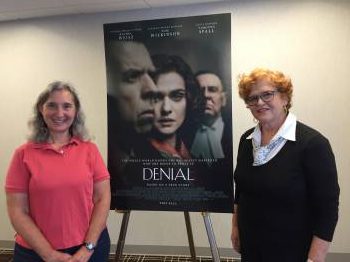
Copyright Nell Minow 2016
Deborah Lipstadt, a distinguished historian and scholar, is the Dorot Professor of Modern Jewish and Holocaust Studies at Emory. Her book Denial: Holocaust History on Trial is the basis for a new movie about a defamation lawsuit filed by a David Irving, because she referred to him as a “Holocaust denier.” Oscar-winner Rachel Weisz plays Lipstadt in the film.

In an interview, Professor Lipstadt talked about what we must do, at this moment when the last witnesses to the Holocaust are nearing the end of their lives, to make sure that the history is accurately communicated to future generations, and about the real basis for claims that the Holocaust did not happen. One way to tell the difference between those with intellectual integrity and those who try to suppress the truth is in their willingness to be transparent. Lipstadt has posted the entire trial transcript online so that anyone who wants to review the arguments and documentation has access to the entire record.

The film makes clear your frustration with the scope and procedures of the trial, which took place in London because British law is more favorable to plaintiffs in defamation suits. The standard of proof is different in a courtroom than it is in academia.

Historians reach proof by consensus. In academics we reach a consensus and we know that consensus might change but the proof we had to show in the courtroom is quite different. The lawyers and I agreed that the courtroom is not generally a place for history, to prove history but this was an exception to the rule in the way it structured itself, in the way we fought to have it structured.

People often say and I in fact said it for many years, “What’s going to happen, certainly in terms of remembrance in general but denial specifically, when there are no more survivors?” In a way our film is a testimony to the ability of documents to speak for what happened and to prove what happens. It took work, it took following the footnotes back to the sources and showing that when David Irving said, “I have a document that said that Adolf Hitler tried to stop the outbreaks from Kristallnacht and you look at the document, it doesn’t say that. It said, “Stop the arson.” What was happening is fire departments were saying that whole blocks are going up in smoke because you’re burning down the synagogue but it’s next to two buildings etc. etc. So Irving takes that one specific and makes it into a general. He takes a sequence of events, and he changes the sequence to make it look like what happened after really happened before. We brought k 25-30 instances of tracking Irving’s footnotes back to the sources and showing a distortion, an invention, a change of date, falsification, what Richard Evans from Cambridge called the tissue of lies.

It is one thing for a single outlier to make these claims, but I have been shocked at the number of people not just taking Irving’s views seriously but supporting his work.

Go to Amazon and look at the new edition of my book. Read the comments. You have the war of the words on the Amazon comments section. Once I wanted to delete and then I said no, they’re too valuable as a teaching tool.

In the movie your character wears very colorful scarves. Is that something that comes from you?

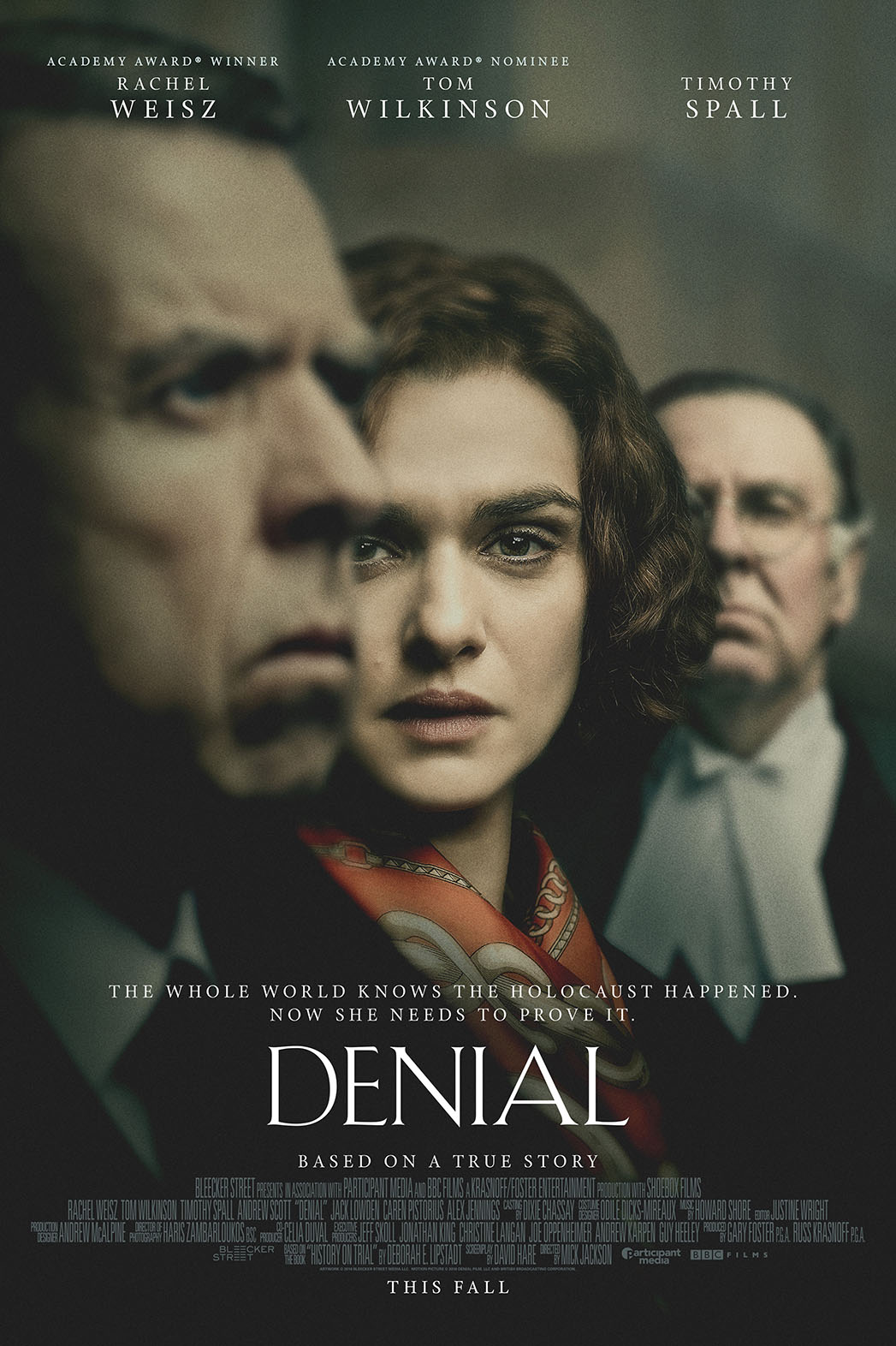
Yes, those are my scarves in fact that orange scarf I was thinking of wearing this morning is the one Rachel Weisz wears in the poster.

How does it feel to have Rachel Weisz playing you? I have to say she got your Queens accent very well.

Some people say oh, “The Queens accent is so overdone.” They clearly did not hear me speak, you know. You should hope and pray if they should ever make a film about you, that you get someone with the wellsprings of talent that Rachel Weisz has, and with the humanity, with the menschkeit and professionalism. She is a professional’s professional. She would call me up the night before and say, “Record this scene for me. Tell me how you would say this.” The scene in the lecture room where he is confronting me, she called me that morning before she was going to film. I was in Barcelona for a conference and she tracked me down. She said, “Deborah tell me what you were feeling, what was it like?” and I said, “Rachel, it was a horrible, horrible moment. I’m used to having as you know some measure of control, I was completely out of control… He was completely out of control. I didn’t know how to take charge of the situation. I saw the students looking and I was thinking maybe I have something to say if I started to challenge him it would elevate him. It was a debate I wouldn’t want to have. And yet I knew he was capturing the students and getting into their minds.” She stands there and she is standing her ground, saying, “I’m not going to debate,” you but you can see in her face that she knows she has lost in that setting.

Copyright 2016 Bleeker Street
How do we respond when deniers insist that all they want is to “hear both sides?”

It’s not just the Holocaust. Birtherism, Nine Elevenerism, Sandy Hook “truthers.” When David Hare sent me his original notes on how he was going to structure the screenplay, he sent me a memo 10/20 pages you know, on the cover there was a quote from Bertolt Brecht’s Galileo. I saw that and said, “We’ve got the right person.” That was very, very powerful to me. There are not two sides to facts, whether historical facts or science.

There are not two sides to every story. There are facts, there are opinions, and there are lies. If I will say to you, “It’s my opinion that the earth is flat,” you would say, “Get this woman help!” And you would say that’s not an opinion, that’s a lie parading as an opinion. What Holocaust deniers want is to provide a cover for racism and anti-Semitism. When David Duke when ran for governor of Louisiana he did not run wearing his bed sheets and Ku Klux Klan garb. You wear a suit and you look reasonable. Charles Murray wrote The Bell Curve; it’s racism parading as facts. David Irving brought a number of witnesses most of whom he had to subpoena to get them to appear. One witness who did not have a subpoena came of his own volition was a professor from Cal State Long Beach, who calls himself an evolutionary psychologist, and what he has written on Jews is just high-class anti-Semitism. He is not just an anti-Semite; he is a misogynist. His “testimony” was just a file folder of newspaper clippings about where I had appeared or given speeches, the groups I spoke to. This was to prove his theory of some conspiracy. And then, when it was our turn, the barrister defending me did not even ask a single question. The solicitor could see I was about to explode. He came to me and turned me around so my back was to the gallery so people couldn’t see me and he said, “Deborah, that was the right thing to do, if Richard had cross-examined him it would suggest to the judge that we thought he had some validity and the judge clearly thought he was worthless.” They were right.

What is behind these kinds of denials?

How come nobody asks George W. Bush or Bill Clinton to prove where they were born? Obama was born in Hawaii, which is not contiguous but it is a part of the United States. Why not make a fuss over Ted Cruz, who was born in Canada? It’s a form of racism. You and I know that. Parading as a rational kind of question, parading, masquerading. Holocaust denial is a form of anti-Semitism. You ask David Irving what motive the Jews would have to create such a widespread lie? And what he would say is a lot of what the Jews get out of the Holocaust is Israel and money. The Israel thing is not really historically true because it was really created 1945/46 because of British had to get out of their governing role in the region. And there would’ve been some Jewish entities there anyway; there were enough Jews living in Israel that there would’ve been something, but nonetheless that’s the popular perception. Well Israel and money speak right to the anti-Semitic stereotype of money and secret conniving power to accomplish their goals. They made up this myth so it fits right into the anti-Semitic template.

At its heart, Holocaust denial is a form of anti-Semitism. Anti-Semitism is a form of prejudice, think of the etymology pre-judged, I made up my mind, don’t confuse me with the facts. It’s utterly stupid, it’s utterly ludicrous but we fall into that trap. So that’s the point, the point is that well, how come David Irving believed that the Holocaust didn’t happen? It is the most documented genocide. I said it doesn’t make sense, I said then Holocaust does make sense, genocides does make sense. They do not believe it because the prism through which their view of the world is refracted is the anti-Semitic prejudicial conspiracy theory. The title of the movie reviews to denial in three senses: denial of the Holocaust, denial of reality and history, and then my denial of being able to speak.

Related Tags:


Behind the Scenes Interview
Interview: Composer Jake Monaco

Interview: Composer Jake Monaco

Posted on September 30, 2016 at 3:56 pm

Jake Monaco is a multi-talented composer who has worked on a variety of projects for film and television. His music will be featured in Fox’s highly-anticipated action comedy “Keeping Up With the Joneses,” starring Jon Hamm, Gal Gadot, Isla Fisher, and Zach Galifianakis. He is also currently scoring three family-favorite animated series, “The Stinky and Dirty Show,” Netflix’s “Dinotrux,” and Warner Bros. Animation’s “Be Cool Scooby Doo.” As a producer and composer of additional music for Christophe Beck, Monaco has contributed to the animated magic of “Frozen,” the record-breaking laughs of the “Hangover” trilogy, the furry hijinks of “The Muppets,” and the award-winning documentary “Waiting for Superman.” What he loves about composing for movies and television is creating music that tells the story. He took time from his busy schedule to answer my questions.

What was the first instrument you learned to play?

Copyright 2016 Jake Monaco

I started taking guitar lessons when I was 6, but after a year of not wanting to practice, my parents let up. Then my freshman year of high school, my family moved, which left me with a lot of free time. I started getting more into music in general at this point and so I found that same guitar from when I was 6 and started teaching myself. I think it’s still in my attic actually… I should go and get it at some point 🙂

When did you first realize, watching a movie, that someone composed a score that helped tell the story?

My favorite movie as a child was Ghostbusters and although I didn’t know anything about Elmer Bernstein at the time, I remember the music being an integral part of the story.

What was the first composing job you got paid for?

I was accepted into the USC film scoring program 2006-2007. My first paid gig was with a director named Zeus Quijano on the short “Point of Entry”. A few years later he turned this 5 min short documentary into a 20 min version, which I was also lucky enough to work with him on. He is hoping to turn it into a feature eventually. Fingers crossed!

At what stage do you usually come into a project? Before or after filming has been completed?

It completely depends on the project. Some smaller projects, I have started working on themes or sound palettes prior to shooting, or in the case of animation, during the storyboard phase. Although on the last two features, I’ve been brought on only a few weeks before completion. I had two and a half weeks for “Absolutely Fabulous” and five weeks for “Keeping up with the Joneses.” It’s kind of exhilarating to be under that sort of deadline; adrenaline gets you through!

If you could go back in time and score any movie, what one would you pick?

Probably any James Bond film. I love them all (even the bad ones). 🙂

When you work on a film that mixes genres, like the action comedy “Keeping Up with the Joneses,” how is that reflected in the music?

I try to make the action sequences as fun as possible. While there are still stakes in the film, the music doesn’t have to play them so seriously, it’s ok to have fun! There’s a long, exciting chase sequence in the middle of “Joneses” that, while it has a driving beat and action elements, has a funk horn section and some crazy EDM synth interjections. The comedy is really all about timing; when is the perfect moment to drop out. A lot of the time, a joke plays funnier when the music pauses for it as opposed to commenting on it.

Did you incorporate any unusual instruments?

Without giving away too much, there is a running theme through the movie about the Joneses going to this little café in Marrakech in Morocco. So I did a little research and found some instruments native to that region that are sprinkled throughout the score. The two most interesting being the Sintir (or Gimbri), which is a 3 stringed mid/low register plucked instrument that has camel skin stretched over the body and the kemenche which is a bowed instrument that rests on the players knee and has a very distinct, almost nasal, tone to it.

Related Tags:


Composers Interview
THE MOVIE MOM® is a registered trademark of Nell Minow. Use of the mark without express consent from Nell Minow constitutes trademark infringement and unfair competition in violation of federal and state laws. All material © Nell Minow 1995-2026, all rights reserved, and no use or republication is permitted without explicit permission. This site hosts Nell Minow’s Movie Mom® archive, with material that originally appeared on Yahoo! Movies, Beliefnet, and other sources. Much of her new material can be found at Rogerebert.com, Huffington Post, and WheretoWatch. Her books include The Movie Mom’s Guide to Family Movies and 101 Must-See Movie Moments, and she can be heard each week on radio stations across the country.

Website Designed by Max LaZebnik