
Interview: Paul Dalio, Writer/Director of “Touched With Fire”

Posted on February 10, 2016 at 3:56 pm

Paul Dalio is a rap artist, writer, and director whose own bipolar disorder inspired his new film, “Touched With Fire.” In an interview, he talked about how he portrayed the subjective experience of mania for the bipolar poets played by Katie Holmes (Carla) and Luke Kirby (Marco) and how bipolar disorder affected the way he wrote. The imaginative vocabulary and rhythm of his conversation echoed the speeches he wrote for his characters.

https://www.youtube.com/watch?v=U5xTorJad3w

It is very interesting because when I was in the hospital, I just started kind of rhyming compulsively, unconsciously and not trying but it came out that way rhythmically. There were so many rapid associations, with a kind of vivid sensuality that came from hearing each sound and hearing how the sounds move together. There is this rapid burst of emotional rise that almost can’t be satisfied just by normal sentences but almost needs that rapidly repeating sound of the same word that escalates in beat, the same way that music has a burst. And it comes out in these words that have rapid associations. People in the hospital would communicate in ways that might not make sense to us. They would use these word plays to have double meanings or triple meanings. If they’re talking about an egg it could mean the origin of the cosmos or the birth and they might say the egg head as legs and just find some kind of association between them and almost test to see if the other one understood it and then they would play back and forth like that.

I never was into poetry or rap at all until I was manic and then when I left the hospital I couldn’t write screenplays because I couldn’t write things for sane people anymore. I just wasn’t able to tap into the sane mind. But I still had the artistic urges and so it took the form of these raps because rap was almost a way of purging the poison in my veins that I kind of needed an outlet to release. So it was very toxic, what I was experiencing and it was always like puss coming out in words through these vicious, sharp, violent rhymes. I almost took on the identity of the lunatic and every stereotype assigned to me I would wear that face to exaggeration, almost to mock the people who were creating the stereotype and laugh at it and own it to like the tenth degree and be in their face about it, flaunt it. I was certainly going manic again in the rap world, doing rap battles. You are basically competing to see who can be more rhythmically intense with rapid rhyme schemes and more assaulting the person, or more creatively painting out a picture how you are going to cause their demise. And so I would be like the alter ego of Jack the Ripper or the Lunatic Under the Moonlight or breaking out of the Luna Band. It kind of became a way of finding company, too, because you can’t really be around happy people, but the people who I was hanging out with wore suffering as a badge and they embraced my insanity because I was coming up with this crazy stuff. And so that definitely was an outlet, especially when you’re battling a lot of this freestyle improvisation. So you are just kind of writing outbursts of euphoria. And when you write that burst first of euphoria comes out in words there is kind of a thrill to kill in terms of the playfulness of what happens when the two battle rappers bond over assaulting each other.

The film is deeply humane and very sympathetic to both the people with bipolar disorder and other forms of mental illness and the families and health care professionals who try to help them. Dalio said it was important to him to show parents who were caring and supportive.

I did want well-intentioned parents out in the audience to be able to see themselves in these parents. It’s very easy to make the parents the villain, but that’s not at all helpful. I wanted the ones who do want to do right for their children to be able to not only see themselves in the parent but see themselves through the children’s eyes so they can at least know what their children are going through, to at least open up a dialogue to have a talk with their children. There’s just no guide book for something like that. It’s just throws you so off of your orientation as a parent. One of our colleagues put it like this: you’re trying to be reasonable in a very unreasonable situation. That’s what it’s always like for my parents and I wanted to capture the different dynamics that would cause conflict between parents and children. In Carla’s case the intense love and fear is manifest through her very strong mother, which is both life-saving and crippling for Carla as she is trying to break free and be her own person but also needing her mother to survive. And with Marco and his father, it was a different situation. A father is trying to reason with a very erratic person who is rationalizing his own psychosis as very reasonable in itself. And it’s hard to deny that it’s not reason, the books on the floor you can look at titles, you have your patterns and so it is so hard to reason with that.

Dalio literally moved the walls of the rooms in the film to convey the distorted and often exhilarating thinking of Marco and Carla.

Obviously the room colur was reflecting Van Gogh’s starry night but in the initial state there was a lot more clearly man-made stuff, the markers and the construction paper and it was bright light and very even lighting and it was day time. As they started to slowly go manic we had these sliding panels so that we could make them more and more mazelike as they got more and more manic and project more and more spotlights on them and darken the other lights and strip away all of the production and the design that wasn’t celestial looking. And we had it slowly transform progressively as the mania does, it creeps up on you slowly and it’s not like stuff that isn’t real, it’s almost like enhanced reality that can lead to distortion, beautiful or ugly distortion. So yes there was definitely that and the actors had a blast with it.

And in that case while there were lines of dialogue that were written, I gave them a lot of freedom to improvise. I flooded their minds with a whole bunch of loosely associated things that manic people would connect to each other like 13th hour or Christ was the 13th, the 12 minutes of the clock, the pyramids of the corners 3×12, and we did that right before the scene so they just got flooded with it. Then I said, “Take that stuff and go figure out how to go out to space together.” So they were able to just free flow and improvise and use that stuff to passionately connect on going to their planet where they belonged and as the steady cam sort of become more disconnected from the symmetry of the ground and kind of just circled around and floated with them. I would ask the camera operator to be like a plane going that way and just kind of be with them and circulate with them. It was magical how they did it. How they did it was extraordinary actually. They have amazing imaginations and free chemistry. We wanted to show how letting go of the sense can feel very freeing.


Related Tags:


Directors Interview Writers
Interview: Marilyn Meberg from “Women of Faith”

Interview: Marilyn Meberg from “Women of Faith”

Posted on February 8, 2016 at 3:55 pm

Copyright Women of Faith 2016
Marilyn Meberg knows how to make everyone feel like an old friend. Counselor, author, and part of the Women of Faith tour of inspirational events, her kindness and warmth are illuminated with a wonderful humor, all grounded in a deep and abiding connection to the divine. It was a great pleasure to speak to her about this final tour of the group that has spoken to hundreds and thousands of women for the last twenty years.

By Experience and Fathom Events will present the farewell Women of Faith event on Thursday, February 18, 2016, at 7 p.m. local time nationwide, with an encore presentation Saturday, February 20 at 12:55 p.m. local time also nationwide and on Thursday, March 3rd at 7 p.m. local time nationwide. The film takes audiences on the historic journey of the Women of Faith movement and showcases how this extraordinary group has influenced the lives of more than five million women. It’s called the Amazing Joyful Journey. And it was a great pleasure to speak to Marilyn Meberg about what that journey has meant to her.

https://www.youtube.com/watch?v=JdfDPDLQhlU

“I’ve been with Women Of Faith for 20 years as we all have. They just decided to call some of us out of retirement in order to have a farewell tour.”

https://www.youtube.com/watch?v=Z0HBrw4nt9w

She got started speaking when she was still a teenager. “I was a motivational debater in high school and did some speaking in college, too. Then I got married at 22 and started speaking with Christian women’s clubs and then various churches and retreats, so it’s been a very rich life. For some reason God thinks that I have a message that he’s put on my heart and mind and it’s been a pleasure to do that which I’ve been doing with Women of Faith.”

Meberg is known for bringing a sense of humor to her speeches, and she does it for a reason. “Humor is a door into peoples’ consciousness. They’ll listen to you if you can make them laugh. Once they laugh and you say something meaningful they say, ‘Oh, that’s another way of looking at it.’ My first book is called Choosing the Amusing. It’s how we look at life. We can look through a lens of despair — we all have despairing things in our lives. Or we can change our attitude and we can change how we see things. Of course the best lens is to say, ‘God is in control and God is love.’ Yes, you will have trouble on this earth but find something funny, find something lighthearted, something that can give you a giggle and that can get you through the hard times.”
She told me about a memory that still makes her laugh. “When our little boy he was on a pacifier and I felt like it was time for him to get off the pacifier but he didn’t seem to agree with me. He wanted his old pacifier which was rubbery and he rejected his new pacifier, so I decided to break it in. So one day I’m busy working on it, the doorbell rings, I go to the door, and there is a man who wants to sell me something and he stares at me and then he said, ‘Lady, I don’t know what you’re doing but I think your kid is going to be okay.’ And he went on out the door, and I thought, ‘That was nervy, what right did he have to do that?’ I was engaged into a private thing here! I could have been embarrassed and I wasn’t. I could have been the mad because he had no right at my door. But I thought it was funny and I have had a lot of giggles with that in the years since then. You don’t laugh your way to a funeral, because that would be denial and in many cases it would be inappropriate but you’re able to have room in your insides to know that you can lighten your spirit. Why? because God cares. Why? Because He cares. What goes on may not always be the best but it can be made much better when we see through a lens of humor. That is the very thought at my bottom line.”

She spoke about how she and her husband were able to find something to laugh about even as he was dying. “My husband was extremely funny. One of the things that drew us together was in fact was our wacky humor. I’ve been coloring my hair since I was 16 and when I turned 45 I asked Kenneth, ‘What would you think if I let my hair go?’ He said no. So shortly before he died, I said, ‘Babe, you know you’re going to leave me,’ and he said, ‘Yes.’ I said, ‘Well, don’t you think maybe I have to let my hair go after you’ve gone?’ He said, ‘Yes, but I think you should wait until after. I think you also you could get mileage out of letting your hair go after I’m gone.’ I said, ‘What do you mean?’ He said, ‘Well, how long does it take to grow out?’ ‘No idea. Don’t know what’s under there.’ He said, ‘Okay, here’s the deal. After my service don’t go out until the hair is grown out. People will look at you and say, “Have you seen Marilyn? Bless her heart, her hair turned white after her husband died because they were so close.” So I was like, ‘You rascal!’ and that’s exactly what I did, I let it go and when a friend that we had not seen in a year came to see me for lunch, she was like, ‘Oh no Marilyn,’ and so I said, ‘Oh Ken, you were so right thank you so much.’ I could play that for a while; humor does help.”

She had some concerns about how the immediate personal connection of the live tour could translate to film. “We thought: How are you going to make a movie that commemorates 20 years of ministry with Women Of Faith. We were afraid to be corny. But oh my word! They previewed it for us last week and I was so proud and so moved. Women of Faith has been about stories. Tell the story and it resonates to people. You know Jesus talked in parables, he told stories, why? Because you don’t get bored out of your mind hearing someone’s story. When you tell your story and God became a reality to you in the middle of your story that’s moving to people. So what this movie is about is the six of us, with Women Of Faith. We thought, ‘Oh no don’t let it be embarrassing,’ and it wasn’t. It was moving it was uplifting, and very tender. And I won’t tell you the ending of it, but for those who are acquainted with a Women Of Faith, Mary Graham who has been unable to be with us this past year shares the reason. She narrated the whole thing from the comfort of her living room so they put the movie together based on her narration which was flawless, so sweet and kind and then we concluded the movie with her story. I didn’t expect that to be so we were all pretty undone emotionally but it is just upbeat, it’s sweet, it’s kind, is encouraging. And for 20 years having done this, to go out on that note, we feel very very honored and pleased.”

The most meaningful responses she has seen to their tour is from those who “have found the realization in their heart that the God who created them has not lost sight of who they are, where they are, and what’s going on in their lives. And they have had a reminder that it is possible to notice God in a very personal way. The personal way is Jesus, the son of God and what he did to make it possible for us to have access to God in a personal way.”

She is comforted by favorite Bible verses: “God said, ‘I will never leave you or forsake you,’ that’s in Isaiah and when he says in Psalm 63 “Oh my God, you are my God I thirst for you, my soul thirsts for you my, whole body longs for you in a parched and weary land where there is no water.’ There is water with Jesus, there’s water in worshiping him, there is water anointing him and He is never ever going to leave you starving and parched and alone.”

Related Tags:


Interview Spiritual films
Interview: Francis Gary Powers, Jr. on his Father, the Cold War, and “Bridge of Spies”

Interview: Francis Gary Powers, Jr. on his Father, the Cold War, and “Bridge of Spies”

Posted on February 7, 2016 at 8:00 am

Copyright Touchstone 2015

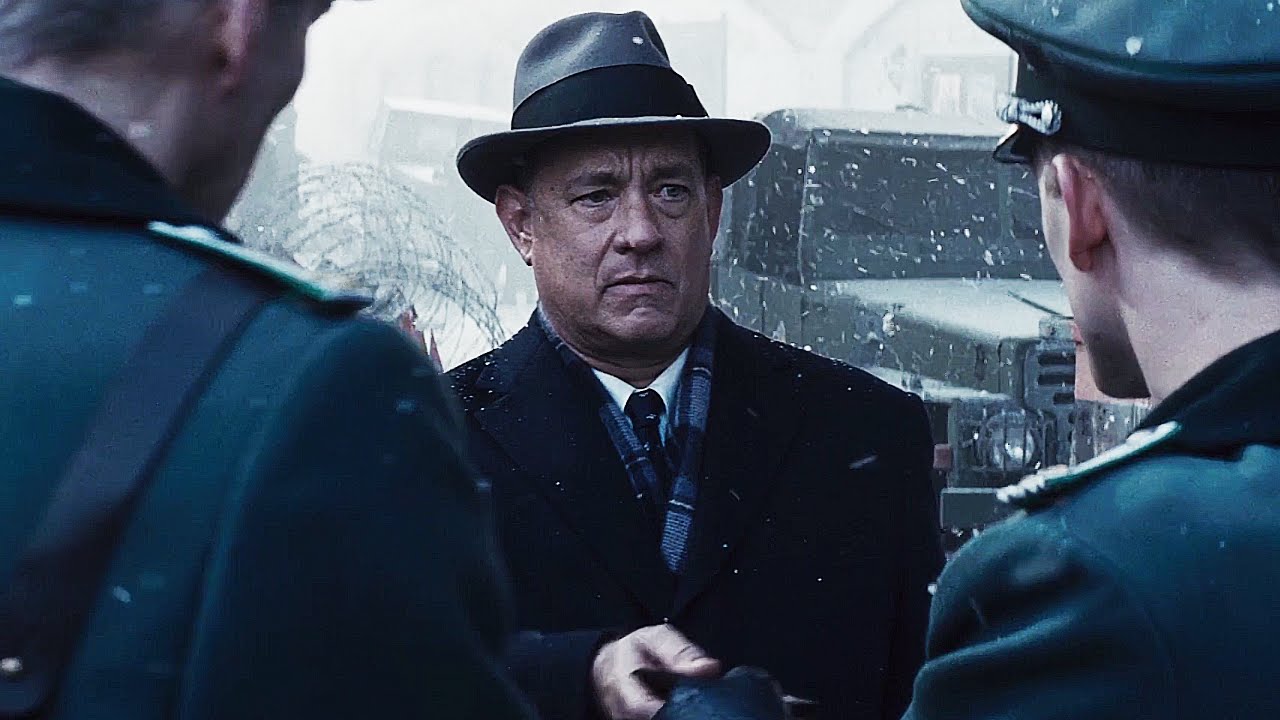
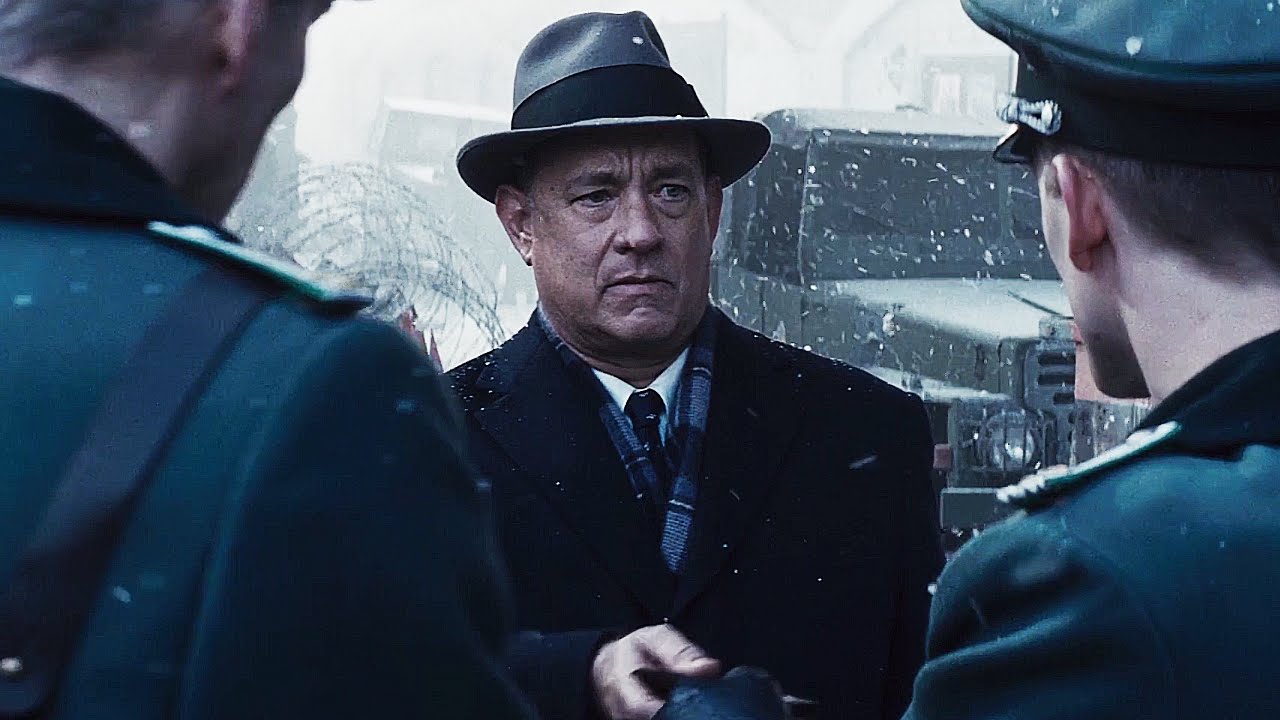
Bridge of Spies, out on DVD/Blu-Ray this week, tells the story of the tense negotiations for the exchange of a Soviet spy for an American U2 pilot and a graduate student. The pilot was Francis Gary Powers, who was flying a camera-equipped plane on a top secret reconnaissance mission for the CIA when he was shot down over the Soviet Union.

His son, Francis Gary Powers, Jr., talked to me about the film and about his work in educating people about his father’s legacy and about the Cold War era.

What led you to create the Cold War Museum?

I founded the Museum in 1996 to honor Cold War veterans, preserve Cold War history and educate future generations about this time period. I found that in the early 90s right after the end of the Cold War. I’d be giving lectures to high school students in the Washington DC Fairfax County area, and nine times out of ten I would walk into a classroom to give a talk on the U-2 incident and I would get blank stares from the kids. The students thought I was there to talk about the U-2 rock band. And so that was the catalyst, that was a light bulb that goes on, that said, “Oh we need to create a Cold War Museum to preserve this history and educate the students.” That’s how it all transpired.

Copyright Francis Gary Powers, Jr. 2015

It was opened in November 2011, 2000 square feet of Museum space, an addition 2000 square feet of storage space adjacent to the Museum. It is in Vint Hill, Virginia, 40 miles from Washington DC, in an authentic Cold War historic site that was used throughout the Cold War by NSA, CIA, ASA – Army Security Agency – to electronically monitor and intercept communications primarily from the DC embassies. And so it was functional up through the mid-90s at which time it was closed down by BRACT – the Base Realignment and Closure Act. The government of Virginia had appointed a Vint Hill task force to oversee some developments of homes and businesses and make it a residential area and a business complex. So that’s what they’re doing now. It’s opened on weekends, midweek by appointment for school groups and the vision that we have is to grow on site, to become a state of the art museum.

I think even adults will learn something from the movie. Does it tell the story accurately?

I am hearing very good reviews from friends and peers, and people I have interacted with over the last few months like the movie. My personal take is that the movie is very well done. In the big scheme of things, the overall movie hits the historical accuracy spot on, the feelings of the 1950s and 60s, the fear of the Soviet Union, the civil defense drills and duck and cover drills that people would do are all accurately portrayed, including the feelings towards my father, towards Rudolf Abel, and towards James Donovan , the attorney representing the Soviet spy but also brokering the exchange between my father and Rudolf Abel. So the feelings felt towards these individuals sometimes throughout the movie were not so flattering. I mean it was the time period and these were the feelings that were felt, so overall in the big picture it’s historically accurate.

Now you get to the details of each scene. It’s Hollywood, a little embellishing, a little dramatic effect, a little artistic liberty in all the scenes. At the very end of the movie, they do honor my father, though. They helped to set the record straight, acknowledge him as a hero to our country through the medals he received posthumously.

In the film’s climax, as your father is being released, the Americans bring someone there who knew him and could identify him. Is that how it happened?

In reality there is a gentleman name Joe Murphy and he was responsible for ID-ing my father at the bridge. So that is historically accurate. The movie takes some liberties with the role that Joe Murphy plays. In the movie Joe Murphy is a second lieutenant U-2 pilot along with my father, one of his colleagues. In reality Joe Murphy worked for the CIA in their security division and he was tasked to bring the pilot home. So in the movie it seems like dad and Joe knew each other very well, they were pilots together, in reality they did not know each other very well until after he came home.

But you had also have to remember this time period. Abel was caught in 1957-ish. There was a sting operation set up by the FBI for about two years in order to capture him. So between 55 and 57 they’re looking for Rudolf Abel. My father got shot down on May 1st of 1960. His his trial was August 60 then he got exchanged in February 62. So there’s about a 5 to 7 year time period that the movie has to condense into a two hour block so as a result some things are left out, some things are left unanswered. It’s not Gary Powers-centric, the movie is Donovan-centric. He is the hero of this movie, James Donovan. So there are a couple of things that I would have done or added in to clarify which there wasn’t time for.

Where should people go if they want to learn more?

There are three books out there that talk about this part of American history, or world history. My father’s book, Operation Overflight, that he wrote and had published in 1970. There is that of one James Donovan’s book called Strangers On A Bridge published in 1965. And there is a third book with the same title of the movie called Bridge of Spies that was written by Giles Whittell out of the UK. The movie is not based on any one book. It is based on, as they say in the movie, inspired by historical events. So between the historical records, the declassification conferences and files, the news reports at the time, the books that were written about it, the Coen brothers put together this movie script.

What did you know about all of this when you were growing up?

I was actually born in 1965, two and a half years later. So my father got shot down on May 1st of 60, spends 21 months in the Soviet prison, three months solitary confinement going through the interrogations, 3 days trials in August of 60 and then another 18 months Vladimir prison. The first prison he stayed in for the three months of interrogation was Llubyanka, the infamous KGB prison and then after the trial he was transported to three hours outside of Moscow to Vladimir prison where he serves out another 18 months as a sentence, a total of 21 months in captivity. His exchange on February 10th at the Glienicke Bridge, Potsdam Germany. It’s a cold dark foggy morning right out of a le Carré novel, these two spies were on each side of the bridge with their entourage, they are positively ID-ed and they walk home with their respective freedoms. So as a kid I was very well aware of this. I knew my father had been shot down and I knew he had been imprisoned.  We talked about this, when I was reading his book. He would come in at nights and answer questions I would have. But for me as a kid 10 years old or so reading this book I thought this was normal, I thought everybody’s dad did something like this. That perception changed on August 1st of 77, I’m 12 years old my father dies in a helicopter crash while working for NBC television out of Los Angeles and that’s when the last light bulb goes on. That’s when I realized ‘Oh, not everybody’s dad gets struck down, imprisoned exchanged, buried at Arlington, news reports about him,’ that’s when it really hit home. But by that time had passed away and I couldn’t ask any other questions.

What is it that you think the Cold War era has to teach us about the geopolitics issues of our day?

The Cold War needs to be studied and analyzed so that people, including students and scholars understand the world we live in today. The War on terror has its origins in the Cold War. For example, the Afghan war in 1979 – 1980, when the Soviet Union is fighting Afghanistan in a guerilla type of war in that country. The CIA is helping to supply the rebels with the weapons and instructions to fight the Soviets. Well the head of the rebel organization that the CIA was backing to fight off the Soviets was none other than Osama bin Laden and so from his training, from the CIA, in the 1970s, late 70’s and early 80’s, the Afghan war evolves into over the next 10+ years into him using that technology, that training it against us. And so in this war on terror it’s very important to realize what the roots are, where it comes from. To understand what’s happening in the world today you have to understand how the Cold War contributed to it. And so one of the very important things that I like to reach out to my students about is that it’s not just two separate conflicts, it’s overlapped.

Related Tags:


Interview The Real Story
Interview: Producer Jim Whitaker on “The Finest Hours”

Interview: Producer Jim Whitaker on “The Finest Hours”

Posted on February 1, 2016 at 3:57 pm

Producer Jim Whitaker says that when he first read The Finest Hours: The True Story of a Heroic Sea Rescue, “every time it came to a different point in the story it just got more and more amazing. And in my job you try and find great stories that could work for the big screen, that could be movies. But when you can find a story that is amazing and great in the movie story but then it also turns out to be true — to me it’s incredible to be able to have that opportunity. It is an incredible adventure but also is important for the values that the characters represent as well.”

But it was a daunting undertaking, even with modern technology, to try to re-create a 1952 nor’easter storm so massive and powerful that it split not one but two tankers in half, and the small boat captained by 24-year-old Bernie Webber (played by Chris Pine) that rescued 33 men from one of the tankers. “We knew that the key to emotionally experiencing a movie in the strongest way was to put yourself in the position that Bernie and his crew were in going on this incredible journey and accomplishing this incredible feat. And the goal was to have the audience get right in the middle of it and then in a way feel the catharsis of the experience. As always, we start with the characters and their journeys and when you start to build out from there. We break the movie down into its essences which took us on a fantastic journey because we found ourselves building giant parts of steel oil tankers putting them on hundreds of thousands of gallons of water and creating a kind of an amazing reality which was also tied in with the raw circumstances of the actual event with sixty foot waves. We were kind of in a continual wet and miserable state to create the most authentic experience.”

Copyright Disney 2016

The 3D effects really take the audience into the heart of the storm. “We wanted the movie to feel completely immersive. Craig Gillespie was designing the movie to feel authentic like you were right in the place where Bernie and his men were. So as you are building the movie you’re constantly thinking, ‘How do I make the experience feel authentic and real?’ 3D allows that in an incredible way. And we wanted the movie to be kind of gut-wrenching in the sense that it sorts of holds you in the gut. And therein lies character catharsis. We wanted to grab you and hold you through the whole experience from both an environmental point of view and a character point of view and I think 3D actually does that very well. As much as it is about size and scope and specs which I think the movie has, in essence it really is the heart and the emotion of the movie to me that’s most powerful. And I think in many ways that’s why you go to the movie,s both to get thrill of the size and scope and then emotionally to just feel the power of these great characters.”

We go back and forth between the rescue boat and what is happening with the group hoping to be rescued, who, first of all, have lost their captain and officers, so they are not sure who is in charge. The one who emerges is played by Casey Affleck. “I think both characters embody, Casey’s and Chris Pine’s characters, is a very humble, quiet nature and then they are both called upon to do something extraordinary. And in some respect they both resisted but you could see that they operate very differently in the movie. But they have the qualities to be able to do it, and you’re just watching and waiting for them to allow themselves to emerge and take control. It shows a message that I feel is very important, that we all have it within us to do extraordinary things. Sometimes we do it in life in very small ways with our kids or our partner or wives and we just do little things that are extraordinary but sometimes you are called upon to do something that is physically and emotionally extraordinary because the circumstances call upon it. In that case for Siebert, Casey’s character and Bernie, Chris’ character, they were both called upon to do extraordinary things and they rose to the occasion. To see on the screen a story that was true of these men, I find it incredibly inspiring and I hope aspirational too, I hope people can take away from it a certain sense of being inspired to do that in their everyday lives. I love their selfless nature. Bernie in particular was very humble and yet he knew that he needed to do the right thing. He did the right thing in the most selfless way and I think it is a beautiful thing to see people who serve other people in very quiet, strong way. They lead by their example in very quiet, strong, humble ways, I love the integrity of both of their characters for that.”

There are some computer graphics in the film, but a lot of the water in the movie is real. And some of the footage of the storm is real, too. “We were determined to make it as authentic as possible so we shot on Cape Cod for a good portion of the film. Of course we are shooting a movie about a nor’easter, a hurricane that comes through and in fact one did. Most often when that happens it’s an interruption to production. But we said immediately, “Okay let’s get our cameras and get out there and shoot.” So a bunch of the stuff that happened on Cape Cod happened in the middle of the nor’easter and that was both complicated and amazing. It was perfect for the movie and pretty exciting to be able to shoot. So that was great, we felt like Bernie had a hand in it.”

As the movie begins, about a month before the storm, Bernie is about to meet a girl he has been talking to on the phone but never seen. Whitaker told me the real story of how they met over the phone. “Miriam was a phone operator. She overheard Bernie telling a young woman that he was supposed to have a blind date with that he couldn’t go on the blind date because he had to go out and go do a rescue. And she was an operator and she overheard it and the gentle and kind of kind way in which Bernie spoke to this woman down immediately made her think that was a guy she wanted to meet and fall in love with. So using that technology she kept calling the Coast Guard station and said ‘There is a guy named Berry or something?’ Finally, Bernie got on the phone and she sort of talked her way around this unusual circumstance of being an operator who listened in on his call and they then spoke over the phone without seeing each other for almost 2 to 3 weeks without ever seeing each other, every day they talked on the phone but they never met up. And so the story begins with them meeting for the first time and Bernie is still anxious because he doesn’t know if the girl of his dreams looks like he imagines.

Whitaker hopes that families will see this movie together. “I want them to talk about the importance of character. These men had they did the right thing for the right reasons, not to get any attention. They just did it because it was their job and they knew it was the right thing to do, no matter how dire the circumstances. It was a suicide mission. They knew that there were other people in need and so they didn’t think about themselves. It’s those qualities, those character qualities that I think are important. And then finally when it got to be the most difficult point for them at their darkest hour they relied on faith. I want people to take away the idea that it’s important to hope.

Related Tags:


Behind the Scenes Interview
Interview: Ilya Tovbis on the DC Jewish Film Festival

Interview: Ilya Tovbis on the DC Jewish Film Festival

Posted on January 31, 2016 at 3:18 pm

Ilya Tovbis is director of the Washington DC Jewish Film Festival, which will take place from February 24-March 6, 2016. In an interview, he talked about what it means to be a “Jewish movie.” “It’s on one hand easy and on the other hand a much more complex question. The easy answer for us is that some aspect of the content has to be about the Jewish experience and that could be cultural or historical, it could be character driven but it has be something that has even if not the central characters of or the central theme of the film the film will not be the same without that element. So sometimes obviously it’s on the nose and very clear and it’s entirely about let’s say “Shtisel,” which is about an Orthodox family in Jerusalem, very clearly black hat Jewish through and through. And then there are other stories. This year we have a whole sidebar of films around artists and many of them are Jewish in a more cultural or secular way and perhaps not even the main driver of the art form they are making but without their Jewishness and Jewish identities that they bring to the artwork.

Tovbis said they reviewed around 1300 films, and, as happens every year, some themes emerge. This year happened to have several outstanding films about artists, so that became one of the categories selected for special attention. “The artist category is pretty broad, so we have dancers, we do visual artists, we have poets, we have some musical artists, graphic, novels, so it’s really a bit all over the map.” Another focus this year is LGBTQ films. “So something else is important to us and I think you would find this at most major Jewish festivals is a diversity of mission and so for us the notion of expanding and challenging what the Jewish identity is is paramount in everything we do. It’s really the core of what we do whether we’re looking at Diaspora Jews or visions of a Jewish identity that don’t conform to perhaps the norm that everyone would put out there.

https://www.youtube.com/watch?v=M59zWXV0zT0

Some of the films are perhaps more of what you would expect in LGBT lineup and other ones are more unusual. ‘Marzipan Flowers‘ is a sort of fun transgender relationship doesn’t really conform, even the way it’s made, very low-budget. I’m very excited to share that. We are presenting most of the films with some form of discussion though sometimes it’s more focused on other content in the film, sometimes it’s more focused on LGBTQ content. So we’re going to have with us for example for ‘The Good Son’ the director and producer Shirley Berkowitz. We will be having a professor speaking about “Sunday Bloody Sunday” because are looking at that in light of John Schlesinger’s entire career. Barney Frank is going to be here with his husband as well to discuss the documentary, ‘Compared to What: The Improbable Journey of Barney Frank.’ The discussion will be more about pushing legislative agenda and politics. This is Washington!”

One film of particular interest on the schedule is “A Tale of Love and Darkness,” based on the book by Amos Oz. It is the writing and directing debut of Oscar-winner Natalie Portman, who also stars.

“It’s a lovely film based a major pillar of modern Israeli literature, a very personal tale that deals with his mother which Natalie Portman plays in the film. There’s some elements where she takes liberties with the original material but it does stay pretty close to it and I think it’s a lovely film. I think there is some incredible assuredness. Natalie Portman has been around show business for a long time so even though it’s her first time directorial effort I think she takes a lot of risks. The story focuses on a mother making up these sort of fanciful tales in order to escape a bleaker reality which she finds herself in both in terms of a personal depression and what’s happening more broadly nationally as the state of Israel comes into a more modern being and then also she has some issues with her husband and so a lot of the tales are sort of interwoven with these really almost magical realism shots and stories and I think the way thats done is just exquisite and very gentle in the film.”

The festival’s visionary award will be presented to the actor Armin Mueller-Stahl, with a screening of his film, “Avalon,” written and directed by Barry Levinson, based on his memories of his family in 1940’s Baltimore. “Most of the event is really centered around a lengthy Q and A on stage really about the full body of work.” Another highlight is a musical program, a live musical performance that is a musical tribute to the jazzy soundtracks of animator Max Fleischer’s surreal, wacky and Yiddish-inflected Betty Boop and Popeye cartoons of the 1930’s. Tobvis says, “It’s a really fun zany kind of insane project I am curious myself to see.”

Related Tags:


Festivals Interview
THE MOVIE MOM® is a registered trademark of Nell Minow. Use of the mark without express consent from Nell Minow constitutes trademark infringement and unfair competition in violation of federal and state laws. All material © Nell Minow 1995-2026, all rights reserved, and no use or republication is permitted without explicit permission. This site hosts Nell Minow’s Movie Mom® archive, with material that originally appeared on Yahoo! Movies, Beliefnet, and other sources. Much of her new material can be found at Rogerebert.com, Huffington Post, and WheretoWatch. Her books include The Movie Mom’s Guide to Family Movies and 101 Must-See Movie Moments, and she can be heard each week on radio stations across the country.

Website Designed by Max LaZebnik