
Interview: Director Morgan Matthews on “A Brilliant Young Mind”

Posted on September 8, 2015 at 3:54 pm

Morgan Matthews made a documentary about brilliant teenagers competing in the Math Olympiad, many of whom were on the autism spectrum, and that inspired his feature film, “A Brilliant Young Mind,” with “Ender’s Game” and “Hugo” star Asa Butterfield. Sally Hawkins plays his mother and Rafe Spall plays his teacher, once a brilliant young mind himself but now bitter over his struggle with multiple sclerosis. I spoke to Matthews about the film.

https://www.youtube.com/watch?v=GlEnQFbcH_I

“I was making a series of films about unusual competitions and I had made one film about the world’s taxidermy championships for the BBC which has gone down quite well. I followed people from around the world who were entering their mounted animals into this competition. And so that had picked up some awards and got some attention so BBC and I got together and decided to make a series of films and so I ended up making documentaries about a million-dollar pigeon race, the world hairdressing championships and the world Elvis impersonating championships. They are all quite fun and very good characters but we felt that one of them might go wrong or fall done for whatever reason and so we were looking for a kind of backup subject. The producer I was working with at the time came across the International Mathematical Olympiad and it was really interesting. And I went to meet the wider pool of students who were all competing for a place on the team and their tutors and was just so taken with these wonderful characters and this world that they inhabited which was one that was largely alien to me. Here we had children and young people aged between 13 and 17 who were doing the most extraordinary things. They were all really unique characters in their own right and everyone of them very interesting to talk to. And they were going on this incredible journey. And so I instantly felt there was another film here and I went back to the BBC and showed them some of the footage and they agreed and commissioned it as a separate film actually from the series which became a standalone 90 minute feature-length documentary.”

One of the key moments in the film is when a character says that if you are not gifted then you’re just weird. Matthews says that applies to any teenager — or anyone looking to find their niche. “It doesn’t just apply to the world I experienced during making the documentary with those gifted teenagers. In any kind of discipline or subject whether it’s sport or an academic subject and particularly with young people, they can be the best in their class, they can be the best in their school and then when they get together in these hothouse environments with other children who are sometimes more gifted than them, it can be quite a difficult experience. On one level it can be incredibly enriching for them and actually liberating in the case of the kids on the math squad because for years they have been at school and they might be going to quite high achieving schools but the people around them are operating at a much slower level and even their teachers so it can be quite frustrating for them and then they get together with Olympiad students and all they want to do is math and math at the level that they can operate at. And so it can be a very exciting time for them but it can also be disconcerting because sometimes they are not the best anymore and if you’re not the best then where does that leave you? And I think there were a couple of students who experienced that having been the very best in their class, the very best in their school to suddenly be challenged by the fact that they weren’t the best in that group of students and sometimes even make the team became quite difficult for them. But on the whole I think it’s very enriching experience for those students who went through the competition. There are also clearly especially the time I was making the documentary, a significant number of those students who were on the autistic spectrum and in that environment that was okay. They didn’t experience negative reactions from their peers within the Olympiad environment because they were kind of with kindred spirits with people like them not necessarily the same as them; everyone on the spectrum is very different as well but people who accepted differences on the whole. Although there was one student who was more I suppose noticeably on the spectrum. He was sometimes quite abrasive and rubbed some of the other students up the wrong way and they ended up ostracizing him really and for me that was quite sad to see that a group of students many of whom had experienced bullying themselves and had been ostracized themselves in their normal everyday environments were suddenly doing that one of their own.”

He spoke about making the mathematics in the film real — and expressing the beauty of math — to audiences who would never be able to grasp what the students were doing. “It was very important that the math in the film was correct and because I knew it was being scrutinized by mathematicians,people who know. And there are many examples of films that have a mathematical theme or context where maths is represented in very complex looking equations on blackboards that are actually either gobbledygook or just not relevant to the type of mathematics that those students or those people would be studying and mathematicians pick up on that all the time and get frustrated by it and it kind of blows the illusion of the film, the suspension of disbelief. So it is important for me to have correct math in the film and we involved a mathematics consultant who was one of the original Olympiad students in the documentary. He made sure that everything was correct and came up with interesting problems. But he and I had a bit of a battle sometimes because he had a not so hidden agenda which was to make math in the film accessible to a wider audience. And for me when I experienced the Olympiad, what was amazing about it was here is all of this math which just appeared completely inaccessible and extraordinarily complicated and yet there was these children who were able to do it and that to me was what was so extraordinary. So we had to find a balance of not completely alienating people from the mathematics but also being truthful to the level of mathematics that was being done by these kids and sometimes that was just around language for the kinds of problems that we used. Instead of the necessarily mathematical symbols, they use words to express problems. It is very important to be able to represent this world efficiently, a world which most of us cannot see and that Nathan sees all around him. mathematics is all around him in engineering and everything and in nature. And so he sees this but it also empathizes through his condition, synesthesia where he sees colors in pattern, especially patterns which involve light. And so that beauty is enhanced in points in the film where we see through Nathan’s eyes, the beauty around him and that he’s quite an introverted boy. He is often in this other world looking around him absorbing all of the mathematical patterns around him and I just wanted to be able to represent that so we used color and pattern to give the viewer a sense of that.”

Butterfield’s character is based on a real competitor in the Olympiad. “Asa was able to meet Daniel and Daniel was able to articulate. He is an interesting boy, Daniel, well, a young man now. He doesn’t think he is a very good communicator and that makes him very shy but actually if you spend time with him in a room and sit down for a few hours he’s able to articulate his experience brilliantly and what goes on inside his head. He will explain that he doesn’t know what to do with his face and he doesn’t know how to read the facial expressions of other people and the stress of trying to work that out becomes so overwhelming that he will avoid communication altogether. And so he was able to explain things like that to Asa which helped him form Asa’s performance. So even though Asa doesn’t say very much as Nathan he knows what’s going on inside of his head and I think that’s really helpful but he does have those wonderfully expressive eyes as well and that was also really I think central to his performance, that he was able to convey so much through them and that he is just so endearing in that way.”

Matthews used music very effectively to help tell the story, too. “It’s cathartic and it draws out the emotion. There were characters in the film who aren’t necessarily able to tell you how they feel. I think the music helps us with that.” Especially meaningful was the use of music by Keaton Henson, who “has terrible stage fright and he is unable to perform in public most of the times so he rarely ever does very small shows. And I met him and there was something about him being quite an introvert and shy person that just was in keeping with Nathan’s character. But when he sings, when he plays, these beautiful and very emotional songs come out and that just seems very appropriate to me.”
Related Tags:


Based on a true story Directors Interview
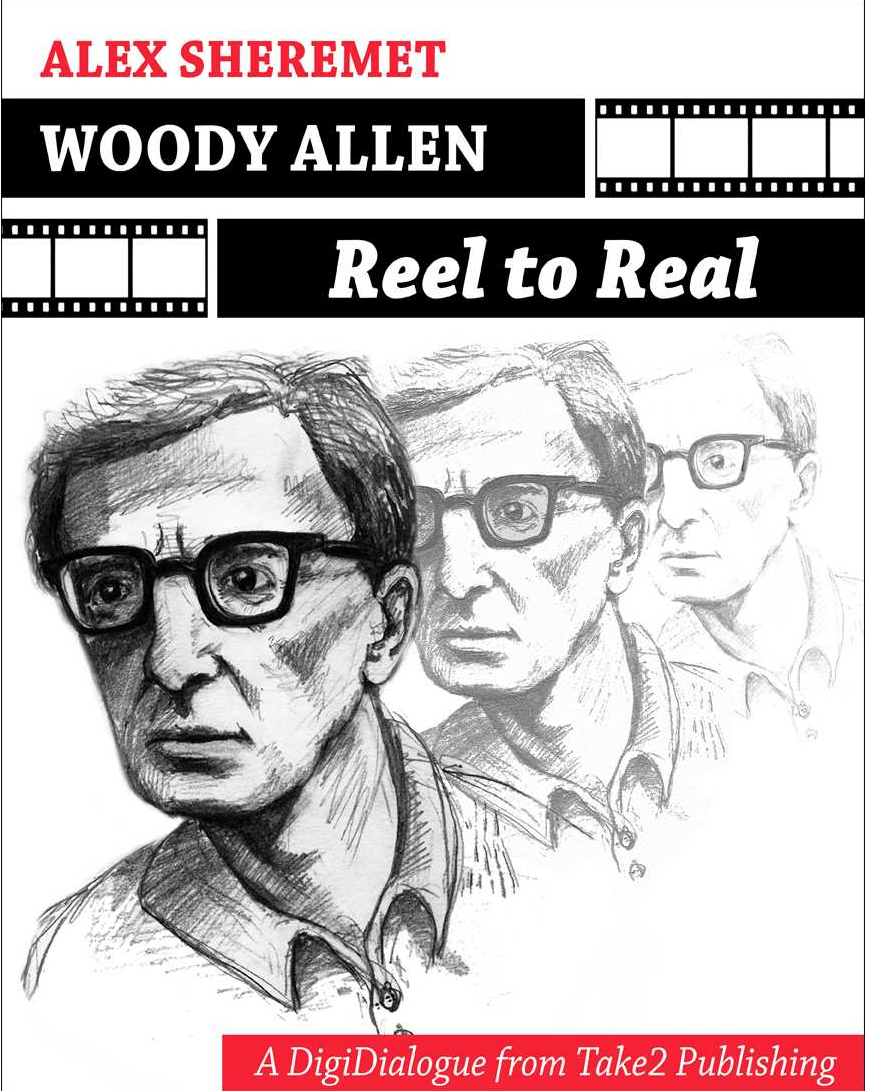
Interview: Alex Sheremet on Woody Allen (Part 2)

Interview: Alex Sheremet on Woody Allen (Part 2)

Posted on September 6, 2015 at 3:23 pm

Copyright 2015 Take Two Publishing
This is part 2 of my interview with Alex Sheremet about his book, Woody Allen: Reel to Real. You can read Part 1 here.

He keeps coming back to a character’s taking moral judgement into his own hands to commit murder, most recently this year in “Irrational Man.” What do you think this idea of literally getting away with murder is so resonant with him?

I think the fixation began with Woody’s desire to show death and evil as realistically as possible, and Martin Landau’s Judah Rosenthal (Crimes And Misdemeanors) is, perhaps, the most realistic killer captured on film. In short, it is obvious that the number of murders (usually unsolved) far outnumber the confessors- meaning, guilt is a malleable thing, and can be siphoned off for one’s own uses and rationalized away. Art has rarely shown this (especially not well), and the biggest example that we have of murder and guilt in the arts is Crime And Punishment. This film is an inversion of that, and even though Cassandra’s Dream does show guilt eating away at things to the point of destruction, even that is treated in a way that basks in its own inversions and exploits the viewer’s sense of complacency.

Bergman and Fellini are often mentioned as clear influences on Allen. Who else would you add to that list? And which current directors most look to him as an influence?

Bergman, Fellini, The Marx Brothers, Charlie Chaplin, Akira Kurosawa, Bob Hope (especially the persona), and Buster Keaton all had their place. I probably would not add much to the list of artistic influences. As for the work that’s been influenced by Woody, there is- literally- all of the ‘city’ rom-coms from the 1980s-90s, to shows like Sex And The City, Derek Cianfrance’s Blue Valentine, Whit Stillman’s Metropolitan, Kevin Smith’s Chasing Amy (his best film, in fact) and- I’d wager- the majority of films that try to put romance front and center as a ‘serious’ topic. I think the majority of these attempts failed, however, partly because so many fans take works like Manhattan and Annie Hall at face value and don’t recognize how so many of their illusions are being skewered.

Which is his most under-appreciated film?

It’s a tie between Stardust Memories (one of the 10 or 20 greatest films ever made) and Another Woman. Stardust Memories, in particular, has been seen as an ‘attack’ on Allen’s films, which is both ridiculous and irrelevant. In fact, it is one of the deepest comments on art and human relationships that I’ve ever seen, from the illusory ending of the ‘inner’ film, to the way that Sandy- despite being neurotic and the like- is both wanted and demanded by thousands of others not necessarily for his fame and money, but because he is a complete person. He simply knows HOW to create and retain a measure of health and self-purpose that the others do not. Yet his flaws are front and center, too, even as the film ends on a positive note: that all of these conflicts, from Sandy’s fears, to his fans’ neediness, are self-made, and immaterial in the end. In short, no one escape’s Woody’s eye…not even great artists, as Sandy apparently is. It is simply wrong, factually, to call Stardust Memories dour. And it has more a ‘happy’ ending. It is an ennobling one.

Is “Radio Days” is most autobiographical? Or “Annie Hall?”

Probably neither. Radio Days captures the spirit of what Allen has gone through and valued, but not necessarily the specifics. Annie Hall has small parts of his relationships and upbringing, but that’s about it. Stardust Memories and Interiors have elements of his life with Louise Lasser, and Husbands And Wives is viewed- incorrectly- as a kind of corollary to his relationship with Mia Farrow. It’s hard to get an artist’s “real life” from his work of art, unless one is dealing with a memoir. But you get much more than that: you get an artist’s INNER life, which is necessarily richer than the details. It’s not the details, per se; it is the REACTION to these details and how they’re interpreted and re-interpreted that matters most.

You say that with “Mighty Aphrodite” Allen stepped “outside his comforts.” What was different with this film?

https://www.youtube.com/watch?v=-qz_zB2Pc2g

It featured a number of self-conscious changes/additions. The ridiculous use of the Greek chorus might have an analogue with his skewering of the Russian literary classics in Love And Death, but while the earlier film was all gags, there are a number of truly serious and poetic moments in Mighty Aphrodite. For example, Michael Rappaport’s character is probably the dumbest character he’s had to this point- and while Cheech (Bullets Over Broadway) was a thug, he was an intelligent one. By contrast, Michael Rappaport plays an idiot that, instead of merely being forced into the role of a pure idiot, is fleshed out by whatever means possible for such a limited human being. Thus, when Mia Sorvino is having dinner with Rappaport, you see just how little the two can talk about, and how little- by extension- most people really have in their own relationships, built, as they are, upon things that don’t really last. And Rappaport, on his end, delivers a wonderful little monologue about a ‘dream’ he has- to be dropped naked into the middle of the snow by a bird. No matter how comic it is, there is also something knowing about the scene, too- that these are the limits for so many people, anyway, and that this is the way they create and retain meaning. In short, characters get precisely what they deserve: criticism, prodding, but also the opportunity to show off their own depths, if in fact they are available.

Which is your favorite score in his films?

I’ve always been partial to the music in Hannah And Her Sisters and Radio Days. The latter probably has Allen’s best use of music, while Hannah does interesting things with song titles and lyrics that often go at odds with what’s on the screen- as if Allen means something other than what he shows.

What do you want him to do that he has not done so far?

At this point, I’d want him to simply rest. He’s done more great work than almost any other filmmaker in cinematic history. The longer that he attempts to draw his material past the point of his own talent, the more filler he’ll be responsible for. If his last film were 2007’s stellar Cassandra’s Dream, we would all be tantalized with ‘What’s next?’ and hope that he’ll continue. Instead, we had the question answered in a way that will simply not matter a half century from now. On the other hand, I don’t really care, personally. Again: he’s done great work. He has certainly earned the right to waste people’s time so that he could pass the time in old age. Let him do what he feels he must.

Related Tags:


Books Critics Interview Understanding Media and Pop Culture

Simon Abrams Interviews Legendary Producer Roger Corman

Posted on September 5, 2015 at 3:31 pm

One of my favorite critics interviewed Hollywood’s legendary producer, Roger Corman, for New York Magazine’s Vulture, and it is a treat to read. Corman is by many measures the most successful filmmaker of all time because he made ultra low-budget films that were very popular with moviegoers, including “The Man with X-Ray Eyes,” “Little Shop of Horrors” (the original, with Jack Nicholson, that inspired the Broadway musical) and a series of adaptations of Edgar Allen Poe stories. At 89, he is still going strong, producing some of the SyFy channel’s nuttiest and most entertaining monster movies, like “Sharktopus vs. Whalewolf.”

Corman spoke to Abrams about the one that got away (“Easy Rider” went to another studio because one of the studio executives insulted Dennis Hopper) and the difference between making a theatrical release and a TV film.

“In a motion picture, you can wait a while, build suspense. I always preferred to hint at the creature and not disclose it until later. But Tom ‘s theory — and I think he’s right — is that in the theater, people have paid money to come in, so they’ll sit and wait, and expect the suspense to build. But in television, within the first five to ten minutes, they’ll simply change the dial. It’s a totally different concept.”

Related Tags:


Behind the Scenes Film History Interview
Interview: Kim Campbell on Caring for Glen Campbell and “I’ll Be Me”

Interview: Kim Campbell on Caring for Glen Campbell and “I’ll Be Me”

Posted on September 4, 2015 at 12:07 pm

Glen Campbell…I’ll Be Me is a beautiful documentary about an ugly disease. Glen Campbell, one of the most popular and successful musical performers of all time, was diagnosed with Alzheimer’s disease in 2011. As memories, words, and some basic concepts about daily life became fragile and then disappeared entirely, the music stayed with him. And so, his family took him on one last performing tour. The audiences were understanding, applauding even when he forgot the words or repeated a song he had just played. But backed up by his children, he played brilliantly and he loved the audience and they loved him back. The documentary is the story of that tour, of how Alzheimer’s affected Campbell and his family, and, with commentary by friends and fellow musicians, about how all of our lives are touched by the tragedy of dementia and cognitive impairment.
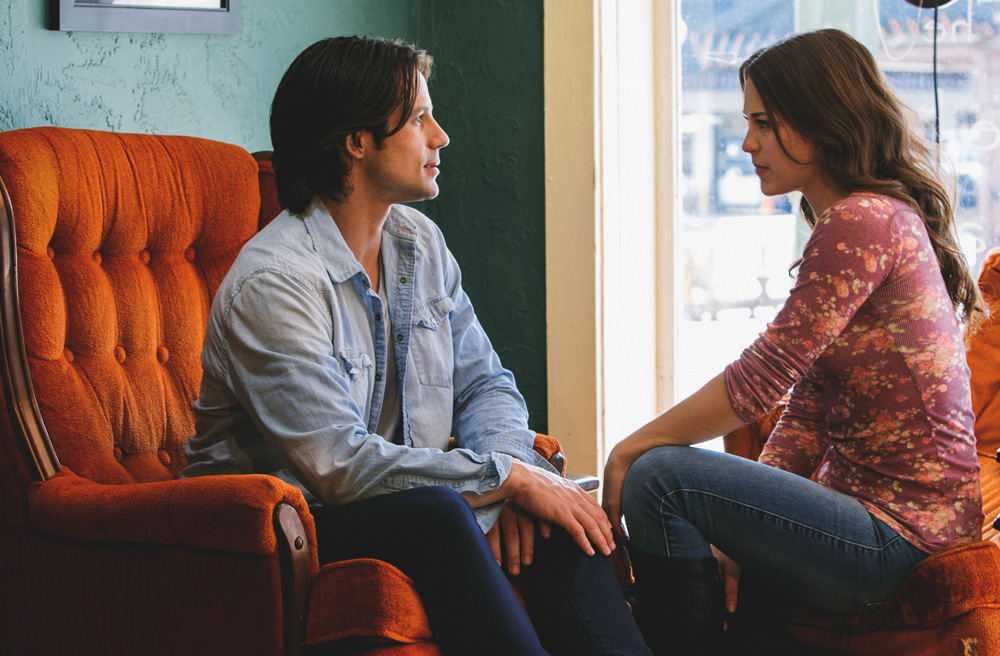
Campbell’s wife Kim is in every way the heart of the film. Her loving spirit and devotion are deeply moving. It was a pleasure to speak to Kim about the film, which is Glen Campbell…I’ll Be Menow available on DVD.

What has it been like for you to see how audiences respond to this film?

It’s been amazing. Everywhere we go and show the film people are really moved. They feel like we’re telling their story and they feel like it’s bringing Alzheimer’s out of the shadows into the light and helping remove the stigma of this disease.

What is it about music that seems to be able to reach people with dementia even when words are failing?

From what the doctors told us, music involves all the different regions of your brain at the same time and everything is stimulated at once. It just seem to promote the health of the brain, to keep everything working. They say that it may have kept Glen from progressing as quickly as he otherwise might have had he not been playing music. It’s a natural memory aid. People have used music to memorize things for years, for centuries. I think when you hear songs from your past on the radio or something you remember everything, you remember where you were when you heard it and the smell of the ocean and colors and what you were wearing and it just seem to trigger everything to do with your memory for some reason. And it brings joy to people. And joy of course brings a sense of well-being. So it’s a good therapy for people. I think all the arts are. There is a video clip of Glen relating to color and singing while he is painting and it’s really beautiful. So I am a big advocate of all of the arts for people with dementia. Really for everybody, for caregivers too. The art is therapeutic.

How is Glen doing now?

In March of 2014 our family joined the Memory Support Community in Nashville and Glen began residing there but recently about a month ago I brought Glen back home so now I’m caring for him at home again. And it is extremely challenging, he’s at the point where he just need one-on-one care round-the-clock. And it’s such a joy to have him back, emotionally it’s much better for me but physically it’s really challenging, I don’t get much sleep. He still has moments when he can become combative. I’m sporting a black eye this week that I got just trying to change his pants. You know that’s a part of Alzheimer’s that people generally don’t talk about. Your desire is to protect someone’s dignity but I really don’t think it has anything to do with dignity; it’s a disease. And this is typical for all people who have Alzheimer’s. They can’t express themselves verbally anymore and they don’t understand what’s going on, if you are trying to bathe them or take their clothes off or something their natural instinct is to lash out. So it’s just something that you don’t talk about that I think needs to be out there so that people can understand the tremendous challenges it is to be a caregiver for someone who has dementia.

So what are you doing to try and takes care of yourself? You can’t take care of him unless you are in pretty good shape.

Well, I pray a lot and I’m so blessed to have our daughter Ashley and our son Shannon and our nephew, Matthew. They’ve all been a part of our care team for so many years and they’re still living at home with me and helping. So I have got family and friends around, so that’s really important because you don’t want to become isolated. So many people are isolated in a home with someone with Alzheimer’s and they don’t have any help or the moral support of having somebody else there to help you. But I exercise, I take ballet, and that’s very therapeutic for me. I think it’s really important to raise awareness about Alzheimer’s and educate people about Alzheimer’s and so I’m doing that. I recently did a real estate course to get my mind off of Alzheimer’s and learn something new because I am aging, too. I am 57 and for my brain health I need to keep learning. So that was really fun. And it helps to meet people that are going to the same thing that I am. I’ve met a lot of women around the country who have husbands that have Alzheimer’s. I think it’s really different thing to have a spouse with Alzheimer’s than with a parent who has Alzheimer’s, emotionally different and so to have those friends has really been a great support to me. And I don’t belong to formal support group but I believe that those are really important and people should seek those out in their communities. I’m just blessed that it kind of happened organically with me to meet people in the same situation around the country and connect with them we stay in touch and visit each other and talk on the phone about what we are going through. And I try to eat right, too, all the natural things.

The film really makes clear that while people with Alzheimer’s and their caregivers have a lot in common, there are some very big differences.

Right. The thing is if you see one person with Alzheimer’s you’ve seen one person with Alzheimer’s. It’s different for everybody but at the same time it’s similar for everybody. There are standard things that people generally go through. Not everybody becomes combative but many do. Not everybody goes through retrogenesis but many do. Glen hasn’t really regressed and started becoming a child but there are childlike things that he began to do like his fascination with color. That is kind of beautiful actually because the way they begin to look at the world is like a brand-new life. Glen would look at the sunset and just get so emotional about it, “That’s the most beautiful thing I’ve ever seen!” So you try to find beauty and joy in the obvious tragedy. It’s your brain dying and you’re losing your memory but there’s still beauty to be found and Glen still seem to recognize me and we love each other and hug each other and still there are moments when we really connect deeply, when we look into each other’s eyes. And for the longest time Glen still would say things like, “We are so blessed!” Or he would go over to the window and raise his hand and say, “Thank you heavenly father!”

So I knew that he still senses God’s presence and we’re still connected to God and that really gave me a lot of comfort. Now he has really progressed with his dysplasia so his ability to communicate verbally has diminished severely. He doesn’t understand anything anyone says to him but we still communicate with smiles and hugs. At least it’s so funny because he still has his personality to some extent that he’s always been an entertainer, and so even now he’s still telling you jokes. It may not make sense, the words don’t really relate to each other but he is telling a joke so he laughs and laughs and laughs hysterically which makes us laugh and that makes him happy. So we try to appreciate each day for what it is and we just love each other and try to make the best of a bad situation. What can you do?

Tell me about some of the support activities you are working on.

We’re also excited that the I’ll Be Me Alzheimer’s Fund will create programs that will lift the spirit of caregivers and also fund research. What we want to do is give an award to young scientists, give grant to somebody like gave Mayo Clinic or a place like Johns Hopkins to hire a young scientists and involve them in Alzheimer’s research because generally scientists doesn’t get involved in research until they are older. It’s really exciting. There are lots of great companies working as hard as they can to find their drug or therapies are hopefully a cure. So we’re hoping that that is going to speed up the process.

If somebody came to you and said, “We’ve just got the diagnosis and I don’t know where to turn,” what would be your first piece of advice?

You have to educate yourself. That’s the first thing and the Alzheimer’s Association is really helpful. That’s where I went to start learn about the disease and learn what kind of resources there are available to you. You have to build a support team around yourself. It’s important for the person who has Alzheimer’s to have that support and the caregiver needs support. You can’t do it on your own — it takes a team. I would advise them to not let it get you down, do what Glen did and keep living your life and not worry about it. Don’t worry about tomorrow. Jesus said, “Don’t worry about tomorrow, it has enough worries of its own.” And a cheerful heart is like a good medicine so keep yourself a healer, keep living your life. Educate yourself and surround with people that you love and who will support you. And be honest with people, because when you are honest with people and let them know what you’re going through that gives them permission to step in and help, it helps to remove the fear. I think people are afraid, “I don’t know how to relate to someone Alzheimer’s” and they just stop coming around because they are afraid that they will say the wrong thing. But if you talk openly about it, it helps them feel a bit more comfortable with you. And then you’ve got more support.

Related Tags:


Documentary Illness, Medicine, and Health Care Interview
Interview: Rachel Hendrix of “77 Chances”

Interview: Rachel Hendrix of “77 Chances”

Posted on August 30, 2015 at 3:39 pm

Copyright 2015 Echolight

Rachel Hendrix plays Mac in the faith-based romantic film “77 Chances.” It’s a “Groundhog Day”-style story about a young man who feels lost after the death of his mother. He meets a pretty girl and they have a wonderful evening together until a tragic accident. He keeps repeating the same day, 77 times, until he can figure out a way to keep her safe.

I can’t think of a bigger challenge for an actor than essentially doing the same scene so many different ways. Tell me a little bit about how you kept that straight.

They paid somebody to keep that straight so I don’t have to worry about it. The writer Tracy Trost, who also directed, did a good job of showing how every day can be different if you make different choices. And so it was really fun to see how he examined that and how no matter what, never do you more than once have the same day which was interesting. It kind of makes you think about how you live your life and the little nuanced things that we do to affect the people we encounter. It was challenging because you are in the same clothes and you don’t really get a lot of exploration with your character as things happen over time, but you do get to explore your character in different scenarios and that was different. I’ve never done anything like that before.

In the scene where you have your first conversation while you are standing in line to get lunch, your character reacted very differently to different overtures that he tried each day.

I think in the beginning she’s curious about this guy. She wants to know who he is and what he is doing and what his story is and so she is kind of initiating a conversation. I guess you would call that a move. And you see him respond to that in very kind of awkward he doesn’t know what to do with it kind of way. But I feel like it was a realistic depiction of what a first conversation might look like in a scenario like that and it was neat to let that be warm and friendly and natural and organic and see how we messed it up so often when he tried to repeat it. And I think that’s a big statement on humanity in general when we try to force something or we try to be artificial or re-create something that’s already been created, it often times surprises us how far away we are from that, how it’s not really possible to re-create it. So that was fun to kind of jump into that first. We shot all of those pieces all on the same night so that was a really repetitive night but a whole lot of fun and we did that scene first before all of the other ones in sequential order which you typically don’t do on film. It was fun. It was kind of fun to be thrust into – hey this is what the relationship could be like if you didn’t keep messing it up.

One of the scenes that is very affecting in the film is when your character talks about the broach. Do you have a memento like that that’s very meaningful to you?

If I had to grab one thing because my house was burning down, it would be my journal for sure. I don’t think I’ve got a memento or like an actual physical object that was given to me. Other than right now, I am wearing a necklace that somebody gave to me that says “brave” on it and I love it. It’s probably one of the only things that I have that is like a tangible object that I have held on to. But in terms of the value of the written word and the recording of history or recording of stories, experiences, that’s something I would always go back to as a memento for life, my life. So I created them myself, they haven’t been given to me. All the stories were given to me by other people and all my experiences were given to me by other people so I guess that kind of counts.

How did you come to this movie?

I was reading over the script and it looked like a really great story. And I think what attracted me the most to the opportunity was that this is would be like a student film shooting at a university. The the students were all part of a program where they were required to jump right in and crew a professional movie with little to no experience. Really the only experience they have is what they are learning in their classrooms. So it was an opportunity to come in and offer up whatever I could in terms of my experience or my education in acting, which is limited, but to really just like reach out and teach which is something I don’t do very often but I enjoy. So we worked it out and I flew out.

Did you enjoy having a part that was lighter in tone than your previous work?

I enjoyed that and I think I told someone soon after I finished shooting that that was the most natural casting to who I really am of anything that I have done and it was easy because of that. And I enjoyed it just kind of playing myself, not afraid to be vulnerable but kind of hesitant with a new person, somebody with a story, somebody with a painful back history. And it was really enjoyable to explore that with the character that is opposite that. And Andrew Cheney did a fantastic job. He was really magnetic and just easy to spend time with on screen. I so appreciated his energy and his work. I enjoyed working with him and I hope he took away something as well from just hanging out with me and how much I was like that character. And I think the students being on set every day, being sponges and willing to go the extra mile to serve and do great work because their degree depended on it. It was quite surprising how much I enjoyed that, that whole thing just felt really like home and it just continued affirming for me that this is what I want to do and every film I have done since then has just reiterated that.

What is it that really captured you about acting?

I think it boils down to the possibility of when you are an actor, you’re trying to tell a powerful story. You have an opportunity to reach a broad audience, to touch a broad audience, to inspire a broad audience, to have an audience empathize with what you are feeling. That is one thing that cinema does which is so beautiful, is the human experience that happens when a person is sitting in a chair watching another person on screen in empathy. It can invoke empathy and I can’t think of a lot of tools of the pillars of our country, the pillars, the things that this world stands on other than art media, film being in that category that really move people to empathy. If you want to have influence that make people feel, you get involved in the arts. A

You studied photography in college. What did that teach you about being on the other side of the camera?

Being on the other side of camera has taught me a lot. It has taught me a lot about lights and not just the technical aspect of the camera but what ultimately the camera is used for; to frame something, to tell a story or to capture a beautiful image or to paint something with light. I really think that the two inform each other and by having had so much experience behind the camera, that might be why it was easy for me in my first short film to just stand there and be myself and not act, not do anything, just be. Hopefully that is what acting is, it’s just being and listening and responding. So it’s been very helpful and I continue to learn photography. I think I always will. And I will always have my camera with me, I will always bring it with me. It’s just a part of what I do, it’s part of my process and I have enjoyed the freedom to return to it in between when the acting jobs that are coming and going but it’s always a part of seeing it. I do feel like they inform each other in a way that grows me wherever I am behind or in front.

Do you have a favorite Bible verse?

I have so many. This is not my favorite but it is one that I really like. “Do not forget to entertain strangers for by doing so you may have entertained angels without knowing it.”

Related Tags:


Actors Interview Spiritual films
THE MOVIE MOM® is a registered trademark of Nell Minow. Use of the mark without express consent from Nell Minow constitutes trademark infringement and unfair competition in violation of federal and state laws. All material © Nell Minow 1995-2026, all rights reserved, and no use or republication is permitted without explicit permission. This site hosts Nell Minow’s Movie Mom® archive, with material that originally appeared on Yahoo! Movies, Beliefnet, and other sources. Much of her new material can be found at Rogerebert.com, Huffington Post, and WheretoWatch. Her books include The Movie Mom’s Guide to Family Movies and 101 Must-See Movie Moments, and she can be heard each week on radio stations across the country.

Website Designed by Max LaZebnik