
Interview: Genevieve Bailey of “I Am Eleven”

Posted on September 21, 2014 at 8:09 pm

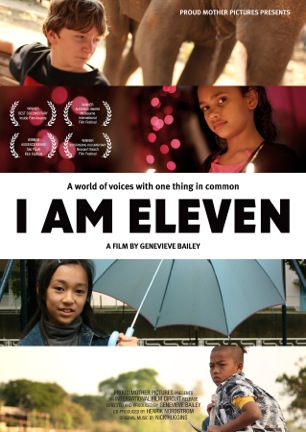
There’s a reason that so many heroes and heroines of classic literature are eleven years old. It is that last magical moment at the cusp of childhood and adolescence, which is what makes it so fascinating and delightful. Genevieve Bailey remembered the year she was 11 as one of the happiest of her life, and so she decided to make a movie about 11-year-olds around the world, a wide variety of religions, cultures, nationalities, economic and educational levels, but all extraordinarily open, thoughtful, and engaging.  At the end of I Am Eleven, she revisits one of the boys, now 14.  When she asks him a question, he says, “That’s embarrassing,” and refuses to answer, and we see how precious those last moments of childhood are.

Why is it that the sense of embarrassment accompanies adolescence?

It’s true. I think when you become a teenager, there’s all sorts of things that we all go through; more self centering and feeling like life is more complicated and worrying about looking cool and acting cool.  That doesn’t happen too much when you’re 11, it’s just before all of that.

I think people will be surprised to see how philosophical these kids are, how deeply they thought about life.

Yes, that’s definitely been the response, we’ve screened at film festivals are in 20 countries and across cultures we are often surprised particularly by boys like Remi.  They say, “Is he really 11? Is the French boy really 11? He is such an old soul and his sense of humanity and community is very strong at a very young age.”

Tell me a little bit about how you found these children.

I decided on landing in these foreign countries where I didn’t speak the language, the easiest way to find children would be to go through schools because of course, that’s where they are Monday to Friday every week. But I did also worry a little bit that don’t teachers might nominate the students with the best grades or they might pick one of the kids who has acting experience and I didn’t need those things. I just needed the child to be 11 and want to be involved.

So I thought rather than going through schools, I wouldn’t take the easy approach. I would actually hit the streets and try to find children in the mall, or in some other random way. So I would go to marketplaces, I would go to families, ask people if they knew anyone who would want to be involved.  Each country brought its own challenge and sometimes I found them quite quickly in weird and wonderful ways and sometimes it took a lot longer.

But I’m really glad that took this approach rather than auditioning dozens of children to select someone for the film. In some ways, the children found me in their own weird and wonderful ways when I was out in the city.

I tend to assume as I think most people in the first world do that children around the world are very influenced by Anglo-American culture. Did you find that to be true?

I didn’t find that to be true because I covered such diverse places and I went to 15 countries and the children were speaking in 12 languages.  I think that definitely in Western English-speaking world, there are obviously influences. But the thing I really wanted to uncover, some places that I knew very little about like Morocco and Bulgaria and explore these words through the eyes of kids because I think there is a sense of clarity at that age in expressing who they are and their identity.

So yeah, I did see influences but there were a lot of things I did not know until I went to places kind of outside of the usual tourist traps and where backpackers normally go.
Copyright 2014 Proud Mother

I particularly enjoyed the scenes with the children dancing.

Yeah, I love that. That wasn’t a deliberate conscious effort for me to ask the kids to dance. It was something that was happening organically and I love that because I love dancing when I was 11; much like Kimberly, I used to dance in front of my mirrored wardrobe to no end. And that was something that was really nice to see across cultures.

Yeah, the influence of music and dance was seen in each community so I’m really glad that I was able to edit together that sequence that’s taken from around the world and watching the children dance. I particularly like Billy’s dance moves on his bedroom floor.

You seem especially fond of him. Talk to me about him a little bit and about why you chose to include his father, one of the few parents in the film.

From the minute I walked into the Billy’s flat in London, I was completely charmed. And I ccouldn’tturn the camera on quick enough that she was ready to go – he was on the couch, he was asking me all sorts of questions.  He wanted to know if I had a theme song yet. Because he had a theme song he wanted for the movie, a 1984 wrestling movie theme song, he thoguht might be appropriate. And I was kind of just bowled away by his idiosyncratic way of speaking and his sense of humor; he was very cheeky but also very honest.

Audiences have really taken to him; he has resonated across the world. Especially young audiences always come out of the cinema saying, “We want to meet Billy!” Billy is autistic and he is very happy to chat specifically about that. And basically I think sometimes we see films and read books or articles about children on a spectrum and they focus on the challenges of what makes it difficult. For most, that’s true.  The film does not label him but he is really celebrated by audiences and I think it’s great for children to see that it can be really a positive thing.  Billy has his way of engaging audiences and I’m really glad that he is in the film.  His family is very loving and they celebrate him.  Hiis father was obviously very impressed and proud of how far he had come and that’s why I decided to include that scene where he explains that when Billy was young, he couldn’t talk or he couldn’t hold a pencil.

I think he provided some insight for the people watching the film, into how Billy has developed and that’s the reason why I decided to include that scene. And I also felt that Billy, when he was in that scene, he was very comfortable.  I also included the moment of Jamira with her father when it was Father’s Day and a few of those moments with adults because obviously as children, we are very influenced by those who are raising us; our mother, our father or both. But yeah, I was very conscious that for every minute or two that I used my screen time on exploring adult relationships that would be a couple of minutes and had to take away from the children. So that’s why I was very conscious of having a limited presence of adults on screen but there was little bit of it in their obviously to give some background context to certain relationships that I felt were very insightful.

Another one which I thought was very worthwhile was the guy from the orphanage talking about the house they were going to build for the children.

When I first went to the orphanage, obviously there are all different sorts of orphanages around the world; there are ones that are well run and there are others that are not so well run and ones where there is a lack of resources. And when I arrived in India I definitely saw that they were short of certain things but what they weren’t short of love and I felt very happy to know that we could still get involved on a long-term basis in supporting the kids and empowering them and having a focus on making sure they can complete their education and not have any financial hardship in regards to doing that. And because we knew that they were being cared for very well.

Despite their adversity in younger years, they are in a very safe place now.

Most people feel that children of that age are either too young or would be too upset to deal with the world’s various problems but these children seem to deal with them in a very honest way and yet not lose their sense of optimism.

Absolutely. That’s what I found across the board in every place that I went to. This sense of optimism and I think when you are 11, you are excited about dreaming big and you are ambitious and whether or not you are growing up in a privileged environment or a challenging one, you really believe that things are possible when you are 11.

I think sometimes we become teenagers, we lose that a little bit and obviously into adulthood we often lose that and become more cynical or skeptical of pursuing certain dreams. But I love that when they are 11 that they do really believe that dreaming big is a good thing.

Was it difficult to edit all of your footage into feature-length?

It was a challenge but it was a huge learning experience.  I am glad that I didn’t fear the risk factor of including so many voices.  Sometimes we are used to seeing films with three or four characters and of course, I could have chosen three or four of the English-speaking kids but I really wanted the audience to feel that they have traveled around the world in a hour and a half and seen some places maybe they haven’t seen on screen before. So it was a risk to include so many children in the same but I am glad that I didn’t shy away from the risk.

What did you learn from the 11 year olds?

11-year-olds are courageous and I think that rubbed off on me.  I am glad that people have the opportunity to meet all these different voices.  I could’ve made the film just in Melbourne with all different children but I really wanted to visit these places for the first time. I had never been out  of Australia so the big challenge that I set myself was to go around the world and not leave any city until I had met an original there.  So that was a little part of my process.

I think that as a filmmaker, I fell in love with these kids and they are big part of my life.  They are like my nieces and nephews. But to be honest, you kind of expect them to be a bit excited about the film as what you are. But as we have traveled with the film and screened it and we visited these kids, I’m really glad that even if some of them laugh at their hairstyles or some of the boys whose voices have now broken say, “Oh, my voice was so squeaky?!” But they are all really proud of themselves and how they are represented and also proud of being part of a really global perspective on the world. So I think that is something that I’m really happy with, with the children that are proud of being part of “I am Eleven.”
Related Tags:


Directors Interview

Interview: Nathan Gamble and Cozi Zuehlsdorff of “Dolphin Tale 2”

Posted on September 12, 2014 at 8:00 am

dolphin tale 2 interviewThe young human stars of Dolphin Tale, Nathan Gamble and Cozi Zuehlsdorff, are back for the delightful sequel. They conducted a charming Q&A session after a screening in Washington, D.C., always remembering to say “Good question!” to the children who raised their hands, and warming the hearts of the locals by praising their visits to the local monuments. I very much enjoyed talking to them, two of the nicest, brightest kids I have ever met, and with the same chemistry off-screen that makes them so good together in the film. They were just 12 when they made “Dolphin Tale,” and are now both 16, so they have been working together for a quarter of their lives, and they stay in touch by text when they are home with their families, Cozi in California and Nathan in Seattle.

One addition to the cast in the sequel is Hope, the young dolphin whose rescue and “pairing” with Winter are the a key part of the plot. I asked Nathan and Cozi to tell me about the personalities of the two dolphins. “They are similar in the way that you can connect with them because they are very personable creatures,” Nathan said. “But they are different because Hope is a very energetic, fun-loving bundle of energy and Winter is more gentle. She is really there just to hang out not really to do all the funny crazy stuff.” Cozi said that if she could ask them a question, she’d ask, “What do you think we are doing when there are cameras in the water? What do you think is happening?” Nathan was surprised by “how easy it is to interact with them. When I first met Winter before I heard the trainer going through all the do’s and don’ts and I was pretty nervous.” He was worried he would hurt her because there was so much to remember. “But really with Winter and Hope it’s very easy to swim with them and connect with them. I’m not nervous around them at all.” “What surprised me is how distinct their personalities are,” Cozi said. “You see dolphins in the wild and you kind of go, ‘Oh look how cute!’ And they all look kind of the same. But when you’re with them you totally feel their personalities. In that way they’re very human-like.” They both understood why dolphins cannot survive alone. “They are social,” Nathan said. “They’re just awesome that way.”

They both felt they’d brought what they had learned from the first film and just from being more grown up to their characters and to the other actors. “I don’t think I’m as nervous that much I think especially on the first one with my first leading role where I was the main protagonist in it and it was all very new to me. And now that I’ve done that I’m not as nervous and I think I am very confident in that way,” Nathan said. Cozi added, “I think for me it is easier to grasp how important it is to stay focussed. That’s another thing like being respectful to the other actors; you really understand that it’s important to give as much as you can even when you’re completely off camera to aid them. It’s so disrespectful, like making funny faces.”

Charles Martin Smith directed the first one, but with the sequel he directed, wrote the screenplay, and appeared on screen as well, as a stern but not unsympathetic government official. Both Nathan and Cozi loved working with him, and enjoyed watching him in his early films like “Never Cry Wolf” and “Starman.”

Cozi wrote and performed a song called “Brave Souls” that is played over the closing credits. She talked about how much she appreciated being around Kris Kristofferson and Harry Connick, Jr., who play her grandfather and father. Surprisingly, she said Morgan Freeman also loves music and did more singing around the set than the two musicians. “He sang ‘Night and Day’ and it was lovely.” She said her notebook is filled with “scribbles” from her conversations with Connick about music. “He doesn’t treat me like a kid in that musical sense. He talks to me until I go ‘I have no idea what you’re saying,’ then he’ll clarify. I would play a really tough piece and he’ll say what chord is that?”

There’s a great story behind the shoes that Cozi wears in the film. “Hope Hanafin who is our costume designer, she’s like one of my favourite people. Hope was so knowledgeable and so intelligent about never buying something in a store that my character couldn’t afford. But she said, ‘I want Hazel to have some really cool shoes. Do you like to draw and would you like to draw on your shoes? Because a lot of people do that. You know like they’ll take blank white shoes and they’ll draw on it. So she gave me some yellow shoes because yellow is my favourite colour and she gave them to my sister and my sister took all my favourite quotes from shows like ‘Doctor Who’ and Bible verses and just like anything that I loved and put them around the base of the shoes. And then she drew dolphins all over them and a sunrise and waves with the dolphins breaching and jumping over and birds in the air. And every dolphin has a little name. And it was all my best friends’ names so now I can say to all my best friends that they were there in the movie. You really see the shoes in the scene where we’re lowering the stretcher and Winter got scared. There’s a whole shot where you can totally see the shoes.”

Nathan talked about playing a character who is very interior, “which is totally opposite of me. I’m a very outgoing person and I talk a lot. So, you’ve got to find little things you can relate to and just build on that. Sawyer is shy but also he is just passionate about things. Not a ton of things but when he finds that thing that he really loves, he really is passionate about it and he is going to devote his life to it.  That’s how I am so I just sort of build off that and see how I can morph that into a real life character.”

They enjoy the questions they get from children when they show the movie or appear on behalf of the aquarium.  Some kids offered to share their popcorn.  Some just say, “I have a question!  …..You are cool!”  But some ask thought-provoking questions about what is real in the movie (yes, Cozi really cries, but if what they are doing would be even a little bit dangerous for the animals, they use robots).  And in some scenes, where they appear to be interacting with the animals, they were just looking at a tennis ball to show them where their eyes should go. Nathan said he prepares for those shots by closing his eyes and picturing what his character would really be seeing “and kind of match it together.”  And Cozi said, “I kind of think of it as a game for myself like how emotional can I get when I look at the tennis ball? Ii is kind of like a fun challenge, like how much realness can you put into staring at a tennis ball.  Sometimes there is this full second where you go, ‘This is so weird!’ And you just kind of go, ‘Okay, forget it. Now I’m just going to do it.’”  One surprise was that the water, which looks very warm and comfortable in the film, was very cold and salty.

They would both love to make a “Dolphin Tale 3.”  Nathan said that he would like to return from the adventure we see him begin at the end of the movie “almost like a totally new person.”  Cozi said she would like to have her character meet a new volunteer who might make Sawyer feel a bit displaced.  “I hope that she would be happy and strong and really, really starting to own up to the fact that one day she will probably run the aquarium.”  But she thinks before she can do that, Hazel would have to “travel around the world in the same boat that her dad and her grandfather travelled the world in, and then she can find out where she belongs.”

They are both grateful for what they have learned from the movie and from the dolphins.  “I learned so much just from the countless stories of families and people who have been inspired by Winter.  It’s really cool to just see in person what Winter has done for so many people.”

Related Tags:


Actors Interview

Interview: Dylan Brody on Comedy, Depression, and Robin Williams

Posted on August 29, 2014 at 8:06 am

copyright Dylan Brody 2014

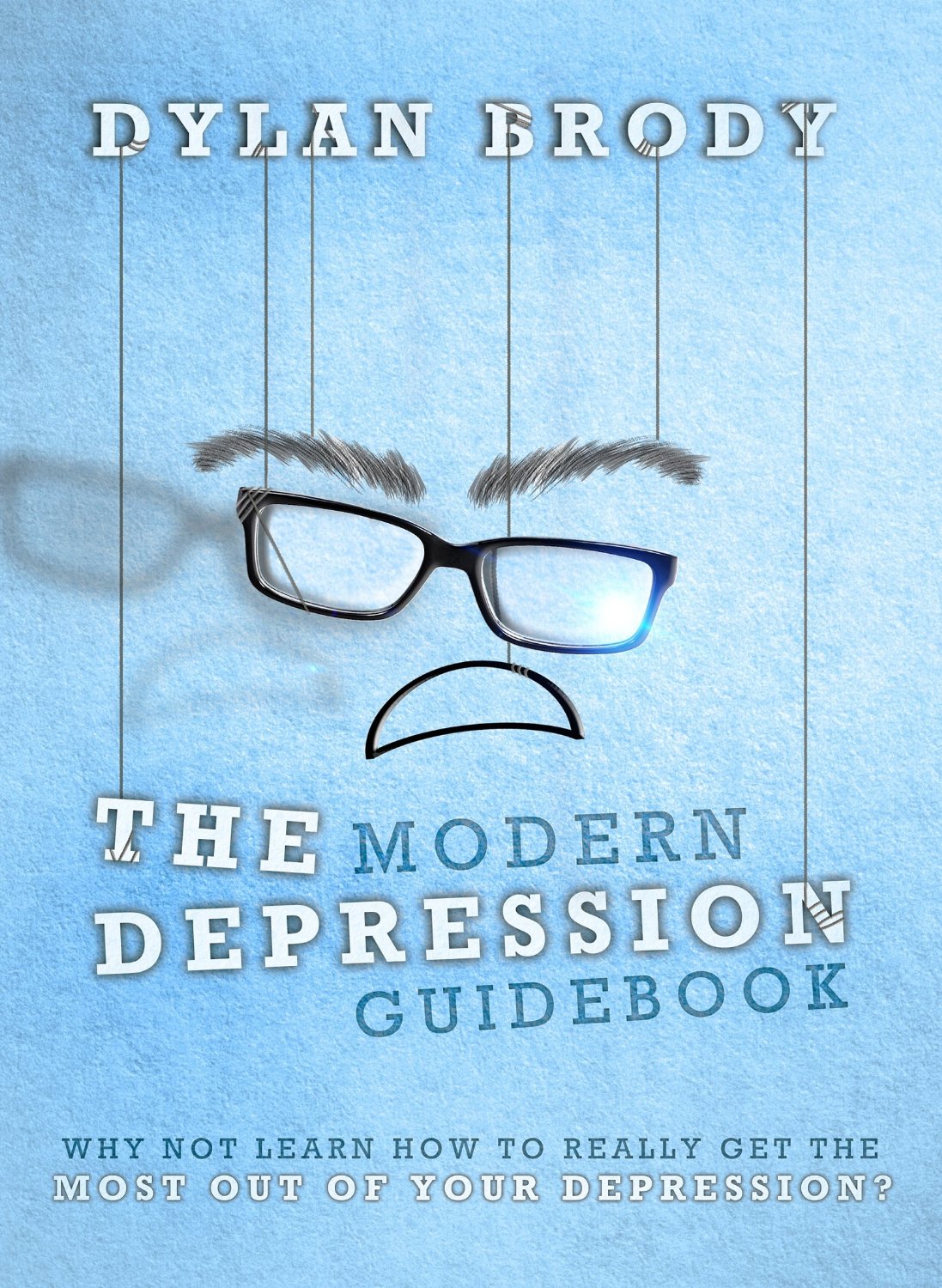
Dylan Brody is a comedy writer and stand-up performer dubbed “brilliant” by Robin Williams.  It was Williams’ tragic suicide that inspired Brody to write a moving essay about his own struggles with depression.  Brody generously took time to talk with me about the connection between comedy and clinical depression, the best — and worst — things to say to someone who is struggling with depression.  Brody currently writes and performs regularly for the David Feldman show on KPFK(Pacifica Radio) in Los Angeles., The Drive with Steve Jaxon on KSRO (Sonoma County) and is a regular contributor to John Rabe’s OFF RAMP on KPCC, NPR’s Pasadena affiliate. His material runs on XM/Sirius Satellite Radio’s comedy channels, Pandora and he is a regular contributor to the Huffington Post. He has written for dozens of comedians, including Jay Leno, who has used Brody’s work in his monologues on NBC’s The Tonight Show. In 2005, Dylan won the  Stanley Drama award for playwriting. He is a thrice-published author of fiction for the Young Adult market with one of his books, A Tale of a Hero and The Song of Her Sword finding a place in the curriculum at several public schools in the U.S.  His book, Laughs Last, is a novel about a stand-up comic.  And The Modern Depression Guidebook is a humorous take on how to be depressed, a parody of a self-help book that guides readers to have the biggest, bleakest, most depressing depression ever.  Brody was thoughtful, insightful, very funny, and a lot of fun to talk to.
I heard a report on NPR that the only stand-up comic that they’ve identified who was not struggling with some kind depression, OCD, or anxiety issues was Jerry Seinfeld. Do you think that’s true?

That might be true. I don’t know if Jay Leno does. Like any other group of people, comics are all different and I’m sure there are some among us who have found a way to function in the world without also being subject to its sadness. But I think that certainly our profession involves an awareness of every irony, every hypocrisy, and we tend to lean into depression. Both humor and sensitivity are associated with being gifted so there’s likely to be a lot of overlap between those who find their profession in humour and those who find themselves frequently depressed.

Tell me a little about the response that you got for the piece that you wrote and in tribute to Robin Williams and about your own experiences with depression.

The response to that has been sort of extraordinary because first of all I didn’t realize that there were people that I knew very well who had no idea that I struggled with depression. And I suspect part of the issue with depression is that we don’t realize that it’s not as visible as it feels. So there have been a lot of people  reaching out saying, “Are you ok?  Do I need to be worried about you?”

Copyright 2012 Autharium

And no, I’m fine, you don’t need to be worried about me. And so there’s a lot of that coming from people who I actually know. And there’s has also been an unexpected number of direct messages and emails and stuff of people saying “Thank you for saying this.” In the days immediately following Robin’s suicide there was an outpouring of sadness about the loss of Robin and a great number of people, myself included who sought the proper way to pay tribute to him by speaking of their experiences of and with Robin Williams. “This is the man I knew and how this is how his death affects me.” But when I put out that piece which came a couple days after my initial response I was really beginning to think about the larger picture of depression in the world and the need, the real need for people to be open to one another’s suffering and open to what help might be available. The difficulty I think with depression is that in some way it’s like a virus and it is self sustaining and self supporting. It is an illness that wants to survive, the illness itself wants to survive so it tells the sufferer all these lies about how impossible it is to change, how little interest anyone has in hearing about it, it creates within the sufferer the belief that the depression itself is necessary.  I got emails from comics saying, “You’re not depressed — how come you’re still so funny?” People have difficulty believing they can remain creative or productive if they’re not driven by depression because depression is telling them this lie. And so to me the real benefit that came out of writing that piece is that it caused people to get in touch with me so I can then say, “No, you can be all right and still be all right. You can be undepressed and still do the work you love and still care about politics and still worry about your loved ones and still have an emotional life without the constant sorrow of alienation and disaffection that comes with depression.”

I was so struck in the beautiful tribute that Letterman did to Robin Williams and at the end the last thing he said was “I didn’t know the man was in pain.” What is the best way to make people feel all right about sharing their experience with depression and what is the best way for the people around them to respond to them?

I think any illness, any disability the natural response is to find coping mechanisms. You can’t function daily if you’re constantly sobbing, you can’t go to a job interview and talk about how miserable you are all the time. There’s a need just to function in the world, there is a need to repress and suppress the outward symptoms of depression and that can become habitual. Many depressed people, I think, do not realize they’re depressed. In 1994, when I went into therapy for the first time in a long time, it was because I had spiraled into a depression.  I hadn’t realized it. My wife said, “You have to talk to somebody. You’re absorbing all the light in our home.” And through therapy and martial arts training I was able to quit smoking pot because that was no longer working as self medication. And so I was able to find a way past depression that served me well for 10 or 15 years and then it came back. And I didn’t realize it had come back until I realized the people around me didn’t like me.  They were starting to feel like I was being a jerk.  And I was being a jerk because I was miserable. All I could see in my work or anybody else’s work was flaws. So instead of being supportive and energetic and enthusiastic when I went into the studio all I was doing was correcting errors. And I never noticed the transition.

Andrew Solomon who I think writes better about depression than anybody said that the problem with it is that it feels knowledge. It comes to you from the same parts of your brain that tells you that it’s time to eat or you shouldn’t cross the street because there’s a car coming. And it’s that same reliable use of speaking to you.

That’s right and it’s very difficult to recognize it as a lying voice, as a voice of an unproductive perspective as opposed to a voice of fact. I know a lot of people who are deep in depression and tell me all the reasons that I should go off my medication. Because they are aware, they feel they’re more aware than I am of all the wrong in the world, of all the political injustices that need to be corrected and so on. There’s a wonderful comic named Rick Overton who talks about how people medicate against depression, if you get shot in the ass with an arrow, you want to go to a doctor and have the arrow taken out, you don’t want to just take something that makes you say, “Oh, what a nice place for birds to perch.” Because he genuinely feels as though the depression is telling him about things that need to be fixed. And if he meditates against the depression he won’t be fighting the fight against these things in the world. And I understand that feeling so well.  And all mental illnesses tell you to get off your medication, every one of them, schizophrenics and bipolar and clinical depression everyone of them. There’s something in your brain that’s constantly saying, “Well, you’re fine now, you should get off this medication, you’re fine now, you should go off the medication.”  We want to be able to think our way out of the illness.  For some reason with mental illnesses you want to get off it, you want to get off the medication, you want to get back to who you’re supposed to be or something. One of the things that has kept me able to stay on my medication is reminding myself that I have remained productive, that I have remained politically engaged, that I’ve remained passionate about things about which I have always been passionate. I just don’t feel hopeless or helpless about them.

What are the helpful things to say to someone who is struggling with depression?

Years ago when Nancy Reagan started her “Just say no” campaign I used to say on stage, “Trying to cure clinical addiction with ‘just say no’ is like trying to cure clinical depression with ‘just cheer up’. ”

The thing that a person can say are these: “You need to see a professional.”  “I will still love you if you’re not unhappy.” “You need to find out what’s wrong,.” “You don’t need to be this sad.” In 1994, when I went into therapy at that time I literally came out of my first session feeling as though there might be light at a distant end of a tunnel. I wasn’t better. I wasn’t undepressed.  I wasn’t just fine from one session but having talked to somebody who was trained to help with this was enough to tell me that it was possible to see hope and just the possibility of hope can be enough. When engaging someone with depression, I think the words they need to hear are the possibility of hope. “You can let go off your depression and remain yourself. Your depression is not integral to your personality or your humanity.” And everybody needs to be reminded whether depressed not, everybody needs to be reminded constantly that despite their perceived, self-perceived flaws and failures and inadequacies they’re loved and will continue to be loved.

What do you hope people will get from reading your parody self-help book, The Modern Depression Guidebook?

There are a bunch of layers to that book. First of all I wrote it when I was in a deep depression. I really thought if I could get every possible laugh I could get out of this sensation I would cure myself. It did not work. But it did create what I think is a very funny, very truthful book. And a short book, an e-book. In print it won’t be more than 90 pages, maybe less. It is not making fun of depression as much as is making fun of the self-help industry. The premise of the book is: I am not going to cheer you up. If you’re going to be depressed you might as well do that well.

So the book is designed to help you get the lowest possible lows and the darkest possible blues. It has handy exercises to improve your self-loathing, it has lists of things to ponder that will make you feel bad about the universe. It is designed to help you get your mood spiraling downward. It’s like my grandfather who told me, “We’re Jews, we don’t believe in tragedy. We believe in horror, atrocity and injustice and we recognize them all as inherently hilarious.”

There is such stigma attached to depression that nobody knows how to even broach the subject. And it is my hope that through this book and ultimately I hope through the screenplay that I’ve based on it, I can crack that conversation wide open. That by allowing it to be something that can be approached with sense of humor and a sense of irony and awareness of the absurdity that we’re all experiencing the same life on the same planet and some of us can see in it only the darkness, maybe I can create a new pathway towards healing for let’s say even two people. If it’s hundreds or thousands that will be great but two would be a good start.

Related Tags:


Interview Writers

Interview: Daniel Schechter, Writer/Director of “Life of Crime”

Posted on August 27, 2014 at 3:59 pm

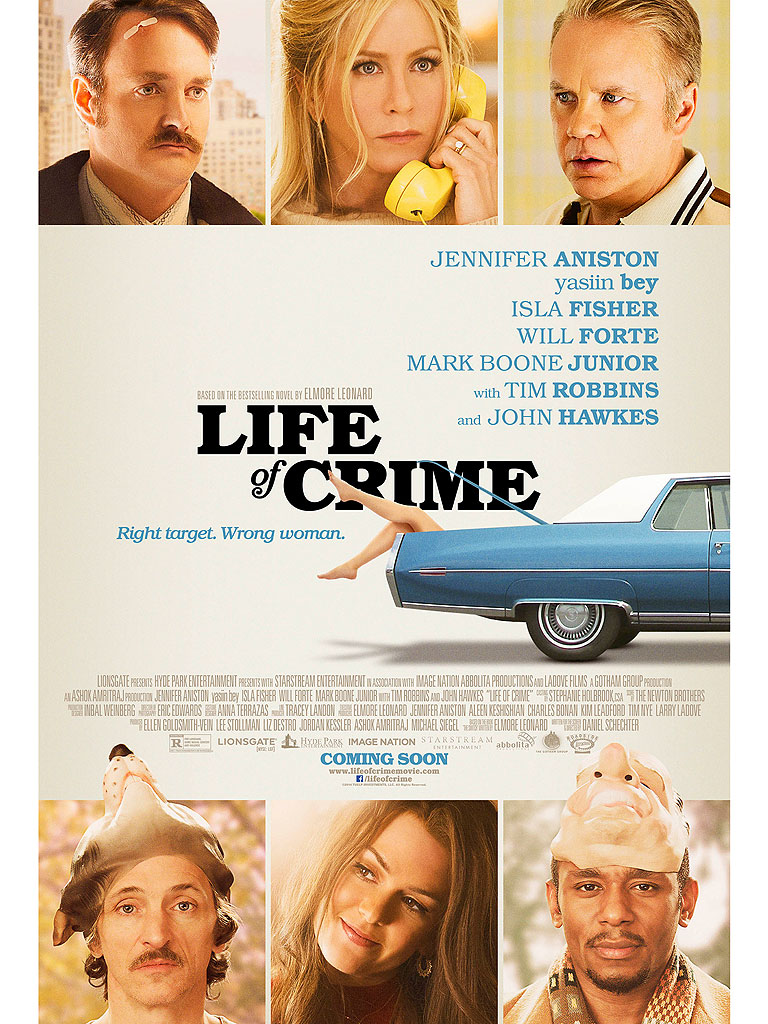
Newcomer Daniel Schechter, who wrote one of my favorite neglected gems, The Big Bad Swim, worked with an all-star cast in “Life of Crime,” which he adapted from The Switch by Elmore Leonard and directed.  It is set in 1970’s Detroit and it is the story of a woman played by Jennifer Aniston who is kidnapped for $1 million ransom.  But things don’t go well because her husband (Tim Robbins) does not really want her back.  The hapless kidnappers are played by Mos Def and John Hawkes and the husband’s tough, calculating mistress is played by Isla Fisher.  Schecter talked to me about re-creating the 1970’s, spending a day with Elmore Leonard, and why we love to watch crooks.
Copyright Lionsgate 2014

What are the challenges of doing a period film with a very limited budget?

I always say it’s the difference between moving into a furnished and unfurnished apartment. You just have to re-create everything 360 and we had a fantastic production designer named Inbal Weinberg who was even more ambitious than I insisted that she be to her amazing credit. And it creates a great illusion really helps the audience go back in time.  The money goes on screen but it doesn’t add more days to your production. So it’s a tough give-and-take.  I was also thrilled with the wardrobe. We had a really wonderful costume designer named Anna Terrazas to walk us through the process.  She just had to pound the pavement and then go to every vintage place she could find in the Tri-State area.  She found us some wonderful stuff.  We also really wanted the cast to feel involved in their choices and some of them dressed in things they used to wear in the 70s and some of them wanted to dress like their parents. It was a really fun exploration and conversation.   I wasn’t alive in the 70’s, I’m only 32, but I think you just see authenticity when you see it.  There are even things in the book that were specific references to what they wore and we would try to take our cue from that.

You assembled an extraordinary cast. 

It’s really tough because you want to get your big names but we’ve all seen the films that have so many famous people but zero chemistry or who felt inappropriate for the role. So I think there is a angel hanging over my shoulder that I not only got people that I’m felt really appropriate for their parts but have great chemistry.  I’ve never worked with a cast of this caliber but after a few minutes you realize they’re all actors and they really want to deliver and I think one of the reason I chose to adopt this book was because it had seven unbelievably great lead parts in this ensemble.  Actors love good parts.

What is it about crime stories that is so endlessly appealing?

It’s why we go to the movies.  It’s like we want to see some kind of crime that we don’t have to take any responsibility or blame or fault for. But that I think there’s something especially fun about this because the main character isn’t a criminal. So I think the audience sort of feel like they’re inside Jennifer Aniston’s point of view the whole time, experiencing this crime vicariously. And it’s just sort of timeless.  I think that’s what’s so fun about being in the 70s, you’re not dealing with any sort of cell phones or Google or Internet. It really makes it a real pure papers story like a 1970s crime movies which I love.  It’s a wish fulfillment, and I also think the pleasure of reading Elmore Leonard’s books is not only getting the experience of committing the crime but being reminded of how real people would behave in those situations. We’ve seen so many films with smooth criminals or elaborate heists in glamorous setting that don’t make any sense but I think that he really wanted to thoroughly ground the experience of a crime or heist a bank robbery with reality and real characters that’s where I responded to the material.

“Guardians of the Galaxy” has a surprise hit soundtrack filled with 70’s songs and now your film also has a fabulous selection of music from that era.  

I’ve been thinking a lot about this since seeing “Guardians of Galaxy” because they had every penny you could possibly have to spend on licensing music and we no money at all. I could guarantee the cost of any one of their songs was probably the entire budget for our entire soundtrack not including our score. But I think in a great way it allowed me to discover music that I’ve never heard before and to find gems and make really creative choices in music that I love, that sounded familiar to an audience. It raises the production value. It helps an audience sort of go back in time a little bit so we worked really hard to get the best possible music we could.  We tried to get songs that you might know, so we had songs like “Don’t Pull Your Love” and “Let Your Love Flow.” I think that has a bit of nostalgic pull on a specific audience.  We opened the film with a guy called Dorondo and I love that song and There is a Frankie Miller song called I Can’t Change It that I’d never heard and now I listen to endlessly on my phone.  It’s amazing how some songs are a hit and some songs get lost in time. Some things just don’t come at the right moment and they seem just as good to me.

There’s this song called “Show Me a Man” and it plays over this long tracking shot of John Hawkes walking to the restaurant pretending he was inside of it stealing a car. It’s a very offbeat bizarre song that I thought that I thought Quentin Tarantino would’ve liked. And there’s this great juxtaposition with the lyrics.  Here’s a song about a noble great cowboyish type played for a guy who is just a criminal stealing a car.  We love this guy and we do feel that there’s nobility to him. There are sometimes you don’t even know why you just put those song on top of the picture and yet it justs elevate whatever I had there before. And then there’s moments like during kidnapping we had a literal needle drop where a record plays and I think we had 10 different songs in there at one point. One song I really wanted was Chicago’s “Saturday in the Park” or something that was reedy like that, iconic and memorable but of course that was like a $75,000 thing we had to make different choice but just the idea of getting featured song like that and have it played throughout the house in different perspectives; you don’t get the better opportunity than that to play with music.

You met with Elmore Leonard to talk about the film.  What was that like?

I was really lucky.  I went up to Detroit to meet with him for a weekend and we had good food and beers and discussed a lot of his projects, many of which he needed to be reminded of because they were old books that he hadn’t looked at, and things that I had read several times recently. And I got to look at every location that was written into the book. Everything that he writes was set in a real place in and around Detroit so it was fun to see the book come alive in front of my eyes.

What is it about his writing that makes it so instantly cinematic?

Somehow he makes exposition entertaining. I’m writing a new script now and it is such a challenge to make exposition not feel so obvious.  He finds a really good reason for those people to be discussing the plot and having the audience be thinking, “Oh that’s what I would say and that’s what I would ask.” There are a lot of people who say that he was the greatest dialogue writer alive which I agree with. Not because he is the quippiest or cleverest but because it just felt so alive. It was like he was just possessed by those people as he was writing it. In my adaptation I was sometimes I would just omit a word and then I would read my script and I wouldn’t love the line. I would go back and realize I skipped a comma or one word and it just threw off the whole rhythm the that’s how good he was, that’s how almost perfect his writing was.  Well, I think if you look at “Jackie Brown” which is based in a book called Rum Punch, you’d think, “Wow that stays shockingly close to the original novels capturing characters and dialogue!” And I think I took the cue out of their book and did the same thing. I think people are far less impressed with my adaptation when they read the book.  The book was as if somebody gave me a great screenplay and as a director I just had to adapt it a little bit.

Related Tags:


Directors Interview Writers
THE MOVIE MOM® is a registered trademark of Nell Minow. Use of the mark without express consent from Nell Minow constitutes trademark infringement and unfair competition in violation of federal and state laws. All material © Nell Minow 1995-2026, all rights reserved, and no use or republication is permitted without explicit permission. This site hosts Nell Minow’s Movie Mom® archive, with material that originally appeared on Yahoo! Movies, Beliefnet, and other sources. Much of her new material can be found at Rogerebert.com, Huffington Post, and WheretoWatch. Her books include The Movie Mom’s Guide to Family Movies and 101 Must-See Movie Moments, and she can be heard each week on radio stations across the country.

Website Designed by Max LaZebnik