
Interview: Mike Cahill of “I Origins”

Posted on August 4, 2014 at 11:30 am

Copyright 2014 Fox Searchlight Pictures

Mike Cahill writes and directs singular, provocative stories where science and faith combine — and sometimes clash. In “Another Earth,” Cahill’s college classmate, sometimes co-writer and friend Brit Marling starred as a girl who befriends the man whose family she accidentally killed in a car accident as a planet identical to Earth comes close enough to establish contact. In “I Origins,” Marling plays a scientist who works with her husband in seeking the origins of the development of the eye. Her husband, played by Michael Pitt, is the ultimate man of rationality until developments make him begin to suspect that there may be some things that cannot be explained by reason. He talked to me about science, art, and his own experiences with the supernatural.

Why do you think that science and poetry and art focus so much on people’s eyes?

That’s a great question because eyes are our generation our civilization’s dinosaur footprint, which is to say it is the thing that has some significance but we don’t know what it is. I was once on this Island in Brijuni, and there were these ancient Roman ruins and these dinosaur foot prints right next to them. I realized that the civilization there had risen and fallen while their kids splashed around in puddles of the dinosaur footprints and yet that civilization did not discover dinosaurs. They had mythology, they had stories of dragons, they may have had belief in mythological creatures but they didn’t actually know that two hundred and fifty million years ago, reptilian creatures evolved and then were destroyed by comets or whatever.
The greater significance was never uncovered until recently, in the 1800’s. So the eyes I feel is similar in that sense that we’ve been staring at them, wondering about the mysteries. Creationists call them “irreducibly complex.” They’re fascinating. They never change throughout your lifetime. The cells in your body are flushed every seven years or something like that. But your eyes are the same throughout your entire life, which is insane. And it gives is this magical mystical wonderful thing that we cannot completely wrap our head around but it just captivates us. Our eyes are the window to our soul.

I understand that this film is a prequel to a film that you had already written. Is that right?

Yes that’s right, that is correct. I’m going about it in the weirdest way in the history of Hollywood which is very new to me. I have only made one movie before this. I sold the script for another film to Searchlight and it was called “I.” We were working on that and figuring how to make that. In the meantime, just because I’m a creative person who gets really empty and wants to make something and not sit around, I asked Searchlight, which owned all the rights, if it was possible to make this prequel of this sort of backstory independently and they graciously gave me the freedom to do so and then they ended up buying it. So the next step is to make the sequel now, the original script.

Is that the plan?

In the ideal universe, yes. There is also a life involved.

You have a “stinger,” a surprising little scene after the credits.  That’s unusual in a small-budget drama.

That’s my Marvel ending.

You seem really enthralled by the intersection of science and questions that are — at least as far as we know — beyond science?

Right. The metaphysical, the beyond the physical, beyond the testable… I am very fascinated by that, definitely.

And have you had experiences in your own life that you would consider to be kind of supernatural, outside the bounds of scientific explanation?

Yes, many.

And do those inspire some of your stories?

A hundred percent yes. I’ve had experiences in my life particularly with finding things. Once I had a vest that was stolen and I had walked thirty blocks through DC randomly and found it again as if I was getting signals sent to my brain. It was very inexplicable… and I am very rational, scientific minded generally.

I think if you are very rational one rational conclusion is that not everything can be rationally explained.

Yeah, exactly and the key to that for me in this film was when Sofi describes the worm.  Ian is taking a living being which has two senses and modifying it to have a third.   The light which is unperceivable and inarticulable and unimaginable to worms, that light influences the world of the worm, the world that is perceivable such as they can smell so the light of the sun and the rhythm of the light of the sun influences like and apple rotting for example which a worm finds pleasing. That light is indirectly influencing the perceivable world of the worm and it’s a horribly loaded word, a spiritual realm, the metaphysical realm is actually a more appropriate word, can very much be interacting indirectly with our world. And we can’t trace things to it, we can’t things and things like co-incidences or those magical moments that you don’t have the words to describe.

Did you study scientists in their labs to get the details right?

I put a lot of research in to make the sciences as bulletproof as possible.  Ian’s worm experiment is a real experiment. We also studied others like molecular biologists and neuroscientists and we were invited into a laboratory.  Then I brought Michael and Britt with me and the scientists were so gracious. They explained how the experiments worked, the lingo as well as the mannerisms and just the sort of lifestyles. And for me, like I know so many scientists in my life and I admire these people and I know they have often been misrepresented in films and sort of clichéd and I find scientists to be the most exhilarating, interesting, passionate, poetic, funny people; and some of them at least, and real extraordinary and yet ordinary people.  It was a really exhilarating moment for me because people who are celebrities in my mind are the scientists, the people with curiosity.  We know more on Wednesday than we did on Tuesday only because of scientists.  And we can take that for granted because there was the middle ages and the dark periods of civilization where we knew less on Wednesday than we did on Tuesday.

And that does not necessarily conflict with the spiritual.  The Dalai Lama is very scientific. He loves science; you give him a watch, he will take it apart and try to figure out how the mechanics of it works. And he really says if there is some sort of scientific proof that challenges the tenet of his spiritual belief, he would change his spiritual belief. I put that in the movie.  If you are a person of faith, science should not frighten you at all. We are working on two different realms here.

Related Tags:


Directors Interview

Interview: Michel Gondry of “Mood Indigo”

Posted on August 2, 2014 at 3:50 pm

Michel Gondry is one of my favorite directors, with a distinctive style of romance and whimsy, best known for “Eternal Sunshine of the Spotless Mind” and “Be Kind Rewind.”  His films usually feature intricate contraptions with a very hand-made feeling.  His latest film, starring “Amelie’s” Audrey Tautou, is based on a popular French novel first published in 1947 novel by Boris Vian with a title usually translated as “Froth on the Daydream”. Gondry is the perfect choice for a film that features a “pianoktail,” a piano that makes cocktails according to which tune is played on its keys, and a character who becomes ill because a water lily is growing in her lung. The book has been filmed twice before and turned into an opera, but in Gondry it has found the perfect person to translate its bittersweet allegory to cinema.

I spoke to Gondry about why handmade items still matter and which item from the film he would like to have in real life.

In a world of CGI effects that feel realer than reality, it is very endearing to see a film that is filled with charming items that all feel very handmade.

I am surrounded by function, and I am not very good at decorating or being organized. It is very messy most of the time. But I like to make things and to have people make things for my movies. It is very nice when you can see the construction and the results, when you can take it in your hand and it moves and functions, where you can see the mechanics and the guts inside. You want things to be made my people, not things made by things. You don’t want robots to be designing the items you are going to buy like it’s a sign of better quality. I don’t see it that way. A lot of the films I saw when I was growing up, you could tell how things were made and I found that exciting. It stimulates the creativity of the viewer. You would be inspired and want do make the things yourself. If you show how it is made, people will think about how to make it themselves. It’s a democratization of creativity.

The actors have to believe that they are in a real world. The fact that everything was made, there was no green screen, helped them. They have to jump into this world so they can feel the emotion they would feel in the real world.

If you could have one of the movie’s contraptions in real life, what would it be?

I have the airplane.  I like some of the cars we did.  One was made by two very famous French cars from the 60’s and 70’s.  Storing items costs more money than building them.  It’s too bad.

The book that inspired the movie is still very beloved in France, isn’t it?

Yes, I was about 15 when I first read it.  Everyone has their own take on it.  That puts some pressure on me  to not fail them — some people say, “Don’t make this book into a film because we love it!”  That scared me a little.  But I have to forget about that and the best I could.

The movie’s US title comes from an American song and American jazz plays a role in the film.

Duke Ellington is very important to the story.  The character Chloe has a name inspired by a Duke Ellington song.  And I grew up listening to Duke Ellington.  Two heroes in the house — Duke Ellington and Serge Gainsbourg, who was in a way sort of a student of Ellington. So I did put a lot of Ellington music in the movie and it was very important to honor that spirit.
What did you tell your actors about maintaining a reality in a partially fairy tale setting?

They asked me a lot of questions about who their characters were and where they came from. I don’t like to intellectualize the background of each character. It should come from themselves. They just have to be themselves and believe in the moment. I don’t think they need to create a heavy psychology. The psychology of the emotion comes from the situation and what is going on. They don’t have to imagine a full and complex story for each character.

Am I right in seeing some influence by George Méliès in your work?

Yes. He was a magician first and used the camera to complexify his tricks. And he discovered most of the effects that were used in cinema until CGI. He had the ingenuity and creativity and complete freedom in his work that I really got inspired by.

Related Tags:


Directors Interview

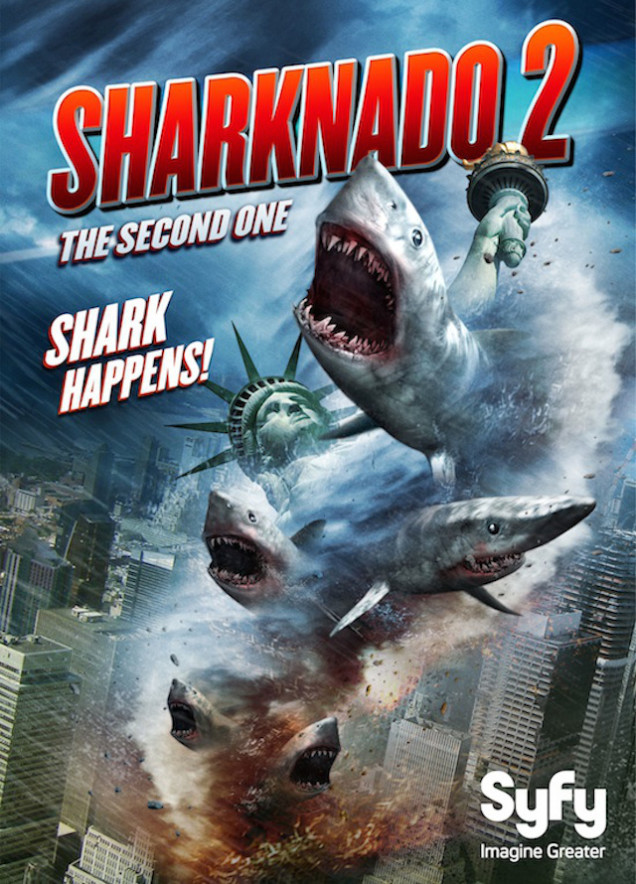
Interview: Thunder Levin of “Sharknado” and “Sharknado 2”

Posted on July 30, 2014 at 7:37 am

One of the highlights of Comic-Con was the chance to catch up with Thunder Levin, screenwriter of the sensation, “Sharknado” and the sequel, “Sharknado 2,” which premieres tonight on Syfy.  The original was remarkable for its over-the-top storyline and even more for the Twitter-nado it inspired.  In an era of time-shifted consumption of media, it was a rare example of a genuine event broadcast, with sharing OMG reactions online was part of the fun.  He is always fun to talk to and I hope I get to talk to him again for “Sharknado 3.”sharknado 2

Isn’t it the ultimate compliment to have the Rifftrax guys provide snarky commentary for your movie in the theatre? Is that kind of being a musician and having Weird Al take you on?

Absolutely and I went to see it and it was just hilarious.  They were remarkably respectful and good natured.  They were in on the comedy of the inherent material and it’s just great.

Are you expecting another twitter avalanche for film?

I don’t know if it’s going to be like it was for the first one. I’d like to surpass that, I’d like to crash Twitter this time, but that might be asking for a bit too much. The last time it was so organic.  They see us coming this time. So we’ll see, but I’m sure it will be a big thing. The first communal TV movie. It’s like having a theatrical experience with a thousand people in one room.

Tell me where we begin on this one.

It’s about a year later and Fin and April were on their way to New York.  April is going to a signing of a book she wrote called I Survived Sharknado and Fin is going to be seeing is sister and his brother in law who is an old friend.

So this one takes place on the East Coast?

Yes, they are on their way to New York City where things just happen.

What is it about Comic Con that makes Sharknado such a perfect fan opportunity?

Well Comic-Con is an over the top event in itself so to take an over the top movie and add it is just adding fuel to the fire I guess.

Is the lady with the Sharknado costume here again this year?

She came back this year and she updated the hat reference the so it’s got the Empire State state building on the top.

What else are you working on?

I’ve created an original TV series called “Dive,” which is “Sharknado-esque” in tone, and I’m working on getting financing for an independent feature called “An Ordinary Hero.”  And I’m writing an novel, quite a change of pace from “Sharknado,” a very dark thriller.  I’ve never tackled that medium before.  I wrote a script that ended up being a trilogy, so I thought, “If I can do this, maybe I can write a novel.”

And “Thunder” is your real name, right?  Where does that come from?

It was the 60’s!


Related Tags:


Interview Writers

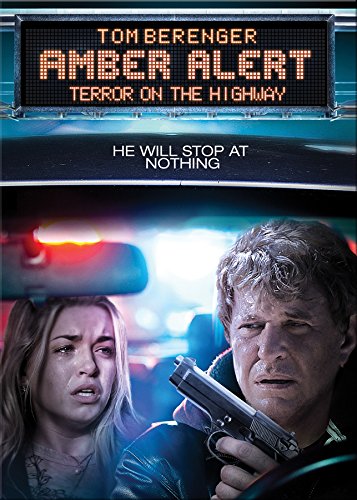
Interview: Joseph Nasser of “Amber Alert: Terror on the Highway”

Posted on July 28, 2014 at 8:00 am

Reserve Police Officer Joseph Nasser produced Amber Alert: Terror on the Highway to help raise awareness of the Amber Alert system. It stars Tom Berenger as a man on the edge, making a dead rush for Mexico and kidnapping two young girls along the way. He is hotly pursued by police chief Martha Geiger (Torri Higginson).  It will be available on DVD tomorrow.  Nasser answered my questions about the film.amber alert
Can you remind us how the real-life Amber alert program got started? Amber Hagerman was kidnapped and by the time the word was out it was too late. So her mother campaigned to have news outlets broadcast an alert when a child gets kidnapped.The AMBER Alert System began in Dallas Fort Worth when broadcasters teamed with local police to develop an early warning system to help find abducted children. AMBER stands for America’s Missing: Broadcast Emergency Response. The acronym was created as a legacy to 9 year old Amber Hagerman, who was kidnapped while riding her bicycle in Arlington Texas, and then brutally murdered.

How effective has it been? Up to date there have been 685 recoveries due to an Amber Alert

How have you seen it work in your profession as a reserve police officer?  Yes, I watched it work for the first time ever in California when two girls where kidnapped.

How did your experiences in the field shape the story? it made me want to educate the public about what to do if there is an Amber alert. I have noticed that people are sometimes not paying attention to their surroundings and the Amber alert film teaches to be alert for the Amber alert notice and report it.  Also it’s important for the relatives of the kidnapped child to stay calm and collected so that an individual can assist in the recovery of an abducted child. In the film we se that the parents are freaking out until the “Chief” calms them down.

How can we understand the motives and decisions of someone who would abduct a child well enough to find him?A child is kidnapped because there is an emotional attachment such as a non-custodial parent or relative who want custody and control of the child. That more frightening cases are when the child is abducted because of greed or for deviant  desires by the kidnapper. In this scenario it’s hard to relate to these kidnappers because they are working from a abnormal state of mind. Some criminologist believe that the deviant behavior is genetic and have found that there is an “XYY” chromosome factor that is one of the common traits many criminals possess.

How did you raise the money to produce this film? I took a loan from the bank. However In order for the bank to loan  the funds we needed a distributor had to be aboard. We found several foreign distributors which appeased the bank. However we wanted a USA distributor, we made this film for American viewers and we wanted America to be a bit safer by releasing the film in the USA. We reached out to Anderson Media and explained that the power of having this kind of film released would include educating Law Enforcement and the public alike,  and it entertains while teaching.  And now it will be released in every major retail store in the country starting this week.

How did the director work with the young actresses to make them feel safe as they were filming?He gave them hugs and assured them that they were safe. He was loving and comforting as were the producers and other cast and crew.

What do you want audiences, especially parents, to think about after they see this film? Stay calm, call the local Law Enforcement agency, get all the details of a possible abduction. The public needs to stay alert and write down anything they see that pertains to an abduction. Make note of signs and news reports and keep an eye out for the information that can lead to saving a child.

Related Tags:


Interview

Interview: Dan Cohen of “Alive Inside”

Posted on July 26, 2014 at 8:00 am

Dan Cohen is the gifted and passionately committed man who transforms the lives of people with dementia and other severely debilitating diseases.  He is featured in the documentary “Alive Inside.” He is the founder of Music and Memory, which provides resources to help bring these programs to people with dementia.

How did you get started playing personal music for nursing home residents?

I’m a social worker by training. In 2006 I heard a journalist on the radio talking about how Ipods are everywhere. I Googled “Ipod in nursing homes” and even though there were 16,000 nursing homes in the US I couldn’t find one that was using Ipods for their residents. So I called up a nearby county-owned nursing home, and I said, “I know music is already your number one activity, you have live music, you play recorded music but what would be the added value if we were to totally personalize the music? And they said, “Sure.” So I sent them a laptop and some Ipods for the residence.

How do you personalize music for somebody who has lost so much memory that they can’t tell you a lot about who they are?

They can tell you nothing about who they are or what they like. So this is where if the family is available, we’ll speak to family. We’ll speak to friends, whoever is visiting. What did they listen to when they were young? Did they sing in choirs? Did they go to musicals? Did they play an instrument? Are there old records sitting in storage somewhere that we could look at? We really try to discover what that might be. We try for music from when they were young then we watch for their reaction to the songs. So build out a list based on their reaction to the songs.

Is it very important to personalize it to the individual’s experience?

That is exactly what is special about it, so back to Dr. Allen Power, who wrote Dementia Beyond Drugs: Changing the Culture of Care. He’s a geriatrician and a leader on how things should be in the nursing homes. He says that the typical nursing home facility is playing that 50s songs and it just becomes background noise. For the rest of us, everybody has their devices, and what do we put on? We put on what we really want to hear and that’s what we listen to.

We have that ability but these folks in nursing home are in like a digital isolation from the modern age and of course it takes technology to make this happen. But with music that is personalized, if somebody has advanced dementia and they can’t recognize their own family members and they can’t speak, if you give them music that has personal meaning for them they will awaken. Even with Alzheimers where you have short term cognition that is seriously degraded, your emotional system is very much intact. So you can say to somebody. “I’m here this is your daughter” and they do not react. But once you put on something, “God bless America,” Frank Sinatra or whatever, they will awaken literally as Henry did in the movie and start reminiscing and start being more social instead of just being in a slump and non-verbal.

One woman seems to indicate that the music connects her to memories she cannot access without it.

As you could see she had a lot of angst and it was really difficult to get through the day, and so this just allowed her to be herself, enjoy herself and that was huge for her. And that’s a massive benefit. That really changes their day. And it changes the way they interact with the family.

What kind of neurological research is being done on this kind of therapy?

There have been hundreds of studies over the last 50 years. Most of them have a really small sample size but the one study that I base this on, one piece of it, is research by Linda Gerdner on the impact of individualized music to reduce agitation. And it was so good; her research said that every one of the 16,000 nursing homes in New York should be using individualized music to reduce these agitations. But there is no money behind it, no requirement to do it so how do you do this anyway?

Dr. Concetta M. Tomaino who co-founded the institute for music and neurological research with Oliver Sacks, was with the New York State Department of Health funding in the 90s that did research on working on individuals with late stage dementia and playing music that personally related to them for an hour three days a week and repeated this three hour routine for 10 months. And after 10 months, these folks scored 25 percent better on the cognitive test. And then the neurologists who are brought in to assess by looking at these folks, how advanced the dementia was, they were unable to accurately assess how advanced the dementia was because these folks were uncharacteristically awake and alert instead of just head-down slumping.

If somebody came up with a pill and said, “After 10 months of taking this pill, your mom’s cognition is going to improve on average by 50 percent” well, it would be a multibillion-dollar blockbuster and every doctor would be prescribing it and every family would say, “I want it.” But because it’s not coming in the form of a pill, and we have medicalized our society, we are very much left with just word-of-mouth. We now have about 16,000 nursing homes and it’s just the living and hospice and home care and hospitals adult day care all using this in 45 states in eight countries. And then they see their benefits and then they tell everyone else in the community and that is how it this thing spreads because they are seeing it work.

Wisconsin rolled out 100 nursing homes with this six months ago. They are doing an 18 month study with 1500 residents with dementia. While they are waiting for their final results from this 18 month study, they already got funding approved to roll out a phase two, 150 nursing homes.

Have you been surprised at all by some of the musical choices that have had the biggest impact?

It really runs the gamut. It could be something their mom listened to when they were young and it was her song from the old country. Even though two people could be very similar in age, religion, culture and they have some overlap as a result of that, every playlist is like a fingerprint. That’s the hardest part sometimes to find that. But once you have that, you have it for this individual for the rest of your life and it will change their experience and the experience of their caregivers. My recommendation is to train all these nursing homes to have as large a playlist as possible no matter how advanced the dementia is.

Related Tags:


Documentary Interview Music
THE MOVIE MOM® is a registered trademark of Nell Minow. Use of the mark without express consent from Nell Minow constitutes trademark infringement and unfair competition in violation of federal and state laws. All material © Nell Minow 1995-2026, all rights reserved, and no use or republication is permitted without explicit permission. This site hosts Nell Minow’s Movie Mom® archive, with material that originally appeared on Yahoo! Movies, Beliefnet, and other sources. Much of her new material can be found at Rogerebert.com, Huffington Post, and WheretoWatch. Her books include The Movie Mom’s Guide to Family Movies and 101 Must-See Movie Moments, and she can be heard each week on radio stations across the country.

Website Designed by Max LaZebnik