Interview: Michael Rossato-Bennett of “Alive Inside”

Posted on July 23, 2014 at 3:58 pm

Michael Rossato-Bennett agreed to spend one day filming Dan Cohen’s remarkable music therapy work with people struggling with dementia. He ended up spending three years there and the result is “Alive Inside,” an extraordinary documentary about the power of music to reach the human spirit, even when words and memories are gone. And it is also about the devotion of those who care for these people, those who work so hard to reach what seems unreachable. He spoke to me about making the film and about the work that is being done to expand these programs.

What is it that makes this film so powerful?

It’s so profoundly touching. People that are gone in one part of their being and yet absolutely profound in another. And that’s why I think this is a film that is meant to be seen with other people. I think by accident I’ve shown something that no one has ever seen before. These are people who don’t have any of their personalities, any of their memory, of their mind, they’ve basically lost the ability to lie. So you just see these pure human souls. And these pure souls are living in a world where they’re basically starving for the stuff that makes people alive, connection and music.

And then we brought the one-two punch, we brought music and we brought us. And we said, “Show us who you are. Listen to this music from when you were young and we are going to be here and watch you.” And these people just were like, “Oh my God! This is the music of my soul and you are here with me!” And they woke up. And to experience another person waking is an odd and indescribable experience. Like when you see your child take its first step or see your baby crying, there’s nothing you can do it just cuts into the core of your heart. We are showing people who are lost to themselves and lost to the world and then giving them this miraculous elixir of life that’s called music. And to see them discover the core of what they are and have that bloom in front of our eyes is a gift because that’s who we are, you and I, we’re not like our jobs, that’s not the people we are. That’s what we do to make a living or whatever but the people we are, are the people who deeply love. You know, in the moment of our deepest love, that’s who we are and those are the things that when you go into yourself and say, who am I? What am I? Those are the things that are real and you just sit there and resonate. And I think music is the perfect vehicle to awaken that for all of us. Anyway this is just a huge opportunity to make a difference for a sleeping population and heal ourselves in the process. And I think we’re in desperate need of healing as a people and that’s perhaps why this movie is getting such a good reaction.

As a filmmaker, you had this great gift of the look of coming alive on people’s faces when they heard the music.  You also had archival footage.  Was that real film of these people or was it just intended to evoke the feeling of their pasts and their memories?

It’s a mixture of both.  Some is their home movies and some of it was footage that we found that describes moments that we were told happened in their lives. So it’s either their actual footage from their life or it’s illustration of things we were told about them.

This film made me conscious of my own memory.  I remember one day just walking around in total awe looking at all the people around me, all these elders in these nursing homes and I realize that inside each one of them, that they play for themselves, that is a kind of movie of them with their wives and their kids or their dogs or their friends.  It kind of overwhelmed me this idea that we all have a movie playing in our heads.

You had some people in the movie were dealing with diseases other than dementia.  Tell me a little bit about what the music therapy can do for other kinds of illnesses.

Music therapists have known about the power of music for years. This environment is to some degree a desert of the soul.   Steve was a man with multiple sclerosis.  All he can do is speak listen.  I was literally aghast that no one thought to bring him his music in eight years since he was first hospitalized. If that’s the case, what are we thinking? We certainly need to rethink what we’re doing especially when it had such a profound effect on him.

Music is one of the most profound human creations that we’ve got and its wisdom is phenomenal. I personally believe that music is a precursor to religion. Together we existed in community in rhythm and melody, it thought is that we are together and that we are one and that we vibrate and that the world vibrates. It’s a preverbal expression of everything good we’ve ever expressed.

It’s actually very sad about our state of music right now; you know all music today is quantitized. It means computers put it on micro beats so it doesn’t have human beats.  It’s like robot music.  And a majority of the artists are now auto-tuning their voices.  It is pretty, but it is less human.  It’s like Photoshopping for the ears.

Has working on this film affected your thoughts about your own music?

I never liked the music of the 40’s or 50’s but now I just listen to it through their ears. It literally brings tears to my eyes.   I’m building an app to be a tool for young people. So that a young person could interface with an elder and help them find their music but at the same time get to hear.  So these young people will get to hear this phenomenally profound music, like the music of the Andrews Sisters or Louis Armstrong or Nessun Dorma by Pavarotti.  I think that’s one of the pinnacles of human music.

https://www.youtube.com/watch?v=TOfC9LfR3PI

What do you want this movie to accomplish?

What I really want this film to do is to inspire people to create connection.  I see this world as a place going more and more individualistic, creating divisions and isolation in many people’s life. We are more connected than ever now with all these phones and everything but we’re not really connected and we’re tweeting each other and Facebooking each other but are we really connecting? How profound are we emotionally? How profound are we musically? How profound are we as dancers? These things are being discarded.  I get it that we are moving forward and we are discovering new things you we can’t get there from here and we will become different beings. We have always evolved but we spent half a million years creating music and I think it has lessons for us.


Related Tags:


Interview

Interview: Richard Linklater of “Boyhood”

Posted on July 17, 2014 at 8:00 am

Richard Linklater is one of my favorite directors.  Films like “Waking Life,” “Before Sunrise”/”Before Sunset”/”Before Midnight,” “Dazed and Confused,” “School of Rock,” “Bernie,” and “Me and Orson Welles” display his restless intelligence and remarkable range.  His latest film, “Boyhood,” was an under-the-radar twelve-year project, filming just a few days each year, so that we watch the main character, Mason, played by Ellar Coltrane, grow up before our eyes.  It was an honor to have a chance to talk to him about the film.

“This is an odd movie, because it’s a period piece film, but we were filming it in the present tense,” he explained.  “You don’t get that opportunity very often.”  Knowing as you film that what you are shooting won’t be seen for another decade, “you kind of look at that differently.  Film’s a powerful recorder of the present.  If you look at a silent film, even if you don’t like the movie, it’s a great record of how people lived and what fashions were.  I had no agenda, but I thought this would demarcate its era, just by its own existence.”

He said he wanted the film to reflect the way that children process time differently from adults.  “When you’re young, you hear a song and it’s very specific — fifth grade, eighth grade.  When you get older, it gets kind of mushy.  It doesn’t mean as much.  It gets a little more undifferentiated.”

It is an extraordinary, unprecedented form of storytelling but he said he wanted it to be an ordinary family at the heart of the story.  “These are not superheroes.  They’re people trying to maneuver through life like everybody.”

Mason’s parents, played by Ethan Hawke (Mason senior) and Patricia Arquette (just billed as “Mom”) are separated, at in the film’s first scenes, Mason senior returns after an extended time in Alaska, to see his children.  He said he wanted “the off-screen separation to be a little mysterious,” to maintain the point of view of the children, showing us that children “just feel the effects.  I didn’t want to give the audience information that is outside the viewpoint of the kids.”  Because the actors themselves interacted so little in filming, they were each able to develop their own ideas about what had happened in the relationship.  “Both of the parents are admirable and a little triumphant in varying degrees.  He wanted to be a dad and he is.  He is a big figure in their lives.  And she wants to provide for her kids and get an education and she does.  She’s kind of a great woman, flaws and all.  Who doesn’t have that?”

He had the big picture, “the big issues, moving, the end, the last shot” early on.  “I kind of work that way, big structure planned out, and then kind of macro/micro within it a lot of leeway to be inspired.  In most movies, you’re very rushed during production.  It’s great to work like a sculptor.  I’ll work three days, and then edit, and then think for a year.  Film doesn’t give you that and I wanted to take advantage of it!  Watch at home at 2 in the morning, thinking ‘What does the story need?  Is this part working?  Oh, I need to put back in this relationship.  I never made a film that felt like it wanted to be itself so much.  They always say films are like your kids, but I never believed that before. With this one, I actually do.  It’s its own living, breathing person who I’m now sending off to college.  Reluctantly.”

And Linklater’s own living, breathing daughter is in the movie, playing Mason’s older sister, Samantha.  Linklater said that as the younger brother with older sisters in his own family, “it was hard to carve out space for myself.  They have such an impact on you.”  The girls were such a powerful force in his life and he wanted Mason to have a sister who was part thorn in his side, part witness, part support system.  “They have that rivalry, but as they get older they support each other.”

eller coltrane

Mason sees a range of models of masculinity in the film — his father, two stepfathers, even a teacher who really takes him to task in a scene set in the red light of a photographic darkroom.  “It’s a male world.  They’re in your face.  The male world is in your face, compelled to shape the youth and be in your face all the time.  Men want to be mentors.  Moms will still straighten you out, but they’re more accepting.  A step-parent is a fraught relationship anyway.  These guys who are suddenly in his life — no one asked him — they have influence and authority over him that he feels maybe they haven’t earned. That’s his perspective.  They’re probably not as bad as he sees them.”  In what Linklater called “one of the most violent scenes you will see this year,” Mason’s long hair is cut short at the direction of his stepfather.  Linklater told us that Coltrane’s look of mute, impotent, fury was all acting.  Linklater insisted that Coltrane grow his hair for a few months before the shoot so they could do that scene, and the reality was that he was relieved in the hot Texas summer to get it cut off.

Making the film this way meant no opportunity to go back and re-shoot a scene or add in something extra. That was fine with Linklater.  “Work hard and if that’s the best you could do at that moment, you should be okay with it and make your peace with it.  I’ve never done a lot of reshoots.  I believe in making it work.  That’s the good thing about movies and art in general.”

Many thanks to Rebecca Cusey for sharing this interview with me and for her thoughtful questions.

Related Tags:


Directors Interview Writers

Interview: Raffi and His New CD “Love Bug”

Posted on July 14, 2014 at 8:00 am

love bug raffiRaffi has a new CD! His first new music in twelve years is called Love Bug and it will be available tomorrow.

It was a special thrill to talk to someone whose music has been so important to our family.  Many car trips were more memorable than the ultimate destinations because we all sang along to “Baby Beluga,” “Down By the Bay,” and dozens more of his “singable songs.”  And I am so grateful for his integrity as a performer, declining offers to sing in enormous arenas because he always wanted his young fans to be able to feel connected to him in a way that is impossible in those venues, and refusing all kinds of lucrative endorsements because he did not want to exploit his relationship with the children who loved his music.

Raffi has devoted himself to protecting children through initiatives like Child Honouring, a program that calls on all adults to commit to a world where all children are entitled to love, to dream, and to belong to a loving “village” — and to pursue a life of purpose.

You really recorded Love Bug in your living room?

Yes! In fact, 80 percent of it was recorded in my living room on the west coast. So you might say that my beautiful view of forest and water and islands and the mountains in the background was the backdrop that inspired the music and even helped get it to sound right. The title song Love Bug that was entirely recorded in my living room and for the first time, on a title song of mine, on a kids’ album I played piano as well as guitar. So that was fun.

The audio was excellent and that’s why I recorded there. I have a wood floor and I have sliding glass doors, and also a stone fireplace. So the combination of wood and glass and stone is excellent especially with the angles from this sort of vaulted ceiling.  All of that combined to give me sweet spots. And that’s what I learned, it’s to record where it sounds good rather than go to a sterile studio space and then make it sound good afterwards and add all kinds of effects of sorts.

Who else is on the CD?

Most of the musicians were people I knew either in my community or in Vancouver. But this time around my niece, Kristen Cavoukian, she sang on This Land is Your Land.  Her husband Ivan Rosenberg is a wonderful Dobro player and he plays other instruments as well. He played Dobro on the song Water In the Well and he played banjo on Pete’s Banjo. I also had young voices from the island where I live. My island is called Salt Spring Island and it’s a beautiful place.

As it happened on the Love Bug song, the two kids who sing on it, their names are Julia and Gabrielle Love. Can you believe it? Their last name is Love!  And their mother Karen Love sings beautifully on the song Magic Wand. So there are many stories around this album, in how it came into being.

I know you are concerned about children spending too much time indoors with electronic devices. Why is it important to get them back outside?

Richard Louv wrote a book about about that called Last Child in the Woods: Saving Our Children From Nature-Deficit Disorder. The way I approach this question is that it is the work of newborn babies and infants to bond with not only their caregivers but also the real world that births them into being. The wondrous three-dimensional world of wonders, the place where they explore and touch and feel the elements, the place that gives them other seasons, the flow of a long summer, an unhurried childhood. These are the makings of a person who is filled with wonder, who has her or his imagining capabilities strongly intact. This is the person who is going to do well in life. Not the person who is introduced to infotech early with the misguided idea that it will give them a leg up on that form of communication. That is nonsense actually because infotech is going to change. Five years from now it’s going to be different from what is now. And as I like to remind people, I began to do email when I was 50. Doesn’t hurt me any… I started being on Twitter when I was 62. Wasn’t hard to catch up.

It’s just complete nonsense to suggest that we need to start kids early on infotech. The opposite is true; it is our duty to make sure that children have the kind of play that lets them explore as I said the three dimensions of the real world and also let them have moments of boredom from which a great creativity can spring.

Why do you think boredom is so important?

Well maybe the parents have grown up with too much screen time themselves. And by screen time we used to means television.  Now it could also mean other visual screens such as computer game screens, and laptops and the rest of the shiny tech as I call it in my book Lightweb Darkweb: Three Reasons To Reform Social Media Before It Re-Forms Us. Sherry Turkle at MIT made a very good point. If you don’t teach children how to be alone, how to relish solitude, you deprive them of a wonderful gift and they will grow up being lonely because the present moment will never feel good enough unless it’s hyped up.

And you’ve got adults taking workshops, just to learn how to be. Think about that…Just to enjoy this cup of tea, just to enjoy this moment’s gentle breeze as it comes in. I mean, these are the basics to life; these are the riches that we all share.

I love the way that you have titled the book Lightweb Darkweb: Three Reasons To Reform Social Media Before It Re-Forms Us because you’re not trying to say that technology is all bad that we should be haunted by it or terrified of it. You are very balanced in talking about the good and bad. Particularly in the music business, since your last album, hasn’t social media really transformed the way that music is marketed?

As I was saying earlier, it’s the lightweb technology, the digital technology that allows me to record in my living room. What we used to call the recording console was this huge, 6 foot wide, complex piece of machinery. It was like a car. Well, that thing now is in the laptop, and there is a little connector box and my engineer brings very fine microphones, the ones in fact that are in recording studios, he brings them over, the microphones are connected to the little box, the box connects to the laptop and on the laptop has a professional recording software program, away we go, and visual editing is easy. I’ve mentioned all this in the book. In fact I start the book by saying, as a tech enthusiast and troubadours… So I put my tech enthusiast label on right away so that people can see I’m critiquing infotech from that vantage point.

Since my last album 2002, twelve years, we’ve had social media come on the scene and so you could say that Love Bug is the first Raffi CD of the digital era. And I think that’s important because of how social media has changed parenting and how it has changed childhood. And in brief parents now raise children in two different worlds, the real world and the virtual. By that I mean they have to be constantly supervising what their kids are doing in the virtual world. How they’re relating to these shiny tech devices.

I’m asked this question a lot now. People say, “How have children changed with the world changing around them?” And I say well, children in their basic need, young children I’ m talking about because they seem to be my primary audience, young children’s needs don’t change.

As many child development experts such as Berry Brazelton and others have taught us, children’s needs are irreducible and universal. Those needs don’t change. What changes is the world around them and I think that’s where parents, teachers and policymakers and social critics such as ourselves have a duty to remind people that the culture that we create around children must be child honoring, it must respect their innate capabilities, their innate imagining abilities, there innate need for play, it must not overwhelm the young psyche. I quote Columbia University’s expert of technology, Neil Postman.  He is the one who helped me understand the importance of this quote: he said it’s not ‘what’ they watch but ‘that’ they watch.  In those early years less is more because it’s the emotional intelligence which is by the way one of the nine child honoring principles, its emotional intelligence. That’s the work of the early years.

Did your family love music?

I certainly grew up with it in my family. It was probably because my father was an expert musician.  He played a number of instruments including accordion, which is where I got my love for that instrument. I actually love accordions. But he also sang in the Armenian Church choir, and I sang on that choir with him. That’s before in my newly found home in Canada because I grew up in Cairo, Egypt but we migrated when I was 10 years old. In Toronto when I was growing up as a teen, I certainly heard the music of the Beatles and also Motown. And I also had the terrific inspiration of Pete Seeger, Joni Mitchell and Bob Dylan and these people, these great early musicians.

I saw that Pete Seeger was an inspiration for this album. Do you have a favorite Pete Seeger song?

Probably “If I Had a Hammer,” which I actually sang recently.  I might record “If I Had a Hammer” and have it be the bonus song on my next CD. Bonus songs are kind of like saying, “Okay, this is the album I did but here is one more song that may or may not belong to this album but here it is, to give it some creative latitude.” I feel like the baton has been passed on to many of us who sing and love sing-along.

Tell me about the young woman that your book is dedicated to.

Lightweb Darkweb is dedicated to Amanda Todd who at the age of fifteen in Vancouver took her life after two or three years of sexual extortion by an online predator. And this is a tragic death that actually could have been averted had the RCMP acted quickly to have smoked out the perpetrator because they know how to do that. In a similar case in Ontario the RCMP intervened quickly and the boy’s life was saved. But the stronger point here perhaps also is the group called the Red Hood Project citizen’s group to urge for corporate social responsibility by the billion dollar social media platform such as Facebook. When we co-wrote an open letter to Facebook’s CEO, Sheryl Sandberg including, signatories including Carol Todd, Amanda’s mother, there was silence. Not a response, not one. And I think that’s tragic because I think the business model of billion dollar corporations that care more about profits than the people their services affect, there’s something wrong with that picture.

You have said that with this album you also honored another recently passed hero, Nelson Mandela. How did his inspiration touch you?

How can I talk about Mandela? The wonderful thing about those who inspire us deeply is that they live on forever. And Mandela’s courage, after 26 years of being imprisoned, and his nobility in that the way he conducted himself, his captors felt like they were the ones in captivity. You have to kneel at the foot of that man. So anyway I was inspired by his words in the year 2000 when he said, empty rhetoric is not enough he said we must turn this world around for the children. I thought that would make a great song and I wrote a song and I recorded it. Got to sing it for him in Toronto in 2001 at Ryerson University and that was an unforgettable event. When I was finished singing the song he stood up and actually shook my hand and it’s something I’ll never forget.


Related Tags:


Books Breakthrough Perfomers Interview Music Parenting Preschoolers

Interview: Director Steve James on the Roger Ebert Documentary “Life Itself”

Posted on July 5, 2014 at 3:32 pm

Roger Ebert said that Steve James’ documentary “Hoop Dreams” was the greatest film of the first decade of the 21st century. He wrote, “A film like “Hoop Dreams” is what the movies are for. It takes us, shakes us, and make us think in new ways about the world around us. It gives us the impression of having touched life itself.”

Those last two words became the title of Ebert’s autobiography. And when it came to make a documentary about Ebert’s life, James was the one Ebert wanted to make it. There were no restrictions or approvals from the subject. Ebert wanted his story told the way James thought best.

I spoke to James about making the film and the great loves of Ebert’s life.

Roger loved it when his friend Bill recited the last page of The Great Gatsby. Why was that so important to him?

I think Bill really nails it in the film so I’m just going to steal his thoughts on it. Number one it’s a great piece of writing and Roger loved novels. He probably loved novels as much as he loved movies.
In fact when he was younger, quite young he was one of those guys that had charted out his life. He was probably about 17 when he said, “OK, I’m going to be a newspaperman and then I’m going to be a political columnist then I’m going to move to New York to be a novelist.” He charted that out.

So literature meant the world to him and that passage meant a lot. But I think what Bill says in the movie is true. It’s that it was about a self-made man. Now in Gatsby’s case there was a lot of artifice there. It wasn’t with Roger but that notion that you can come from modest or nothing background and make something grand of yourself I think appealed to Roger as a small-town kid from Urbana who went on to the big city and sort of conquered the world in his own way but in an honest way. And then you know it’s about loss. I think Bill talks about in the movie about the loss of Roger’s father and death and the way in which death sort of haunted Roger. When he lost his father at that young age, it was not something he ever really got over according to Bill. Bill tells stories about other passages that he loved too that of course Bill committed to memory. He would quote something and then Roger would say, “Tell me again.” Or they would be at a dinner table and he would say, “Bill, give me the last page of Gatsby or this Yeats poem. And Bill is one of those guys that just commit a lot of great stuff to memory including a great editorial passage from when Roger was in college that is just remarkable.

He was a fully formed writer at the beginning as Bill says.

Yeah. I mean if I was a writer I would have hated this guy. I mean really hated them, just hated him. He wrote so well, plainly but with spiritedness and well chosen adjectives.

How did you find someone to do the narration who sounded so exactly like Roger?

Really I owe this to Chaz and her team. They were looking for someone to come in and read some of his great reviews, audio recordings. We had been for editing purposes using the book narrator. He did a perfectly good job but he didn’t sound anything like Roger. So we had been using him in editing because it’s convenient, but I knew I wanted to replace him and my thinking up until they found Stephen Stanton was that we would just find someone who kind of sounded like Roger but we weren’t going to try to channel the actual Roger. But then when she said, “We found this guy, you should hear him,” I was just like, “Oh my God!” And then my next concern though was, he was doing like a review on the show so it was kind of swashbuckling Roger and all that, it was kind of big and broad. So then I had him I reach out to him and had him read some of our narration passages that we had chosen that are much more intimate and he said, “Okay, I’ll do it but send me whatever kind of intimate recording.” So I sent him Roger’s Fresh Air interview with Terry Gross and we just sent him another interview that was done in Champaign with him where he was very relaxed and kind of speaking more quietly, more conversationally. He is not an impressionist; impressionist does not do him justice. He is an actor who can act in other people’s voices. He read the memoir himself before we did at the recordings. He listened to these tapes religiously and then he came in and he took directions like, I would say, “Oh, that was great but I feel like it could be even a little more private like we are just across the table together and you are speaking” and then he would boom! He was remarkable! He is so good that even though in the movie, in his voice, in doing Roger’s voice, he said, “When I lost my ability to speak…” there are a lot of smart people who say, “How did you get Roger to record it?” That irony of, “No way, that can’t be him,” just doesn’t even dawn on some people because they are just so immersed and that is what I wanted it to be. I did not want to fool you which is why I made sure you know if you are listening closely enough but on the other hand I want you to immediately forget it because it’s Roger’s words.

How do you as a filmmaker bring together several very distinct episodes in his life?

You could call it a three act, four act, or even five act life. He had a lot of adventures and he went to a lot of places in his life. He left a small town, he went to Chicago and became a newspaper man and fell into this job reviewing movies and then there was drinking and then he gave that up. Then there’s the TV show and then Gene’s dying and then the cancer and then the blogging. I mean it’s like there are so many aspects to Roger’s life. Plus he loved to go to the Cannes film Festival and he loved to go to the Conference on World Affairs and a lot more.

I felt like I wanted to use the present as a springboard to the past, something he does in a memoir in places which was really moving to me and so I wanted to do that. But otherwise when I do interviews, I do interviews with people for hours on end and we talked about a lot of stuff and not all that got in the movie but when you start to put the movie together, you start trying to identify what are the strongest strains in his life and I guess what I kind of came to realize is, and I did not realize this from the start but I came to realize that the film is kind of ultimately a series of love affairs. It’s a love affair with writing, it’s a love affair with movies, it’s a love affair even with Chicago of course. And then there’s Chaz.

And kind of like what all those love affairs add up to, in a weird way it is a love affair with Gene Siskel. It’s a torturous one but it’s a love affair. It’s like he had a series of love affairs but he was never not true to his wife. It all adds up to this kind of love affair with life. I mean he called the book Life Itself, not My Life and Movies or Me at the Movies. “Movie” is not in the title. It’s life itself that was the grand movie of his life, you know what I mean?

Was it hard for you to maintain objectivity as Roger became seriously ill?

I never worry about trying to maintain objectivity in that kind of journalistic way. Because like for instance I knew that this ultimately was going to be an admiring portrait of Roger Ebert because I wouldn’t have wanted to make it otherwise. I am not that kind of filmmaker. I want to be around people I am interested in. And so I knew that so it was never going to be objective in any kind of purely journalistic way. I did not go out of my way to find someone who hated Roger or something. But I went out of my way to find people critical of his contributions. I knew that I wanted it to be honest, though, and I think there is a difference between honest and objective. Honest is it may have a point of view and I feel like all my films do but I try not to make my point of view blow out of the water and eliminate anything that’s contrary to it, that’s contrary to who this person is or that there is other ways to look at this person. And so that was important. I mean when I saw how stubborn Roger could be with Chaz, I was a little surprised until I thought about it, “Well, you don’t get to be Roger Ebert and you don’t survive all he’s been through without being stubborn.” And I am not talking about just doing this; I’m talking about 20 years with Gene Siskel. You don’t get to be that way without having a stubborn streak in you. He had had a toughness about him that was essential to his success. He also had a generosity about him that everyone commented on that didn’t just happen late in life. Although he became even more generous, it was there all along.

In the film we hear filmmakers talk about how instrumental he was in helping them. How did he help you with “Hoop Dreams?”

First, he and Gene reviewed the film on the show when it was just going to Sundance. For them to even review it was remarkable because it had no distribution and it was three hours long and they knew that. And so they watched it and then they decided they were going to go on the show while it was at Sundance and they said something to the effect of, “You can only see this film if you are at the Sundance film Festival but we really feel that this film should be seen by a wider audience.” And they just sort of planted this flag. Sundance made an enormous difference because up until then, it was the three-hour documentary about two kids playing basketball that no one ever heard of and nobody was really going to see it. It was getting some buzz with the audiences a little bit but the distributors weren’t. And then suddenly, it was like we were a hot ticket at Sundance and we had ended up with three or four different offers and none of that would have happened without what they did, no way that would’ve happened even if they loved it.

And then over the years, Roger continued to write very thoughtfully about my work and support my work. Three years ago when “The Interrupters” came out, when it premiered at Sundance, we had sent a screener to him, just hoping that he would watch it. I don’t tweet but someone told me, “Roger just tweeted this wonderful thing about the film at Sundance.” He knew that we were premiering there; he knew exactly what he was doing. He had 800,000 Twitter followers; it was picked up, it was tweeted all around and then he continued to champion that film right up through the end of the year and was outraged when we did not get shortlisted for the Oscar. He was just such a supporter of my work. For me to be able to kind of do this film means a lot.

Related Tags:


Critics Directors Documentary Interview

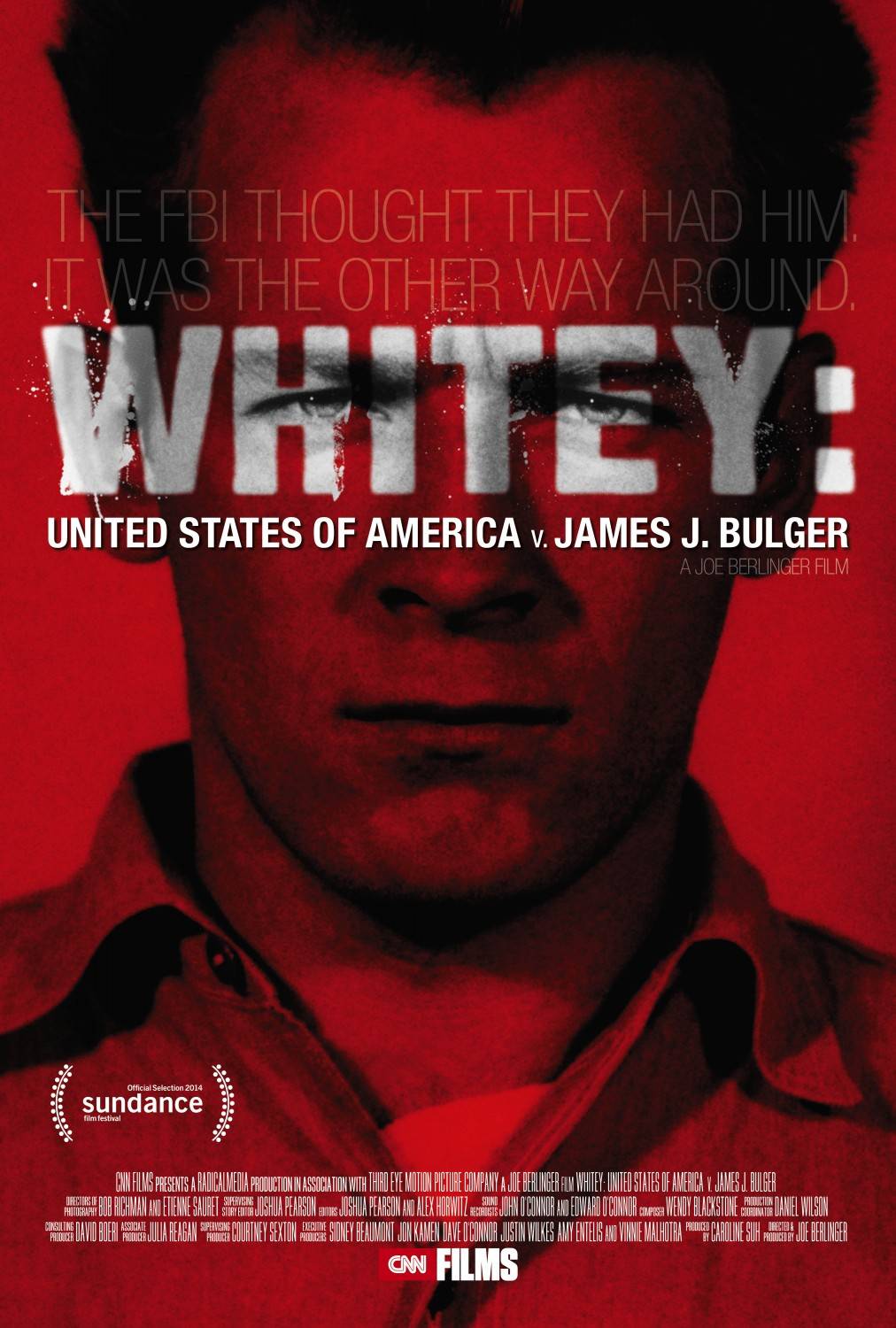
Interview: Joe Berlinger of “Whitey: United States of America v. James J. Bulger”

Posted on July 5, 2014 at 8:00 am

Joe Berlinger is one of my favorite directors and it was a treat to talk to him about “Whitey: United States of America v. James J. Bulger,” his new documentary on the trial of the notorious gangster. We know Bulgar was a crook. What this movie explores is the manipulations and cover ups from the law enforcement that kept Bulgar from being prosecuted for decades.

If you had a chance to interview Whitey and he agreed to tell the truth, what would you ask him?

The most important question is the central assertion to his claim that he had on immunity deal with Jeremiah T. O’Sullivan and the reason that’s such an important question is it goes to the heart of whether or not he was an informant and if he was not an informant the level of corruption and abuse of our institutions of justice is like significant.

The film raises the question of how much crime you can allow an informant to commit to hold on to his credibility.  Presumably killing is over that line.

David Boeri is a WBUR Reporter who says that as long as informants are the mother’s milk of criminal investigations we have to be really careful because on the one hand you they can’t blow their cover but it doesn’t mean they should be killing people with institutional knowledge because that puts the government in the position of picking and choosing who should live and who should die and that’s not the role of government. You know to empower the Irish mob so that they can bring down the Italian Mafia; there’s something inherently wrong with that. And it wasn’t just limited to Boston. We see the same thing in Gregory Scarpa’s cas.  There’s no question he was a major informant there to bring down the Colombo Crime family and over 50 people were killed under his watch.  There’s something wrong with that system. One of our bedrock principles of our legal system is a defendant should be able to present whatever vigorous defense he wants with the presumption of innocence. Again this is not a wrongful conviction cases, but the guy should have been able to present his point of view. whitey_united_states_of_america_v_james_j_bulger_xlg_2

I love the line in the movie from one of the witnesses: “Of course I lied; I’m a criminal.”  What do you do when everybody that’s testifying is a liar by definition?

The three star witnesses for the government are murderous thugs. I mean could you imagine somebody going up for trial for 20 murders and getting 12 years? He’s a serial killer and yet the government treats him as a star witness, now how is that guy incentivised? It’s what I love about the movies, it is a true Rashomon experience and yet the truth rises to the top and something stinks.  The real story has been swept under the rug because it’s just implausible on so many levels that all that murder and mayhem and bad behavior is solely the responsibility of one relatively low level agent and his corrupt supervisor, it’s just not plausible.

I really want to know how truthful is the claim that he had a deal of protection and frankly it’s an important question that is the major disappointment that I had in observing the trial because that was a question that was not allowed to be aired.  Even before the trial began, the judge ruled that the immunity claim was not allowed to be brought up in trial so that was disallowed as a line of inquiry.  It’s a complicated question but he should have been allowed to bring that up at trial because it’s a central question to the saga and I was disappointed that the judge would not allow because I think it was pretty clear that no matter what happened at trial Whitey Bulger was not going to walk out of that preceding a free man.  Right from the start he admitted to being a drug dealer and loan shark.

I was really interested in the comments on the file by the woman who’s an expert on informants.  Normally when someone gets immunity, isn’t that very well documented?

Well there are two levels, if there was a personal deal of protection like, “Hey, keep me from getting bumped off from the mob and I’ll keep you from being indicted”. That’s not going to be documented.  That’s a personal deal of protection.  There were were all these hallmarks of a fake file and in civil proceedings and in the proceedings against Connolly the government acknowledged that much of that informant file was faked by John Connolly. You can’t have it both ways.  If you’re going to say you faked the files in the proceedings against Connolly then let’s talk about where is the real file if he was an informant? And there are just so many things that don’t hold water.  Again I don’t know whether he was or wasn’t but something stinks.  If he was an informant then there’s some basic protocol that wasn’t being followed by like targeting the head of the gang, he was the head of the gang.

The first person we see in the film is a man who was threatened by Bulgar and is looking forward to testifying against him. But he was murdered before he could appear in court. At the end, the film tells us the murder was unrelated. Really?

I can see it’s a legitimate coincidence but to me the importance of it is that when Rick’s body was discovered on the news and that rippled through the courtroom, everyone — reporters, observers, family members — all were debating, almost like as if they were debating a horse race or a Red Sox game, they were debating with equal plausibility whether or not it was in the government interest to knock him off or in Bulger’s interest to knock him off. I was just kind of stunned by the fact that the government was even considered a possibility, which is demonstrative of the complete erosion of faith in their institutions that they would actually believe they might have a hand in it. That demonstrates why this trial should not have been so narrowly focus on confirming the obvious. The obvious is okay he’s crook, we know it let’s let Bulger talk about whatever he wanted to talk about.

This story has so many people and so many incidents and so many boundaries being crossed, how do you try to help people keep that straight? How do you address that is a filmmaker?

It’s a very challenging story and in addition to that there’s a certain subtlety that I hope the audience gets. I was very conscious that there is a certain amount of the conventional story that you need to tell to set the table and then you have to start picking that conventional story apart and do it in kind of a seamless way. I was so worried that some people would walk thinking, there’s no problem with the conventional story. So the challenge is you start with what everyone says is the truth and then you start showing what the issues are with while still maintaining that that’s still a possibility. You know, people expect to be told what to think and many filmmakers believe you have to have a very singular point of view. I’ve always in all of my work tried to embrace multiple points of view and then hope that the truth rises to the top. And look, I do want to say for the record I don’t think everyone in law enforcement or everyone in the FBI is rotten. I think the majority of people in law enforcement and the majority of people who are in persecution take their job seriously.  And actually I think Wyshock and Kelly are the heroes of this story on a certain level because they came to town in the early 90s being sent from other places said, “what the **** is this?” And against the will of their own Justice Department they were fighting vociferously to bring about those indictments, the indictments that ultimately led to this proceeding. They fought tooth and nail for those against their institutions but at a certain point at this trial they now were put in the position of defending the institution that they once fought against in order to bring these indictments. And you can’t serve two masters; you can’t defend an institution that screwed up while you’re simultaneously trying to get to the root of the problem.

Related Tags:


Crime Directors Documentary Interview
THE MOVIE MOM® is a registered trademark of Nell Minow. Use of the mark without express consent from Nell Minow constitutes trademark infringement and unfair competition in violation of federal and state laws. All material © Nell Minow 1995-2026, all rights reserved, and no use or republication is permitted without explicit permission. This site hosts Nell Minow’s Movie Mom® archive, with material that originally appeared on Yahoo! Movies, Beliefnet, and other sources. Much of her new material can be found at Rogerebert.com, Huffington Post, and WheretoWatch. Her books include The Movie Mom’s Guide to Family Movies and 101 Must-See Movie Moments, and she can be heard each week on radio stations across the country.

Website Designed by Max LaZebnik