Interview: “Earth to Echo” star Astro

Posted on July 2, 2014 at 8:00 am

astroBrian “Astro” Bradley plays Tuck in this week’s “Earth to Echo,” the story of three friends who discover a stranded alien and help to rescue him. Astro talked to me about being in the film and the books and music that mean the most to him.

How would you describe Tuck?

He’s ambitious, a go-getter and a guy who doesn’t settle for anything less than what he wants. Like if he wants to do something or find something out he will eventually do it or find it out. I think he is like the driving force in a group of friends in the movie.

The friends don’t have a tremendous amount in common. They are very different people. What keeps them being friends with each other?

I think they are all considered outcasts almost, not really outcast but they are not the coolest kids. They are all they have.  When you’re hanging out with your friends and only you guys really understand each other the rest of the world looks at you different but we all see each other as cool. I think that’s why we were all best friends in the movie.

Did you guys hang out together when you weren’t shooting?

Well we really didn’t have time because we shot everything to fast. We only had a week of rehearsal before we actually started filming and I think we shot the whole film in 28 days. It was everybody’s first time being a part of a major film so I think just being on set everyday was enough for us. It was just a blessing.

Your character Tuck had a conflict with his friend Alex.  What was that about?

I think that he was just scared and so he couldn’t really help Alex like he wanted to at that point in the movie. I think he was just scared because at the end of the day they are big kids but they’re still kids. They are still young.  Unfortunately he was unable to help his friend Alex at one point in the movie.  He knew he was wrong but he tried to act like he didn’t know what’s going on. Of course they dealt with it like friends would.

One of the things that make this movie so interesting and so different is that it’s got all that footage as though it’s being shot by the kids themselves, mostly by your character. Can you use a movie camera?

I shot one scene I don’t know if they kept it in the movie but they let me hold the camera for one scene. We were in a van driving away from construction workers and the camera was very really heavy.  You have to give respect to guys like Dave Green. our director and the Director of Photography, Maxime Alexandre.  They really have to hold the camera it’s like a million pounds and I don’t know if I could do that all day.

So tell me how you first found out about this movie.

My agent at Williams Morris Entertainment sent it to me. They sent me a bunch of scripts, the first role I ever had was on “Person of Interest” and this is my second role ever.  This was playful, it was cool, it didn’t seem too serious. It seemed very natural and organic and I liked it and I recorded my audition take in my living room, sent it out to the “Earth to Echo” staff. They flew me out to California to audition in front of the director, Dave Green, and I got it.

I don’t remember exactly which lines we did but we filmed it in my living room. I actually got all my roles so far that way. I have this wall in my living room that I’m going to call the Movie Wall or something because I auditioned for all these roles in front of the same exact wall. It’s this white wall in my living room, it’s weird, it’s crazy but I got three roles because of this wall so…

That’s a pretty lucky wall.

Exactly.

I have never taken acting class or anything like that but that’s pretty much as far as we went with it. Like I said it was a very natural script so there wasn’t much preparing that had to be done. I think even when you watch the film now it seems very natural, like it’s just very normal because we didn’t have to try hard. We were just having fun. The only hard scenes were like when Munch had to cry, that was probably hard for him bring those tears out but other than that it was very easy to do because we were just being everyday kids.

I would think that the hard part would probably be interacting with Echo.

No that wasn’t hard for us because we had Echo like when we actually talking to him and he’s in our hands. He was actually being controlled by a wire.

What do you think about how it came out?

I’ve seen it many times and it’s amazing! It’s amazing! I’m glad to be a part of it. I think it’s an exciting movie; it’s a family-friendly movie. You can take your kids out to see it. And anybody could see it whether you’re older or you’re younger.

You’re also a rapper, right?

Acting is still something I’m still trying out. I’m still learning about it and seeing how it works. My main focus is my music but the acting is fun as well.  My favorite rapper is Jay-Z.  Right now I am working on the EP.  I’m just taking my time with it. I have the first single and everything ready but I’m not rushing anything I just want to put it out when the times is right. But as far as my influences, I listen to Biggie, Jay-Z, Nas, Wu-Tang, Snoop Dogg, only legends because I want to be better than those guys so that’s all I listen to right now.  I’m a 90s baby so that’s all I really listen to.

I don’t express myself through acting because you have to play like somebody else. I think eventually you do express yourself in acting but you’ve got to get a certain type of role.  But I haven’t gotten that deep into acting yet where I’m really like “let me really get into this character.” For now it’s just fun.  For now it’s just fun with acting. But music is life. I’ve been doing that since I was a baby I can’t explain my love for music especially like hip hop music. Music is just the greatest thing in the world.


Related Tags:


Actors Interview

Interview: Robert May of “Kids for Cash”

Posted on June 23, 2014 at 8:00 am

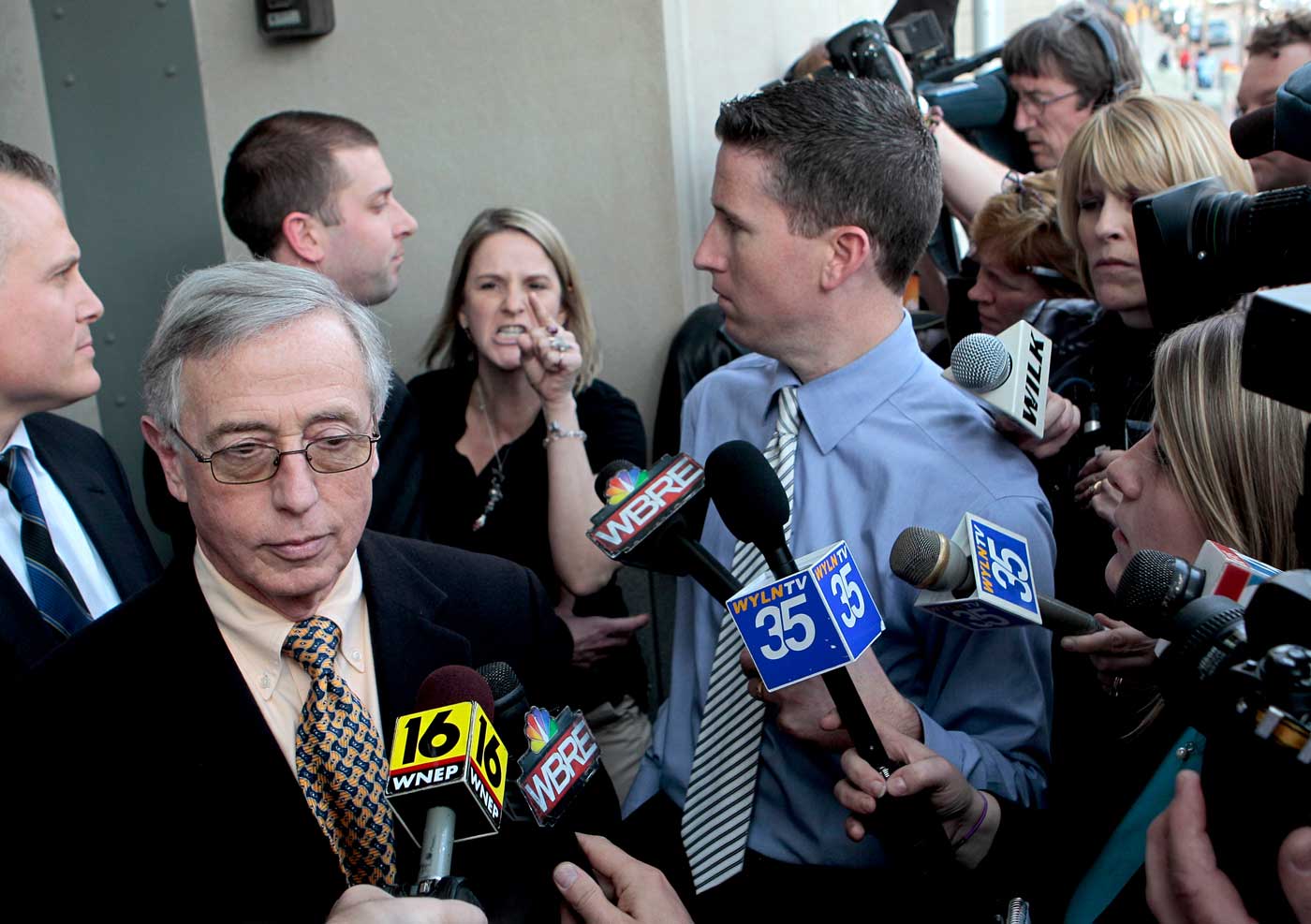
kids for cash 1One of the most outrageous scandals in the history of the U.S. justice system involved two judges who took undisclosed multi-million dollar payments from the developer of a privately owned and operated facility for incarcerating teenagers.  A “law and order” judge named Mark Ciavarella was elected after promising to take a hard line on kids who broke the rules.  Even before he took the payments, he imposed the harshest possible sentences for even the most trivial of violations.  Over 3,000 children were taken away from their parents and imprisoned for years for crimes as petty as creating a fake MySpace page making fun of a school vice-principal or shoplifting a few DVDs. The kids who emerged were often permanently damaged by years of imprisonment and exposure to brutal fellow inmates.

The heroic intervention of Juvenile Law Center, founded in 1975, the oldest non-profit, public interest law firm for children in the United States led to the exposure of the scandal and the incarceration of the two judges who took payments from the developer.

Robert May’s searing documentary about this scandal and the larger problems of our juvenile justice system is called Kids for Cash.  It is now available on VOD. I was grateful to get a chance to ask him some questions about the film.

How did the tragedy at Columbine affect the support Ciavarella got for his hardline approach in the first campaign?

The first campaign was in 1995 and the Columbine shootings occurred in 1999.  Judge Ciavarella ran on a “lock-em-up” platform in 1995 and the community loved the idea.  After Columbine, he felt that he had been ahead of his time in that he was always tough on kids.  After Columbine, he simply had even more support for Zero Tolerance.

One of the people in the movie suggests that the schools were supportive of his approach because it was a way for them to get rid of troublemakers.  Is that your assessment as well?

Yes, schools routinely invited Ciavarella to speak at assembly’s letting kids know that if they came before him, he would be glad to send them away.  Schools, police and the community at large, liked the “idea” that he was a zero tolerant judge so; he was very popular on the “speaking circuit” and had a busy speaking schedule to prove it. And lastly, he always made good on his word, he would send the “troublemakers” away.

https://www.youtube.com/watch?v=Q21KnjiJ0xI

Did any kids ever appear before Ciavarella and go home?

Yes, he did not send every kid into detention. His placement average was 22% during his tenure in that 22% of the kids who went before him, were locked up.

Since the Supreme Court’s Gault decision in 1967, courts are not supposed to give harsher sentences to teenagers than to adults but it seems that this was the case here.  Was that because the parents were found incapable of handling them?

While the Gault decision was landmark in that finally kids had some rights, kids are still not afforded all the same rights in a practical way.  For example, if they want to appeal their “conviction” that process takes so long that they will be in and out of incarceration before the appeal is likely heard.  And because of indefinite probation and zero tolerance, kids can easily be re-incarcerated.  Kids should never be able to waive their rights to counsel because they’re kids, yet many states allow for kids to appear without legal representation. Also, the so-called crimes like fighting, verbal altercations etc., it would be extremely rare for an adult to be charged and incarcerated for similarly detailed offenses.

The judge tells a very compelling story about his own teenage law-breaking and his parents’ reaction.  How do you think that affected him?  Did he apply the same hard line to himself?  What do we learn from his daughter’s comments?

To Judge Ciavarella, it seemed clear that his parents had the right idea on discipline and tough love.  He felt that his parents know how to raise their children and by contrast, stating in the movie, “parents don’t know how to be parents.”  He felt that the juvenile system was there to take over and teach kids what their parents were not.  He also was a zero tolerant parent to his own three kids who told me how if they “simply left the top off of the toothpaste tube, they would be grounded.” He was proud of how his parents raised him and was proud when telling us the story of how his father knocked him out thereby teaching him right from wrong.  He completely missed the irony of his current situation.

Why did he agree to talk to you and what did you do to gain his trust?

I felt that the media had painted a very one-sided story and so I first approached Judge Ciavarella with that thought in mind.  Specifically, I approached him with the idea that we intended to do a film on the scandal and wanted to tell the story from the perspective of both the victim and the villain.  I pointed out that I felt he was the “villain” in our story, which he quickly acknowledged.  Initially he was interested in talking to us but only after the federal prosecution was over.  That was a deal breaker for us because we wanted to follow the active story and stay behind the scenes as he went through the prosecution.  After a few weeks of consideration, he contacted me to let me know that he would participate under the condition that he not inform his attorney.  That of course seemed crazy to me however, he was a lawyer and a judge and so if he was ok with that, I would be too.  The same presentation was then made to Judge Conahan who agreed to take part in the film under the same terms.

How did you first hear about the case and what captured your interest?

My producing partner (Lauren Timmons) and I were working on another project, a fiction film about power, greed and kids…(seriously) when the scandal broke in January 2009.  We were actually working in Pennsylvania at the time where this “fiction” film was to take place.  And, while my offices were in NYC, I actually live in Luzerne County PA where the scandal took place.  I became fixated with how such celebrated guys, “judges” could fall so far right under the noses of the community, and me.  While I did not know either of the judges, it’s likely that I voted for them both.  The way the story had been portrayed was basically this – One-day these greedy judges who had been scheming for years to lock kids up in exchange for millions of dollars, finally implemented their plan… and then got caught…with a relative “period” after the story.  That seemed ludicrous to me as there are always many parts and layers to a story and that’s what I was looking to uncover.  I got more than I bargained for because at first, I had no idea that there was a bigger story looming about how we treat kids and that basically, no one cared.

Would things have been different if the new facility was built by the government and not by a private firm?

Yes, the scandal would have never occurred, Judge Ciavarella and Conahan would still be judges, thousands of kids would still be locked up for years and the larger story about the way we treat kids everywhere would never be known to the general public.

Ciavarella is adamant that it was never “kids for cash” and the prosecutors chose not to charge him with that in part because the number of kids he sent away did not increase after the payment he received.  So, why chose that for the title?

Good question and one that gets asked now and again.  In fact, during Q & A’s for the film, some folks routinely mentioned that the story was larger than the accusation of sending kids away for money.  And to me, that was the point.  The idea of this title took me right back to when I first heard of the scandal (by the same name) it grabbed my interest.  The phrase “Kids For Cash” stuck, in that it was a sexy story as far as the media was concerned and it’s all anyone talked about – a judge locking kids up for money.  I like films that respect the audience for their ability to think and I wanted our audience to ponder and be curious about a likely larger story without having the film be preachy in the face of a tell-all title. At first, this was a simple story that was in essence minimalized by the razor focus on one guy, “the judge,” when in fact it took an entire community to support what he was actually doing to the kids (money or not).  Then to learn that his practices are basically in play all around the country without any exchange of money really does lead to the bigger question of “just how are we treating kids who need special care and attention?” I also wanted the story structured in the same way that the public was first introduced to the story, then in the second act, begin to peel back the layers of complexity without a voice-over telling the audience how to think and finally in the third act, present the broad consequences of both the judges actions and the actions or lack of actions of others leading to an awareness of how little respect “we” have for adolescence.

What was your biggest challenge in making this very complicated story understandable?

Well first, getting the judges to agree to talk with us for what turned out to be years and keeping that all a secret. And, to that point, I felt a bit of a rush when I was told that their attorneys first found out that their clients had participated in the film (for years) when the trailer started playing in movie theaters.  But really, the biggest challenge in telling the story was the balance of stories between the villains (judges) and the victims (kids and families).  That took a couple years of editing and many NDA (non-disclosure) research screenings with moviegoers and advocates. In other words, we knew that if the balance between the villain and the victim was off, people would be confused.  Perhaps one of the most notable comments we’ve received regarding this balance was from the critic Carrie Rickey who said “I see about 400 films per year and I’ve never seen a film that puts the villain and the victim in the same story in such a compelling way as in “Kids for Cash.”

Have there been any improvements in the juvenile facilities in Pennsylvania as a result of the litigation?  Are teenagers given any counseling or educational services?

Yes and no. For example, juveniles must now be represented by an attorney when in juvenile court and kids can only be handcuffed and shackled in court under certain circumstances. There is also an effort in Luzerne County where the scandal occured, to improve the system overall and fewer kids are being sent away there.  Also, “evidence based programs” which deal with the entire family, not just the kids, are becoming more popular but that popularity is very slow.  People who see the movie all around the country leave the theater (now perhaps their living rooms) angry and disillusioned about the complete disregard and disrespect for kids and are demanding change.  Evidence based programs is a good start but people need to know that they exist and that they are needed and… cost about one tenth of the cost to lock a kid up.  That said, out of the top ten most populated states, Pennsylvania currently ranks number one on the incarceration of children – this, five years after the scandal.

What is your sense of how other communities are handling juvenile justice?

We’ve learned from screenings all around the US, that communities really are unaware of how kids are treated when they fall into the system.  They are unaware of how schools greatly contribute kids into the system. And, they are unaware of how long a kid can remain in the system.  After a screening in Denver CO to a large group of juvenile court judges, one judge stood up after the screening and said “what’s this thing you refer to in your film as ‘indefinite probation’ we don’t have that here in Colorado.” Before I could respond, another judge immediately said “yes we do, you can hold a kid until they are 21 years old – every state utilizes ‘indefinite probation’.”  Another judge stood up and said “well, if a family sees this film in Colorado and their child comes before juvenile court here, they will see that we do things right.” My response was this… “I’ve screened the film to regular moviegoers all around the country and when they find out that that 54% of the kids in Luzerne County Pennsylvania were not represented by an attorney, they draw a straight line to the money.  However, you do know that in this state 45% of ALL juveniles across the entire state are not represented by lawyers and in three jurisdictions , it’s as high as 60%.”  That judge sat down with a red face.  I have many many stories just like this one that exemplify how unaware not just the public is, but how unaware judges, lawyers, school officials and others are when it comes to the treatment of kids within the system.

There are some despicable people in this film but also some heroes who show remarkable courage and integrity.  What kept them going?

There are some real heroes in the film for sure.  First, the newspaper reporter Terrie Morgan had worried about the stories she’d been hearing on how kids were being treated and whiles she wrote about those stories, few paid much attention.  This seemed to be true in other communities around the country as well.  A reporter reports a few parents complaining about the treatment of their kids and the communities pay little attention instead the reaction is more like “oh please, just because you’ve got a bad kid, stop complaining and start parenting.” Second, Hillary Transue’s mother Laurene is one of those mothers who was going to stop at nothing until she got her daughter out.  While other parents had similar passion, they were fraught with obstacles not unlike Laurene’s.  The main difference is that Laurene found the Juvenile Law Center who took on her fight.  This center has been around for 40 years now and is the largest non-profit children’s law center in the country and specializes in advancing the rights of children.  Prior to the film, those who really needed their services were the only people who knew them and even then, few knew about their work.  The Juvenile Law Center systematically reviewed the circumstances surrounding Hillary’s case and were moving to get her out.  But that also proved to be very difficult because they were taking on a powerful judge will little if any support from the community.  It was not until the federal government announced that they had been investigating the judges and the connection to the newly built for-profit juvenile detention center that a “perfect storm” began to brew.

How are the kids doing?

Because of how this film has affected me personally, I have stayed connected to all of the kids and families and I am continually taken by the scars they have.  They all still suffer in some way.  Charlie is still suffering with addiction and has been jailed twice since the film has been released. That said there are a few good things to report.  Amanda had a baby girl and still resides in California with her father and while she still suffers from PTSD, the film has allowed her to face her past and hold her future in a more promising way.  Hillary Transue is now in grad school at Wilkes University (Pennsylvania) and is a grad assistant in their Creative Writing Program.  Justin is about to begin college and plans to attend Wilkes University in the fall.  Sandy (Ed’s mother) is still dealing with the grief of losing her son but is very active in support of change within the system.  Judge Ciavarella’s daughter Lauren has formed an unusual connection with both Hillary and Justin as she moves to advocate for change within the juvenile system.  All of the kids and families remain connected to the film in that they are still anxious to participate in panel discussions.  In fact, Hillary and Justin were part of a panel in Washington DC when the film screened on three separate occasions for the U.S. Dept. of Justice, Congress on Capitol Hill and for the U.S. Dept. of Education.  They are moved by the kindness and concerns from those who see the film, feelings that they had never experienced in their early life within the system.

What’s your next project?

That is a question that I’m being asked all the time now and I’m grateful that people are interested enough to pose it.  It will be hard for me to transition into another project after five years on Kids For Cash, a film, which changed my entire view of the world.  But, I have a number of projects both fiction and non-fiction that I’m considering.  It would be great to take a few months off in between but I’m not sure that’s in my DNA.

 

Related Tags:


Crime Directors Documentary Interview

Interview: Michael Ealy and Meagan Good of “Think Like a Man Too”

Posted on June 22, 2014 at 9:32 am

ealy goodI am a huge fan of Michael Ealy and Meagan Good and it was a lot of fun to talk to them about “Think Like a Man Too.”

Meagan, I loved your performance of Bell Biv DeVoe’s classic “Poison!”

MG: It was an evolution. Initially the song was supposed to be En Vogue’s “Never Gonna Get It.” We were all excited to learn the words and everything and then they were like, “You know what, we want to do ‘Poison’ instead.” We actually went into the studio and recorded it and all of us girls sounded like pretty bad except for Taraji who really sings. And then we got the set and we literally just sang to our own voices basically. And we did it for two days and it was like the easiest thing because you don’t have to do anything, just come to work, show up, have fun,be silly, laugh, joke, crowd surf, whatever it is you’re doing that day, it was just a lot of fun. It was actually just like going to a party.

Michael, I have heard that the hardest thing for actor is to play a nice person and your character is the nicest person of all of the characters. With so many colorful characters around you, with Kevin Hart being so extreme, how do you create a character who is nice but doesn’t get lost in all the hubub?

ME: I think it’s knowing who you are playing with. Like you said, Kevin Hart is at decibel 10 throughout the film and if you don’t have something to kind of ground that it could be a bit overwhelming. And having done three films with Kevin I know exactly where I need to be in every scene and it’s usually the straight guy, I think of Jerry Lewis and Dean Martin.  And I have so much fun doing it. Dominique’s sincerity was in my opinion in the words especially in the first script, so love to Keith and David for writing such a character that is kind of endearing in that way.

Meagan, your character is very fashion oriented.  How did you create her look?

MG: Shout out to  Salvador Pérez Jr., who did an incredible job.  I really wanted to do something that I felt a little bit out of the box and I wanted her to kind of have more like a rocker vibe and something that was like a little ‘vintage-y’ but a lot more on the edgy side and with that rocker-esque thing. So we did a lot of cuffs and we did a lot of shirts that were cut out in the side and just different stuff like that and for me, I felt like there is always that girl but she doesn’t always get represented. So that’s what I’m trying to do.

You can tell me.  Behind the scenes, did you guys have some real fun in Vegas?

ME: The first two weeks I think everybody was like, “Yeah, we’re going to party. We’re going to do Vegas. We’ll do Vegas, get some stories.” And literally that work schedule just kind of knocked all of that out. We did like the first week, we hung out with Kevin at a party but that was about it and after that it was like we need to film  in the casinos during the off hours , when there are still people in there playing but it is not nearly as crowded. That’s when the casinos gave us permission to shoot. So we would have to sleep from five or six in the evening until midnight, wake up, go to work, go do hair and makeup, be ready to shoot by 2:00 AM. So our hours were so off at a certain point, we were starting to become vampires, it was just crazy. And then we did all the daytime stuff and it was just awkward. And we were there for two months.  Vegas is a place you stay for two days.  Needless to say, we all kind of got to the point where it was like, “Yeah…  How many days left, I’ve got to get out of here.”

Meagan, you had to be angry and frustrated in a comic way without going over the top.  You kept the character sweet and gave her a lot of depth. And all of that opposite Romany Malco, who has a lot of energy, too.  

MG: I think me and Romany have very good chemistry. We both kind of refer to ourselves as aliens because we are the same kind kind of awkward in a way which works out very well. But I think it’s the chemistry and I also try to be very conscious of not being in the way. I did not want to be that girl that’s always like, “He’s not doing what I want him to do.” Just whining and being obnoxious.  I tried to be very conscious of that and still be sincere with the frustration and anxiety but not play it in a way that comes off obnoxious; which is kind what I believe in real life too,  just bring it all the way back, to be honest but relaxed.

So are we going to have a third one?

MG: We hope so.

ME:  It’s up to the fans. It really is up to the fans, I mean we weren’t anticipating a second one so the fans dictated the second one and the fans dictate the third one.

You encourage people to Tweet and Facebook to get the word out. How has social media changed the way that people find movies? Are you guys both on Twitter?

MG: Yes.

ME: Yes. I joined right before the first film at the request of my publicist. I remember talking to Meg  and neither of us were really enthusiastic about it and then we both got TV shows and you have to push and you have to interact with your fans weekly. So you just kind of get better at it almost naturally and then you kind of see the power. So the things that you are able to do, the charity organizations that you work with and what you are able to do not just for your own self promotion. It is a powerful, powerful tool and I do think it is a good way to motivate people and create some sort of movement and I think the social media effect on Think like a Man was probably like responsible for about 70% of the box office. That was one of the most powerful campaigns on social media that I think there ever was.  We all learned on the first that you can just buy into the system, reach out to the grassroots and watch what happens.

What are the most important lessons people have learned from these films about male/female relationships?

MG: My gosh, that we are very different! Which I think is important. I think it’s very important to recognize that in a real way because what’s common sense to him is not common sense to me. What’s common sense to me is not common sense to him and so if you can really understand that then you can start to understand the person better or if you are not seeing eye to eye on something, there is more of a respect level just because you understand that you see it very differently, not just that you disagree.  The interesting thing is that people walk away saying, “Well, I am a Dominique” or “I am a Maya” or “ I am a Maya mixed with Lori” and people kind of see themselves in our relationships.

ME:  Yeah. That’s the coolest part.

Related Tags:


Actors Interview

Interview: Carl Deal and Tia Lessin of the Documentary “Citizen Koch”

Posted on June 19, 2014 at 8:00 am

“Citizens United has unleashed money that our disclosure laws are not equipped to reveal.” Tia Lessin and Carl Deal wanted to make a documentary about the toxic effect of corporate money on politics following the Supreme Court’s decision in Citizens United that invalidated just about every law controlling campaign contributions. But it ended up focusing on private money — mostly from the Koch brothers, who have spent hundreds of millions of dollars, much of it undisclosed before voting day. I spoke to Deal and Lessin about making the film.

How did this project get started?

Tia: We were really curious. David Koch ran for Vice President in 1980, on a Libertarian ticket. This was a fringe, fringe party. Not at all part of either major national party at the time.

Carl: They made Ronald Reagan look like a flaming liberal.

Tia:  His platform was abolished Social Security Medicare and Medicaid, the Postal Service, taxes, of course; corporate and personal taxes. Now a lot of those tenets have become mainstream within the Republican party. He’s no longer part of the Libertarian party, he’s part of the Republican party and so we were curious to understand how that happened. A big part of the way that happened was his seed funding, the Tea Party. And hijacking what might have been actually legitimate populous concern over Wall Street and the power of the banks and the economic implosion after the mortgage crisis.

People on both sides of the aisle were concerned about that and concerned about the lack of accountability. And the Kochs and their brethren I think hijacked that and saw the value in boots on the ground because that’s the one thing that they lacked. All this time they had the money, they had the strategy, they had their dupes and their political players in Washington but they didn’t have boots on the ground; they didn’t have any popular support. They always fabricated that, they pretended to have that. They had Astroturf but the Tea Party gave them the people and then they began to fund it. So we were curious on how that happened. We learned that that happened and how it was that true believers on the ground were allowing these, the two richest men in the country, if you put their wealth together; they are the two richest men in the country, in the world actually, to tell them what to do.

What percentage of what the Koch brothers are doing do you believe is pure policy and what percentage is just an way for them to make more money?

Carl: That’s a billion-dollar question right there!

Tia:  If it’s ideology, then it can also very conveniently makes you a richer. All the better right? I mean what’s the difference in ideology and greed? I feel like every one of their ideological positions also has a profit and benefit of making them and other companies richer.

What are their core positions?

Tia: The regulation of the financial sector, the regulation of the economy, of their industries. They want to do away with the EPA and the very government functions that provide oversight for their businesses. Those are primary and then they don’t believe in government; they believe in privatizing the conscience of government. And whether it be our schools, our healthcare, whatever else they believe in, they are very anti-union, they are anti-collectivists; In their dad’s day, that was anti-communist but now they have adopted this term “collectivist”. Well what does that mean? They don’t believe in people banding together to negotiate over their wages. And I don’t think it’s ideological either. I think that there is an element of cynical political maneuvering. I mean, that’s what we see in our film. It’s not about pensions, it’s not about wages, they want to kneecap the labor unions so that they don’t contribute to liberal politicians.

Is there a difference between the Koch brothers and contributors to Democrats like George Soros and labor unions?

Carl: They have more money and the way they spend their money is different. George Soros has a political agenda and he spends money on certain types of candidates; there is no doubt about it. But the kind of philanthropy that he gave, that he engages in is a little bit different than the kind of quote unquote philanthropy that the Kochs engage in.

Tia: The bottom line is, there is a difference in spending between billionaires and unions. I think the media equates those two. They are not equal. The Unions do not spend as much as the Kochs. They spend on a different scale but they also represent real working people. The Kochs, they are two guys, they are two men. The other difference in between spending of Labor and spending of the Kochs — Labor has to disclose every penny it spends.

Carl: They don’t even have a responsibility to the shareholders. They are part of a private corporation.citizenKoch-pin2-192x128

Tia:  They have the right to speak. The unions have the right to speak. They have the right to speak as human beings. But why should the speech of those two men trump the speech of millions of working people? I think yes, Soros, whoever it is; the Hollywood folks who spent a lot of their monies, Tom Steyer and Jeffrey Katzenberg. Why is it that any rich person has more of a voice or gets to speak louder because they have this money to amplify their voice? Why is that fair to everybody else? And in the end I think the big problem is that the politicians owe them something at the end of the day.

Carl: I think you also look at how a lot of the billionaires on the left are spending their money versus the way the billionaires on the right are. Tom Steyer and George Soros are building infrastructure, they want more government. They are interested in creating a bigger safety net and working for the betterment of everyone. The Kochs and their kind are about themselves; it’s a shell game they have created. Look, I think it’s straight up a cheating in a way. They took a look at the playing field and they saw where they were losing and then they figured out how they can strategically over time rig it in their favor. And that’s one of the reason why we looked at Citizens United so closely in this film. It was a marker; it was a signpost where there was democracy before Citizen United and there is less democracy after.

The surprise hero of the film is a politician who has held office as both a Democrat and a Republican, Buddy Roemer.

Carl: And he was a “right to work” governor. He is no friend of organized labor.

Why aren’t people more up in arms over this?

Tia:   I think people are. It makes you sick and tired and kind of don’t want to vote. You feel sick of it.  One guy in our movie votes for the first time and then he finds out all this money got poured into the election and he is like, “Never again. This is the first and the last time I am going to vote.” Two things; people don’t want to vote and when they see what’s happened in the state houses and in the Congress, this divisiveness and this extreme conflict and disinterest in negotiating on the part of these Two Party radicals, they feel that government has broken down. And I think that’s exactly what the Tea Party and the Kochs want people to believe, government has broken down. So it serves their agenda.

Related Tags:


Directors Interview
Interview: James Ward Byrkit of “Coherence”

Interview: James Ward Byrkit of “Coherence”

Posted on June 18, 2014 at 8:02 am

James Ward Byrkit wrote “Rango” and designed the visual effects for the “Pirates of the Caribbean” movies.  His new movie, “Coherence,” is a nifty little mind-bender of a psychological thriller that makes the most of its micro-budget.  He talked to me about filming in his own living room, without a crew, and telling the cast about their characters but not about what was going to happen to them.

This is a deliciously scary movie!  Talk to me about how it all came together.

This was really just a reaction from all the movies that I had worked on, these huge blockbusters that you sort of plan in advance for years and years which I love. I loved working on the “Pirates of the Caribbean” movies and “Rango.” But because they are so planned, you sort of lose the ability to improvise. You lose the spontaneity of being in the mix with the actors. And I come from theater where I was trained to really just concentrate on story and character on a stage with actors and so I was craving getting rid of everything, getting rid of the crew; getting rid of script, no special effects, no support, no money, no nothing, and just getting back to the purity of that, of a camera in your hand and some actress that you trust and an idea.

Copyright 2013 Bellanova Films

And no money means not having to account anybody.  No notes from the suits.

Exactly! I needed that freedom and the freedom to experiment. We shot over five days, five nights actually, in my living room and instead of having a script, each actor was given a page of notes each day with their back story or sort of motivation for the night. But they wouldn’t know what the other actors had received so it had a very natural, very spontaneous collision of motivations that ended up being what you see on film; obviously guided by a very strict outline that we have been working on for about a year that tracked all the clues and the puzzles and all the rehearsals and things like that. But the actors weren’t aware of those, those things happened because we were sort of guiding them through it.

So the actors were all people that you knew pretty well?

Yeah exactly. They were just friends that I knew I could just call up and say, “Show up at my house in a couple days. I can’t really tell you what we’re doing, trust me I’m not going to kill you. It should be fun!” And they didn’t know each other before they got to my house and so I had to pick people that seemed to be like they could be couples, seemed like they could be best friends and that I just knew were up to the task of jumping into it.

I just assumed that they all knew each other very well because they fell into the kinds of rhythms that old friends have.

That’s just casting great people that could do that. Just five minutes after they arrived at my house they had to pretend to be married and lovers and best friends.  Lorene Scafaria is a writer and director.  I’d never seen her act before but I just had the feeling that she would be great. And so I said, “Do you want to act in something? Can you show up at my house next week and ready to make dinner for eight people?” So she had to cook the chicken.

I don’t want to give the movie’s surprises away, but the actors had another challenge as well.

What we usually say as a euphemism, we talk about fractured reality. Reality starts to fracture that night. And it gets very complicated, it gets very mind-bending and twisty but they love it. Once the actors realize that they are safe and it’s all about just being in the moment, it doesn’t matter that your character might have made a slightly different choice, slightly had a different time in their life, you are you right now and whatever immediate concerns you have is driving you and so whatever your relationship is or whatever your inner conflict is. These are all people who are either in hidden conflict with themselves or hidden conflict with each other and they understood that part of it. They didn’t have to understand the whole science fiction puzzle of it all.

Did you run into any unexpected problems in filming?

I wouldn’t say anything was actually wrong but you’re constantly dealing with unexpected things. One night we tried to shoot outside and we had to make the whole thing look completely desolate and the power being off; that was the one night that we had another movie shooting on our street. So the whole street is completely ablaze with lights  and hundreds of extras. It turned out they were shooting a Snickers commercial.  We would be right in the middle of the dramatic scenes and there would be another knock on the door that would just scare the hell out of everybody. And it would be the pizza guy you know, just bringing our food for the night. So when you don’t have a fully supported production, there’s a lot of things like that but you just have to roll with and make the best out of it.

It occurred to me as I was watching it that in a way it kind of paralleled the process of making a movie or editing a movie where you’ve got all these different fractured realities from the different takes and you’re trying to figure out how to piece it together.

That’s exactly it and especially because it wasn’t rehearsed.  And we told them that they could go anywhere in the house they want to, we’ll follow them. So we have to improvise just as much to figure out how to make a good-looking frame on the fly. We have to figure out how to get it in focus. We have to figure out how to maneuver this mass of people because they basically become their own organism after a while. They got completely comfortable with each other. They started having their own surprising motivations as a unit, as a model and so you have to wrangle this whole thing. It’s like herding buffalo throughout an entire crazy, fun house of a puzzle.

There is also poignancy to it that I wasn’t really expecting.  You really tapped into a very deep conviction that we all have that there is some other version of our lives somewhere else that’s going on that’s better, and where we should be.

That’s exactly it. That was the universe that we hoped would ground the whole thing because we said if we’re going to make a story like this that gets absolutely incoherent at one point, we have to have a solid throughline with a character. That is a universal concern that you think about; what would my life be like if I had made different choices. Is this the best version of my life I could have? What would the other version look like? And what would I do to get it?  If you could see it again sometime, I promise you, you would like it even better the second time. You realize all the random stuff they are talking about in the first ten minutes at the party isn’t so random.

Related Tags:


Directors Interview
THE MOVIE MOM® is a registered trademark of Nell Minow. Use of the mark without express consent from Nell Minow constitutes trademark infringement and unfair competition in violation of federal and state laws. All material © Nell Minow 1995-2026, all rights reserved, and no use or republication is permitted without explicit permission. This site hosts Nell Minow’s Movie Mom® archive, with material that originally appeared on Yahoo! Movies, Beliefnet, and other sources. Much of her new material can be found at Rogerebert.com, Huffington Post, and WheretoWatch. Her books include The Movie Mom’s Guide to Family Movies and 101 Must-See Movie Moments, and she can be heard each week on radio stations across the country.

Website Designed by Max LaZebnik