Interview: Legion of Leia Founder Jenna Busch

Posted on June 2, 2014 at 3:55 pm

I’m a huge fan of Jenna Busch, co-host of Most Craved for CraveOnline. She co-hosted ‘Cocktails With Stan’ with the legendary Stan Lee and she’s written for sites like Zap2it, After Buzz TV, Fanhattan, Screen Crave, Inside Horror, Huffington Post, AOL, Popeater, Newsarama, JoBlo, Blastr, UGO, IGN, Moviefone, SheKnows, Coming Soon, Screen Junkies, Famous Monsters and Geek Week and Inside Horror. Her own site is Girl Meets Light Saber. I’m very excited about her new initiative, the Legion of Leia, to provide more support for girls as characters in and creators of comics and sci-fi. Many thanks to Jenna for answering my questions about it.
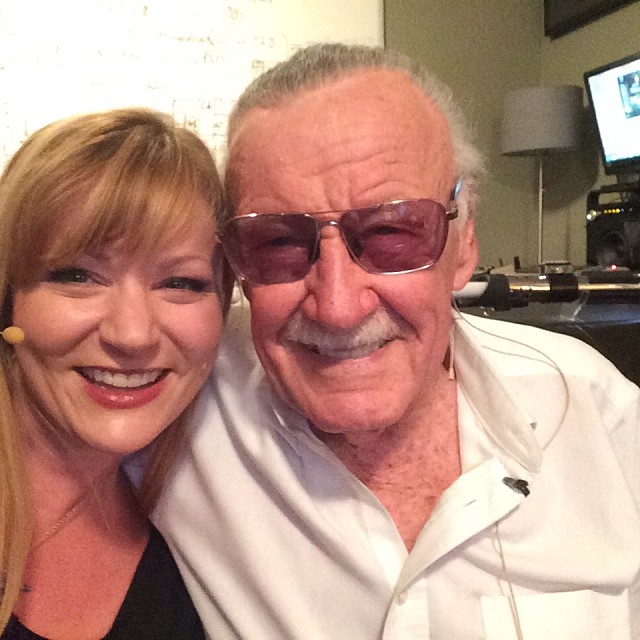
jenna and stan leeWhat is the Legion of Leia and where did it come from?

The Legion came out of a conversation a dear friend of mine and I had over dinner, right after the cast of the new Star Wars film was announced. I’d written a blog post about how disappointed I was in the lack of female cast members and posted a picture of myself dressed as Princess Leia as a little girl. She showed me one of herself and said, “I bet most of the women we know have a picture like this.” Part of the blog post was about how sad it was that a fan base as full of women as this one wasn’t going to be represented. Star Wars and its female fans have been around for decades and we’re not exactly quiet about it. I remember playing Star Wars with my girlfriends as a kid and having to change the gender of characters so we could all play. I was frustrated that my six-year-old niece is going to have to do the same thing, while my nephew will have a ton of characters to play.

The thing is, I didn’t just want to wag my finger. I wanted to do something positive to support women who create the things we genre fans love, inspire young women who want to be a part of this creation, give fans a place to talk and let the world know how many of us there actually are. On May the 4th (Star Wars Day), I started a Twitter handle (@LegionofLeia) and a Facebook page for the Legion and asked my friends to change their social media profiles to a picture of Princess Leia to support women in Sci-Fi and I was overwhelmed by the response. Not only did they do it, but a ton of celebrity women joined, from Buffy, Husbands and Once Upon a Time writer Jane Espenson to actress and reality star Adrianne Curry to the voice of Ahsoka Tano in Star Wars: The Clone Wars, Ashley Eckstein.

Since then, the support has only grown. I’m humbled and honored by the attention we’ve gotten and I want to take it further. We’ve started a website (LegionofLeia.wordpress.com) and began doing weekly profiles of women working in the industry and our new writer Sabina-Lissette Ibarra has been doing Sci-Fi Women Friday pieces for us, spotlighting a new female character we love each week. The plan is to host art and fiction contests, post advice from women who’ve made this their career, bring more writers on board and showcase women, both known and behind-the-scenes.

What was your first fangirl passion?

There were two, around the same time. Star Wars, without a doubt. I mean, I have two lightsabers and a Boba Fett helmet in my trunk! You know, for emergencies. I loved the fact that the Princess really didn’t need saving. Heck, I would put my hair in buns, find my white jeans and a while shirt (or a bed sheet if we were doing the final scene from A New Hope) and use a stick as a lightsaber. I even made her necklace from the last scene out of string and tin foil!

The other one was the Pern series from Anne McCaffrey. I loved Lessa, her powerful Dragonrider heroine, as well as Menolly, the young girl who ran away because she couldn’t live without music, despite the fact that women weren’t allowed to be Harpers. (I actually went into musical theatre because of her!)

What did you dress up as for Halloween?jenna leia
Okay, so I told you about the musical theatre part of my career, but before I became an entertainment reporter, I was also a makeup artist. Halloween is my favorite holiday! I’ve been Leia, Rogue, and every sort of fantastical creature I could come up with. Fairies, dragon ladies, water sprites (with my hair covered in conditioner so it looked wet) If it involved face and body paint, I did it. I actually dressed as Cersei Lannister for Cupcake Quarterly for their geek pinup issue!

Who are your sci/fi-superheroine favorite characters and why? Your favorite writers/artists?

As I said, I’m a fan of Anne McCaffrey. I also adore Wonder Woman, Ms. Marvel, She-Hulk, Katniss Everdeen (I love the books and the movies), Starbuck from Battlestar Galactica, Aeryn Sun from Farscape, Buffy the Vampire Slayer — I guess what they all have in common is that they don’t need anyone else to save them. They do it themselves. As far as artists, I’m a huge fan of Cat Staggs and I hope to get to work with her one day! I also love Janet Lee’s work. In fact, I brought Return of the Dappermen (which she won the Eisner Award for) on G4’s Fresh Ink when I was guest hosting and she saw it. I kind of gushed. Then we ended up working together on a piece called “Ladybird” with co-writer Rachel Pandich in the comic anthology Womanthology.

Are female fans accepted as equals by geeks and fanboys?

That’s a hard one to answer. I’ve been lucky enough to be surrounded, even as a kid, by fanboys who never give my gender a second thought. There are many, many guys out there who support women who love this stuff. In fact, I lost count of the men who supported the May the 4th event. I heard so many stories about their wives, girlfriends and daughters who love the genre and it was absolutely wonderful. On the other side, there are certainly guys who either have issues with fangirls or hold them to a different standard. For instance, I frequently see and hear about women who say they love, let’s say, Batman. They’re immediately quizzed about every single tiny detail of his history and told they’re not real fans if they don’t know something, where a guy is less likely to hear that. I’ve talked about this before, but there was an incident in a comic book store I was doing a podcast at, where a woman had just seen Thor, the movie. She told the guy at the counter that she’d seen it and didn’t know where to start with Thor comics. He laughed at her and told her that just because she thought Chris Hemsworth was hot, that she wasn’t a Thor fan. Things are better than they were, but it’s still an issue.

What do you think about the plans for the new “Star Wars” movie?

I’m thrilled to see Luke, Leia and Han back and I absolutely loved the creature in the J.J. Abrams video. I’m so happy that they’re doing a lot of practical effects. As I said, of course I’m disappointed in the fact that there aren’t more women in the cast. I hope they’ll be adding more.

What indicators do you have that more female stories and characters are being developed?

Well, actually, I think there aren’t enough. I hope that will change. We’re still seeing one “token” women in a cast. Avengers, for instance. Or Batman v. Superman: Dawn of Justice. I mean, Lois is in there, too, but as far as superheroes, there’s just Wonder Woman. That said, we’re certainly seeing more than before! I think that, the more the industry realizes that there is a huge female fan base out there, the more we’ll get.

Womanthology is a good example. We did a comic anthology (created by Renae DeLiz) with art, writing, penciling, etc., all by women and it exploded. I think our goal was $30K and we ended up with $109K on Kickstarter. The industry was shocked! Not only do women love to read comics, but we create them as well! I still get chocked up talking about this, but when I was at Comic Con, right after it was published, a little girl pulled on my pants leg. Tiny little thing. She asked if I was in the book. When I said yes, she asked if she could hug me. Her mom told me that she loved comics, but didn’t know that girls could make them. That’s what I want to change.

Is television a better place to find strong female characters than comics or movies?

I certainly think so. Look at things like Battlestar Galactica, Caprica, Once Upon a Time, Game of Thrones (and yes, these women are strong, despite their situation), Orphan Black and Arrow. There are more characters and time to develop them, which sometimes keeps studios from classifying a show as something as “for boys” or “for girls.” Sci-Fi is certainly on the forefront in terms of strong women (and by strong, I don’t just mean women that “act like men,” but women with a complete character) and worlds that are populated the way our world is. They often have a realistic split between men and women, gay characters, trans characters, people of color … imagine that!

Which comic book heroine deserves a starring role in a feature film?

I’m holding out for a Ms. Marvel film. I have been for a long time. Also, after David Goyer’s terrible comments about She-Hulk, I’d love to see her get one!

Does today’s generation of tweens and teens have a better range of sci-fi/superhero female characters to choose from?

Absolutely, but we have a long way to go. We certainly have more, but they’re often marketed to us all as “badass sexy chick,” doing the “butt pose” in posters. And if she can’t “soften” or fall in love, they kill her off. Now, I have absolutely, positively no issue with sexuality, nudity, love or anything of the sort. There is no reason at all why they shouldn’t be sexy, in love or own their sexuality. In fact, quite the opposite. But there is a difference between someone owning their sexuality and using it in any way they wish, and that being their only justification for being there. I’m just saying, write characters, not caricatures.

If you could have a superpower, what would it be?

Oh, I live in Los Angeles, so it’s definitely Force Push so I could move the other cars out of my way in traffic. (I did say I was a Star Wars geek.) Or maybe flight, so I wouldn’t have to deal with a car at all.

Related Tags:


Film History Gender and Diversity Interview Science-Fiction

Interview: Bishop T.D. Jakes on His Best-Seller “Instinct”

Posted on May 29, 2014 at 8:00 am

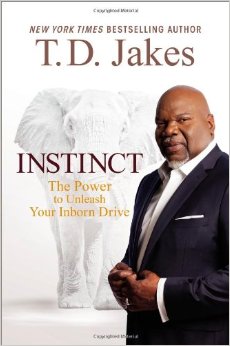
Bishop T.D. Jakes’ new book, Instinct: The Power to Unleash Your Inborn Drive is an instant best-seller.

Combining historical, cultural, and personal examples with biblical insights, in INSTINCT Bishop Jakes outlines how to re-discover your natural aptitudes and re-claim the wisdom of your past experiences. When attuned to divinely inspired instincts, you will become in sync with the opportunities life presents and discover a fresh abundance of resources. Knowing when to close a deal, when to take a risk, and when to listen to your heart will become possible when you’re in touch with the instincts that God gave you.

Bishop Jakes talked to me about how an elephant helped him learn about the power of instinct and why it is not the same as impulse.

How did the original idea for the book came to you?

I was on a safari in South Africa after concluding speaking for a group of black billionaires.  I was invited to speak to them and one of the perks they gave me was to go on a safari and to stay out in the jungle.  I had an amazing experience when I was on the safari with a zoologist who was extremely knowledgeable about the animals on the tour.  The animal I most wanted to see was the elephant. He explained to me all about the elephants; their habitats, their mating and what have you.  But he did not know where to look for the elephant.  The Zulu who had said nothing at all finally spoke up and said, “The elephant is over there.” And when he said it, it blew me away because I realized that I was sitting between intellect and instinct. And that intellect can explain it but instincts can find it.instinct book cover

And from that time I started researching instinct and reflecting back on my own life and the life of other people.  I find that the most creative, exceptional people who have done amazing things with their lives were people who followed their instincts. While they respected the data and the information that was in their particular industry, they were not tarnished by it, and they were able to do exceptional things because went with their gut and followed their instincts and found the thing in life that they thought they were created to do.

What steps do people need to take to be open to that genuine instinct?  How do they get past the fear?

Well, you hit the nail dead on the head when you start talking about fear. I think people misunderstand fear and give it too much power and they see it as a stop sign when it should just be a yield sign in their lives.  I never found anybody who did anything, who built a corporation or raised a child who didn’t have some or an interest in doing so and I’ve been teaching people to feel the fear and do it anyway. And as it relates to finding your instinct and we have so much noise around us; television, media, the cultural media, loss of jobs, jobs, all kinds of stuff invading our space, we don’t get time to meditate, to think, to really soul search to see, “Are you living your life to the fullest? Are you doing the things that fuel you when you do them, that fire you when you do them, that motivates you when you do them?” And sometimes we’re in the middle of my lives before we get to take a breath and reflect and that’s why so many people changing careers and making decisions in the second half of their lives because they recognize that they have responded to what everybody needed them to be without really researching who they were created to be

Did you do a lot of interviews in researching the book?

I did quite a few interviews and that I was privy to, as a pastor and having done 36 years of counseling not only the 30,000 members of my church but throughout my traveling and interaction with people from politics to entertainment. And almost consistently I found that people who enjoy their jobs and enjoy their life and were the most productive, were people found careers that were in alignment with their core competencies and their core inclinations, their core instincts. And so I wrote the book with that pretty much.

And then I interviewed doctors who added to the information like how they were telling me how heart cells developed from stem cell start beating before they connect and they connect with other cells that have the same beats.  So we’re instinctive right down the cellular level of who we are. And I found all of that quite fascinating.  They work their way over to the cells that have the same rhythm.  That’s one of the same metaphors that I use to talk about our lives.  For instance I talk about the nine foot neck of the giraffe that enables him to eat from the tops of the trees.  He eats from the level of his vision.  When you have a certain worldview and a certain vision you have to eat from the level of your vision.  Turtles share the same space and also eat on the level of their views.  People will comment on your decisions from their perspective. And you can’t let their perspective stop what you’re doing.

Are there some good examples in Scripture of people acting on instinct?

Yes, I think there are couple of real good examples. One of them is when Jesus talked about the talents. One he gave five, to one he gave two and to one he gave one. And then the Bible says that he took his journey and went to a far country. And then he came back and asked them to give stewardship of what he had given them and what’s amazing is the first of all didn’t ask them to multiply what he gave, he just gave it to them.  But some of them instinctively took what he gave them and turn it into so much more and others did not.  Jesus spoke very harshly to the one who took what was given him and did not make more. And I use that to talk about how all of us have an obligation to stewardship not only to maintain what was given to us but also to multiply what was given to us.  Another good example would be the ten lepers.  Jesus told them to show them set to the priest all 10 of them obeyed what you said and they were healed as they went but one of them returned having not gotten to the priest yet and came back to say thank you and Jesus said, “Where are the nine?”  Well he told them to come back to say thank you.  This one brother reacted to his instincts and went back and told Jesus thank you and was complimented for doing so.

Let’s go back to this question of fear.  What is it that people fear, do they fear making mistake, do they fear being embarrassed? What are the fears that prevent people from tapping into their instincts?

I think a it’s a lot of things based on who we are.  For some people it’s a fear of failure, sometimes it’s a fear of rejection, sometimes it’s a fear of something new, unfamiliar.  Our intellect is formed by the things we’ve read, the things we’ve seen the things we’ve heard and how we react to them.  And all of that is based on empirical data.  But the reality is when you follow your instinct you’re often challenged to go into an area that you don’t have the support of previous experience and that’s quite a vulnerable feeling because you don’t have anything in your background that supports it. You just have an instinct and then interest in that area that is outside of your past experience and I think that’s alone is quite frightening.

How is instinct important in personal relationships?

I think is very important, I give you an illustration of three turtles who were born in the land, they actually had some land and they migrate to the ocean. I think when it comes to your personal relationships, you have to find people who migrate to the same things that you do, that have the same worldview that you do. To give a Biblical example, how can two walk together except they agree? And out of 7 billion people on the planet you’re not gonna agree with everybody but find the people who basically have your same worldview. It’s an instinctive thing.  Those who are comfortable in their own skin, not intimidated by your uniqueness — that is very important personal relationships.

Many employers have started to take the book and offer it to their staff because the stats really prove that people do the best work when they’re doing what are instinctive to them, that’s innate to them, that’s comfortable with their personality types.  Sometimes we made the mistake of having a need and forcing somebody to supply a need and they can do it but the fact that you can do something doesn’t mean that you ought to do it and it might not be the best thing for you to do that makes you the a most productive and that’s true in personal relationships as well as professional ones.

Isn’t there a difference between instinct and impulse?

Yes.  When I say instinct, I’m talking about your inclination to be in a particular environment. I’m not talking about decisions, snap judgments, quick decisions made impulsively.  The only thing they have in common with instinct is that impulses may not be well researched, they may be urges or inclination.  But when I talk about instinct am talking about your proclivity towards art or drama or science or music or that sort of thing; is not so much about buying a dress or moving to Chicago, that’s impulsive. Quick decisions to those things may be impulse and have nothing to do with instinct that all.

If you’re in a relationship with someone and  trying to explain to them what direction your instincts are taking you, what’s a good way to frame that?

If it creates conflict, I think that’s a red flag. I think that the reason that we date people in the first place is try to get a sense of their worldview and what kind of person they are. They may not necessarily be the same kind of person you are but if they’re uncomfortable with the kind of person you are, it’s is a bad thing the bend yourself out of shape just so you have a company because ultimately that’s going to get tiresome and is going to be frustrating and I think also be a failure.

Related Tags:


Books Interview

Interview: John Ottman, Editor and Composer of “X-Men: Days of Future Past”

Posted on May 27, 2014 at 8:00 am

I last talked to editor/composer John Ottman about “Jack the Giant Slayer” and loved hearing about his unique combination of roles, often working with his former classmate, director Bryan Singer.  They collaborated again on X-Men: Days of Future Past and it was a pleasure to catch up with him to discuss the challenges as both editor and composer of working with so many characters and two different time periods.

You have so many characters in this film and some of them change their appearance a lot, either due to use of their superpowers or being played by different actors in different time periods.  How do you as an editor help the audience keep everybody straight?

The hardest thing when you have many characters in a room in one scene is to basically keep their presence alive in the scene.  If you spend too much time with one character talking, your mind inevitably wants to know what the other characters are thinking or how they are reacting.  And if you spend too much time away from showing their reaction to the other character talking, the more I think you feel uncomfortable in the scene. So the challenge is sort of the keep everybody alive even if they’re not speaking.

What are some of the ways that you do that?

I just put myself in the mind of the audience. I’m watching someone speak and I as soon as I start to wonder what the other character or character being spoken of might be a reacting, I want to see them. I use my own reaction to cut to another character.

And there are different time periods in this film also.

Yeah, there’s a dreary future and then there is 1973.  Logan’s consciousness was fed back into his younger self so that he can change an event that happens in the past so that the future might be fixed or not be so dreary.

How do you keep the audience constantly aware of where they are in time?

It’s pretty obvious where you are.  Nevertheless, we did have internal debates sometimes where people were like, “Are you sure people know that we are in 1973?” “I think so.”  But that wasn’t a huge problem. It was just basically the timing and keeping the storyline as clear as possible. It’s extremely convoluted and a very complex story.

Ottman_1You’ve got the young and old version of some of the characters, right?

Correct, yes. And the other biggest challenge of the film was the time travel aspect.  It’s like the “whack a mole” game where you whack one mole and then you create another problem. It’s sort of like you have to keep whacking a mole until you can live with the smallest problem. But there will always be imperfections in time travel stories so that was a big challenge; sort of building consensus with everyone to try to accept what we were going to accept.

Did you once again do the editing first and then composing second?

Of course, yes.  It’s overwhelming to actually deal with all of the management of the film to get it together. The editing is not just putting pieces together.  At least for me it’s also storyboarding scenes, it’s designing the pre-visualization of the scenes with the pre-vis artists, it’s generating the shot list with the second editing director, visual effects issues, looping the actors and all that endless stuff.  I have no hope of even starting to write the score until I have some sort of editor’s cut.

So do you work with a temporary music track as you are editing?

Yes, but people would be surprised to know that I don’t really use music to cut my scenes together. I wait until I get my full editor’s cut together before I put any temporary music in. And working without music, I know where the film is strong and it’s not reliant on the score. Once I get to that point, I spend about two weeks putting temporary music in so we can have screenings and show the studio.

I’d like to go back to that same challenge of two time periods and so many characters.  How do you use the music to help the audience keep it all straight? You don’t have different themes for the characters, right?

In fact this has fewer characters themes than X-Men 2. It’s not so typically superhero-like when a character walks and you hear a motif for them.

This film is different so it does not really lend itself to have numerous character themes. There is the overall theme of the film; the X-Men world, which is my theme from X-II but then there are really three other themes in the film. The main one is Charles Xavier’s theme because it’s really his story about how his character has lost all the hope when we see him in the 70’s.

And it’s Logan really trying to get him to rekindle that hope. That’s the centerpiece of the score; at least subliminally, his music. And also he’s trying to fight for Raven’s soul so she has a little bit of a motif in the movie and then Magneto himself has a very simple very accessible motif. There’s not much time in modern movies to establish a beginning, middle and end theme for each character so you barely have time to do signature sound that you can recognize, so his is very simple but very sort of malevolent.

For lack of a better description, there’s a metallic sort of sound. And Mystique has her transformation swishy kind of sound. So I obviously left room for those things. I am very involved in the sound design so I think I surprise people when I am directing the dub as the editor, how I often bury the music or intertwine it with the sounds I use.

What about the time period differences? Are there different instruments or different time indicators?

The 70s gave me an excuse to use some analog synthesizers; we use some old keyboard synthesizers and electric piano and guitar, sometimes very subtly but it was fun to do that. And especially for the sentinels of the past, I was able to do some sort of electronics that were of the period. The score for me is unlike Jack in that Jack was a very pure orchestral swashbuckling score where you had basically everything emulated from the orchestra. This score was very synthesizer heavy with orchestral supplementation. So that was just our decision because every movie is different and that’s what felt right for this film.

If you could take one of the X-Men, which powers would you pick?

I guess I would have Mystique’s power so I can sort of… I can be really out of shape and morph into someone has a great body.

Yeah, I think we’d all like that one!

Related Tags:


Behind the Scenes Composers Interview Music

Interview: Sister Stephen, End of Life Nurse from “American Nurse”

Posted on May 21, 2014 at 8:00 am

Director Carolyn Jones told me that she learned more from Sister Stephen than anyone she has ever met.  Sister Stephen is an end-of-life nurse featured in Jones’ documentary, The American Nurse.  I also learned a great deal from her, even in a very brief interview.

What do you think that Carolyn Jones learned from you?

Well I think one of the things we talked about and she seem to really have some questions about is this whole thing about dying and how is it for these people at the end of their lives. What do you think is out there for them after they pass away? What are some of your beliefs about that? We talked about that and I think she saw also just being here how our residents really die with dignity and with the peace and the joy and the love surrounding them. That really that’s the way it should be if they all they pass on and I think that that was impressive. It wasn’t a negative experience for her at all.

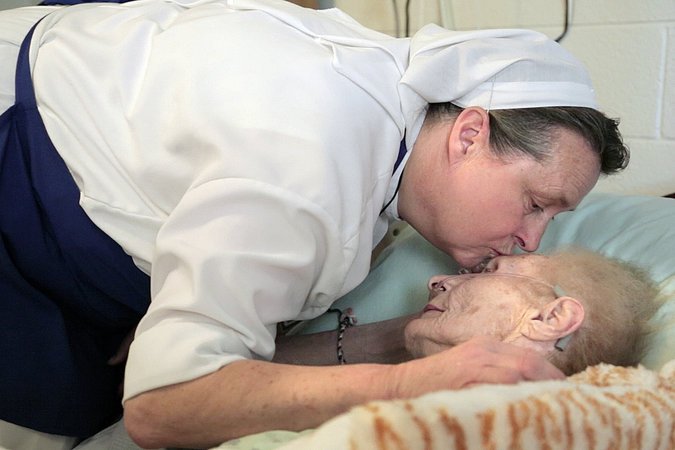
She said you really bring the entire life cycle into the facility. Tell me why that’s important.AMERICANNURSE-master675

We’re so very fortunate that we are able to do that. We have animals here, we have children here.  So there’s not the concept of when you go to the nursing home you’re just gonna sit and rot and die, nobody is gonna care about you and there is no life. I do believe that there is a lot of life here and that we do the best we can to make their last days feel full of life.  Having animals and the children around, there is always something going on. We have grandchildren here all the time. Many of our residents are from rural areas and so they get to participate in feeding baby goats or going on hay rides. We do a lot of outings with them.  There are children who come here from respite care to interact with them.  They bring the residents outside, they bring the animals in to them, they play games with them. So it’s really not just sitting some place and meditating, they’re really involved and I think they feel that. We used to do a lot more activities in the evening, but by evening they want to just rest because their days are full, and they really want to participate in all of that.

What have you learnt from working with people at the end of their lives about the fears and regrets that they are experiencing.

One of my favorite parts of my nursing career is to be with residents at the end of life.  One of them was quite a bit younger, he was a hospice resident and he had a battle with alcoholism and never believed in God.  At the very end of his life, he did not want us to pray with him.  He did say, “I deserve what I’m going to get.” It was kind of sad but we still tried telling him no matter what God loves you and He’s the Father, he’s the Good Shepherd, He’ll call you by name.  I think we helped him the best we could and at least he was surrounded by love, he was surrounded by the spirit of God. I really believe that and the rest is up to God and him at that time.  Most of our other residents are very ready to die, they’ve lived a full life and most of them are faith-built people and when they get to that age it is like, “I’m ready, let the Lord come and take me, the Lord can come and take me anytime, I’m ready.”  It’s not the same when you’re taking care of someone that’s young and have a family.  A very few of our people expressed regrets to me, very few. The big thing is the population we work with here is in a rural community I’m sure is different than somebody in a big city that has loss of contact with their children and they do feel alone and maybe part of the loss of contact with their family is something that they contributed to and they may have regrets but most of our people their families are close, they’re here with them when they are dying and in my experience you do not see a lot of that.

Even though the person who is dying may be ready, sometimes the family is not ready.

Exactly, exactly.  I’ve gone through it twice with my own parents. They both died here.  Both of them had dementia.  My father was 71, my mother was 80, so he was a little bit younger.  One of the things that was so helpful for me when my mother and dad were dying, and me being a nurse in geriatrics and long term care and seeing all of the many residents that have passed and work with families, I had kind of a difficult time at that point, being sure I was making the right decisions.  My nurses were there to support me and help me.   So that is what I try to be for the families.  We sit down with them and it’s not always just me it’s often our social worker and our team that help them work that through. “What would your mom or dad really want?” Well they don’t want to be on life support. And are the decisions we are making what your parent or loved one would like or is it what you want to do because of your own guilt or comfort or whatever it might be? And it’s ok to let them go, that’s what they wanted. It’s ok not to send them to the hospital and pump IV’s and antibiotics if they are really ready and it’s nothing we can help…they’re not going to get better, they’re just going to be in discomfort.

What changes in the way we do health care in this country would be most beneficial to your work?

This sounds really, really kind of materialistic but I think with the elderly, I think reimbursement is a big issue. There’s still many more things that we would like to be able to do for our residents and have more time for them especially at that time with the families and reimbursement is a big issue. It’s a big issue on who we can actually take care of which is unfortunate. When we were a bigger congregation and we had most of our sisters we never looked at what the financial situation was unfortunately now we have to and that’s very bothersome to most of us.

Medicaid reimbursement is horrible and there’s some people you’d really like to help out but you can only do so much of that or you’re gonna sink. That’s one thing, the other thing I really think are some of the regular regulatory situation. And that’s getting better, I have to say it’ getting better but before when residents were at the end of life and I have to call the doctor regardless of what is happening or what the wishes are, you’ve got to call the doctor and many times if you get an on call physician and it’s like, “I’m not going to do anything unless you send them to the hospital.” They need to be evaluated and, they’re afraid of a lawsuit.  Do we really have to be putting them through CAT scans and MRIs to save our butts? It’s not really for the betterment of the residents.  It’s probably to save our butts or because of the regulatory issues.

Do you have a favorite bible verse that you like to share with people as they approach the end of their life?

One of them is The Good Shepherd. “I am the good shepherd and I know my sheep and I call each of them by name.” And I really feel, and I said to a women that was dying last night when I prayed with her and I said, it happened to be Good Shepherd Sunday in our church and I said, “Jesus said I’m the good shepherd, I know my sheep, my sheep know me and He will call you by name.” He will call you by name. And I guess that’s one of my very, very favorites.

What was it like to see the film about your work?

When you see the movie on big screen, I was telling my administrator about it this morning, she had tears in her eyes and I had tears in my eyes. It is phenomenal; it just really restores your hope. Sometimes you get in a little bit discouraged because there’s a staffing issue, there’s a financial issue, there’s a regulatory issue and sometimes you wonder what happened to what we really got into nursing for? And you see this and it just like restores your hope.  Oh yeah, but there’s a lot we can do, there is many ways we can still serve.


Related Tags:


Interview

Interview: Carolyn Jones of “American Nurse”

Posted on May 19, 2014 at 8:00 am

“American Nurse” is a deeply moving documentary about the men and women who are, as the bumper sticker says, “patient people.”  The film explores aging, war, poverty, and prisons through the work and lives of nurses.  Jason Short drives up a rugged creek to reach a home-bound cancer patient in Appalachia. Tonia Faust runs a prison hospice program where inmates serving life sentences care for their fellow inmates as they’re dying. Naomi Cross coaches an ovarian cancer survivor through the Caesarean delivery of her son. Sister Stephen, a nun, runs a nursing home filled with goats, sheep, llamas and chickens, where the entire nursing staff comes together to sing for a dying resident. And Brian McMillion, an Army veteran and former medic, rehabilitates wounded soldiers returning from war.  This film will touch, uplift, and inspire you.  It was a great pleasure to speak with writer/director Carolyn Jones.  I also spoke to Sister Stephen, and that interview will be published later this week.

Did this project start as a book?

Yes, it began as a book. I’ve actually published a number of books. And Living Proof: Courage in the Face of AIDS is probably the most similar for me kind of emotionally to this one, more so than any other project.  I’ve really spent my career taking pictures and telling stories of people that I think are admirable, that I think we can learn something from, that we can be inspired by. I’m always eager to shine a light on those stories. So I was asked to do a book that celebrates nurses back in the end of 2011 by a global health care company came to me. They wanted to sponsor a project that would be a photo-journalistic study of nurses all across America and show the best nurses, meet the best nurses. It was a perfect sponsorship for someone like me.  They had absolutely no editorial control and so it was kind of like a PBS sponsorship where they would just support the project and get behind what I was doing. I think they knew what kind of work I like to do so it was a really great match. Anyway it started off that way and I have to say as I travelled across the country my mind was completely transformed by the over one hundred nurses that I had the chance to photograph and interview. By the time I was two months into the project I knew this was an extraordinarily special group of people that I was going to want to get to know.

They’re really dealing everyday with this critical balance between being very caring and compassionate and yet holding on to some kind of sense of themselves where they don’t get washed away in it.

And that’s a very, very fine line to walk. I had no idea what nurses do. I mean zip! I had gone through chemotherapy with breast cancer and my nurse really got me through that on a personal level so I knew what that kind of nurse does. But I really knew nothing about the diversity and the depths of knowledge that nurses have and all the different things that they deal with so when that lid got blown off I was really struck. My first feeling was “Oh good heavens they’re all saints!’ and I honestly would talk to someone and just think, “You are just from a different planet than I am.” And it got very interesting: “Are you born like this? Are you born to be caring for your fellow man and completely non-judgmental?” They seemed to me, to be people that were just on a higher plane than the rest of us.

And then I kind of got comfortable and caught my stride and I realized that a lot of the qualities that nurses have are qualities that I believe as human beings are innate within us.  I believe we will care for our neighbor for the most part and I believe we will help one another given a certain set of circumstances. So I started to get a little bit comfortable with it. Maybe somewhere within me I had some of the qualities that let me inhabit the same earth that they do. And then by the end of the project I was convinced they were saints and decided that they have a completely different DNA structure than I do!  And I will never be anything like them, they’re incredible. Everything I want to be, everything that I think matters during life and at the end of life are things they think about and act upon everyday and just to be in their presence makes you a better human being.

Do you think that we as a culture do enough to support them, particularly with regard to the way that we structure health care?

No! I mean, not even close.

We’re so far off from understanding what nurses do and how they can contribute. We haven’t even begun to scratch the surface. We have got this group of people in this country that are non-political, can’t be bought, they see us holistically, they know how we suffer, they know what makes us healthy, they know where we find joy, they know how to make the hospitals run smoother, they know the full effect of war on our young men and women coming back from fighting, they know what poverty looks like, they know what working in the coal mines look like, they know what end of life is. They should be a part of every conversation, there should be always a nurse sitting at the table to remind us whatever choice we’re making, whether it’s about health care, going to war, food stamps, closing down a school, I don’t care what it is, they can tell us what effect this is going to have on our health and ultimately on our children.

And it’s critical that we stop and listen to them because we don’t have another group of people with this incredible treasure chest of knowledge. We don’t have them; there isn’t anybody else that we can turn to that is as, dare I say, pure and straight forward and non-judgmental and non-political as this group. They are capable of great things  because they do have something innate that they are born with that make them different than the rest of us. But they are educated constantly to be non-judgmental, to look at things at face value, to accept everybody and try to understand the cause of someone’s behavior rather than just react to it. And it’s absolutely invaluable and I think this country needs them desperately and doctors are great, this is not a project that is trying to say nurses are great and doctors aren’t. That’s not my message at all.

We don’t know many things about our nurses and “Nurse Jackie” just doesn’t cut it. I’m a huge fan of Edie Falco.  She’s brilliant and I wish she had lent herself to something else because it did a great disservice to nurses. I haven’t met a nurse in the last three years that had anything good to say about that. It’s not who they are. And I was lucky enough to meet some of the finest in this country.

How did you find the nurses you followed in the film?

First we would settle on a topic like returning war veterans and what the military had to say about what those women and men were facing. And so we went to the place in America that had more returning war veterans from Iraq and Afghanistan than any other place in the country. That was the VA Hospital in San Diego. Then we went to that hospital and asked them to nominate a few nurses that not only can speak to this issue but also represent the hospital really well, that are like the finest nurses in the industry.  So that’s the way we functioned all across the country.  We were able to meet nurses that were nominated by their peers and by their supervisors, and all of them are kind of the best of the nurses in that particular facility or place where we were. And so I say that because I’m not trying to say that all nurses are without fault either, they’re human just like the rest of us.  But there are more great nurses than any other pocket of a profession that I have certainly encountered in my life and I’ve been interviewing and meeting people for over 25 years.  This is an extraordinary group.

It reminds me a little bit of documentaries like “Twenty Feet from Stardom” or “Only The Strong Survive,” where we turn our focus to the people at the side and not the ones that usually get the leading role.  Their job is to help other people.

I happen to love stories like that because you find the richness in life there. And you can do a deep dive in and find out makes things work and I love that.  But I think in this case in the process of uncovering that I discovered that there is a reason that they don’t have a loud enough voice right now.  We don’t know what they do, we have this preconceived notion of what nurses do and it involves holding hands and taking your temperature, and caring for people and being empathetic and all of those things.

We don’t realize how smart they are; we don’t realize the kind of education it takes to become a nurse and we don’t realize how they continue to educate themselves. I heard this so many times, they’ll get a patient who…it could be anything, a burn victim that is hurt in a different way that they didn’t encounter before.  They dig in and find out how to help that person. And they get more certifications to be able to help the next person who is dealing with the same thing. That’s just the way their minds work. That’s why there are so many darn letters after all of their names. They have like this long list of number of letters, all of them. Half the time I couldn’t keep straight to who have what but that’s because they are so well educated and they continue to educate themselves because they’re driven by taking the knowledge that they had from the person that they just cared for and using it for the next person. And it’s remarkable.

And what do they do to keep from not falling apart over the tragedies they see around them all the time?

I was thinking, “Do you all get in your cars and drive for 45 minutes and sing Dionne Warwick songs or something to let it go?” But they all do different things. So for some of them there are groups of their colleagues in the hospitals, so there might be something that happens and they’re able to meet right after someone has died, and they can talk about it and kind of get beyond the moment by finding strength in others. Some of them actually do get in their cars and cry or sing or just try very hard to leave that moment behind them and drive home and then walk in the front door, take of their scrubs and make dinner for their families. That just blows my mind on so many levels, it’s incredible! And some of them aren’t able to cope, frankly. Some of them have a difficult time having personal relationships because it’s so hard to talk.  Nobody wants to hear that stuff.  Nobody wants to know what your day was like.

Naomi Cross is a Labor and Delivery nurse at John Hopkins and is also a Bereavement Counselor.  So she’s the one helping moms when their babies don’t live.  She’s married to this guy named Jason Cross.  We should clone him because he’s so supportive and so aware of how important the work that Naomi does is. And he cooks and he’s there and that’s the way they solve it. They have a young boy who is just adorable, he’s in the film as well, and they kind of have found this balance in life so that she can get in the car and go home and walk through the door and leave it outside most of the time and just enjoy and build herself back up with the love of her family.

But it’s not easy and it takes a very, very special person to be married to a nurse because of what they go through in a day.  The film takes us over the threshold into the patient’s room so that we can see them caring for other people.  You actually see a baby come into this world and you see a prison nurse attending to a nasty wound on a man’s leg and you get a little glimpse, a little understanding of how dramatic and profound these moments can be that nurses go through. And a lot of the nurses who have seen the film have said things like: “I can’t wait to show my sister and my mother and my cousin or even my husband or my wife because now they’ll get it.  Because there isn’t any way for us to understand.  They put their hands inside our bodies, they deal with gruesome things and they’re fearless.

I’m going to speak to one of the nurses in the film, Sister Stephen.

Oh my gosh! Sister Stephen transformed me, I want to you to know. There is more life at Villa Lerado than any place I’ve been. I live in Manhattan and I think we very often spend time in the here and now. Oh come on…we all do right? We are very focus on right now and one of the things I think is wrong with the way we live, we’re so trying to hang on to our youth we’ve forgotten that there is a cycle to life, that we’re born and we die. And we try to stay young for so long.

Sister Stephen has the full cycle of life at Villa Laretto. She’s got all these animals that she uses as animal therapy. I’m not just talking about a couple of ducks.  She’s got llamas and woodpeckers and monkeys and these animals all give birth and she brings those baby animals either into the facility herself and puts those little babies into the laps of the elderly or she puts the elderly in wheelchairs and takes them out to witness all those baby animals on the farm. And then on top of that this woman is a genius, she also brings in respite kids from the town, kids that have all kinds of different problems either developmental problems or problems at home. She brings them in and they help her care for the animals. And those young people relate to the elderly in such an extraordinarily beautiful way.

We need to be reminded that our time here is so precious. She reminded me of that. I think of her every day. She’s reminded me that we are born, it beautiful here, we are lucky to be here. We need to cherish it, we need to make the most of our time and then we leave. And that can either be a beautiful moment or a difficult moment but that’s the way it’s going to be for all of us. And I think she lives that every day.  She taught me more in the amount of time that I have known her probably than anyone else in my life and she’s a very, very special human being.

Related Tags:


Directors Documentary Interview
THE MOVIE MOM® is a registered trademark of Nell Minow. Use of the mark without express consent from Nell Minow constitutes trademark infringement and unfair competition in violation of federal and state laws. All material © Nell Minow 1995-2026, all rights reserved, and no use or republication is permitted without explicit permission. This site hosts Nell Minow’s Movie Mom® archive, with material that originally appeared on Yahoo! Movies, Beliefnet, and other sources. Much of her new material can be found at Rogerebert.com, Huffington Post, and WheretoWatch. Her books include The Movie Mom’s Guide to Family Movies and 101 Must-See Movie Moments, and she can be heard each week on radio stations across the country.

Website Designed by Max LaZebnik