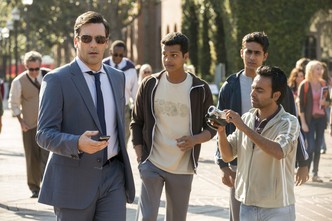
Interview: Gia Coppola of “Palo Alto”

Posted on May 18, 2014 at 4:12 pm

Gia Coppola is the 27-year-old writer/director of a new film called “Palo Alto,” based on a book of stories by James Franco, who appears in the film.  Other performers in the movie are, like Coppola, Hollywood-bred.  Coppola is the granddaughter of Francis Ford Coppola (“The Godfather”) and niece of Sofia Coppola (“Lost in Translation”), and her young cast includes Emma Roberts (daughter of Eric, niece of Julia), Nat Wolff (son of “Thirty-Something’s Polly Draper), Christian Madsen (son of Michael), and Jack Kilmer (son of Val).  “Palo Alto” is the story of high school students, centering on the vulnerable character played by Roberts.  Coppola spoke to me about the cast — including her own mother — and about what it was best that she didn’t know before she started.

 You have a superb cast in the film.  Tell me a little bit about the casting process.

That is 90% of the job. It was really just kind of going with my gut.  When I met Nat Wolff, he just seemed to really understand the characters. And even though he had not really played that sort of part before, it just seemed like he understood it more than anyone of the other kids I met and had the sort of skills to kind of go there. I saw him in a movie “Stuck in Love” and you could see he was sort of capable of going there.  And then with Emma, she  kept coming up in the conversation and I kept running into her randomly and it just felt like there was some sort of cosmic pull.  I was a big fan of her work and she was super supportive and really fun to have around. So I was glad to have her as part of the project.

She’s got a wonderful vulnerability.

Yeah, yeah, yeah. She’s very complex in a sense. It was great to work with her, she’s really talented.

And you cast your mother in the film?

It was a lot of pulling us as many favors as I could and kind of get everyone to get together.  I always knew my mom was a good actress. She didn’t want to do it but I begged her.

Was it hard to give her direction?

No. It was fun. She just kept always looking at me after the take and spiking the lens .  (Laughs) It took a while to get her there.

How did you work with the costume designer and what did you ask for?

Courtney really got it.  We really wanted something that was realistic.  We just let the kids they wear their own close. We were low-budget so a lot of it was my clothes or my friends clothes. Just kind of letting them put the outfit together.  Jack already had great style and our goal was dirty Converse rather than brand-new, clean ones.

I understand that you read this book before it was even published.

When I met James he had just finished his book and he wanted to make it into a movie.  He thought from my pictures that it could be a good fit.  He presented a few different ideas and this appealed to me most.  hadn’t really made a feature film before so it was to my advantage to not really know that working with short stories might be harder than it is. It was great because Jame really set the tone to give me freedom and have my own interpretation but then also very supportive and he kind of took me through it.  He said, “Pick the stories you like the most” and then we made a test film of one of the stories to hear the words off the page and see what wasn’t working and what was working.  I was able to discover that it should be an ensemble piece and combine the characters and make it fit for the screen.

I thought the music was especially good.

I mean I wanted something that was modern but also still classical and I was a big fan of Devonté Hynes.  He took the kids’ emotions seriously and didn’t try to belittle it even though in hindsight it doesn’t seem like that big of a deal.

You came from the world of photography, moved to short non-narrative films and then now this narrative film. What was the biggest challenge in doing that?

It really felt like a collaborative experience and I was working with the same people on my smaller projects and so it was very comfortable and we all pitched in and we were all very enthusiastic. It was my first film and the boys was at my mom’s house and we are very much like a family. So the hardest part was saying goodbye and not getting to see these people every day after we kind of were in this grueling schedule of working six-day weeks.

Because of your background in photography, what were you looking for in terms of the cinematographer?

I worked with Autumn Durald who I worked with on my smaller films and we have a great kind of working relationship where we kind of communicate beyond words and it was just a lot of sending each other pictures.  She really knows my aesthetic. My mentor in college was Stephen Shore.  I loved his color palettes and his taking mundane things but finding them fascinating. I like the camera to be still and not very shaky and have everything happen within the frame.

The author of the stories, James Franco, also appeared in the film.  Did he give you much feedback about the screenplay or about directing? 

He really wanted me to have my own interpretations so he gave me a lot of liberty to do that.  I kind of kept him updated, sending him pictures of what we were doing. And whenever I had a question I would email him or something and he was always very helpful. It was great to have him on set because he would tell us the inspiration behind all the characters.  And he is a director so he could help me when I got stuck on set.  It was really nice to have him, he’s a great teacher.  He was really able to capture what it felt like to be a young teenage girl.  I really connected with it and I was really impressed because it is not an easy thing to do.
Related Tags:


Directors Interview Writers

Interview: Sarah Drew of “Moms’ Night Out”

Posted on May 17, 2014 at 3:39 pm

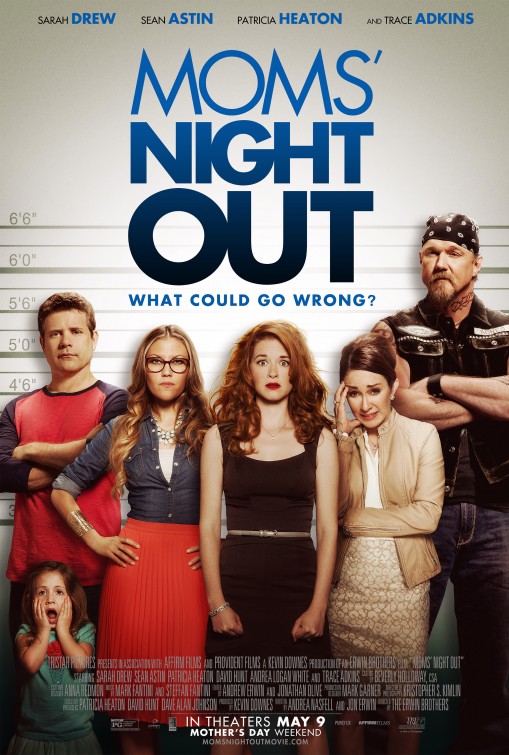
“Grey’s Anatomy” star Sarah Drew stars in the delightful “Moms’ Night Out.”  I was thrilled to get a chance to interview her.

© 2014 AFFIRM Films/Sony Pictures Entertainment & Provident Films, LLC. All Rights Reserved.

One of my favorite things about this movie was the way it avoided the usual daffy misunderstandings between the married couples.  Allyson and her husband were wonderfully supportive of each other and really understood each other?  How did you and Sean Astin work together to create such a natural chemistry?

I think we just clicked right away. We had a meeting with the directors the day before we started shooting to work through our scenes and found ourselves finishing each other’s sentences. I think we have many years of marriage under our belts. Sean has been married for over 20 years and I’ve been married for 12, so we get how loving couples communicate. We both brought ourselves and our experiences to the table as we created our onscreen relationship.

Is it important for moms to have a night off?  Why?

Yes! Motherhood is often times very isolating. You can feel trapped in the house having toddler conversations as your only form of communication. I think we need to go out, be with other moms and remember that we are all in this together. We are not alone and we are not crazy and this mom thing is hard. It’s important to be able to blow off steam and remember that we have an identity beyond the little people that occupy so much of our time. It’s healing and rejuvenating to make that space for ourselves.

Your character Allyson is very tough on herself.  Is that an occupational hazard for moms?

Oh man… Mommy guilt is no joke! I know that first hand. I think we all walk into motherhood hoping that we are gonna be the world’s greatest mom and then we are faced with tiny people who give you no clear indication that what you are doing is ever right or wrong. It’s really hard to measure success as a mom and it’s really hard to gauge whether we are doing it right. While attempting to breast feed, I felt like the world’s biggest failure. While working, I feel like I’m not present enough for my son. While sleep training, I felt like everything I was doing was wrong and then I would get mad at myself for feeling frustrated. Motherhood is beautiful… My child is beautiful… Shouldn’t I be grateful every minute of every day? Well, no… I don’t always feel grateful and happy. Sometimes I feel like tearing my hair out and then I feel guilty for feeling like tearing my hair out. We moms need to be kinder to ourselves. My sweet husband reminds me of this almost on a daily basis, but it is still a challenge.

Did making this movie affect your own thoughts about being a mother?

Yes. I think I preach the message of the movie to myself daily and the message is in my heart because I got to make the movie. “I am enough. I’m a mess but I’m a beautiful mess. I’m His masterpiece. And that’s enough”.

One of the funniest scenes in the movie is at the restaurant with the wonderful Anjelah Johnson.  Was some of that ad lib?  What was it like to film that scene?

Anjelah came to work that day with a bunch of hilarious ideas. She was so brilliant. Comedy is hard to do, and this scene was one of the ones that I was the most nervous about. You want to keep the scene rooted in reality, so it can’t be too over the top, but it has to be extreme enough to still be funny. It was a tricky line to walk but I’m really glad I had such a talented acting partner to work it out with.

Is there a difference in the way you prepare to play a more heightened, comic role than to play drama, as you do on “Grey’s Anatomy?”

Yes. I think I answered that in the question before actually. I find drama much easier than comedy. I’m able to access emotion pretty easily, so playing dramatic scenes comes very naturally to me. Doing comedy requires a whole other set of skills and it’s hard to get the timing right. The whole film was like an comedy acting master class for me.

What’s the best advice you have received as an actor?  As a mom?

Remember who you are. Remember what your true identity is. This acting thing is hard for many reasons. I think the hardest part for me is the public scrutiny of it. Your work is you and your work is scrutinized, criticized and praised multiple times a day online, in the press, and around the water cooler.  It’s easy to get caught up in what people are saying about you and if I pay too much attention to it, it begins to eat me alive. I have to do the hard work of separating truth from lies on an hourly basis in order to protect my heart and remember who I really am.

Best advice as a mom: trust your gut. No matter what anyone else says about how you should be raising your child, you and you alone are the expert on your child and you need to trust yourself.

Who should see this movie?

Everyone. Moms should see it so that they can be encouraged and affirmed that what they do is deeply valuable and important. Dads should see it so that they can see their wives in a new light and grow a deeper understanding and appreciation for the emotional rollercoasters moms find themselves on on a daily basis. Kids should see it so that they can laugh with their parents and walk out of the theater loving their moms even more. And anyone who has ever felt like they are not enough… This movie is for them. The ultimate message of this movie is : you are enough. You are beautiful. You are loved. Be free. I’m pretty sure everyone could use that message in their lives.

What do you want families who watch this film to talk about afterward?

I want them to laugh with each other. I want them to have a good cathartic laugh together and I want them to talk about how grateful they are for the families they have.

Related Tags:


Actors Interview

Interview: Mark Ciardi, Producer of “Million Dollar Arm”

Posted on May 16, 2014 at 8:33 pm

million dollar armMark Ciardi is an athlete turned producer who specializes in taking real-life sports stories that sound like Disney movies into actual Disney movies: “The Rookie” and “Miracle.”  His latest is the Cinderella story “Million Dollar Arm” about sports agent J.B. Bernstein’s “American Idol”-style competition to find athletes in India who could become major league baseball pitchers, despite the fact that no one in India plays baseball.

Ciardi spoke to me about why audiences connect to sports stories and how the real-life J.B. Bernstein changed as a result of the competition.

What is it that makes sports such a powerful metaphor for so many other things in life?

It’s a great backdrop for stories. Hopefully the really great sports stories are never about the sports, they are really about the people and how they change.  Usually it’s either a great underdog story or how you’re overcoming something or second changes. So I think the themes are really great in sports stories and when they’re done well they’re just very, very powerful.
I’ve never heard of the real life million dollar challenge before. How did that come to your attention and what made you think that would be a good movie?

I know the guy personally who started the contest, J.B. Bernstein. I knew him well before I got into the film business and in 2007 we actually ran into each other at a super Bowl party in Phoenix. And he was just about to go to India. And was telling me the story about wanting to find two kids to bring back, and I remember looking at him, and I looked across eyed and was like “…good luck. That sounds crazy.” And about a year and a half later he ended up in my office saying he got these two kids signed and I was stunned.  It was a quite, quite incredible story for him. It just became apparent to me that it would make a great film.

And what about the sort of personal aspect of that, did that play out the same way that it did in the movie in terms of his attachment to the two players and his romantic involvement?
Absolutely, that’s the great thing. Everything on the field really takes a backseat to the love he has for these boys and he’s was just together with them in Pittsburgh or at the premiere.  He definitely gives credit to the boys to meeting Brenda and obviously falling in love and now having a family of his own. It’s was a great thing for me to watch personally. All those relationships — I had a front seat to all of them.  I can attest that it is all true and he now has a family which is great.  At the end of the film you see all these images of the real J.B.  We’re really excited about that emotional transformation, spiritual transformation as well.

You kind of had the same challenge with the actors that Bernstein did with the athletes — you had to teach them how to play baseball at a very high level very quickly.  How did you do that? 

It was funny, it was like imitating art.  As difficult as JB had it, this was more because these kids aren’t actually athletes. We had to find doubles to actually double our actors but we had great students in Suraj and Madhur and even Suraj who plays Rinku, a leftie, and he is right-handed.  We had to flip the negatives.  So there was a lot that went into what you saw the screen, it’s years of work and we really feel like we pulled out the sports really well.

Which part of the production did you work on?

We’re involved in getting the rights to the story, finding the director, bringing it to Disney, hiring, casting, everything. I was the one over in India and when we came back and shot in the States.  I was there kind of every day on the set dealing with it and I guess I was the most involved.

Was this you first time ever in India?

It was, we actually scouted over there in March and we did a lot of the casting so when we went back to film for a month it was my second time. We were there at the very hottest time of the year, getting in before the monsoon started. So it was anywhere from 100 to 126 degrees.  All the sweat you saw on our actors and everyone was the real thing. There was no makeup artist going in and spraying anybody down. It was brutally hot but I think it added the feeling of what JB went through with the contest and frustrations. It’s an amazing country I think everyone came back better for being there.

And what do you want families to take away from this movie?

It will make you feel good, put a smile on your face.  It’s uplifting.  It’s just one of those movies that entertains you, and you walk away and it stays with you. I’ve seen this many, many times in front of many audiences and it’s incredible, like the response. We know it special.

Related Tags:


Behind the Scenes Interview

Interview: Sophia Grace and Rosie

Posted on May 15, 2014 at 8:00 am

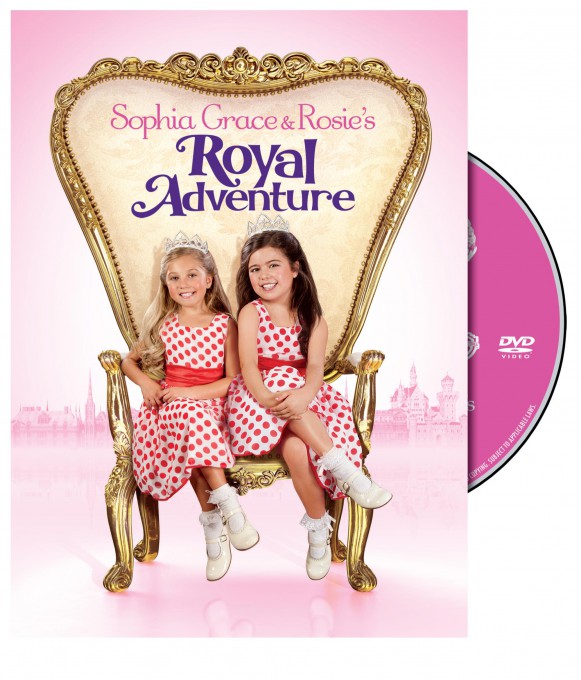
Sophia Grace & Rosie’s Royal Adventure comes out on DVD and Blu-Ray on May 20. I am a big fan of these cute little British girls, and it was a treat to get to talk to them.
Sophia Grace, tell me what character do you play in this movie?

Sophia Grace: I actually play myself, Sophia Grace.

I see and was that easy to do?

Sophia Grace: Yes, it was actually quite easy to do, it quite fun as well because you got to act how you’d really act in real life.

Even though it was a script written by somebody else?

Sophia Grace: Yes, it was still was like life.

Rosie, which what of you is better at remembering lines, which one learn the lines quicker?

Rosie: We’re both the same.

Which one of you is most likely to laugh when something goes wrong while you’re filming?

Sophia Grace: Rosie laughs as well, we both do the exact same thing, we’re both the same.

Rosie why do you think children will love this film?

Rosie: Girls will like it more than boys, but boys will like because there’s a superhero in it and girls will like it because of pink as well, there’s lots of pink.

Sophia Grace, what was the hardest thing about making this movie?

Sophia Grace: I think the hardest thing wasn’t actually anything to do with the movie it was just like when we we’re practicing the lines it goes over and over again because we have to do the scenes over and over again. The director would say “one more time” but it would actually be a hundred more times. That was quite hard to keep doing it all the time but it was really fun to do as well.sophia grace rosie royal adventure

Rosie, did you get to wear some lovely dresses in the movie?

Rosie: Yes, it was mainly dresses and they were really nice, we got to wear a pink dress with a sash, like royalty.

What about you, Sophia Grace? Did you have a special dress that you liked in the movie?

Sophia Grace: We got to wear white gloves, which was really nice, and this big puffy purple and pink tutu one too, actually sequin top it was joined together like the dress.

What’s the funniest thing that happens in the movie that would make kids laugh?

Sophia Grace: What made me laugh was when we were doing the ledge scene there was pigeons, people were putting pigeons there that supposed to be a part of the cast and they were throwing seeds at the pigeons and it was exciting and funny. So I think kids will find that funny. And it was really funny to shoot too.

Rosie: And we got the giggles because the pigeons were like bouncing their heads. We got the giggles.

You have to teach the princesses in the film, right? So Rosie what did you teach them?

Rosie: We had to teach them how to curtsy like royalty and act like royalty.

And Sophia Grace have you ever seen royalty in real life?

Sophia Grace: Yeah, we actually have, me and Rosie we got to perform for the Sultan of Brunei’s birthday. Her name is princess Amira.

Was it like you imagined?

Sophia Grace: Not at all really. She was actually just normal like us. She was wearing a trousers and a top.

I’m very excited about your film and I hope that I get to meet you two in person someday if you come to Washington D.C.

Sophia Grace: I would love to come to the White House!

Related Tags:


Interview

Interview: “Fed Up’s” Laurie David and Stephanie Soechtig

Posted on May 12, 2014 at 3:59 pm

Oscar-winning producer Laurie David is back with an even more inconvenient truth: our food is killing us and the government is powerless to stop food companies from making it worse. I spoke to David and director Stephanie Soechtig about the film.

I want to start with the end — to me the most interesting part of the movie was what I call the Citizens United problem,orporate involvement in making policy decisions about health and nutrition and disclosure. One of the most devastating revelations of the film was the story about the way the industry softened findings of a World Health Organization report on the impact of sugar on health.

SS: What’s interesting about the WHO report was just how hard it was to actually find that story. Peter Jennings, who appears in a clip, was the only American newscaster who covered that. I found it initially, in a paper from the UK, and I contacted the head of the World Health Organization at the time and asked him more of the story but I couldn’t find anything in the press on this other than that one Peter Jennings clip. We really had to dig hard to unearth that and it really didn’t get any mainstream press attention in the US. And the headline in the UK paper was “George Bush is beholden to sugar barons and he is jeopardizing the future of American children.” It was an incredibly damning letter the WHO had sent to Tommy Thompson at the time. I’m a journalist by trade and had I seen that, it would have been my lead story. It was a really damning letter and it got no coverage. So it was just interesting to see just how the media was a bit complacent in what happened as well.

fed up poster

And what do you think is the reason for that? Do you think it’s because of their advertisers? Do you think that they sensed that there isn’t an interest in this as an issue?

SS: Yeah, a hundred percent. Look at the recent effort of the voluntary guideline to stop marketing to kids. Some of the people that were up there lobbying against it were some of the major networks and you saw Viacom and Nickelodeon and all of them up there because they are reliant on the advertising dollars. So everyone has a dog in this fight it seems.

LD: No one cares about the health of the American public.

Another area where that came up was the lack of transparency around sugar on labeling of food. What went into the decision not to have a percentage displayed?

LD: I think that the industry has been fighting that from day one. I don’t think that anybody even tries to do it anymore. It’s all part of the conventional labeling, completely accepted. That’s got to be some serious under the table stuff that’s gone on to keep that off the label. But you know what’s funny about it? What the truthful daily recommended amount of sugar that you need per day is? It is zero, zero! You can imagine how damning that number would be for all these products!

That chart that you show about the amount of sugar in our food is really shocking. Every morning I take calcium vitamins and because of the movie I looked at the sugar content and I was shocked! As soon as I’m done with this jar I am going to try to find some calcium that doesn’t have sugar in it.

SS: Exactly! And that is the whole point of the movie. We want to level the playing field for people. It’s heartbreaking that families think they are doing the right thing, think they are making the healthier choice and what they are eating is making them sick. It’s not right! And just look at yogurt as a great example right now. Yogurt is marketed to death as a healthy choice for breakfast and if you look at the sugar content of most of these fruit filled yogurts, honestly it’s a dessert.

The other thing that surprised me was about the takeover of full lunchrooms by fast food companies. Is that based on lobbying at the local level or is that a purely economic decision — where did that come from?

SS: We met with a principal and she was just as distraught as anyone that her student body was able to buy diet soda and candy bars for breakfast. And she felt that her hands were tied as well too. She said, “There’s nothing I can do about it.” And I think everyone just feels a little hogtied about the policies. What is missing is a common sense approach. We all know that tomato paste isn’t a vegetable and that french fries aren’t vegetables. And I think that we were all really shocked when we saw the footage that these kids were sending us back that they had slushy machines and McDonalds in their cafeteria.

How did you find the kids that struggling with obesity and their and the families?

SS: We spent a little over a half a year just calling schools, churches, synagogues, different hospitals, doctors that specialized in diabetes and obesity and we’d say, “We’re looking for some families that could give us sort of a look into their world. What was making it so hard to make good food choices?” And it was incredibly difficult to find people. It was incredibly labor-intensive. But it’s incredibly courageous of the families. You saw how candid they were with. It all just kind of fell into place I think the way it was supposed to because we found these incredible families who really opened our eyes to things that we had no idea were happening.

And yet they didn’t really make much progress.

SS: We weren’t making a reality show. This wasn’t “The Biggest Loser.” We didn’t send trainers to them. This was asking them to show us what was happening in their lives. They were our field reporters on the ground showing us life on the front lines. So how could they make progress? What they showed us is how much misinformation is out there. And the answers to what is happening is this film. So I think the real story now is to see what happens once they’ve seen the film, what progress they make then.

LD: You saw the end of the movie that Tina and Brady started cooking real food and they changed their lifestyle. Tina has lost 100 pounds. Of course, Brady has had a tougher time. It’s the entire food carnival environment we are living in. So Brady went on to get a job at Bojangles and his school asked him to sell candy bars to raise money. Te second he left his house, this is what he is dealing with so it is not a big surprise he gained the weight back.

SS: I don’t know why are so shocked that his school asked him to sell candy bars. I mean, there are Girl Scouts selling cookies right on every corner. It’s crazy.

And the ads for these foods are always saying, “You deserve this,” or “This is going to help you get your energy back.” 

LD: “Open happiness.”

SS: And happiness is used as a marketing tool for everything! I mean it’s really outrageous, it’s outrageous!

What kind of research material are you developing for people to have to follow up and learn more?

SS: We have a great website. We have some school curriculum on there already and a discussion guide. And one of the goals of the movie to get our 60 minute version of it into every school in the country.  We made the movie with kids in mind, we want kids to see movie and be empowered by it. Another thing we are doing and it’s never been done before, we have dubbed a Spanish language version of the movie which is going to be released on May 16th in certain markets. So I think we’re doing as much as we can and we are hoping that the single most important thing is for people to come out to the theaters and see this film.

And I have to say, the things I think we put out are so powerful. I mean, look at our poster. I think the poster really breaks through the haze of media stuff out there. I think it is iconic. It was one of the most popular Instagrams the week it came out. We have an incredibly powerful trailer which kids are posting on their Facebook page and helping us get the word out so I think that we’ve got lots of ambassadors and social media support so I hope we are getting the word out.

LD: I think the film really unfolds like a murder mystery thriller. It is not a dry educational documentary. It really plays like a film more than a typical documentary.


Related Tags:


Directors Documentary Interview
THE MOVIE MOM® is a registered trademark of Nell Minow. Use of the mark without express consent from Nell Minow constitutes trademark infringement and unfair competition in violation of federal and state laws. All material © Nell Minow 1995-2026, all rights reserved, and no use or republication is permitted without explicit permission. This site hosts Nell Minow’s Movie Mom® archive, with material that originally appeared on Yahoo! Movies, Beliefnet, and other sources. Much of her new material can be found at Rogerebert.com, Huffington Post, and WheretoWatch. Her books include The Movie Mom’s Guide to Family Movies and 101 Must-See Movie Moments, and she can be heard each week on radio stations across the country.

Website Designed by Max LaZebnik