Interview: The Real Philomena Lee

Posted on February 7, 2014 at 3:47 pm

Philomena Lee is a retired psychiatric nurse who lived quietly with her family in England until a search for the son taken away from her and adopted by Americans led to a  book by journalist Martin Sixsmith (Philomena: A Mother, Her Son, and a Fifty-Year Search) and a movie starring Judi Dench and co-screenwriter Steve Coogan.  Since the movie came out, Lee has devoted herself to helping change the laws in the UK so adoptees and their birth mothers can find each other if they want to.  When she came to Washington, D.C. with her daughter, I spoke to them about this project and why it was important to her to forgive the nuns who abused her.

Have any of the other women whose babies were taken away found their children?

I wouldn’t know, we honestly wouldn’t know because when I was in the home, you had to lose your identity, you had to forget your own name. I wasn’t Philomena Lee anymore. We were all given what they called a house name and my name was Marsella. So I didn’t even knew then they name of many of them, they were just called by, it could be , Mary , Kate, Annie or something.  So I was just known as Marsella and they would have known me as Marsella. They wouldn’t have known me as my home name which is Philomena Lee.

Have you heard from many of the adoptees and mothers who gave up their children for adoption?

People’s enquiry is usually “Did you remember my mother? Did you know my mother?” And of course I didn’t know any of them at all really. And this is why we started the project last week in Ireland, The Adoption Alliance, so that the mums that are trying to find their babies will be given the right do so.  At the moment in Ireland, it’s not law , they don’t have to be told anything. So the women are trying to get the right to be able to find out who their mom was, who their dad was. 

Philomena’s daughter added: Yes, we’ve heard from hundreds of people, people have come up to us in the cinemas and things like those, have come us to us physically, we’ve had lots and lots of contact, people sending us messages, people have left message on the graves, all sorts of things which is the reason we started The Philomena Project really and the awareness that people who don’t have an automatic right to information and trying to get that changed if we can.  It’s to have a place for them to go or a website for them to go so they know how to go about starting that if they want to because many of them won’t know where to look in the first place. And for that reason we would like to change the legislation and that is ultimately what we would like as a result of this.

One of the most powerful moments in the film is when you say to the nun who not only abused you and took your son but thwarted your efforts to find him and his efforts to find you.  Why do you think forgiveness is so important?

I was very unforgiving in the very early stages after I eventually left after the adoption, I eventually worked in a boys school in Liverpool from Ireland to England and I was so sad and so hurt and so I was in an unforgiving frame of mind at the time.   But then after a couple of years I left Liverpool and went down south to a place in London. I worked in a psychiatric hospital for 30 years and over the years I’ve been working in the psychiatric hospital I can assure you, you can see life as life is more often than not. So I gradually and gradually saw so much sorrow and hurt that was caused through anger. So I was able to release my anger gradually and start forgiving again so that’s how it is.

And I do forgive because I’ve lived to sixty one last year and so it’s a long time to live.  My son grew up in a lovely home, had an education ended up happy so I’m happy about that and I’m able to put some closure on this because at last I found him. For my whole life all I ever wanted to do was to find him.

Of course he was looking for me, as well.  He went over three times to the home where he was born and they wouldn’t give him any information.   They said no one knew of me and I was looking for him  and so my brother lived at the same home we lived since I was eight years old.  He was only an hour away and they wouldn’t give him the address. When I moved to England several times I sent my new addresses but I never got any answer back so they never took it. They had told him that I abandoned him at two weeks old.  But I was in the home for three and a half years and I wrote him and developed a very close bond with him.

You know at three he was a lovely, friendly, intelligent boy and I certainly believe because he looked for me so much straight on he did remember me. I wondered all the time and prayed that I would find him and eventually Martin Sixsmith, who was the correspondent in Washington managed to get all the information.  Martin called all of his friends and his partner and his partner gave us so much information and they did have a good amount of time together; 15 years together and they were very happy together and he loved him very much and that put my heart at ease when I knew that he tried to find be because I know that he remembered me.

I always thought it was good to have a close bond. He was really such a lovely little boy; such a loving little boy you know. As they say, at least I found him and he will always be within my own heart.  It was very good to know that he had a good life and he was a happy man and he had happy friends and I am happy about that because I knew he was happy, I found out he was happy.   He did request when he knew he was dying that one day if anything happens “please bring my ashes back and have me buried where I was born.”  And now I can visit his grave.

When I first saw the film, I didn’t know what to think but who would ask for more?


Related Tags:


Interview The Real Story

Interview Jose Prendes of “Mega Shark vs. Mecha Shark”

Posted on January 25, 2014 at 8:00 am

perf6.000x9.000.inddMega Shark vs. Mecha Shark” had to be made.  And someone had to write it.  I got to talk to the man who took that on, Jose Prendes.

When you were growing up did you enjoy watching a lot of scary movies?

Oh yeah. I was an only child. God bless my parents, they did not give me limits so I could watch Freddy and Jason and all that stuff. I definitely grew up in that. “Jaws” was one of my favorite movies and up to this day it has left a lasting impression on me. I’ve been a huge horror movie geek for a long time.

There are many kinds of scary; what do you think is the scariest?

You know, it really depends on the material and the director, the script and stuff like that. I find, I am not so much scared by slashers, things like that. I think the supernatural movie is what terrifies me, this stuff that we don’t know – the unknowable I think is always frightening. The haunted house movies get me. Monster movies not so much.  Definitely stuff that changes the world around you. It changes it in a way that you’ve never seen before; that’s the kind of stuff that really, really takes me by surprise, really impresses me and leaves me with that eerie feeling.  I think it’s actually hard to scare me because I think I’ve seen it all but if a movie can put me on a ride that have never been on then that is something I always look forward to.

What do you think about the recent trend of air quote-type scary or meta-type scary where it is sort of making fun of scary stuff at the same time that it is scary?

One of my favorite horror movies of all times is, definitely I think is the birth of that, “Scream.”  I love that movie. I think it is a brilliant script. I don’t think anyone has been able to do it as well.  Horror is losing its feet a little bit especially nowadays when everyone knows how movies work. With the advent of behind-the-scenes and all the special features on DVDs, we know how movies work and we are all little bit more savvy so it’s a little trickier to get people.  I am not a huge fan of the meta-horror but I can’t say I am not a huge admirer of the grand daddy of the meta-horrors.

Tell me about “Mega Shark versus Mecca Shark.  How did that project come together?

It is from the studio that did Sharknado. And mega shark is one of their biggest franchises. There are two other movies; Mega Shark vs. Giant Octopus and I think the second one is Mega Shark Vs Crocosaurus. Before “Sharknado,” that was their big claim to fame series.
After “Sharknado,”  the producers came to me and I was looking for something to do and they said basically give us two giant sharks fighting each other; and that’s pretty much how they and I came together. I wrote this script in about, with rewrites and everything, in about two months or so and then it was a quick production turnaround time with those guys.

Everyone tunes in to see the giant sharks fight with each other but you have to have some dramatic interest in it too. So, how did you go about creating the human story?

Yeah, actually that’s the tough part. As a writer, that’s the kind of stuff that you really want to do because people might come and watch the movie in a tongue-in-cheek way or just for laughs. But, if you can give them believable characters and characters that you like, human beings, then they will stick around and they won’t just come for laughs and things like that. So that’s kind of been a big thing for me, to kind of deliver that kind of movie but still have somebody that you really care about. And that was the toughest fight in pre-production.  You try to get little character bits here and there but eventually it’s an effect movie so it’s a big monster brawl type of thing and at the end of the day you have to kind of understand that and find a way to sneak in little hidden character bits that people will catch and go, “oh, that’s kind of interesting.”  Again, I wasn’t directing so I couldn’t little touches to the performances but me and the director were really on the same page building unique and honest characters.

How closely do you work with the effects people?

Well, it’s tough because of the effects part is the last thing that goes into the movies. So, the producers would say, “We have a limited number of effects shots.”  Let’s say for example you’ve got 200 effects shots which means now in this script, I have to be careful with how much action I put that involves CG and things like that.
And, it becomes tough especially if you have to cut character stuff and they still want nonstop action but you don’t have enough effects shots to cover all the CG effects action so it’s sort of a struggle. And, at the end of the day I think we try to limit as much as possible but still deliver a shootable script.
We usually go over the effects shots but that’s okay. On kind of a tight budget it’s really difficult to shoot the works and go all Michael Bay with it because that’s not a luxury that you have.

Part of me wanted to play with that, like, “Hey let’s have fun with this. We are not making something that is super serious.” Sometimes that was a battle because the producers wanted us to take it seriously.  That’s the kind of product they want and in short, you’ve got to do your best. That’s why when people kind of comment on these movies and they say, “Why did it seem so joyless?” And it’s just because they didn’t want any joy.

But they don’t want to make it campy.

Campy is the word they use a lot but it’s hard to avoid camps when it’s about two giant sharks.

Let’s go from one extreme of your being one part of a big project to the other extreme where you have total control; that’s when you write a book and you don’t have to worry about the budget and you don’t have to worry about the producers and you get to do whatever you want to do. So, talk to me a little bit about your book, Sharcano.

You hit the nail on the head. That’s the main reason I wrote it. I was working on Mecca and in the back of my mind I was like, “Man, it’s been a while since I wrote a book and I really miss it, just that freedom and not having to worry about budget for effects shots count and all that stuff.”

I found these amazing publishers Curiosity Quills Publishing and I pitched them an idea and they were like, “How about we do Shark-Cano and it’s the apocalypse and these three super volcanoes erupting, the world is in danger, there is lava and ash everywhere and then sharks from hell start erupting from the mouth of the volcano and they are made of magma and it’s just going to be this big shark on shark fight?”  They flipped for it and that was the reason I wanted to do it. I wanted to tell a movie like a horror movie. I want to tell a story like “Sharknado,” or something like “Jaws,” but there were no restraints and I could go Michael Bay with it.  That was the fun part of it, just letting loose that imagination.
So, the movie is for people that like that kind of experience but I wanted to show what it would be really be like if someone shot the works and did the most effects shark story ever and that was the idea.

And do you have anything else coming up that we should be sure to mention?

I am in pre-production on a sort of a metaphysical serial killer movie called “The Divine Tragedy” and we start shooting that next month and I have another book coming out in March called Elementary.   It’s Sherlock and Watson as 12-year-olds in boarding school in England and it’s very Harry Potter but instead of wizards, they are detectives.

Related Tags:


Interview Writers

Interview: Vanessa Hudgens on Playing a Pregnant, Homeless Teenager in “Gimme Shelter”

Posted on January 22, 2014 at 8:00 am

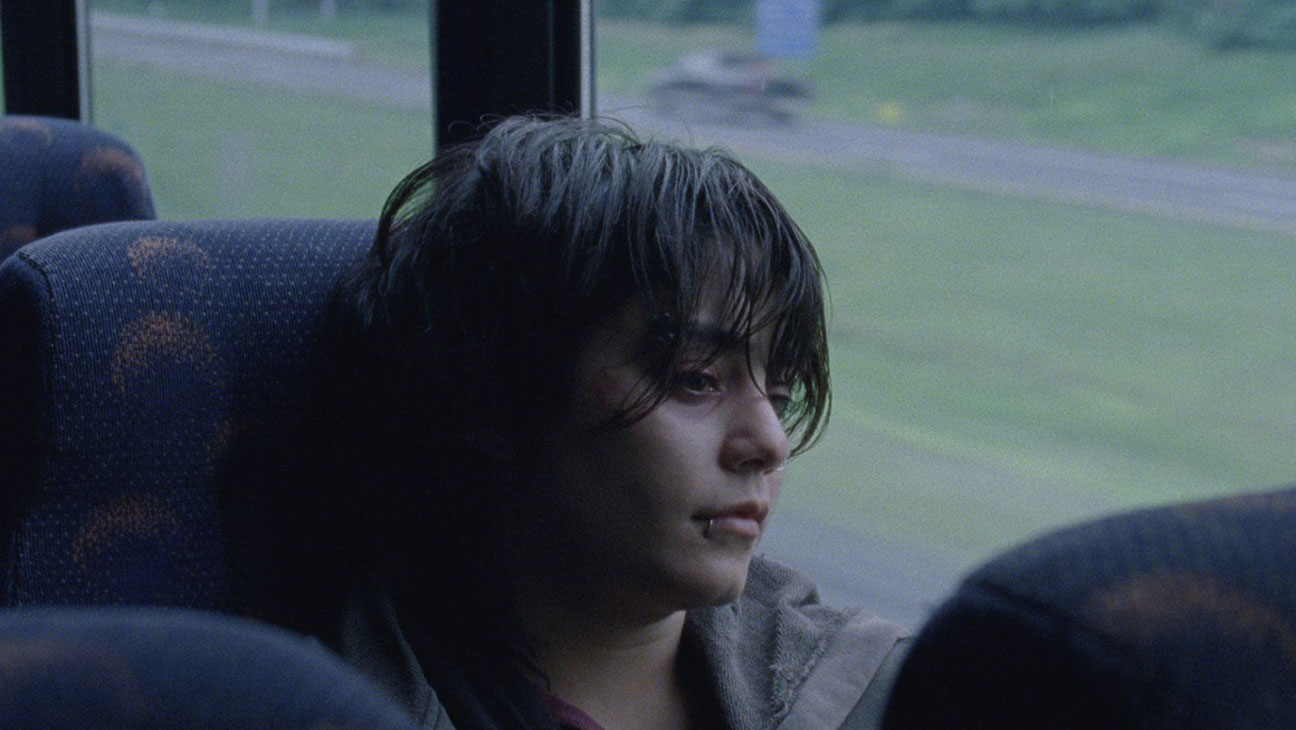
BUS TO COPS:  VANESSA HUDGENS "APPLE" IN BUS 3.tifVanessa Hudgens gives a performance of extraordinary courage and sensitivity in “Gimme Shelter,” based on the true story of a teenage girl who is pregnant and homeless. Her name is Agnes, but she insists on being called Apple.  Both Hudgens and writer-director Ron Krauss moved into a shelter run by Kathy DiFiore, played by the magnificent Ann Dowd in the film, to immerse themselves in the lives and experiences of these girls.

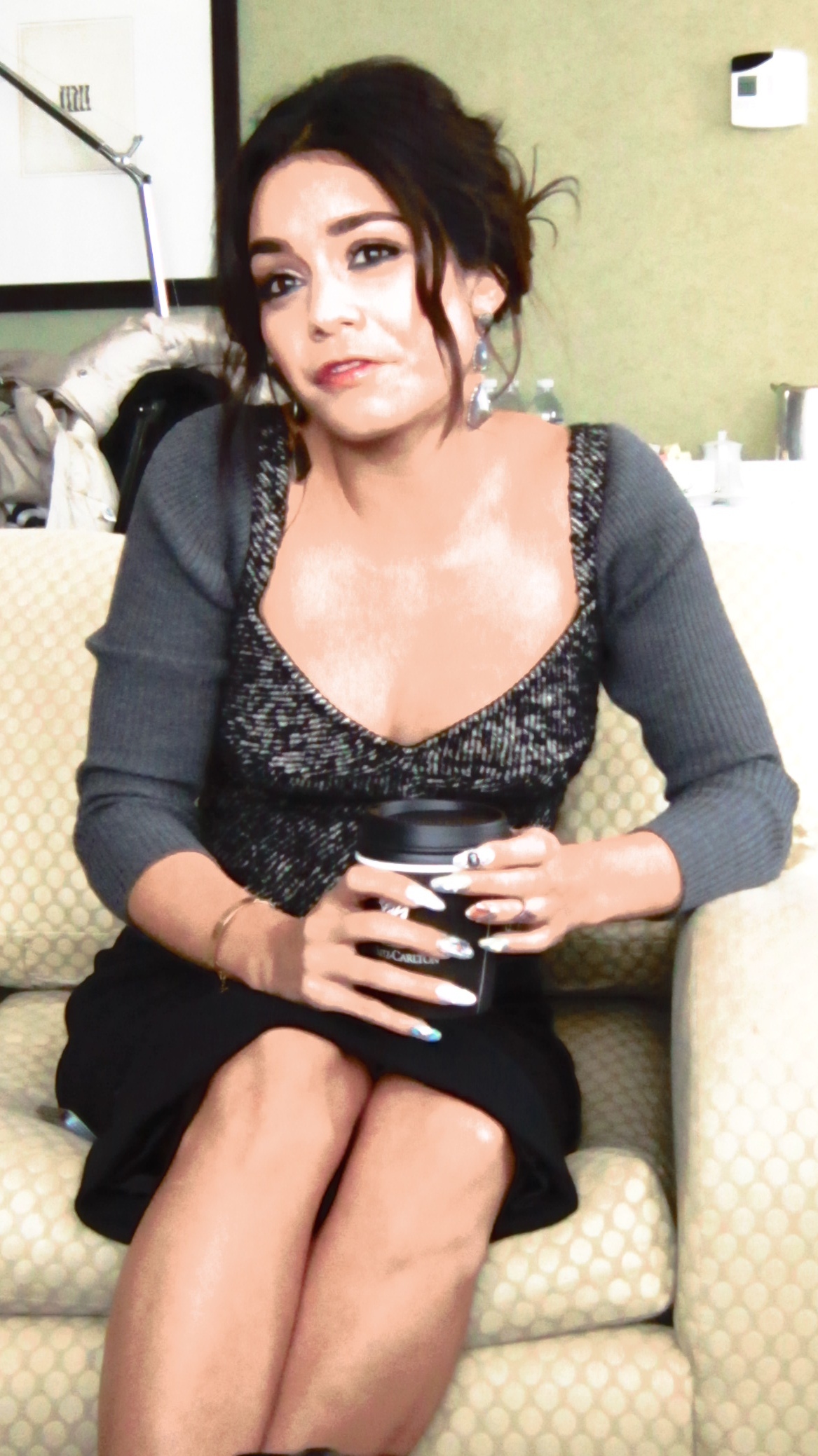
Hudgens, Krauss, and DiFiore were in Washington to present the film, and the next day Hudgens met with a small group of journalists to talk about the experience of preparing for and making the movie and why it was important to her.  When she first read the script, she was immediately drawn to “what a strong character she was, the fact that she was a real survivor who took her future into her own hands.  I just love strong women.  I always love the idea of transformation, like Sharon Stone in ‘Monster.’  It’s amazing to watch an actor and not see the actor, just the character.  I love that aspect of acting and I knew it was going to require that.”  She talked about working with Rosario Dawson, who plays her angry, manipulative, drug-addicted mother. “Everything was really present and in the moment, discovering as we went.  Of course the fighting scenes we blocked out so no one was hurt.  But she just understood the role, we already had a good relationship as people, so we just did our thing.”  She talked about getting to know the girls in the shelter.  “The fact that I was there and wanted to tell their story, to make it a glimpse into their lives and not an over-dramatization.  They saw my passion for the project.  They knew I was really invested in it and this was not something I was going to take light-heartedly.  I stayed in the shelter for a couple of weeks.  I was doing the chores with them, I didn’t put myself on a different level.  The one I got closest to was Darlisha, the one who had the real experience with her mother that we see Apple go through in the film.  I was surprised by how uncensored Darlisha was, how open.”

IMG_8850She told us what she looks for in a role.  “I’m very selective about the things that I do.  I first listen to my intuition, my gut.  I love being able to be a chameleon and trip people out by being a different person.  I look for a character with depth, something real, something I have not done before, situations I have never personally been in, the further away from me, the more of a challenge, the cooler.”  As she created the character, “In every moment, I tried to find something that was Apple, not Vanessa, playing with the lip rings, the way I spoke, touching myself, making every moment a bit more harsh and ugly, more raw, more real.”  She appreciated “an instinct connection” with Krauss, “a magical dance connection.  We just kind of got each other.  I put him in his place and he put me in my place.  He could do it with just a look.  Because we had both lived in the world of the shelter, that became normal for us.  There were times when I wanted to punch him!  But his sheer dedication and motivation — I could never have done this without him.”  The timing of the film and the character felt right for where she was.  “I feel the movie came to me when I was at a point of transition myself, stepping into the world more, trying to figure myself out…I pushed myself harder than I ever had.  It was a big touchstone for me.  Afterward, I looked into the mirror and saw Apple.  I didn’t see Vanessa anymore.  I didn’t feel comfortable in my skin.  It was kind of a disaster.  That was the lowest part for me, just finding myself again.  But then I got myself back on my feet and continued to work.  Now that it is relevant in my life again, the journey is still continuing.  I see signs everywhere I go.  It is such a God-driven film.  It has taken on a life so much bigger than the movie, connecting with women and bringing healing.  It’s transcended into such a beautiful thing.  It’s a gift.”

Related Tags:


Actors Interview

Interview: Writer-Director Anthony Joseph Giunta of “Contest”

Posted on January 21, 2014 at 3:59 pm

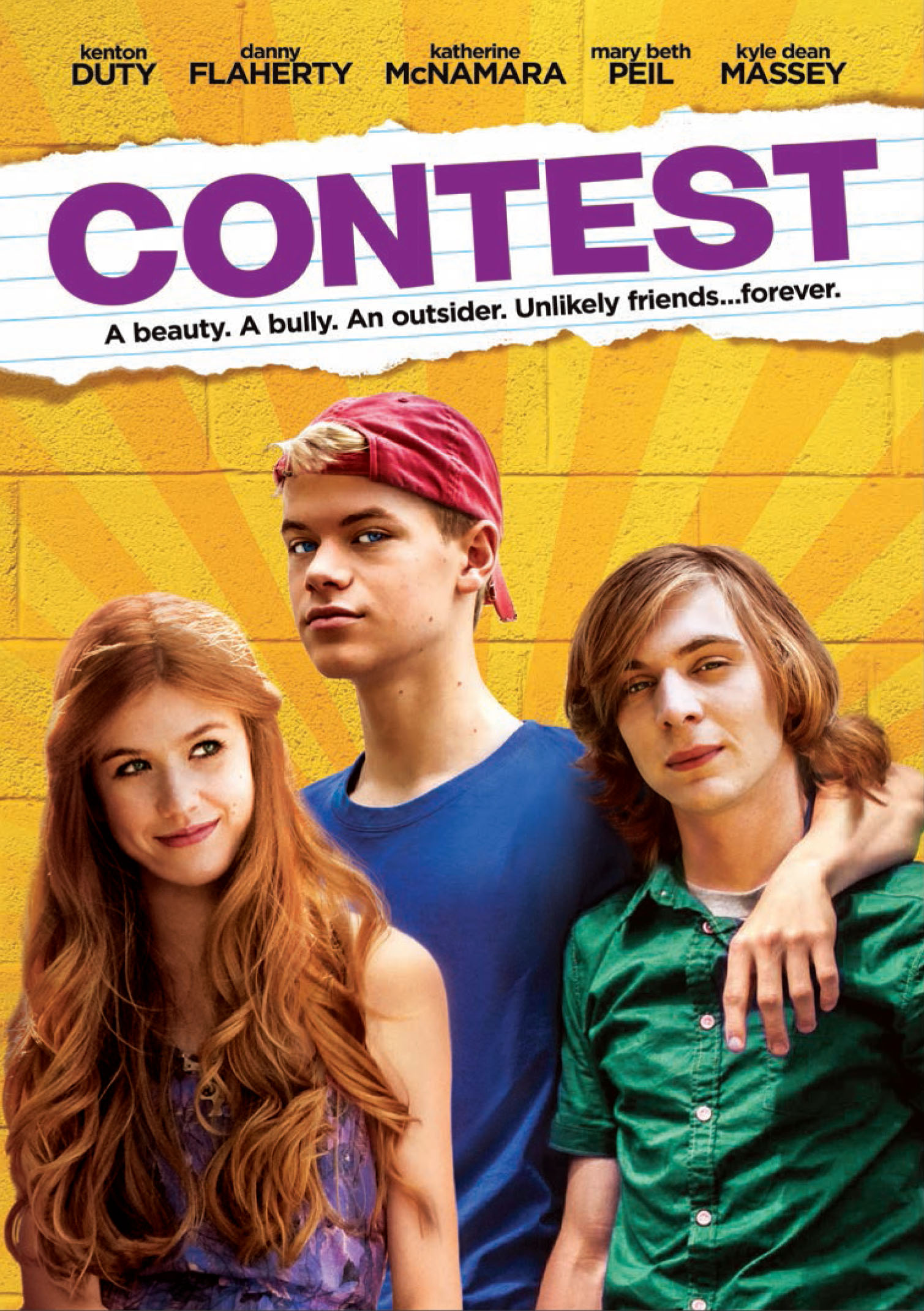
I really enjoyed writer-director Anthony Joseph Giunta’s first film, “Contest,” a smart, funny, thoughtful story about high school bullying — and a televised cooking competition.  It was a pleasure to talk to him about making the film.

CONTEST_KA_R5.inddHow did this project come about?

Basically it was the end of 2010 and I had read a string of articles during a 1-week period about different kids throughout the country committing suicide as a result of teen bullying.  By the third day when I had read about the third different kid this had happened to it really got to me.  I was a bullied kid back in grade school and high school but that was before the Internet and that was before texting and I had the luxury of being able to come home at the end of the day and close the door and not have to deal with it until I got back to school the next day.  What got me was how pervasive it had grown so there are many kids who just cannot get out from under it.  They have to deal with it 24/7 between social network sites, texting and all of that.  So that is where I felt like I had to do something and that is what I decided to do.  I was in a totally different career.  I was an HR executive with a cultural institution in Manhattan and I basically spent every hour that I was not working for a month doing the first draft of this script and it was like a passion lit a fire in me.  I could not stop and about half way through I just said, “What am I going to do with this? This is not something I just want to sell to a producer or a studio.  This is a movie I want to make,” and I just kept going.  To make a long story short within a couple of months I gave 6 months’ notice to my job as leaving to go make a movie. I didn’t know how yet but I was going to get this movie made.

What would you say is the biggest misunderstanding about bullies?

I think what people don’t get is that a lot of times the kid who is doing the bullying has some kind of pressure on them themselves that also resembles bullying from somewhere whether it is a family member or some authority figure.  There is something going on that is compelling them to target other people. And when they do target the people they are bullying, it is not only about that person. It is to send a message like a social status message to everyone else around like “look I have some power here and if you cross me. see what I’m doing to him, that could be you.”  It is kind of the unspoken thing but it really stems from a place of feeling a lack of control somewhere and you know a lot of times when you look back kids who are the bullies are being bullied somewhere along the line.

As someone who is experienced with HR do you see that this kind of thing plays out in the workplace as well as in schools?

Absolutely.  When I got out of school and went into the working world I thought “okay that part of my life is behind me.”  Not so much.  It definitely plays out into the working world and I actually I touch on it in one scene where the assistant principal is kind of stuck in the middle of a good old boys network between the principal and the head of the swim team and basically all the pressure is shifted to her but there is an already expected outcome.  That was kind of my nod to the way it can continue into the adult working world.

What should parents and school administrators do to help and manage to prevent bullying?  Do you feel the anti-bullying efforts that you are portraying in this school are effective in any way?

There are different schools that have different programs and I think there are probably some that are more effective than others.  I am pleased that one school system is going to use the film in their anti-bullying curriculum starting in the fall of 2014 and we are actually going to be working with them.  It will be used in schools throughout New Jersey and hopefully will continue into schools throughout the whole country.  I’m going to get some of the kids who worked on our film and some of their peers from TV, Broadway, movies etc. to help us out on this initiative and I think when kids see other kids that they hold up as role models it can be very helpful and effective on the kid level but the biggest thing you need to get with any program if you need to get the buy in and participation from not only school administration but from parents too.  It is really totally a collaborative thing.

It is interesting to me that the two main characters in the movie don’t have parents in their lives.  What was your thought about that?

For these particular guys there is that actual physical absence and for audience members who see it there may be qualities that are absent in some of the parent/child relationships that they see in front of them.  That helps me to draw on that without feeling like it is a specific one or two things about this particular parent with this particular child and that is really where that came from.

Why was it important to focus on changes in both the boys?  A lot of bullying material only focuses on the source of the bullying and not the victim.

I was a bullied kid but my journey was pretty much emotionally like what Tommy’s was.  My biggest goal was to live as self-sufficiently as I could without having to bring in other people.  That stuff does not always serve you well and I just thought if the story is going to be or come forth in a way that it really resonates with everyone you are going to have to show the humanity of everybody as opposed to demonizing one side and sanctifying another so it felt like a more natural type of thing.  When people read the script and gravitated towards that and loved that and said, “Oh my God it made it just so accessible and so relatable.” then I knew I had made the right choice.

What are some of the challenges working with the teenagers in the cast?

People said to me “It is going to be so difficult,” “It is going to be so hard,” and I was expecting exactly that and I had exactly the opposite.  It was one of the most wonderful experiences ever.  These are very, very professional kids, many of whom have been working for a very long time since they were little and every day was just more and more joyous.  I think one of the reasons it worked so well is my style is very much that we will talk things through.  We will talk through the motivation, the back story, all of those things and I love when one person’s idea sparks another person’s idea and that is what I got.  These are all really, really smart kids, and we talked about their characters, we talked about where they came from, what motivated them to do certain things etc.   It was just a completely joyous experience.


Related Tags:


Directors Interview Writers

Interview: James Udel Takes Us Behind the Scenes in The Film Crew of Hollywood

Posted on January 13, 2014 at 3:59 pm

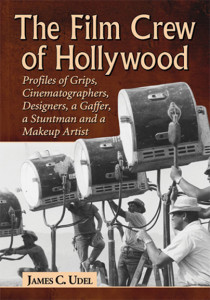
James Udel is the author of a magnificent new book, The Film Crew of Hollywood: Profiles of Grips, Cinematographers, Designers, a Gaffer, a Stuntman and a Makeup Artist.  He goes behind the scenes, interviewing ten people who created movie magic from 1950-85 in films starring everyone from Steve McQueen and Jerry Lewis to Tom Hanks and Roman Polanski.  This book provides a celebratory back story to the production of classic films such as “Little Big Man,” “Chinatown,” “One Flew Over the Cuckoo’s Nest,” “King Kong,” “The Searchers,” “Bullitt,” “Catch-22,” and “The Hustler.” I was thrilled to get a chance to talk to him about the unsung heroes who do not care about credit or fame — their only concern is telling the story.
I love to hear about the crew — these are people with extraordinary talent, artistry, and skill.  But what impresses me most about them is their passion for solving problems.  

These people are largely unsung, unappreciated, unless they get to the head of their department.

If they do everything perfectly, nobody notices because they’re paying attention to what the characters are doing. If they make one mistake, though, everybody is distracted by it.

There isn’t a single craft that I can say, on the movie set or a TV show, that I don’t have some interest in or some desire to know a little bit more about. If you’ve ever been in a room with ten other individuals and tried to work in a committee to get anything done, we all know what that requires. Now imagine multiplying that and you now have 100 people, plus actors, in a room, and we’re all going to work on the same idea of making Tom Hanks look great and let him do his thing and walk 12 feet, say 32 words, and then we’re going to cut. For three and a half minutes, 100 people are absolutely focused, every ounce of their body, on making that shot as good as they possibly can. And that’s what we do, over and over and over and over again, all day long, until the hours add up to days and the days to weeks and weeks to months and months to years.

Tell me how this book came about.film crew

I was working on a movie called “Being John Malkovich” in 1997, and really cutting to the chase, I was hurt at that time. I had some soul-searching to do, because I still really needed to be involved, as I do now, with making movies. Some friends of mine suggested I go out to the Motion Picture Home, and I did, and I fell in love with all these great old folks out there, the original people who did those movies from 1950 on. Started to think, “This stuff’s golden; I’d really like to write this for somebody or get this idea out there.”

After a documentary was kind of shuffled to the side, I started writing a column for Below the Line Magazine under the banner of “Footnotes,” which I’d pitched to them. That was doing interviews with some of the original grips that I worked with from my union, and then from other unions around town, different crafts, and then putting those stories into a human form so I could tell people just how much of an individual’s life was given to making motion pictures, and how much of their early life lent itself to being able to do this. There’s always a formula to it. It’s really interesting how no matter what somebody does, by the time they get to L.A. or movie making, they have all these skills that come together to make it happen.

One of your interviews was about the Steve McQueen movie, “Le Mans.”

I interviewed a man named Gaylin P. Schultz, who was a key grip extraordinaire, and he worked for the Mirisch Brothers, going back a ways. They came to him and said they’re going to do this movie “Le Mans.”  It was Steve McQueen’s baby, and he wanted to be seen doing his own driving at excessive speeds, with no stunt doubles for the most part. They wanted to actually film this race with a major movie star in it. Now, this had never been done before. The French Racing Commission at first said, “No, no, you’re not getting anywhere near this thing.”

But Steve McQueen and a bunch of other people prevailed, and they actually let Gaylin Schultz become part of the pit crew, and he designed specialized cameras and rigs that could literally float the camera one inch off the ground at 170 miles an hour. He devised camera mounts that could put the camera inside of the racecars with Steve McQueen, so that there was no denying that this was the guy driving the car. Every bolt had to be safetied, every nut had to be countersunk. Literally, Gaylin put on a suit and worked as part of the pit crew, and instead of changing the film magazines out, they swapped out entire cameras with quick release bolts and a pneumatic gun. So it looked exactly like everybody else, what they were doing when you see a race car being worked on, except that he was swapping cameras out.

Gaylin, being a genius of a mechanical engineer, had to work with the racecar drivers to get the balance of these rigs specifically lined up so that they wouldn’t create vehicles that couldn’t be controlled. At first, he told me the guys were a little bit leery of him because he had these extended camera mounts that were six feet off of some of the cars. Some of the drivers really dug him and they trusted him, and once they saw this stuff go around the track a few times and none of the bolts fell off, they started to trust him.

Steve McQueen was always the magic quotient to when you’re getting a film like this made. If you can look at it today and think of who else out there could get a movie like this made today, it would have to be somebody huge, like Tom Cruise or somebody like that.

I’m sure that Steve McQueen had some credibility with the drivers because he really knew something about driving.

Absolutely. Everybody understood that McQueen was this guy. And interestingly enough, Gaylin met Steve McQueen while doing “The Thomas Crown Affair.” Another incredible film, right?  Gaylin was putting a rig on a very rare Ferrari, and McQueen was behind him, watching him, and he didn’t know it, watching him work – and he was working delicately, trying not to leave a single mark on the car, which he did. At the end of him putting this camera on the car, McQueen looked at him and said, “My goodness, man. You’re an artist, Gaylin. Here, I’m Steve McQueen.” And a friendship was started that from there on out.

Sometimes the crew has to have courage to disagree with the director or producer, don’t they?

In a creative situation, as you know, there’s always discussions. You can call them disagreements, but depending upon how you state your point, other people may or may not listen to you. Daniel C. Striepeke, who was a makeup guy that I interviewed, was working on a mustache for Robert Redford. That was going to be very specific. The director had an idea of what he wanted, and Striepeke and the other guys had an idea of what they wanted, and ultimately, when he grew the mustache and they did the tests, they decided upon it, and Redford decided upon which mustache they were going to use. It was a big deal. Three weeks after the movie came out, Striepeke is walking down Sunset Strip, and almost every guy has a Robert Redford mustache.  So he calls the director up and said, “Hey, by the way, old boy, I hate to tell you, but have you stuck your head out the window today?” That was an argument that was absolutely won, pitched and won, and then later reinforced.

What surprised you the most in doing those interviews?

What surprised me the most is how connected every one of these 10 people were. And I picked icons. If you go down the list, these men were all at the top of their game when they played. What I was surprised about was the depth of concentrated life experience that went into making the skill level of each of these folks that came into the mix. If you look at a guy like Carl Manoogian, who was Jerry Lewis’s right hand man, Carl, Lewis and most of these people came out of World War II. They were the greatest generation of filmmakers, and they were the folks that won the war. So when they came back stateside, they were looking for occupations, and they weren’t scared of anything because they had already faced the Depression and World War II. So Hollywood didn’t frighten them very much.

You look at a guy like Carl Manoogian, he was the right hand men of Jerry Lewis, doing movies like “Cinderfella,” “Who’s Minding the Store?,” “Nutty Professor,” you name it, and Jerry wouldn’t do a movie without him. And what was surprising is that movie stars and directors and people who are really, really good at what they do making movies always latch onto these amazing icon crew members, and they all have a home of their own, either with a group of directors or an actor or two. They nurture this relationship, and it’s a trusting relationship that nobody out there knows about. It’s a trust relationship with those actresses and actors that it’s far beyond anything most people would understand.

Gene LeBell, for instance, he was raised at the Olympic Auditorium. His father was a famous surgeon in Hollywood in the 1930s, died of a broken neck of a freak accident while on the beach. Gene was from a very wealthy family, and then his mother had to send him to California Military School. So Gene LeBell, who missed his dad horribly – he was the love of his life – was crying a lot when he first got there, and a couple of bullies picked on him.  The first thing he did was he wrestled one of them to the ground and put him on a headlock and choked him out. Gene was only six when it happened. And he became a world famous wrestler – and he’s the nicest man you’ve ever met in the world. He doesn’t have a violent bone in his body for real. But this was something that happened to him; he went to hide in the stables after getting in trouble for fighting with the bullies, and an old Cossack who was in charge of the horses took pity on him and taught him how to ride bareback. Twenty years later, he gets a job riding bareback in the movies. That kind of stuff.  When he was 12, his mother asked him to change the bulbs at the Olympic Auditorium because the regular maintenance guy hadn’t come in, so Gene was up climbing 50 feet up on these catwalks, changing lights out. He said it made him feel like a grownup, to be able to help his mom.

I think if there’s anything that you can derive from each of these interviews, it’s a level of passion for the art and craft that is undeniable.

Related Tags:


Behind the Scenes Books Interview Writers
THE MOVIE MOM® is a registered trademark of Nell Minow. Use of the mark without express consent from Nell Minow constitutes trademark infringement and unfair competition in violation of federal and state laws. All material © Nell Minow 1995-2026, all rights reserved, and no use or republication is permitted without explicit permission. This site hosts Nell Minow’s Movie Mom® archive, with material that originally appeared on Yahoo! Movies, Beliefnet, and other sources. Much of her new material can be found at Rogerebert.com, Huffington Post, and WheretoWatch. Her books include The Movie Mom’s Guide to Family Movies and 101 Must-See Movie Moments, and she can be heard each week on radio stations across the country.

Website Designed by Max LaZebnik