My Dad Remembers His Friend, John F. Kennedy

Posted on November 22, 2013 at 8:00 am

My father, Newton N. Minow, met then-Senator Kennedy in the 1950’s and worked on his 1960 Presidential campaign. He was appointed by President-Elect Kennedy as the Chairman of the Federal Communications Commission until the spring of 1963. His work there included signing the original charter for the brand-new Washington station WETA and promoting the nationwide availability of what was then called “educational television,” the launching of the first telecommunications satellite, and his famous “vast wasteland” speech, calling on the broadcasters using their access to the public airwaves to live up to their promise to “act in the public interest, convenience, and necessity.” He has carried on the work ever since. He helped to create the Presidential Debates (his book, Inside the Presidential Debates: Their Improbable Past and Promising Future, tells the story and proposes further improvements), and still serves as vice-chairman of the Debates Commision.  And yes, his criticism of television was the inspiration for the name of the sinking ship on “Gilligan’s Island.”  As we remember the tragic loss of JFK 50 years ago, my father remembers his special combination of practicality and vision — and the very funny comment he made to LBJ.

He also wrote about the way we should remember President Kennedy and the other leaders of that era for The Atlantic.

Related Tags:


Documentary Interview

Interview: CCH Pounder on “Home Again”

Posted on November 14, 2013 at 8:00 am

Home Again is the story of three people, Jamaican by birth but having lived their entire lives in other countries, are who are deported for getting into trouble with the law.  A mother from Canada, a student from England, and a man recently released from prison in the US are all sent “back” to a country they barely know.  It is now available on DVD and streaming. I spoke with the distinguished actress CCH Pounder, who plays the mother of the student who is sent to the other side of the world.

Why did you want to be in this movie?

I’m really interested in highlighting stories from the Caribbean and it is a good script.  It’s the part of the world that I’m from, a part of the world that I rarely see discussed or not well discussed, certainly not seen in the cinemas. I wanted to be part of something that went beyond ‘The Harder They Come.” And so I’ve been looking out for directors and writers who want to highlight that region.

You took on a part with a lot of challenges.  For important scenes, you’re on the phone with your son, which means you’re responding to someone who is not in the same room.   

Even though the role itself is rather small, and you don’t see much displayed on film,  she has to create a back story of somebody who has raised someone and then she’s going to lose them in an instant. It’s precipitated by her desire to teach him a lesson. Everything kind of goes to hell in a handbasket really rather quickly and completely changes their lives and you have to create that in a few scenes mostly on phone calls.

You are with your son in the scene with the lawyer though, and I thought that was a very, very powerful scene.

I think one of the things that I’m really aware of, is sitting in front of people of authority, particularly one here from the third world country where you give them the benefit of the doubt at all times. So if you sit in front of the doctor and he says, you’re dying of cancer and you have three days to live then you go home, you sell everything. And it’s like that kind of voice of authority.  My character has to kind of illustrate that to her son. “I’m going to fix that mister,” you know, that kind of thing. I think a lot of people know what that is when you do it. And also I’ve been in that situation myself, with my immigration papers. You know having to sit and keep a flat face while bad news is being given to you and some of it is acting and some of it pulling from somebody else’s history.

Where that person has all of the power and you just really need them not to be threatened by you in anyway?

Exactly.

Tell me a little bit about what some of the challenges are for a character like the one you play, where she is an immigrant and she’s trying to raise the child in a different culture and give him a sense of what his own culture is like.

Well actually, she doesn’t give him a sense of what his own culture is like, which is really interesting because I will say that the biggest challenge for most people who immigrate is that they have to hit the ground running, they have to find housing, they have to find a job, and they have to start earning a wage very quickly and that wage probably is not much so they’re going to look for two and three jobs. So you spend a lot of your life just saying “Did you behave today, did you take care of this?” And there’s not much you know, “Ah! How was your day?”, “Let’s watch this, let’s eat together”. There is that pressure of maintenance and so when your kid gets into trouble, you try to slam them hard like you could, “This could really be a problem. This could be this, this could be that”. And I think that the talk would affect lawyer and while all those kids get slapped on the wrist where he’s just part of the joyride, which most teenagers around the world are entitled to do if they belong. That’s what would have happened; he would have had a slap on the wrist and said “You see? If you don’t do that, such and such will happen” but instead, it was “bam”, this happens. And it turns your entire world upside down and that it’s not much different about black children living in United States, black young man and their mother constantly hankering, just hammering home. “Don’t go there, don’t do this, don’t hang with them” endlessly hear it and you know.

What do you hope people will talk about on the way home after seeing this film?

Fantastic question, because, I don’t think that this should be the only film about this story but I think this film opens up a dialogue and it has a kind of a universal flavor to it.  There are Eastern Europeans that are sitting in Mexico, there are Mexicans sitting in America, there are Jamaicans, Nigerians, etc. sitting in all these ports, working, raising children, papers, no papers. There are refugees coming in. Life is changing and migrations are moving, and the world is changing in general and these stopgaps of papers are going to be in the end all of things. I thought it’s really important that people start to have a dialogue about what do you do with your children who are basically, the children of the country, simply without papers? Are you going to take them on? Are you going to give them a drivers license? Are you going to make them legal? Are you going to have them become productive members of the society in which they were raised, the only society that they know?  So it has a long way to go in terms of what the conversation could be and I’m hoping that this tiny little film creates a potboiler. I actually witnessed that we screened at the British Museum in London last week and I was there and you know three or four days later, the feedback was, they are still talking about it and I think the cross section of immigrants who were watching in the room who considered themselves British was, it was quite an eye opener to them.

Once I said yes in terms of participation, for me there was not a huge challenge. This is not an unfamiliar story to me. I come from an immigrant family. I know about who has papers, and who doesn’t, and who forged them, and who didn’t, and who survived and who got to step back. I mean it is really not far from my tree. The apple just barely rolled. And so this is wonderful that somebody wrote it and they interviewed forty to fifty deportees in Jamaica in terms of how they got here and all the things and places they came from. And so this story is weaved together by just three people and some people surrounding them, but just three people were actually representing a myriad of stories and maybe that’s why it seems at time so highly dramatic because you are putting in several stories into one person’s life history.


Related Tags:


Actors Interview

Interview: Composer Dominic Lewis of “Free Birds”

Posted on November 1, 2013 at 7:00 am

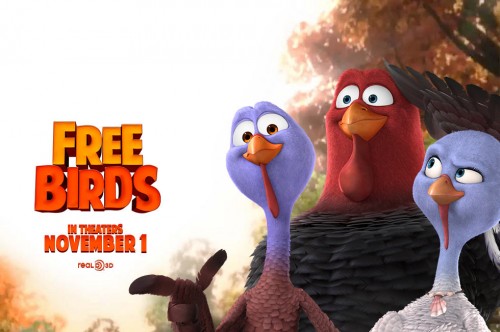
“Free Birds,” an animated film opening today, stars Owen Wilson, Amy Poehler, and Woody Harrelson.  And it has a great score by composer Dominic Lewis available on iTunes.  He talked to me about what it was like to write music for a movie about time-traveling turkeys.

You could hardly have set yourself a more complicated challenge because you had science fiction element, history, comedy, and even romance.  How do you begin to approach something like that?

I always watch a movie a few times before embarking on trying to come up with stuff that works.  And I guess the great thing about it was that Jimmy gave me free reign.  You know, it was a blank canvass.  And he basically said “Do your thing.” And the lovely thing about the movie is it’s so fast-paced, I got a chance to explore all those different genres of music and it’s not just all those one thing.  But I’d like to think that they’re going to take together in some shape or form.  So it’s really great to be able to not just be in one box, which is what’s so great about animations is that you’re allowed to speak completely freely at whatever you’re doing to express yourself.

Is it different to score for animation that it is for live action? Free-birds-movie-500x332

Oh, hugely, yeah.   I mean the thing with live action is that everything needs to be modern and visual.   So gone are the days of being able to really pull from classical composers such as a lot of Stravinski and Chopin was used back in the day. With animation, it’s just a really great opportunity to be able to pull all your tricks out the box and really write.  Whilst in live action and not negatively at all, but there are boxes that you need to tick.  But it’s the animation that’s definitely freer which I love.  It’s just lovely to do that.

I’m a little interested to hear that you saw the film before you started writing the score.  So at what point did you get involved with the project?

Well music is the last thing to go in.  I got involved, I guess I’d say, slightly before a composer would normally would come on which is nice because I saw the whole thing evolve from storyboards all the way through to its finished product now.  That’s been a really cool journey.  But yeah, I mean music is the last thing to go on so the film is able to be watched and you need to be able to see the whole thing down and ideas if they’re going to work with the whole thing.  So that’s the normal process.  And I guess, from then on, it was a question of coming up with scenes based on the images.  I had meetings with Jimmy about what he wanted and so we kind of went from there really.

And does the theme of time travel pose any particular challenges?

It has to be in the realm of the sci-fi world which is nice.  I got to use a lot of space-like sounds and electronic stuff with time travel.  It was a nice challenge.  It was a really good challenge to me to get my hands dirty with that one and trying to come up with something that works.

What was the first film you worked on?

I did my first movie in about 2007.  In the US, it was called “Hearts of War.”  Everywhere else, it was called “The Poet” and that was directed by Damian Lee.   Before that, Rupert Gregson-Williams sort of took me under his wings when I was 15, 16 so I would go down to Rupert’s studio and watch him working and do a few vocal things for him, and he’d leave to make a cup of tea, and he’d say just tell me to play around with the samples and get a feel of his stuff.  So a teenager, I was in and amongst the world of film music.  Plus my father is a cellist and plays on all the movie soundtracks and pop stuff in London.  So I was brought up with this stuff.  We had work experience at school.  When you’re 14, 15 you’re shoved into a workplace to see what you want to do.  And I was lucky enough to go to work with my dad. I just fell in love with it.  It was from then on, it was like “I have to do this.”

What kind of music did you listen to in the home?

It was everything.   I mean it was predominantly classical with both parents being classically trained and working in the classical world.  My Mom’s a singer and my Dad’s was in a quartet and played on soundtracks.  And I started cello when I was 3.  So a lot of classical, but as every parent is, they are also huge Beatles fans.  We listened to the Beatles and the Beach Boys and, you know, on trips going to the seaside and stuff.  So it was everything.  And I’ve got an older sister as well so when she was a teenager, she was listening to all sorts of grunge music and Iindie music.  And that all filtered down to me.  Yeah.  It was everything, really, which you need to have in film music.  You need to have everything.

Was it recorded in England?

Yeah.  We went over to London to record the orchestra which was great because I got to hang out with my Dad for four days.  Normally when I go back to London, I’m working and I don’t get to see my family.  But my Dad is the only one I get to see because he’s always in the sessions with me so it’s really nice to have it in the family like that.  It’s great.  And the guys over there, they’re unbelievable musicians.  I mean some of the stuff in this score you can probably hear is quite tricky.  Hard and it’s all over the place, and epic, and big.

Do you have a favorite all time film score?

I absolutely love Alan Silvestri’s “Back to the Future.”  I still think its theme is just perfect.  It’s one of those things that you can just put with anything and it just worked.  If I could choose a moment of filmmaking married with music, I think I’d choose the last 15 minutes of E.T. John Williams.  It is just incredible and also because of the whole story behind it.  It’s one of the very few times that picture has been cut up to music rather than the other way around.  They were recording the score of E.T. and he couldn’t quite get the performance he wanted so in the end, Spielberg said “You just record it how you want it done and I’ll cut the picture with the music.” It’s just a perfect performance and it’s just so perfect for the end for that moment in the movie.  When that track comes on my iPod or whatever, I can be in the bus and I’d get off the bus, absolutely in flood with tears.  I think if I have to choose, that would be the moment that I’d choose.


Related Tags:


Composers Interview Music

Interview: Scott Jordan Harris on Rosebud Sleds and Horses’ Heads — The Greatest Movie Objects

Posted on October 21, 2013 at 3:59 pm

Scott Jordan Harris is the author of Rosebud Sleds and Horses’ Heads: 50 of Film’s Most Evocative Objects – An Illustrated Journey, a beautifully illustrated tribute to some of the most beloved props and costumes in film history. He writes about Marilyn Monroe’s dress in “The Seven Year Itch,” Dorothy’s ruby slippers in “The Wizard of Oz,” and Michael Myers’ mask from “Halloween.” He generously took the time to answer my questions about the book and these iconic objects.

Dorothy’s ruby slippers are one of the most popular items at the Smithsonian’s Museum of American History.  In the book, they’re silver.  Why the color change?

rosebudChanging them to red allowed “The Wizard of Oz” to fully exploit the potential of Technicolor. I say in the book that nothing has ever seemed quite so resplendently red as Dorothy’s ruby slippers and I think that’s true. The redness is crucial to their visual impact, which is crucial to their resonance.

Didn’t we see Rosebud burn in the film?  

We did. Just as writing a book about film’s most memorable characters would involve writing about some characters who die in the course of their movies, so writing about film’s most memorable objects meant writing about some objects that are destroyed onscreen. The book isn’t about props, as such. It’s about analyzing important objects in movies in the same way we analyze important characters, discussing their symbolism, their impact on the plot, and what they tell us about the characters around them.

Iconic objects are sometimes based on real life, like the championship belt in “Raging Bull,” and sometimes created just for the story, like the Maltese Falcon.

The two objects you mention—Jake LaMotta’s championship belt in “Raging Bull” and the Maltese Falcon in “The Maltese Falcon”—are two of my favourites. Both only actually appear in their films for a short time but both are crucial to our understanding of those classic movies.

The Maltese Falcon is the engine that powers the entire plot of its film. It is the only real connection the characters have and they wouldn’t encounter each other without it. The title belt doesn’t drive the plot of “Raging Bull” but is instead used, briefly and brilliantly, to comment on the main character. The way Robert De Niro’s Jake LaMotta behaves towards the middleweight championship belt, using physical violence to destroy the symbol of his best achievements while believing he is acting rationally, is a potent metaphor for the way he behaves in life.

Have HD and 3D and CGI affected the way props are created?

Dramatically so, I would say. CGI in particular has altered what we think of as a prop and what we think of as a character, which is an area of discussion that always fascinates me. Had “Life of Pi” been made years ago, for example, the tiger might have been a sophisticated animatronic puppet. We would have called it a prop and thought of it as an object. Because it was CGI, we think of it solely as a character.

If you could have one of the items from your book in your home, which one would you pick?

In a sense, I have one. My friend, the film writer Elisabeth Rappe, bought me a Sheriff Woody doll that sat on my bookshelves while I was writing the book.

If I could choose another, I’d have a real, working hoverboard from “Back to the Future Part II”. I was a young child when the movie came out and the hoverboard represented the true magic of the movies to me and to many people of my generation. I still feel almost cheated that hoverboards don’t exist, not by the movies but by reality.

What makes a prop or a costume iconic?

Very few movie objects become truly iconic. There are the ruby slippers, Marilyn Monroe’s white dress from “The Seven Year Itch” and perhaps a few others. Those objects have a cultural significance beyond a single film.

There are a few qualities they share. The first is an unforgettable look that makes them immediately recognizable and the second is an emotional resonance so powerful it approaches the universal. They often also have an unmistakable symbolism. The ruby slippers suggest the power of childhood fantasy and escapism, for example, while the white dress is a perfect image of irrepressible sexuality.

How did you find the artists to illustrate the book and what made them right for this project?

The book was developed from a column I wrote for a British film magazine called “The Big Picture”, of which I was editor for a couple of years. The editor-in-chief has a background in graphic design and knew various illustrators he thought might be right for the book. He spoke to them about it, they submitted portfolios, and we chose the three we thought would work best. The way their three distinct styles would blend to create the look of the book was an important factor in the decision, as was the ability to highlight in the illustrations certain aspects of the objects highlighted in the text.

In a digital world, how can a book like this demonstrate the benefits of a traditional book on paper?

As Rosebud Sleds and Horses’ Heads is about evocative objects, one of the aims behind it was to create a book that was an interesting object in itself, something that was enjoyable to handle and to display but that would still cost less than $20. That was easy for me to say, though. I’m a writer: all I do is type. It was the publishers, the printers and, most of all, the illustrators (Charlie Marshall, David McMillan and Jayde Perkin) who had the responsibility of making the book an impressive physical object, and I’m indebted to them for pulling it off.

What was the biggest surprise you uncovered in researching the book?

Years ago, when I first became interested in the subject but well before I started writing the book, I researched the horse’s head in “The Godfather”. It was a little shocking to learn that it was a real horse’s head. When I tell people that, they sometimes think it was the real head of the live horse that is seen earlier in the film. It wasn’t: it was bought from a dog food factory and then painted so that it appeared to be the head of the horse that plays the racehorse in the earlier scene. I’d be fascinated to talk to the person who had to paint the head. It can’t have been a pleasant job.

Something that surprised me when I began research with the book in mind was that a book about evocative objects on film didn’t already exist. There are many wonderful books about objects in other areas of life and about film memorabilia, but I couldn’t find one written from a film critic’s point of view about the role objects play in movies. I wanted to read one, so I wrote one.

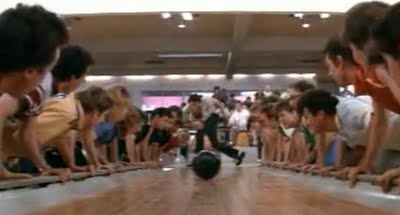
What movie object do you get asked about most often?Grease-2-bowling-797824

The object people talk to me about most frequently is their favorite object, the one there was no way I could possibly have left out of the book, but somehow did. That object has been everything from the watermelon in The Adventures of Buckaroo Banzai Across the Eighth Dimension to the bowling ball in Grease 2.

Those are always enjoyable conversations. It’s not like those times as a critic when you’re forced to write a top 10 list and people call you an idiot for not including X or Y. Rosebud Sleds and Horses’ Heads was never intended to be a definitive collection of the “greatest” film objects, but a celebration of some of the most evocative, and I love talking to people about their favorites. It’s such a fertile subject.

Related Tags:


Books Interview Understanding Media and Pop Culture Writers
THE MOVIE MOM® is a registered trademark of Nell Minow. Use of the mark without express consent from Nell Minow constitutes trademark infringement and unfair competition in violation of federal and state laws. All material © Nell Minow 1995-2026, all rights reserved, and no use or republication is permitted without explicit permission. This site hosts Nell Minow’s Movie Mom® archive, with material that originally appeared on Yahoo! Movies, Beliefnet, and other sources. Much of her new material can be found at Rogerebert.com, Huffington Post, and WheretoWatch. Her books include The Movie Mom’s Guide to Family Movies and 101 Must-See Movie Moments, and she can be heard each week on radio stations across the country.

Website Designed by Max LaZebnik