Interview: “Elysium” Villain Faran Tahir

Posted on August 9, 2013 at 8:00 am

Faran Tahir comes from a family of actors.  He was born in Los Angeles to Pakistani parents and studied theater at UCLA and Harvard.  He has appeared in “Star Trek” and “Iron Man” and on the television series “Warehouse 13.” He talked to me about playing a bad guy (who happens to be the President) in today’s release, “Elysium.”

You play the President in this movie!  That must be pretty cool.faran tahir
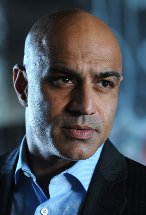
Not a bad thing to play, right!  To be the leader of something.  The way I look at any character is, “Can the audience, can I connect to the character?”  You always build from that essential connection, making the person as human as you possibly can.  When I was living with this character, I didn’t want to put the label of “good,” “bad,” or “evil” on him.  I wanted him to be more of a person and let the audience decide where he lies in their minds and in the heart of the story.  He is a politician so you needed to see nuance and have an angle of this politicking in dealing with issues.  So that’s how I see it.

Whoever the bad guy is, he or she thinks that they’re completely justified in what they’re doing.  Their actions might be perceived as bad, but to them, they’re natural.  That’s just what they do.  The challenge is how to step into those shoes and see the world from that perspective.  Your own personal values and inclinations might play a part in it, but you do have to put them on the shelf for a little bit and just see the world from those eyes.  That’s the beauty and the challenge of acting and that’s what attracts me — to see the world from someone else’s perspective.  You learn a lot, and not just from the bad guy, just to see the world from a whole new set of eyes.

Was there a lot of green screen in this movie?  What kind of a challenge does it create for an actor to know that whatever you are interacting with will be added later by a computer?

There was nothing but green screen!  It’s very exciting because you don’t know what the final product will look like.  So your imagination is working overtime to create all that in front of your eyes as much as they will later.  To me, that is a lot of fun.  My background is in theater and that extends itself to that kind of acting because on stage you don’t have everything in front of you.  If you’re playing in “The Tempest,” you have to create that storm yourself to convey the emotions of the character.  It’s when you walk on the set that the green screen is most apparent to you.  But when you get into the reality of the character, it doesn’t make any difference.  You’re just playing the scene, the emotion of it.  A person standing and just watching  — it might look very odd.  But when you’re in the scene, it’s a non-issue.  You are given some idea of how it’s going to look and technically, you are told, “Look over here, look over there, that’s where it’s going to be,” and you take it from there.
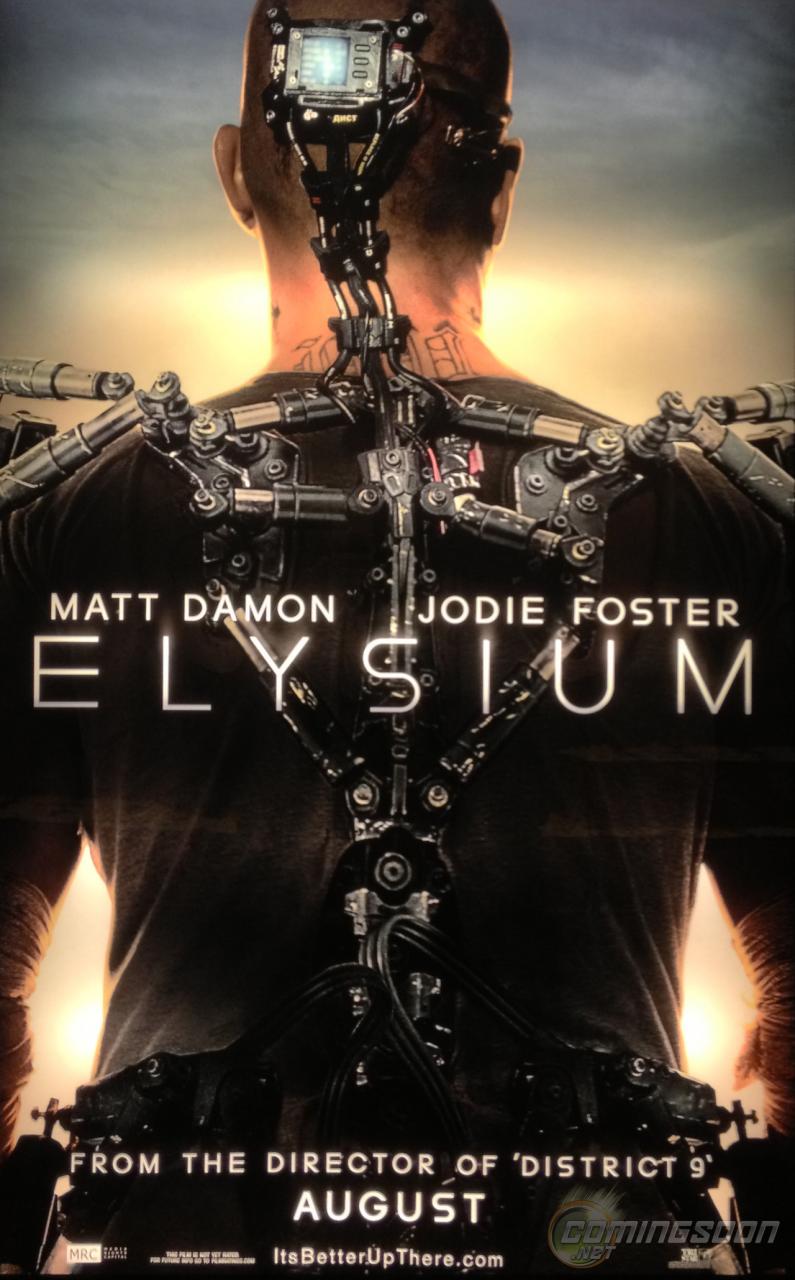
Elysium-PosterYou are working with an exciting and visionary director, Neill Blomkamp.

Neill is a genius.  He has amazing vision, an amazing quality of taking hot-button issues that are current to us right now and setting them in the fictional zone so we all can examine them from all different angles.  As a director, you know he knows where he wants you to go, what the vision of the film is, but there’s this amazing laid-back quality and he lets you organically find your character.  He gives the trust to his actors that they will get there. He is there to guide you and stay true to his vision, but there’s never any shoving down his version.  He lets you find your reality and your truth and for an actor that’s an amazing gift.  He has an affinity and a connection to actors that is amazing to watch.

You’ve played a lot of villains.  Who are some of your favorite movie villains?

Robert De Niro in “Taxi Driver.”  He did some horrific things but there was a connection that you had with this guy, an amazing feat for someone to pull this off.  He took you on the journey.  You knew he was not a good guy but you trusted being led by him on that journey.  That is genius, both De Niro and Scorsese.

What do you want people to talk about on the way home from “Elysium?”

This movie has something for everyone.  If you’re looking for science fiction, it’s there.  If you’re looking for action, it’s there.  But the thing that I want people to be talking about is the way it raises some interesting and important issues and I’m hoping it sparks that conversation.  No matter what side of the argument or issue you fall on, it should spark a debate.

What was it like to grow up in a family of performers?

Our dinner time conversations were sometimes about sports and all of that but a lot of time about literature, television, theater and all that.  And it got heated.  We all had our point of view all points of view were listened to at least.  But they also had a very practical, pragmatic approach to the business of performing. There was the other side.  When I wanted to become an actor, they did not try to dissuade me but their question was “Why?”  They wanted to prepare me for the ups and downs of this life, how to handle success and the failures and disappointments.  As a parent, you don’t want your kids to be broken people.  There was a nice mix of dealing with the creative side and the practical side.  My parents told me to be my own best critic.  You will know when you have done a good job, a decent job, or a bad job.  Listen to your own inner voice.
 

Related Tags:


Actors Interview

Interview: “Sharknado” Screenwriter Thunder Levin

Posted on August 6, 2013 at 8:00 am

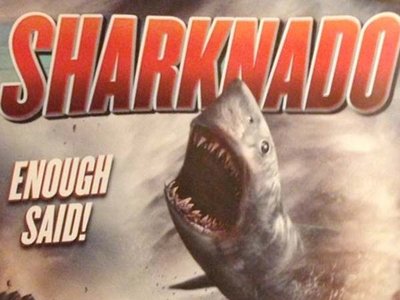
Amid all the summer superheroes and blockbuster sequels, no movie has captured the 2013 movie zeitgeist as much as a low-budget movie for the Syfy channel.  Of course, I am speaking of “Sharknado.”  And yes, it is about a shark-filled tornado.  Its tagline is simple, but effective: “Enough said.”

If tweets were box-office receipts, “Sharknado” could win the summer.  Produced by Asylum for $1 million, it has become a sensation, with television rebroadcasts and a one-night special event theatrical release.  And my favorite costume at Comic-Con.  And yes, a sequel is in the works and they’re crowd-sourcing the tagline.

It was a pleasure to speak with “Sharknado’s” screenwriter, Thunder Levin, who is amused, delighted, and perhaps a little bit dazed by the reception for the film.  He told me what a scientist had to say about this idea, what the movie has in common with “Snakes on a Plane,” and the famous fans he was most excited to hear from.

How has your life changed?

I got an agent and I’ve been going on a lot more meetings.  I hope to move forward to bigger and better things.

It’s hard to imagine anything bigger or better than “Sharknado!”sharknado

It depends on how you use the words “bigger” and “better.”

What was your goal when you began to write the script?

To have as much fun as we could.  The script I turned in should have cost $100 million to make.  And they had $1 million.  My vision would have been even bigger.  I had flaming sharks at one point falling from the sky.  And the whole thing was about LA being hit by a hurricane and flooded with water.    We were shooting on sunny days, so it was limited how big it could finally be.  The main thing was to have fun with it and not believe it could ever be too over the top.  The big moment at the end with the chainsaw and anything, there was some concern expressed that maybe it was going to far.  My response was, “It’s called ‘Sharknado.’  We can’t go too far.”

Yes, I think that should be the tagline for the sequel.  Were you presented with the title?

They came to me with the title.  I had made another movie with the production company, Asylum, last year.  Everybody was pretty happy with it and we were talking about what to do next.  They were talking about a movie to be called “Shark Storm.”  I said, “Is this a straight movie with sharks attacking during a storm or is this going to be some crazy storm of sharks?”  They said, “sharks attacking during a storm,” and that didn’t really interest me.  Apparently, about the same time, SyFy had decided they wanted to make a movie called “Sharknado.”  And so somehow the guys from Syfy were talking to the guys from Asylum and they discovered they both wanted to make a sharks in a storm movie.  So they basically combined the projects and kept the better title.  They said, “We want you to write a movie called ‘Sharknado,'” and I said, “What do sharks have to do with the North Atlantic Treaty Organization?  Are they invading Europe?”  I was thinking of NATO!

That’s a different species of sharks.  So you have the title, and then what?

They had about half a page of notes, the stuff they’d like to see.  I started from a fairly — I hesitate to use this word — realistic place about what would happen if LA was hit by a hurricane.  We’re in the desert and our streets flood if there is five minutes of rain.  If there’s a big rainstorm that’s the news all day, like two feet of snow in DC or New York.  The city is not equipped to deal with it.  It’s called the LA basin for a reason.  It’s basically a shallow basin.  So, if a hurricane hit Los Angeles, that much rain and a storm surge, the city would basically become like a lake.  How would you get around and all of those problems.  So I started with that premise, and then I added sharks!  And tornados!  And just kept going.  If the ocean is washing into the city, why couldn’t there be sharks in the water?  And if a hurricane spun off a tornado, which often occurs and creates a water spout, why couldn’t sharks be sucked up?  There are verified cases of smaller fish being sucked up into water spouts and being deposited miles inland and so I took that to the next perfectly logical extreme.  I don’t know why anyone wouldn’t find that believable!

Have you heard from any marine biologists or meteorologists about this idea? 

Not directly, but I’ve read stuff online.  Just a few days ago there was a quote from a JPL scientist who said that said it is incredibly unlikely but it is theoretically possible that sharks could be sucked into a tornado.  It would have to be an F5 tornado and and there would have to be sharks there, but I felt vindicated!

How do you create a story for viewers to care about in the midst of a shark tornado?

There was more about the characters in the script.  But we had a very short shooting schedule, just 18 days.  Stuff gets cut, and for something like this the character development is going to have to go because they want the sharks and the killing and all that.  But you have to care about the characters.  Even though the situation is ridiculous, and the way we’re presenting it, the characters themselves have to exist in that reality.  They can’t ever wink at the camera.  They have to be in the moment and this is really  happening to them.  Otherwise it turns into a farce.  It was important to me to make them as real as I could make them, give them a certain amount of background.  I liked the idea of Fin and his ex-wife, the separated spouses, coming together and re-uniting because they have a shared history.  A lot of people thought he had more chemistry with Nova, the gun-toting bartender, but I wanted Fin and his wife to have their past experiences come out and make them work together better as a team.  Nova is from a different generation.  I wanted the attraction between them to lose out to the less obvious but deeper relationship with his wife.

And the actors have to put themselves in the reality of the moment.  Ian Ziering was kind of a revelation for me.  I only knew him from “90210,” and I thought he really reinvented himself as an action star. He could do straight action after this.  I think it’s just a matter of them committing to the reality of the character, no matter how extreme the situation we put them in, they have to say, “What would I do in this situation?”  Really, that’s what acting boils down to.

What has been the best moment for you in the reactions to the movie?

Bleeding Cool picked up on the title last year and the reaction began building from that.  The most amazing thing was trading tweets with Damon Lindeloff during the first broadcast.  He tweeted that he would have a sequel written before the movie was done airing.  I tweeted back that it should be a prequel, and he tweeted “touché” and we tweeted back and forth.  To think that the guy behind “Lost” and “Prometheus” is trading tweets with me, about this ridiculous movie on Syfy, incredible.  And Mia Farrow and Philip Roth tweeted about it!  That’s just bizarre and surreal and amazing.

What is it that captivates people in a movie like this?

I was at the opening night of “Snakes on a Plane.”  The audience I was with had a great time.  They were laughing and shouting out lines and saying, “Hey look behind you!” and “Don’t do that!” and throwing popcorn at the screen.  I know the movie didn’t do very well box office-wise, but the audience I saw it with had a great time.  And I think that’s what happened when “Sharknado” was on, but in a virtual sense.  It all happened on Twitter.

Unlike “Shakes on a Plane,” you didn’t have to face high expectations.  You had the benefit of surprise.

And that’s something we’re going to have to deal with in the sequel.  They’re going to see us coming.  I haven’t figured out how to handle that yet.

Related Tags:


Interview Writers

Interview: “Elysium” Composer Ryan Amon

Posted on August 5, 2013 at 8:00 am

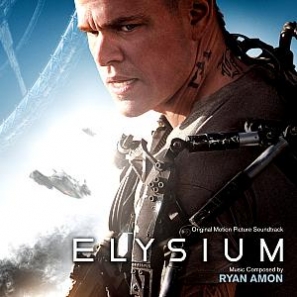
Elysium-Soundtrack-297x297Ryan Amon talked to me about the YouTube video that led to his first feature film score, in this week’s “Elysium,” directed by Neil Blomkamp (“District 9”) and starring Matt Damon and Jodie Foster and how two notes create a mood.

How did you get involved with this project?

I had been doing trailers and before that I was an assistant on reality TV, so I had a lot of experience writing on deadline, but never anything like a film, which is a very different approach.  I was living in Bolivia, where my wife’s family is, on a different continent when I got the email from Neill Blomkamp, who was in Vancouver.  He had come across a YouTube video that a trailer music fan had posted.  Someone had taken one of my tracks and posted it.  Neill must have been searching through and found it somehow.  And I got a one-line email: “Is this you?”  I thought one of my friends was playing a prank on me.  I’ve got very funny friends who have done things like that in the past.  So I didn’t think too much about it until his assistant Victoria followed up, and I thought, “This is real.”  Then I got nervous.  He was still in the early stages but a few months later, he got in touch by Skype, with me still in Bolivia, and he talked about the film a little bit and his interests and my interests, and he offered me the job.  You can’t turn that down!  It was awesome.

When you have to write music for a story set in the future, how do you approach it?  Do you try to project ahead to what kinds of instruments or genres will be used?

That’s tricky.  I thought a lot about that one.  His approach on this was not letting me see much of the film.  I was working while they were filming.  He didn’t want to let me read the script or see any footage.  I had a few sketches of Matt Damon’s character in his exo-suit.  So I had a few images but basically knew nothing of what was going on.  My direction was to write something dark and then something light.  It was a huge blank canvas for me.  It was really hard but it was also very liberating and gave me a lot of room to experiment.

As for the future thing, who knows what music will sound like in 150 years?  I knew I wanted to keep it relevant.  Sometimes using too many synthetic elements, too many synthesizers, could backfire.  In the 80’s, all those synthesizers sounded cutting edge and futuristic, but now they sound dated.  So I wanted to steer away from that and bring in more orchestral elements.  I took some traditional instruments, even piano strings, violin strings, and I scraped them metallically, and tried to create a sound that wouldn’t feel dated, even if we watch the film 20 or 30 years from now.  We recorded in Abbey Road with the London Philarmonia.  My first picture, and I’m in Abbey Road with a full orchestra!

Did you take a picture like the cover of the Abbey Road album?

Yes, we had to do that!  It was freezing, in January, but it was still fun.

Before you were in Bolivia, where were you? What is your background in music?  

I never really had that much interest in the classical side of things.  I was classically trained and played piano and played the saxophone in a jazz band.  But I was more interested in science, in biology.  The music fell into my lap a little bit.  I promised myself I would not try to do music professionally.  But when I was in college I ended up enjoying coming back to my dorm room to play my guitar or I would write music on the piano instead of going to class.  And I said, “Why am I enjoying this more, when it used to be such a struggle?”  I think when you get older you are more comfortable embracing the areas where you have a gift, start to appreciate it more and want to explore it.  I went to the McNally Smith College of Music in St. Paul to learn the technical things and got an associate degree.  It was very new, more of a guitar school than anything back then.  They only had a songwriting course at that time, so I studied film scores on my own, by ear, watching a ton of movies to see what worked and what didn’t.  That’s what I was trying to train myself to do, to be more cerebral.

I entered a competition through BMI called the Pete Carpenter fellowship that allows one or two students every year to go out and shadow Mike Post in his studio in Los Angeles.  He teaches us the way he approaches TV shows and we get to score a few scenes as practice.  That was invaluable.  And I knew that was what I wanted to do.  I went back home, packed up everything I had in my car — and it all fit — and went to LA.  I worked at IKEA and Virgin Records, and then through BMI I got a job as an assistant for a group that was doing reality TV.  So that was a fast and steep learning curve.  We had to produce at a very high level but also very, very quickly, two to three tracks a day for the show.  It goes into a library and the editors get to place it where they want to.  The most valuable thing was learning to use the software.

How do you begin to work on a movie score?

In writing a film score you have to be more of a psychologist than a musician.   I approach it a bit differently.  I sit at the keyboard and play intervals, just two notes at a time.  These two notes, played on one instrument, what emotions does that evoke for me?  I make a list of vocabulary words, as many as I could, of what these two notes felt like.  I realized that a lot of music can be written from our background in music theory.  But I felt it could be much open than that, a much wider spectrum of colors and instruments.  So I always try to write from someplace deep inside, not to sound cheesy, but I try to write from my heart and not my head.  In a way it’s cerebral, but I’m like channeling it.  For dark and light it’s almost like not having an image in front of you can help sometimes.  You can picture the whole world in your mind the way you do when you read a book.  It’s fun to do that musically — what would light sound like?  What would dark sound like?

So when you saw it with the footage, how did that go?

It was a little bit cringe-worthy to me.  The original idea was that I would do some of the music first and they would use what I wrote as a temp score, and then we were going to manipulate it and see what’s working and what’s not.  Sometimes Neill likes experimentation and wants you to go off and do your own thing, but sometimes he knows exactly what he is looking for and he will push you to search for it until it clicks.  So there was a lot of music written for this film.  I did over 200 tracks and they chose a handful.  When I saw the temps with my music I thought, “Oo, that’s completely different than what I thought it would be — it looks different or the editing is slower or faster than I thought.”  So that was terrifying at first, but as we went along I flew up to Vancouver to work with the post-production team for the last few months.  It was definitely a surprise to see some of the matches between the music and the visuals.

What are some of the movies that inspire you?

My favorite movie was always “Jurassic Park.” That film score by John Williams is perfect and Spielberg is such a great story-teller.  I love “Braveheart” and I would love to do a movie like that in the future, very raw and the power comes from traditional instruments.   I love that old sound from the old world, what it might have sounded like in those days.  I love hybrids, too.  That’s a little bit of what I became known for when I was doing trailers.

Related Tags:


Composers Interview Music

Interview: Bishop T.D. Jakes Talks About the New Faith and Family Film Festival

Posted on August 1, 2013 at 8:00 am

Bishop T.D Jakes, who serves on the board of Beliefnet, has added a Faith and Family Film Festival to his inspirational MegaFest gathering, this year taking place in Dallas on August 29-31.  Bishop Jakes spoke to me about why film is so important in providing spiritual enlightenment and what his plans are for this inaugural event.winnie-mandela-1

What made you decide to bring movies to MegaFest?

The International Faith and Family Film Festival is one component of MegaFest, a huge event we have every year for families to come and to worship and have an opportunity to go to enrichment classes and more.  This year it extends from comedy shows to Oprah’s Life Class on families and fatherhood and how we can strengthen fathers and what women can do when there is no father in the home.  We’re covering a wide range of things and in the midst of that is the Faith and Family Film Festival.  I’m interested in that because I have a for-profit business that produces faith and family entertainment.  Some of the discussions will be about marketing within the faith-based community, the now and future of faith-based films and TV, getting your film and TV production launched, digital filmmaking distribution and marketing.   And we’re going to have actors there like Anthony Mackie, Regina King, and a host of others.  William Morris, the agency will be there, and Sony Pictures.

What is is about film that connects so powerfully with people?

Christ conveyed truth through the telling of stories.  Today we use film to convey stories.  We can do it in an entertaining way, a comedic way, a dramatic way and still be able to interject truth and faith so that people are stirred in their thinking and moved to worship and perceive God differently.  I realize there are more people in the theater on Friday night than there are in the pews on Sunday morning.  If you are going to reach the world, we have to go where the world is.

What films will you be showcasing?

One I am really excited about is “Black Nativity.”  I’m serving as a producer on that one. It’s a star-studded cast — Jennifer Hudson, Tyrese, Forest Whitaker, Angela Bassett.  Jennifer Hudson will be at the MegaFest event.  We’re so excited about that film, which will be out for the holiday season.  We have a film about Winnie Mandela, the love story of Winnie and Nelson with the background of apartheid.  Jennifer Hudson and Terrence Howard star in that one and it will debut at the festival.  My company with Sony is working on “Heaven is for Real,” shooting now in Canada, based on the book about the child who came out of an operation and said he had been to heaven and had all of this information he would have no way of knowing.  That will be out at Easter time, but there will be a sneak peek of it at the festival.

http://www.youtube.com/watch?v=kzr0wUqhAz0

Why is it so hard for Hollywood to get the message that there is an audience for uplifting films?

I think they are starting to get it.  But it is true that there are people in some of those top offices there who are out of touch with mainstream America.  It’s an education process.  But when you see the success of “The Bible,” quadrupling the ratings at the History Channel — Hollywood is starting to get the message.  That begins to tug on their hearts.  When people like Tyler Perry and I interweave faith into our movies, it has been very, very well-received.  This is an opportunity for us to let Hollywood know that we are here.  And we will develop entertainment that is suitable for the audiences who will support that entertainment.

What kind of turnout are you expecting?

This is our first event in Dallas, so we do not know, but in Atlanta we had over 290,000 people and broke all records over the two years we were there.  Thousands of people from all over the world have already registered.  Where else can you go in the world and see that many people with their families sharing their faith?  And faith is infectious.  When you see others, it stirs your faith as well.

What movie spoke to you when you were growing up?

This really dates me.  “The Ten Commandments” with Charlton Heston, sitting in front of the TV set, going “ooo” and “ahh.”  I remember “Imitation of Life.”  We watched it every year and my father would get teary-eyed.  That was a rare thing!  I would love to get the rights to do a remake.  It tears your heart.  It shows the importance of family.  I think you learn as much from people’s struggles, maybe more, than you do from their successes.  The real strength of the power of God is the struggles that we have in life and how we overcome them.


Related Tags:


Festivals Interview Spiritual films
THE MOVIE MOM® is a registered trademark of Nell Minow. Use of the mark without express consent from Nell Minow constitutes trademark infringement and unfair competition in violation of federal and state laws. All material © Nell Minow 1995-2026, all rights reserved, and no use or republication is permitted without explicit permission. This site hosts Nell Minow’s Movie Mom® archive, with material that originally appeared on Yahoo! Movies, Beliefnet, and other sources. Much of her new material can be found at Rogerebert.com, Huffington Post, and WheretoWatch. Her books include The Movie Mom’s Guide to Family Movies and 101 Must-See Movie Moments, and she can be heard each week on radio stations across the country.

Website Designed by Max LaZebnik