Interview: Civil War Filmmaker Ron Maxwell of “Copperhead”

Posted on June 23, 2013 at 8:00 am

Copperhead is a new movie based on the novel by Harold Frederic, who witnessed these conflicts firsthand as a small child, Copperhead tells the story of Abner Beech, a stubborn and righteous farmer of Upstate New York, who defies his neighbors and his government in the bloody and contentious autumn of 1862. The great American critic Edmund Wilson praised Frederic’s creation as a brave and singular book that “differs fundamentally from any other Civil War fiction.”

http://www.youtube.com/watch?v=F_SHERZJvBw

Tell me about this new movie.

Copperhead is based on a novel written in the 1890’s by Harold Frederick. Harold Frederick was a young boy during the Civil War, and he lived through it. He lived in upstate New York, and later, when he began to write novels, he wrote a number of novels that all take place in that part of New York. And if you want to know about rural America in the north in the 19th Century, he’s a wonderful author and a great window into that world, the same way that Charles Dickens, for instance, is a window into the world of Victorian England at the same time. Through Oliver Twist and David Copperfield, we know as much about Victorian England as we do by reading historians like McCauley, etc.

Even though it’s a work of fiction, it’s a wonderful window into that world. So when I came across it, it was very intriguing on many levels. First and foremost because it explores dissent. Dissent, as we know, is protected by the Constitution in the First Amendment to the Bill of Rights, and it’s very much a part of our national fabric and our national history. There have always been dissenters, minority opinions that have over sometimes the course of time, as we know, become majority opinions. What’s interesting about the book that Harold Frederick wrote is that he wrote about a man who was very convincing, a farmer that he might have known and people that he might have known. Even though it’s a fictionalized account, it’s set in 1862 within historical events that really happened.

It was the year that the war was escalating, big battles were being fought–Antietam was fought that fall, that September. And in that fall, the November election of 1862, what became derisively known as the Copperhead movement–that was a name given by Republicans and war supporters to the dissidents. It was a contemptuous term, derisive term, an insulting term hurled at those who were against the war. And after a while, those who were in that position in the north wore it as a badge of honor. And they actually wore copper pennies to kind of boast that they were Copperheads. Well, in the election of 1862, the peace Democrats, Copperheads, swept much of the elections in the north. Of course, not in New England because New England was hardcore Republican, pro-war, but across New York State and the Midwest, they won governorships and mayorships and a huge electoral repudiation of the Lincoln administration. So it takes place during this year that is mostly remembered for the big battles that were fought and very little for the anti-war movement that was raging in the north.

What is it about this era that particularly draws you?

I have always been a student of history. You know, that never stops because you stop getting a formal education in school. And if you’re a naturally curious person, you’re always reading and studying–whether that’s fiction or non-fiction. I started at a very early age as my father read to me and my younger brother before we could read. And once we could read ourselves, it became a wonderful acquired habit. And I still have many books on my nightstand before I go to bed, and I have to decide which one I want to read because I’m always in the middle of a half-dozen or more: fiction and non-fiction, poetry and history and biography. But at an early age I certainly became interested in history–in world history, but certainly in American history too. And my father took us–my brother and I–to sites that were within driving distance, you know when I was growing up in the Fifties. And I grew up in northern New Jersey, and so I mostly visited colonial historical sites: French and Indian War and Fort Ticonderoga and Lake George, etc. Wonderful road trips and forays and day trips, but I didn’t see a Civil War battlefield until after I read The Killer Angels. It won the Pulitzer Prize in ’76, the Pulitzer Prize for fiction. I read it in ’78 and that started–a rather well-known now–fifteen year saga from the time I read the book to the time it appeared on movie screens, a fifteen year saga to have it made into a movie. So that was the first time I visited a Civil War battlefield, in 1980. A couple years after I optioned the book, I visited a battlefield over a three day period, and my tour guide was none other than Michael Shaara, who wrote The Killer Angels.

It was three days I’ll never forget because he took me through the three days as he wrote about it in his novel. Of course, anyone who’s been to a battlefield knows that you need more than three days to really absorb the whole thing; you need at least a week or multiple visits. He took me through the three days as he wrote it in his novel, which as we know is focused on Joshua Lawrence Chamberlain and the 20th Maine, on Lee, Longstreet, Armistead, Hancock, etc. So my interest in the Civil War started in my youth. I always studied it; I loved reading about it. But I didn’t actually visit a battlefield until I was thirty, thirty-one. And I didn’t know when I started that it was going to take fifteen years to make that movie nor did I know that I’d still be working on Civil War movies twenty-five, twenty-six years later. But it just kind of worked out that way.

What is it about the Civil War that continues to be so enthralling to us, 150 years later?

I’ve had some time to think about it and how to explain my own passion for it. And the hundreds and hundreds of people I’ve met over the years, whether they’re historians and novelists or re-enactors or members of Civil War roundtables. It is certainly a deep and abiding interest; it’ll probably never go away as long as there’s an America. But even after America in some distant future, the way we go back and look at the Peloponnesian Wars or the wars of antiquity, whatever the civilization is in years to come, I think the Civil War resonates. It resonates in a universal way, and I’ve seen this, I’ve been at screenings of my films in Europe and Central America. So I know that people recognize it, even if they don’t know American history.

What do they recognize? They’re attracted to and fascinated by fratricide because fratricide and civil wars are going on right now. They’re part of the dark side of human nature. And on the one side of the coin is brotherly love and on the other side is fratricide. And it’s always been with us; it started with Cain and Abel, and sadly it will probably always be with us. The American Civil War is such a vivid example of such a tragic flaw in humanity. So that’s why I think it’s recognized universally, wherever it plays. I’ve seen it play in Helsinki, and it reminded the panel afterwards of their civil war in the nineteen-teens. I’ve seen it play in Madrid, and after you meet the Spanish journalists and historians, right away they’re talking about the Spanish Civil War. So it has that international, universal resonance, but I think for Americans, it’s even deeper.

First of all, besides the Indian wars that started in colonial times and finished at the end of the nineteenth century, it’s the only other war that was fought on our soil among Americans. I guess you could say the other wars were fought among Americans: the French and Indian War divided American colonists, the American Revolution certainly divided colonists–that too, you could argue was a civil war because Americans were fighting Americans.

But the American Civil War was kind of the apex, the climax in American history of Americans fighting Americans. And it was fought here, right in our backyards. You and I, we both live in Virginia, you can’t throw a stone without it landing in a Civil War battlefield or a Civil War graveyard or a Civil War site of some kind or another. It’s with us. Also, we’re not that far from it. 150 years is just a few generations, and the old-timers, the people in their 80’s and 90’s and 100’s now, can remember the stories of the grandparents who lived in it, who lived it firsthand. We’re not that far removed, actually. And also, I think, another reason the war resonates is because it decided some things for sure. It held the Union together by force, but it held it together. It abolished slavery; it emancipated the slaves. There are certain things the war did. It also killed over 700,000 people, and it maimed or wounded a million and a half or more. It destroyed practically the whole infrastructure of the south. It was cataclysmic. And even though some things were politically decided, the underlying issues are still with us.

What am I talking about? I’m talking about States’ Rights. Where does sovereignty lie? Does it lie with, does the country reside in Washington, DC with the politicians? Or does it reside with the individual citizen no matter where he lives? Or does it reside in the community? Or does it reside in the states? These things are still argued about! We just argued about the Second Amendment. We’re talking about sovereignty issues now when we talk about immigration and illegal immigration and the borders. And the states say, Arizona says, “We’ve got to be able to protect our borders.” And the Federal government says, “No, it’s a Federal issue.” So all of these issues of Federalism, States’ Rights, centralized government, decentralizing government, the same things our founding generation talked about when they drafted the Constitution, the same things they fought about in the Civil War are still with us now. So for all these reasons, I think the Civil War is a touchstone. And not the least of which: race! We still have racial questions in our society. Slavery was at the center of the Civil War. And that’s another reason why I think it’s based in our consciousness. And finally, I don’t want to leave what I think is one of the most compelling aspects: that the Civil War, as tragic and bloody as it was, created heroes. It created these mythic heroes, and they were real people; they were flesh and blood; they were flawed; they were not angels, but they are heroic in our national history, whether they were wearing blue or they were wearing gray. And that is very compelling and very appealing, and these are the stories that novelists write about and the stories that are made into movies.

What do you want people to talk about as they’re driving home from seeing this film?

I really assiduously and meticulously and rigorously stay in the time frame. This movie takes place in 1862; I don’t even step into 1863. And I’m very disciplined about that with the script, the actors, with how we shoot it and how we edit it. So we don’t make moral judgments about people. Well, I don’t, I don’t. I don’t think it’s useful in a motion picture; I think that’s for historians to do, it’s for journalists to do; that’s to do in other forums. But movies are woefully inadequate at answering questions; as soon as they try to do that it comes off as propaganda. But movies are powerful and effective at asking questions. So this novel that’s been translated into a film is asking some pretty big questions. What is the role of dissent? What is the cost of dissent? What is the personal price of dissent? We as an audience are used to relating to dissenters, but usually we relate to the dissenter when the history is already vindicated his position. So we relate to Galileo; we relate to the people in the Massachusetts Bay Colony, who were saying, “You should not burn the witches.”

We relate to Darwin when he was being criticized. Because they were kind of vindicated by history. But here we have a guy who’s called a Copperhead, and, in fact, history did not vindicate him. If anything, our historical consciousness and our received wisdom as a culture–right or wrong, and I’m not taking a position, but right or wrong–our received wisdom is that the Civil War was inevitable, that it needed to be fought, Lincoln was a great president. And so here we have a guy who does not agree with those things. In real time, he is in opposition to all that.

And so we have to ask ourselves: how much do we really care about dissent even when you don’t agree with the dissenter? How important is this? So it raises these fundamental questions about that. It also raises the question about how we treat one another. Because in 1862, we weren’t treating one another so well, were we? His neighbors look upon him as a pariah because he’s in the minority, a tiny minority.

And that’s why on the poster it says, “Copperhead: Patriot to Some; Traitor to Others”. Copperheads were called traitors; people wanted to hang them. In that sense, it’s a mirror to our own times. Again, I leave that to the audience to kind of see or not see. But, you know, the other question in the movie, can’t help but asking after the movie is: how are we treating each other now? Are we listening to one another? Are we really listening to our neighbors or even across the kitchen table, members of our own family? I think it’s not an exaggeration to say that we have a pretty degraded political conversation going on now. There’s a lot of shouting going on, not a lot of listening, not a lot of tolerance. And it’s getting less civil by the day. So I think this movie raises that question: do we want to continue down this road of incivility or do we want to start showing a little more respect and a little more understanding to people who disagree with us?

Related Tags:


Directors Interview

Interview: Joel Smallbone of “The Book of Esther” and For King and Country

Posted on June 19, 2013 at 8:00 am

Joel Smallbone of King and Country plays Xerxes in “The Book of Esther,” his first film role.  He was nice enough to take some time off from his For King and Country tour to talk to me about playing the Biblical king.

http://www.youtube.com/watch?v=Ko63DUcc8i4

How did you get involved with this project?

I’ve always had a real passion for film and music — the arts in general.  I’m one of seven children, five boys and two girls, and I’m in the middle.  The brother just above me, Ben, we did films growing up together.  We just had a Super 8 camera and we’d run around the property making films and submitting them to festivals.  And then I got older and the brother just under me, Luke, said, “Hey, what do you think about giving this music thing a shot?”  So he and I started leaning into music but the passion for film has always been alive in me.  My father, who also manages us, has some connections in the film world and he was in touch with David White of PureFlix.  When they were looking at doing “The Book of Esther,” David said, “I might have a role for Joel.”  They were so gracious — we were in the middle of a tour and I had just five days off.  We flew out from Virginia early Monday morning and was on set in LA Monday evening.  I did my whole role in five days and flew out the morning of the show from LA to Phoenix and performed that night.

It was really fulfilling, kind of a dream come true to be involved in film after all those years.

So you had no time to rehearse!

I’d gotten a script a month or so before.  What I wasn’t familiar with at that point was that they change the script all the time, up to the last minute.  And this film in particular is a period piece.  In order to make it feel more like the day and time, everything was spoken in old English.  Sometimes when you’re memorizing something it’s easy because you think, “I could say something like that.”  But this is all thees and thous and noblemen and stuff like that.  I spent about a month prior preparing each day.  I had a lot of dialogue.  About five or six days before the shoot, as we’re on our first headlining tour, I get the revised script.  And it’s not just a few changes.  It was dramatically changed.  I was pulling aside everyone in the band to help me memorize the lines.  I focused on the first few days so I could feel good about that and build my confidence going into it.  David White was very gracious and when I had to do a page-long monologue he really helped me pick it up and didn’t blow a gasket when I didn’t know a line.

What about the technical stuff, learning how to hit marks and where the lights are?

In music you have a cue and a spot on stage but not in the same way.  If you move your head a little bit you might be out of frame or out of focus.  So it was a trial by fire.  But fortunately, my character was stoic and pretty immobile.  Most of the scenes I was sitting on the throne or sitting at a table.  Which creates its own challenges itself because you’ve only got so much to work with, hand movements, facial expressions.  I stepped into it  not knowing a lot and after that five days I really felt like I had a good handle on what needs to happen in film.  Since then I made another film with Billy Ray Cyrus, “Like a Country Song,” and having “The Book of Esther” experience under my belt allowed me to step into this role with confidence.

How did you approach the character of Xerxes?

If you read Esther in the Bible you have to use some imagination.  What excited me about the story is that you can read these epic stories from history and never quite dive into the reality of what was going on.  Here’s a young man.  He’s just lost his father and is one of the most powerful people in the world.  The irony is that rather than being a bit of a narcissist and making decisions on his own and doing away with his advisors.  Instead he leaned into counsel, people who counseled his father, and he hung onto them for better or worse. And he really, desperately wanted to find love. He looked in the wrong places and made a political decision rather than from the heart with Vashti, which was a mistake.  Even when you look through the six months of preparation and the nonsense, in the end, if you really boil it down, the decision he made about Esther were about more than her physical beauty.  There was a love.  We really wanted to turn the lens on these four characters.  What are some of the pressures and strains and motives?  What were their fears?  That was he heartbeat of the film at the end.


Related Tags:


Actors Interview Music Spiritual films

Interview: Joey King of “Oz the Great and Powerful”

Posted on June 10, 2013 at 8:00 am

I loved Joey King in “Beezus and Ramona” and very much enjoyed her performance as China Girl and the girl in the wheelchair in “Oz the Great and Powerful,” which is out on DVD and Blu-Ray this week.  She talked to me about walking on the Yellow Brick Road and what it was like to play a girl made out of porcelain.

You played two different but parallel characters in this film.  How did you work on that?

I thought it was really cool that I got to play two different characters that were connected, like the original “Wizard of Oz,” where there was a connection between the characters in Kansas and the characters in Oz.  Sam was so great.  He really wanted me to bring my own perspective, flair, and personality to the roles.  Wheelchair girl was a little more vulnerable and sad and you don’t see much of her.  With China Girl, I didn’t want her just to be this delicate, fragile little creature.  I wanted her to have some sass and feistiness about her.  When you’re fragile like that, you need a little bit of that spice!

Did you get to work with the other actors or were you alone when you recorded your performance?china-girl-joey-king-jpg_005256

Zach Braff and me were in this little booth together and we got to read lines together and have the cameras on our faces so they could use that in the animation. But we got to be on the set and interact with the other actors more than you’d think, getting to act with them and too them.  They used motion capture to film our faces and get our reactions.  So we could be on set a lot of the time.  Sam really wanted us to interact with each other so we could get a nice clean performance.

The set looked really magical on screen.  What was it like in person?

Of course there is that blue screen and green screen part of it but they built so much of it.  The Emerald City set was amazing, the Yellow Brick Road, Porcelain Town, the forest — it was so beautiful and magical.  It was amazing — the castle!  I can’t even describe how beautiful it was.  Oh, my gosh, me and my mom got so excited when we walked on the Yellow Brick Road.  I was so privileged to be a part of that.

If you could bring one piece of the set home with you, what would it be?

At the end of the shoot, everyone got a little piece of the Yellow Brick Road, engraved with “Oz the Great and Powerful,” so that was really nice!

What made you decide that you wanted to act?

I was four when I started.  My older sisters were in acting and of course I wanted to be just like them!  We put on plays together and I did commercials.  It’s what I want to do for the rest of my life and I’ve always wanted to do it.  It’s my passion!

What was the biggest challenge?

To convey what the character is feeling  and the emotions through the voice alone.  You have to show the character is confused or scared or happy through your voice instead of with your face and body.

What’s the best advice you got about acting?

Never get it get to your head and always stay humble.  Don’t get discouraged from all the rejection.  You have to keep going and pursue your dreams.

And what do you want people to talk about when they see this movie?

The importance of friendship and staying close to people.  Family really matters — Oz creates his own family in this story.  And I want people to think it’s the most magical thing they’ve ever seen!


Related Tags:


Actors Interview

Interview: Nick Robinson of “The Kings of Summer” (and the Hilarious Cox Commercials)

Posted on June 9, 2013 at 3:59 pm

I love the hilarious Cox commercials, with Nick Robinson as the perpetually-humiliated teenager whose father thinks he is super-cool as he shows off all of the great features of Cox television, internet, and phone.  And I love “The Kings of Summer,” the hit independent film about three boys who run away and build a house in the woods.  He also appears on “Melissa and Joey” and is getting ready to go to college.  So I was especially pleased to get a chance to talk with Nick Robinson about the movie.

http://www.youtube.com/watch?v=zuLH6P2PE7I

It must have been really hot filming in the woods in the summer.

It was hot and it was the humidity that killed me.  But the natural beauty in Ohio made up for it.  The locations were amazing.  The best day was when we got to swim around in the quarry.

What made you want to play this role?

I fell in love with the sensibility of the script.  It really captured the experience of being 15, stuck in that weird no-man’s-land between childhood and adulthood.  It’s awkward, no one really knows how to treat you, you’re aware of the world and know all kinds of things but still have this childlike wonder and imagination and creativity.

It looked like you guys really were friends who had known each other forever.

It’s hard to fake chemistry.  Everything you saw on screen was very real.  Jordan Vogt-Roberts gave us improv training beforehand to let us get to know one another and get ready to go toe-to-toe with some of the funniest people on the planet.  Have of the film is improv.  Jordan would just take us out to the woods with the camera.  The pipe scene, where we’re all banging on the pipe, that was completely improvised.  They just said, “Go for it,” and we stared messing around.  The sound is just iPhone sound.

How do you keep a straight face acting opposite Nick Offerman, who plays your dad?

I don’t!  I ruined I don’t know how many takes.  It was intimidating when I first met him, but once you get to know him he’s a complete teddy bear.  Also, just one of the most talented and funniest people I’ve ever worked with.  He has that stonewall, straight-drive delivery and it just kills me.  I could hardly keep it together.  That was me biting my tongue to keep from laughing.

What did your character, Joe, and the other boys want to find when they went to the woods?

They really just wanted to be independent for once in their lives, to be free from their parents, who were overbearing or in Joe’s case downright mean sometimes, to be their own men and kind of find themselves and find their potential.  They wanted to live off the land free from any societal pressures and free from their parents especially.

But not free from Boston Market!

No, thank goodness!  Without Boston Market it would have been more like “Lord of the Flies.”

What would you bring if you were going to live in the woods?

A tent, a pocket-knife, and some matches or flint, just the essentials.  You can find water and food.

What’s the best advice you ever got about acting?

Acting’s not particularly complicated.  But the great thing is you can step into somebody else’s shoes without dealing with the consequences.  It’s very therapeutic in that way.

Related Tags:


Actors Interview

Interview: Steve Taravella, Author of a New Book about Mary Wickes

Posted on June 9, 2013 at 8:00 am

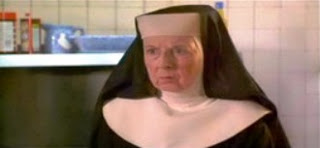
I love the great character actress Mary Wickes, who was the nun who was replaced by Whoopi Goldberg as choir director in “Sister Act,” the nurse who was “a treasure” opposite Bette Davis in “Now Voyager,” and the hotel staff who operated the switchboard in “White Christmas.”  And it was a very great pleasure to read the new biography about Wickes by Steve Taravella called Mary Wickes: I Know I’ve Seen That Face Before, the meticulously researched and beautifully written story of her life on and off camera.  As an actress, she had impeccable comic timing.  She appeared on Broadway, on radio, and on television as well as in the movies, appearing with some of Hollywood’s brightest stars.  Off-screen, she was for decades the closest friend of Lucille Ball.  Taravella generously took time to answer my questions about the book.wickes nun
How did you decide to write about Mary Wickes?

As a former journalist who likes researching people’s lives, I always thought I’d enjoy preparing a proper biography some day, though certainly I never had Mary in mind. When I found myself moving from San Francisco to Washington DC without a job lined up, I decided this was my opportunity to try. Since I’d often considered writing a magazine profile of Mary, I turned to her life first, to determine if it might be interesting enough to justify a book treatment. I mean, would readers find her life genuinely intriguing or was my interest in her unusual?  I quickly decided there was indeed a book in Mary’s story. It wasn’t generally known that she had been the original Mary Poppins, the animator’s model for Cruella de Vil, and a member of Orson Welles’ groundbreaking Mercury Theatre. There were interesting stories in each of these things – and many more, like her close friendship with Lucille Ball.

I began in spring of 1998, giving myself a year to research and write full-time. I was naïve to think I could finish this in a year. Twelve months became thirteen and, not wanting to incur debt to complete this, I returned to the workforce. My new job required frequent travel to the developing world – mostly Ethiopia, Kenya and South Africa, but also Uganda, India and other places – so the book lost some momentum.  I’d pull it out on vacation to work on a chapter here or there, but was far from done.  When I took a job with the UN in Italy four years ago, I decided that if I didn’t finish the book now, I’d never complete it, and I didn’t want all that effort to have been wasted. So my time in Rome became extraordinarily single-focused – not the typical ex-pat experience.mary wickes cover

Your breadth and depth of research is remarkable.  What or who was toughest to track down?

Hardest to track down were former child stars, who often leave the business, form social circles outside the entertainment industry and, especially with women, build lives under different names. I had great trouble finding Anne Whitfield, who played a teenager in White Christmas and would have been the only surviving member of the film’s principle cast. Finally, after several hundred pages in a Google search, I found her name in a PDF of promotional materials for an “old radio days” festival in the Pacific Northwest in the 1980s. I tracked down the organizer of the event, who agreed to pass my contact information to her husband. When we finally spoke, Whitfield was very helpful. She long ago stopped performing, became a grandmother, and worked in environmental programs in Washington State under her new last name, Phillips.

One of the biggest stars quoted in the book keeps her personal address and phone number private. My requests to her public PO box went unanswered. Since I knew the city she lived in, I searched public records available online in hopes that her name would be recorded with her residential address somewhere. I discovered a recent permit approval for a home construction project under a name that jumped out at me – that of the actress’ long-deceased mother. Female stars of a certain generation sometimes used their mother’s name to preserve their privacy (just as Mary used her grandmother’s name (Mary Shannon) whenever she was hospitalized, and I recognized this name from the actress’ own memoir years before. I sent a letter by International DHL to this address, and received the reply I needed.

In the end, I interviewed almost 300 people. In some ways, I had an easier time than expected because people sort of figure, If he’s going to all this trouble about Mary Wickes, it’s got to be for a legitimate effort, and they agree to cooperate. If I’d been preparing, say, yet another biography of Elizabeth Taylor, I don’t think doors would have opened so easily.

What surprised you the most in what you found out?

That for her entire life, Mary knowingly kept a man in Ohio from learning that they were first cousins. Discovering this episode of her life was stunning. Even though Mary had very little family herself — she was an only child, as was her father, and her mother had only one sibling – she always professed great devotion to family ties and family history. Mary knew everything about this man, one of her only two cousins – yet he knew nothing of Mary Wickes until I reached out to him for this book after her death, showing him personal family papers of hers that were clearly about him. This was a powerful family secret for her, and a painful one for him, even in his 80s. For instance, his whole life, he was unable to learn where his mother was buried; meanwhile, Mary visited her gravesite often.

She appeared in one of her signature roles, the nurse in “The Man Who Came to Dinner,” on stage, film, TV and radio — which did she prefer and why?  Why was that role one of her favorites?

No doubt, she preferred the stage version. The Broadway run was her big break, gave her steady, high-profile work for almost two years, brought her to the attention of casting directors and pushed her into social circles she wouldn’t otherwise have been part of. It cemented her as a performer who could deliver – and it reassured her that she could in fact make it as an actress. She got one of the show’s longest, loudest laughs every night. On the other hand, a TV version 30 years later was a disappointment for all involved, even with Orson Welles as star and the Hallmark Hall of Fame people behind it.

What was the change made from the theatrical to film version for “taste” reasons?

We forget today the power that Hayes Office censors once had over film releases. In this case, the play’s central character – arrogant, abrasive and over-bearing – refers to Mary’s character, a nurse, as “Miss Bedpan.”  That was changed to “Miss Stomach Pump,” which censors felt would offend filmgoers less.

Mary Wickes worked with a range of top directors and actors.  Who did she admire most? 

She adored George S. Kaufman, the playwright who also directed her on stage often. The two of them developed a strong rapport; he didn’t just understand her comic gifts, he celebrated them. The director George Seaton (“Miracle on 34th Street”) was another favorite. Years later, she also really admired Mike Nichols, who directed her in “Postcards from the Edge” with Meryl Streep and Shirley MacLaine. Nichols won her over at the start by hiring her without asking for an audition or reading of any kind; this was during a particularly dry spell in her career, and she never forgot the gesture. As to performers, it’s hard to know who she most admired because Mary spoke so little about work. But she did on several occasions mention the respect she had for Bette Davis; no doubt Mary admired Davis’ directness on the set. They worked together in three films and one television show.

She was a close friend of Lucille Ball’s.  What made their friendship so enduring?wickes and ball

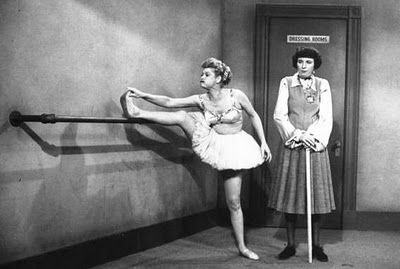
Yes, Mary was inarguably Lucille Ball’s best friend for some 30 years, and was virtually a member of the family. Both women were both bold and direct and a little ‘in-your-face.’  They both loved to laugh, and neither had much patience for ineptness. Because they started working about the same time (Mary was 14 months older), they had experiences in common. Lucy appeared in the film version of Stage Door, while Mary appeared in the original Broadway production, for which Lucy had auditioned.  They had deep affection for each other, evidenced by never-before-published letters that I excerpt in the book.

How did she get Cary Grant’s trunk?

An interesting story. In the 1930s, while Mary was a young amateur performer in St. Louis, an actor performing in a touring stage show there got a film contract offer and left quickly for Los Angeles. His name was Archie Leach and, when he left, he gave his theatrical costume trunk to a friend of Mary’s, Clifford Newdahl, who asked Mary’s family to store it for him when he entered World War II. It sat in their basement until after the war, when Newdahl decided he no longer needed it. So the trunk became Mary’s . . . and Leach, of course, became Cary Grant. Mary loved the trunk and made great use of it, like during her national tour of Oklahoma! in 1979.

What problem did she face on the set of “The Trouble With Angels?”

This was one of the few moments in her career where she let others down, and she no doubt agonized over it. Playing a nun at a Catholic girl’s school, she was to jump in a swimming pool in full habit to help two young girls flailing in the water. Mary had never learned to swim, so producers arranged for her to receive lessons at the YMCA in advance. The day of the shoot, without any warning to producer or director, Mary refused to enter the water, saying she was afraid she’d drown. In reality, she’d never showed up for the lessons that Columbia paid for – not out of fear of drowning, but out of fear that others would learn from her swimsuit and swollen arm that she had undergone a mastectomy. Mary went to great lengths to hide her breast cancer. So this consummate professional made a conscious decision to let her co-workers down rather than risk revealing her condition, since the production was now forced to hire a stuntman, incur additional costs and delay shooting. Both the cancer and the stigma surrounding it in the 1960s shaped many of her interactions with people later.

What role did her faith play in her life?

Mary’s faith was profoundly important to her. To her, church was not a place merely to spend Sunday mornings; it was the very center of her community. She was completely engaged in the life of her church (All Saints’ Episcopal Church in Beverly Hills, Calif.), serving on various committees, helping to organize special events, and even teaching Sunday School when in town. More than this, Mary put her faith into practice. She had a strong sense of service to others that was rooted in her faith. She was a longtime hospital volunteer in Los Angeles. She did not just providing comfort to patients, keep them company, arrange interpreters or assist the chaplain, but advocate on patient care issues to management. She spoke on public occasions about the importance of volunteerism and about her faith, often citing a verse from First Corinthians about having faith strong enough to move mountains not being enough without charity.


Related Tags:


Actors Books Great Characters Interview Writers
THE MOVIE MOM® is a registered trademark of Nell Minow. Use of the mark without express consent from Nell Minow constitutes trademark infringement and unfair competition in violation of federal and state laws. All material © Nell Minow 1995-2026, all rights reserved, and no use or republication is permitted without explicit permission. This site hosts Nell Minow’s Movie Mom® archive, with material that originally appeared on Yahoo! Movies, Beliefnet, and other sources. Much of her new material can be found at Rogerebert.com, Huffington Post, and WheretoWatch. Her books include The Movie Mom’s Guide to Family Movies and 101 Must-See Movie Moments, and she can be heard each week on radio stations across the country.

Website Designed by Max LaZebnik