Thomas Horn, Jeopardy champion and star of “Extremely Loud and Incredibly Close,” appears in this week’s “Space Warriors.” The movie premieres on Friday, May 31st at 8/7c on the Hallmark Channel and co-stars Ryan Simpkins, Danny Glover, Dermot Mulroney, Josh Lucas, and Oscar-winner Mira Sorvino.
Thomas Horn was nice enough to answer my questions:
What’s the scariest part of Space Camp?
I used a simulator called the multi-axis trainer that spins riders’ bodies in multiple axes, as the name suggests. Its a little bit nauseating and scary to watch, but it is less unpleasant than it looks.
What’s the most fun?
Conducting the space mission is definitely the most fun part of the camp, because you get to put what you have learned into practice. You get a feeling for what it is like to actually operate a spacecraft
If you were an astronaut, which job would you want?
I would want to be the mission commander, because they get to be in charge and make the final decisions on the spacecraft. It is the most difficult job, but also the most important.
What are the most important things an astronaut has to know?
As far as I know, an astronaut needs to be very familiar with physics and chemistry in general. Astronauts also have to know a large number of ordinary and emergency procedures.
What are the most important qualities an astronaut has to have?
An astronaut has to be clever and decisive, but also patient. They have to be hardworking, physically fit, and good team players. For my character in the film, this last requirement is the hardest.
What surprised you the most in what you learned about the space program?
I was really surprised when I heard that the astronauts returning from the Apollo missions had to land in the ocean, but couldn’t aim themselves very well, so they sometimes had to wait for hours to be picked up by a ship. That’s bravery.
What did you and the other kids do to have fun while you were making the movie?
We did a lot of swimming in the hotel pool (temperatures were 90+ for all but 2 days during the shoot), and we saw a lot of movies, including two in which my co-stars acted!
What’s the best advice you ever got about acting?
Be natural.
What makes you laugh?
Jokes are great, but the funniest moments are always accidental.
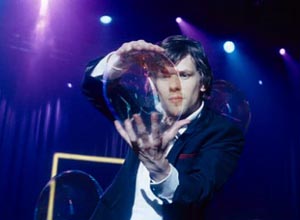
Jesse Eisenberg (“The Social Network,” “The Squid and the Whale,” “Rio”) stars in one of the most entertaining films of the year, “Now You See Me,” the story of a group of magicians who rob a bank. It co-stars Morgan Freeman, Michael Caine, Isla Fisher, Mark Ruffalo, Dave Franco, Mélanie Laurant, and Woody Harrelson. It keeps you guessing — and smiling — until the very last minute. Eisenberg sat down with a small group of journalists in Washington, D.C. to talk about the film. He has an electric intellectual energy, very quick, very smart, very witty, with much of the intensity he brings to his roles, and it was fascinating to see him engage so wholeheartedly with our questions with such boundless curiosity that he came up with questions of his own for us. He made us immediately feel like we were part of a conversation that we wished could go on all day.
“When I first read the script,” he told us, “I wanted to play my character more like David Blaine. My character is like a street magician in the script, so I thought, very casual, dress like regular clothing. But the director wanted to have a more flashy style. So the whole aesthetic for the magicians is like they’re these cool magicians of the future and they do tricks that could be done in five years. That was actually the rubric that we used — all this magic could be done in five years. It’s actually not possible now, but it will be possible, with the governing laws of the universe, these could be done.” He talked to us about trying to learn to perform some of the tricks himself. “I play a character who is one of the best slight of hand magicians in the world, so he would have been practicing for 25 years and I had just four weeks to practice before shooting and then four months while we were shooting to perfect the tricks that were going to be done at the end of the movie. So, I learned some basic slight of hand tricks, like a snap change. I could so some smaller, less complicated, less impressive tricks fairly well. There’s a scene where I’m handcuffed to the table, and there are these twin brothers named Dan and Dave Buck, and they are the best card flourishers in the world, just incredible. They can make a cascade or waterfall and the cards look like they’re tied together. It’s beautiful. So they superimposed their hands over my body in that scene. So, there are a lot of computer effects, but it’s not because the magic can’t be done; it’s because we couldn’t do them. Where I’m shuffling those cards, they superimpose their hands over my body, but it’s magic that can actually be done because they’re doing it live.” If he could do any style of magic tricks, he would do close-up magic, slight-of-hand. “It’s the most impressive thing. Also, I bite my nails, and probably if I did card tricks I would have better nails.”
Eisenberg talked about playing a cool, confident character, a contrast to some of his other roles, where he plays an insecure or nerdy role. “They sent me the script when I was appearing in a play and had a lot of stage fright performing every night. When I read the script, I thought that this character feels more comfortable on stage than anywhere else. He’s so confident. And I thought this would be a good way for me to challenge myself to play a certain kind of character that might be therapeutic in a way and make me feel confident on stage and in my personal life. And it worked — while we were filming I was feeling really good about myself and had a four month break from my own dumb neuroses. I was sleeping, I was eating — I had an avocado one day! It was a fun experience. It wasn’t difficult for me. Whenever I take on a role, I find it easy to get into the role. Once I’m there, there’s like little challenges along the way.” He does not worry about being type-cast. “Sometimes, when you’re an actor, you get thought of for certain things and that’s what you end up playing. And I don’t think that’s a bad thing. If you can play one thing well, you’re a successful actor, because most actors can’t play one thing well.” But he says he is glad he is being sent a greater variety of roles now. When he was not happy with what he was being sent, he wrote a play to create his own part.
He said he thought his character in this film “had an air of superiority when he was five years old and then found himself alone in his bedroom and had a deck of cards and found he was good at it and liked doing it and isolated himself and became focused on his work and became great at what he does and is now the best in the world. And then he gets teamed up with these three other characters who also felt like they were the best. And now they’re all kind of competing with each other but they have to work together. I think he feels kind of annoyed by having to work with them.” He talked about working with the cast members who play the other magicians. The actors and their characters have very different skills and styles. “I knew Woody Harrelson, and he likes to bring his own sensibility to roles, even dramatic roles, and I like to do the same thing. But I didn’t realize how funny Isla and Dave were. Most of the time, the characters are talking to each other, but we have three big performances. We’d film them over the course of a week, sixteen hour days, very long days. It gets repetitive after a while. Because we all had a sense of humor and we had an audience that was a very patient group of New Orleans extras, we would really perform for them. A lot of our off-the-cuff remarks and our personal chemistry made it into the movie. That came just out of trying to keep each other entertained. I suppose there’s a version where the actors try to entertain each other and it’s alienating or annoying to the audience. But we had a good director who knows how to control the set and good actors who know when to stop trying to be funny and do the scene for real and push the plot forward and do the things you need to do for the story. The movie is better for it.”
He was impressed with the “visually arresting” style of director Louis Leterrier, “a great visual filmmaker,” who kept a lot of energy in the performance scenes, making them feel like live shows. He described how, in the one set in New Orleans, “in the first shot, the camera’s on a cable and it circles around us and there’s maybe a three-minute shot, which in movie terms is epic, and then goes to a close-up of Morgan Freeman.”
He said he’s getting “a little better” at feeling that he knows what he is doing. He had just finished a play , and he said that even after the 79th performance out of 80, he still agonized before each curtain. So did his co-star, Vanessa Redgrave. “She’s like the greatest actress in the world. And both of us would get there at 3 for an 8:00 show and start panicking. I thought, ‘Maybe it does get easier,’ and then I met her and she is still worried about making sure it’s right. I asked my father about this, and he said, ‘Maybe if you care about what you do, then it will always be hard because you set a high standard for yourself.’ I still feel very nervous. That said, when I was playing this character, I felt really confident. I think the personality of the character starts to infect how you feel about it. In the play I just did, the character is a very angry guy who hates himself, so I was feeling all those feelings, and Vanessa’s character was this tortured older woman, so she was maybe feeling that, too. I supposed if we were playing really happy, confident people who liked ourselves and each other, we might have had a better experience and gotten to the theater a little bit later.”
It is important, he said, to work with people who are “trying to take it seriously, treating it with respect and not just get trying to get something made or make money. That’s actually kind of a rare thing. Even a movie like this, a big-budget movie, when I first met with Louis Leterrier, I asked him what he was thinking of for the acting and he gave me all these French art films, with the most dramatic, terrifying acting I’ve ever seen, and I thought ‘This is a great opportunity, to be in a bigger movie where someone really wants to see good acting, to do your job well.'”
Interview: Scott McGehee and David Siegel of “What Maisie Knew”
Posted on May 23, 2013 at 3:59 pm
“What Maisie Knew” is a touching, beautifully acted new movie starring Julianne Moore and Steve Coogan as a couple breaking up but the story is seen through the eyes of their little girl. I spoke to the directors, Scott McGehee and David Siegel, about the film. Remarkably, though it is set in the present day and feels very contemporary, it is based on a book written over 100 years ago by Henry James.
I have to begin my asking you, how you got that amazing performance out of Onata Aprile, who plays Maisie.
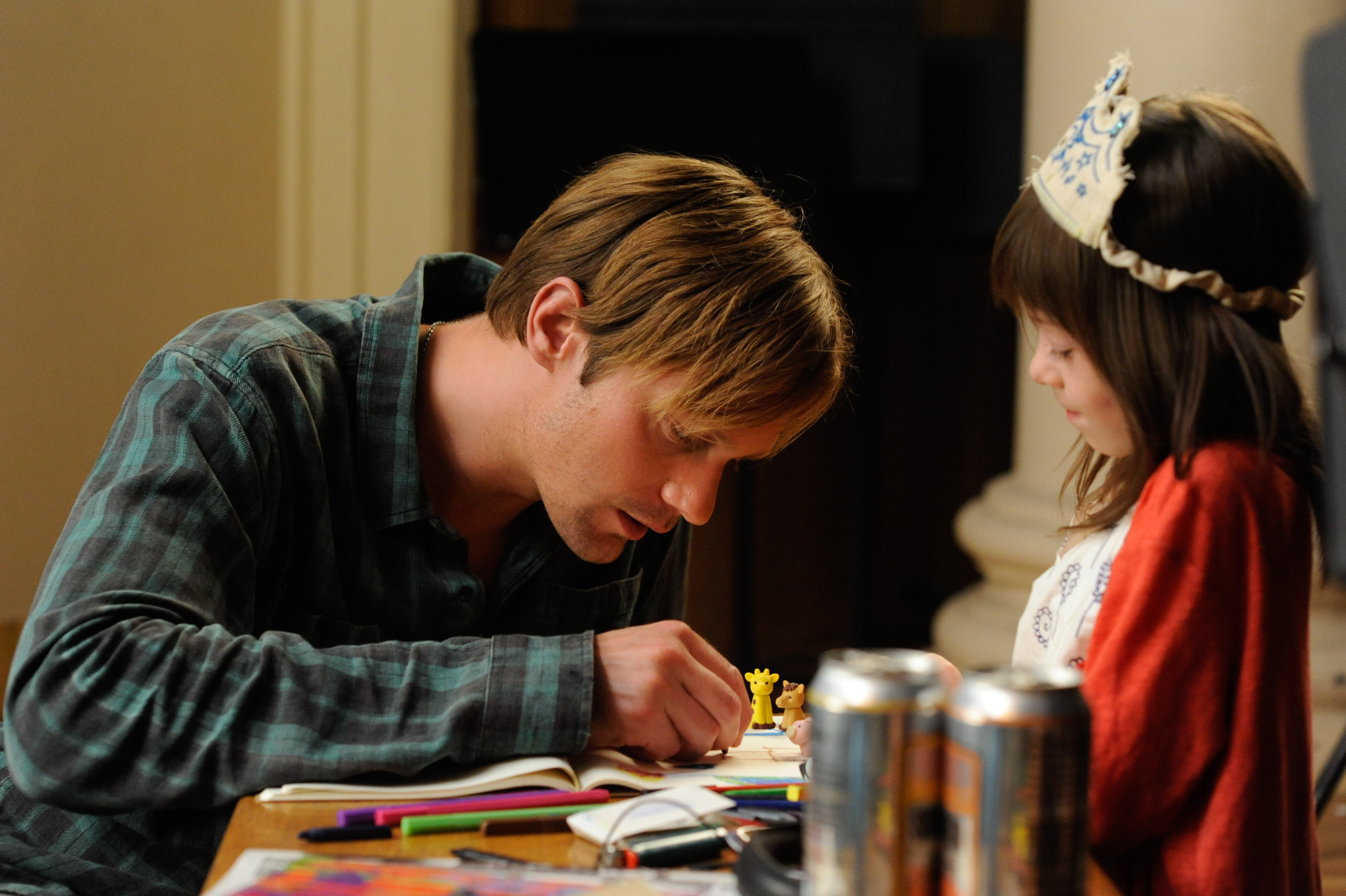
DS: With pins and…you know I’m just kidding. She really is extraordinary. We’d love to be able to take more credit for it then, then we really can because she really has this incredible ability to just live in front of the camera. To shut it all down and just give her a scenario and she could really just, just sort of be in it, to live it as I was saying. When we were casting, we knew we needed a child who could be, with her face and close up to be able to convey a sense that you were getting into her head, that there was an interior life there that you were sort of understanding on an emotional level. Then boy did she deliver in spades. The only time that we’ve ever had an actor in one of our films whose had that kind of responsibility was Tilda Swinton in “The Deep End, and you know, Tilda’s a forty year old actress, very trained and very cerebral. Onata is a six year old child who wants to play with her horsie.
SM: Our only handicap, honestly, was her bedtime. We talked a lot about how to explain the story of the movie to her in a way she would understand. Her mother, Valentine Aprile, is an actress also, and really has a great relationship with her daughter. She kind of did the heavy lifting in terms of preparing Onata for the day’s work and, you know, kind of making sure she was comfortable with the emotional terrain of what the story was. And then the other actors also, Julianne Moore especially were all good about making sure Onata was comfortable if they were going to do a scene where they were screaming, or whatever. They’d say, “Okay Onata, I’m going to be screaming but I’m just pretending, and if you get uncomfortable let us know.” There was a scene I remember when Julianne had to cry and after she finished Onata was kind of giggling because she thought it was interesting that Julianne’s pretending went so far. She was very user friendly that way, if that makes sense.
The story seems so completely contemporary. Tell me a little bit about bringing it up to date.
DS: You know it obviously starts with the writers, Nancy Doyne and Carroll Cartwright. There was a lightness of touch to the script that kept it from being maudlin. We were really afraid that there would be a kind of florid melodrama. Before reading the script that’s where our anxiety was. Their idea of telling the story in ellipses really also caught our eye from a film making perspective. That was really interesting and a great challenge. And it was also the thing that made it start to feel relevant and contemporary. It allowed us, the film makers, to play with it cinematically, to play with the fundamentals of film making, where the camera is, how high it is, what comes in and out of the frame and what she hears, what she doesn’t hear, because it’s all coming from her perspective. It’s a real treat to get to play with the blocks, as opposed to play with the digital blocks that are, you know, thicker, louder and you know, more violent. We had heard anecdotally or we read anecdotally that James was inspired to write this story because he had heard at a dinner party of a couple that had chosen in a divorce settlement to share custody of a child, and he thought it was the most ridiculous thing he’d ever heard. And so the book is kind of darkly satiric and it takes place over a much longer period of time in Maisie’s life. And now joint custody being the most common thing in the world. But still it is interesting how many people who see the film identify with the struggle that the child endured.
It’s a very different role for Julianne Moore. She plays a fading rock star.
SM: We took her to a Kills concert. The Kills’ frontwoman, Alison Mosshart, was kind of a style model for us for Julianne’s character. She said that the singing aspect of this character was the thing that scared her most. But it was also the thing that attracted her. She didn’t shy away from something new and challenging. She could, just kind of jump in head on, and it was really inspiring.
What did you want from the movie’s score?
DS: The composer was Nick Urata, who did the music for “Little Miss Sunshine.” He’s the front man for a band called DeVotchKa, so he’s a player himself. The score needed to kind of feel like Maisie’s world. There’s only occasionally any classical underscoring. Most of the scoring is kind of just, a kind of filling up of the kind of our world, with music. He really got on board with that, and thought it was a great idea and we, we got the idea early on in cutting that we thought a voice would be good. A voice would help connect us to the child.
The scene with Steve Coogan first asking and then un-asking Maisie to go to England with him is heart-wrenching.
DS: He was our first choice for that role and that doesn’t happen often enough. He’d handle the emotions really well, we thought, and he’d be a little bit funny at times and bring a bit of levity to the proceedings that we thought would be really welcome. And we just lucked out that his agent had read it around the same time and also thought of him for it. Steve’s a classically trained actor and really likes to do the dramatic stuff and doesn’t get that many opportunities. We were more than happy to give him one.
What was the most fun part of making the movie?
DS: We had such a good vibe on the set of this film. We have the lucky opportunity to work with several long time collaborators like Kelly McGehee, Scott’s sister, who’s been our Production Designer forever and Giles Nuttgens who shot and Stacey Battat, who did the costumes, and a lot of the seconds and thirds on the crew were great people. It was a pleasure to show up every day. And it doesn’t happen on every movie and, and you know you could just feel it. And we had a little six year old who just wanted to be there. She had so much enthusiasm and that never waned… Seven weeks, five days a week, a dozen hours a day. That was amazing.
Interview: Directors/Writer/Star of “Desperate Acts of Magic”
Posted on May 17, 2013 at 8:00 am
Magic is in the air. And on the screen. Two big-budget films with some of Hollywood’s biggest stars playing magicians are being released within a few months of each other. In March, we had the silly comedy The Incredible Burt Wonderstone, with Steve Carell and Jim Carrey. Coming up is the enormously entertaining “Now You See Me,” with Jesse Eisenberg, Woody Harrelson, Morgan Freeman, and Isla Fisher.
And there is also a very nice little indie romantic comedy, with magicians played by real-life magicians, called Desperate Acts of Magic. I enjoyed it very much, and was very glad to get a chance to speak with Joe Tyler Gold, who wrote, produced, and stars in the film, and his co-director, Tammy Caplan.
Tell me how this movie came about.
Joe: I was a magician for many years and I did tons of kids’ birthday parties and entered lots of magic competitions. We were looking for something we could produce on a low budget. I had a lot of magician friends and there was a magic convention in San Diego happening in 2010 that we knew was coming up, so we went at it and put a script together and there you go.
Tammy: Joe was trying to figure out what we should work on next, what he should write next. I said to him, and this is based on an acting exercise that we know, “If you were to write about something that was deep and personal to you, very meaningful, what would you write about?” And he talked about this one event that happened at this magic convention that he did and the impact of that event always stayed with him and so I said, “That’s what you should write about, that’s what you should go with.”
Joe: Back in 1998 I competed in a magic competition actually with that very act, the act that I do in the movie. We didn’t get into the finals. They said there wasn’t enough magic but that they liked the act a lot and they asked us to perform on the evening show. The girl that I was doing the act with at the time was an actress and she wasn’t my girlfriend and she went off with a new boyfriend to a bed & breakfast. And so the performance actually never happened. And so that was always something that was kind of a regret of mine…
Tammy: Because at the time in Los Angeles at this convention it really was full of the cream of the crop of the magic community and he kind of regrets that this could have made Joe’s career really go along better. So we decided the film should have a happier ending.
Well that’s the beauty of fiction, isn’t it, that you can give yourself a happy ending.
Tammy: Yes and this is sort of life imitating art because the movie itself is a happy ending. I do think it’s kind of interesting the way we shot it because we shot it on such a low budget and because Tammy and I took on so many of the roles of the crew. We shot a day or two a month over 18 months. We kept our day jobs and each month we would save up the money to pay for the next shoot day. And that also allowed us to very carefully craft each shoot day and figure out how the magic was going to be done. And teach Valerie Dillman the magic since Valerie, who plays the role of Stacy Dietz is not an actual magician. She learned magic for the role.
What do you think people will be surprised by, when they see it? What will they learn about the magic community?
Tammy: I think one thing is the way we portray female magicians because there never has really been a magic movie with a character, a fictional magic movie, with a character of a female magician. And you know when you see characters on TV, women playing doctors, lawyers, teachers, musicians, then it feels natural in the real world, to see these types of people. You don’t think twice these days when a doctor is a man or a woman. But when you think of a magician, you think of a stereotype that comes up and it’s always a guy, sometimes very stereotypically, in the tuxedo with the rabbit in the hat. But magic is a really beautiful art form. It takes as much skill as playing an instrument or dance. There is a great way of telling stories through magic. Once there are more women in magic, I think you’ll see more interesting stories and I think it’s really going to help the art of magic as a whole.
Do you think there are still a lot of barriers to women in the world of magic?
Joe: Yeah, I do. I mean, it’s opening up and there are a lot of women in magic. There really are. But one of the difficulties is it is still very much a man’s profession. And you know I mean the Magic Circle in London only recently started to allow women into their organization. I just think that it’s more difficult to gain respect in the world of magic as a woman. And that there is an assumption when you see a woman involved in a magic act, that she’s an assistant. They always have to work a little bit harder to convince anybody that they are actually a magician. I almost think that the word “assistant” is kind of ridiculous. When you have a play and you have a couple people in that play who might have smaller roles you would never call them something else. You know, if they have ten lines in the play they’re still an actor in the play and they are in the program and they get a bow at the end. It’s strange to me that if two people are performing an illusion, and one is sawing the other in half, that one is automatically in some sort of a superior position than the other. And even stranger, and I mention this in the movie, is that when you do have the woman sawing the man in half, they still call it “the Assistant’s Revenge.” She’s sawing the magician in half and she’s still the assistant.
Tammy: I mean it’s just weird that …the fact that you even have to call a female magician, “a female magician.” You know, you don’t call a painter, “a female painter” or “a male painter”. It’s just “a painter.” And oftentimes, what’s so strange is that a magician will have a female assistant and maybe the magician is doing some act where, I don’t know, let’s say he’s making fun of the fact that, you know that he’s this middle-aged balding guy, let’s just say. But then there’s the assistant comes on and she’s this 19 year old in a skimpy dress and that has absolutely nothing to do with his act. It’s almost as if there is some disconnect story-wise, between what the magician is doing and what the assistant is doing.
One of the things that I really enjoyed about the movie is the way that there was a story to the act. The audience in the movie and the audience at the movie both wonder if the magicians are really fighting.
Joe: I always like telling stories with my magic and many magicians do this. That’s one of the reasons I really enjoyed making the movie is that it really allowed me to tell a longer story through magic. Because I tried to use the magic to advance the story and incorporate it into the story as much as I could. And it can sometimes be difficult to do that in a 6-minute act.
One of the things that I thought about as I was watching the film is that you had a very big challenge in that difference between a film and a live performance. We’re very used to “Bewitched” with Samantha Stevens twitching her nose and something appearing or disappearing on screen. You had to really do all those tricks and persuade the audience that you were really doing all those tricks. How did you stage the tricks so that we know they were really being performed and were not special effects?
Joe: It’s a challenge for sure, because and Harry Potter and all the special effects movies, people just assume that it is effects. And we contemplated putting something at the beginning of the movie, you know, “There are no camera tricks involved.” One thing that we did was, we tried not to cut away in the middle of the effects as much as possible except for story. And we tried to keep people’s faces and hands in the shot at the same time.
Tammy: There’s very few places where you are just seeing hands alone and not the person. It was always important to us and sometimes it’s a bit of a challenge to be able to get the person’s face and the trick because you need to be able to see what’s going on with the trick. So we really want to be able to see what the actor was doing at the same time.
Joe: We also populated the movie with a lot of real magicians. Most of the cast were actual magicians. Now, not everybody is going to know that, but you know, those who do, will know that those are real magicians and hopefully they’ll understand that they are really doing legitimate magic. There’s a lot of slight of hand in the movie. When you see a movie and Harry Potter is flying around on a broomstick you know it is special effect. But when you see slight of hand, you frequently will go, “That must be dexterity.” Once you know that, you kind of prove to the audience that you are doing slight of hand. Then later when you do other types of magic, hopefully they go for the ride and assume that it’s also legitimate magic.
Tammy: And also because we are a lower budget, independent movie you know that we’re doing the magic for real. We didn’t have the money to do the Harry Potter special effects.
What got you interested in magic to begin with?
Joe: I was interested since I was 8 years old, but I started performing probably about 13. And you know, “Burt Wonderstone” has it right. A lot of guys get into magic to, you know, to meet girls, you know. I don’t know that that was the motivation. But you know, it’s a fun thing to do. When you’re a teenager, it’s nice to kind of feel empowered and maybe that you know something that other people don’t know. That eventually evolved into being at a party and not knowing what to say and having an icebreaker. I would stand around in college just riffling a deck of cards.
Tammy: Well, you meet people in the magic community. Joe met people at magic camp that are in the movie that he’s known for years, practically his whole life.
Joe: It’s true, it’s true. I attended Cannon’s Magic Camp which is actually where I met Jonathan Levitt who played the role of Steve and where I met several other cast members, as well. And these are friendships that have lasted my whole life. And so that was something that really fed the interest for me. As a teenager I was the editor of a magic magazine and I would go to magic conventions and I would go to Magic Club meetings. So you know, certainly I wasn’t meeting girls at a lot of these places. It must have been something else. When I sent out my college applications, my essay statement was, “I like to make people laugh.” And that’s what I always really enjoyed is making people laugh. And I continue to try to put a lot of humor into my magic and into movies that I’m making.
Who are your magic idols?
Joe: I’d say Penn & Teller, for sure. What they do is so unique and also they always have a strong point of view and a statement that they make. Female magicians, I love Tina Leonert. Oh my gosh! Google her and take a look at her act. It’s so beautiful. She always tells a story.
Interview: Candace Cameron Bure of “Finding Normal”
Posted on May 16, 2013 at 8:00 am
It was great to catch up with Candace Cameron Bure to hear about her new film, “Finding Normal,” premiering this week on GMC-TV. She plays a brilliant type-A surgeon who is completely focused on status and her career until she gets stuck in a small town and sees a different way of life.
What is the definition of normal?
Is there one. I don’t know. Normal is different for everyone. For me finding my normal I think it really is about finding balance in life because I’ve lived in a lot of places and the truth is I know who I am and where I like to live. I am a city girl and I do love staying busy. And I love working and I love my family and my children and my husband and all those things. I don’t think that for everyone that it doesn’t necessarily mean that you have to go out and move to the country and live rural life to find what’s important to you. but it’s about being able to stop and smell the roses or make sure that whatever you are doing, whether you are working or you’re with your family or you’re spending time on your own that you’re really connected in those moments. And just enjoying them. Every moment of what you’re doing.
Tell me a little bit about your character and about the story.
I play Lisa Leland, an LA doctor who is moving to the Hamptons with her doctor boyfriend. And she just cares about herself, her life, and her own happiness. And all the stuff that she can have. After driving to the Hamptons she gets stuck in this little town with real people who are doing real life in a hardworking kind of way. And that’s where she ends up finding herself and finding that there is more to life than just her own selfish desires.
So in a way you were experiencing some of what your character experienced in exposure to small-town life.
I totally was. We all were.
I understand it was shot in Louisiana.
Yes, and we had a blast. It was in this little town of Columbia. The population was just over 300 people. The first time we drove through it even I was like, “Is this a real working town?” Because it was like a half a block. The whole town. It was so tiny and just in the middle of nowhere. I stayed at someone’s house. It was like there weren’t even hotels around. But the town was so excited to have us and to have a film crew in there.
How long were you there?
We shot this movie very fast. We shot it in 12 days. Which was insane. I have never done a movie that quickly. We basically shot two six-day weeks and just produced a great little movie.
Did you think about what your characters background might have been? What her family might have been? To make her think that the things were important that she thought were important?
I did. I thought a lot about that because certainly your family has an influence on you and in what you believe to be important. And so I figured that this woman is so driven in her career so that she could have major luxuries in life. You know probably she had or could have had parents that had the same type of motivation that maybe didn’t give her the love that she needed but just pushed to drive her to be competitive and maybe she was just bossy her whole life. Maybe that’s how her parents expressed love to her. Or it could be the very opposite where she didn’t come from much and maybe it pushed her into overdrive to be able to accomplish things. Maybe she had lazy parents and there was something in here that went “I don’t want to be this way.” So yes, as an actress I certainly had to put in a backstory. I chose the first on for her. I certainly gave it thought.
What do you do to teach your children, based on what you just said, to not be like those parents and to teach your children who they are?
Well you know we live in LA. I know that my children have so many luxuries that so many children around the world do not have. What I do to balance that is to make sure that we are serving, volunteering and doing charitable work and just helping wherever we can. And take all of those opportunities. So whether it’s at school or whether it’s through our church. I mean even this Saturday we are going with our church and we are putting on a carnival for union rescue mission which houses homeless families. So I take every opportunity I can to bring my children and go serve places. And I think that certainly shows them a perspective of their life and how other people live and builds compassion in their hearts. And gives them the tools to be able to love others and serve others. And that’s a really great feeling.
The last time I talked to you I asked you for a bible verse and you gave me a beautiful one Philippians 1:6. I wondered if you wanted to share a different one this time.
Well one that has kind of been on my heart has kind of been my life verse. Its Esther 4:14. And that it probably the most known verse from Esther. And it says “for if you remain silent at this time, relief and deliverance for the Jews will arise from another place, but you and your father’s family will perish. And who knows but that you have come to your royal position for such a time as this?” And that verse has stood out to me in terms of where I have been put in this industry right now. And if I don’t speak up or if I remain silent then God would not be able to use the things, the tools or the gifts that he has given me to use it for his purposes. So I feel like I kind of cling to that verse in terms of being outspoken about my faith and to be a proponent in family programming. To just keep good things out there on television for families to be able to watch and it encourages me to continue to just pick and choose the right projects that are positive and have good messages.
“Finding Normal” premieres on GMC TV Saturday, May 18th at 7pm, 9pm and 11pmET.