Interview: BerNadette Stanis of “Good Times” and Gospel Musical Behind the Pulpit

Posted on February 18, 2013 at 3:59 pm
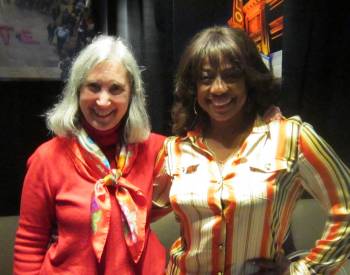
It was very exciting, as a long-time fan of “Good Times,” to get a chance to interview BerNadette Stanis, who played Thelma.  She was a teenager herself when she was given the role.  She made me feel like an old friend and it was a lot of fun to talk to her about going from living in the projects to starring in a hit television series about a family living in the projects, about meeting classic movie stars Mae West and Loretta Young, what she learned from her TV mom, Esther Rolle, being a caretaker for her own mother with Alzheimers, and her current role in the gospel musical “Behind the Pulpit.” To see the tour schedule and buy tickets, check here.  To bring them to your church, contact them here.

Tell me about the play.

I play Deborah, the first lady of the church. And my husband the pastor is so involved in this church that he’s forgetting about his family. And his son. And so we have those issues in the church and all the little stuff that’s going on. It’s a real fun play. It’s a very good play.  Lots of singing. You know the gospel thing.  Those gospel people can sing, baby. I can do the acting and they can do the singing.

And what do you hear from the fans of the play? How do people respond to it?

They really like it. They are intrigued and they are astonished by what it says. Because my son in the play is gay. And I love him. He’s my only child. I love him to death. He can do no wrong. And his father is not having it. So you have that going on. And being a pastor. And how does he tell his church members my son is gay. So he doesn’t go along with it. And gives the boy a hard time.

That’s very difficult.  What do you hope people will take away from the play?

Well what I would hope that they take away from the play is that sometimes our children are not what we want them to be or they don’t turn out  the way we think they should turn out because it reflects badly on us because were pastors or were doctors or were whatever. But it doesn’t happen for them and we have to learn to embrace them as human beings and love them as their parents. Even though they are going through things they still need our love.  And if they feel they don’t have the love and they are going through stuff sometimes it becomes overwhelming. And they can’t handle it.  Pastors do have a lot on their shoulders because they are obligated by God to lead in the right way according to bible. Then you have these things that may come up, you have a child that’s wayward, you may have a child that’s gay, what are you going to do with that? I think Jesus would love them anyway.

We all deal with that work/life balance.  You have to deal with that work/life balance. You’re a mom.

My mom passed in 2011 from Alzheimer’s. I had been a caregiver for 8 years. So I was caregiving and promoting a book at the same time. I had written a book in ’06. She came to live with me in ’06. And I had a ten year old daughter at the time. She’s 18 now. But I’m just saying that was living the sandwich life. It was like balancing mom and balancing my little 10 year old and balancing trying to get out to promote my book. Thank God my husband was there to help me but still. It was difficult.

And it’s hard for kids to understand because they want 100% of your time.

That’s right. That’s it. So my mom came, it was like “I don’t understand that. You’re taking all my mom’s attention.” So we had to deal with that. Yeah, there was a lot of dynamics going on with that disease.

It’s wonderful that you were able to care for her.

To the end.

I’m sure that was a great comfort to her.

Yes. And she always wanted to live with me anyway. And I’m writing a book on the last night. The last night we spend together and that’s going to be for the Alzheimer’s community. I’m going to be doing a lot for them to educate the African American community on this disease. And I have an organization I put together for my mother, Remembering the Good Times. Nonprofit. Yes, remembering the good times. That’s what I’m doing for her.

What do you think families can do to be more supportive of care givers?

A lot of times when this particular disease hits a family a lot of people don’t understand the disease so they think if you forget a few things that you are no good. You’re not mommy anymore. And they hurt them so they walk away. And I would say that with something like this just understand why they want to hold on instead of putting them in a home.  Let them live a quality life even though they are going through this disease.  Know they are loved. And support your family members that are trying to hold on.

Tell me about your books.

I have a book called Situations 101.  Its about the good, the bad and the ugly in relationships. 101 different situations and my responses to them. It’s a funny book. Everything in there is real. I have heard those stories from someone. And then I have another book called Situations 101: Finances. The good, the bad and the ugly and the basics. In everyday terms. Because a lot of times people don’t really quite understand it. You read the financial books and I mean for me I was reading the financial books and really, really trying and I would go to sleep. My brain would just shut down.  I have a book called For Men Only and another Secrets from the Soul of a Woman in Love.  And I’m writing one with my daughter. She’s 18 now and it’s Situations 101: Teenagers. You wouldn’t believe what teenagers go through. She tells me everything in school. There’s enough stories right there. And it’s different stories with different children. And some children have multiple stories. And how do they handle it. So a lot of her friends come to me and ask me things. And I help them as much as I can.

You got famous very young.

That wasn’t a problem. My mother was there. My parents were very supportive. It was beauty pageant that actually got me that opportunity.  That was very interesting because it was like coming out of the projects going into the projects. I’m glad they picked me. That was a wonderful time in my life.

What was the audition process? 

Well I think they auditioned every black young actress in America. I remember when I went up to CBS. I was in a beauty pageant and the manager came over to my mother and said were looking for a teenage daughter for a television show. That’s how we got in there. So we went up to CBS and the room was packed — you’re talking about a cattle call. I thought I was the only one. I thought, “Oh my God, look at all these people,” and then I saw some famous people there. And I’m like “Oh no, I’m not going to get this. Get out of here.” I was just so excited to be there. And then they called me into the room with Norman Lear and Jimmy Walker because Jimmy was already picked. And Norman was the producer of “Maude” and “All in the Family.” And he’s a very interesting man. He loves comedy. He knows comedy. So were sitting there and I get the script. The script was a little stiff to me. To me. The expert.  So I’m like, “Can I improvise and do like I do at home with my brothers?” He’s like, “Go ahead. Just do something.” So I auditioned and I went up to Jimmy and I said something to him and he was like ignoring me and I just gave him a push. You know how you push your brothers and he went “What!” And we went back and forth and Norman loved that. So I think that won me over.

What kind of reaction did you get from the fans?

It was nothing like it is today because you see back then they had to write letters. We got lots of letters but now you get email and Facebook and all of that has changed.  I couldn’t communicate with them like I can today. But they loved me and I really felt the love when I went out for my book promotions in ’06.  30 something years later.

That show seems to have really connected to people. I think because it was such a strong family.

And it was written with real issues. It wasn’t necessarily written like we were just black people. We were people going through issues. Now there were some situations that pertained to blacks like hypertension, high blood pressure, that we were going through and we addressed that. And I loved the way they wrote that.  The show went into a lot of different dynamics and when I was thinking about it as an adult. They had the mother and father at one point. There’s a family with the mother and father and then the father was gone and then you had the mother supporting the children and you had a step father come in. then the mother went away and it was just the children and an aunt. Willona. So we adopted a kid.

Janet Jackson!  You had a chance to work with some really fine older actors. What were some of the things they taught you?

They taught me about being professional. And taking your craft seriously. And learning your lines and being real with your character and I learned about discipline in the work place and because I didn’t have that. I was late all the time. And Esther fixed me real good.

Did she? What’d she say?

She fixed me real good. She would pick me up around where I lived and we would go to work together and so I was always late. And she said, “BerNadette, I don’t like being late and if you’re late, I’m late.” I was supposed to be on the corner waiting for her at 9 o’clock. “And if you’re late tomorrow I’m going to leave you.” I started laughing. “Mom, you know you’re not going to leave me, stop it.”  So she said “Hmmm.” And so this day I was late. I was trying to really get there on time I still was late.  And I got downstairs and there was no car. So I said, “Maybe she’s late.” I stood there for about 10 minutes and I realized she left me. She really left me. Oh, my God. And you can’t get a cab in California. So it took me like  two hours to get the cab and it cost me about 30 bucks. It was like a mess. When I got there I had a little attitude. I got up there and she said, “Hmmmm,” and I couldn’t even get mad because she was right. But you know I got mad anyway and she said, “Don’t be late.” It was a hard lesson but I learned it.

What do you get from live performance that is different being on television?

Live performance is you’re right there.  You don’t know what’s going to happen. You know your lines but each night it’s different. And that’s what I like about it because when I do my scenes with Terrell, the one who plays the pastor, he’s so good and he flows with me well and when I come out and he’ll say something it’s so real. And that’s what I enjoy, having an actor that has good chemistry. So you can enjoy your work. So that’s what I love about that.  But as far as television is concerned it gets way out there and everybody sees it in one little spot. So if you want your popularity to be there, television is it. But if you want to hone in on your craft, the stage is it.

And what books do you like to read?

You know I like to read autobiographies in fact I’m reading Mae West’s.  She was way ahead of her time and you know I was reading about her is that her mom raised her basically to think like a man. Not to be a man, just to think like one because her mother wanted to be a star and was married and back in those days, she was born in 1997 or something. So you can imagine. Her mother was stuck with three kids and a husband and she couldn’t make it.  But she saw this pretty little girl she had and she adored her and just let her just blossom and she put everything into her. And didn’t teach her the way you would teach a girl. Don’t do this. You can’t do that. It wouldn’t be lady like. Her mother just let her go. And she did the opposite.  And she didn’t let anybody stop her from being who she was.

And I had an opportunity to meet her. Because Herb Kenwith was our first director on Good Times. And he was one of her best friends and he’s in the book. So Herb came to me when we first started the show. Like the second season and he said were going to the CBS dinner and “Ms. Mae West would like to meet you.”

So I met her at the escalator and we walked in and we sat at the dinner table and everything but she wouldn’t speak but now that I’m reading the book I realize she didn’t speak much, she was studying people.  And so I sat with her and everything for a while. But she didn’t speak much and I didn’t know what to say. So I just drifted off into my friends.

And I got to meet Loretta Young.  You want to know what she said to me.  She asked me to pray for her.

When did you decide that you wanted to act?

When I was a very young teen.  I had a class and I improvised something and the teacher thought I was very good. I was a dancer so I would interpret dancing in an acting way.  You know what I mean I would put music on and I would act it out in dancing. So I was always acting and that’s what I did. Interpretive dance, modern jazz, and I was always doing things like that so acting came kind of natural.

And your parents were supportive of that?

Oh yeah. I can remember this is so interesting now that I  have teenagers you know we were living in a two bedroom apartment in the  projects and you have the living room and you have the little bedroom and I would get up on Saturday or whatever day and I would play my music, no one ever stopped me. And I would play it loud. My mother never said turns it down. And I would play the song over and over. And she just let me do that. Now that I think about it that’s pretty incredible.

Related Tags:


Actors Interview Live Theater Music

The Abolitionists

Posted on January 21, 2013 at 3:59 pm

B+
Lowest Recommended Age: Middle School
MPAA Rating: Not rated
Profanity: None
Alcohol/ Drugs: None
Violence/ Scariness: Lynching, abuse
Diversity Issues: A theme of the series
Date Released to DVD: January 21, 2013
Amazon.com ASIN: B00A3THVGE

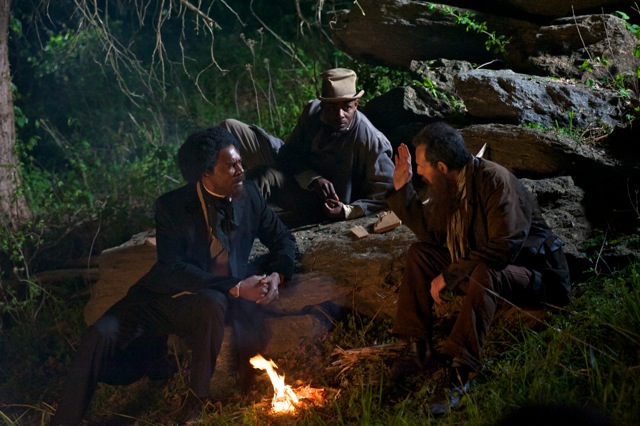
The new release from the PBS series “The American Experience” is a three-part story called “The Abolitionists,” the story of the fight to end slavery in the United States.  They were called radicals, agitators, and troublemakers. They thought of themselves as liberators. Men and women, black and white, Northerners and Southerners, poor and wealthy, these passionate anti-slavery activists fought body and soul in the most important civil rights crusade in American history. What began as a pacifist movement fueled by persuasion and prayer became a fiery and furious struggle that forever changed the nation. Bringing to life the intertwined stories of Frederick Douglass, William Lloyd Garrison, Angelina Grimké, Harriet Beecher Stowe, and John Brown, “The Abolitionists” takes place during some of the most violent and contentious decades in American history. It reveals how the movement shaped history by exposing the fatal flaw of a republic founded on liberty for some and bondage for others. Despite opposition and abuse, beatings, imprisonment, even murder, abolitionists held fast to their cause, laying the civil rights groundwork for the future and raising weighty constitutional and moral questions that are still with us today.  “The Abolitionists” interweaves drama with traditional documentary storytelling, and stars Richard Brooks, Neal Huff, Jeanine Serralles, Kate Lyn Sheil, and T. Ryder Smith, vividly bringing to life the epic struggles of the men and women who ended slavery.

http://www.youtube.com/watch?v=xU3RSqT76ic

I spoke to one of the historians who worked on the series, Dr. Manisha Sinha, Professor of Afro-American Studies and History at the University of Massachusetts, Amherst.

How did you get involved with this program?

I’m in the process of finishing a big book on the history of abolition from the revolution to the civil war. I was tapped for this series to be consulted on the script and be a sort of talking head for it.

One thing that I think is very hard for contemporary people to understand is that even among those who wanted to end slavery, there were many different kinds of views on the reasons for abolition.

Right at the outset it is important to distinguish between people who are sort of anti-slavery, who did not like the system of slavery for a variety of reasons, but who choose not to do much about it, versus the abolitionists, who devoted their lives to fighting against slavery.  If you want to look at the roots of the movement, you could go back to the Revolutionary era.  There were some outstanding Quaker individuals and African-Americans who fought for abolition and founded some early abolition societies, which resulted in emancipation in the North.

The people who we call abolitionists, they are the ones who came on in the antebellum period, which was 20 or 30 years before the Civil War, when you had people like William Lloyd Garrison, whose publication of The Liberator in 1831 is seen as the starting point of the formal abolition movement in the United States. Garrison of course, owed his inspiration to many of these early Quaker abolitionists, one of whom he served under as an apprentice.

Most importantly, he was very influenced by the black tradition of protest against against slavery and racism. That’s really important to remember. Garrison rejects the idea of Jefferson and later on even Lincoln, which was anti-slavery but wanted to colonize black people outside the United States.  What’s unique about Garrisonian abolitionists is that they adopt the African-American program of anti-colonization and black citizenship. If you looked at the roots of Garrisonian abolition, it very much lies in a long tradition of black activism of rejecting colonization and citizenship in this country. To that he adds what is known as Immediatism, which is the immediate abolition of slavery.

That’s when the movement starts taking off in the 1830’s that’s inspired by British abolitionists, who first came up with the idea of Immediatism. It’s inspired by these early outstanding Quakers who fought against the African slave trade and slavery supplemented by this long standing black tradition of protest that had its roots during the Revolutionary era.

I’ve always been very interested in the Grimké sisters. They were pioneering feminists as well as promoters of the abolition of slavery. To me that speaks to a very modern view of equality.

It does. In fact, you could say the abolitionists were well ahead of their time, because they’re fighting not just against slavery, but also racism. They fight against racial discrimination in the North and then they fight for women’s rights. Now of course, that becomes one of the issues that fractured the abolition movement.  There were many varieties of abolitionists. You had the Garrisonians, who were fairly radical in their rejections of all kinds of hierarchy, gender and race. You had Evangelical abolitionists, who really didn’t want to mix the question of women’s right with abolition. They thought they had one unpopular cause. They didn’t want to advocate another. Many of these abolitionists were also clergymen.

There were evangelical clergymen, who opposed having women stand up and speak in public like the Grimké sisters, most famously.  Of course, before that, an African-American women, Maria Stewart, had done that.  And before her, Fanny Wright who was an abolitionist and a workingman’s and women’s rights advocate had spoken out in public to what ware known as “promiscuous” audiences that included both men and women. These are the issues that started dividing the abolitionists.

By the end of the 1830s, we have different varieties of abolitionism. Some of these abolitionists became political abolitionists. Unlike Garrison, they felt that they could work through the political system to abolish slavery. Garrison saw the system that was very dominated by slave holders and by the Northern allies and realized that the fight for abolition would be a long and difficult one. He sort of said that the way for abolitionists to go politically was to agitate in the streets rather than to become part of political system that was corrupt.

The series emphasizes the economic basis of the pro-slavery advocates.  It was less a matter of philosophy than it was of money.

Exactly. There were a whole bunch of revisionist historians of the Civil War, who said, “The Civil War was not really a war about slavery. It was about the industrial North against the agrarian South. It was really economic interests that were divergent.” That is true that, that slavery gave rise to a distinct society in the South. In fact, the economic interests of Southern slave holders were quite complementary and in fact linked with that of Northern economic elite.

The people who started attacking abolitionists first were what we call “gentleman of property and standing.” Prominent leaders and the Democratic party were that time leading heavily toward the south. Also, economically others, including the lawyers and politicians, these are the people who led mob violence against abolitionists because they saw abolitionists as threatening these unions, these alliances between Northern capitalists and Southern slave holders.

A lot of work needs to be done on this, but we know that slavery was sort of a national economic interest. Slave-grown cotton was the largest item of export from United States before the Civil War, and its values exceeded the value of all other items of exports from this country, so this was a huge national economic interest that involved Northern banking, insurance, shipping.

It also involved Northern manufacturers.  The textile mills at Lowell were dependent on slave-grown cotton from the South. Northern manufacturers of clothes, tools, shoes, found a market in the South.  Economically, the North and South had complementary economies, not economies that were in conflict. These are the odds the abolitionist faced.  Slavery was entrenched in the nation’s political institutions, it was an enormous part of the nation’s economy.  To fight against that made the abolitionists seem like radical fanatics who are advocated women’s equality which was unheard of. They were really taking on big causes and they were fighting against the enormous odds.

Was the abolitionist movement really the first big American political initiative coming from the people?  Did it inspire later movements like the civil rights, the women’s movement, the labor movement, anti-war protests, and other reforms? 

That’s a great question. Abolition was the first truly radical social movement in this country. It was one of the first to be successful. It became a model for radical activists in later ages. Civil rights activists many times called themselves The New Abolitionists and called for a second reconstruction of American democracy referring back to Reconstruction after the Civil War. Women’s Rights, Second Way Feminism clearly had most of their heroines in this 19th century movement for women’s rights.

It is true that there are a lot of divisions within abolition and within women’s rights during the Civil War over issues of black suffrage and female suffrage.  But the fact remains ideologically, the abolitionists remain a source of inspiration. Even Eugene Debs, the head of the American Socialist Party, often pointed to the abolitionists as his inspiration. There were some populists in the Midwest, who looked up to the abolitionists, too. The abolitionists became a kind of a touchstone, because they are one of the few radical movements in this country that was actually successful at the end.

My husband and I stood in line for two hours on New Year’s Day, the 150th anniversary of the Emancipation Proclamation, to get a rare glimpse of it at the National Archives.  We have to remember it did not free all the slaves, though it was a very  important step.

The Emancipation Proclamation was an official document, a legal document, a military document, born in the midst of war. Its scope was modest, mainly because Lincoln wanted to issue a proclamation that could not be challenged Constitutionally.  He invoked his war powers to free the slaves only in the states that were in rebellion, because that’s what he could Constitutionally do as President.

Everyone knew that if the Union won the war, slavery would be dead in Mississippi and in Louisiana and South Carolina. If slavery was dead in those regions, there was very little chance that it could survive in the border slave states that were still in the Union and were not included in the purview of the Emancipation Proclamation. They had far fewer slaves and Lincoln had been pushing them on compensated emancipation since the start of the war.

The idea that it was not momentous, I think is false. Yes, its purview was demarcated for specific reasons, but the Emancipation Proclamation was a turning point in the war. It clearly linked black freedom with the powers of the federal government and the fortunes of the Union army.  In many respects, it was actually quite a revolutionary doctrine. No less a person than Karl Marx said that it made the Civil War into a revolutionary war for freedom.


Related Tags:


Documentary DVD/Blu-Ray Pick of the Week Epic/Historical Interview Politics Television

Interview: Cederick Tardy on the Best Movies About Single Moms

Posted on January 11, 2013 at 3:44 pm

Cederick Tardy is the author of four books for mothers raising boys. He is also the founder of STRONG Inc., a nonprofit focused on Strengthening, Training and Redefining Our Next Generation.  “I love movies about single moms because they often highlight the qualities that help single moms raise confident, successful kids,” he says.  “Having been raised by a single mother, I know the job can seem overwhelming. Mothers, especially moms of boys, may feel like they’re doing well just to get their sons through adolescence alive and with no criminal charges.”

I interviewed Tardy about what mothers and their sons can learn from the movies.

Do you have a favorite movie mother?  

Sarabi – Simba’s mother from “The Lion King”

A favorite bad example?

Just turn on the news to those reality TV shows. Smokey’s mom in the movie “Friday” was pretty bad.

What are the best movies about single mothers that are based on true stories?

One of my favorites is “American History X.” It shows that boys who grow up without their fathers are more easily pulled into dangerous behavior no matter what neighborhood you live in.

Can you give some examples of single moms in movies who teach their sons important lessons about being a man?

“The Karate Kid” is an example of a boy dealing with transition, bullying and identity. In this story his mother allows him to use a mentor to overcome his difficulties. That is a life lesson everyone should be taught.

What are the biggest challenges single moms in movies face in raising their kids?  Are they the same ones real-life single mothers face?

The reality of single mothers from movies like “Boyz in the Hood” is not the reality for every single mother in America, despite the stereotype. Many deal with bullying issues, as seen in “The Karate Kid,” or with the loss of a father, shown in “American History X.” Nevertheless, somewhere in America a mother is dealing with all of these issues and even worse ones, as depicted in “Notorious” by Angela Bassett, who played Volleta Wallace, the mother of legendary rapper The Notorious B.I.G.

What lessons can single or married moms learn from the movies?

Moms can learn a lot about their teenagers by watching movies. If my mom watched every movie I liked as a teenager, she would have been more aware of my influences. Today’s parents should also be familiar with the internet videos their children are watching.

What lessons can their children learn about their families?

I don’t believe children should learn about family from movies or television. It isn’t realistic. They could be encouraged to think all situations are solved in less than two hours or even 30 minutes. And, if they like drama in their media, they may pick up worse habits.

What are some of the best examples of single moms on television?

My favorite single mother on TV is Courtney Cox in “Cougar Town.” She loves her son and they can talk about anything. The worst mom on TV has to be Mary-Louise Parker, the mom on “Weeds.”

What’s the best way to encourage kids to talk to their moms about what they see in films?

I believe it is up to the parents to build an environment that fosters communication. For example, if they want their children to talk with them about movies they will need to watch the movies their kids are watching. This gets them familiar with the central topics of conversation. They need to be able to see the movie from the kid’s point of view as well. Once the kid feels like a favorable conversation will arise he or she will be encouraged to talk to their parents about a movie or anything else.

Tardy’s five favorite single moms in the movies:

• “The Karate Kid” (1984) – Single moms should ensure their sons have strong male role models and, while Lucille LaRusso didn’t actually find Mr. Miyagi for her son, Daniel, she allows the relationship to flourish, Tardy says. “They don’t get better than Mr. Myagi, the Army veteran and Medal of Honor winner who teaches young Daniel karate.” It’s not enough to simply provide role models and hope some good rubs off, Tardy notes. “As with Mr. Myagi, there should be a plan, a mission, something specific your son can learn that will move him closer to his goals.”

• “Erin Brockovich” (2000) – If kids’ basic needs aren’t being met, you can’t expect them to be able to focus on the higher pursuits for which leaders-in-the-making must aim, Tardy says. “The first thing Erin does right in this movie is to doggedly pursue getting a job,” he says. Then, though she’s just a legal clerk, she discovers a puzzling case file and follows her intuition to dig into it and learn more. She eventually uncovers a large company’s complicity in contaminating a town’s water supply. “Erin believed in herself – she knew her questions were valid and she pursued them. And she thought for herself – she didn’t accept the big company’s pat answers,” Tardy says. “What I especially like is that this movie is based on a true story.”

• “Forrest Gump” (1994) – Forrest Gump appeared to have a lot of disadvantages, starting with a low IQ, but his mother, Mrs. Gump, believed in him and never stopped teaching him valuable life lessons, including, “Life is like a box of chocolates … you never know what you’re gonna get.” Tardy notes that she communicated with Forrest in the way he best understood. “That’s important for all parents,” he says. “Everyone has a communication style, and it’s up to parents to figure out what works best for their children.”

• “Terminator 2: Judgment Day” (1991) – Targeted for death by a nearly indestructible killing machine in the first movie, Sarah Connor not only survives, she is impregnated by a man from the future and then slays the terminator. In the second film, we find her institutionalized during her son’s boyhood because everyone thinks she’s crazy. Despite all of that, when she is finally able to reconnect with her son, Sarah throws herself into teaching him how to be the leader of the human resistance. “Sarah is focused, unyielding, and determined to teach her son John all he needs to fend off a robo-apocalypse,” Tardy says. “You gotta love a mom like that!”

Related Tags:


Interview

Interview: Atticus Shaffer of “Frankenweenie”

Posted on January 7, 2013 at 8:00 am

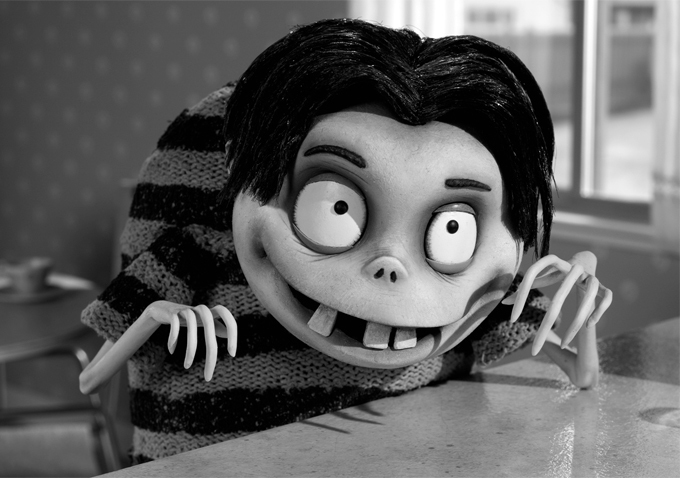
It was a lot of fun to talk to “The Middle’s” Atticus Shaffer about his performance in “Frankenweenie,” which comes out on DVD and Blu-Ray this week.  Shaffer provides the voice of Edgar “E.” Gore, the cheerfully ghoulish friend of the main character, Victor, the boy who brings his dead dog back to life.  The film, directed by Tim Burton, is based on the classic Frankenstein story — and on Burton’s own live action short film.  It is the first-ever black and white stop-motion animation feature film.

Tell me a little bit about how you first came to the project and when you first saw what your character was going to look like.

I came into the project just on an open call audition.  It was a year-long audition process and I really didn’t see anything about the character until after I’d gotten the part and they had started recording the animation. So I really didn’t know the specifics on what the character was going to look like until after I’d already gotten hired.

And when you first saw your character, what did you think?

I thought it was awesome. I thought it was so cool. One of the strangest things though, is whatever character I play recently, this is like on my show “The Middle” and what not, I always wear a striped shirt. So to see that he is wearing a striped shirt I was like “Oh my God! it follows me?”

So a striped shirt is definitely your trademark these days!  What about the teeth?

Well actually, I think that might have slightly come from me because Tim does like to record the actors when they are on the booth to kind of see mannerisms and what not to add to the characters. And I get into my role when I do voice-overs especially, so I hunched my back, I bared my teeth and I give the little finger thing, so I think I do definitely see traits of me in the character.

Before you made this film, were you very knowledgeable about the classic horror movies?

I am. I mean, I always have been. I love history of any kind so to be able to be a part of this, like to be able to see all these classic films I already had known for the most part. And during the audition process, because they did ask for Peter Lorre impressions at some point along the way, I was like, “challenge accepted” because I love doing impressions, I love doing accents. So I went in and my mom, being the awesome home school mom that she is, she rented me “The Maltese Falcon” and “Arsenic and Old Lace” and I already had “Casablanca.” And we sat down together and we watched the films and that alone was such a great education for me. It was just amazing.

What qualities of Peter Lorre do you pick up when you are trying to do a version of the characters he played?

Well, I mean, I do need to pick up as many qualities as I can. I really just pick up everything. I picked up how he behaves when he panics or when he is very calm and he is very sly and just all the variations and all the colors of him. I will pick that up and then obviously combine it with my own reactions to form the character.

And what kind of guidance did you get from Tim?

I really don’t get guidance, it’s the fact that he just knows exactly what he wants. He is the type of director that makes you fish for the answer. He knows exactly what he wants and he is able to relay that to you and then you as an actor can go “OK, I know what he means, let me just put it into my own perspective.”

Did you interact with the other actors or were you in a booth by yourself?

For the most part, I was in the booth by myself. I actually never even met the other cast members until we were promoting the movie before it came out. So for three years, I never knew any of them except for Tom Kenny who was in the film.  Peter Lorre is a new impression and I work better with a new impression when I just hear it and then I go into it. So they hired Tom Kenny and along with the voices that he does in the film, he would do a Peter Lorre impression and then I would do an impression of his impression. And also he would read opposite of me in the scene and that kind of helped me to get into the scene more.

If you could have in real life any one of the props that are in this movie, which one would you pick?

I actually already have a prop. Well, it’s not really a prop but I do have something from the film and it is a little Edgar doll that was used in the film. And that’s really, really cool but I am also very, very nervous because I have cats and I just know that they are going to go “Ooh doll! Let me rip it apart!” So I’m planning on getting a bulletproof glass and laser tripwires.

What do you think it is that makes horror movies so endlessly fascinating?

I think it depends on the type of horror movie.  The old classic horror movies, they were ingenious. There was a concept that you wouldn’t think of before like “The Wolf Man” or “Frankenstein.” It was these weird new concepts that were different, they were new at the time so then they were kind of fun and exciting. I don’t like horror movies now though, where they are just gory and everyone is going to die in the end and they leave you with a weird feeling. I don’t like that. I’ve never been a fan of those types of movies but I do like the zombie movies and stuff like that because that’s the classic horror genre and it’s the delicate horror that you would think of.

Why do people like to be scared?

I guess because people do like the adrenaline rush. Like sometimes there is this weird feeling that you get in all of us and I get it too, where you just feel like you need to watch a horror movie which is a weird unexplainable feeling I guess is a part of the human emotion, I suppose.

After this one, do you have a favorite Tim Burton movie?

I would probably say “Corpse Bride” — that was the first Tim Burton animation that I saw and I don’t know, that one really resonated with me and it stuck with me and I thought it was so good.

You worked on this film for three years?

Three years to make the film on top of another full year of auditioning.

Wow! so you started when you were how old?

I believe I was ten.

Is that before you were on “The Middle?”

It was actually during. I auditioned before I was on “The Middle” and then when I start being on “The Middle” they would record me while I was on the show.

You said that you like history.  Do you have a favorite era of history that you wish you could visit?

I love military history but I would probably have to say as an era, like if I had a time machine and I could just go back to that era it would probably be like the early, early nineteen hundreds and the late eighteen hundreds. That’s probably the era where technology is starting to become more advanced but is still old timey enough that you feel like you are in that little country log cabin type of thing.

What is some of the best advice you ever got about acting?

Some of the best advice really wasn’t for acting, it was just for life and it was from my mom.  It  was “always be yourself, don’t let people change you and don’t become a part of the big machine (that’s what I call it), the big machine of popularity. Just be yourself, explore your own interests and you will be successful.” That’s what I always keep in mind and I mean that’s how I like to live my life.

If you want people to take away one idea or one message from “Frankenweenie,” what would that be?

I have a huge appreciation for “Frankenweenie” because of the moral of the story and the fact that it is a black and white animation and hopefully it will inspire a new generation of kids to enjoy the old classic black and white films and have an appreciation for that part of our history. But then also the fact that the biggest message that resonates with me is the fact that you can love something so much and go to whatever extreme you wanted to in order to honor the memory or bring back that that you loved.

Related Tags:


Actors Interview

Interview: Roger Michell of “Hyde Park on Hudson”

Posted on December 11, 2012 at 10:04 am

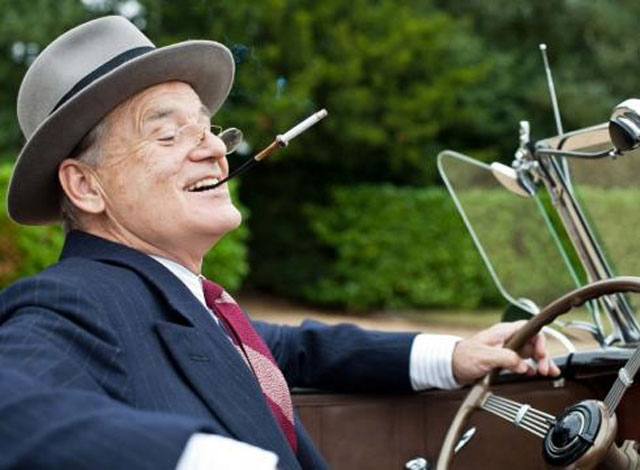
Roger Michell is the director of beloved films like “Notting Hill” and “Persuasion.”  His latest is this week’s “Hyde Park on Hudson,” based on the real-life visit of the King and Queen of England to the home of President Franklin Roosevelt (beautifully played by Bill Murray) in Hyde Park, New York, where they were famously treated to a hot dog picnic.  The movie also deals with Roosevelt’s relationship with his cousin Daisy and the other women in his life.  When Daisy died at 99 years old, a suitcase full of letters was discovered that indicated she had a much more intimate relationship with Roosevelt than previously known.  I spoke to Michell about the film. 

Oliver Wendell Holmes famously said that Franklin Roosevelt had “a second-class intellect but a first-class temperament.”  Tell me how you see him, not as a historical figure but as a character in this story.

I’ve never heard that description before, but having read about him quite a lot, he seemed to have had various strategies for governance which involved making people feel enormously relaxed around him, triangulating brilliantly between people. Often avoiding the issue at hand, but making his personality kind of glue people together or kind of get over difficulties simply by wafting his personality at them, and of course, that’s what he does in the film. That’s precisely what he does in this film, he creates a little bit of magic around this sort of gauche king. He makes the king feel a foot taller and at the same time, he scores this tiny—but enormous—political point by getting the king to eat a sausage. What could be better?

Please—a hotdog!  That is a famous story, often quoted in books about entertaining.

You see, that’s amazing, that’s very unknown in England—that idea.  But you still often see stage-managed pictures of presidents eating street food, don’t you? Eating a hotdog at the ball game or something.  And it created quite a stir at the time, it was reported upon and it became a political tool, a political lever.

I like your use of the term “strategies,” because I think that’s a very apt one, and it seemed to me that his relationship with his cousin was in a way, a strategy for management of himself, and a sort of compensation. So tell me a little bit about what you think about that relationship, and what it meant to both of them.

What’s striking about the letters is their banality, you know. Well, they’re published and they’re expurgated—she didn’t really release all the letters, she destroyed tantalizing passages of letters and of diaries—but they’re very affectionate letters, they’re usually letters about dogs or little bits of gossip or about the countryside. They share an intimacy which feels like it’s not intellectually demanding for either of them, and I think maybe that touches on what you just said, that she was strategically…restful, deeply restful, undemanding, sweet-natured and like a sort of human stamp album, you know? And their relationship went on for much longer than it’s depicted in our film had started much earlier and it survived for much longer; after he died, she held this clutched the secret joy to herself until her death at the age of 99.

That’s not the way people do it these days, is it?

No, it’s not.

There’s a great dignity to that.

Enormously dignified. And he asked her to become the first curator of his library, which she did for many years. She took the only two photographs in existence of him in a wheelchair, for example. She, along with other members of his harem, were at his bedside when he died. So, it was very sustained and successful—I imagine, on both sides—successful relationship, amongst many others. He clearly had this incredible ability to sustain without necessarily compartmentalizing all these women who often knew each other and sort of got along and okay with each other, like a Mormon with several wives.

And tell me your thoughts on Eleanor, FDR’s wife (and another distant cousin).

Well, she was obviously an extraordinary woman, but I think that their marriage was so, even after all the complications of his terrible betrayal of her very early in their married life, and to go off with her social secretary, her best friend…in spite of all that, they seemed to enjoy this fabulous relationship, and to feed each other, basically, very considerably. You get the sort of sense of Eleanor’s touch in a lot of what he did, and I think she was constantly kind of throwing memos and letters and ideas and suggestions and demands at his desk.

Olivia Williams gives a beautiful performance as Eleanor, and one of my favorite moments in the movie was the look on her face as she does this sort of half curtsy, doing it but not really doing it.

She doesn’t want to do it.

And you did a good job of making a very beautiful actress look not so beautiful.

Yes, I know.  And we cast an English actress because Eleanor, she sounded virtually English.

Right, that’s what upper-class people sounded like in those days.

I went to see Olivia in a play in London, I know Olivia—and  it was an American play, actually, but I was suddenly struck by the fact that she was facially not totally dissimilar to Eleanor.  She’s too young for the part, but with some teeth and some hair, she did it brilliantly.

I want to talk to you a little bit about casting, because I thought you did a brilliant job with casting, but certainly not the obvious choice for FDR, Bill Murray, for a lot of reasons. 

Roger: Well, that was a big stretch for Bill—he was frightened.  He had never done anything like this before, and he was aware that he was taking on a big responsibility to, as he puts it, to portray somebody who’s on a dime, who’s really sort of embedded as an icon, but he put in the work. He spent time with polio survivors, he had diction coaches both here and there, we had people who’d advise him on how to walk with the crutches, how FDR had this enormous upper-body strength because of learning how to grapple himself around desks and objects and things. And he did a lot of reading, and he was very thoughtful about it and really committed to it. And I cast him because I really—and this is for real, I know people say this, but—I didn’t think I wanted to make the film without him, because I couldn’t think of another actor who would be as forgivable as Bill and as mischievous and as playful.  Because he does things in the film which are bad, and I didn’t want it to feel like the Dominic Strauss-Kahn story, or even the Bill Clinton story. It’s more delicate than that and it’s more miraculous, in a way, that he was able to sustain all these relationships without imperiling people, and I didn’t think I could do that with nearly every other actor I thought of. There would be something predatory or just frankly downright bad about the behavior; whereas with Bill it is bad behavior, but it’s kind of sweet-natured and it’s forgivable. The film forgives, anyway.

We understand this movie is not a history lesson; it’s a story about people, and how do you think that it relates to today’s life? Obviously we look at presidents and celebrities very differently now, so what lessons do you want people to take home?

Well, I think there are questions raised about secrecy which are interesting. I think that, and I don’t know the answer, as to whether the current fetish for transparency is going to remain a productive one. Will it mean that only the dullest of the dull will be joining to politics? Because they have nothing to hide, see what I mean? Or is it for the common good that now we seem to need to know everything about everybody before they can do anything?  Probably a bit of both. I think the conundrum with the special relationship remains very complex between our countries.  I’ve worked with Richard Nelson a lot, I’ve done lots of plays by Richard, so that was a kind of ongoing relationship. He always writes about our two countries in one respect or another. I always find that…well, in England, we’re stuck between Europe and America, and most of the big political meltdowns in England since the war have been about whether we really join you guys or whether we’ve really become European, which is why we haven’t joined the monetary system, but he have joined the EU.  So that’s the kind of cultural enigma of our times, and in England we felt supplicant to you, and adoring of everything that you can offer, and yet resentful.  And there was a big switch after the war, I mean, before the war, England really did cover the globe and had the kind of moral superiority and cultural superiority, and after the war, Britain was so badly hit.

After the war, Soviet Union sort of did a massive land grab on Eastern Europe, but in a way, you guys did the same in the west. We suddenly found our economies were linked with yours, we had your weapon systems all over our country and we had your army still over West Germany, so how different was it, really? I mean, it was different, but culturally, it was a kind of enforced hegemony, and we all worshiped your movies and we all started wearing jeans and we started wearing your clothes.  It’s full of rivalry and will continue to be complicated and interesting. I mean, we bask in this fiction of the special relationship, it is is not really special. It can’t be.

Related Tags:


Directors Interview
THE MOVIE MOM® is a registered trademark of Nell Minow. Use of the mark without express consent from Nell Minow constitutes trademark infringement and unfair competition in violation of federal and state laws. All material © Nell Minow 1995-2026, all rights reserved, and no use or republication is permitted without explicit permission. This site hosts Nell Minow’s Movie Mom® archive, with material that originally appeared on Yahoo! Movies, Beliefnet, and other sources. Much of her new material can be found at Rogerebert.com, Huffington Post, and WheretoWatch. Her books include The Movie Mom’s Guide to Family Movies and 101 Must-See Movie Moments, and she can be heard each week on radio stations across the country.

Website Designed by Max LaZebnik