Interview: Genie Francis of “Notes from the Heart Healer”
Posted on May 7, 2012 at 8:00 am
Genie Francis co-stars in “Notes from the Heart Healer,” the third installment in Hallmark’s popular series about the mid-life romance of an advice columnist named Peyton and a sportswriter named King. It will be on the Hallmark Channel Saturday May 12 8/7c & 10/9c and Sunday May 13 12/11c & 8/7c. Francis became an international phenomenon as Laura on “General Hospital.” The Luke and Laura wedding was the highest rated soap episodes in history with 30 million viewers. I talked with her about her chemistry with co-star Ted McGinley, working with directors, and why audiences feel such a connection to the “Notes” love story.
Was it a big change to move from soap opera to a made-for-TV movie?
Most of my work was in a three camera show, but I’ve also worked on stage and in film, so I am comfortable with one camera films. But it’s not like breathing to me as three camera is—I’m as comfortable as that as I am in my living room sofa.
What makes this story so popular with audiences?
Hallmark has an older audience and a lot of older people would love to believe they could have a second chance at love. It’s a really big and powerful message. It’s a romance that is slowly built. They were working in the same place for five years. They noticed each other right away but didn’t act on it for five years. It’s a sweet love story that’s mid-life and their love for each other makes them young again.
What happens in this third chapter?
Peyton has a baby dropped at her doorstep and it brings up all of her guilt and unresolved issues about the baby she did not raise, even though her daughter did come back in her life. She first thinks she is not worthy and then realizes she can do this and wants to do this and she gets to see King as a father. And they both start to fall in love with the baby. It causes an issue in the marriage.
Ted told me he was very impressed by how well you were able to respond to direction because you have such control over your performance.
I take notes well because I don’t cling to my way. I have an idea of how I want to do something but I come to the set very malleable, not overly investing in doing things my way. That way I can bring what good I’ve brought and they can take me a bit further. I welcome it. The people who have taught me the most about acting were Denise Alexander and Tony Geary on “General Hospital” and my acting teachers, Michael Howard and Bill Esper.
How old were you when you started acting?
I was 14. The first thing I did was “Family,” a two-part episode with Kristy McNichol. Then three months laeter I got “General Hospital.” “Family” came back and wanted me again but by then I was already booked. “General Hospital” told me that they were using me to catch the young audience. We were on at a time when kids could see us after school. They get to live with the character every day for an hour so they get very invested in you. The character gets delved into more deeply because there’s so much time to fill. You are a permanent fixture, on every day. And the character of Laura was really based on my own need to be loved, to find someone to love me, and that was pretty strong for an ingénue. Luke and Laura – the audience really believed that when you put these two people together they were better off than they were before. She wasn’t lonely and sad, he wasn’t in the Mafia. Their union makes each of them whole and better in a new way.
It’s the same thing with Peyton and King – can two older people really have a chance at a happy love life?
How did you like filming in Victoria?
It’s a beautiful part of the world and I really enjoyed being there. My daughter came and we went whale watching. We saw so many whales, many of them jumping out of the water. I ziplined through the forest with my daughter. I am half Canadian and I am seriously considering reclaiming those Canadian roots.
Is your mom a heart healer? Hallmark Channel is looking for inspirational, poignant or funny stories about moms who have healed a heart. Post your tributes to Facebook.com/hallmarkchannel #HeartHealer #HallmarkChannelCountdown
Interview: Ted McGinley of “Notes from the Heart Healer”
Posted on May 3, 2012 at 8:00 am
Ted McGinley talked to me about re-teaming with Genie Francis for the third in the Hallmark series of films about an advice columnist known as “The Heart Healer.” In The Note, Peyton (Francis) discovers a note she thinks is from someone who was killed in a plane crash. Struggling with her own grief, including the loss of her husband, she tries to find the intended recipient of the note. The movie was Hallmark’s top rated for 2007 and led to a sequel, The Note II: Taking a Chance on Love, which brings Peyton closer to writer King (McGinley). Now in chapter three, “Notes from the Heart Healer,” the couple care for an abandoned baby. McGinley spoke to me about what he likes best about his co-star, filming in Victoria, Canada, and about his first real acting job replacing the star of the top television series of the decade. It will be on the Hallmark Channel Saturday May 12 8/7c & 10/9c and Sunday May 13 12/11c & 8/7c.
How does it feel to come back to this story and these characters?
I was excited to revisit it myself. First, to work opposite Genie is fantastic. We have a strange chemistry. Like an old glove, we just fit into each other. I loved this script, the best of the three. And every time we do these movies we go somewhere. It’s like an adventure. King’s a nice guy to put on, a nice guy to hang out with.
What is it like to work with Genie Francis?
She’s so skilled that you could lay out a deck of cards and read through all 52 as quickly as possible and have her read it back to you. She’s that sharp. She’s just a very open soul. That’s what she has in common with her character. When she first started doing this she had done the soap and had not had much experience with single-camera filming, but now she can move into this different formula. She is like silk when she works, so smooth. She is so in control of her emotions and how she uses them. I like her because she is very giving and very honest. The chemistry is good and it’s a fun place to be.
And what is it that draws people into these characters?
It’s a great story. I think the shame is that it is not a week to week series — Hallmark should make it a show you could sit down to watch with your family and get a heartwarming story every week, like “Touched by an Angel.” We are all touched by the fantasy of “what if.” Peyton reaches out through the newspaper to uncover stories. Each one is a fun little fantasy and it’s okay by the end. All you have to do is read the newspaper and there are 20 stories every morning that you could write an episode around. The first one was such a fun journey and very well done. The second one was not as well thought out. The third is the best. The relationship between King and Peyton is so strong, like she’s the dock he is heading for. The story is compelling and the guest cast is amazing. It felt like a little piece of magic up there.
Tell me about playing King.
King had a family previous to this and was addicted to his work. He just got old enough to realize that just having work and being successful at work and being a Pulitzer prize winner doesn’t do anything for your soul. You have to have a more well-rounded life. He lost his marriage and ruined his relationship with his son. He had climbed into this cave and was trying to do his work but had lost the passion of his life. He had blinders on. When he ran into Peyton, she had been in her own cave to protect herself and felt guilty. They were two wounded warriors who worked near each other but never knew each other, so it is a very healing process as they come together. He’s an easy person to be around. Not highly judgmental. I’m a sports fanatic and he is a sports writer but we never delve into that. All of that has to be in his background. Sometimes there are characters that are fun because they are nasty and shoot people but some are fun and comfortable and easy to get into, and that’s King; he’s a trustworthy, reliable, decent, smart character.
This chapter adds some new characters.
Laci J. Mailey stole the movie, just phenomenal, as the baby’s mother. The twins who took turns playing the baby were so great. When I’m away I miss my family so much and it was so great to have these babies to hang onto.
Where was it filmed?
Victoria. I spent half my time looking for places to live if I didn’t live where I do now. We were in Brentwood Victoria, and it is just spectacular. It is one of the great family vacation spots. You can do 50 different things almost every day, watch the planes come in and land on the water, whales, museums, the Community Gardens.
How did you decide to pursue acting?
I was playing water polo at USC, and a girlfriend told me I should do some modeling. I didn’t know what that was. I started modeling and someone was there casting a movie called “Valentine” with Jack Albertson and Mary Martin and they needed a guy to run on the beach. It was supposed to be a one-day deal and they paid my modeling fee. It rained for 13 straight days and I ended up being the 3rd highest paid, because they had to pay me for all those days. I spent 13 days hanging out with Jack Albertson and watching him. This is a fun job, and exciting job. I still thought I was going to go into commercial real estate or having my own advertising company. But this kept tugging at me and I ended up on “Happy Days” while I was still doing commercials, without any training. I had on-the-job training — with the Fonz. Ron Howard left because they wouldn’t let him direct, so I call it “the Chachi years.” It was a great learning ground. I made a lot of mistakes, publicly, coming from being very successful in polo to being a beginner. I’m never the guy who got in for the attention; I still don’t like getting up in front of a crowd. In some ways Roger on “Happy Days” was my most challenging role because I didn’t have a clue what I was doing. I didn’t know timing, rhythms. I played a murderer/rapist in a TV movie and that was very challenging. But there’s always a couple of moments in every show — the key is to find those moments and allow them to be challenging. There’s a lot of jobs you can’t say no to, and you say, how am I going to do this, to get through those kinds of scripts and live with yourself.
What are some of your family’s favorite movies to watch together?
“Kicking and Screaming,” the soccer movie with Will Ferrell — we love that as family. My house is that house that all the kids go to. We still howl laughing at it. On the way to a soccer tournament, we’ll watch it, too. And “Elf” — it’s fun when you watch it with a group of teenagers and watch them laugh hysterically. That’s the best.
STAY TUNED FOR AN INTERVIEW WITH MCGINLEY’S CO-STAR, GENIE FRANCIS, COMING NEXT WEEK.
Is your mom a heart healer? Hallmark Channel is looking for inspirational, poignant or funny stories about moms who have healed a heart. Post your tributes to Facebook.com/hallmarkchannel
Interview: Writer/Director Richard Linklater of “Bernie”
Posted on April 27, 2012 at 8:00 am
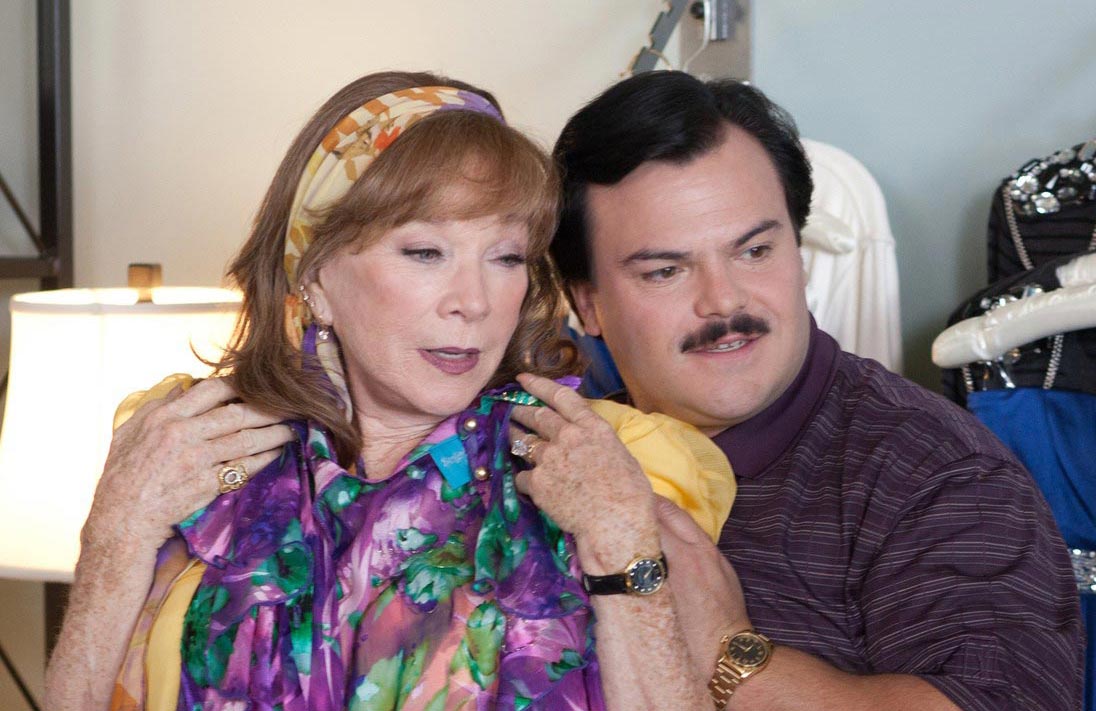
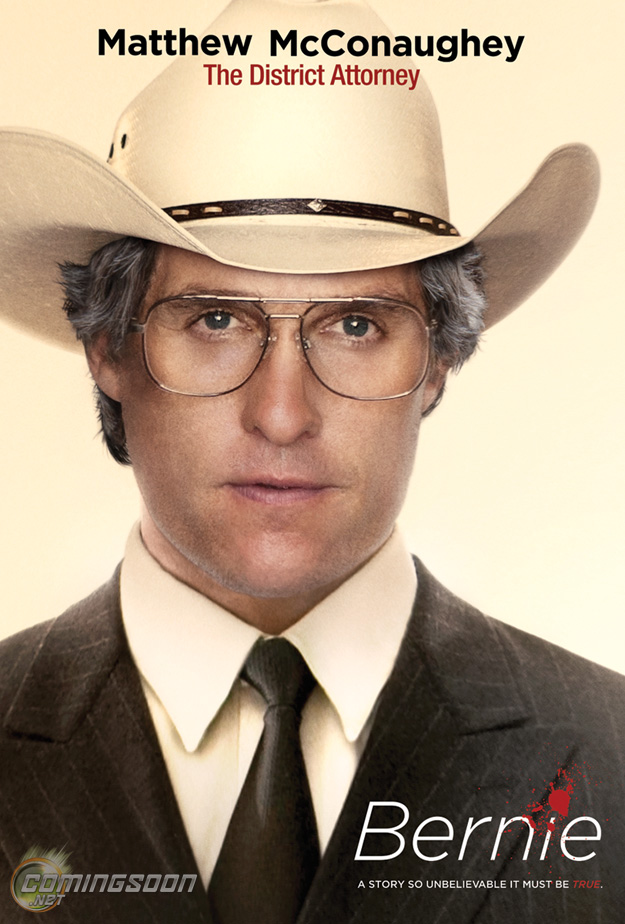
Richard Linklater has directed some of my favorite movies like “Waking Life,” “Before Sunset,” “School of Rock,” and “Dazed and Confused.” He talked to me about his new film, “Bernie,” starring Jack Black as the real-life Bernie Tiede, the most popular man in the small Eastern Texas town of Carthage even after he confessed to killing a wealthy widow and stuffing her in a freezer for nine months. Tiede, now in prison for the murder, was a funeral director who became friendly with octogenarian Marjorie Nugent, known as “the meanest woman in east Texas.” She lavished him with gifts and trips and made him her heir, but then became possessive and demanding and abusive. He shot her, hid the body in her freezer, told everyone she was in assisted living, and spent a lot of her money helping people in the community. Shirley Maclaine plays the widow and the prosecutor is played by Matthew McConaughey. As Ms. Nugent’s nephew wrote in the New York Times:
There are little things in “Bernie” that aren’t exactly true, bits of dialogue, a changed name here and there. But the big things, the weirdest things, the things you’d assume would have to be made up, happened exactly as the movie says they did. The trial lawyers really did wear Stetsons and cowboy boots and really were named Danny Buck Davidson and Scrappy Holmes. Daddy Sam’s barbecue and bail bonds, just a few blocks from the courthouse in Carthage (population: 6,700), really does have a sign that says, “You Kill It, I’ll Cook It!” And they really did find my Aunt Marge on top of the flounder and under the Marie Callender’s chicken potpies, wrapped in a Lands’ End sheet. They had to wait two days to do the autopsy. It took her that long to thaw.
One of the highlights of this film is the commentary from the people in Carthage. Are those real townspeople really talking about their own experiences?
Oh, they’re definitely, mostly real people, I mean, “non-actors,” but some are actors. Most are people from the area of the state near Carthage and surrounding towns. Some of them were actually intimate with Bernie and Mrs. Nugent, so it’s kind of a mix.
It feels so natural. Was it unscripted?
No, it’s scripted, but they kind of put it in their own words, quite often. I looked at a lot of people and found people that could be themselves, doing material and throwing in. You know, some of my favorite ones were things that people just threw in there. When Sonny Carl Davis, who’s an actor, goes off on the town, “He’s my daddy, he’s my cousin,” you know, he’s got a way with words. And Juli Erickson saying, “Honey, there are people in this town who woulda shot her for five dollars,’ stuff like that.
What made you decide on this quasi-documentary format?
I really never thought of it much as documentary, because the stories were dramatic. I saw a story told from town gossips—and Southern gossip is such a huge thing. I attended the trial, and read and got my hands on everything. I was going through Skip Hollandsworth’s journalistic notes where he had interviewed everybody, and what they were saying was really kind of funny, I felt, and very telling of the town and of the situation. If you think about it, Bernie was in jail, Ms. Nugent was gone, and they’re not there to speak for themselves. As in small towns, with any event like this, all that’s left is the community itself reverberating around with opinions. If you were to go to Carthage, anybody over a certain age would be able to tell you what happened; how they knew Bernie, about the nine months she was in the freezer, how he preached at church, “we hung out, went to a party at his house,” maybe how he should’ve killed her to get away with it—everyone has their own idea, how they would’ve done it? You know, it’s just one of those crazy things. It’s a very rare event, such a notorious crime in that area. The guy says on closing credits, “we don’t have stranger killings, usually it’s family.”
You certainly deglamorized Matthew McConaughey. I love the choice of the glasses, they were wonderful.
Oh, you liked those? Let me think about it, he also had little plumpers in his mouth, and a little gut, an extra 25 pounds. He still had a ways to go to get to the real Danny, but he tried.
And you were at the trial? I never heard of a change of venue to a different city because the defendant was too popular!
Yeah, no one’s ever heard of that. I’ve talked to every judge, DA, defense attorney, since this trial. “Have you ever heard of a trial being moved because it was too because he was too well liked and they didn’t think they could get a conviction, so they had to move to get a jury of his peers?” People just kind of go, “No, I’ve never heard of that.” Skip’s article probably didn’t help Bernie—it just was not on terms that were any good. I think Danny Buck started feeling pretty confident at some point and there wasn’t a plea bargain, or it didn’t work out or something. At the end of the day he definitely got a really hard sentence. Well, the deck was stacked against him. First off, the change of venue, and then the judge disallowed the psychiatrist to examine him, who was going to speak on behalf of his disassociated moment, temporary insanity, and that got disallowed. That was his only hope. As Scrappy tells it, I had a guy who had confessed and told em’ everything and he didn’t have a lot to work with by the time he was with Bernie and yet he was really going for this thing…. The evidence that Danny was allowed to show him at trial, pulling Ms. Nugent out of the freezer, with some really horrific images and out of context. And he successfully prosecutes him as the other— not like us— flying first class, going to the opera.
Tell me about working with Oscar winner and old-style Hollywood movie star Shirley MacLaine.
There’s no one like her. I had always had her in mind for this part, I guess because she had played a Texas grand dame a couple times already, as Aurora in “Terms of Endearment” and the sequel, and I was just lucky she did it. I think she wanted to work with Jack. It’s not a huge part for her, but I think she had fun. It kept her laughing, but she was sort of perfect. What was funny, I think, Shirley liked Ms. Nugent. The first thing she told me was, “even after she’s dead, she’s still around. That’s how I’m going to be! That’s how I’m going to be, you can tell me, that’ll be me.” I think she’s right! There was so much historical record, there was so much testimony. It is a little bit of a dance of how much of a bitch, to what level the bitchiness should reach, but at the end of the day, Ms. Nugent was actually a lot worse than Shirley was in the movie, according to all accounts. Shirley kind of humanized her, but that was my goal. I think the fun part—and this is why I love Shirley for the part—is that she still has that little girl infatuation, she’s still very sensual. When they were first together we called it the honeymoon, the time where she was happy, when out of the blue this terminally miserable lady who could never be happy with anyone or anything, had some fun, a guy paid some attention to her, before she had to possess him and ruin it. There were some happy times there.
I know you’ve worked with him before, but Jack Black would not have been the first person to come to my mind for this part, because Bernie’s a very restrained character, a kind of repressed character—and I think of Jack Black as irrepressible.
Well, that’s what you know from parts you’ve seen him in—but I know him, and having worked with him before, I knew he could do it. I was just lucky he wanted to do the part and found it interesting. And you know, a good actor like Jack, you find there’s a part of Jack that could relate. Bernie is a guy who’s non-confrontational and Jack really is the sweetest guy in the world, a total nice guy. He saw Bernie very clearly, and could in some ways relate to him. And who else could sing like that? There’s really no one else at the end of the day who could play this part, who could sing to Bernie’s actual level.
I love the parts when he sang, when he steps in at that funeral and sings “Amazing Grace,” it was fantastic. What was it like to stage a big musical number from “The Music Man?”
Fun! A dream come true! Anytime, you’re making a musical, it’s just fantastic. I felt like, “I’m Vincente Minnelli, and it’s the fifties and I’m making a musical!”
Interview: Philippe Falardeau of “Monsieur Lazhar”
Posted on April 25, 2012 at 3:32 pm
“Monsieur Lazhar” is an Oscar-nominated Canadian film about an Algerian immigrant who takes a job as a substitute teacher even though he is not qualified and ends up learning a great deal from his students and teaching them more than either they or the school expected. I spoke to writer/director Phillippe Falardeau about his remarkable, if almost accidental, start in film-making, how he worked with children to create such sensitive performances, and the challenges of adapting a one-man play to tell a story on film.
How do you work with children on such a sensitive and difficult subject? The film opens with two of the children finding that their teacher has committed suicide. Ho do you take children to whom nothing bad has happened and help them create that performance?
There are some important things in what you’re saying. First of all, how do you work with children to craft a film that’s saying that and the fact that you’re saying we want to protect the children from that. I think the school wants to do the same thing. The school has all kinds of protocols and rules and regulations trying to figure out all kinds of possible situations, but the film is saying no matter how many protocols we have and how many rules, we won’t be able to prevent stuff from happening, because life happens, period.
And some of those rules have the opposite impact, like saying that a teacher cannot touch a child for any reason.
Exactly. So, working with the children—it’s interesting, because, we see the film and we see the stuff happening through the children’s characters. But you have to remember that when you’re crafting the film, these things happen over a period of three to four months so they see the stuff coming. There’s an audition, and then you talk about the subject with the parents and with the children, and so it’s slow in happening. It’s never a traumatic experience for the young actors, because it’s an abstract idea on paper, first, and when we’re on the set, we’re at three months later and we’ve talked about it a lot. And I found out that at that age, ten eleven, twelve, they’re often dismissed as too young to talk about it, but that is not true. Even though none of these events happened to me when I was a young kid—I hated it when adults were saying, “It’s not a subject for you. We can’t talk about it. You’re too young for that. You’re too young for that.” Especially when I had a question about something. So, I wanted a film that would say, “No, they’re not too young for that, actually,’ and Bachir Lazhar is not treating them like that—he’s treating them like equals.
Even when he makes a mistake in thinking they’re capable of more than they are.
Exactly, and I think life finds a way—or the children will find a way—of saying, well, this is just a little over our heads. Because there is the issue of competence: are they able to do a dictation taken from Balzac? And there’s the issue of life and the questions that are raised by some events; you cannot hide them from children, even if they’re ten years old. So for me, it’s just a long process of audition, taking your time, not just throwing them in front of a camera and saying, “OK, read your lines,” and then, “Bye.” It’s meeting the person, giving them 15, 20 minutes—and if I like them, I invite them back for another audition that’s more complex, and then I work with a coach—she’s an actress also—but she’s good with kids, so, she rehearsed with me and she knows where I want to go in terms of tone, so when I’m off on other tasks, she keeps working with the children. We never leave the children alone. And the third part which is probably the most important, I tried to make the set a summer camp. They know it’s work—but if they have fun, I believe that they trust you, and if they trust you they can reach into their own emotions to give you some personal stuff, like the cathartic scene with the boy. I wish I could say I have a director’s trick I can use on children. I don’t. It’s just life happening there, because I think the children feel comfortable. With the young girl, it’s a little bit different because she’s a very good actress, and she could snap out of the emotion and just look at me and say, “Do you want another one? Do you want another take?” and she could get back into it. The boy was a slow process and difficult process. But in any case, I think trust is the key to work.
And they seemed to develop a very nice relationship between the two of them—a trust relationship.
Yes, yes, absolutely. And all these kids became friends for the duration of the shoot. At the end of the shoot, it was really emotional—it was like the end of a full school year–and they had this nice experience. I wish I would’ve been them when I was young, living through that experience. Some of them probably won’t become actors. I think they she will, the young girl named Sophie Nélisse who plays Alice, if she wants to, but she’s a gymnast and she’s a gymnast at a very, very high level—and that’s her goal in life, so I think she’s an accidental actress.
You took quite a challenge to adapt a one-person play into a movie and can you talk a little about that? You worked with the playwright, I think?
A little bit. She was the first person who read my different drafts and we bounced ideas, although I didn’t want her to co-write, and she didn’t want to co-write either. She knew the play had to transform and become something else. On stage, there’s one man interacting with people who are not there and that we don’t see or hear, but by his reaction we can make them out in our minds. As members of an audience, we’re actually making a film in our head while we’re watching the play. so it’s not that difficult for me to make that into a screenplay.
Tell me what is important about making your main character an immigrant.
In Canada, we have so much land, so much space, and so few people. Now we’re up to 32 million. We’re a country of immigrants. First of all, French immigrants and then the British immigrants, but soon after the Confederation in 1867, you need to colonize all the West, the farming land; so Ukrainians, Polish people—they all came from Eastern Europe to the west, there’s Saskatchewan, Manitoba, Alberta, and then the new wave of immigrants, the Chinese immigrants, and the west of to Vancouver. And in Quebec during the 1990’s, there were a lot of immigrants from Algeria because of the civil war there. Because they speak French, it’s more natural for them to go to France, but they have a difficult relationship with France because it was an ancient colony, so it makes sense for them to come to Quebec. America is so good at integrating and assimilating culturally and identity-wise with people because it’s such a strong political melting pot. In Canada, it’s a tapestry. It’s really something that immigrants can continue being immigrants for at least one generation without really embarking on what is Canada. You know, because, I don’t think Canada has a strong identity, except for some political choice we make, like health-insurance, for instance. We have a hard time defining ourselves…we often define ourselves negatively, we are not Americans.
In Quebec it’s different. We don’t have that identity crisis because we speak French, but we have this crisis of “will we exist in still 50 years” because we have linguistic assimilation. So, in the past ten years I’ll have to admit that our policy has been aligned to the U.S. politics in the post 9/11 era—we’ve been closing our doors to immigrants and refugees.
I was interested in having an immigrant character, but for me the most interesting thing that I was able to revisit who we are through his eyes. You have this guy who comes to school, he knows nothing about the rules and protocols, and he’s kind of clumsy, and he’s not a teacher. I like the fact that he’s lying to get his job, and he’s telling the truth to the immigrant officer—so it’s a nice way for us to look at where we’re at and it allows us to ask ourselves, is that a comfortable place? It’s like the Polaroid of where we’re at, and on certain issues like touching or not the children, I think we’ve gone too far…but by using this man who knows nothing about our values here, he’s like candid, in a way—he just does what he does we see ourselves through his eyes.
One thing that I thought was really strong in the film was the look of it. Can you talk a little about what your discussions were with the cinematographer and what you were trying to say? I thought the look of it matched the emotional tenor of it very well.
The first decision I had to make was with the format. Was it going to be the normal rectangular format or the cinemascope? Since it’s not an action movie or there’s no landscape, you don’t think of cinemascope. Then my director of photography, said, “I think you should shoot your first cinemascope format,” and I said, “Why? I want a documentary feeling.” He could not tell me why rationally, yet he had this instinct. So I said, “Ok, I’m going to do some tests.” So, we’re testing, and we have children in the classroom, and it’s two weeks before shooting, so I’m testing the different formats and I’m holding the camera at the height of the desk, and I’m realizing that with the cinemascope format, you have a feeling that you have more children, because you’re horizontal. You’re skipping the roof and the bottom. You don’t have more children, but you have the sense that there are more children. So that was the first decision. The second decision, I wanted only natural light from the exterior, I wanted it to be very bright, very luminous, colder at the beginning, just bluish at the beginning, and as the season progressed and as the film progressed, just a little warmer. So the premise of that film is so dramatic that I didn’t want the film to drown and be heavy—so I used the photography to pull the film towards the light. I also used also the music to do that. The music is not dramatic; it’s Mozart, it’s Scarlatti, and the music composer—when I pitched him the film, I said, “There’s going to be Mozart in there, so, bring your A-game on that one!”
Unfortunately, they’ve been struggling and the conservative government has done some major cuts. It is ironic because we just had three films at the Oscars and the Minister of Culture was proud to announce that Canada had funded a film that was nominated for an Oscar at the same time they were making cuts. The National Film Board is still way up there in terms of animation, but for documentaries they are struggling and they have not financed a feature film since at least 18 years. It was a nice place to do films without engagement from distributors and television for financing a film so they could take risks. But I was influenced by them when I was younger.
Most directors say that they were inspired to make films by the movies they watched as children, but that was not what got you started, was it?
I knew I would make a feature film only at the age of 27. I studied political science and international relations and had the intention of becoming a journalist or work in foreign affairs. I had no intention of making a film. The first person to make me realize there was someone behind the film was Steven Spielberg. I saw his name on “Close Encounters” and “Raiders of the Lost Ark” and “E.T.” and said, “I want to see what he does next.” He was my first influence but it is ironic because he is everything our film industry is not — big Hollywood movies. And then I saw “Amadeaus” and what Milos Foreman did and it brought me into another spectrum of what film could do. And then then I participated in a contest from the Canadian Broadcasting Corporation, the French side, a contest called “The Race Around the World.” Every year they would chose eight amateurs and give them cameras. We had to travel alone for six months and do 20 short films in 26 weeks in 20 different countries. The movies were shown before a panel of judges live on television. When I came back from that my life had changed and I wanted to make documentaries. Ken Loach and Mike Leigh became my real inspirations.
Interview: Mark Linfield of DisneyNature’s “Chimpanzee”
Posted on April 20, 2012 at 3:58 pm
Mark Linfield is the co-producer and co-director of DisneyNature’s Earth Day release, “Chimpanzee.” I talked to him about some of the challenges of filming in the rainforest and how scientists who had been following the chimps for years saw things in the movie they had never seen before. NOTE: Disney will make a contribution to Jane Goodall’s institute to care for the rapidly declining chimpanzee population for every ticket sold this weekend.
In the midst of a leafy, wet, rainforest how do you find enough light to get those perfectly focused shots of the chimpanzees?
It’s all down to the cameras. We would not have been able to make this film 10 years ago. You’d have needed 35 mm film cameras, which are big and bulky and you’d still have had quite a grainy image. Even the early digital cameras could not do it. The latest digital cameras are really good in the dark and really good at capturing very bright things and very things in the same composition. So it is only recently that the technology has finally caught up with the subject matter. So it’s all natural light. And you don’t see the shots that didn’t make the movie. It’s incredibly difficult to hit critical focus in the near dark. But the shots that did work were so good that the scientists who had been studying the chimps for years told us we showed them thing they never saw with the naked eye. With this film, audiences can see what the scientists have been thrashing through the bush to see and see it better.
All the animals in the film appear to be completely natural. How did you keep the chimpanzees from interacting with the people making the film?
We worked with a group that had been followed for 30 years by scientists. You need an animal that is totally oblivious to people. The last thing you want is an animal looking nervously over his shoulder. They had a level of comfort so they just get on with their everyday life. It sounds counter-intuitive but if you want to get really natural behavior from an animal, you need to an animal that is totally oblivious to people and doesn’t react or respond to the people in any way. To get that level of comfort so you don’t get a response to being filmed but they get on with their everyday life, you need them to be used to people. But they’re individuals just like us with different personalities. Some are just camera shy. We had one who was perfectly comfortable with people but whenever we pulled out the camera she turned her back. That’s when we moved on to Oscar and Isha.
We wanted the process of filmmaking to vanish. We really wanted to make a film that felt like a film crew wasn’t there. It would be much easier to film with a camera on the shoulder. The chimpanzees travel great distances, often travel 10 miles in a day and we would like to chase after them. But then the camera is always moving around and wobbling a bit and you’re always reminded of the cameraman attached to the camera and by inference thinking about the process and not the story. We decided early on even though it was sheer hell to carry tripods through the rainforest we needed to do that so that the audience isn’t conscious of the camera. We wanted beautiful, static, unobtrusive shots with the chimpanzees doing whatever they were doing in the frame and just kind of unfolding within it.
There must have been moments when you wanted to interfere with what was going on.
We had to have a golden rule of not intervening. Its not uncommon for something to happen that makes you want to step in and help it. But if we had, we would have ruined Oscar’s chance of being adopted by Freddy. On the face of it, it looked hopeless. But as it turns out it would have been much worse for him if we had. It’s quite a good lesson on the dangers of stepping in and doing what you think would be a good thing and it wouldn’t be.
What was the biggest challenge in filming?
Any time in the wet season is a hard day. Rainforests have a rainy season and it’s like standing under a shower for half a day. It wears thin being drenched all day and having your clothes eaten by a fungus, especially when it seems that nothing is happening. Then they will do something really magical out of the blue – make a tool or always surprising you. With chimpanzees, you can always be sure it’s going to be something exciting.



 , Peyton (Francis) discovers a note she thinks is from someone who was killed in a plane crash. Struggling with her own grief, including the loss of her husband, she tries to find the intended recipient of the note. The movie was Hallmark’s top rated for 2007 and led to a sequel,
  , which brings Peyton closer to writer King (McGinley). Now in chapter three, “Notes from the Heart Healer,” the couple care for an abandoned baby. McGinley spoke to me about what he likes best about his co-star, filming in Victoria, Canada, and about his first real acting job replacing the star of the top television series of the decade. It will be on the Hallmark Channel