Women on Women: Emma Piper-Burket Shows Us A Woman’s Life Through Women’s Eyes
Posted on March 30, 2018 at 8:41 am
For rogerebert.com’s Women Writers Week, filmmaker Emma Piper-Burket assembled an extraordinary compilation, the life of a woman as seen by female directors.
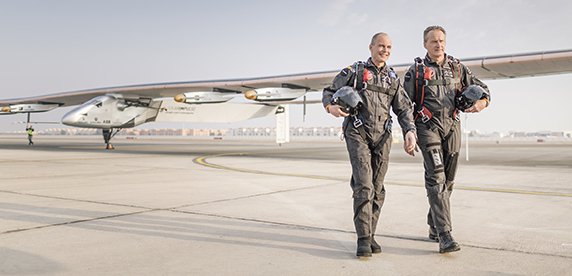
Interview: Andre Borschberg of “Planet Power” and Solar Impulse
Posted on March 29, 2018 at 2:54 pm
“Planet Power,” is a stunning documentary about the round-the-world flight of the Solar Impulse, the first-ever plane completely powered by sunlight to circle the globe. It is now in IMAX theaters across the country. It was developed and piloted by two Frenchmen, Andre Borschberg and Bertrand Piccard.
What did you learn about the world by flying over it that way that you didn’t know before?
Lots of things! But first of all it’s an incredible experience when you look about the airplane and you see the sun and you see the sun rays and then you start thinking that these rays and this radiation is sufficient to make the airplane fly, to climb and fly through the night. It’s absolutely incredible. Normally you always have an eye on the fuel gauge and then you know you only have a few minutes to go and then you have to land. So to think that you have an indefinite unlimited endurance, it’s a totally different world. Of course the entire project was incredible in the sense that we were told by the aviation industry that to build such an airplane was not possible. We were convinced on our side that there was a solution so we decided to do it ourselves. These fifteen years were a sequence of hurdles, of success, of difficulties and all this done with a fantastic team; so it’s a life experience.
I imagine that it was very quiet there because you didn’t have the humming of the engines. Is that right?
It is. If you have a chance to fly in an electric airplane, you will see how quiet it is because you don’t hear much, there’s no vibration. It’s like being in a glider which suddenly can climb like a normal plane. And in this plane I was alone. We will have a two-seater flying this summer in Switzerland and my goal is really to take lots of people in this airplane just to see the difference. The experience is something else.
One of the things that really captured my attention in the movie was that while a passenger plane can tip to a degree of 30 degrees this plane because of the size of its wings was much more limited. Did that make it difficult to maneuver?
What was tricky was the sensitivity of the airplane towards turbulence and this is why we also always try to take off very early and land late at night so we’re away from the turbulences created by the sun during the day. So that is certainly one characteristic of the airplane. On the other side, as I said, we have this freedom to be away from the clock and having the possibility if necessary to be one more day in the air when I flew across the Pacific from Japan to Hawaii, we thought it would take 5 days than have taken 6; I would say even so much the better because of the incredible experience but to have this feeling of no limit on the energy, of course, it’s a major plus.
The movie explains that you come from a family with a history of innovation. What did they do to influence you to become an innovator yourself?
When I was a really young kid I was taken by the books I read about the aviation pioneers, about what they did, about their lives, about the way they went about trying, exploring, building something that nobody did and then flying without having been coached by a flight instructor on how to do that. For me this created a strong dream and appeal in fact to be part of this world as well; so when I met in fact Bertrand a few years later, it was like getting into this world I’ve been dreaming about when I was a young boy.
Tell me a little bit about more about the partnership with Mr. Piccard, what is it that each of you contribute to that partnership?
Bertrand and I basically had different educations; we have different backgrounds and skills and at the end we were extremely complementary as a partnership through these differences. It’s one plus one equals three; one for each and one when we’re together. In that sense we are truly different but we understood that this difference was a source of creativity so very early we gave up basically the tendency to argue and to try to defend own ideas and we were more interested when we were not having basically the same understanding of a situation. I think we were always interested to understand what the other was thinking, knowing that at the end the solutions would be neither his solution nor mine. So regularly once every two weeks, once every month we would sit down and expose our feelings to the other one to try to find a common ground. We had a clear understanding that it’s only by sticking together that we could have a chance to succeed.
What of the innovations in the plane do you think will be most useful to consumers?
I think very simply electric propulsion. It is not just that solar energy is renewable. It is also much more efficient than a combustion engine. If you take your car, two liters or two gallons out of three that you put in the tank are lost for heat so it’s a totally inefficient technology. With electric propulsion we’ve changed the world of aviation for a lot of reasons but it will make aviation quieter, cleaner, safer and more affordable and you can use it not only for propulsion but also to stabilize the airplane. There are few moving parts, it’s only software, it’s only electronics, which are (things we know how to produce very cheaply and very safe today, so you can start imagining that you will have new ways to transport people, for example from one side of Los Angeles to the other side. There are many projects aiming in fact to provide this added value that will all use electric propulsion. I didn’t want basically to do a commercial project after flying around the world but I couldn’t resist to continue and develop this technology because I think it will be a game changer.
Kristen Lopez on Movie Theater Accessibility for Rogerebert.com
Posted on March 29, 2018 at 9:27 am
Bravo to Kristen Lopez for her outstanding piece on rogerebert.com about the accessibility — or inaccessibility — of movie theaters for people with disabilities.
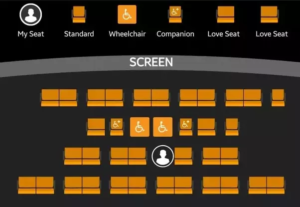
A movie theater should be a peaceful, relaxing place, and I’m sure it is for most in light of reserved seating. Movie theaters have gussied the concept up as the perfect way for all audiences to get the best seat in the house. But movie fans with wheelchairs or other limited mobility don’t get the best seat—they get the only seat. Theaters are mandated to make approximately 10% of the theater seats accessible, so obtaining the two to four wheelchair spaces in my theater can be like a terrible game of musical chairs. The outdated, ableist thinking is wheelchair users bring their own seat, like a lawn chair you plant on a soccer field. It gives them access, but how is this effective with such a small field to play on? Wheelchair users are often stuck sitting in the front rows, on flat ground with no elevation to keep a clear view. The changeover to wider, recliner-style chairs has actually decreased the number of handicap seats, and many of these new chairs come with oversized footrests or outward facing tray tables that prevent wheelchair users from transferring into them to begin with. The same Cinemark I was in has one presumably handicap seat that requires a wheelchair user to climb over the armrest to transfer into. All so you can find a place to set down your popcorn.
This is especially meaningful because Roger Ebert himself used a wheelchair for the last years of his life, and well understood the barriers — physical, logistical, and ignorant — that keep people out of movies, the very art form he called “an empathy machine.”
Rotten Tomatoes: How Digital Media is Changing Movie Criticism
Posted on March 29, 2018 at 8:41 am
Rotten Tomatoes has a fascinating and very insightful essay about online movie critics. Citing the 1990 essay by Richard Corliss decrying the devolution of movie critics due to television, Rosemarie Alejandrino, the inaugural USC Annenberg-Rotten Tomatoes Digital Innovation and Entertainment Criticism fellow, describes the scope of online critics and their connection to their audiences.
Across multimedia platforms — particularly online video and podcasts — a new class of critics has arisen, made up of people who view the world of film and entertainment criticism through a digital lens. Some don’t consider themselves critics at all. This new breed of content creators isn’t looking to compete with traditional print critics; in fact, they exist side-by-side in the same cinesphere, often using written reviews as a jumping off point for their discussions.
Where these video and audio critics are taking us represents an exciting chapter in the evolving narrative of film criticism. The ability to pause and zoom allows a crafty YouTuber to dive into a scene’s shot construction in minute detail. Access to streaming services lets a critic watch a movie over and over as to not miss a detail while dissecting the plot for easter eggs and hidden gems. The rise in podcasts and longform audio platforms connects the critic to the listener in an intimate setting, as if you’re listening in on a conversation between friends who love (or hate) a film as much as you do.
The key culture-shifting component of new media film criticism is the critics’ relationship with their audience.
The First of What Will Probably Be Many “Ready Player One” Reference Guides
Posted on March 26, 2018 at 1:50 pm
Ernest Cline’s book, Ready Player One, takes place in the future but its main character is as enmeshed in the past as he is in the video game puzzle created by the mysterious man who is something between Steve Jobs, Bill Gates, Mark Zuckerberg, and whoever invented Grand Theft Auto. The book and movie are filled with references to the pop culture of the 1980’s and there are likely to be many critics and fans examining every frame to find them all. Rotten Tomatoes kicks it off, from “Saturday Night Fever” to “Terminator,” “Iron Giant,” “Say Anything,” and the original “Mad Max.” Of course “Ready Player One” director Steven Spielberg was himself responsible for many of the iconic pop culture moments of the 1980’s.
There are tons of nods to and cameos from Spielberg’s big blockbuster hits, especially the one about the dinos. The Spielberg gems come thick and fast and pretty early in the pic — so eyes out. It all makes a bunch of sense, given that the filmmakers had to secure the rights for every easter egg they use here. And it has us imagining a Spielberg-directed Ready Player One sequel, full of easter eggs referencing the original Spielberg-directed Ready Player One: Our pop-culture–loving minds were just blown.