Interview: Jon Manning on the Burlesque Documentary “The Glitter Tribe”

Posted on February 28, 2017 at 7:50 am

Jon Manning is the director of Burlesque: Heart of the Glitter Tribe, an engaging and enlightening new film about modern-day burlesque performers who, as one of them says, combine “dancing, sexy, pretty, funny” in their performances. They have great passion for their work, their audience, and their fellow performers and they love what they do. Another one says in the film that when people tell her she will end up a spinster because of her burlesque lifestyle, she says, “I’m going to be a spinster that was a showgirl so I’m okay with it.” The film is in limited release March 3, 2017 and on VOD/Itunes March 7, 2017.

In an interview, Manning talked about what he saw and what he learned.

What makes someone a great burlesque performer?

You might want to ask a performer that question but here goes – a great burlesque performer is one that takes seriously their artform, their performance, their costume, their music, their family of performers, their audience – in the playful presentation of a sexy, sometimes funny 5 minutes of performance art. For, generally, almost no money.

These are the 98% of burlesque performers around the country that are bank tellers, graphic artists and chefs during the day.

This is not relative to (and this film is not about) the small handful of international performers such as Dita Von Tease that create big extravagant Las Vegas style shows, and have major international sponsors.

What goes into the song selection? What makes a song right for burlesque?

I have found that usually bsq performers select a piece of music that is very specific to the routine they are doing – either bc of it’s irony, specific singer or that they are exploring in their performance.

Our film explores “neo-burlesque” which is generally different than “classic” often in the types and styles of music the performers choose.

How does a burlesque performer develop her or his on-stage persona?

It’s usually an outgrowth from an aspect of their own personality. They then begin to see what works on-stage with the audience and slowly they begin to create their own persona that is unique and different than other performers.

Are burlesque performers competitive with each other? Do they enjoy watching each other perform?

I can’t speak to whether or not they are competitive with each other. As dancers and performers I image that they are. We looked very closely at one troupe that works intimately with each other in their chosen burlesque family.

My experience is that they love to watch other dancers/performers – especially if those other performers are at the top of their game!

Some of the performers in the film have always been outgoing and enjoyed being on stage. Others were originally shy and found the freedom to perform very liberating. How does that affect their acts and their relationship to the audience?

No doubt that their fears or assets are front and center in their comfort on-stage. Remember that these dancers are also actors for those few minutes on stage – with narrative and persona being adapted to their routine. So there may be a lot to overcome in who they actually are to what they want to be on-stage.

This is why most bsq performers find it empowering to be on-stage and getting immediate feedback from their audiences.

Who is the audience for burlesque? Is it different from the audience for strip shows?

Everyone can enjoy a burlesque show! A strip club usually has a completely different vibe and intention of from the audience. My experience of a strip club is that it is also very carnal and mostly attended by men. Bsq is kind of the opposite. The sexual aspect is usually done with a lot of fun and tease and usually only at the very end of the performance and my shows I have ever attended are at least 50% women in the audience.

In an era where everything is available online, what is it that brings the audience to a burlesque show?

People are realizing that life is bigger than their phones. There is a whole vibe and excitement at a bsq show. You have to be in the audience to feel it. You can also usually talk with the performers afterward a show.

So many of the performers have day jobs and other commitments. Why is burlesque so important to them?

Love of performance, empowerment, chosen family. Did I mention that is was a bawdy and raucus good time?!
Related Tags:


Behind the Scenes Directors Documentary Interview

Interview: Arthur Rasco on the Ebola Documentary “Facing Darkness”

Posted on February 27, 2017 at 8:00 am

Arthur Rasco  directed the extraordinary documentary “Facing Darkness,” about the efforts of the humanitarian group Samaritan’s Purse and their fight against Ebola, one that became very personal when their own doctor and nurse, Kent Brantly and Nancy Writebol, became infected. It was an honor to speak to Mr. Rasco about the film.

When did you start filming? It seems like you were there right from the beginning.

Samaritan’s Purse has been covering the Ebola epidemic since 2014. We have people on the ground in Liberia and some of those folks had cameras and were filming. The Deputy Country Director, Joni Byker, was filming, trying to get some clips and we were trying to get a video team off the ground to go but then late July happened and Dr. Kent Brantly was diagnosed with Ebola. And then so that changed things dramatically and then all of a sudden that threw all of us into a tailspin so it was all hands on deck to try and take care of Kent and Nancy Writebol. So we filmed bits and pieces along the way as we could, their arrivals at Emory, and then we did send our crews back in late October 2014. Once we re-engaged and sent supplies to the airlift with two 747s loaded with supplies, we sent a video crew. And then we were green lit to do the documentary in about April 2015, so that’s when we really begun in earnest putting together the film. The film will be in theaters on March 30, 2017.

How did you shape your production schedule and your approach as the story developed?

We had a great team that was involved in putting the film together. I’m just one piece among a great team of people here at Samaritan’s Purse and so we documented quite a bit of the stories of several people that had been involved. Some of the people like Bev and Kendell Kauffeldt and Dr. Lance Plyler we debriefed and recorded those interviews. So we had an idea of how we wanted to shape the story and then you go and you go there on the ground and then you also start meeting people like the nationals, the Liberians who had such amazing stories that we were able to work into the film.

We talked to people like Joseph Gbembo who lost 17 family members. We knew that he had lost quite a few and when we were interviewing him and then he says in the film, “When I look at the kids, the nieces and nephews, the children of those family members that passed away that gives me hope.” Okay, how many are we talking about? And then he says, “16.” And that moment was just so real and so we put that into the film just as it was because it was just such a dramatic earth shattering moment for all of us. We didn’t quite know that aspect of the story and so that was just amazing. Meeting people like Barbara Bono, who was a Liberian Ebola survivor and having her tell the story was just so powerful. Filming many interviews with everybody, I am crying and all of us are just in tears as we’re hearing the stories of what she went through and what she was afraid of during the time.

How do you maintain the distance that you need in order to make the film and yet to reach out to them as a human to get them to open up the way they do?

Well, I don’t know if I’m too good at keeping distance. I really enjoy and I want to engage with the folks, with people because their stories are just so amazing, they have been through some things that I am just trying to reflect, I’m just trying to share. I wasn’t able to be on the ground in 2014 when all of this happened and yet you know that these folks have been through something pretty earth shattering and so you want to respect that and you want to be able to let them tell their story openly and honestly. And so I laughed at when they laughed, I cried when they cried. I’m just trying to have them tell their story.

In America people went a little crazy on the subject of Ebola and didn’t listen to what the experts and the scientists had to say about the threat that it posed. How did that complicate things to bring back Kent to the US in the midst of all of that fear?

We as an organization as Samaritan Purse knew that we had to do everything, all that was possible to try and take care of Kent and Nancy. As you saw in the film it’s just a miraculous set of events that’s really unfolded. You almost can’t write this as a script. You just see God working in these ways. We took all the precautions that we could and Samaritan’s Purse put in place its own set of protocols to try and take care of our remaining staff. We were in touch with the CBC during this time, too. They gave us their instructions and we said, “Well, we’re going to step it up a notch because we want to keep our people safe and do the best that we can.”

What do you want people to learn from the film?

Our hope is that this is a story that will inspire young people, inspire a new generation of missionaries to set out in bold faith and go out to the mission field, to go out and serve, and serve in the name of Christ and putting their life on the line if that’s what they are called to because that’s where the need is. The need is out there and you can go out, you can make a difference. And that’s what the movie is about right? It’s letting compassion fuel a courage that will conquer fear and so that’s what we want to be able to do to encourage, to inspire a new generation of missionaries to head out there. I hope that people will feel challenged after watching this movie.

Related Tags:


Documentary Illness, Medicine, and Health Care Interview Spiritual films
Oscars 2017

Oscars 2017

Posted on February 27, 2017 at 12:11 am

Nice work, Oscars!  Except for that weird fake-out at the very end.

Copyright 2016 Plan B Entertainment

The show started off with Justin Timberlake’s terrific performance of his nominated song, a burst of jubilant  celebration that set the tone.  Jimmy Kimmel was a fine host, with a self-deprecating reminder that this was his first-ever time at the Oscars and, given the way the awards ceremony runs through hosts, probably his last.  His opening remarks were just barbed enough, joking about the “overrated” Meryl Streep and touching lightly on the political controversies of the moment.  Supporting Actor award winner Mahersala Ali got the acceptance speeches off to a wonderful start with his gracious comments about being in service to the characters he plays.  His perspective on the event may have reflected the even more important event in his life this week, the birth of his new baby.

Best Supporting Actress winner Viola Davis gave a deeply emotional speech, reminding the crowd that their profession celebrates “what it means to live a life.” She became the first black woman to achieve the triple threat: Oscar, Tony, Emmy.  Kimmel joked that her speech was so powerful she was immediately nominated for an Emmy.  16-year-old Auli’i Cravalho was marvelous performing the song from “Moana,” and kept her cool even when she was bonked on the head by one of the huge blue flags representing the ocean, and continued like a pro.

Kevin O’Connell is not a household name, but he is the Susan Lucci of the Oscars, with a record-breaking 21 nominations. His first win last night for “Hacksaw Ridge” was very meaningful to the insiders and his acceptance speech was one of the highlights of the evening.

Not so good — the idea of delivering snacks to the audience never worked and repeatedly dropping candy from the ceiling was pointless and silly, as was the prank of bringing unsuspecting tourists into the building.

Oscar commercials are getting as important as the Super Bowl ads. The Walmart challenge to four directors to make short films based on the same shopping receipt made the commercial breaks a lot of fun.

The theme of inspiration was beautifully presented as today’s stars paid tribute to the movies that meant the most to them when they were young and then came out on stage with the stars they saluted. Kimmel went overboard with his spoof, unfortunately using it as another opportunity to push his mock feud with Matt Damon (later introduced as a presenter only as Ben Affleck’s “guest”). I like “We Bought a Zoo!”

It was great to see Damien Chazelle become the youngest person ever to win the Best Director award, for “La La Land,” a labor of love made almost entirely by young people, and a film that revitalized the musical genre and of course paid tribute to the making of movies itself.  Tied for the record of the most Oscar nominations, it went on to win Best Actress for Emma Stone and best score, production design, and song as well.

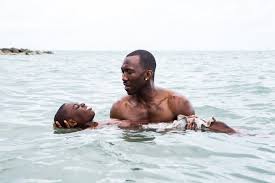
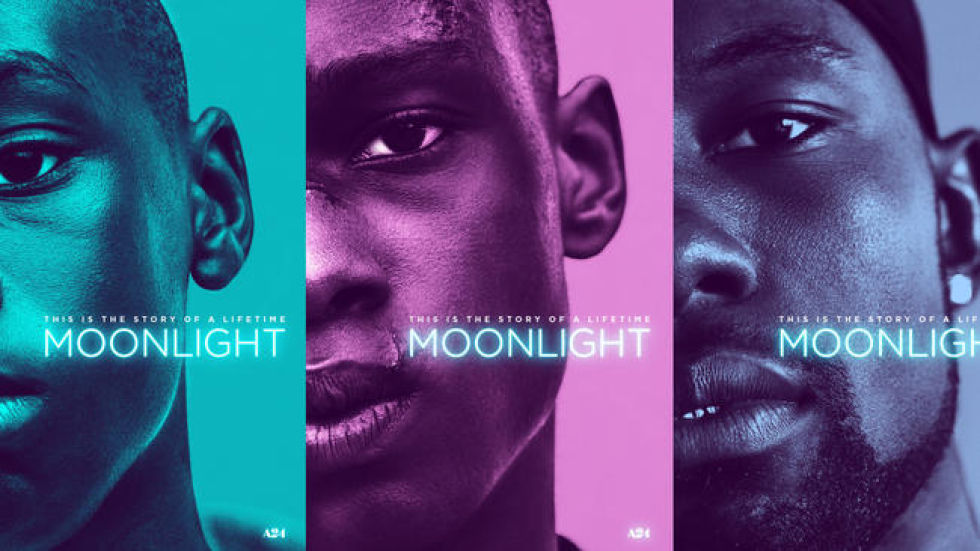
And then, after the biggest fumble in awards show history, it turned out that “Moonlight” was the Best Picture winner after all, a superb choice.  A small movie about people often overlooked or marginalized or stereotyped, made by a group of friends who had no other aim but to honor their own history, achieved the highest award in show business due solely to its powerful honesty and the poetry of its storytelling.  That’s a Hollywood ending.

Related Tags:


Awards
Spirit Awards 2017: Molly Shannon, Casey Affleck, and “Moonlight”

Spirit Awards 2017: Molly Shannon, Casey Affleck, and “Moonlight”

Posted on February 26, 2017 at 4:01 pm

Copyright A24 2016

I love the Spirit Awards (formerly Independent Spirit), given out the night before the Oscars for the best of the year’s independent films. These are movies made with more passion than money, and the award ceremony, on the beach, is always casual and a bit subversive, but always very sincere. I am proud to be a Spirit Awards voter, and very proud of our selections.

Best Feature:

Moonlight (A24)

Producers: Dede Gardner, Jeremy Kleiner, Adele Romanski

Best Director:

Barry Jenkins, Moonlight (A24)

Best Screenplay:

Barry Jenkins, Tarell Alvin McCraney (Story By), Moonlight (A24)

Best First Feature:

The Witch (A24)

Director: Robert Eggers

Producers: Daniel Bekerman, Jay Van Hoy, Lars Knudsen, Jodi Redmond,

Rodrigo Teixeira

Best First Screenplay:

Robert Eggers, The Witch (A24)

John Cassavetes Award (For best feature made under $500,000):

Spa Night (Strand Releasing)

Writer/Director: Andrew Ahn

Producers: David Ariniello, Giulia Caruso, Ki Jin Kim, Kelly Thomas

Best Supporting Female:

Molly Shannon, Other People (Vertical Entertainment)

isabelle-huppert-in-elle-closing-her-shutters-in-storm-with-help-of-neighbor
Image via Sony Picture Classics
Best Supporting Male:

Ben Foster, Hell or High Water (CBS Films/Lionsgate)

Best Female Lead:

Isabelle Huppert, Elle (Sony Pictures Classics)

Best Male Lead:

Casey Affleck, Manchester by the Sea (Amazon Studios)

Robert Altman Award:

Moonlight (A24)

Director: Barry Jenkins

Casting Director: Yesi Ramirez

Ensemble Cast: Mahershala Ali, Patrick Decile, Naomie Harris, Alex Hibbert, André Holland, Jharrel Jerome, Janelle Monáe, Jaden Piner, Trevante Rhodes, Ashton Sanders

Best Cinematography:

James Laxton, Moonlight (A24)

Best Editing:

Joi McMillon, Nat Sanders, Moonlight (A24)

Best International Film:

Toni Erdmann (Germany and Romania– Sony Pictures Classics)

Director: Maren Ade

Best Documentary:

O.J.: Made in America (ESPN Films)

Director/Producer: Ezra Edelman

Producers: Deirdre Fenton, Libby Geist, Nina Krstic, Erin Leyden, Tamara Rosenberg, Connor Schell, Caroline Waterlow

Related Tags:


Awards

The Razzies 2017: Batman v. Superman, Zoolander 2, and Hillary’s America

Posted on February 26, 2017 at 3:54 pm

Each year at Oscar time the Golden Raspberry Awards (the Razzies) pay “tribute” to the worst films of the year.

The big “winner” this year was “Hillary’s America,” an anti-Hillary Clinton “documentary” from Dinesh D’Souza, who was awarded Razzies for worst film, worst director, and worst actress for the woman who portrayed the former first lady, Secretary of State, Senator, and Presidential candidate. D’Souza deserves some sort of good sport award for showing up to accept the honors. Other awardees included “Batman v. Superman” and “Zoolander 2.” Mel Gibson’s comeback was recognized with a “Razzie Redeemer award” for “Hacksaw Ridge.”

Worst picture: “Hillary’s America: The Secret History of the Democratic Party.”

Worst actor: Dinesh D’Souza, for “Hillary’s America: The Secret History of the Democratic Party.”

Worst actress: Rebekah Turner, for “Hillary’s America: The Secret History of the Democratic Party.”

Worst director: Dinesh D’Souza, for “Hillary’s America: The Secret History of the Democratic Party.”

Worst supporting actor: Jesse Eisenberg, from “Batman v Superman: Dawn of Justice”

Worst supporting actress: Kristen Wiig, from “Zoolander No. 2.”

Worst screenplay: “Batman v Superman: Dawn of Justice.”

Worst ripoff or sequel: “Batman v Superman: Dawn of Justice.”

Worst screen combo: “Batman v Superman: Dawn of Justice”

The Razzie Redeemer Award: Mel Gibson, for “Hacksaw Ridge”

Barry L. Bumstead Award (for a movie that cost a lot and lost a lot): “Misconduct”

Related Tags:


Awards
THE MOVIE MOM® is a registered trademark of Nell Minow. Use of the mark without express consent from Nell Minow constitutes trademark infringement and unfair competition in violation of federal and state laws. All material © Nell Minow 1995-2026, all rights reserved, and no use or republication is permitted without explicit permission. This site hosts Nell Minow’s Movie Mom® archive, with material that originally appeared on Yahoo! Movies, Beliefnet, and other sources. Much of her new material can be found at Rogerebert.com, Huffington Post, and WheretoWatch. Her books include The Movie Mom’s Guide to Family Movies and 101 Must-See Movie Moments, and she can be heard each week on radio stations across the country.

Website Designed by Max LaZebnik