What Can We Learn from #1 Songs?

Posted on April 27, 2011 at 8:00 am

Jessie Rifkin listened to every number one song in the history of the pop charts, from Ricky Nelson’s “Poor Little Fool” up through this week’s “ET” by Katy Perry and wrote about it for the Washington Post.  He notes that “The first 100 non-instrumental No. 1’s were performed by 38 solo acts and 62 groups, but the most recent 100 were performed by 91 solo acts and nine groups” and that George Harrison and Elvis Presley had number one hits after they were not at the top of their careers.  “And only 19 instrumentals have reached the top spot, none after 1985’s synth-percussion-fest “Miami Vice Theme” by Jan Hammer.”  Perhaps most significantly,

What is remembered as the defining music of an era and what actually sold the most at the time are very different. Imagine the 1960s without Bob Dylan, James Brown and Jimi Hendrix; the 1970s without KISS, the Who and Led Zeppelin; the 1980s without Bruce Springsteen, Journey and Run-DMC; the 1990s without Nirvana, Green Day and Public Enemy; the aughts without John Mayer, Linkin Park and Taylor Swift. None of these giants have had a No. 1 song — at least not yet.

Get your own sense of what Jessie Rifkin listened to with these wonderful compilations of five seconds from every number one song on the top 40.  If you are as old as I am, it is the aural equivalent of seeing your life pass before your eyes.  What is the first pop song you remember?  What is the first one you ever bought?  What’s your favorite one-hit wonder?


Related Tags:


Music Understanding Media and Pop Culture

Cracked Solves Seven Movie Mysteries

Posted on April 25, 2011 at 3:31 pm

Cracked has a funny post about what’s behind seven hotly debated movie mysteries, from what’s in “Pulp Fiction’s” briefcase to what Billy Murray whispered to Scarlett Johansson in “Lost in Translation.”  They even take on the last episode of “The Sopranos.”

Related Tags:


Understanding Media and Pop Culture
Interview: Morgan Spurlock of POM Wonderful Presents: The Greatest Movie Ever Sold

Interview: Morgan Spurlock of POM Wonderful Presents: The Greatest Movie Ever Sold

Posted on April 21, 2011 at 8:00 am

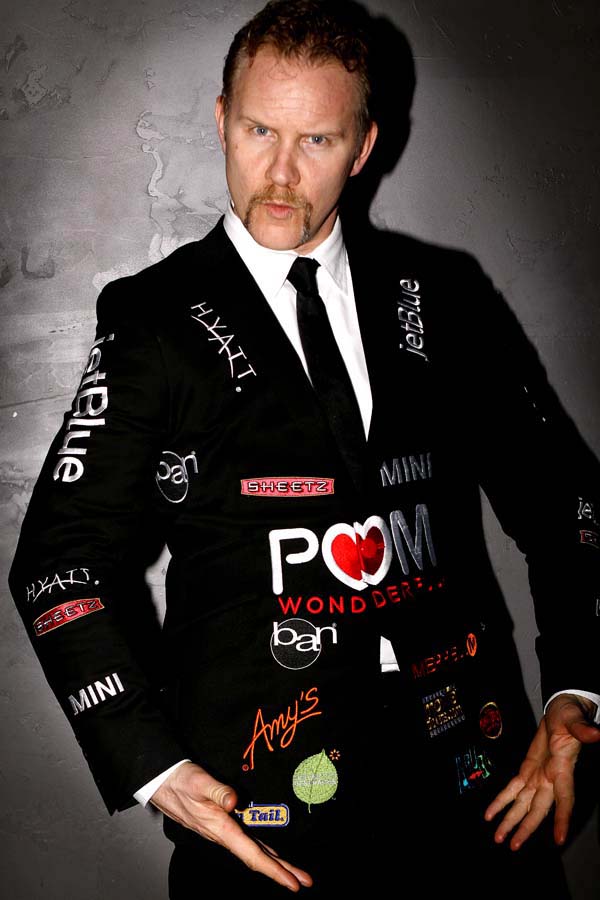
Morgan Spurlock took on fast food in “Super Size Me.”  He was funny, direct, and at times outraged as he tried to live for a month on McDonald’s “supersize” portions, and I liked his even-handedness in taking on the consumers as well as the providers, calling on us to take responsibility for ourselves.  His television series, “30 Days,” had people (including Spurlock himself) immersing themselves for a month in a culture outside their comfort zones.  Again, despite tone that seemed highly satiric at times, the show was about the middle, the gray areas, the nuances.  His new film is called “POM Wonderful Presents: The Greatest Movie Ever Sold.”  Yes, he made a movie about product placement that is entirely financed by product placement.

Spurlock spoke to me about the movie.

You were right!  At the screening you said that everyone there would never look at the world the same way again.  We walked out of the theater and the first thing I saw was a banner on a building I had never noticed before.

And it’s going to get worse — and better at the same time!

Advertising is everywhere.  Amazon has just discounted the Kindle for customers who are willing to look at ads.

And it’s such a small discount!  Shouldn’t it be free if they’re going to send you ads?

I think the most disturbing thing in the movie is the school selling advertising to raise money.  It’s especially sad that it is such a small amount of money and yet they can’t get it any other way.

It’s incredible. School districts are getting literally five to seven thousand dollars a year and in exchange they are letting all this advertising in.

What kind of impact does that have on kids? Does it desensitize them or do they stay susceptible to being drawn into the brands that are put in front of them?

That’s what the jury’s out on. There’s multiple layers to that one. You start to believe that these products and these brands are the ones that make things happen. They’re the ones you should trust, the ones that have solutions. That’s the question I have all the time, do we really want to live in a world where everything’s brought to you by some sponsor? That’s the way it seems to be going.

That’s right. Even at the Smithsonian, the flag that inspired “The Star Spangled Banner” is now brought to you by Ralph Lauren. Is POM happy with the results from paying to have their name in the title of the film?

Everybody seems to be. It’s gotten a great response. I think it makes all the sponsors who paid to be in the film look incredibly smart. I called 600 brands but only these 20 were brave enough to be a part of the film and want to pull back the curtain and have a real honest conversation about transparency. It’s very telling.

For me what was telling was that they basically say, “We don’t care what you say about us as long as you get our name out there.”

That’s part of what I love about it. Who was it who said, “I don’t care what you say about me as long as you spell my name right?”

Will you have product placement in your future films?

I think it really works for this one because the satire makes the whole thing work. I can’t imagine shooting an interview for another movie about Darfur or something where suddenly someone is drinking Coke in the middle of an interview. But one of the things I love is what J.J. Abrams says in the film: “I’m about story-telling, not story-selling.” We live in a world where people use products. They drive Cameros. They drink Coke. They wear Nikes. So it’s not like I think we should try to eliminate this stuff from entertainment. It would create a very unreal scenario. But what I don’t want is Ford in the writer’s room, “I want to start with a wide shot of the car and when the guy gets out of the car it would be great if he could say how well the car handled.”

You want the product to tell you something about the character.

Yes, if he drives a Mustang, he drives a Mustang.  If he drives a Volvo, he drives a Volvo.  But don’t make them show an extreme close-up of the logo just because they gave them a car to be in the movie.

You kept Mane and Tail shampoo in the film even though they didn’t pay.

They were the only ones where we were contractually obligated to say that they did not pay.  But there were others in the film who did not pay.  But what they brought to the table was not hard cash but soft money in terms of promotions.  Big brands do that all the time with studios so they can have Iron Man in the store or Tony Stark wearing sunglasses in their ads.  Characters appear on cereal and candy bars and potato chips and then there are lunchboxes, t-shirts, hats, and all that other stuff.  I tried to get McDonald’s to be a partner on this film.  I really wanted those documentary action figures.  Those would have sold like hotcakes!

Many of the companies that were willing to work with you were family-owned, like POM, Sheetz, and Hyatt.   They were very big, but they didn’t have the kind of bureaucracy of publicly-traded companies and were more inclined to do something off-beat.

Some of them make more than Fortune 500 companies.  And MiniCooper is part of a giant corporation.  Old Navy is owned by a gigantic conglomerate.  But they didn’t come on until they saw the film at Sundance.  Eight partners came on after Sundance.  That happens all the time with big Hollywood movies, too.  They wait to see how the film comes out and how audiences react and then say, “I want to be a part of this.”

What do you advocate?  Better disclosure?

It’s already at the end of a movie, where it says, “promotional consideration by…” but by then you’ve stopped watching.  The BBC has just started to allow product placement.  Like we have TV-MA, they have P for product placement before the show.

Do you advocate different rules for children’s programming and programming intended for adults?

You have to look at them different.  They’re two entirely different audiences.  They consume media in very different ways.  Kids recognize brands at a very young age, as young as four years old.  I don’t think you should have placement in kids’ shows but it goes beyond that.  The character becomes the toy, the lunchbox.  The argument for that is, “I can’t have free enterprise?”  The problem I have is the targeted advertising around programming.  My own son said, “I want to get that wrestler set!  But the pieces are sold separately.” I said, “Time to turn off the TV.  We’re done.”

 

Related Tags:


Directors Documentary Interview Understanding Media and Pop Culture

Screen-Free Week April 18-24

Posted on April 16, 2011 at 3:45 pm

It used to be called TV-Turnoff Week but that was so 1990’s.  Now it’s Screen-Free Week — one week for families to turn off the screens and reconnect with old-fashioned in-person interaction, to look each other in the eyes, spend time outside, cook together, read books on paper, daydream, play board games and cards, and, perhaps most important, go for more than 20 seconds without being interrupted by buzzing, beeping, ring-tones, or tweets.  It’s also a chance to participate in the many Screen-Free Week events organized around the country.  The Campaign for a Commercial-Free Childhood has a fact sheet for kids and resources for parents and teachers, including an excellent Live Outside the Box Toolkit from Seattle and King County.  Screen-Free Week is endorsed by a wide range of educators and health professionals including the American Medical Association, the National Education Association, and the American Academy of Pediatrics.

I was disappointed to see Double X blogger KJ Dell’Antonia explain why she and her family will not be observing Screen-Free Week, apparently because it is inconvenient. Without television as a soporofic,

my four children will be running wild around me, invariably losing their generally excellent ability to self-entertain and peacefully interact at approximately 5:00 daily, precisely the moment when I’m desperately trying to finish up the last bits of work for the day and start dinner—without once resorting to the highly addictive, all-child-inclusive form of entertainment that is Phineas and Ferb.

She doesn’t try to suggest that there is anything beneficial to her children in her decision.  It is Dell’Antonia who wants to continue to rely on television to keep her children quiet and does not even want to take one week to try to teach them that they have other alternatives — like reading a book, drawing a picture, playing a game, or setting the table.  She has to admit, “I support the idea of a “screen-free week,” but I support it as a family project, not a top-down imposition of a temporary new screen rule.”  The entire idea of Screen-Free Week is as a family project.  I am certain that children will be so happy to have their parents put down their Blackberries that they will be more than willing to miss another rerun of Phineas and Ferb and that it is well worth it for everyone to learn that media is not the only way to spend quiet time.


Related Tags:


Parenting Understanding Media and Pop Culture

Enough Already with ‘In the Hall of the Mountain King’

Posted on April 13, 2011 at 3:59 pm

Indiewire has a very funny piece about the popularity — the near-ubiquity — of Edvard Grieg’s “In the Hall of the Mountain King” in movies and trailers.  Before I go any further, let’s listen to it and see if it brings back any memories.

Wikipedia has an extensive list of “Mountain King” in film and television and trailers.


  • “In the Hall of the Mountain King” was famously used in the 1931 film “M,” in which Peter Lorre’s character whistles it. As of February 2008, it may be viewed and heard on YouTube.
  • In the ‘boat race’ scene of “The Social Network” (2010), a Trent Reznor remix is used when the Winklevoss brothers compete before discovering that Facebook reaches both Europe and video live streaming.
  • The song also was used in the opening promo for WWE’s Vengeance 2001
  • The song also appears during the teaser trailer of Tim Burton’s “Corpse Bride” and “How the Grinch Stole Christmas,” “Beetlejuice,” “Funny Games, Bride Wars,” “Rat Race,” “Friday After Next” and “Night at the Museum 2: Battle of the Smithsonian.”
  • The song is the theme music for Dr. Ivo Robotnik in the animated series, Adventures of Sonic the Hedgehog.
  • The semi-fictional characters Tristan Farnon and James Herriot in the BBC televised series “All Creatures Great and Small” perform the piece drunkenly with their dates at a pub.
  • It is also played over the end credits of the Woody Allen film “Scoop.”
  • A young boy is seen playing “In the Hall of The Mountain King” as a piano practice piece in an episode of Mad Men entitled “The Mountain King”.
  • In the final episode of Beavis and Butthead, “In the Hall of the Mountain King” is being played when Principal McVicker has flashbacks to their antics.
  • In the Courage the Cowardly Dog episode, entitled “Farmer-Hunter, Farmer Hunted”, the song can be heard several times.
  • “In the Hall of the Mountain King” is also featured in the intro of the television series “The Dudesons.”
  • The vampires in “The Lost Boys: The Tribe” whistle the tune to this song.
  • Lamberto Bava’s 1985 horror film “Dèmoni” (aka Demons) includes a title theme by Claudio Simonetti that incorporates the melody of “In the Hall of the Mountain King”.
  • Fragments of the piece are heard in the BBC Oscar-winning documentary “Man on Wire” in a re-enactment where Philippe Petit and an accomplice herd the infamous tightrope wire up the stairs, past a guard on duty. Though not played in full, the song is listed in the film’s musical credits.
  • It was used as the three brothers theme on the “Garfield and Friends” spin-off “Orson’s Farm.”
  • It is played when the antiestablishment Mozzie enters the FBI offices in USA Network’s “White Collar” (season 2, episode 4, 2010). song of the French author Bernard Werber’s short film “La Reine de Nacre.”
  • It served as a basis for the theme of the Inspector Gadget animated series.
  • A version of the song is used during a scene featuring a game of charades in a 2010 episode (“Chuck Versus the Leftovers”) of “Chuck.” Scenes immediately following this one then work cues of In the Hall of the Mountain King into the show’s original score.
  • It is used in the movie trailer of “Dinner for Schmucks.”
  • This song is the main theme of Microsoft’s commercial for its Windows Phone 7: Really.
  • It the sixth episode of 2nd season of “Misfits” (TV series) .
  • It was used in “The King of Kong: A Fistful of Quarters” during a graphing of Steve Wiebe’s world record attempt.
  • It was also played in the opening scenes of the Norwegian movie “Død Snø (Dead Snow).”
  • In “Mickey, Donald, Goofy: The Three Musketeers,” Pete’s song “Petey’s King of France” is sung to the tune of this song.


Two more over-used tunes:

(A lot of sports movies including “The Sandlot,” “The Mighty Ducks,” “The Replacements,” “The Longest Yard,” “Ice Princess” and many more)

(Also mentioned by Indiewire and used for a lot of battle scenes, series and comic, in everything from “Excalibur” and “Detroit Rock City,” to “Glee,” “Wrestlemania” and “Jackass”)

Any other candidates?


Related Tags:


Music Understanding Media and Pop Culture
THE MOVIE MOM® is a registered trademark of Nell Minow. Use of the mark without express consent from Nell Minow constitutes trademark infringement and unfair competition in violation of federal and state laws. All material © Nell Minow 1995-2026, all rights reserved, and no use or republication is permitted without explicit permission. This site hosts Nell Minow’s Movie Mom® archive, with material that originally appeared on Yahoo! Movies, Beliefnet, and other sources. Much of her new material can be found at Rogerebert.com, Huffington Post, and WheretoWatch. Her books include The Movie Mom’s Guide to Family Movies and 101 Must-See Movie Moments, and she can be heard each week on radio stations across the country.

Website Designed by Max LaZebnik