
Black-Ish: An Episode of Great Humanity and Understanding

Posted on January 13, 2017 at 3:08 pm

I have never missed an episode of “Black-ish.” It’s one of my favorite television shows, smart, sophisticated, and very funny. I am a huge fan. But this week’s episode took things to another level as the Johnson family and Dre Johnson’s co-workers react to the election of Donald Trump.

Over at Vulture, my friend Jen Chaney writes:

no scripted mainstream sitcom has captured the very real mix of post-election grief, frustration, confusion, and sadness with as much spot-on accuracy — and, miraculously, also humor and openness to multiple viewpoints — as Black-ish did in this week’s episode. The fact that it was broadcast the day after President Obama’s farewell remarks and just a few days before the birthday of Martin Luther King Jr., whose “I Have a Dream” speech played a key role, gave it an extra shot of timeliness.

At TV Guide, Liam Matthews said:

Dre launches into a monologue about how he loves this country, even though as a black man this country doesn’t love him back.

“You think I’m not sad that Hillary didn’t win?” he says. “That I’m not terrified about what Trump’s about to do? I’m used to things not going my way. I’m sorry that you’re not and it’s blowing your mind, so excuse me if I get a little offended because I didn’t see all of this outrage when everything was happening to all of my people since we were stuffed on boats in chains. I love this country. As much if not more than you do. And don’t you ever forget that.”
It’s an emotionally complicated monologue, and Anderson delivers it with stunning conviction.

The room is silent. If you watched it, I’ll bet you were silent, too. The monologue is rousing and demoralizing at the same time. It makes being black sound Sisyphean. It contextualizes our current predicament as one that’s been going on since America began and may not ever be solved.

This 22-minute episode of television had more insight, more humanity, and more healing than all the chattering heads and yelling partisans on all the news shows. I recommend recording it to have on hand to replay as needed over the next few months.

Related Tags:


Television Understanding Media and Pop Culture

Eugene Lee: Production Designer for SNL

Posted on January 10, 2017 at 4:01 pm

Eugene Lee has designed sets for “Saturday Night Live’ since the very beginning in 1975. He spoke to the UK’s Creative Review about creating the look of the sketches and how technology and expectations have changed in 41 years.

Lee says the SNL team has just four days to prepare the show and construct sets. Every Wednesday, he takes the train from Rhode Island (where he lives) to New York (where the show is broadcast) and spends the afternoon reading through scripts submitted by writers. Once the producers have decided which scripts they’d like to use, Lee and his team will work with the writers and actors to devise each set.

“We go and talk to the writers and actors and try to work out what they see in the set,” he explains. “If the script says there’s a restaurant, we’ll say, ‘what kind of restaurant? Is it high class? Is it elegant? Does it have red chequered tablecloths?’…. SNL is best when there’s great writing – if a sketch doesn’t have that, then it’s a fail – so we listen to the writers and they tell us what they think.

Related Tags:


Behind the Scenes Television Understanding Media and Pop Culture
Slate’s 2016 Movie Club

Slate’s 2016 Movie Club

Posted on January 6, 2017 at 8:00 am

I look forward to Slate’s annual movie club roundup of critics discussing the best and worst of the year.

Copyright 2016 Plan B Entertainment

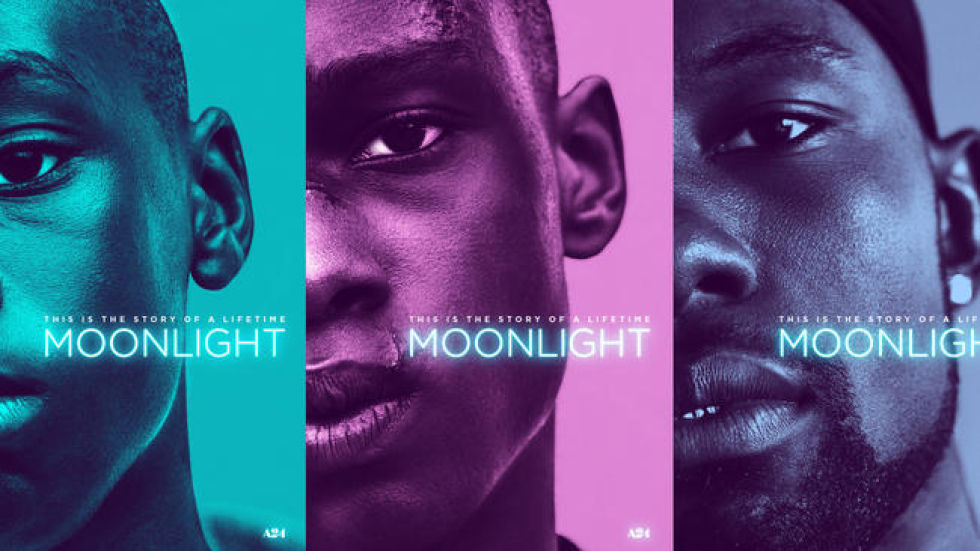
Slate’s own Dana Stevens points out that there was only one title on all four participants’ top ten lists for the year, Barry Jenkins’ “Moonlight.” She says, “‘Moonlight’s’ commercial and critical success—the near-universal recognition of its hard-to-define specialness—was one of the cracks in the wall that allowed light (that liquid Miami moonlight) to shine into this sometimes pitch-dark year.” Mark Harris calls it “a beautifully accomplished work that takes seminar-room issues of race, class, sexuality, and identity and transforms them into something artistic, sexy, tragic, wrenching, human, and fully American.”

I am more interested in the discussions and debates about particular movies than in the effort to look for themes in the movies that were released or popular in any individual year or consider them as a reflection on our times. But I did like Brooks Barnes’ essay in the New York Times about how in the tumultuous year all of the top box office films were fantasies.

Related Tags:


Understanding Media and Pop Culture

A Scholarly (Yes!) Look at Ferris Bueller

Posted on January 4, 2017 at 8:00 am

I’m a fan of Steve Almond’s writing, and really enjoyed his take on “Ferris Bueller’s Day Off,” especially his discussion of the relationship between Ferris (Matthew Broderick) and Cameron (Alan Ruck).

Hughes could have simply cast as a straight man for Ferris. But he does something far more compelling: he renders the pair as a psychological dyad. Ferris is fearless, larger-than-life. He has internalized the unconditional love of his parents and skips through his days in a self-assured reverie. He is what every teenage guy dreams of being: a raging, narcissistic id who gets away with it. Cameron is an actual teenager: alienated from his parents, painfully insecure, angry, depressed.

It is the tension between these two that drives the action.

He puts the story into context as more than a lighthearted wish fulfillment.

 Hughes performed an astounding ontological feat. He lured viewers into embracing his film as an escapist farce, then hit them with a pitch-perfect exploration of teen angst. He snuck genuine art past the multiplex censors.

He writes about the scene where Cameron argues with himself about whether he will do as his friend Ferris asks and leave home for a “day off.”

https://www.youtube.com/watch?v=CdcFYNe9U7A

The sequence lasts barely a minute. It is an astonishing piece of physical humor, an emotional ballet worthy of Chaplin. Hell, it’s one of the best pieces of acting I’ve ever seen, period. Because it’s not just funny, it’s heartbreaking. We are watching a kid utterly crippled by his own conflicted impulses, torn between outrage and obedience.

Related Tags:


Understanding Media and Pop Culture
THE MOVIE MOM® is a registered trademark of Nell Minow. Use of the mark without express consent from Nell Minow constitutes trademark infringement and unfair competition in violation of federal and state laws. All material © Nell Minow 1995-2026, all rights reserved, and no use or republication is permitted without explicit permission. This site hosts Nell Minow’s Movie Mom® archive, with material that originally appeared on Yahoo! Movies, Beliefnet, and other sources. Much of her new material can be found at Rogerebert.com, Huffington Post, and WheretoWatch. Her books include The Movie Mom’s Guide to Family Movies and 101 Must-See Movie Moments, and she can be heard each week on radio stations across the country.

Website Designed by Max LaZebnik