Yes, There is More Violence in PG-13 Movies Now: Pediatricians

Posted on November 11, 2013 at 8:06 pm

Pediatrics, the journal of the pediatric professionals, has published a new study about the increase of gun violence in PG-13 movies, often more than in R movies.  It documents what parents have already figured out.

Violence in films has more than doubled since 1950, and gun violence in PG-13–rated films has more than tripled since 1985. When the PG-13 rating was introduced, these films contained about as much gun violence as G (general audiences) and PG (parental guidance suggested for young children) films. Since 2009, PG-13–rated films have contained as much or more violence as R-rated films (age 17+) films.

Even if youth do not use guns, these findings suggest that they are exposed to increasing gun violence in top-selling films. By including guns in violent scenes, film producers may be strengthening the weapons effect and providing youth with scripts for using guns. These findings are concerning because many scientific studies have shown that violent films can increase aggression. Violent films are also now easily accessible to youth (eg, on the Internet and cable). This research suggests that the presence of weapons in films might amplify the effects of violent films on aggression.


Related Tags:


Understanding Media and Pop Culture

In DC: I’m Co-Hosting a Series of Pre-Code Films at the Hill Center

Posted on November 10, 2013 at 3:57 pm

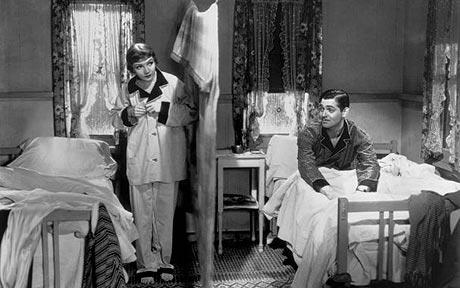
I’m thrilled to announce that Margaret Talbot and I are co-hosting a steamy series of four films from the early 1930’s at Washington DC’s Hill Center, starting this Friday with Barbara Stanwyck’s “Baby Face.”

In a film and discussion series that will explore the history of sex and violence in the movies, censorship and the ratings system, we will present four gems of pre-Code cinema. For several years in the early 30s, producers, directors and screenwriters routinely flouted the moral guidelines known as the Hays Code. It wasn’t until July, 1934, when they were threatened with a nationwide boycott of the movies organized by the Catholic Church and its Legion of Decency, that the studios agreed to a stricter enforcement regime that would ensure they followed the rules. The movies that emerged from Hollywood in those first, “pre-Code” years of the 1930s are often racier, more cynical, darker and franker than movies would be for many years afterward.

In Baby Face (1933), Barbara Stanwyck literally sleeps her way to the top in the film that critic Mick LaSalle calls “lurid and black comic” and “the ultimate pre-code for pure outrageousness.” Stanwyck plays a small-town girl whose father sells her sexual services until she decides to deploy them for her own benefit. In a stunning scene, we see her take the elevator higher and higher in a big office building, seducing a man on each floor with more money and power than the one below. Look quickly — one of those men is a very, very young John Wayne. We will be showing the rare uncensored version of the film, with a steamy extra five minutes and without a tacked-on final scene — more men and less redemption.

Related Tags:


Understanding Media and Pop Culture

Bad Movie/Good Soundtrack — IndieWire’s Critic Survey

Posted on October 30, 2013 at 8:00 am

I always enjoy IndieWire’s critics surveys and this is an especially good question: What is your favorite example of a bad movie with a great soundtrack?  I was not surprised to find Elizabethtown mentioned by Alissa Wilkenson of Christianity Today.  I would call Cameron Crowe’s movie more a mess than a complete failure, but as is clear from the autobiographical “Almost Famous,” he got his start writing about music and his soundtracks are always terrific.  I enjoyed Mike McGranagan‘s praise for the “Twilight” soundtracks and the thoughts of my friend Dan Kois:

I barely remember anything about Until the End of the World, Wim Wenders’ sort-of road movie, sort-of spy thriller, sort-of apocalypse sci-fi. I remember being really, really disappointed by it when I saw it my senior year in high school. But oh, wow, the soundtrack, which served as rich mixtape fodder that same year: crucial unreleased tracks by R.E.M. and Talking Heads; Elvis Costello doing the Kinks; grim and great Lou Reed, k.d. lang, and Depeche Mode songs; and my first introduction to CAN, Patti Smith, and Nick Cave. Plus that Achtung Baby song, before I got sick of everything on Achtung Baby.

There’s a difference between a soundtrack (that can include songs) and a score.  Two movies that are not terrible but not great with outstanding song-based soundtracks are “Boys on the Side” and “Leap of Faith.”  My favorite songs from those movies include:


Related Tags:


Music Understanding Media and Pop Culture
THE MOVIE MOM® is a registered trademark of Nell Minow. Use of the mark without express consent from Nell Minow constitutes trademark infringement and unfair competition in violation of federal and state laws. All material © Nell Minow 1995-2026, all rights reserved, and no use or republication is permitted without explicit permission. This site hosts Nell Minow’s Movie Mom® archive, with material that originally appeared on Yahoo! Movies, Beliefnet, and other sources. Much of her new material can be found at Rogerebert.com, Huffington Post, and WheretoWatch. Her books include The Movie Mom’s Guide to Family Movies and 101 Must-See Movie Moments, and she can be heard each week on radio stations across the country.

Website Designed by Max LaZebnik