
A Trip to the Moon
Posted on November 22, 2011 at 3:57 pm
This week’s release of “Hugo,” based on The Invention of Hugo Cabret
I highly recommend the last episode of Tom Hanks’ brilliant series, From the Earth to the Moon

Posted on November 22, 2011 at 3:57 pm
This week’s release of “Hugo,” based on The Invention of Hugo Cabret
I highly recommend the last episode of Tom Hanks’ brilliant series, From the Earth to the Moon

Posted on November 21, 2011 at 3:54 pm
 New York Times movie critic A.O. Scott has a very thoughtful essay about the transition from movies on film to digital images and the perennial question, “are the movies today as good as they used to be?”
Scott writes about the good:
he history of film is now more widely and readily accessible than ever before. We may lament the end of movie clubs and campus film societies that presented battered prints of great movies, but by any aesthetic (as opposed to sentimental) standard, the high-quality, carefully restored digital transfers of classics and curiosities now available on DVD and Blu-ray offer a much better way to encounter the canon.
And he puts the concerns into context with exceptional insight:
And yet movies, at the moment, feel especially fragile and perishable. That may be because film is so much younger than the other great art forms, which have had centuries to wane, wax, mutate and cross-pollinate. But there is also something about cinema’s essentially modern character that makes it vulnerable to fears of obsolescence. The camera has an uncanny ability to capture the world as it is, to seize events as they happen, and also to conjure visions of the future. But by the time the image reaches the eyes of the viewer, it belongs to the past, taking on the status of something retrieved. As for those bold projections of what is to come, they have a habit of looking quaint as soon as they arrive.
Nostalgia, in other words, is built into moviegoing, which is why moviegoing itself has been, almost from the beginning, the object of nostalgia. It hardly seems like an accident that so many movies embrace this bittersweet disposition. This week Martin Scorsese’s “Hugo,” which visits the earliest days of cinema, will open on the same day as “The Artist,” Michel Hazanavicius’s silent film about the silent era. Both films recapture some of the heady magic of the old days, and both make use of the latest technology in doing so.
Posted on November 9, 2011 at 8:00 am
How families use media and what it means for kids’ health and well-being is the subject of Zero to Eight: Children’s Media Use in America, the first study by Common Sense Media’s new Program for the Study of Children and Media, released late last month.
The study shows that everything from iPods to smartphones to tablet computers are now a regular part of kids’ lives, with kids under 8 averaging two hours a day with all screen media. Among the key findings:
What troubles me most in the results of this study is the pervasive exposure to media for under-2’s, contrary to the recommendations of pediatricians and the increasing digital divide that limits the opportunities to use the best of what is available to kids who already have greater access to traditional resources.
I agree with the recommendations of Common Sense Media:
Posted on November 3, 2011 at 3:59 pm
The headline is inflammatory but the facts are truly disturbing. Business Insider’s slideshow on how companies get kids hooked on brands starts, believe it or not, prenatally, and continue through “alca-pop” candies and tobacco companies’ 18th birthday gifts to teens.

Posted on November 1, 2011 at 8:00 am
I like Ann Hornaday’s piece in the Washington Post about ambiguous endings.
In “The Film Snob’s Dictionary,” writers David Kamp and Lawrence Levi cheekily chart out the differences between Movies and Films (“It’s a Movie if it’s black-and-white because it’s old. It’s a Film if it’s black-and-white because it’s Jarmuschy.”) They might have added another definition: It’s a Movie if it ends. It’s a Film if it stops.
Studio films tend to spell everything out — motivations, backstories — while independent films invite the audience to fill in the blanks or just ponder the unanswerable. One reason for that is money. Studio films are expensive and have to appeal to the broadest possible audience. The more money you spend, the more people weigh in on the film’s artistic choices, and the more people weigh in, generally speaking, the more questions get answered on screen.
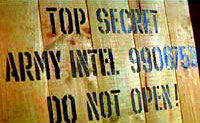 Of course, even the most definitive-appearing ending leaves a lot open for discussion. Does finding out what “Rosebud” means in “Citizen Kane answer a question or raise a dozen more? What happens after Rhett tells Scarlett he does not give a damn what happens to her? Does anyone ever open that crate in the government warehouse and find the Lost Ark of the Covenant? What exactly does “happily ever after” mean?
Hornaday discusses some of this year’s most open-ended movies, including “Take Shelter,” “Martha Marcy May Marlene,” and “Meek’s Cutoff.” I love to come out of a movie and talk about what I think happens next, don’t you? Do you have a favorite theory about an ambiguous ending?