
Harry Potter and the Curse of the Non-Fair Trade Chocolate

Harry Potter and the Curse of the Non-Fair Trade Chocolate

Posted on July 27, 2011 at 8:18 am

The last of the Harry Potter films is out and Fandango reported over 5000 shows were sold out before opening day. It’s a likely candidate for this year’s box office champion with multi-million dollar revenues from tickets and perhaps even more from the lucrative licensing and product sales, estimated at over $14 billion by Brand Licensing Europe.  But a recent campaign endorsed by four members of the Potter cast demonstrates that these partnerships can bring risks as well as rewards.
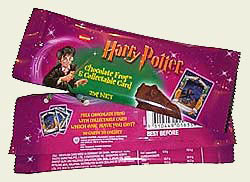
An advocacy group self-dubbed the Harry Potter Alliance has written a letter to the studio behind the Potter films, NBC Universal and Time-Warner asking them to make sure that the chocolate sold in the Harry Potter wrappers meets Time-Warners’ own ethical sourcing guidelines, with copies to Potter author J.K. Rowling, the corporations behind the theme park, and more.

The Harry Potter Alliance has also asked its members, over 100,000 in 70 chapters around the world, to support this initiative by uploading a video on the subject to CNN’s anti-slavery Freedom Project and by purchasing fair trade chocolate and sending the wrappers to Time-Warner.

Evanna Lynch, who plays Harry’s classmate Luna Lovegood, has signed the Alliance’s petition and made a statement in support of the campaign.  Three other actors from the cast signed on this week.

Warner Brothers has agreed to work with the Alliance and assured them that their ethical sourcing guidelines are included as a part of every licensing agreement.  In the US, most of the Harry Potter chocolate is sold in the theme park through a re-license arrangement, and their candy is a tiny fraction of the non-fair trade chocolate sold each year, so their involvement is limited.  But their profile is high and their interest in the brand is strong, which makes them a good target for this campaign.

Harry Potter Alliance director Andrew Slack told me that Warners is “a cut above” the other companies.  He is optimistic about making progress and Warner Consumer Products confirmed to me that they are working toward a solution.  In the meantime, there are a few lessons to be learned about licensing risk.

1. Using an established name or brand to sell your product can leave you open for a judo-like upset, using your own strength against you.  The chocolate companies and theme park paid for a license because they thought the Potter name would help sell chocolate.  The boost the candy got from the name may be overtaken by the reputational hit the name gets from selling the candy. My favorite brand expert is Jonathan Baskin (he’s also my cousin), who says, “This illustrates the complexity of translating an imaginary idea into a concrete product or service. I can’t imagine that the short-term upside outweighs the risks.”

2. “Guidelines” are easy to agree to and difficult to enforce.  Time-Warner may have an excellent ethical sourcing policy for its own products, but insisting on non-enforceable guidelines for licensees without any effort to check independent third-party assessments leaves them vulnerable to this kind of bad publicity.

3. The group that is making the most effective use of the Potter name is the one that did not enter into a license or pay a fee — the Harry Potter Alliance.  It has no official connection to the J.K. Rowling trademarked properties but it has been named a “fan site of the month” by her website and she has spoken approvingly of its activities.  Just as the wizards in the Potter books can’t match the healing properties of the muggle chocolates, businesses who think they understand the best use of brands have a lot to learn from the amateurs on this one.

Related Tags:


Marketing to Kids Understanding Media and Pop Culture

Progress in Efforts to Cut Back on Smoking in Movies for Kids

Posted on July 18, 2011 at 3:37 pm

MedPage reports that smoking is down in movies rated G, PG, and PG-13.

Overall, there were about 72% fewer on-screen appearances of smoking and tobacco products in G, PG, and PG-13 movies in 2010 than there were in 2005, according to Stanton Glantz, PhD, of the University of California San Francisco, and colleagues…

For the three studios that had actual written policies to reduce tobacco use in their movies, there was an average drop of 95.8% in tobacco appearances, compared with a fall of just 41.7% for the three major studios and some independent film companies that had no such policies.

Among the three with anti-tobacco policies, 88.2% of their top-grossing youth films never featured smoking or tobacco, compared with 57.4% of those from companies without policies.

“This finding indicates that an enforceable policy aimed at reducing tobacco use in youth-rated movies can lead to substantially fewer tobacco incidents in movies and help prevent adolescent initiation of smoking,” Glantz and colleagues wrote.

Advocacy groups have urged film studios not to make smoking look glamorous and sophisticated.  The study relied on scenesmoking.org, which has detailed documentation of  the frequency and context of smoking in movies and the impact it has on young viewers.  The World Health Organization has recommended an automatic R rating for any movie with tobacco smoking, except for those like “Good Night and Good Luck,” where the smoking is included for historical accuracy.

Related Tags:


Understanding Media and Pop Culture

What’s the Deal with All These Tree Titles?

Posted on July 3, 2011 at 8:00 am

Last time, it was a bunch of Nine movies.  Now for some reason we have a bunch of movies with “tree” in the title.  Here’s a quick guide to help keep them all straight.

Tree of Life is the impressionistic, sometimes mystifying Terrence Malick movie starring Brad Pitt as a powerful and sometimes abusive father of three boys in 1950’s Waco, Texas.

“The Tree” is a mystical Australian story of loss and rebirth.

“The Family Tree” is an offbeat comedy about a dysfunctional family with a mother who has lost her memory, staring Rachel Leigh Cook and Hope Davis.

http://www.youtube.com/watch?v=ygqdGNQDV50

“If a Tree Falls” is a documentary about the environmental activist group, the Earth Liberation Front.

Oh, and there’s also another movie called “The Family Tree,” but that won’t be out until next year.  It’s the story of an estranged father and son and it stars Gabrielle Union and “Mad Men’s” John Slattery.


Related Tags:


Understanding Media and Pop Culture
Supreme Court: Violent Video Games Get Free Speech Protection

Supreme Court: Violent Video Games Get Free Speech Protection

Posted on June 27, 2011 at 12:10 pm

A California law that would prevent the sale of violent video games to children has been overturned by the U.S. Supreme Court.  The 2005 California law has never been enforced because it was found unconstitutional in the lower court as well.  The 7-2 ruling (Breyer and Thomas dissenting) said, “The State wishes to create a wholly new category of content-based regulation that is permissible only for speech directed at children.  That is unprecedented and mistaken. This country has no tradition of specially restricting children’s access to depictions of violence.”

Supporters of the legislation tried to make the case that exposure to violence is a public health issue, like smoking and alcohol.  Opponents argued that games are protected speech, like a book or a movie.  While the industry may choose to adopt its own rules voluntarily (as the movie industry has with its ratings and the theaters have done with their ticket sales policies), the government may not impose these restrictions.

Parents will have to continue to be especially vigilant about the restrictions on video games in their own homes and, the bigger challenge, in the homes of the friends where children go to play.  Start with the ESRB ratings and then check out the ratings from Common Sense Media.

Related Tags:


Internet, Gaming, Podcasts, and Apps Parenting Understanding Media and Pop Culture

The Role (and Roles) of Women in Film

Posted on June 18, 2011 at 3:23 pm

Monika Bartyzel has an excellent and insightful essay on Movies.com called Girls on Film: Why Supporting Female Characters Matter.

Funny men like Seth Rogen and Jason Segal act as the everyman with a witty sarcastic edge, and since men dominate cinematic comedy, this relatability is front-and-center. But these are male-dominated characteristics that have no realistic female balance or counterpoint. They can offer relatable aspects, but not a comedic mirror for the female audience – women relating women. Since men almost universally take the lead in any comedic film that doesn’t start with “rom,” women must turn to the supporting roles – roles which are not only secondary characterizations, but also clichéd whirlwinds that have little resemblance to reality.

She used twitter to invite comments and heard back from women who were also concerned about the portrayal of female characters:

Most complaints centered on one of the most prevalent characterizations – the shrew – the woman who acts as the anti-fun counterpoint to the fun-loving man, who, as smart as she may be, cannot lighten up, who has no sense of humor and takes the fun away, and sometimes needs the man to teach her to lighten up and live. Other irksome qualities included women with a lack of friends, women as either asexual or ridiculously sexual, clingy partners, unreasonable man-haters, catfighters, superficial characters, bossy beasts, hormonal time bombs, and lest we forget – jealous, green-eyed monsters who will not allow men to interact with any woman who is not a blood relative.

Related Tags:


Understanding Media and Pop Culture
THE MOVIE MOM® is a registered trademark of Nell Minow. Use of the mark without express consent from Nell Minow constitutes trademark infringement and unfair competition in violation of federal and state laws. All material © Nell Minow 1995-2026, all rights reserved, and no use or republication is permitted without explicit permission. This site hosts Nell Minow’s Movie Mom® archive, with material that originally appeared on Yahoo! Movies, Beliefnet, and other sources. Much of her new material can be found at Rogerebert.com, Huffington Post, and WheretoWatch. Her books include The Movie Mom’s Guide to Family Movies and 101 Must-See Movie Moments, and she can be heard each week on radio stations across the country.

Website Designed by Max LaZebnik