Sin City: A Dame to Kill For

Posted on August 21, 2014 at 5:59 pm

Copyright 2014 The Weinstein Company

If you want to not just see but hear an eyeball being pulverized, then see “Sin City: A Dame to Kill For.”  If you want to see and hear it in the company of an audience who thinks that’s funny, buy a ticket.

Like the first “Sin City,” this sequel is co-directed by Frank Miller, who created the comic book series that inspired it, and Robert Rodriguez, and they have again perfectly transferred the dark pulp sensibility and striking visuals from page to screen.  Like the first film, it is in stark shades of black, white, and gray, with splashes of color — bright red lips, shining blonde hair, sleek blue satin — and, of course, blood.

Sin City is a place of corruption, betrayal, and decay, of haunted souls who can’t remember or who remember too much.  “How did I get here?  What have I done?  And why?” Marv (Mickey Rourke) asks as the film opens and he finds himself with some dead and dying guys.  He does remember “wishing I had an excuse to break somebody’s face.”  When he gets an excuse, he says he feels like Christmas.

The interlocking stories center on a young gambler named Johnny who wants to bring down crooked Senator Roark (Powers Boothe), who controls just about everything and everyone in Sin City, a private detective named Dwight (Josh Brolin) who takes photos of indiscretions for his clients and who knows he should not trust the woman he loved and lost to a man who could afford her (Eva Green as Ava), and a stripper named Nancy (Jessica Alba), who cannot decide whether she should kill the man who murdered her lover or just drink herself into oblivion and hope she can forget him.

People say a lot of tough things to each other.  “They’ll eat you alive,” someone tells Johnny.  “I’m a pretty tough chew,” he answers.  Everyone in this film is a pretty tough chew.  “Death is just like life in Sin City,” another one says.  “There’s nothing you can do and love don’t conquer anything.”  There are monsters everywhere in Sin City, and some of the most painful struggles are with the monsters within.

But that doesn’t keep people from trying.

There is a lot of artistry in “Sin City,” but it is so stylized that it calls attention to itself instead of its story, characters, or themes.   The artistry in visuals and storytelling is so self-conscious it is fetishistic.  It always keeps us at arm’s length.  Despite superb work from everyone in the cast, especially Brolin, Willis, and Gordon-Levitt, the visuals are more striking than the story and ultimately they overpower it.

Parents should know that this is an extremely violent movie with themes of corruption and betrayal.  People are injured, maimed, mutilated, and killed by a wide variety of weapons including a sword, knives, guns, pliers, and arrows.  There are graphic and disturbing images and sounds.  It also includes explicit sexual references and situations and nudity and strong language.  Characters smoke, drink, and use drugs.

Family discussion:  How do Dwight, Johnny, and Marv define justice?  What do we learn from stories of corruption and betrayal?

If you like this, try: “Sin City” and the Frank Miller comics

Related Tags:


3D Based on a book Comic book/Comic Strip/Graphic Novel Crime Drama

Interview: Joe Berlinger of “Whitey: United States of America v. James J. Bulger”

Posted on July 5, 2014 at 8:00 am

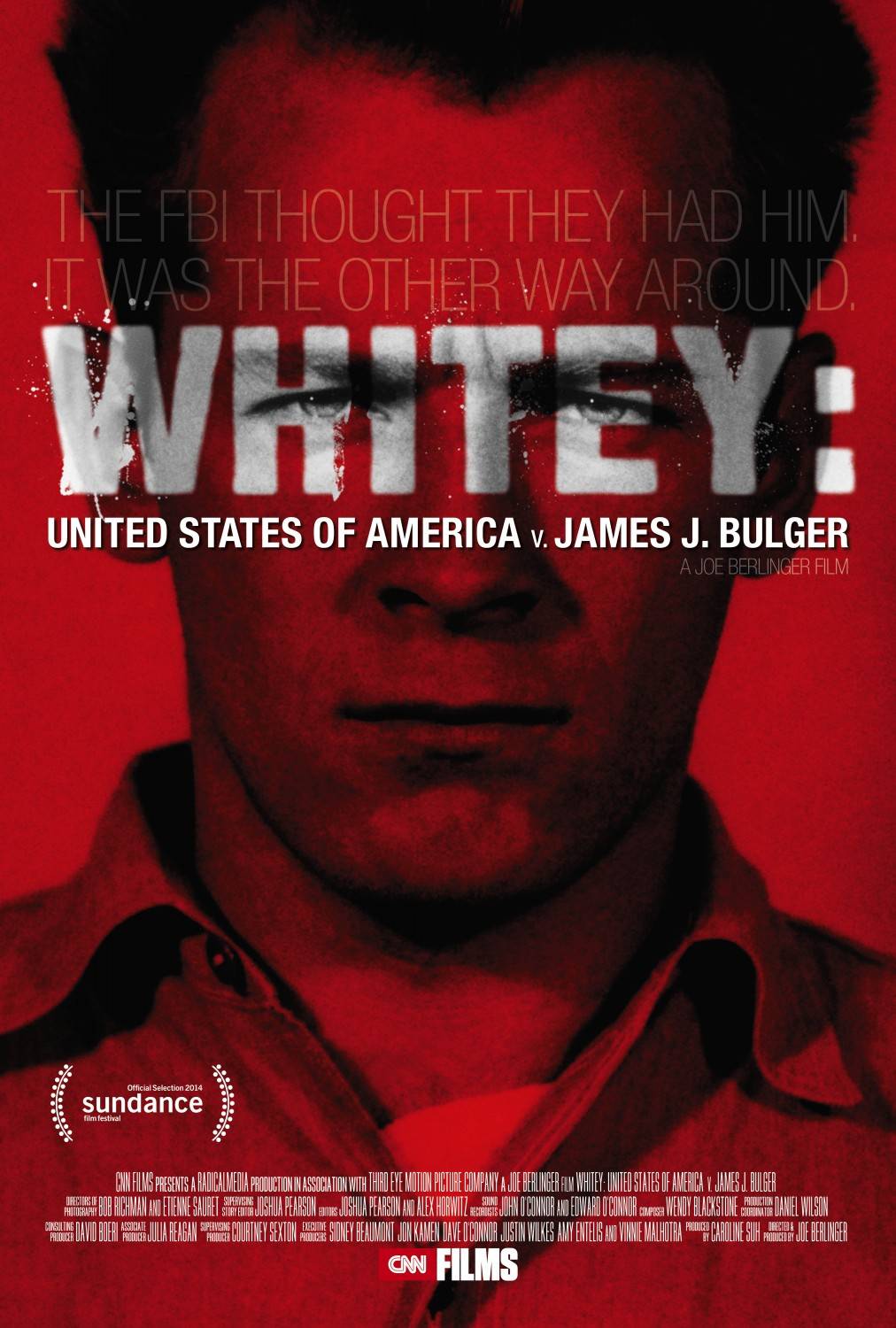
Joe Berlinger is one of my favorite directors and it was a treat to talk to him about “Whitey: United States of America v. James J. Bulger,” his new documentary on the trial of the notorious gangster. We know Bulgar was a crook. What this movie explores is the manipulations and cover ups from the law enforcement that kept Bulgar from being prosecuted for decades.

If you had a chance to interview Whitey and he agreed to tell the truth, what would you ask him?

The most important question is the central assertion to his claim that he had on immunity deal with Jeremiah T. O’Sullivan and the reason that’s such an important question is it goes to the heart of whether or not he was an informant and if he was not an informant the level of corruption and abuse of our institutions of justice is like significant.

The film raises the question of how much crime you can allow an informant to commit to hold on to his credibility.  Presumably killing is over that line.

David Boeri is a WBUR Reporter who says that as long as informants are the mother’s milk of criminal investigations we have to be really careful because on the one hand you they can’t blow their cover but it doesn’t mean they should be killing people with institutional knowledge because that puts the government in the position of picking and choosing who should live and who should die and that’s not the role of government. You know to empower the Irish mob so that they can bring down the Italian Mafia; there’s something inherently wrong with that. And it wasn’t just limited to Boston. We see the same thing in Gregory Scarpa’s cas.  There’s no question he was a major informant there to bring down the Colombo Crime family and over 50 people were killed under his watch.  There’s something wrong with that system. One of our bedrock principles of our legal system is a defendant should be able to present whatever vigorous defense he wants with the presumption of innocence. Again this is not a wrongful conviction cases, but the guy should have been able to present his point of view. whitey_united_states_of_america_v_james_j_bulger_xlg_2

I love the line in the movie from one of the witnesses: “Of course I lied; I’m a criminal.”  What do you do when everybody that’s testifying is a liar by definition?

The three star witnesses for the government are murderous thugs. I mean could you imagine somebody going up for trial for 20 murders and getting 12 years? He’s a serial killer and yet the government treats him as a star witness, now how is that guy incentivised? It’s what I love about the movies, it is a true Rashomon experience and yet the truth rises to the top and something stinks.  The real story has been swept under the rug because it’s just implausible on so many levels that all that murder and mayhem and bad behavior is solely the responsibility of one relatively low level agent and his corrupt supervisor, it’s just not plausible.

I really want to know how truthful is the claim that he had a deal of protection and frankly it’s an important question that is the major disappointment that I had in observing the trial because that was a question that was not allowed to be aired.  Even before the trial began, the judge ruled that the immunity claim was not allowed to be brought up in trial so that was disallowed as a line of inquiry.  It’s a complicated question but he should have been allowed to bring that up at trial because it’s a central question to the saga and I was disappointed that the judge would not allow because I think it was pretty clear that no matter what happened at trial Whitey Bulger was not going to walk out of that preceding a free man.  Right from the start he admitted to being a drug dealer and loan shark.

I was really interested in the comments on the file by the woman who’s an expert on informants.  Normally when someone gets immunity, isn’t that very well documented?

Well there are two levels, if there was a personal deal of protection like, “Hey, keep me from getting bumped off from the mob and I’ll keep you from being indicted”. That’s not going to be documented.  That’s a personal deal of protection.  There were were all these hallmarks of a fake file and in civil proceedings and in the proceedings against Connolly the government acknowledged that much of that informant file was faked by John Connolly. You can’t have it both ways.  If you’re going to say you faked the files in the proceedings against Connolly then let’s talk about where is the real file if he was an informant? And there are just so many things that don’t hold water.  Again I don’t know whether he was or wasn’t but something stinks.  If he was an informant then there’s some basic protocol that wasn’t being followed by like targeting the head of the gang, he was the head of the gang.

The first person we see in the film is a man who was threatened by Bulgar and is looking forward to testifying against him. But he was murdered before he could appear in court. At the end, the film tells us the murder was unrelated. Really?

I can see it’s a legitimate coincidence but to me the importance of it is that when Rick’s body was discovered on the news and that rippled through the courtroom, everyone — reporters, observers, family members — all were debating, almost like as if they were debating a horse race or a Red Sox game, they were debating with equal plausibility whether or not it was in the government interest to knock him off or in Bulger’s interest to knock him off. I was just kind of stunned by the fact that the government was even considered a possibility, which is demonstrative of the complete erosion of faith in their institutions that they would actually believe they might have a hand in it. That demonstrates why this trial should not have been so narrowly focus on confirming the obvious. The obvious is okay he’s crook, we know it let’s let Bulger talk about whatever he wanted to talk about.

This story has so many people and so many incidents and so many boundaries being crossed, how do you try to help people keep that straight? How do you address that is a filmmaker?

It’s a very challenging story and in addition to that there’s a certain subtlety that I hope the audience gets. I was very conscious that there is a certain amount of the conventional story that you need to tell to set the table and then you have to start picking that conventional story apart and do it in kind of a seamless way. I was so worried that some people would walk thinking, there’s no problem with the conventional story. So the challenge is you start with what everyone says is the truth and then you start showing what the issues are with while still maintaining that that’s still a possibility. You know, people expect to be told what to think and many filmmakers believe you have to have a very singular point of view. I’ve always in all of my work tried to embrace multiple points of view and then hope that the truth rises to the top. And look, I do want to say for the record I don’t think everyone in law enforcement or everyone in the FBI is rotten. I think the majority of people in law enforcement and the majority of people who are in persecution take their job seriously.  And actually I think Wyshock and Kelly are the heroes of this story on a certain level because they came to town in the early 90s being sent from other places said, “what the **** is this?” And against the will of their own Justice Department they were fighting vociferously to bring about those indictments, the indictments that ultimately led to this proceeding. They fought tooth and nail for those against their institutions but at a certain point at this trial they now were put in the position of defending the institution that they once fought against in order to bring these indictments. And you can’t serve two masters; you can’t defend an institution that screwed up while you’re simultaneously trying to get to the root of the problem.

Related Tags:


Crime Directors Documentary Interview

Interview: Robert May of “Kids for Cash”

Posted on June 23, 2014 at 8:00 am

kids for cash 1One of the most outrageous scandals in the history of the U.S. justice system involved two judges who took undisclosed multi-million dollar payments from the developer of a privately owned and operated facility for incarcerating teenagers.  A “law and order” judge named Mark Ciavarella was elected after promising to take a hard line on kids who broke the rules.  Even before he took the payments, he imposed the harshest possible sentences for even the most trivial of violations.  Over 3,000 children were taken away from their parents and imprisoned for years for crimes as petty as creating a fake MySpace page making fun of a school vice-principal or shoplifting a few DVDs. The kids who emerged were often permanently damaged by years of imprisonment and exposure to brutal fellow inmates.

The heroic intervention of Juvenile Law Center, founded in 1975, the oldest non-profit, public interest law firm for children in the United States led to the exposure of the scandal and the incarceration of the two judges who took payments from the developer.

Robert May’s searing documentary about this scandal and the larger problems of our juvenile justice system is called Kids for Cash.  It is now available on VOD. I was grateful to get a chance to ask him some questions about the film.

How did the tragedy at Columbine affect the support Ciavarella got for his hardline approach in the first campaign?

The first campaign was in 1995 and the Columbine shootings occurred in 1999.  Judge Ciavarella ran on a “lock-em-up” platform in 1995 and the community loved the idea.  After Columbine, he felt that he had been ahead of his time in that he was always tough on kids.  After Columbine, he simply had even more support for Zero Tolerance.

One of the people in the movie suggests that the schools were supportive of his approach because it was a way for them to get rid of troublemakers.  Is that your assessment as well?

Yes, schools routinely invited Ciavarella to speak at assembly’s letting kids know that if they came before him, he would be glad to send them away.  Schools, police and the community at large, liked the “idea” that he was a zero tolerant judge so; he was very popular on the “speaking circuit” and had a busy speaking schedule to prove it. And lastly, he always made good on his word, he would send the “troublemakers” away.

https://www.youtube.com/watch?v=Q21KnjiJ0xI

Did any kids ever appear before Ciavarella and go home?

Yes, he did not send every kid into detention. His placement average was 22% during his tenure in that 22% of the kids who went before him, were locked up.

Since the Supreme Court’s Gault decision in 1967, courts are not supposed to give harsher sentences to teenagers than to adults but it seems that this was the case here.  Was that because the parents were found incapable of handling them?

While the Gault decision was landmark in that finally kids had some rights, kids are still not afforded all the same rights in a practical way.  For example, if they want to appeal their “conviction” that process takes so long that they will be in and out of incarceration before the appeal is likely heard.  And because of indefinite probation and zero tolerance, kids can easily be re-incarcerated.  Kids should never be able to waive their rights to counsel because they’re kids, yet many states allow for kids to appear without legal representation. Also, the so-called crimes like fighting, verbal altercations etc., it would be extremely rare for an adult to be charged and incarcerated for similarly detailed offenses.

The judge tells a very compelling story about his own teenage law-breaking and his parents’ reaction.  How do you think that affected him?  Did he apply the same hard line to himself?  What do we learn from his daughter’s comments?

To Judge Ciavarella, it seemed clear that his parents had the right idea on discipline and tough love.  He felt that his parents know how to raise their children and by contrast, stating in the movie, “parents don’t know how to be parents.”  He felt that the juvenile system was there to take over and teach kids what their parents were not.  He also was a zero tolerant parent to his own three kids who told me how if they “simply left the top off of the toothpaste tube, they would be grounded.” He was proud of how his parents raised him and was proud when telling us the story of how his father knocked him out thereby teaching him right from wrong.  He completely missed the irony of his current situation.

Why did he agree to talk to you and what did you do to gain his trust?

I felt that the media had painted a very one-sided story and so I first approached Judge Ciavarella with that thought in mind.  Specifically, I approached him with the idea that we intended to do a film on the scandal and wanted to tell the story from the perspective of both the victim and the villain.  I pointed out that I felt he was the “villain” in our story, which he quickly acknowledged.  Initially he was interested in talking to us but only after the federal prosecution was over.  That was a deal breaker for us because we wanted to follow the active story and stay behind the scenes as he went through the prosecution.  After a few weeks of consideration, he contacted me to let me know that he would participate under the condition that he not inform his attorney.  That of course seemed crazy to me however, he was a lawyer and a judge and so if he was ok with that, I would be too.  The same presentation was then made to Judge Conahan who agreed to take part in the film under the same terms.

How did you first hear about the case and what captured your interest?

My producing partner (Lauren Timmons) and I were working on another project, a fiction film about power, greed and kids…(seriously) when the scandal broke in January 2009.  We were actually working in Pennsylvania at the time where this “fiction” film was to take place.  And, while my offices were in NYC, I actually live in Luzerne County PA where the scandal took place.  I became fixated with how such celebrated guys, “judges” could fall so far right under the noses of the community, and me.  While I did not know either of the judges, it’s likely that I voted for them both.  The way the story had been portrayed was basically this – One-day these greedy judges who had been scheming for years to lock kids up in exchange for millions of dollars, finally implemented their plan… and then got caught…with a relative “period” after the story.  That seemed ludicrous to me as there are always many parts and layers to a story and that’s what I was looking to uncover.  I got more than I bargained for because at first, I had no idea that there was a bigger story looming about how we treat kids and that basically, no one cared.

Would things have been different if the new facility was built by the government and not by a private firm?

Yes, the scandal would have never occurred, Judge Ciavarella and Conahan would still be judges, thousands of kids would still be locked up for years and the larger story about the way we treat kids everywhere would never be known to the general public.

Ciavarella is adamant that it was never “kids for cash” and the prosecutors chose not to charge him with that in part because the number of kids he sent away did not increase after the payment he received.  So, why chose that for the title?

Good question and one that gets asked now and again.  In fact, during Q & A’s for the film, some folks routinely mentioned that the story was larger than the accusation of sending kids away for money.  And to me, that was the point.  The idea of this title took me right back to when I first heard of the scandal (by the same name) it grabbed my interest.  The phrase “Kids For Cash” stuck, in that it was a sexy story as far as the media was concerned and it’s all anyone talked about – a judge locking kids up for money.  I like films that respect the audience for their ability to think and I wanted our audience to ponder and be curious about a likely larger story without having the film be preachy in the face of a tell-all title. At first, this was a simple story that was in essence minimalized by the razor focus on one guy, “the judge,” when in fact it took an entire community to support what he was actually doing to the kids (money or not).  Then to learn that his practices are basically in play all around the country without any exchange of money really does lead to the bigger question of “just how are we treating kids who need special care and attention?” I also wanted the story structured in the same way that the public was first introduced to the story, then in the second act, begin to peel back the layers of complexity without a voice-over telling the audience how to think and finally in the third act, present the broad consequences of both the judges actions and the actions or lack of actions of others leading to an awareness of how little respect “we” have for adolescence.

What was your biggest challenge in making this very complicated story understandable?

Well first, getting the judges to agree to talk with us for what turned out to be years and keeping that all a secret. And, to that point, I felt a bit of a rush when I was told that their attorneys first found out that their clients had participated in the film (for years) when the trailer started playing in movie theaters.  But really, the biggest challenge in telling the story was the balance of stories between the villains (judges) and the victims (kids and families).  That took a couple years of editing and many NDA (non-disclosure) research screenings with moviegoers and advocates. In other words, we knew that if the balance between the villain and the victim was off, people would be confused.  Perhaps one of the most notable comments we’ve received regarding this balance was from the critic Carrie Rickey who said “I see about 400 films per year and I’ve never seen a film that puts the villain and the victim in the same story in such a compelling way as in “Kids for Cash.”

Have there been any improvements in the juvenile facilities in Pennsylvania as a result of the litigation?  Are teenagers given any counseling or educational services?

Yes and no. For example, juveniles must now be represented by an attorney when in juvenile court and kids can only be handcuffed and shackled in court under certain circumstances. There is also an effort in Luzerne County where the scandal occured, to improve the system overall and fewer kids are being sent away there.  Also, “evidence based programs” which deal with the entire family, not just the kids, are becoming more popular but that popularity is very slow.  People who see the movie all around the country leave the theater (now perhaps their living rooms) angry and disillusioned about the complete disregard and disrespect for kids and are demanding change.  Evidence based programs is a good start but people need to know that they exist and that they are needed and… cost about one tenth of the cost to lock a kid up.  That said, out of the top ten most populated states, Pennsylvania currently ranks number one on the incarceration of children – this, five years after the scandal.

What is your sense of how other communities are handling juvenile justice?

We’ve learned from screenings all around the US, that communities really are unaware of how kids are treated when they fall into the system.  They are unaware of how schools greatly contribute kids into the system. And, they are unaware of how long a kid can remain in the system.  After a screening in Denver CO to a large group of juvenile court judges, one judge stood up after the screening and said “what’s this thing you refer to in your film as ‘indefinite probation’ we don’t have that here in Colorado.” Before I could respond, another judge immediately said “yes we do, you can hold a kid until they are 21 years old – every state utilizes ‘indefinite probation’.”  Another judge stood up and said “well, if a family sees this film in Colorado and their child comes before juvenile court here, they will see that we do things right.” My response was this… “I’ve screened the film to regular moviegoers all around the country and when they find out that that 54% of the kids in Luzerne County Pennsylvania were not represented by an attorney, they draw a straight line to the money.  However, you do know that in this state 45% of ALL juveniles across the entire state are not represented by lawyers and in three jurisdictions , it’s as high as 60%.”  That judge sat down with a red face.  I have many many stories just like this one that exemplify how unaware not just the public is, but how unaware judges, lawyers, school officials and others are when it comes to the treatment of kids within the system.

There are some despicable people in this film but also some heroes who show remarkable courage and integrity.  What kept them going?

There are some real heroes in the film for sure.  First, the newspaper reporter Terrie Morgan had worried about the stories she’d been hearing on how kids were being treated and whiles she wrote about those stories, few paid much attention.  This seemed to be true in other communities around the country as well.  A reporter reports a few parents complaining about the treatment of their kids and the communities pay little attention instead the reaction is more like “oh please, just because you’ve got a bad kid, stop complaining and start parenting.” Second, Hillary Transue’s mother Laurene is one of those mothers who was going to stop at nothing until she got her daughter out.  While other parents had similar passion, they were fraught with obstacles not unlike Laurene’s.  The main difference is that Laurene found the Juvenile Law Center who took on her fight.  This center has been around for 40 years now and is the largest non-profit children’s law center in the country and specializes in advancing the rights of children.  Prior to the film, those who really needed their services were the only people who knew them and even then, few knew about their work.  The Juvenile Law Center systematically reviewed the circumstances surrounding Hillary’s case and were moving to get her out.  But that also proved to be very difficult because they were taking on a powerful judge will little if any support from the community.  It was not until the federal government announced that they had been investigating the judges and the connection to the newly built for-profit juvenile detention center that a “perfect storm” began to brew.

How are the kids doing?

Because of how this film has affected me personally, I have stayed connected to all of the kids and families and I am continually taken by the scars they have.  They all still suffer in some way.  Charlie is still suffering with addiction and has been jailed twice since the film has been released. That said there are a few good things to report.  Amanda had a baby girl and still resides in California with her father and while she still suffers from PTSD, the film has allowed her to face her past and hold her future in a more promising way.  Hillary Transue is now in grad school at Wilkes University (Pennsylvania) and is a grad assistant in their Creative Writing Program.  Justin is about to begin college and plans to attend Wilkes University in the fall.  Sandy (Ed’s mother) is still dealing with the grief of losing her son but is very active in support of change within the system.  Judge Ciavarella’s daughter Lauren has formed an unusual connection with both Hillary and Justin as she moves to advocate for change within the juvenile system.  All of the kids and families remain connected to the film in that they are still anxious to participate in panel discussions.  In fact, Hillary and Justin were part of a panel in Washington DC when the film screened on three separate occasions for the U.S. Dept. of Justice, Congress on Capitol Hill and for the U.S. Dept. of Education.  They are moved by the kindness and concerns from those who see the film, feelings that they had never experienced in their early life within the system.

What’s your next project?

That is a question that I’m being asked all the time now and I’m grateful that people are interested enough to pose it.  It will be hard for me to transition into another project after five years on Kids For Cash, a film, which changed my entire view of the world.  But, I have a number of projects both fiction and non-fiction that I’m considering.  It would be great to take a few months off in between but I’m not sure that’s in my DNA.


Related Tags:


Crime Directors Documentary Interview

Jersey Boys

Posted on June 19, 2014 at 6:00 pm

Winston Churchill famously said that history is written by the victors.  In movie terms, that means that when you see the names of just two of the original Four Seasons listed as the film’s producers, it is clear we are going to get their side of the story.jersey boys

This film, like the Tony Award-winning musical, is the “VH1 Behind the Music”-style story of four guys from the scrappy streets of New Jersey who grow up with only three possible career paths: the military, the mob, and somehow achieving fame.  The first two have a high risk of getting killed.  The last seems unobtainable.  But the four guys, brought together in part by a fifth guy who took the fame option, Oscar-winner Joe Pesci (played in the film by Joseph Russo), became one of the most successful pop acts of all time, with number one hits through the 60’s-70’s.

Clint Eastwood, a composer himself, who made a fine musical biopic about Charlie Parker (“Bird”), has taken on this story, beautifully performed, but too focused on the lives of the group’s members, with very little about what it was that made them stars, or even what the music meant to them aside from a way to get out of New Jersey and support their families.

Tony Award-winner John Lloyd Young plays the undisputed star of The Four Seasons, Frankie Valli, whose pure-toned, remarkably elastic three-octave range was the pure aural joy amidst the sweet harmonies of the Four Seasons sound.  It was that voice that persuaded 15-year-old Bob Gaudio (Erich Bergen), already the composer of a hit single (“Who Wears Short Shorts”), to join the group.  A handshake deal between Gaudio and Valli continues to this day.

Eastwood and cinematographer Tom Stern give the movie a bleached-out look that gives the skin tones of the cast the consistency of putty.  This is intended to express the grittiness of the New Jersey community, but it just looks drab.  And it undermines the points that Eastwood and the Jersey boys themselves try to make about their rough-and-tumble environment when the kindly cop knows everyone in the community so well he remembers Frankie’s curfew.  Even the mob boss (a deliciously droll performance by Christopher Walken) is so cute and cuddly that he cries openly when Frankie sings a sentimental number.  And he’s there to step in when another mob guy is less understanding.

The predictable temptations and stresses of life on the road are predictably laid before us.  Some day, I hope someone will make a movie about a famous guy that won’t have the screaming fight with the wife about how he’s never home.  This is not that film.  And there are the struggles for leadership, the poor judgment with money, also resolved the Jersey way.  We briefly see decisions that led to iconic details.  After several other names, the group picked “The Four Seasons” from a sign at a bowling alley that would not hire them to perform.  “Big Girls Don’t Cry” came from a Billy Wilder movie they saw on television.  But we never get a real sense of the era, of how they fit into the culture musically, how they interacted with the fans, how they were affected by experiencing the world outside of New Jersey.

It is absorbing, largely because of excellent performances by all four of the Jersey Boys, but uneven, largely because the script assumes that we will be as fascinated with the relationships of the four men as they are themselves.  At the end, Frankie says that for him the high point was finding their sound, just four guys harmonizing under a street light.  That’s a moment we never get to experience.  The only time we feel their pleasure in performing is in what has to be seen as the curtain call number, an odd piece of theatricality that, after two and a half hours of running time, finally shows us what made the Four Seasons so thrilling to experience.

Parents should know that this film has very strong language including crude sexual references, a non-explicit sexual situation, smoking, drinking, off-screen drug abuse, and references to mob activity.

Family discussion: Why does Frankie take responsibility for what Tony did? Why did he leave his daughter with her mother? What do you think was their high point and why did Frankie pick the one he did?

If you like this, try: other musician biopics like “Ray” and “Walk the Line” and the music of the Four Seasons.  And to get a glimpse of Frankie Valli today, look for him in a small role in Rob Reiner’s “And So It Goes” with Michael Douglas and Diane Keaton.

Related Tags:


Based on a play Based on a true story Biography Crime Drama Musical

22 Jump Street

Posted on June 12, 2014 at 5:55 pm

B-
Lowest Recommended Age: Mature High Schooler
MPAA Rating: Rated R for language throughout, sexual content, drug material, brief nudity and some violence
Profanity: Constant very strong and crude language
Alcohol/ Drugs: Drinking, drunkenness, drugs and drug dealing
Violence/ Scariness: Comic action-style law enforcement violence, characters injured and killed
Diversity Issues: Diverse characters
Date Released to Theaters: June 13, 2014
Date Released to DVD: November 18, 2014
Amazon.com ASIN: B00KPYT9PS

22 jump streetIt can be treacherous to go meta in a sequel, especially in the sequel to movie based on a television series that was already pretty meta, with a climax that included appearances by Johnny Depp and some of the other stars of the 1980’s show about young-looking undercover cops. Meta can be smart and funny (see the movie based on another cheesy television series, “Charlie’s Angels”) but it can also be easy and self-absorbed. This sequel is in some ways about sequels, and one of its best moments comes at the very end, with a piling-on of increasingly sillier ideas for future chapters. There are a couple of nice digs at the bigger budget/lower quality/repetitiveness tradition of movie sequels at the beginning, in a scene with the hilariously deadpan Nick Offerman. But if you’re going to make that joke, you’d better be able to clear that hurdle (as Channing Tatum does in a running joke about his parkour-esque athleticism) and not face-plant (as Jonah Hill does in a recurring joke about his lack of athleticism). There are also recurring jokes about how the stars look too old to be in college, the dynamics of the two guys as a couple, and, again, about the bigger budget and repeated storylines, most of which are not as funny as the filmmakers hope.

The 21 Jump Street group has moved from the former Korean church they used as headquarters to a former Vietnamese church across the street. Hence the new address. And they have spent their bigger budget on a high-tech set-up that their commanding officer, Captain Dickson (Ice Cube), describes as suitable for Iron Man. This time, as we heard at the end of the last film, our undercover cops Schmidt (Hill) and Jenko (Tatum) are going undercover in a college. And once again they are looking for the people behind the distribution of a powerful drug. This one is known as whyfhy (pronounced Wi-Fi), and it produces four hours of intense focus (for studying) followed by four hours of wild hallucinogenics (for partying). They stop by the prison to consult with a couple of characters from the last film, and then it’s time for school.

The first film had some real insights about high school, but this one feels based on movies about college rather than the dynamics of a real college environment. There is football, fraternity hazing, and spring break, but not a lot of energy or insight.  The chemistry between Hill and Tatum is still terrific, and one scene where Jenko loses it following an awkward revelation in the captain’s office works very well.  Peter Stormare has an underwritten role as a generic bad guy and Wyatt Russell (son of Goldie Hawn and Kurt Russell) has an underwritten role as a frat guy.  The one who comes close to stealing the show here is Jillian Bell as the former roommate of the student whose death led to the undercover operation.  If (heaven forbid) there is another sequel, it should not be the budget that is bigger; it should be her role.

Parents should know that this film includes extremely strong and vulgar language, sexual references and non-explicit situations, brief nudity, drinking and drunkenness, fraternity hazing, drugs and drug dealing, law enforcement violence with guns and explosions, and characters who are injured and killed.

Family discussion: Which one of the sequel ideas glimpsed at the end looks funniest? Do you prefer relationships with some friction?

If you like this, try: “21 Jump Street” and “Lethal Weapon”

DVD Extras: Commentary, deleted scenes

Related Tags:


Action/Adventure Based on a television show Comedy Crime Movies -- format Series/Sequel
THE MOVIE MOM® is a registered trademark of Nell Minow. Use of the mark without express consent from Nell Minow constitutes trademark infringement and unfair competition in violation of federal and state laws. All material © Nell Minow 1995-2026, all rights reserved, and no use or republication is permitted without explicit permission. This site hosts Nell Minow’s Movie Mom® archive, with material that originally appeared on Yahoo! Movies, Beliefnet, and other sources. Much of her new material can be found at Rogerebert.com, Huffington Post, and WheretoWatch. Her books include The Movie Mom’s Guide to Family Movies and 101 Must-See Movie Moments, and she can be heard each week on radio stations across the country.

Website Designed by Max LaZebnik