Interview: Rachel Boynton of Oil Business Documentary “Big Men”

Posted on March 30, 2014 at 7:39 am

Documentarian Rachel Boynton (Our Brand Is Crisis) spent seven years filming “Big Men,” a documentary about what happens when the American oil business meets a previously unknown oil reserve in Ghana.  Is it possible for American business, with its obligations to generate returns for shareholders, to develop operations in a poor country without leading to corruption and abuse?  Boynton takes an even-handed approach, showing us the story — and the conflicts — as they develop.

The film’s central story follows a small group of American explorers at Dallas-based oil company Kosmos Energy. Between 2007 and 2011, with unprecedented, independent access, Big Men’s two-person crew filmed inside the oil company as Kosmos and its partners discovered and developed the first commercial oil field in Ghana’s history.

Simultaneously the crew filmed in the swamps of Nigeria’s Niger Delta, following the exploits of a militant gang to reveal another side of the economy of oil: people trying to profit in any way possible, because they’ve given up on waiting for the money to trickle down.

So what happens when a group of hungry people discover a massive and exquisitely rare pot of gold in one of the poorest places on earth?

Scott Foundas wrote in “Variety”

“Like a number of recent hot-button docus, from ‘Crude’ to ‘Inside Job,’ Rachel Boynton’s extraordinary ‘Big Men’ should come tagged with a warning: The side effects of global capitalism may include dizziness, nausea and seething outrage. Using razor-sharp journalistic skill to untangle the knotty saga of an American petroleum company’s entrance into the West African republic of Ghana, Boynton’s film also poses a series of troubling philosophical questions: Is unchecked greed an intrinsic part of the human character? Is ‘the greater good’ ever more than a convenient euphemism where big business and big government are concerned? Wide fest exposure and ancillary sales seem assured for this Tribeca world premiere, which also richly deserves a theatrical pickup.”

Boynton talked to me about making the film and the challenges of telling a complicated story.

As is said by several different people over the course of the movie, we all are human beings with the same impulses. So why is it that there are such different outcomes?

Well, in Ghana we don’t know what the outcome is going to be, right? That was sort of one of the conundrums of the film. I knew that watching the film anyone would want to know, are the people in Ghana are going to benefit from this? And I was never going to be able to stick around for twenty years to find out.  I needed a way to contemplate that question, if not to find an answer at least to give them another question.

You show a representative from Norway who provides a counterexample, a very credible, fair system in which all of the citizens of the country share in the benefits from the oil extraction.  And then you show Nigeria as another option, where corruption has been a terrible problem.  What makes the difference?

Norway is a pretty homogeneous society, you know, a lot of unity there.  There are 250 different languages spoken in Nigeria, not to mention the dialect.  So you’re in one town and you go five km down the road and they don’t speak the same language. And it’s literally like the tower of Babel, very difficult for people to communicate with each other let alone come to some kind of consensus as a nation. And I think that kind of diversity is both of something of beauty and strength and at the same time something that is incredibly difficult to overcome when you’re trying to come to some sort of national unifying consensus. Or if you are trying to have leaders, this notion of everyone looking out for themselves is something that unifies everyone in the movie. And there’s a line in the film from someone who works for the Ghanaian national Petroleum company on the board and he says that he doesn’t believe that self interest is an intrinsic part of human nature, that what unites us needs to be greater than what divides us. And I love that sentiment, I love the idea but it’s much more difficult to achieve than it is to say and it’s much harder to achieve in a place as diverse as Nigeria.

How did you become interested in this story?

I made Our Brand Is Crisis and it was very well received on the festival circuit. It did well for itself and I was very pleased and excited about how it was done. It was my first film as a director and I felt kind of empowered coming out of that film to do something more ambitious. I was at a point in my life where I wanted to do something really epic and big and difficult.  And at the time oil was all over the news. I’d turn on CNN and literally every five minutes there would be a segment about the price of oil and fears over a hundred dollars a barrel.  It was just on everyone’s lips and I thought, “This is interesting.  Everyone’s talking about oil and yet I’m not seeing anything about this most important resource from inside the industry. Wouldn’t it be interesting to get in that industry?” I could do that and then I started fishing around. Where would I go first? What I was gonna do?

And as I was doing some research I discovered that the Gulf of Guinea off the Coast of West Africa was this region that the Bush Administration and all of the oil majors were paying enormous attention to as this new frontier for oil exploration. They were all talking about how there was a lot of underexplored territory there. And that new technology was allowing them to look for oil there.  So I said, “Oh well, that’s kind of interesting, that could be an interesting place to go look at,” and then at the same time I was really thinking about this militancy popping up in Nigeria and all these stories about militants attacking pipelines and kidnapping oil workers started appearing in the news. And I said there has to be a movie there, that’s conflict, drama, and that equals movie, right? So I bought a plane ticket to Lagos and I went to Nigeria and that’s how I started.

My original idea was that I was going to get access to an American oil company operating in Nigeria and the whole thing was going to be set there. And I spent basically a year and a half traveling back and forth between Nigeria and America like a crazy person, sort of trying to find the movie, trying to get access to people, trying to get to know people so that I could guarantee our security, trying to get the right permissions to put together a movie, right? But I didn’t start by knowing exactly what the movie was.

So in 2007 I had written several emails to guys at Kosmos Energy.  They had this reputation as being guys who could find oil where no one else could and they had all worked together at a company called Triton Energy in the early 90s to discover oil off the coast of Equatorial Guinea. So a lot of people were interested in what they were going to do next.  They managed to raise a ton of money from Blackstone before they had drawn their first well as a company. And so I knew who they were and I filmed at this thing called the Offshore Technology Conference and I happen to find someone from Kosmos on a panel there talking about Nigerian oil.  I asked him out to lunch, and I pitched him on the idea of making a film.  When I first filmed with them at the Offshore Technology Conference, that was in April, May of 2007, just after that they drilled their first well as a company in June, July 2007. And with that well they discovered the Jubilee field and I basically said, “You know there’s a potentially great film here and it would be great to do something about you guys,” and he said, “Why don’t you come and pitch the guys who started the company?” So I went to Dallas and I did a PowerPoint presentation. And it was a really lame PowerPoint presentation but they said yes to me and that’s how I got access to the company.

The film has a pointed contrast between between what the Wall Street guy said about reputation and how important reputation is and other participants, who in their own ways talk about how they are perceived.  Even the masked gang who destroy the oil drilling equipment talk about being in the film because they want to be famous.

Yes, everyone talks about reputation.

Everyone is very, I guess I’d say, media-savvy.  How do you as a filmmaker get past the way the people you are filming try to spin you?

I’ve made two movies now about people who don’t exactly wear their heart.  I would say the people in my last film were much more conscious than the people in this film because that’s what they did for a living. These guys, when I did my little PowerPoint presentation, one of the things that was at the top of our PowerPoint presentation was something like,  “movies are good for your reputation” and we all know that. It’s about wanting to be big and so of course one of the reasons why they are talking to me is that they want to be big and being big is two things; It’s having a lot of money and it’s having a big reputation, a good positive big reputation. And certainly being in a film is linked to that… Of course.

I don’t feel like I had the wool pulled over my eyes as a filmmaker.

I think anyone talking… Me talking to you okay; listen, I’m not going to tell you my deep dark secrets that I don’t want anyone to know. I’m not going to tell you that because I don’t know you and you are going to publish the interview. There’s certain things that one just doesn’t do and I think that’s kind of human. And I think certainly, one of the things I believe is a filmmaker is that you have to be respectful of people’s limits. And, you have to understand that people are only going to go so far in what they are willing to reveal and you have to accept that about them and embrace that about them and work with what you have. And frequently I would say, nine times out of ten, people will give you more than they think they will because they feel comfortable and they feel not judged and when people are not being judged they are more willing to be open. And openness is what makes someone in a film interesting, in a documentary right? The capacity to get someone being open.

That interview with Jim in the film I think is a phenomenal interview. It’s just that one of the best interviews I’ve ever done in my life. An amazing interview!  Because we just had each other. At the time we did that interview, we trusted each other. I didn’t film him and then show it to people the next day. He felt he could trust me. And he could trust me. I was trustworthy and so he trusted me.  As a filmmaker, I am not interested really in “gotcha” filmmaking, like trying to do something behind someone’s back. I really don’t think I am naïve. And I don’t think the movie feels naïve. I saw this documentary about Nigeria once and the filmmaker says in the documentary; “I decided I just was going to come in and film whatever I saw.” And thought to myself, “what the heck are you talking about?! How can you possibly do that?! It’s Nigeria! Everyone’s lying to you! How in the world could you possibly be coming in and showing what you see?”

So, one of the reasons the film is so layered and incredibly dense and there is so much going on in this movie, is because the truth is incredibly complicated. And one of the ways of getting at that is to contrast and comparison. It’s not just through showing what one person says.

That opening of the wasp on the huge and deteriorating oil equipment is so striking. Tell me why you chose that as a way into the story?

Well, Jonathan Furmanski and I talked about about insects. I was very interested in insects, I kept asking him to film insects. He knew I wanted him to film insects. That said, he found that image. Like, I was busy, I can’t remember what I was doing and he was getting shots; just beautiful shots at the well and things around the well. And he saw this little wasp’s nest being built underneath the oil, the ancient oil well and he got this great image. It’s my little “hats off to Darwin’” scenario I guess, a little bit. I’m very interested in the connections between things and I’m interested in this notion of self interest, and of building things and tearing things apart. And the wasps, for me it was really more about the feeling of the thing, the tone that it sets, that sort of smell of potential threat, the buzz in the background and the thing that strikes that’s got this thing around the end of it that’s going to watch out for itself, don’t step on it, building its nest under this well. For me, it was really about that tone because that’s the tone of the film.

Related Tags:


Directors Documentary Interview

Behind the Scenes: Island of Lemurs

Posted on March 24, 2014 at 8:00 am

Morgan Freeman narrates the IMAX 3D® documentary “Island of Lemurs: Madagascar,” the incredible true story of nature’s greatest explorers—lemurs.  Here’s an early peek at the film, coming soon to IMAX theaters across the country.

Related Tags:


Animals and Nature Behind the Scenes Documentary IMAX

Let the Fire Burn — Coming to George Mason University March 19, 2014

Posted on March 5, 2014 at 8:00 am

“In the masterfully crafted Let the Fire Burn, viewers are thrown back into a time that seems both ancient and wrenchingly immediate, when mutual fear, suspicion and misunderstanding combusted in a grievous, literally fatal, explosion.”

Ann Hornaday, Washington Post

The GMU FAMS Visiting Filmmakers Series welcomes Let the Fire Burn and director Jason Osder to the Johnson Center Cinema on March 19, 7:30pm

The astonishingly gripping Let the Fire Burn is that rarest of cinematic objects: a found-footage film that unfurls with the tension of a great thriller. On May 13, 1985, a longtime feud between the city of Philadelphia and controversial radical urban group MOVE came to a deadly climax. By order of local authorities, police dropped military-grade explosives onto a MOVE-occupied rowhouse. TV cameras captured the conflagration that quickly escalated — and resulted in the tragic deaths of eleven people (including five children) and the destruction of 61 homes. It was only later discovered that authorities decided to “…let the fire burn.” Using only archival news coverage and interviews, first-time filmmaker Osder has brought to life one of the most tumultuous and largely forgotten clashes between government and citizens in modern American history.

“The events of 1985 feel strangely far away, yet also incongruous within their own era,” writes the New York Times‘ Nicolas Rapold, “as remnants of earlier radicalism in the age of Reagan. And, in that sense, Mr. Osder’s use of found footage is well suited. We are spoiled by the sea of archival oddity available online today, but the filmmakers rapidly plunge us into the madness through the double shock of the footage, which offers at once a formal rupture and something familiar.”

Let the Fire Burn won the Truer Than Fiction Award and a $25,000 Spirit Grant at the Spirit Awards in Los Angeles on 11 January 2014. It was a finalist for the Gotham Awards Best Documentary, and has won editing awards from the International Documentary Association and Cinema Eye Honor for Nonfiction Filmmaking.

Related Tags:


Documentary

Trailer: The Lady in Number 6: Music Saved My Life

Posted on March 5, 2014 at 8:00 am

One of the most touching moments of the Oscars was the award for a documentary short called “The Lady in Number 6: Music Saved My Life.”  It is the story of Alice Herz-Sommer, the world’s oldest Holocaust survivor, who died at age 110 just before her story was celebrated at the Oscars.  She was born in Prague.  Her parents’ friends included Kafka and Mahler.  After the Nazis invaded, she was sent to Theresienstadt with her son.  That camp was notoriously used to mislead Red Cross inspectors and others and she performed in over 100 concerts for visitors.

Her husband died in Dachau.  After the war, she emigrated to Israel, and later lived in London.  “I am Jewish,” she said, “but my religion is Beethoven.” A book about her life, A Century of Wisdom: Lessons from the Life of Alice Herz-Sommer, the World’s Oldest Living Holocaust Survivor, was published in 26 countries.

Malcolm Clarke and Nicholas Reed accepted their Oscar for the film on Sunday night and spoke movingly of their admiration and affection for Herz-Sommer.  I  hope this award helps make their film widely available.


Related Tags:


Documentary Spiritual films Trailers, Previews, and Clips

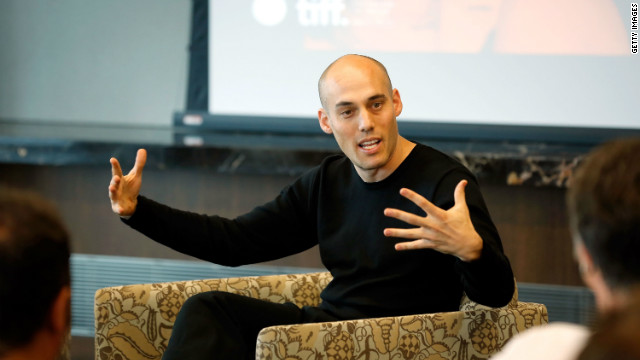
Interview: Joshua Oppenheimer of “The Act of Killing”

Posted on March 1, 2014 at 8:00 am

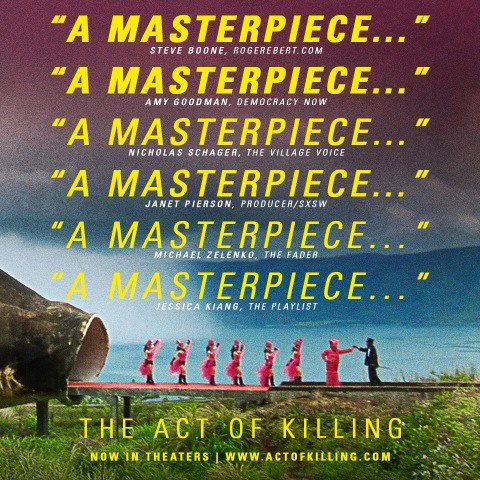
If I were voting, “The Act of Killing” would not only win the Best Documentary Oscar, it would be a contender for Best Picture as well.  Director Joshua Oppenheimer broke through barriers from the secrecy and denial of government-sanctioned gangster killings of more than a million Indonesians in the mid-1960’s to the disaster-fatigue of audiences to tell a riveting story by letting the murders, still living in the community as respected citizens, tell it themselves.  The details that have been repressed individually and institutionally for decades are revealed as the men who killed choose iconic movie genres to re-enact their crimes.  A musical, a western, a gangster movie — these re-enactments allow both the gangsters and their communities to acknowledge the horrors of the genocide for the first time.  The full unabridged version of the film, with scenes not included in the US theatrical release, is now available on iTunes and Amazon.

I spoke to Oppenheimer about the impact that the film has had on Indonesia and the world community and about his biggest regret in making it.joshua-oppenheimer

I’m familiar with the work of the Truth and Reconciliation Commission in South Africa, which sought to provide healing and a sense of justice by documenting the atrocities of apartheid, and it occurred to me that your film is the closest equivalent that Indonesia’s going to get.

You’re right in a sense that before the film came along, there was no chance that the government would implement a truth and reconciliation process.  The president of Indonesia from 1999 to 2000, Abdurrahman Wahid also known as Gus Dur proposed a truth and reconciliation process and apology for what happened in 1965 and he was immediately removed from power as a result.  But it is also my hope that the film has now opened a space where ordinary Indonesians are saying, “This is wrong” where the media is saying, “This is wrong and we have to talk about this not only to right a major historical wrong, not only for the sake of healing but also so that we can beat corruption, fear, and gangsterism that prevent Indonesia from acknowledging what happened.  It’s led the Indonesian media to finally address what had been a 50 years silence about the genocide and talk about the genocide as a genocide and connect the moral catastrophe of the genocide with a moral catastrophe of the regime that the killers have built and presided over ever since.  And it’s emboldened ordinary Indonesians to finally talk about the most painful aspect of Indonesian history and the present for the first time without fear.  It particularly has led Indonesians to say that “We want this country to be the democracy that we would like and that claims to be. We need to address not just the crimes of the past but also how they have terrorized all of us into not holding our leaders into account for corruption and gangsterism in the present.”  So it’s lead to this national discussion which I’m optimistic will eventually be the truth and reconciliation process in Indonesia.

act of killing posterAs you spoke to these admitted killers who seem to feel no regret, did you conclude that they had to be sociopaths before they killed the first person?  Or were they made sociopathic or numb through just the incredible level of atrocity they perpetrated?

Hannah Arendt famously said in her writings in the banality of evil that the killer is an ordinary person.  That doesn’t necessarily mean that every ordinary person is a potential killer. But those of us who haven’t killed are extremely fortunate not to have to find out.  My belief is that there is a moral paradigm that underpins most of the stories we tell, particularly in movies where we divide the world into good guys and bad guys.  According to that paradigm, we tend to believe that because the killer has done something monstrous, the killers are monsters.  And in that sense, we imagine that we’re somehow different from them.   What’s clear is that the killers are human and if we want to have any chance of understanding how human beings do this and then the consequences of their actions, how they tell stories to justify their actions, we have to start from the premise that they’re human and that killing changes them.  So I think that certainly the numbness comes from having killed.   And then because the killers are human, consequently they have to tell themselves stories to justify their actions so that they can live with themselves afterwards.  And then horribly, they impose those stories in the form of victorious history glorifying what they’ve done on their whole society.  Ironically, that of course leads to a downward spiral into further evil and corruption.  If Anwar was to refuse the second time, it’s equivalent to admitting it was wrong the first time.

So further evil is perpetrated not necessarily because the men are monsters but because they’re human and they know what they’ve done is wrong and they don’t have the courage to face that.   So denial has a terrible, terrible cost.

There are so many chilling moments in the movie but, for me, one of the most is the talk show where you see the host speak so cheerfully about the killings.  Denial is so pervasive throughout the entire culture.

I want to also point out that the talk show is as shocking to Indonesians as it is to outsiders.  I think that when Indonesian State Television discovered that the governor of the province or the publisher of the leading newspaper in the province or the head of the paramilitary movement the minister of youth and sport, Anwar who’s famous in North Sumatra — that all of these people were making film scenes, quite ambitious scenes dramatizing what they’ve done, they started to think perhaps we’ve been too tolerant about the killings.  You see the history that talks about the extermination of the communists in general terms as something heroic without ever going into the details of the killings. When the producers at state television saw that they were going into the details of the killings rather than say, “Oh, wait a moment, maybe these  executioners are getting a little carried away and this could make Indonesia look bad,” they thought instead, “maybe we have been too cautious in our representation of what happened and this is a great story, this is a big story, these are the most powerful people in this part of Indonesia, let’s make a talk show about what they’re doing.”  And it sounds more like the individual perpetrators more than it sounds like the mouthpiece of the state which is what State Television is.  And it’s shocking for ordinary Indonesians.  That talk show is an unmasking of the regime by precisely the institution that until now had served to mask the regime.  I guess one other interesting thing is that among the only people in the film who seem to see that the true meaning of what these killers did or the people in the control room while they produced that talk show who start commenting and whispering and saying, “How many people must be haunted?  How do they sleep at night?  They’re greedy.  They’ve been stealing all their lives.  They must have gone crazy from doing this.”  But we have to remember that even if those other people with the same moral perspective that we have, they are also the people who are actually producing that monstrous show.

Another really affecting moment for me was the guy who was smiling when he told the story about how his stepfather was killed. And then, when asked to portray the part of the victim himself, that was not acting, right?  He really was sobbing, wasn’t he?

I think it’s real emotion coming out for sure.  I mean he’s being exactly what he said he wanted to do.  He says that they should stage this story, everybody feeling uncomfortable that suddenly, there’s a survivor in their midst rejects the idea saying it’s too complicated, it would take too long and he responds by saying, “Well we can at least use this story to motivate our acting.”  And that’s what he goes on to do.act of killing

And it’s of course real trauma because it’s his real story but that scene is the one thing of the film that sometimes I really regret.  It’s an error.  It’s an error of omission, not commission but it’s an error.  When we were shooting in the studio which was where he tells that story, we would shoot with two or three units shooting simultaneously because there were many things happening at once.  He doesn’t speak Indonesians, my cinematographer.  He didn’t understand the story and I didn’t hear the story until six months after the shoot.  When I did hear it, I was mortified because if I heard it, I definitely would have pulled him out.  There a principle that there should be no survivors or victims in the film at all, all of the people in the reenactment of the attack on the village, all of the extras are immediate family members of the perpetrators and the paramilitary leaders.  So when I heard this story, I thought, “Oh no.  I would have pulled him out.  I would have taken him aside and said, “Look, you should be behind the camera for the rest of the day and tomorrow.” But when I put the film together, I could see that he had this sort of very painful journey and strange journey through the film because it keeps cropping up during the talk show, he’s acting in the village massacre scene and I wanted to make sure I really understood what was happening there.  Why was he there?  How did he feel about it?  So even though it made me feel guilty, in a way, I called him and his wife answered the phone and said that he’d died 6 months before from complications of untreated diabetes.

I asked her why he was in the film, did he ever talk about it, she said he talked about quite a lot.  He thought that it was the one chance in his life he would have to express the horror of what he’d been through, and somehow felt that even though we were making the film with the perpetrators, this would be the right place to do it.  In a sense, he correctly interpreted what we were doing and sort of infiltrated the film, I was making this film in collaboration with survivors in the Human Rights Community and in constant dialogue with them and much of my Indonesian crew comes from that community.  In a way, that film was an infiltration into the perpetrator’s world.  He kind of infiltrated that.  And in that sense, he wanted to be there.  He went on a mission.  He made the film much more powerful for his presence and if I had pulled him out, he would have failed.

But if I could do it all over again knowing what I know, I would have pulled him out.  I would have pulled him out again.  When you spend so many years looking at what killing means and torture means, the last thing you want to do is somehow be complicit with its currents.

There’s a brief shot where sort of over in the corner, the television’s on with President Obama talking.  Tell me a little bit about what you think that moment means in the film.

Yeah, because Obama grew up partly in Indonesia, Indonesians love Obama and see Obama as the kind of Indonesian in the White House.  There’s a big hit movie called “Young Obama.”  Obama left Indonesia in fact so he says in his book, Dreams from My Father, because his mother was told that the place was haunted and becoming increasingly corrupt because of this recent trauma that has happened.  Genocide was casting a shadow and I put it in the film for the same reason that a lot of the American sort of references are in the film.  The United States supported, participated in, and then ultimately ignored these genocides.

I would have loved to be able to go into the history of that but so much is unknown.  The United States is also not come to terms with this past.  All of the CIA job files from that period remain, covert operations in Indonesia, have been classified.  The documents that have been released were then immediately reclassified.  Luckily, they were made available by National Security Archives in Washington University but they’re heavily redacted, covered with black magic marker.  The US should declassify everything about this.

We want to say that Indonesia ought to apologize, issue a formal apology for what happened and implement a process of justice.  The US needs to set an example and take leadership I think.  We were a part of this.  Fifty years is enough time to get comfortable with what we did.  It’s too long to not call it genocide.  It’s genocide and it’s time that we all accept what happened and our collective role in supporting and participating in those times.  And when I found out that Hammond was watching Obama’s inauguration address as a kind of a victory speech to practice for his own speeches, I immediately felt that it implicates all of us.  And Hammond says his reason to go into politics is to intimidate people and to steal.  And the fact that he’s inspired by Obama somehow evokes the sense that some of it is the unintended or the intended consequences of US policy.

How does the experience of re-enacting these crimes within the context of different film genres make you feel about narrative films?  Does it make you change your idea about how influential they were or about a certain moral quandary of making narrative films?

I think that this is a film about how we tell stories to justify our actions to escape from our most bitter and painful truth, and it’s a film about how we lie to ourselves and it’s a film about those consequences for those lies.  These characters used cinema at that time to distance themselves from the act of killing, coming out of the cinema inspired by whatever movie he’s just seen, waltzing across the street, dancing across the street, he could be intoxicated by his love of the film especially for example, and killing happily.

Cinema is a means of escape.  And this is a film about escapism and the importance also of confronting the most painful truth about who we are and equally in this film, that there’s also I think actually a demonstration of how cinema can equally be a mirror in which we actually look at the most painful aspect of who we are.  Cinema becomes the vehicle with Anwar and all of Indonesia now are looking at the most painful aspect of what it means to be who they are.  I think the film is kind of a manifesto almost of how art ought to be a means by which we invite to do or force our viewers to confront really the most important, painful, mysterious, troubling aspect of what it means to be human.


Related Tags:


Directors Documentary Interview
THE MOVIE MOM® is a registered trademark of Nell Minow. Use of the mark without express consent from Nell Minow constitutes trademark infringement and unfair competition in violation of federal and state laws. All material © Nell Minow 1995-2026, all rights reserved, and no use or republication is permitted without explicit permission. This site hosts Nell Minow’s Movie Mom® archive, with material that originally appeared on Yahoo! Movies, Beliefnet, and other sources. Much of her new material can be found at Rogerebert.com, Huffington Post, and WheretoWatch. Her books include The Movie Mom’s Guide to Family Movies and 101 Must-See Movie Moments, and she can be heard each week on radio stations across the country.

Website Designed by Max LaZebnik