An idealistic young couple from big cities moves to a tiny, economically depressed town in North Carolina for a project that will take advantage of what they think is “an untapped resource” — teenagers. Emily Polliton, TED talker and co-author of Design Revolution: 100 Products That Empower People and Matt Miller, who had just built a home in Detroit to donate to a needy family, got a pioneering school superintendent in Bertie County, North Carolina, to agree to let them create a curriculum with a daunting challenge. They wanted to revitalize the students and the town through design. They had a lot of ideas, but they knew that they could never accomplish anything unless they were clear that they were there to support the town. They knew that the students would be responsible for a big project. But what that project would be had to be decided by the people who live there.
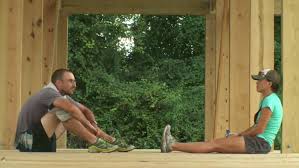 Documentarian Patrick Creadon (“Wordplay,” “I.O.U.S.A”) observed the Studio H project that Emily and Matt brought to North Carolina over 16 months. The name stands for: Humanity, Habitats, Health and Happiness (echoing 4H’s “head, heart, hands, and health”). They began with ten bright but bored high school juniors. One of them says dryly that he hates school just as his father and grandfather did: “It’s a family tradition.” And in one of the movie’s bleakest moments, we see some of them taking mind-numbing online classes, including, ludicrously, PE. “It’s not that I’m leaving here,” another says. “There’s just nothing to keep me here.” This project answers the age-old question: When will I ever need to use calculus? And, in Emily’s words, it is a counter to the current approach, which has “the raw and unadulterated
None of them have ever made anything before. None of them have ever been asked to look at what’s around them and think about design before. Day one, Matt and Emily have them getting their hands dirty — very dirty, making water filtration systems out of mud and cow patties. For the first time, they are asked to think with a pencil. “Some of your sketches are ugly, and that’s okay,” Matt says to encourage the kids to stop self-censoring. “The studio is a mess, which is fantastic,” Emily tells them. After two preliminary projects, they work with the town to decide on what their big project will be. It will be something the town will be proud of, something hopeful, something that will help the economy: a farmer’s market.
Design is about solving problems. As Emily says, “Design allows creativity to have a structure. And that allows you to come up with solutions you wouldn’t otherwise come up with.” Making a bean bag toss or a chicken coop or even a farmer’s market is one thing. Working with people is another. The visionary school superintendent is fired immediately after Emily and Matt arrive. The school board votes to keep their program but eliminate their salaries. As Matt points out, while he can fit in, Emily is a triple outcast in the North Carolina rural community — half-Asian, female, and a designer. As Emily points out, working together under so much stress puts a lot of pressure on their relationship. And, as she also notes, they are trying to build something with a construction crew made up of teenagers.
This is a compelling narrative both in its own terms and as a metaphor of many of the core themes and conflicts in America today. It is a compelling indictment of our failure to inspire our young people with meaningful educational opportunities and a thrilling glimpse of how easy it is to transform the way we think about education and re-connect to our sense of possibilities. It is also a daunting portrayal of the entrenched mindsets and lack of courage that stands in the way. Design can solve problems, but only if we let it.
Parents should know that this movie has some depictions of high-stress economic circumstances, references to prejudice, and a dead animal.
Family discussion: What was Matt and Emily’s biggest challenge? Their biggest accomplishment? Check out the movie’s website to see what happened to the students.
If you like this, try: “Waiting for Superman” and “Wordplay”

 , which also won the National Book Award. Her other books include The Third Life of Grange Copeland, Meridian, The Temple of My Familiar, and Possessing the Secret of Joy. In her public life, Walker has worked to address problems of injustice, inequality, and poverty as an activist, teacher, and public intellectual.
 talks about taking a segregated bus to go to Spelman College.
 . Williams was ubiquitous in the 70’s, both on the music charts and the party scene.
 . Seitz writes