
Lawless

Posted on August 30, 2012 at 6:00 pm

Musician Nick Cave and director John Hillcoat are Australians who are drawn to bleak internal and external landscapes.  They worked together on “The Proposition,” a western-style and very violent crime story about brothers.  “Lawless” is another crime story about brothers, again very violent and, like “The Proposition,” with a bleak setting and compromised characters.  This one is a true story, based on Matt Bondurant‘s book about his Prohibition-era grandfather and great uncles, who were ran illegal hooch in Franklin County, Virginia, described by writer Sherwood Anderson as “the wettest county in the world.”

“There’s a feeling around these parts that these Bondurants is indestructible,” one character says.  Forrest Bondurant (a quietly powerful Tom Hardy) came back from WWI without injury and the community almost believes the legend that he cannot be stopped.  That’s good for business; you might even say it is their brand.  But just as in legitimate enterprise, the success of a local operation selling moonshine in mason jars attracts the interest of the competition.  The big bootlegging organization out of Chicago is thinking about what one might call a very hostile takeover.  The Bondurants have a good relationship with the local sheriff, who is happy looking the other way for a small piece of the action.  But a federal agent named Charlie Rakes (an oily and twisted Guy Pearce) arrives and for him it is not about law, morality, or directions from his superiors.  It is about power.  The Bondurants are not afraid of him and that is why he wants to destroy them.  Pearce, in gloves and slicked-down hair parted in the middle, is one of the best villains of the year.

Forrest is the leader and he has an unspoken understanding with his brother Howard (Jason Clarke).  Indeed, a lot that goes on here is unspoken.  The youngest brother, Jack (Shia LeBoeuf) wants to prove himself to his older brothers.  And he wants to prove something to a pretty churchgoing girl named Bertha (Mia Wasikowska).  Brash and flashier than his brothers, he has the nerve to try to make a deal with machine gun-toting Chicago hood Floyd Banner (Gary Oldman) and the entrepreneurial instinct to improve and expand production and delivery.  When he sees a brutal gangland slaying, his only thought is to grab a souvenir shell case.  He will have a Michael Corleone moment when the violence gets closer to home.   “It is not the violence that sets men apart,” Forrest says.  “It is the distance he is prepared to go.”  The Bondurants do not give up.  It is not about the money.  It is about defending their home and their right to make their own choices.

Maggie (Jessica Chastain) shows up out of the blue one day, offering her manicured hand to Forrest’s rough one and offering to work for the brothers.  “The city can grind a girl down,” she tells Forrest.  “Gets to a point where you start looking for somewhere quiet.”

Franklin County is far from quiet.  But the noise Maggie wanted to escape was the cacophony of heartlessness she was surrounded by in the city.  Everyone in this story is breaking the de jure law, but Maggie knows that the Bondurants have a core of integrity and loyalty that she can count on.  And she will show that she can be counted on as well.

Strong performances and an evocative sense of time and place anchor the film and the unexpected tenderness of the romantic interludes balances the brutality.  A coda provides perspective that just because someone is willing to go the distance does not mean he cannot come back home.

Parents should know that this is the true story of moonshiners during Prohibition, so the good guys are law-breakers and the police are corrupt.  The movie includes extremely graphic violence with characters tortured, injured, sexually abused, and killed, strong language including a racial slur and segregation, sexual situations including prostitution, female nudity, and alcohol and smoking.

Family discussion:  How were the brothers alike and how were they different?  The script was written by musician Nick Cave – how does the music help tell the story?

If you like this, try: Lawless: A Novel Based on a True Story by the real-life grandson of the youngest Bondurant brother
Related Tags:


Based on a book Based on a true story Crime Drama Romance

Sparkle

Posted on August 16, 2012 at 10:28 pm

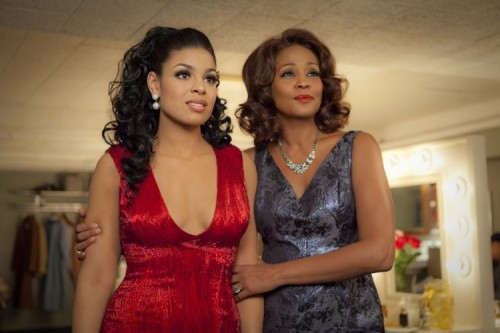
You can’t help wondering what Whitney Houston was thinking when she decided to co-produce and star in the remake of a flawed but beloved 1976 musical melodrama about a singer who becomes involved with an abusive performer and becomes addicted to drugs.  Was this a cautionary tale?  A reflection on her own choices?  In this movie she plays Emma, the very strict mother of three musical daughters, living in 1968 Detroit.  She is determined that her daughters will adhere only to the three priorities she drills into them: respect, education, and having a relationship with the Lord.

Emma once tried to make it as a singer herself and is determined that her girls will not suffer the heartbreak she experienced.  But her youngest daughter, Sparkle (“American Idol’s” youngest-ever champion Jordin Sparks) wants to writes songs, and she wants to be a star.  She does not have the stage presence of her sultry oldest sister, Tammy, known to everyone as Sister (an electrifying Carmen Ejogo) and is too timid to tell the truth about her feelings in her lyrics.  The third sister, Dolores (Tika Sumpter), just wants to go to medical school.  She agrees to sing Sparkle’s songs so she can get money for school and Sister agrees because she likes the money and excitement.

They sneak out at night to perform so their mother does not know.  Their manager is the poor but ambitious Stix (Derek Luke), whose cousin Levi is in love with Sister.  But Sister wants money and excitement.  She agrees to marry Satin (Mike Epps), a comedian who specializes in the kind of racial humor that makes white audiences feel comfortable.  Emma throws them out.  The trio becomes more and more successful, but Sister’s life with Satin is filled with domestic abuse and cocaine and she resists her sisters’ efforts to help her.

Some intriguing themes about the racial conflicts of the era are raised almost in passing and never developed while the soapy parts of the story drag on and the storyline loses any pretense of believability.  Sparks is not an actress, and Houston spends most of the movie giving that “Hell to the no” look we saw too often in her reality show.  Ejogo is a sensation and Luke continues to be one of Hollywood’s overlooked treasures, bringing a dignity and sweetness to the role.  Epps is excellent, showing us Satin’s volatility and magnetism.  The musical numbers raise the roof, especially the cover of the earlier film’s biggest hit, “Giving Him Something He Can Feel” (later covered by En Vogue) and Sparks’ rousing finale.  But the highlight is Houston’s passionate “His Eye is on the Sparrow,” a powerful spirit-lifter and a sad reminder of her once-to-a-century gifts.

Parents should know that this film includes a scuffle, domestic abuse, characters who are injured and one killed, tense emotional confrontations, sexual references including teen pregnancy and non-explicit situations, some strong language including ugly racial epithets, smoking, drinking, and drug use.

Family discussion:  Why did the three girls have such different ideas about what they wanted?  Why was their mother so strict?  Why did Sister tell the other two they had to leave her house?

If you like this, try: the original Sparkle with Lonette McKee and Irene Cara, “Dreamgirls,” and “Grace of My Heart”


Related Tags:


Drama Family Issues Musical Remake Romance

The Odd Life of Timothy Green

Posted on August 14, 2012 at 6:00 pm

B
Lowest Recommended Age: 4th - 6th Grades
MPAA Rating: Rated PG for mild thematic elements and brief language
Profanity: Brief mild language
Alcohol/ Drugs: Some social drinking
Violence/ Scariness: Some sad losses and references to loss of parents
Diversity Issues: None
Date Released to Theaters: August 20, 2012
Date Released to DVD: December 3, 2012
Amazon.com ASIN: B005LAIIKS

I have one copy to give away to the first person who sends me an email at moviemom@moviemom.com with “Timothy” in the subject line!  Don’t forget your address!

One of the biggest surprises — and greatest pleasures — of being a parent is learning how different your child is from the one you dreamed of, and finding out that the reality is so much better than you could have imagined.  That is the theme of the endearing fable, “The Odd Life of Timothy Green.”  Jim (Joel Edgerton) and Cindy (Jennifer Garner) meet with an official from an adoption agency to explain why they are fit parents, and it turns out to be the story of Timothy, who came to be their son after they had given up.

“You couldn’t have tried harder or done more,” they are told as the movie begins.  All of their time, money, and energy has been focused on trying to become pregnant, but nothing has worked and they are devastated.  They decide to mourn their loss by writing down a list of qualities and talents they would have wanted in a child.  Honesty, of course.  Musical and artistic talent would be good and he should have a good sense of humor.  He does not have to be a star athlete, but it would be nice if just once he made the winning goal.  They bury the list in the garden and prepare to move on.

But then, he is there, a 10 year old boy covered with dirt.  He says his name is Timothy (CJ Adams).   He calls them by the words they had hungered for: “Mom” and “Dad.”  And he has leaves growing out of his legs, leaves that can’t be snipped off, even with gardening shears. They decide not to question it, just to enroll him in school and be a family.  They agree that it puts him under too much pressure to say, “Have a great day!” before school, so Jim just says encouragingly, “Have the day that you have.”

Jim works in the town’s struggling pencil factory.  Cindy works for the pencil company’s imperious owner (Dianne Weist) at the local museum devoted to the company’s founder.   As they cope with problems at work and with their extended families (an ailing relative, a competitive sibling, a distant and judgmental father), Timothy inspires many people because he seems to understand and appreciate the world around him.  He forms a friendship with an artistic older girl.  And he manages to fit every item on the buried list, but in his own way.

As someone once said, “I used to have four theories about children.  Now I have four children and no theories.”  And as someone else once said, “Adults don’t make children.  Children make adults.”  The great gift of parenthood is the way it makes you jettison so many assumptions — about who you are and who your children are.  When you meet your children, you begin to meet yourself as well.  This whimsical, bittersweet tale is one of the summer’s nicest surprises.

Parents should know that this film deals with infertility issues, sad losses and references to death of parents, bullies, and includes some brief schoolyard language.

Family discussion:  Where do you think Timothy came from?  What would have been different if he turned out the way Jim and Cindy expected?  How did they learn to be better parents?

If you like this, try: “The Seven Faces of Dr. Lao”


Related Tags:


Comedy Drama DVD/Blu-Ray Pick of the Week Family Issues Fantasy

Beasts of the Southern Wild

Posted on July 5, 2012 at 6:00 pm

A prize-winner at Cannes and Sundance, this near post-apocalyptic story of a father and daughter in a condemned part of Southern Louisiana is a stunningly assured debut by first-time feature director and co-writer Benh Zeitlen and extraordinary performances by a cast of non-professionals.

Six-year-old Hushpuppy (the mesmerizing Quvenzhané Wallis) and her father Wink (Dwight Henry, who owns a bakery in New Orleans) live in homes made from trash in a fictional community called The Bathtub.  They do not have electricity, running water, or telephones, but Hushpuppy is happy and feels lucky to be there.

Zeitlen, the 29-year-old son of folklorists, makes this story exquisitely lyrical.  It is poetic in tone and epic in scope.  Seeing through Hushpuppy’s eyes makes it feel like a fairy tale because of the freshness of her conception of what is real and what is fantasy, what is strange and what is ordinary, what is scary and what is comfortable.  Like Margaret O’Brien in the beginning of “Meet Me in St. Louis,” she introduces us to the community she loves.  Like Alice, she brings us into a strange and enchanted world.

‘The Bathtub has more holidays than the whole rest of the world,” she tells us; while ordinary people in other places only have one or two holidays, they celebrate all the time.  She is a part of a fiercely devoted community.  We hear her repeat what she has been told and we see the contrast between what she is telling us and what we are able to understand.  Her father’s hospital gown and the precariousness of their shelter signify nothing special to her, but we can tell it means that her father is very sick and the next big storm will flood The Bathtub.  What we see as peril and deprivation, she sees as a place of myth and plenty. And she sees it as her home.  For her, it is “the prettiest place on earth.”  That is what she has been told and that is how it seems.

Later, when they are taken to a shelter, we see that through her eyes, too.  For Hushpuppy, it is not a place of rescue and protection but a place of strangeness and sterility.  Buses parked outside, ready to take displaced people from the exotic but familiar world of The Bathtub to strange-sounding far-away places like Des Moines seem institutional and predatory.  Later, another possible rescue takes her to a part of the “civilized” world that again, we understand when Hushpuppy does not see how very dangerous it is.

Hushpuppy’s teacher points to the tattoo on her thigh to illustrate her stories about the aurochs, boar-like prehistoric beasts.  The fable-like timelessness of the setting makes the era of the aurochs feel very close.  When they appear, in a scene of breathtaking synthesis of myth and metaphor, Hushpuppy’s spirit seems to expand to fill all of the courage, resolve, and vision of the human spirit.

Zeitlen achieves a naturalness and state of wonder that is breathtaking to experience and one of the most impressive films of the year.

(more…)

Related Tags:


Based on a play Drama Family Issues Stories About Kids

Savages

Posted on July 5, 2012 at 5:23 pm

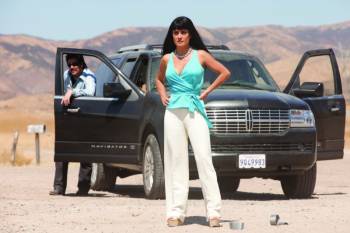
Oliver Stone’s new movie about drug dealers and drug users seems to assume that its audiences may be watching in an altered state of consciousness as well.  Stone has never been known for subtlety, but just to make absolutely sure that everyone watching the film knows what is what, he makes a very clear distinction between our heroes and our villains.  The good drug dealers are two guys and a girl who live together in an almost Edenic state of polyamorous bliss on Laguna Beach and donate money to African villages.  The villains are the bad drug dealers, who chain-saw off the heads of seven people before the opening credits are over and are led by viciously evil Selma Hayek with a hairstyle that makes her look like a demented Veronica from the Archie Comics.

Our narrator cautions us that just because she is telling the story does not mean she is alive at the end of it.  O (for Ophelia) is a California girl from a wealthy but dysfunctional family whose primary occupations are shopping and having sex with her two boyfriends.  Chon (Taylor Kitsch) is the muscle, a cynical former military guy.  Ben (Aaron Johnson of “Kick-Ass”) is the idealistic botany/business guy.  Together, O tells us, they make the perfect boyfriend, and they love each other, too, so it’s just one happy cuddle puddle.

But the very thing that makes them so successful — the exceptional quality of their weed — has made them a threat to the big, bad drug dealers from Mexico.  When they make an offer Ben and Chon can’t refuse, Ben and Chon refuse anyway.  They are willing to turn over the business but they are not willing to work for Elena (Hayek) and her group.  So O gets taken hostage, and if Ben and Chon do not start cooperating, they will chop off her fingers.

When O and Elena have an elegant dinner and O starts prattling on about her failed effort at community college as though she is talking to her parents’ friends at the country club, we get a sense of the grand guignol possibilities of this story, based on novel by Don Winslow, who co-scripted.  Hayek’s relish in the role is entertaining and John Travolta has a good turn as a paunchy FBI agent with no illusions.  But Benicio de Toro’s portrayal of Elena’s sociopathic henchman is just icky.  Stone’s re-re-re-treading of the same issues that have pre-occupied him since he was fighting in Vietnam — drugs, corruption, military, power — is tired.  The butchery and dissolution of the bad guys is over the top and the heroes give us no reason to root for them.  A final fake-out is an insult to any remaining goodwill left from the audience and the overall preposterousness finally feels like an insult.


Parents should know that this film has extremely graphic and disturbing violence including torture and rape, explicit sexual situations, nudity, drinking, smoking, extended drug use (marijuana and cocaine) and drug dealing, very strong language

Family discussion:  Why do the different characters refer to each other as savages?  Do you agree with  the definition used at the end?  What kept O, John, and Ben together?

If you like this, try: “American Gangster” and “Blow”


Related Tags:


Based on a book Crime Drama
THE MOVIE MOM® is a registered trademark of Nell Minow. Use of the mark without express consent from Nell Minow constitutes trademark infringement and unfair competition in violation of federal and state laws. All material © Nell Minow 1995-2026, all rights reserved, and no use or republication is permitted without explicit permission. This site hosts Nell Minow’s Movie Mom® archive, with material that originally appeared on Yahoo! Movies, Beliefnet, and other sources. Much of her new material can be found at Rogerebert.com, Huffington Post, and WheretoWatch. Her books include The Movie Mom’s Guide to Family Movies and 101 Must-See Movie Moments, and she can be heard each week on radio stations across the country.

Website Designed by Max LaZebnik