Mr. Church

Mr. Church

Posted on September 15, 2016 at 5:01 pm

B
Lowest Recommended Age: High School
MPAA Rating: Rated PG-13 for thematic elements
Profanity: Some strong language
Alcohol/ Drugs: Alcohol and alcohol abuse, smoking, prescription drugs
Violence/ Scariness: Illness and very sad deaths
Diversity Issues: A theme of the film
Date Released to Theaters: September 16, 2016
Date Released to DVD: October 24, 2016
Amazon.com ASIN: B01JTQ3QTC

Copyright 2016 Envision Media Arts
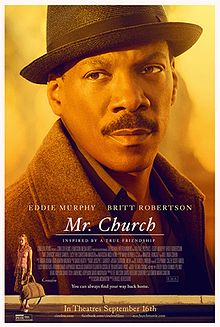
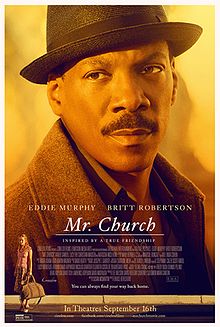
Eddie Murphy gives a thoughtful, nuanced, sensitive performance in a film that suffers from a too-predictable script and suffers even more from very bad timing.

Director Bruce Beresford picked the right time for the similarly themed “Driving Miss Daisy,” released in 1989, the story of a friendship between an illiterate black chauffeur and a cranky Jewish widow in the Civil Rights era South. It was a prestige and popular success, with Best Picture and Best Actress Oscars. But 27 years later, audiences are more sophisticated or less tolerant or both, and the idea of a devoted domestic who sacrifices a great deal from a combination of limited options and loyalty is not a reassuring fable of racial harmony but a grating reminder of white privilege and the prevalence of the narrative of the Magical Negro. No matter how based (as “Miss Daisy” was, as well as films like “The Help”) on real-life experiences and no matter how well-intentioned and affectionate the portrait, no matter how hard Beresford and Murphy try, it is hard to see the portrait at anything but condescending.

But I did my best to try, and watched it as writer Susan McMartin wanted it to be watched, as her sincere tribute to what she calls “a real friendship in my life.” With that context, I was able to appreciate the film’s evocative sense of time and place and Murphy’s understated performance.

Marie (Natascha McElhone) is a single mother of 10-year-old Charlotte (Natalie Coughlin). Marie is very ill, much worse than Charlotte knows. One day, Mr. Church (Murphy) shows up to cook for them. His salary is being paid by Marie’s former lover, a married man who still cares for her. Charlotte is resistant, even hostile, perhaps projecting some of her anger at her mother’s illness onto the man who seems like an intruder. She’d rather just have cereal. But she is quickly won over by his endlessly marvelous food, masterfully prepared, always while listening jazz on the radio. The economy and precision of his hands as he prepares the food is his own kind of jazz. Soon, he introduces her to something even more nourishing: his well-worn library of books, which he allows her to borrow only after filling out a check-out card.

Mr. Church’s care and her own fierce determination keep Marie going long past the predictions of her doctor, and she is able to see Charlotte (now Britt Robinson of “Tomorrowland”) go to the senior prom. But then Marie is gone, and Mr. Church saves the day by making it possible for Charlotte to go to college, until she becomes pregnant and has to drop out. With nowhere else to go, she finds herself back with Mr. Church, who takes her in and cares for her as he always has.

Even after all that, he is still “Mr. Church.” His private life is still private. And when Charlotte tries to find out more, he is furious. But they are family, and that means they find a way to go on together, until it is her turn to take care of him. (We’ve segued from “Driving Miss Daisy” to “Arthur”)

We spend too much time with Charlotte and not enough with Mr. Church. He is a far more interesting and significant character.

Parents should know that this film includes illness and very sad deaths, and smoking and alcohol abuse, and references to adultery and out of wedlock pregnancy. Her story is one we’ve seen many times before. His is one we want to know more about, and this film should have understood that he was its focus.

Family discussion: How did Mr. Church win Charlotte’s trust? Why didn’t he want her to know more about his life?

If you like this, try: “Clara’s Heart”

Related Tags:


Coming of age Drama DVD/Blu-Ray Pick of the Week Family Issues Inspired by a true story
The Vessel

The Vessel

Posted on September 13, 2016 at 7:07 pm

B+
Lowest Recommended Age: Mature High Schooler
MPAA Rating: Rated PG-13 for some partial nudity/sensuality and thematic elements
Profanity: None
Alcohol/ Drugs: Alcohol
Violence/ Scariness: Devastating tragedy (off-screen), some peril
Diversity Issues: None
Date Released to Theaters: September 16, 2016

Copyright New Territory Pictures 2016
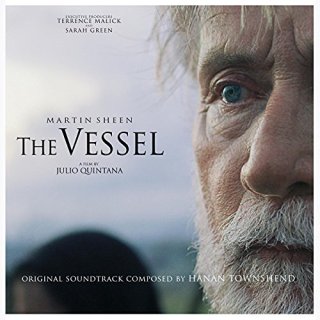
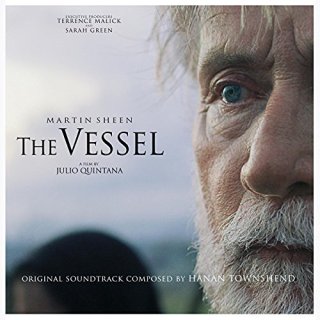
Many people have asked why bad things happen to good people, and many theories have been proposed. Fewer people have explored the more important question: when devastating tragedy happens, how do we find a way to go on? That is the question in “The Vessel,” produced by Terrence Malick and written and directed, in both Spanish and English versions, by Julio Quintana. Malick’s influence or inspiration is felt throughout, from the exquisitely composed images and impressionistic storytelling to the spiritual symbols.

Like Malick, Quintana lets the story unfold slowly, with a dreamy quality, allowing the audience to discover the story rather than serving it to us. There is a narrative voiceover from Leo (Lucas Quintana), a man who lives with his mother, a woman closed off in a deep silence. He cares for her tenderly, patiently. Leo tells us that all of the women in his community wear black in a sort of contest. Whoever puts aside mourning clothes first will lose some unspoken contest. And so we begin to discover she is not the only person in this Spanish-speaking town on the ocean who has had a tragic loss. The entire community has been devastated. They can barely speak. They seem stuck in grief, with no way to return to any part of their lives.

An American-born priest (Martin Sheen, a performance of deep grace and generosity) tries to help. He does everything he can. He listens. He counsels and commiserates. He gently urges. He prays. But nothing changes.

And then, Leo does something. What is a vessel, after all? The word can mean a ship or a container for liquids or a biological or botanical term for a physical delivery system. And poetically it can be used for a human body as the container for a soul. All of the above applies here, with images of water to underscore the metaphor. Leo begins to build something, not sure why or what he will do when it is finished. The priest opposes it; for him it is a distraction, a rival to the church, a golden calf. And yet, the community begins to see it as a portal to a return to themselves. They will never forget. They will never be free from pain. But for the first time, they begin to see the possibility that they might not be numb anymore.

This is a gentle, poetic, touching film, itself a vessel with a message of hope. It does not pretend to answer the question of why bad things happen to good people, but it reminds us that when they do, there are other good people paying attention.

Parents should know that this movie includes themes of devastating loss, some peril, and a brief sexual situation with some nudity

Family discussion: What do we learn from the different ways of grieving? Why did the boat make a difference?

If you like this, try: “The Sweet Hereafter” and “Tree of Life”

Related Tags:


Drama Movies -- format Spiritual films
Sully

Sully

Posted on September 7, 2016 at 2:00 pm

B+
Lowest Recommended Age: Middle School
MPAA Rating: Rated PG-13 for some peril and brief strong language
Profanity: Brief strong language
Alcohol/ Drugs: Acohol
Violence/ Scariness: Intense peril, dire and tense real-life situation, airplane near-crash
Diversity Issues: None
Date Released to Theaters: September 9, 2016
Date Released to DVD: December 19, 2016
Amazon.com ASIN: B01LBWHQRA
Copyright 2016 Warner Brothers

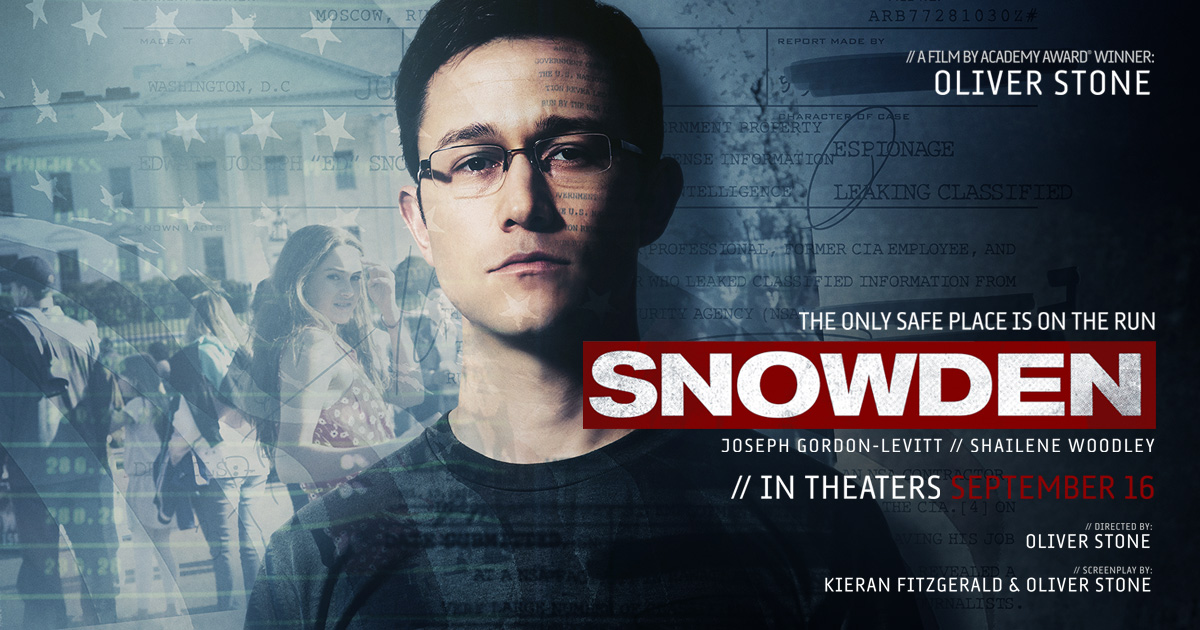
Pay attention to the numbers in “Sully,” the new movie from director Clint Eastwood, with Tom Hanks as “Sully” Sullenberger, the pilot who lost both engines and landed his plane safely on the Hudson River on January 15, 2009. 208 is the number of seconds that Sully and his co-pilot, Jeff Skiles (Aaron Eckhart) had from the time two “bird strikes” took out both of the plane’s engines. 1549 was the number of the United flight, an Airbus A320-214 flying from New York’s LaGuardia Airport to a stopover at Charlotte Douglas International Airport. 155 is the number of people whose lives were saved by Sully’s quick thinking. And 17 — I will let you find out for yourself why that number matters in one of the film’s key turning points.

We know what happened. No one can forget those images of the passengers standing on the wings of the plane on the river in freezing weather. And 208 seconds, no matter how tense and exciting, is not enough for a film. Screenwriter Todd Komarnicki sets the film in the days after the “controlled ditching” (that is the technical term), as Sully and Skiles are lauded as heroes by the media and cross-examined with skepticism by the investigating authorities, overseen by the National Transportation Safety Board. The facts were improbable, even unimaginable. The panel chair (“Glee’s” Mike O’Malley) notes dryly that they have never before listened to the “black box” recording in the presence of the people on the tape. Everyone in the room knows that is because they were all dead. When asked about “the crash,” Skiles interrupts to correct the choice of words: “It was not a crash. It was a ditching, a forced water landing.”

Even Sully, following the intensity of the emergency landing and his concern for what he refers to as the “155 souls” on board, including the crew, is in something of a daze. He is peppered with questions: “When did you last have a drink? Are you having trouble at home?” He is interviewed by Katie Couric and appears with the crew on David Letterman’s show. And yet, he is facing a challenge every bit as daunting and far more complex than losing two engines at a low altitude. There is the relentless, often hostile, dissection of every one of those 208 seconds through an extensive government investigation and the media spotlight, reviewing every decision, every risk assessment, every protocol. Was that second engine really out? Could they have made it to a runway in New Jersey? The only questions tougher and more suspicious than those of the investigators are those Sully asks himself. He is numb from the trauma of the forced landing and especially from the excruciation hours until he was told that all 155 souls were safe.

The script from screenwriter Todd Komarnicki, based in part on Sullenberger’s book, is one of the most well-crafted, tightly constructed screenplays of the year, efficient in providing us the information we need without getting us lost in technical jargon, and making each return to the seconds of crucial decision-making more revealing and more compelling. Hanks, as always, is superb in conveying the ultimate of decency and integrity. And I promise, after this, when they recite the safety details at the beginning of your flight, you will listen.

Parents should know that this movie has extreme, intense peril with some disturbing images. Characters drink and use some strong language.

Family discussion: What experience and character qualities made it possible for Sully to think through his options so quickly and figure out a way to save everyone on board? Were any of the questions they were asked unfair?

If you like this, try: “Apollo 13” and “Captain Phillips,” two other fact-based films with Tom Hanks in charge of a vessel in trouble.

Related Tags:


Based on a true story Drama DVD/Blu-Ray Pick of the Week IMAX
The Light Between Oceans

The Light Between Oceans

Posted on September 1, 2016 at 5:55 pm

B
Lowest Recommended Age: High School
MPAA Rating: Rated PG-13 for thematic material and some sexual content
Profanity: Mild language
Alcohol/ Drugs: None
Violence/ Scariness: Discussion of wartime violence and loss, miscarriages, dead body
Diversity Issues: None
Date Released to Theaters: September 2, 2016
Date Released to DVD: January 23, 2017
Amazon.com ASIN: B01LDWUQ4I

Copyright Disney 2016
The lighthouse is on an island called Janus, and the lighthouse keeper explains that it is named for the two-faced god who is memorialized in the first month of each year, January. One face looks to the past, the other to the future — “two ways of looking at things.”

The theme of duality and perspective resonates throughout this story of the lighthouse keeper, Tom Sherbourne (Michael Fassbender) and his wife Isabel (Alicia Vikander), we see how two ways of looking at things can balance or unbalance each other.

Tom is a WWI veteran who tells the man looking for a temporary lighthouse keeper that he is not worried about the isolation of the job. “I just want to get away from things for a little while.” His mother died and he had a father who was so dictatorial that the regimentation of the military was a relief. We do not learn much about his wartime experiences except that they were brutal. He is, as he later admits, numb. The solitude and order of the lighthouse suits him.

But he meets the lively and warm-hearted Isabel, who impetuously proposes marriage, and realizes how much he had been longing for connection. She tells him, “You still have a light inside you, and I have seen it.” And he writes back, “I’ve never known it was all right to talk about the things I feel.”

They marry and are blissfully happy in their tiny little island. But after two harrowing miscarriages, Isabel is devastated. When a boat washes up near the shore containing a dead man and a crying baby, it seems that providence has given them what they were missing. It seems that way to Isabel. Tom knows that he must put the truth into his log and return the baby to her family. But Isabel is desperately in love with the child and insists that they can give her what she needs. Tom, who has promised to do everything he can to make her happy, agrees.

They adore the baby, who they name Lucy. But when Tom sees a woman sobbing in a graveyard (Rachel Weisz) and realizes she is probably Lucy’s real mother, his conscience begins to torture him. They have inflicted on her the same agony that they suffered.

The story gets soapy, and the tinkly piano score from Alexandre Desplat and scenes of waves crashing on the shore suggest literary pretensions that may work better in the acclaimed novel than they do on screen. But Fassbender and Vikander, two of the most compelling actors ever to appear on film, give powerful performances, and their on-screen chemistry, which turned into real-life romance, holds the film together when the story wavers.

Parents should know that this film has discussion of wartime violence and loss, miscarriages, a dead body, and devastating grief.

Family discussion: Who should raise Lucy? Why did she want to see Tom again? Was Frank right about forgiveness?

If you like this, try: “The Widow of Saint-Pierre”

Related Tags:


Based on a book Drama DVD/Blu-Ray Pick of the Week
THE MOVIE MOM® is a registered trademark of Nell Minow. Use of the mark without express consent from Nell Minow constitutes trademark infringement and unfair competition in violation of federal and state laws. All material © Nell Minow 1995-2026, all rights reserved, and no use or republication is permitted without explicit permission. This site hosts Nell Minow’s Movie Mom® archive, with material that originally appeared on Yahoo! Movies, Beliefnet, and other sources. Much of her new material can be found at Rogerebert.com, Huffington Post, and WheretoWatch. Her books include The Movie Mom’s Guide to Family Movies and 101 Must-See Movie Moments, and she can be heard each week on radio stations across the country.

Website Designed by Max LaZebnik