James McAvoy plays the doctor who tried to play God, Victor Frankenstein, in this latest film based on the classic novel by Mary Shelley. Daniel Radcliffe plays his assistant, Igor, and the cast includes “Downton Abbey’s” Jessica Brown Findlay and “Sherlock’s” Andrew Scott. It will be in theaters this Thanksgiving.
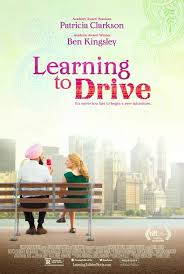
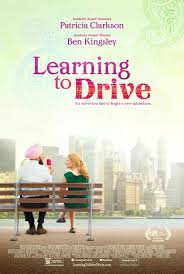
Katha Pollitt’s wry but bordering on scathing essay about taking her first driving lessons in her 50’s, after her partner of seven years left her for another woman has been turned into a softened but still trenchant film. Patricia Clarkson plays Wendy, a less ethnic and more friendly-sounding name than Katha, and perhaps a reference to the “Peter Pan” character who had an adventure and then returned home to grow up.
Wendy is a New York intellectual who writes book reviews and appears on NPR. We first see her devastated and furious because her husband, Ted (Jake Weber), has taken her to dinner so that he can tell her in a public place that he is leaving her for another woman after 21 years of marriage. Their cab driver, a turbaned Sikh named Darwan (Sir Ben Kingsley) pretends not to hear as he takes them home, or rather takes Wendy home. Ted is not going back there anymore. When she realizes that a divorce will mean they have to sell their home, it is as painful for her as the end of the marriage. “It’s like asking me to move out of me.”
Later, Darwan realizes that Wendy has left an envelope in his cab. He returns it to her, and when she sees that he has a second job as a driving instructor, she impulsively hires him to teach her to drive. She has never had to learn; she lives in Manhattan and her husband drives. But their daughter (Grace Gummer) is living on a farm, and if Wendy wants to visit her, she will have to get a driver’s license and a car.
At first, Wendy assumes that Ted will come back. But, as Darwan tells her, she has to learn to be more attentive to what is going on around her. “Teach yourself to see everything.” He also cautions her to be mistrustful of other drivers. She begins to realize that this applies to her life as well as to driving. Meanwhile, Darwan struggles with his nephew, illegally in the US and living with him, and with his sister, back in India, who is trying to arrange a marriage for him. As Wendy’s marriage is dissolving, Darwan is agreeing to marry someone he has never met, Jasleen (Sarita Choudhury).
Beautiful performances by everyone, especially Clarkson and Choudhury, give this story a luminous glow and touches throughout remind us that this is a story told by women. Director Isabel Coixet (do not miss her exquisite “My Life Without Me”) and screenwriter Sarah Kernochan are wise about the connections women make with one another and how they talk about the men in their lives. That applies to Jasleen as well as Wendy. This is more than a story of a woman learning to pay attention and to “taste” a parking space; it is a story of Darwan and Jasleen as well, who have their own challenges of seeing and tasting.
Parents should know that this film includes very strong and crude language, sexual references and explicit conversations, and brief nudity.
Family discussion: What did Wendy learn about “tasting” and paying attention that helped her beyond the driving lessons? Why did she tell her daughter to go back to the farm? What will happen with Darwan and Jasleen?
If you like this, try: “An Unmarried Woman,” “84 Charing Cross Road,” and “Happy-Go-Lucky”
Copyright 2015 Route One Films It isn’t getting to that point where you most often see your friends at funerals. It isn’t feeling stale because instead of promoting a new book, he’s going on some chirpy morning show to promote a reissue of his old ones.
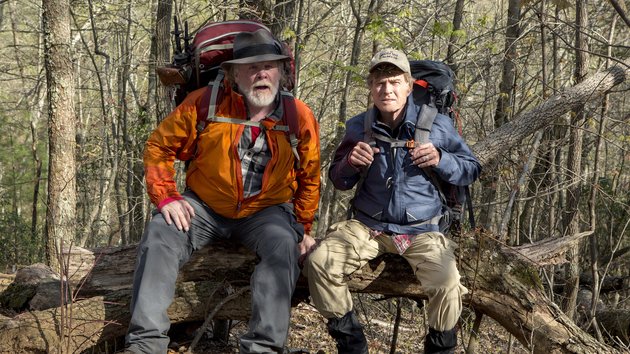
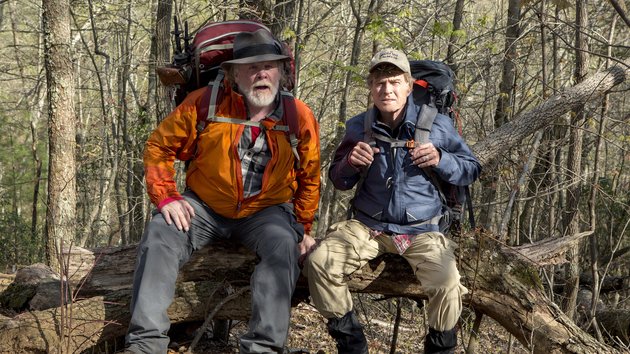
Though both of those things are true. But Bill Bryson (Robert Redford) has a different reason for wanting to try one of the longest hikes in the world, the Appalachian Trail. He quotes the pioneering conservationist John Muir, the man who inspired the National Parks system and urged the preservation of the Grand Canyon. Muir said sometimes you just have to “throw some tea and bread into an old sack and jump over the back fence.” And it is just past Bryson’s own back fence that the AT beckoned.
If mortality was bearing down a bit hard, that just meant more “now or never” urgency. The fact that the lead actors are three decades older than Bryson was when he took the walk that led to his book, A Walk in the Woods: Rediscovering America on the Appalachian Trail, vastly overshadows the clutter from the superficial other issues raised by the script, often half-heartedly. Will Bryson write again? Will he re-adjust to living in the US after years abroad? Will he recover his mojo? Where is he from? Will he make it to the end of the trail alive and without inflicting some serious and possibly lethal damage on his traveling companion?
Bryson is, as the movie begins, back in the US and feeling unmoored. He decides to hike the private, non-profit, volunteer-managed Appalachian Trail, stretching more than 2000 miles from Maine to Georgia. His wife (Emma Thompson, bringing her luminous intelligence to an underwritten wife-y role) insists that he cannot go alone. Everyone he knows turns him down. And then he gets a call from his old high school friend in Des Moines, Katz (Nick Nolte, a marvel of shambling decay with a voice more growl than verbal), volunteering to come along. These guys are not exactly up to jumping over the back fence. But the longest journey begins with a single step, and so off they go.
No big surprises ahead — encounters with quirky people along the way (Kristen Schaal is a stand-out as a loony solo hiker and Mary Steenburgen is a welcome presence as always as the owner of a hotel along the trail), spectacular scenery, some historical and conservationist information, some highs and lows in the terrain, the temperature, and the reconnecting of the old friends. But it is a pleasure to see these two old pros swing for the fences one more time.
Parents should know that this movie has some very strong and vulgar language with very crude sexual references. Characters drink and discuss substance abuse.
Family discussion: How would you describe the friendship between Katz and Bryson? What adventure do you want to take and who would you take with you?
If you like this, try: the book by Bill Bryson and other walking movies like “Wild” and “Tracks” and more great books about treks like A Short Walk in the Hindu Kush
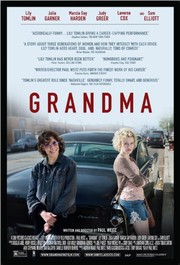
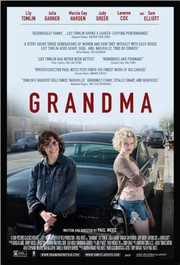
Lily Tomlin is cranky, feisty, tough, and utterly irresistible in this story of a grandmother who has to visit past decisions about her own life in order to help her teenage granddaughter. Tomlin plays the aptly named Elle (French for “she”), a feminist poet. Her work is respected and influential but that has not translated into financial stability. She has recently cut up her credit cards and made a wind chime out of them.
As we first see her, she is dumping her much younger girlfriend, Olivia (Judy Greer). No “it’s not you; it’s me.” No, “I’ll always remember the good times.” No lyrical meditations on love and loss. Not even any arguments or accusations. Just “It’s over. Leave.”
And then Elle’s granddaughter arrives. Her name is Sage (Julia Garner), and she has a head of fuzzy, soft curls that make her look like a dandelion. She is young and vulnerable but determined. She needs help, and it is clear that she would not be there if she had any other option. She is scheduled to have an abortion that afternoon, but she needs $630. And so Grandma and Sage set off in Elle’s clunker of a car, making desperate visits to people who might be able to help them. So we see a series of encounters, sad, angry, poignant, romantic, score-settling, each impeccably performed by an outstanding cast of actors in small scenes with deepening impact. We learn more about Elle’s life, the wrenching loss she is still mourning, the kindness and unkindness she has shown, and the way she has and has not dealt with the consequences. Standouts include Nat Wolff (“Paper Towns”) as the father, Laverne Cox as a sympathetic tattoo artist, Marcia Gay Harden as Elle’s brisk businesswoman daughter, and Sam Elliott as Elle’s ex.
Writer/director Paul Weitz (“About a Boy”) has taken a story that could be a parody of the worst nightmares of Fox News fans and made it into a very human story of love, loss, and overcoming the fear of intimacy. It is about the families we create and the perfect love we must feel for imperfect people.
Parents should know that this film has very strong and crude language, drinking, drugs, teen pregnancy, and extended discussion of abortion.
Family discussion: Why does Elle break up with Olivia? Why don’t Elle and her daughter get along? Why is the film called “Grandma” and not “Elle” or “Elle and Sage?”
Copyright Warner Brothers 2015
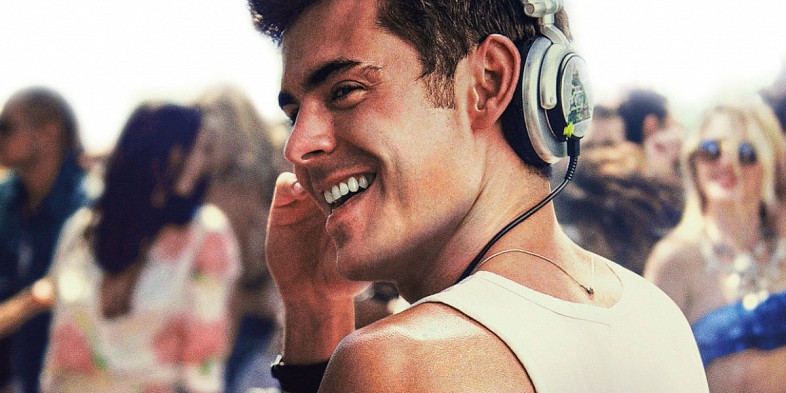
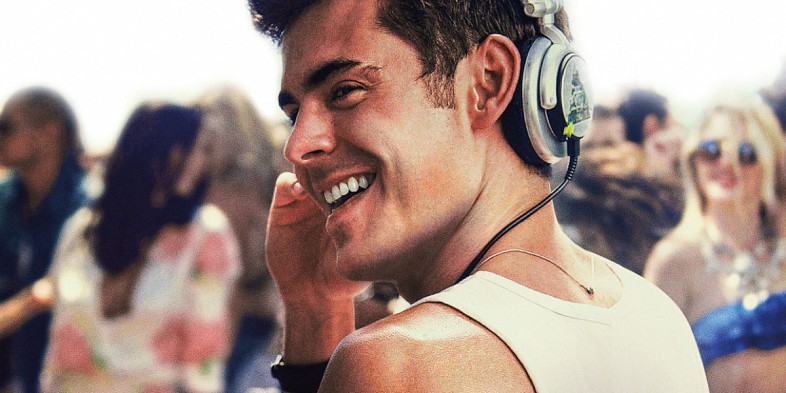
Director Max Joseph brings some of the “Catfish” sensibility to “We Are Your Friends,” with an intimate, documentary feel and a storyline about people in their 20’s who have big dreams but not much understanding about how to achieve them or even about the nature of their relationships. Joseph is the quieter co-host of “Catfish,” the MTV series sequel to the film that added its name to the lexicon, meaning an online relationship with someone who is not as described or presented. In “We Are Your Friends” (named for the Justice vs. Simian song) four bros hang out together, trashing each other and everyone else, promoting parties, enjoying easy access to drugs and girls, and reassuring each other that fame and fortune lies ahead. They feel like besties, but it’s just inertia and a shared fear of moving forward. In reality, they are very different.
Cole (Zac Efron) is a talented DJ who knows how to combine “the rhythm of a caveman” with a kickin’ bass line to “get the crowd out of their heads and into their bodies.” His pals are hot-tempered Mason (Jonny Weston), low-key drug dealer and aspiring actor Ollie (Shiloh Fernandez) and quiet but thoughtful Squirrel (Alex Shaffer of “Win Win”). They get jobs facilitating real estate deals (calling people in foreclosure) for a wealthy businessman (Jon Bernthal, all rough charm and menace in an excellent performance). And Cole meets James (Wes Bentley with Wolverine-style facial hair), a big shot DJ who has performed all over the world and who has a girlfriend/assistant named Sophie who looks like a Sports Illustrated swimsuit model, because she is played by Emily Ratajkowski, who is one. Ratajkowski was better in “Gone Girl.” Here she does more posing than acting.
There’s nothing wrong with a coming of age story about a young person with a strong creative drive who needs to learn to develop a singular voice, and Efron is, as always, an appealing actor. But too much of it seems borrowed from other films and the situations and settings (San Fernando Valley, aimless young men who party too much and wear their pants too low, the empty and foreclosed houses and predators who flip them) are washed out and played out. The big lesson for Cole is learning to develop a distinctive sound. But the scene where the scales fall from his eyes — or ears — so that he begins incorporating the sounds around him like that wacky carriage ride scene in “The Great Waltz” is just silly. It never persuades us that EDM is anything but derivative, mostly because the movie is, too.
Parents should know that this film has a lot of adult material including very strong language, crude sexual references and situations, nudity, drinking, smoking, extended drug use and drug dealing including marijuana, PCP, ecstasy, and cocaine, a fatal overdose, and a painful scene of foreclosure.
Family discussion: Why did Squirrel say the best part was before the evening began? What did James mean about the meaning of the word “irreparable?”
If you like this, try: “Magic Mike” and “Echo Park”

 , vastly overshadows the clutter from the superficial other issues raised by the script, often half-heartedly. Will Bryson write again? Will he re-adjust to living in the US after years abroad? Will he recover his mojo? Where is he from? Will he make it to the end of the trail alive and without inflicting some serious and possibly lethal damage on his traveling companion?