The Twilight Saga: Breaking Dawn, Part 2

Posted on November 15, 2012 at 6:00 pm

The “Twilight” series comes to a close with the fifth film based on the four-book supernatural love story from Stephenie Meyer. This one is for the fans, with a loving farewell that includes a romantic recap series of flashbacks and final credits bringing back all the stars of the series.  It will be less satisfying for non Twi-hards, who will have a hard time ignoring the ludicrousness of the storyline.

In the last chapter, Bella (Kristen Stewart) at long last (well, not too long, she just finished high school), married her one true love, Edward (Robert Pattinson), a vampire.  They had a wonderfully romantic but bed-breaking wedding night, and she got pregnant, a surprise to everyone because it was thought to be biologically impossible.  The pregnancy left Bella so frail that childbirth would have killed her if Edward had not kept her alive by turning her into a vampire.  “Breaking Dawn, Part 1” ended with her eyes opening, vampire-ified to electrified amber with a kind of permanent mascara.  “I didn’t expect you to seem so..you,” Jacob says. “Except for the creepy eyes.”

In the past, we saw the “other” world of vampires and wolf-people like Jacob (Taylor Lautner) through Bella’s brown human eyes.  Now we see everything through the hyper-charged senses of the ultimate predator.  Ironically, it is only as a vampire that Bella feels most purely herself — strong, confident, capable.  This is the fork in the road where the fans will stay with it but everyone else may take a detour.  One reason for the sensational popularity of the books is the way they so perfectly capture a young teenager’s fantasy.  That works better when the characters are themselves teenagers.  Trying to project them into the adult world, even one as skewed as the vampire world, is a tougher stretch.

Bella and Edward have an idyllic existence of eternal adolescence, with a life free from work, struggle, and parents.  They do not have to eat or sleep.  They do not have to do anything but have wildly energetic sex and conversations about who loves who more, with banter like “We’re the same temperature now.”  You may ask, “Wait, isn’t there a baby with some kind of nutty name?”  Yes there is, and her name is Renesmee (after the two grandmothers, Renée and Esmé).  When Jacob calls her “Nessie,” Bella gets angry because that’s the Loch Ness monster’s nickname, though it seems likely that it is just another of Jacob’s protective instincts, her birth name being something of a burden.

Bella and Edward-style parenting is not very demanding.  The baby has a full-time staff of loving vampire relatives and an imprinted wolf-guy.  And it turns out that vampire/human children grow in dog years.  The movie, unfortunately, moves rather slowly, with a lot of time bringing in 18 new vampire characters from all over the world to help persuade the vampiric governing body, the Volturi, that they have not broken the law and produced an “immortal child” who could put the community at risk.  All of this leads up to a grand battle across a snowy field, the motley crew of good guy vampires and the robed Volturi.

The endless procession of new characters gets tedious except for a Revolutionary war veteran played by Lee Pace (“Lincoln,” “Pushing Daisies”), who talks about his time with General Custer and has far more electricity on screen than the vampiress who catches his attention with her super-tasing power to jolt anyone.  I also liked Rami Melek (“Night at the Museum,” “Larry Crowne”) as a vampire who can control the elements.  But the sheer volume of new characters made having to remember each one’s special talent like trying to keep track of the Smurfs.

We’ve spent a lot of time with these characters and it is good to see a satisfying resolution to their story.  But I couldn’t help feeling that Meyer had run out of ideas and just tossed in everything she could think of.  My primary reaction at the end was relief that this was the end.

Parents should know that this movie includes vampire violence with battles that include graphic decapitations and other disturbing images, characters injured and killed, sexual references and situations with some nudity, and some language.

Family discussion: What are the biggest changes in Bella’s outlook and abilities from the first installment to the last? How much should she tell Charlie? If you could have one of the special gifts of the characters in the film, which would it be and why?

If you like this, try: the other “Twilight” movies and the books by Stephenie Meyer

Related Tags:


Action/Adventure Based on a book Drama Fantasy Romance Series/Sequel

Universal Classic Monsters

Posted on October 31, 2012 at 3:48 pm

What could be better for Halloween than the new Blu-Ray release of Universal Classic Monsters: The Essential Collection , with deluxe editions of eight classics:  “Dracula” (1931, 75 min.), “Frankenstein” (1931, 71 min.), “The Mummy” (1932, 74 min.), “The Invisible Man” (1933, 71 min.), “The Bride of Frankenstein” (1935, 75 min.), “The Wolf Man” (1941, 70 min.), “The Phantom of the Opera” (1943, 93 min.), and “The Creature from the Black Lagoon” (1954, 79 min.).

Related Tags:


Based on a book Classic Fantasy Horror

The Original Movie Vampire: Nosferatu

Posted on October 29, 2012 at 8:00 am

As we think about scary movies for Halloween, I wonder what the vampires in “Twilight” or “True Blood” would think of one of the earliest screen depictions of a vampire, “Nosferatu.”  If the story seems familiar, it is because they wanted to film “Dracula” without paying for the rights to the original story.  A great mystery grew up around the actor who played the title role, Max Schreck, inspiring the Willem Dafoe film, Shadow of the Vampire.

http://www.youtube.com/watch?v=rcyzubFvBsA
Related Tags:


Based on a book Classic Fantasy Horror

Cloud Atlas

Posted on October 25, 2012 at 6:00 pm

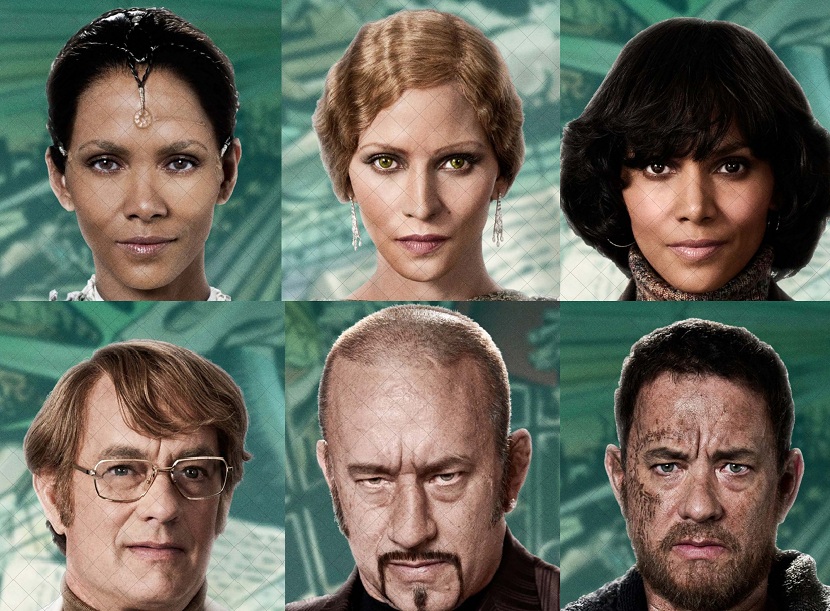
Six nested stories set in the past, present, and future entwine grand themes of the conflicts between those who would oppress and those who demand freedom, those who must create and those who want to repeat what is already there, those who love and those who are afraid to love or be loved.  Some in the audience will be enchanted by the grand scope of the story-telling and the intricate details of the mosaic that make up each of the story’s parts.  Others will be impatient with the gimmicks and distracted by the prosthetics, wigs, and make-up.  Many will grapple with the frustration of experiencing both reactions.

When they made the “Matrix” films, they were known as the Wachowski brothers, Andy and Larry.  But since then, Larry has become Lana while resisting terms like “transition” as “complicity in a binary gender narrative.”  That clearly fueled the commitment to age, race, and gender fluidity throughout the film. Even the most sharp-eyed cataloger of prosthetic noses and teeth will be surprised as the credits reveal the multiple roles taken by Tom Hanks, Halle Berry, Hugo Weaving (Mr. Smith in the “Matrix” films), Hugh Grant, Jim Sturgess, James Broadbent, Ben Wishaw, Keith David, Doona Bae, and others.

The oldest story, set in the early 19th century and told in the  traditional style of ahistorical drama, has Sturgess as a man disturbed by the abuse of slaves in the Pacific who is being poisoned by a doctor (Hanks) he thinks is curing him.  His journals become a book on a shelf in the next story, set in the 1930’s, with a musician (Wishaw) writing to the man he loves about assisting a venerated composer and working on his own composition, called “Cloud Atlas.”  In the 1970’s, styled to remind us of that era’s “paranoid cinema” films like “The Parallax View” and “The China Syndrome,”  an investigative reporter (Berry) gets stuck in an elevator with an elderly scientist who gives her some important information about a nuclear facility.  She discovers his 40-years-old correspondence with the musician in his papers.  In the present day, we see something of a shaggy dog story as a British publisher (Broadbent) goes on the run from hooligans and ends up having to escape from a “One Flew Over the Cuckoo’s Nest”-style facility.

Two stories are set in the future.  The first, in what is now Korea, has a “Blade Runner-“ish society made up of consumers and “fabricants.”  One of them sees a movie based on the story of the publisher’s escape (starring Hanks), which helps her understand that she must rebel against the abuses of her society.  Her story becomes part of the origin myths of a post-apocalyptic society hundreds of years even farther into the future, where much of humanity has returned to an almost bronze-age level of technology and everyone speaks in a Jar-Jar Binks form of pidgin English that may have worked better on the printed page but on screen is intrusive and overdone.

As the the “Matrix” films, the more specific and concrete it gets, the less resonance it has.  Its greatest message about human aspiration and inspiration and connection is in the message as medium.  The scope and audacity of this undertaking, the biggest budget independent film in history, with the Wachowskis putting up their own homes to make the final budget numbers, outshines the details that never quite reach the clouds.

Parents should know that this film includes some graphic violence including murders, rape, shoot-outs, knives, arrows, suicide, brutal whipping, poison, car crashes, and a character being thrown off a balcony.  Characters are in peril, injured and killed.  There are dead bodies with disturbing images, some strong words including f-word and n-word, gay and heterosexual sexual references and explicit situations as well as nudity, crude sexual humor, portrayal of slavery and totalitarianism, smoking, and drug use.

Family discussion: Which of the stories was the most compelling and why?  Who was the bravest character?  Who learned the most?

If you like this, try: the book by David Mitchell and the “Matrix” movies


Related Tags:


Action/Adventure Based on a book Drama Epic/Historical Fantasy Romance Science-Fiction
THE MOVIE MOM® is a registered trademark of Nell Minow. Use of the mark without express consent from Nell Minow constitutes trademark infringement and unfair competition in violation of federal and state laws. All material © Nell Minow 1995-2026, all rights reserved, and no use or republication is permitted without explicit permission. This site hosts Nell Minow’s Movie Mom® archive, with material that originally appeared on Yahoo! Movies, Beliefnet, and other sources. Much of her new material can be found at Rogerebert.com, Huffington Post, and WheretoWatch. Her books include The Movie Mom’s Guide to Family Movies and 101 Must-See Movie Moments, and she can be heard each week on radio stations across the country.

Website Designed by Max LaZebnik