Rated R for drug use throughout, sexual content, graphic nudity, language and some violence
Profanity:
Very strong, explicit, and crude language
Alcohol/ Drugs:
Extensive substance abuse including drinking, smoking, and drugs, drug dealing
Violence/ Scariness:
Peril and violence
Diversity Issues:
Diverse characters
Date Released to Theaters:
January 9, 2015
Copyright IAC films 2014
We love mystery stories because they reassure us that questions have answers and justice is possible. But some mystery stories are there to remind us that life is complicated and messy, and sometimes answers are just more questions. This is one of those stories.
Inherent Vice is a novel by the famously private author Thomas Pynchon, whose books are dense, complex, and thus rich fodder for grad students and intelligentsia. Writer/director Paul Thomas Anderson (“Boogie Nights,” “Magnolia,” “There Will Be Blood,” “The Master”) is also known for dense, complex stories, and he likes to focus on decay, corruption, and bruised innocence. They are well matched in this weed noir story, sort of Dashiell Hammett crossed with Hunter Thompson.
The original set-up is right out of a classic detective story. A beautiful woman named Shasta Fay Hepworth (Katherine Waterston) visits her ex-boyfriend, Doc (Joaquin Phoenix), some kind of hippie detective, to ask for his help. The narrator (singer Joanna Newsom), in a hypnotic, vocal fry deadpan, lets us know right away that Doc would be better off telling her to leave. But he cannot say no to Shasta or to a mystery, so he is on the case.
Shasta’s new boyfriend is a wealthy (and married) developer named Mickey Wolfman (Eric Roberts). Shasta believes that Wolfman’s wife and her boyfriend are trying to have him committed so they can get his money. As Doc begins to look into this, he encounters many odd characters, most with their own unsolved mysteries, some of which begin to intersect with the Wolfman story or with each other or both. And it all comes together, or doesn’t, in a haze of, yes, decay, corruption, and bruised innocence that is about the failure of the American Dream or existential chaos or the fragility of our concept of reality, or maybe just that the journey and those who accompany us along the way are more important than the destination. Also, something about the optimism and passion for changing society of the 60’s giving way to the me-decade and passion for individual self-exploration of the 70’s.
Doc encounters a number of extremely colorful characters as he explores a series of mysteries that appear to be linked, or perhaps all part of one big mystery involving a secret and very powerful malevolent force. The only one who seems to know what’s going on is the almost-never-seen narrator, and it’s not clear whether we’re supposed to root for the characters or laugh at them. But as always, Anderson’s impeccable casting and music choices are captivating, and there is an amusing contrast between his attention to every detail of camera placement, editing, production design, and dialog and the convoluted storyline and druggy fog surrounding the characters. I’m not sure what it was that I watched, but I have to admit I enjoyed watching it.
Parents should know that this film has just about everything we consider “adult content,” including constant very strong, explicit, and crude language, nudity and very explicit sexual references and situations including prostitution and adultery, drinking, drugs of all kinds and drug dealing, and violence including guns.
Family discussion: Why did Doc help Shasta? Why did he help Coy? Why is Doc a detective?
If you like this, try: “Boogie Nights” and “There Will Be Blood” by the same director and the book by Thomas Pynchon
Trailer: True Story with James Franco and Jonah Hill
Posted on January 7, 2015 at 3:52 pm
James Franco and Jonah Hill star in “True Story,” a title with layers of meaning. It is based on the real life story of reporter Michael Finkel (Hill), who was fired because he fabricated and altered facts in a “true story” he wrote for the New York Times. And then he discovered that a murderer (Franco) had been living his own version of a “true story,” representing himself as “New York Times reporter Michael Finkel.” Finkel’s book, True Story: Murder, Memoir, Mea Culpa, is the basis for this film, which co-stars Felicity Jones (“The Theory of Everything”), Gretchen Mol, and impressive newcomer Genevieve Angelson. It will be showing at Sundance later this month.
Sacred Journeys With Bruce Feiler comes out this week on DVD. If you missed it on PBS, here is your chance to travel along with pilgrims and worshippers around the world.
200 million people go on a pilgrimage each year. They set out from the ordinary, and seek the extraordinary.
Sacred Journeys takes viewers on some of the most celebrated, challenging and spectacular religious pilgrimages on earth. In this landmark six-part series, we travel with American pilgrims looking to transform their lives as they visit places deeply meaningful to their faith. And our cameras gain privileged access to places rarely seen by viewers before.
A pilgrimage at its core is a gesture of action. Pilgrims feel a deeper connection to their faith. They feel closer to God. In a world in which more and more things are digital and ephemeral, a sacred journey gives the pilgrim the chance to experience something real.
Pilgrimage today is more alive than ever before. But you can’t experience its wonders unless you go.
Premiering on Fox This Week: Empire with Terrence Howard and Taraji P. Henson
Posted on January 5, 2015 at 3:56 pm
One of the most exciting new televisions shows of the season is “Empire,” premiering on January 7, 2015 on Fox. It is part “King Lear,” part “Godfather,” part “Lion in Winter,” part soap opera, and set in the world of hip-hop music. Terrence Howard plays a drug dealer turned music mogul named Lucious Lyon who has learned he has ALS, with a life expectancy of just a couple of years. He must decide which of his three sons will inherit his business. One son has the business expertise. One has the musical talent. But he is gay, which makes Lyon uncomfortable. The youngest may be the most capable but he is immature and arrogant.
Lyon’s wife, Cookie, took the fall for their drug dealing and has been serving a prison sentence. As the series starts, she is released, furious and determined to make up for the years — and money — she lost. Henson and Howard had sizzling chemistry in “Hustle and Flow,” and it will be a treat to see them setting off against each other. With Lee Daniels (“Precious,” “The Butler”) and Danny Strong (“Game Change”) writing the series, there is sure to be plenty of flinty dialogue to help with the sparks. And, like “Glee” and “Nashville,” each week will have musical numbers (produced by Timbaland) that will be available on iTunes.
Interview: Lacey Schwartz on Her Family’s “Little White Lie” — No One Told Her She Was a Black Daughter in a White Family
Posted on January 5, 2015 at 8:00 am
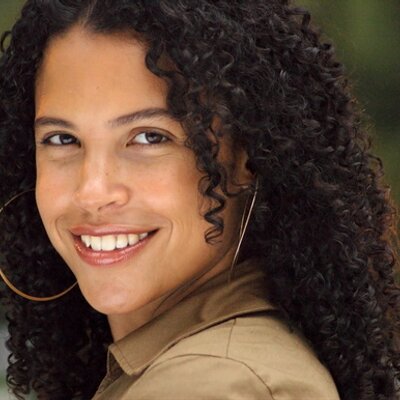
Lacey Schwartz grew up as the much-loved only child of warm, loving parents in a close-knit middle-class Jewish family. She did not resemble her parents, but they reassured her that she had a Sicilian grandparent who was the genetic source for her dark eyes and kinky hair. When she went to college and was invited to join the Black Students Alliance, she realized that she had find out the real story. That led to a documentary called Little White Lie.
Schwartz talked to me about making the film, including inviting a camera into the most intimate family conversations.
How did you get your parents to agree be filmed in such personal and intimate moments?
It’s a few things. One is I always try to acknowledge my own privilege in life and I think the biggest one I have is coming from a loving, supportive family – a family that you can definitely argue with and make mistakes in but nonetheless they have been in support of me for my whole life. And so I would say that’s the first part. The second part is that when I decided to do this film, I had to first go through the process of really having the conversation with myself about whose story is this to tell. And realizing that there’s always many different takes on one situation and that if I was going to make a film; I was setting up to tell my story. I wasn’t setting up to tell my parent’s story. And so what I did with not only just my parents but with my extended family is to tell them that them that I’m going to make a film about my life.
That kind of made it clear that I was going to do it no matter what. And I was asking everybody individually if they would participate and they would talk to me, and I was super lucky and again I am glad that everybody in my family was willing to do that. No one said no.
And we shot over the course of three years primarily and I would say a very high percentage of that footage was shot with one person shooting it who in the beginning he stayed at a hotel but by the end he was at my parents’ house for large periods of time. And in the beginning we didn’t have intense conversations it was the holidays, it was just hanging out. And so everybody really got to know him in a way that they became used to having conversations in front of him. So it wasn’t something where I just dropped in with a camera and asked them to talk about the stuff we had them talk about in a really personal way. It really took a long period of time and in the process of filming, it really worked in our favor.
At first, I thought, “Oh when we could afford it we are going to crew up.” I thought we would have a sound person and a producer there. That was the goal when I set out but from the beginning I couldn’t afford it. But it worked out for the best. He also was the co-director of the film because I’m a subject of the film. I can’t be directing and also be authentically living my life so when we actually shot I would step back from directing while the camera was rolling. And so he was the person who had to track what we were trying to get and figure out if we were getting it during the actual shooting. So he was really doing sound, he was shooting and he was really playing a crew director role. In retrospect I think it really worked in our favor because it did make it more intimate.
If you got a census form in the mail today how would you describe yourself?
When I’m checking off boxes I’m very aware of why people are asking the questions they are asking so I answer based on that- what will the information be used for. Also the forms have evolved since I was younger. For instance with the census form that gives you options to identify yourself in more than one way. But because I know the census is about how making sure that a community is counted I would check “black” because I want to make sure the black community is accounted for. I mean the President checks “black” right? I assume for the same reason.
copyright Lacey Schwartz 2014
Your participation in the Black Students Alliance in college was a real turning point for you. Did you ever experience any issues of not feeling fully accepted or connected to the other students in that group because you grew up in a white family and saw yourself as white?
That whole period of time for me, from when my parents got divorced until when I sat down with my mother and she told me the truth of why I look the way I do which is give or take about three years, was an incredible time, a positive, crazy time of discovery for me. One of the big themes that I look at in this film is denial. And not just the power of denial but the anatomy of denial – what does denial really look like? So one of the things I’m really trying to do is examine all the different elements. Every individual has their own timeline of denial including me even though it was learned behavior. And the way I break up the timeline is there is a period where you are really lying to yourself and you really can’t believe it. But there is sometimes the period where deep down you know that something is not right but you are not really yet ready to admit it. And I think that that period of time was those three years that I’m talking about for me.
Deep down I was like, “Something doesn’t make sense.” But I was getting to that place of build-up where I could ask the question. So in certain ways, getting to Georgetown and getting invited to the Black Students Alliance meeting, having black friends and being part of the black community for the first time although I wasn’t actually identifying with being black, I was just kind of mingling and connecting with them — that was such a interesting time. When that invitation came was like the first moment of awareness. My parents splitting up kind of opened up my consciousness, but the letter from Georgetown gave me some answers to try on and to get more comfortable with.
How did the students there welcome me? I know many people in my situation being biracial or whatever maybe didn’t always feel quite as accepted by the black community as I did. But I think a lot of it has to do with the fact that I came into connecting with the black community at institutions of higher learning like Georgetown University and then like going on to Harvard Law school where it was so diverse and people were very educated about the diversity within the black community. I wasn’t the only person in the black community who really had not grown up around a lot of other black kids as well. I went to speak at Princeton recently in front of a bunch of students and a black guy from Toronto said, “I was like one of four blacks at my high school.” And he said, “So now the diversity at Princeton to me is like super diverse.” So I was not the unique person in that experience.
Why was it so important to begin and end with your wedding?
I think the wedding for me signifies how I was being held back by these family secrets. It is just the idea of ultimately a “coming of age story,” this idea of growing up for me. And I think for many other people, although not everyone of course, the first part of your life is until you go away to college and go out on your own, when your parents for a large part define who you are- that is what happened for me. And then for the second section of my life I was defined almost I would say in opposition to what my parents were. I think that’s the kind of quintessential coming of age experience and then the third section, although I know obviously there are other sections to come, the third section is how do I reconcile those two pieces? When I was editing this film, I was preparing for my own wedding and I was really thinking about my parents marriage. So I think the wedding really represents for me the fact that I had to get past this stuff before I could move forward in my life and be able to combine my life with somebody else and combine our families and to come to terms with my family.
Do you have a relationship with your biological relatives? In the movie you seem to relate more to your classmates than your half-siblings.
I do to a certain degree, but we are not very close. I wanted to be honest about it because I think that in certain ways people almost expect you to feel that connection. I think that with my classmates I met them while discovering the black community, but in the end I wasn’t friends with them because they’re black. And it’s the same thing with my family, I’m not going to connect with them because they are black. And the other thing is that families are much more loaded than friendship relationships. You opt in to your friends in a whole different way than your family. The sister you see in there, I continue to connect with her and we certainly have a relationship. In this day and age of Facebook and all that it is much easier.
What do you hope people will talk about after they see your movie?
I hope they talk about their own experiences. I really want the film to be a tool for conversation and to get people talking about their own stories with friends and also with families. I look at families as a building block to society and it’s really difficult I think for society to move past some of the difficult issues we are dealing with until we are having these conversations in real ways within our families. So that’s what I really want. I want people to talk about what they are not talking about and the things that are holding them back in whatever way and having a negative effect on them. I think by having these conversations in their families it reverberates in their communities and then it goes out to society so that’s what I want.



 , is the basis for this film, which co-stars Felicity Jones (“The Theory of Everything”), Gretchen Mol, and impressive newcomer Genevieve Angelson. It will be showing at Sundance later this month.
  comes out this week on DVD. If you missed it