The Equalizer

Posted on September 25, 2014 at 5:59 pm

B
Lowest Recommended Age: Mature High Schooler
MPAA Rating: Rated R for strong bloody violence and language throughout, including some sexual references
Profanity: Very strong and crude language
Alcohol/ Drugs: Drinking, drugs and drug dealing
Violence/ Scariness: Extended and very graphic violence, with many characters injured and killed and graphic and disturbing images
Diversity Issues: Diverse characters
Date Released to Theaters: September 26, 2014
Date Released to DVD: December 29, 2014
Amazon.com ASIN: B00NX6WZIS
THE-EQUALIZER
Copyright 2014 Columbia Pictures

The only thing nicer than having a real-life friend who could circumvent any obstacle of power or law or, you know, logic to deliver the roughest but most just of rough justice would be to have that friend be Denzel Washington. And that’s the story of “The Equalizer,” very loosely based on television series starring Edward Woodward, but in theme and character closer to a superhero saga.

Washington plays Bob McCall, a kind and quiet inventory clerk at a big box store, but we can tell right away that he has seen some stuff and knows even more stuff.  His alarm clock goes off in a room so spare it might be occupied by a monk.  But the bed has not been slept in.  Bob prepares for the day, serious, precise, and methodical. He does one thing at a time.  At work, he eats his bag lunch and gently but firmly coaches his young colleague Ralphie (Johnny Skourtis) on losing weight and working on the skills he will need to pass the test for security guard. And at night, he brings a book to the diner (Hemingway’s The Old Man and The Sea), sits at a table, unwrapping the tea bag he brought with him, and exchanges a few words with Teri (Chloë Grace Moretz), a young “escort.”  “The old man met his adversary just when he thought that part of his life was over,” Bob tells Teri. “The old man got to be the old man. The fish got to be the fish.  Got to be what you are in this world.”  But what is Bob?  And what is Teri?

We do not know Bob’s past, but we know he has one (especially if we’ve seen the trailer).  If, as Spider-Man learns, with great power comes great responsibility, then with great power come some wrenching conflicts as well.  When Ralphie and Terri get in trouble, Bob will step in, risking escalation, retribution, and blowing whatever cover he has worked very hard to create. On the other hand, if he does not step in, it will not be much of a movie. And if you have any question, his next choice of classic literature will make it clear: Don Quixote, who “lives in a world where knights don’t exist anymore.”  In his own way, Bob is a Knight of Rueful Countenance. But unlike Don Quixote, Bob does not tilt at windmills. He takes on very bad people and he is very, very good at it.  “The two most important days in your life are the day you are born and the day you find out why,” the film tells us at the beginning, quoting Mark Twain.  Bob was not born to haul sacks of gravel.

A superhero movie has to have a character with power, whether it is money plus gymnastics and cool toys (Batman) or extra strength and speed (pretty much all of the Avengers). But we usually like them to have a secret or at least downtime identity — Bruce Wayne, Clark Kent, Tony Stark. There’s a lot of satisfaction in seeing them take down the bad guys. But there is even more satisfaction in what I call the “who is that chef?” moments (a reference to Under Siege). It’s not enough to kick the butt of the bad guy, you have to have the vast, immense, profound satisfaction of letting him know just how massively he has underestimated you. I mean Bob.

We get a lot of both in this film as Bob takes on bigger, meaner, and tougher bad guys in bigger, meaner, tougher confrontations.  Bob likes to set his stopwatch so we know he is setting himself against more than the bad guys; he is still in some competition with, what?  His abilities when he was younger?  Or, as he says, “progress, not perfection” — is he moving toward some goal that is still just out of his reach?

Basically, this is a slow burn movie, with a build-up to introduce us to the characters and then a series of action sequences, all well staged but very, very violent, as to be expected from director Antoine Fuqua (“Training Day”).  The bad guys are very, very, very bad.  The good guy is very, very, very, very good.  Denzel Washington is as good as it gets.  

And a sequel is in the works.

Parents should know that this movie is extremely violent, with many characters injured and killed and many explicit and disturbing images.  Characters use strong language.  Bad guys use every possible kind of weapon and engage in every possible kind of criminal behavior including sex trafficking, extortion and arson, and drug dealing.

Family discussion:  Why did Bob go to see his former colleague? What did he learn from the classic books he read?

If you like this, try: “Training Day”
Related Tags:


Action/Adventure Based on a television show Crime DVD/Blu-Ray Pick of the Week Remake

Hector and the Search for Happiness

Posted on September 25, 2014 at 5:00 pm

hector

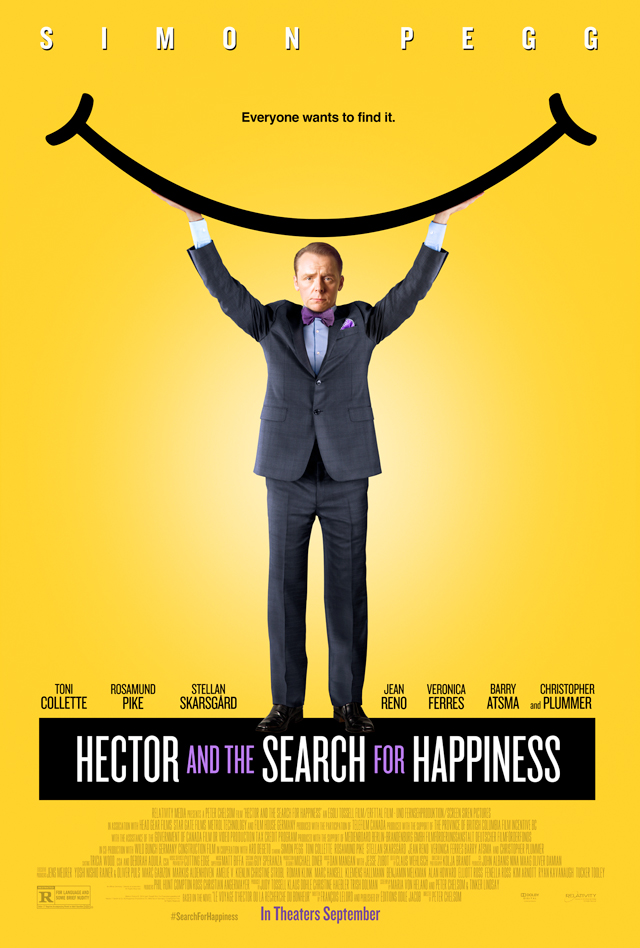
Simon Pegg stars as Hector in this gentle fable based on the whimsical French novel by psychiatrist Francois Lelord.  Like Lelord, Hector is a psychiatrist.  He has a “tidy” life with a nice girlfriend named Clara (“Gone Girl’s” Rosamund Pike), nice patients, and a nice apartment.  But he is missing something.  He wonders if he is really helping people.  And he is not sure what he is helping them toward.  If he is not sure what happiness is, how can he guide his patients toward finding it?
Your level of happiness on viewing this film will vary depending on your tolerance for whimsy and your affection for last year’s The Secret Life of Walter Mitty, as it is almost exactly the same movie, though not as good.

Hector decides that what he needs to do is travel around the world to learn about happiness.  Clara is troubled, and wonders what it might mean for their relationship — especially since he won’t say when he is coming back.  She wonders if “researching happiness” is just a euphemism for “finding Agnes,” the mysterious woman whose photo she found in Hector’s sock drawer (labeled “Hector’s Socks” — he is very tidy).  But she is supportive, and gives him a notebook for his discoveries, directing him to “fill these pages.”  “If you’re going to do this, do it totally,” she says. “Make it worthwhile.”

And so he sets off on a series of adventures and encounters that will teach him something about happiness.  He first meets a genial businessman named Edward (Stellan Skarsgård), who introduces him to one notion of happiness: the kind that can be bought.  Hector enjoys wine, women, and club music.  He enjoys is all so much that he conks out before he can accept the advances of a beautiful “student” (Ming Zhao).  He wonders at first whether it is possible that happiness means the freedom to love two women at the same time, and then discovers to his distress that the interest and affections of the “student” were purchased for him by Edward.  Being rich, being important, believing you are captivating to a “student” — that does not seem to be the answer.  “Sometimes happiness is not knowing the whole story.”

This is the point at which you are either going to go with the premise and tone or you’re not.  It’s either a fairy tale, in which the encounters are metaphors, or it is supposed to be grounded in some semblance of reality, in which case it’s solipsistic, kind of seedy and mired in stereotypes.  For me, it was a fairy tale, and so I gave it some leeway.

Hector’s travels take him to visit an old friend who runs a clinic in Africa, where he runs into a cute sick kid and a vicious but also kind of cute drug lord (Jean Reno), both of whom he helps, and also learns that his friend is gay.  He is captured by gangsters and almost killed until providentially, like a character in a fantasy game who just happened to have picked up a golden arrow and some magic beans, he has the token he needs to get out of jail if not free, at least relatively unscathed.  He meets a dying woman who is philosophical and at peace.  He meets up with Agnes (Toni Collette) and has his brain scanned by a scientist (Christopher Plummer) who is studying the biological basis for happiness.  He takes notes.  He has Skype-fights with Clara.  He learns many important lessons, and, like Dorothy Gale of Kansas, learns that the answer was inside him all along and there’s no place like home.

It is a pleasant little trifle as long as you do not take it too seriously.  If you understand that it is all inside Hector’s head, and that his adventures are more akin to The Little Prince’s planetary hops than to anything resembling reality, it has charm and even some reminders that we get more happiness from what we do for others than from what they do for us.

Parents should know that this movie includes very strong language, scenes of criminal activity including beatings, death threats, and imprisonment, drug dealing, scenes of injured and dying characters, prostitutes, sexual situations, and nudity.

Family discussion: Which of the observations Hector wrote in his notebook do you think were most important? Why did he have to get away from home to understand what he had? Why didn’t things work out with Agnes?

If you like this, try: “The Secret Life of Walter Mitty”

Related Tags:


Based on a book Comedy Drama Romance

New on ABC: Black-ish

Posted on September 22, 2014 at 10:20 pm

One of the best new shows of the year is Anthony Anderson’s “Black-ish.”  Anderson plays Andre “Dre” Johnson has a great job, a beautiful mixed-race doctor wife, Rainbow (Tracee Ellis Ross), four kids, and a colonial home in the mostly-white suburbs.  But now that he has given his children a better life, he worries that they are so assimilated into upper middle class white culture that they are losing their identity as African Americans, that they are only “black-ish.”  

The people behind the show have prepared some discussion materials for church and school groups and families.  If you’d like a copy, send me an email at moviemom@moviemom.com with Black-ish in the subject line.

Related Tags:


Race and Diversity Television

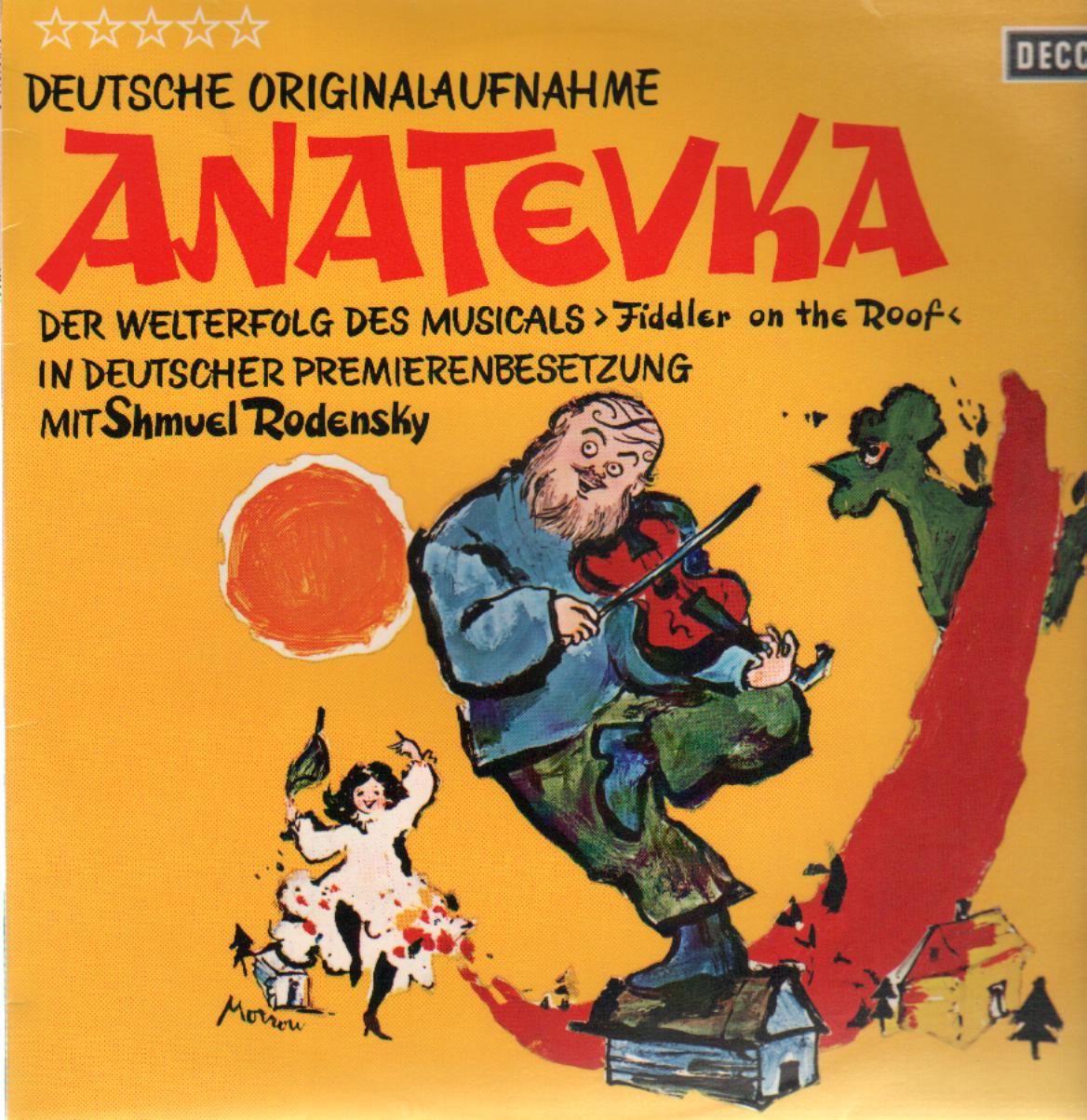
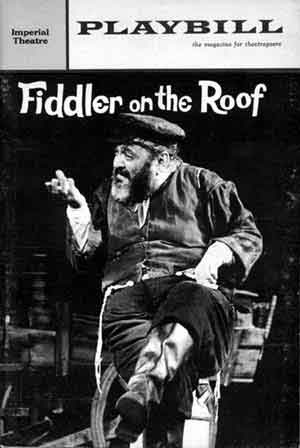
Fifty Years of Fiddler on the Roof

Posted on September 20, 2014 at 8:00 am

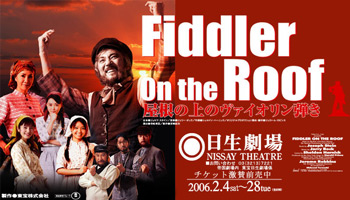
fiddler japaneseThe Yiddish-language stories of Sholem Alechim, collected as Tevye the Dairyman and The Railroad Stories (Library of Yiddish Classics), inspired one of the most successful, influential, and widely performed Broadway musicals of all time, “Fiddler on the Roof,” which opened fifty years ago this week. It set the then-record of 3000 performances and still is listed as the 16th longest-running Broadway musical in history. There has been hardly a day since this story about a Jewish community in czarist Russia opened that it has not been performed somewhere around the world. Its songs, including “Sunrise, Sunset” and “If I Were a Rich Man,” have become standards, performed and recorded by singers around the world.
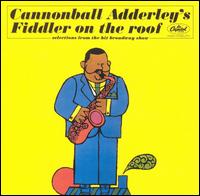
The play establishes its setting with the opening number, “Tradition,” where the fathers, mothers, sons, and daughters sing about the roles established for them by their culture and religion. But the theme of the play will be the pressure of modernity as all of the assumptions and beliefs of the community will be challenged.Cannonball_Adderley's_Fiddler_on_the_Roof

The central character is Tevye (played by Zero Mostel on Broadway and the Israeli actor Topol in the movie). He is a poor milkman with five daughtersshmuel_rodensky_in-anatevka_-_fiddler_on_the_roof.  Tradition would give Tevye the role of selecting husbands for his daughters based on what would be socially and economically advantageous. He approves of the widower butcher for his oldest daughter. But she challenges tradition by asking for his approval for her to marry the shy tailor she loves. Tevye must bend because he loves her and wants her to be happy. Seeing her in love makes him question for the first time whether his wife of 25 years, chosen for him, loves him. But his second daughter asks him to bend farther. She loves a hot-headed revolutionary, and she says they will marry whether Tevye approves or not. He is worried, but he gives them his blessing.

And then the third daughter asks him to bend further. She is in love with a non-Jew. Tevye says that is something he cannot accept. It shakes the foundations of his beliefs to even consider it. But not as much as they will be shaken by an anti-Semitic pogrom, with the Czar’s men all but destroying their village. The title of the play comes from the image of a musician precariously trying to maintain his balance and stay safely on a roof. The play ends with Tevye following millions of Europeans over the late 19th and early 20th century — immigrating to America, under the lamp held high for them by the Statue of Liberty.fiddlerplaybill

Many years ago, my parents were visiting Tokyo and saw that a production of “Fiddler on the Roof” was on stage there. They bought tickets. Even though it was in Japanese, with Japanese actors, they recognized the story and music. And they enjoyed the enthusiastic response of the audience. When it was over, my father asked one of the Japanese audience members who spoke English why the play was so popular there. He smiled, “It’s very Japanese!” The details, including the style of the music, are very particular to one group. But the themes of balancing tradition with growing understanding about ourselves and the world, about struggles between parents and children, about what is best for the community and what is best for the individual, are universal.

Related Tags:


Based on a book Based on a play Classic Family Issues For Your Netflix Queue Live Theater Musical

Tusk

Posted on September 18, 2014 at 5:59 pm

Copyright 2014 SModcast Pictures

You can make a good movie about slackers, for example “Slackers,” from Richard Linklater and “Clerks” from Kevin Smith. But you can’t make a good movie by a slacker, and Smith does not seem willing to be anything more. There are flickers of interesting possibilities in his latest film, his first foray into horror. Justin Long nails his early scenes as Wallace, a sort of Smith wannabe. We learn later in flashbacks that he was once a sweet, geeky guy who cried in “Winnie the Pooh.” He was conversant enough with literature to recognize quotes from “The Rime of the Ancient Mariner” and Hemingway. But he found out he could make money and attract groupies by being obnoxious and outrageous. Wallace and his best friend Teddy (Haley Joel Osment) host a podcast something between Smith’s own SModcast, Tosh.0 and the skankier sub-reddits. It’s called “Not-See Party,” get it? In case you don’t, Wallace has a sign-off in a fake German accent. What, too soon?

We first see them helpless with laughter over a found video along the lines of the “Star Wars kid,” but this one is a “Kill Bill” wannabe who accidentally slices off his own leg at the thigh. A real laff-riot! This is such a bonanza of a topic for the Not-See Party duo that Wallace decides to visit the kid in person, at his home in Manitoba, Canada. But when he gets there (following a not-funny encounter at the border with an official who warns him not to be flippant about hockey in Canada), Wallace discovers that the despondent kid has committed suicide. Bummer for the podcast! Seeking some other poor slob to make fun of so the trip won’t be wasted, Wallace comes across an intriguing flier in a men’s room, a man named Howard Howe, a retired sailor, who says he has stories to tell. Wallace rents a car and drives two hours into Howard’s remote house (beautifully creepy interiors by John D. Kretschmer, a highlight of the film). He sips at the tea offered to him by the genially eloquent Howard (as he prefers to be called), at first condescending but thinly disguising his snark, then impressed in spite of himself with Howard’s stories of WWII and being shipwrecked, and then, suddenly, very, very, very, very sleepy.

The tea was spiked. Howard has something very gruesome in mind, which we discover along with the terrified Wallace.

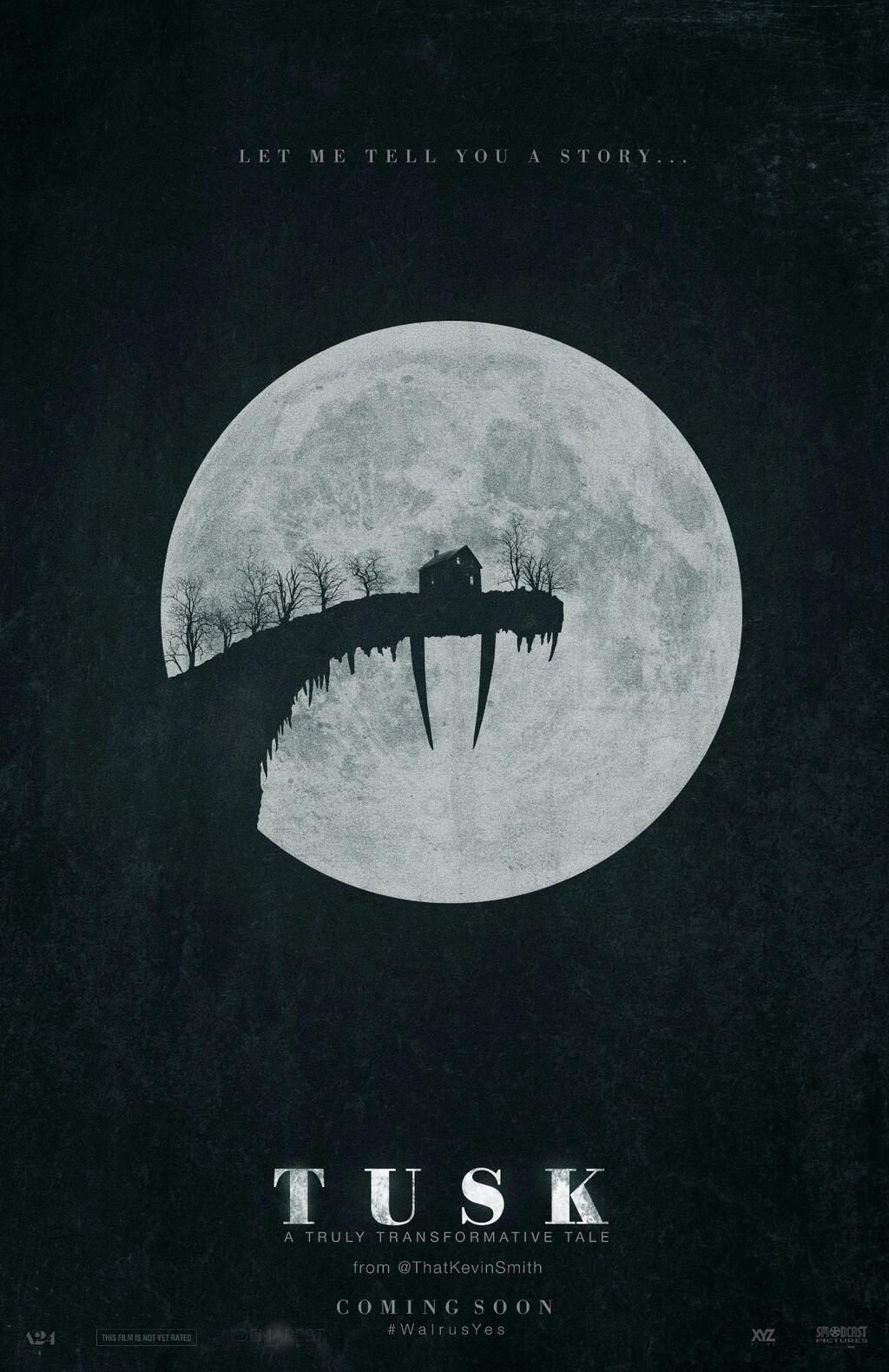
The idea for this film came up in a SModcast conversation with Smith and friend and producer Scott Mosier discussing an ad placed by a homeowner who was offering a living situation free of charge, if the lodger would agree to dress as a walrus. Their can-you-top-this riffs on the possibilities suggested by the ad led to a twitter campaign with the hashtag #walrusyes. And that is why it feels at times as though the screenplay was pieced together by tweets. A major Hollywood star shows up in disguise for a stunt-ish, winking-at-the-screen turn as a Quebecois detective in pursuit of Howard Howe, not nearly as funny or charming as intended. While there are hints of something deeper — the conversation about how Wallace as devolved as a person, with his girlfriend missing the “old Wallace,” the similarities between “Wallace” and “Walrus” — the real possibilities of the storyline about humanity, inhumanity, and what separates us from the animals, are blithely bypassed for random detours and red herrings (maybe red mackerels). It is another disappointment from Smith, who may not write all of his scripts while stoned, but they sure feel like it.

Parents should know that this is a horror film with many graphic and disturbing images of torture and mutilation. Characters are injured and killed. It also includes strong language, drinking and smoking, and sexual references and situations, with brief male rear nudity.

Family discussion: Are we supposed to think that Wallace somehow deserved or asked for what happened to him? How do you interpret the final scene?

If you like this, try: “The Skin I Live In” and “Boxing Helena” — and Eugene Ionesco’s classic Rhinoceros

Related Tags:


Horror Scene After the Credits
THE MOVIE MOM® is a registered trademark of Nell Minow. Use of the mark without express consent from Nell Minow constitutes trademark infringement and unfair competition in violation of federal and state laws. All material © Nell Minow 1995-2026, all rights reserved, and no use or republication is permitted without explicit permission. This site hosts Nell Minow’s Movie Mom® archive, with material that originally appeared on Yahoo! Movies, Beliefnet, and other sources. Much of her new material can be found at Rogerebert.com, Huffington Post, and WheretoWatch. Her books include The Movie Mom’s Guide to Family Movies and 101 Must-See Movie Moments, and she can be heard each week on radio stations across the country.

Website Designed by Max LaZebnik