Ghost in the Shell

Ghost in the Shell

Posted on March 30, 2017 at 11:11 pm
Copyright DreamWorks 2017

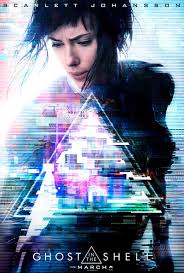
Oh, I don’t know. Maybe if you are a long-time fan of the “Ghost in the Shell” mange by Masamune Shirow and anime and are yet still not offended at the casting of a white actress in a Japanese story you might enjoy seeing a big-budget version of the story with very high-end design and special effects. I am new to the franchise and I was bored. Like a lot of video game movies, it loses the story and characters in a barrage of visual effects and shoot-outs.

Scarlett Johansson plays Major, who used to be a person but is now robot with a human brain or a human brain with a robot body. People do a lot of explaining in this movie, but never about the stuff we would like to have explained. So one character tells us that Major is not a machine but a weapon in the fight against cyber-terrorism. But we never find out why Major’s clothes keep disappearing when she goes into battle. Or why a robot breathes and cries.

In an early scene, we see businessmen at an expensive dinner, being served by elegant but not un-sexy robot geishas. I hope you have seen enough movies to know that when one of them arrogant insists that “There is nothing I can’t do, nothing I can’t know, nothing I can’t be,” he is not going to be around much longer. Some gunmen break in and start shooting, and Major arrives to fight them.

Major was once a human woman. When she was injured in the terrorist attack that killed her parents, her body could not be saved but in a pioneering experiment by Dr. Ouelet (Juliette Binoche), she is turned into a cyborg. At least that is the story she has been told. She has flashes of what could be memories but it seems to her as though there is thick fog over her memories “and I can’t see through it.” Dr. Ouelet is very proud of Major, almost maternal. And Major has a partner, Batou (Pilou Asbæk). Where she is a robot with a human brain, he is a human with mechanical parts.

The man/robot/operating system/entity behind the attack is cerebral hacking and killing more people as Major is experiencing what she calls “glitches,” especially after she does a risky “deep dive” into the network of the hacked geisha robot. But are they glitches or “Total Recall”/”Bourne”-style flashes of memory?

When the comic first appeared, some of these issues were cutting edge but they have been so thoroughly hashed out in so many movies (and in real life) that most of it is as outdated as a VHS video of “WarGames.” The issue of consent is more timely, as Major has to affirmatively accept various risks and procedures (like all of those “I agree” boxes you have to check every time you update your software), but the movie is too busy showing us zippy Pokemon Go-style virtual ads all over the city to spend any thought on it, or anything else, for that matter.  It is a shame that a movie about the spark of human consciousness that remains inside a machine is itself a machine without any evidence of humanity at all.

Parents should know that this film has constant sci-fi/action style peril and violence, guns, explosions, fire, terrorism, a suicide, murder, with characters injured and killed, and some graphic and disturbing images, some nudity, prostitutes and sexual predator, smoking, and drinking. There has been some controversy over the casting of non-Asian actors. Scarlett Johansson responded “I certainly would never presume to play another race of a person. Diversity is important in Hollywood, and I would never want to feel like I was playing a character that was offensive. Also, having a franchise with a female protagonist driving it is such a rare opportunity. Certainly, I feel the enormous pressure of that—the weight of such a big property on my shoulders.” The director of the anime version also supports Johansson in the role: “What issue could there possibly be with casting her? The Major is a cyborg and her physical form is an entirely assumed one. The name ‘Motoko Kusanagi’ and her current body are not her original name and body, so there is no basis for saying that an Asian actress must portray her.”  On Slate, Aisha Harris explains why a revelation late in the film is especially troubling in the movie’s portrayal of race.

Family discussion: Is Major a person, a machine, or a weapon? What enhancement would you like to have?

If you like this, try: the “Matrix” and “Bourne” series, “Lucy,”  and the Ghost in the Shell comics and anime
Related Tags:


3D Action/Adventure Comic book/Comic Strip/Graphic Novel Remake Science-Fiction
Logan

Logan

Posted on March 2, 2017 at 6:00 pm

C
Lowest Recommended Age: Mature High Schooler
MPAA Rating: Rated R for strong brutal violence and language throughout, and for brief nudity
Profanity: Very strong language
Alcohol/ Drugs: Drinking and drunkenness
Violence/ Scariness: Very intense and graphic peril and violence with many disturbing and bloody images, many characters injured and killed
Diversity Issues: A theme of the movie
Date Released to Theaters: March 3, 2017

Copyright Fox 2017
Copyright 20th Century Fox 2017
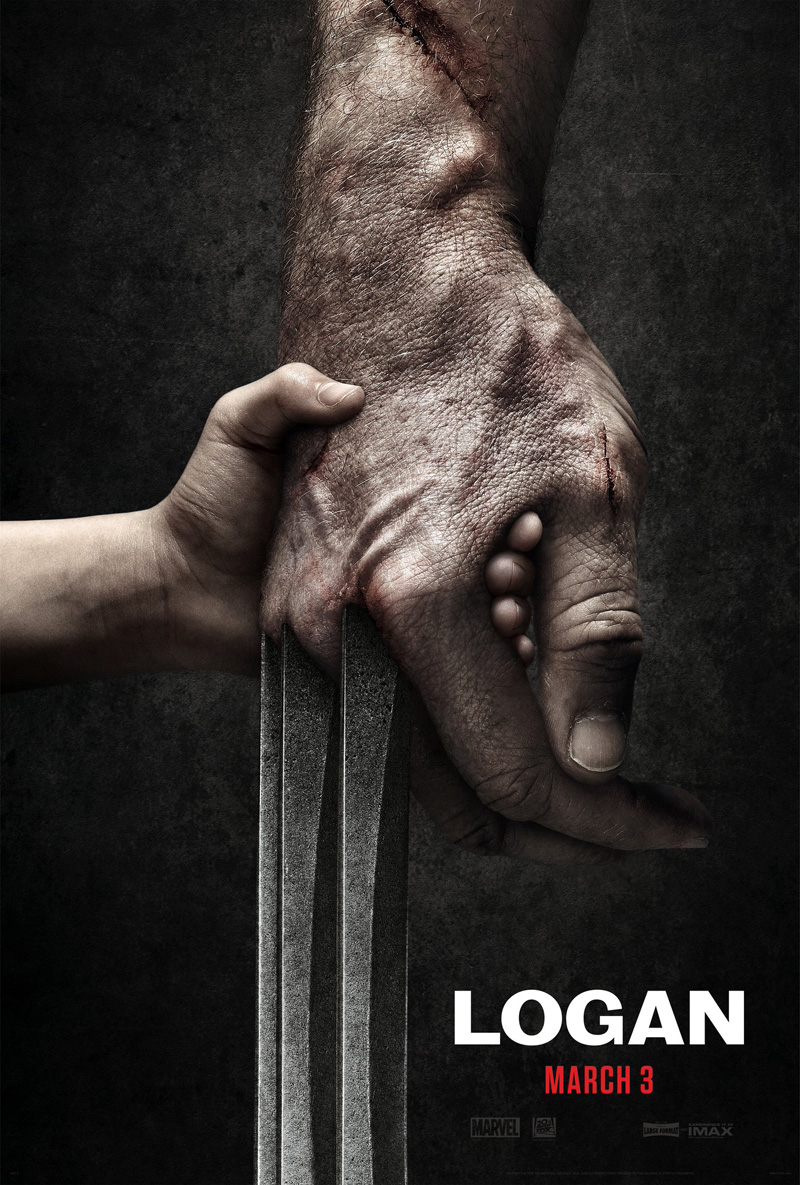
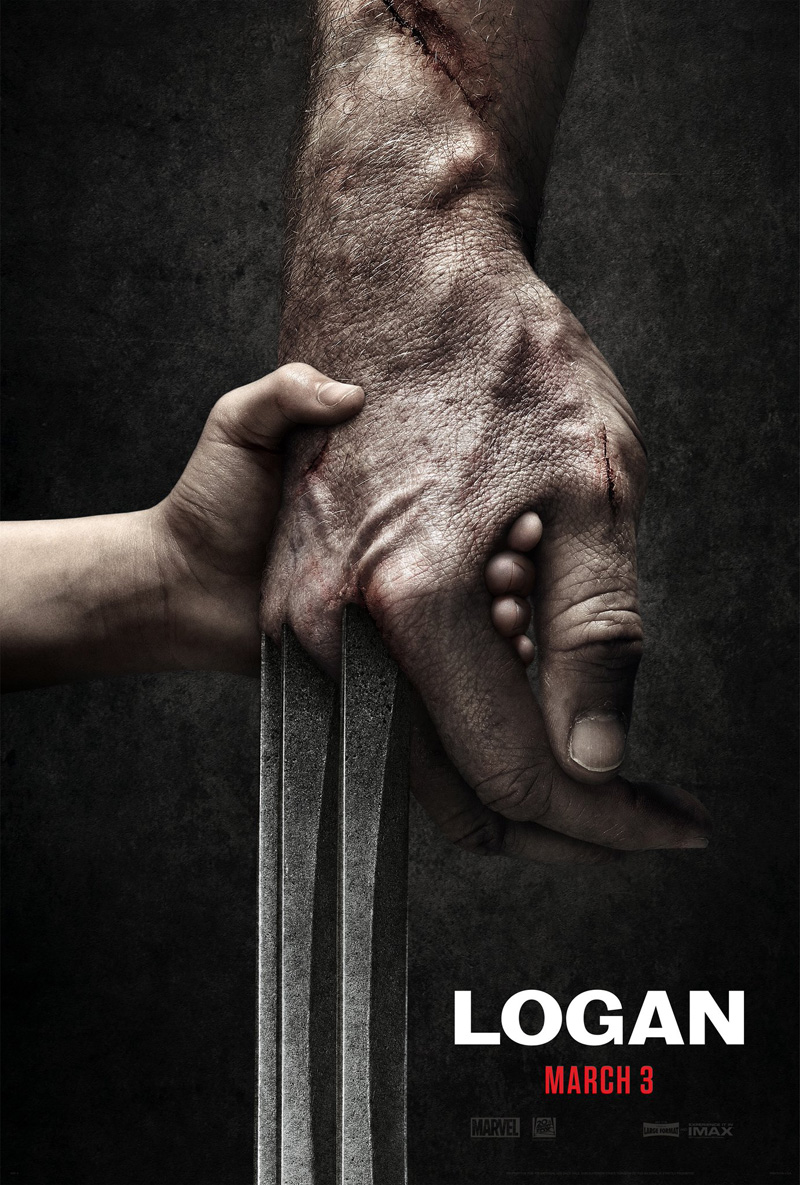
A lot of Wolverine fans love the elegaic final chapter, “Logan,” but I do not. Perhaps if you are deep in the weeds of the MCU, you will see meaning and closure in “Logan,” but for me, even as a Comic-Con-attending fangirl, it was slow and depressing, and not in a good way.

Wolverine fans know that he is a loner, only intermittently joining forces with the X-Men, and his stories often show the influence of classic western sagas. “Logan” is set in the west, and its dry, dusty terrain fits the somber tone of the story. Logan/Wolverine is old and tired. His legendary powers of healing are slowing, and so is he. He and Caliban (Stephen Merchant, looking like Uncle Fester in “The Addams Family”) are caring for Professor Xavier, who is also losing his powers and near the end of his life. The time of the X-Men seems to be ending, too. No new mutants have appeared.

Or, so everyone thought. Logan is threatened by Pierce (Boyd Holbrook), who says he is looking for a woman who is looking for Logan. And she finds him, and offers to pay Logan a lot of money to transport a little girl to the Canadian border. He does not want to do it, but he needs the money to take care of Professor X, and when the woman is murdered, he feels that he has no choice.

Professor X, who struggles with dementia, keeps insisting that the girl has some special qualities, but Logan refuses to believe him…until the tough guys show up and she dispatches them with some very familiar-looking adamantine claws that pop out from her knuckles. Time for a road trip, including an encounter with a sweet farm family and with many perils and threats along the way.

The action is well-staged, though brutal even by comic book movie standards. Jackman and Stewart are always watchable, but the story drags (the movie is well over two hours), and we know where it’s going at every step. One big plot point has to do with Logan’s belief that the story in the comic books cannot be true. He may be persuaded otherwise, but we never are.

Parents should know that this film includes constant and very graphic comic-book/sci-fi peril and violence with many disturbing images and many characters injured and killed, and brief non-sexual nudity.

Family discussion: How does this movie show the influence of classic westerns? Why does Caliban stay loyal?

If you like this, try: the previous Wolverine and X-Men films

Related Tags:


Comic book/Comic Strip/Graphic Novel Movies -- format Science-Fiction Series/Sequel
The Space Between Us

The Space Between Us

Posted on February 2, 2017 at 5:15 pm

Copyright STX Entertainment 2016

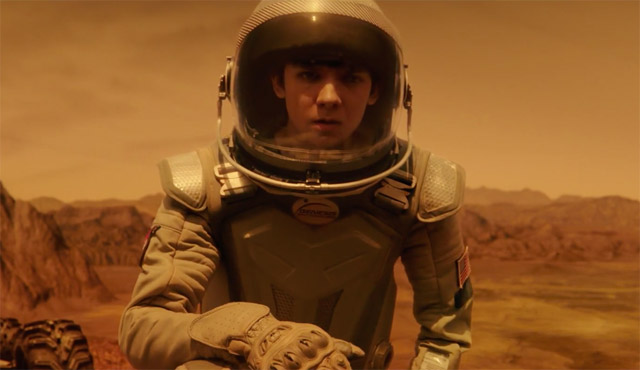
An intriguing premise is repeatedly undercut by clunky dialog and corny plot twists in “The Space Between Us,” the story of a teenager born on Mars and his first trip to Earth.

It begins in 2018, just before the launch of the first expedition to colonize Mars. Nathaniel Shepherd (Gary Oldman) has been planning it since he was 12 years old and now, a joint project from NASA and the private Genesis corporation is sending a team not just to explore Mars, but to live there for four years, in a settlement called East Texas. With the depletion of resources and abuse of the planet, Mars is the best chance for humanity to continue. “Mother Nature does not negotiate.” The night before launch, Shepherd presents the crew, lead by Sarah, who captivates the crowd with her gallantry and confidence. “Courage,” she tells them, “is fear that has said its prayers.”

All goes well at first, but it turns out, about halfway to Mars, that Sarah has committed a reckless misjudgement. She is pregnant. Nathaniel, worried about losing funding for the project, keeps it secret. Sarah dies giving birth and the baby is raised by the scientists on Mars, without anyone on Earth knowing about him other than Nathaniel and a couple of his colleagues. “East Texas runs on money, science, good faith, and PR,” Nathaniel says. He will not risk the mission. And the child, gestated in zero gravity, might not be able to survive the trip home or life on Earth.

By the time we see him again, Gardner (Asa Butterfield, still soulful, and quite the beanpole since we saw him in “Hugo”) is a teenager. His only friends are an astronaut scientist named Kendra (Carla Gugino), who treats him like a lab assistant, and a robot sidekick.

In some ways, he is just like teenagers on earth, moody, uncommunicative, very interested in meeting a girl, determined to find his father, and determined to test whatever boundaries there are. In some ways he is different. He knows very little about the most basic elements of life on earth. And, because he is the first human to grow up in the 62 percent lower gravity of Mars, his physical development — bone density, heart — has been affected so that even if he did get a chance to come to earth, it could kill him.

But remember what I said about boundaries? And girls? Gardner has been e-chatting with a high school girl named Tulsa (Britt Robertson, seven years older than Butterfield and looks it), who lives in foster care in Colorado. He runs away from the NASA/Genesis medical facility to meet Tulsa and asks her to help find his father, with Nathaniel and Kendra in pursuit. There were so many possibilities here, to see Earth through the eyes of someone whose only knowledge of the planet and human interaction involving more than the same five people came from Wim Wenders’ “Wings of Desire” and old how-to movies about dating. Instead, we get a syrupy love story and chases with a helicopter, a crop duster, and a series of stolen cars.

Last year’s “The Martian” made the science fascinating. “The Space Between Us” tries to make it superfluous, neglecting some basic principles of physics but even worse, some basic principles of logic.

Parents should know that this film includes some mild language, non-explicit teen sexual situation, alcohol abuse, teen mayhem (stealing, reckless driving), some peril, childbirth scene, sad death, and health risks.

Family discussion: What’s your favorite thing on earth and why? What surprised Gardner most? What advice would you give him about how to act on Earth?

If you like this, try: “The Martian” and the film Gardner watches, “Wings of Desire”

Related Tags:


Date movie Drama Science-Fiction Stories about Teens
Passengers

Passengers

Posted on December 21, 2016 at 8:47 pm

Copyright Columbia Pictures 2016

“Passengers” is beautiful to look at, a pretty story about pretty people in a pretty (outer space) setting, but it cannot overcome the ick factor of its premise.

Everyone’s favorite boy we wish lived next door, Chris Pratt, plays a likeable ordinary guy who works with his hands named Jim Preston, one of 5000 passengers and 250 crew in a spaceship on a hundred-year journey to a hospitable colonized planet. Like the spaceship in “Wall-E,” it is set up with every luxury, from sushi restaurant to a genial robot bartender (Michael Sheen). The people on board are in suspended animation for a hundred years, to be awakened four months before arrival, to enjoy the ship’s amenities and prepare for their new home. The ship is gorgeous, though I am not sure how practical it is.

But somehow Jim awakens 90 years early and there is no way to return to his hibernation. He is alone on the spaceship and his plan to emigrate to the new planet is not going to happen. Instead of being a pioneer in a fresh, optimistic new world, he is doomed to spend the rest of his days stranded, sure to die before anyone else on the ship is awake. The ship’s help kiosks briskly inform him that malfunction of the hibernation units is impossible, a reminder of the Titanic’s “unsinkable” hubris. He tries to send a message to the home base on earth, only to learn that it will be more than 30 years before he can get an answer.

So, he basically turns the spaceship into a man cave, living in dirty sweats, growing a beard, drinking, and playing one on no one basketball and one on avatar dance video game. Finally, almost mad with loneliness, he starts looking at the files of the 4999 people still sleeping on the ship, and finds himself captivated with one of them, a journalist from New York with the fantasy name Aurora Lane (Jennifer Lawrence). After many discussions with the robot bartender, he can no longer help himself. He knows it is wrong, but he wakes her up, and he lets her think it was due to the same malfunction that woke him.

Decades ago, movies used to have scenes where the guy grabbed the girl and she beat her fists helplessly against his chest, crying, “I hate you!” until he forced her into a passionate kiss, after which she melted into his arms. These were mostly romantic comedies, but we saw some of this and worse in drama, too. Remember Rhett carrying Scarlett up the stairs in “Gone With the Wind,” and 30 years later, Laura falling for her rapist, Luke, on “General Hospital.” (Also see: Zeus and Europa, the Sabine women, the silent classics “The Sheik” and “Son of the Sheik”) But that just doesn’t work any more.

Aurora is entirely a fantasy figure. Even her nudity is highly sexualized, where his is not. By taking away any shred of agency or consent the script sets up an insurmountable obstacle to any kind of relationship for Jim and Aurora, which it makes the fatal mistake of treating as surmountable. There’s the getting-to-know-you part, and then she she-learns-the-truth part and then the not-talking-to-him part, and then the work-together-or-everyone-dies part, but nothing can really support the idea of the romance it tries to persuade us is happening.

Parents should know that this film includes extended sci-fi action and peril, sad death with characters injured and a sad death, some disturbing images, issues of predatory behavior and consent, brief strong language, alcohol, sexual references and situations, and nudity.

Family discussion: Why did Aurora make that choice at the end of the film? What would you do if you were left alone?

If you like this, try: “Gravity” and “The Martian”

Related Tags:


Romance Science-Fiction
Rogue One: A Star Wars Story

Rogue One: A Star Wars Story

Posted on December 13, 2016 at 12:00 pm

Copyright Disney 2016

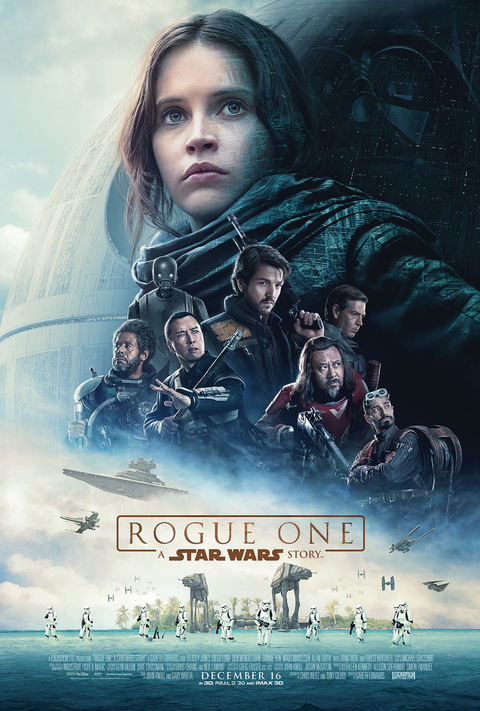
I know, I know, you want me to tell you how it ranks against the other “Star Wars” movies.  I’m going to say somewhere between “A New Hope” and “The Force Awakens.”  It is a worthy addition to the canon, gorgeously imagined, with striking images, intriguing and richly diverse characters, a suspenseful plot, a worthy adversary, an amusing sidekick, some romantic sparks, and a very satisfying answer to one of the most persistent questions from the very first film in 1977.  And without getting heavy-handed or preachy, it touches on some complicated and timely issues.

Once again, we are reminded that this takes place a long time ago, in a galaxy far far away, and thankfully the text ends there and we are immediately in the middle of the action. A little girl with pigtails is breathlessly racing home to tell her parents that the threat they have been preparing for has arrived. “It’s happened. He’s come for us.” “You know what to do.”

The girl is Jyn Erso. Her father Galen (Mads Mikkelsen) was a scientist who once designed weapons for the Empire. He got away and has been living on an isolated farm, but the Empire’s Orson Krennic (Ben Mendelsohn) has found him. He is there to bring Galen back to finish work on the planet-killing weapon we know well from “A New Hope.” Galen explains why he left. “You’re confusing peace with terror.” Krennic responds crisply, and creepily, “You have to start somewhere.”

Jyn’s escape has been well-rehearsed. She knows where to hide. Her mother was supposed to go with her, but could not resist trying to protect her husband. She is killed, Galen is captured, and Jyn is rescued, kind of, by outlaw Saw Gerrera (a dashing Forest Whitaker).

The grown-up Jyn (Felicity Jones of “The Theory of Everything”) has clearly been taking care of herself — and not trusting anyone else — for a long time. But she is captured by the rebel forces, who have received a message smuggled out by a pilot named Bodhi Rook (a terrific Raz Ahmed). The Rebel Alliance wants Jyn to get to her father and find out how to stop the terrifying new weapon, the planet-killing Death Star. Jyn, who did not know whether her father was dead or alive, and hoped he was dead because it would mean that he was not helping the Empire and not abandoning her, must re-think her view of the world (in her case, I guess, the galaxy) and of herself.

Led/accompanied by Rebel Alliance hero Cassian (Diego Luna), his pilot/sidekick droid K-2SO (winningly voiced and motion-captured by Alan Tudyk in one of the film’s most memorable highlights), a blind monk with mad martial arts skills (Donnie Yen) with his firepower-packing friend Baze Malbus (Wen Jiang), and the renegade pilot, Jyn crosses the galaxy to try to rescue her father and stop the Death Star.

So, to recap: good characters, good action, great scope, and just the right amount of fan service. I’m not sure that the digital re-animation of “A New Hope” characters are worth the distraction. And I am not entirely on board with the ending.

No more for risk of spoilers. But there is so much going on, it is worth pointing out some details that might be overlooked in the middle of all the action. Note young Jyn’s stormtrooper doll, an Ozymandias-like massive statue, prone on the sand, the issue of factions within the rebel community, the bigger issue of moral responsibility for actions committed for the larger good, echoes of familiar wartime images from the D-Day landing to hooded prisoners and IEDs in civilian areas.

K-2S0, like Rook and “Force Awakens'” Finn, was formerly with the Empire. It/he has been reprogrammed but a sort of data pentimento has it/him a bit loopy and the result is a dry, even sarcastic wit that adds a bit of a twist to the seriousness of the storyline. This film, more canon-adjacent than linear, has some of that same sense of independence and even improvisation, a welcome waystation before the next chapter of the saga.

Parents should know that this film includes extended sci-fi action-style violence, with many characters injured and killed. There are sad deaths including death of parents, and some disturbing images, including monsters. The script by Chris Weitz and Tony Gilroy is wise enough not to try to answer questions about the complex quandaries of oppression and rebellion, but wise enough not to overlook them.

Family discussion: How did the governance of the Empire and the Rebel Alliance help or hinder their decision-making? How did the hologram message change Jyn’s mind? What does it mean to carry a prison with you?

If you like this, try: “Star Wars” IV, V, VI, and “Force Awakens”

Related Tags:


Fantasy Science-Fiction Series/Sequel
THE MOVIE MOM® is a registered trademark of Nell Minow. Use of the mark without express consent from Nell Minow constitutes trademark infringement and unfair competition in violation of federal and state laws. All material © Nell Minow 1995-2026, all rights reserved, and no use or republication is permitted without explicit permission. This site hosts Nell Minow’s Movie Mom® archive, with material that originally appeared on Yahoo! Movies, Beliefnet, and other sources. Much of her new material can be found at Rogerebert.com, Huffington Post, and WheretoWatch. Her books include The Movie Mom’s Guide to Family Movies and 101 Must-See Movie Moments, and she can be heard each week on radio stations across the country.

Website Designed by Max LaZebnik