Hag Sameach! Passover is not just about remembering the story of the Exodus from Egypt. It is about telling the story. The word “haggadah,” the name of the book we read aloud every year at the meal (seder) to remember what happened and help make it real to us, means “story.”
Thousands of years before people talked about “learning styles,” the seder included many different ways of telling the story, so that everyone would be included, and everyone would feel the power of the journey toward freedom. The Haggadah makes the story come alive through taste, smell, and touch as well as sight and hearing, and through the example of the four sons it presents the story to the wise, the simple, the skeptic, and most especially to the young — one of the highlights of each Seder is when the youngest person present asks the traditional four questions, beginning with “Why is this night different from all other nights?”
These are some of my favorite movies set in Ireland.
1. The Quiet Man John Wayne plays American Sean Thornton (John Wayne), who returns to in Innisfree, the small, beautiful Irish village where he was born, to buy his family’s old home. He meets fiery Mary Kate Danaher (Maureen O’Hara), courts her, marries, her, and then really has to win her as both must learn some lessons about intimacy, pride, and trust. Yes, there are some moments that seem sexist but the underlying story is as glorious as the spectacular landscape and as touching as the endearing characters.
2. The Secret of Roan Inish A little Irish girl named Fiona goes to stay with her grandparents and becomes convinced that her baby brother, whose cradle was carried off to sea years before, is alive and being cared for by Selkies, seals who can transform themselves into humans. This is a quiet film, filled with lovely images that convey the magic surrounding anyone who believes in it. It explores themes of loyalty and commitment to family and following your heart.
3. The Commitments A group of hardscrabble Irish musicians come together to firm an American-style soul band and perform songs like “Mustang Sally” and “Try a Little Tenderness.” Look for future Frames and Once performer Glen Hansard in the group. (Mature material)
4. Once The best song Oscar went to this bittersweet film about an Irish musician (Glen Hansard) who meets a pianist and singer (Markéta Irglová) from the Czech Republic.
5. Millions The Oscar-winning director of “Slumdog Millionaire,” Danny Boyle, also shows his gift for working with children in “Millions,” the story of a young boy who finds a bag of money.
6. My Left Foot Daniel Day-Lewis won an Oscar for his portrayal of Christy Brown in this true story of a writer and painter who was paralyzed and could only use his left foot — and of his indomitable mother (Oscar-winner Brenda Fricker).
7. The Secret of Kells This quietly exquisite animated film was a surprise Oscar nominee. It is about an 11th century boy who lives in a monastery run by his stern uncle and the gorgeous illuminated manuscript that changes his life.
8. Circle of Friends Minnie Driver and Chris O’Donnell star in Maeve Binchy’s story of love and friendship in 1950’s Ireland.
9. Hear My Song A fast-talking small-time promoter has to persuade a retired performer to sing again.
10. In the Name of the Father Day-Lewis again, in another true story, this time the story of a father and son who were imprisoned for an IRA bombing. Emma Thompson plays his dedicated lawyer and Pete Postlethwaite was nominated for an Oscar as the father who ends up in prison as well.
And don’t forget Jig, a wonderful documentary about an Irish dancing competition that shows there’s a bit of Irish in all of us.
It was reputed to be Alfred Hitchcock’s own favorite of all his movies, and it was the acknowledged favorite of critic-turned filmmaker Francois Truffaut, whose book-length interview of Hitchcock is essential reading for anyone who wants to understand the way movies tell stories. Hitchock biographer Donald Spoto wrote, “’Notorious’ is in fact Alfred Hitchcock’s first attempt—at the age of forty-six—to bring his talents to the creation of a serious love story, and its story of two men in love with Ingrid Bergman could only have been made at this stage of his life.”
Bergman plays Alicia Huberman, the daughter of a Nazi spy. Humiliated by his trial and conviction and the assumption of everyone she knows that she was helping her father, she has tried to lose herself in wild parties and bad behavior. But T.R. Devlin (Cary Grant), an American agent who has overheard the wiretaps of Alicia’s conversations with her father, knows that she is loyal to the United States. He persuades her to go to work for the American government as a spy, using her father’s connections. One of his old associates, Alexander Sebastian (Claude Rains) is living in Brazil with some other Nazi refugees. Devlin takes Alicia there to meet up with Sebastian and find out what he is hiding. In order to infiltrate thoroughly enough to find out, Alicia has to accept Sebastian’s marriage proposal and move into his home. Under the watchful eye of Sebastian’s suspicious mother, Alicia must, like Bluebeard’s wife, steal the key to unlock the door and uncover what has been hidden.
This is a gripping story and the scene where Alicia hides the key is a small masterpiece of tension and suspense. The overlay of the complicated relationship between Devlin and Alicia adds enormous dramatic power to the storyline. Both use a tough exterior to hide their feelings. The suspense of the emotional connection between them is even more compelling than the spy story. Will Devlin refuse to acknowledge his feelings for Alicia because of his professional obligations or because he cannot bear to admit to himself the risks he has urged her to accept? Will he be so blinded by that refusal that he will put her at even greater risk?
And that is what makes their kiss so meaningful. These days, most romantic movies are dreadful because the script cannot think of a good reason to keep them from going to bed together in the first 20 minutes of the story. (Twilight author Stephanie Meyer has acknowledged that the reason she made her main character a vampire was to provide a meaningful – if fantasy – obstacle to physical contact.) In “Notorious,” there are story and psychological barriers keeping them apart. Even worse, Alicia is (presumably) having sex with someone else as a part of her cover. And yet, the longing they have for each other is evident and by the time it finally happens, we are almost as anxious for them to have some overt confession of their true feelings as they are.
And then, at long, long last, they kiss. And in an art form that has spent more time than any other on the kiss, this one just might be the very best in the history of the movies. The Hays Production Code banned kisses of longer than three seconds. So, Hitchcock told Bergman and Grant to just keep kissing, stopping to murmur to each other and nuzzle, and then kiss again. They move from the balcony overlooking the ocean into the room, talking about dinner and calling the hotel as though they are talking about sex, and as though being more than two inches apart is unbearable. “This is a very strange love affair,” Alicia almost whispers as he is calling his hotel to ask for his messages. “Why?” Devlin asks. “Maybe the fact that you don’t love me.” “When I don’t love you, I’ll let you know.” The result is a scene of piercing intimacy.
And two more classic movie kisses:
Breakfast At Tiffany’s with Audrey Hepburn and George Peppard (and a happier ending than Truman Capote gave Holly Golightly in the short story).
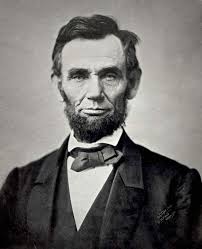
Celebrate the birthday of our 16th President with some of the classic movies about his life. Reportedly, he has been portrayed more on screen than any other real-life character. I was honored to be invited to participate in the 272-word project from the Abraham Lincoln Library in Springfield, Illinois. Each of us was asked to contribute an essay that was, like the Gettysburg Address, just 272 words. Here’s mine:
Two score and six years after the death of Abraham Lincoln, he was first portrayed in the brand-new medium of film. 102 years and over 300 films later, Lincoln has appeared on screen more than any other historical figure and more than any other character except for Sherlock Holmes. In 2013 alone there were three feature films about Abraham Lincoln, one with an Oscar-winning performance by Daniel Day-Lewis, directed by Steven Spielberg. In another one, he was a vampire slayer. He has been portrayed by Henry Fonda (John Ford’s “Young Mr. Lincoln,” Raymond Massey (“Abe Lincoln in Illinois”), Walter Huston (D.W. Griffith’s “Abraham Lincoln”), and Bing Crosby – in blackface (“Holiday Inn”). The movies have shown us Lincoln defending clients, mourning Ann Rutledge, courting Mary Todd, and serving as President. We have also seen him traveling through time with a couple of California teenagers in “Bill and Ted’s Excellent Adventure” and granting amnesty to Shirley Temple’s Confederate family in “The Littlest Rebel.”
Lincoln is appealingly iconic as a movie character, instantly recognizable as a symbol of America’s most cherished notion of ourselves: unpretentious but aspiring for a better world and able to find both the humor and integrity in troubled times. In every film appearance, even the silliest and most outlandish, he reminds us, as he did in The Gettysburg Address, of what is most essential in the American character: the search for justice.
PS My husband and I waited for two hours outdoors on a frozen January 1 to view the Emancipation Proclamation on its 150th anniversary. When I saw it, I wept. A security guard whispered, “I know how you feel.”
The Steven Spielberg epic, Lincoln, based on Team of Rivals: The Political Genius of Abraham Lincoln by Doris Kearns Goodwin, with Oscar-winner Daniel Day-Lewis.
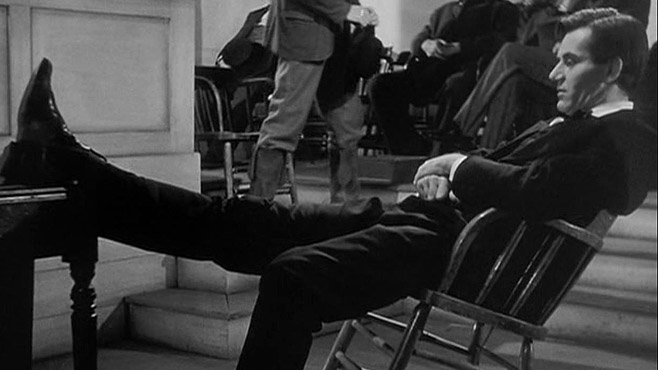
Young Mr. Lincoln Directed by John Ford and starring Henry Fonda, this is an appealing look at Lincoln’s early law practice and his tragic romance with Ann Rutledge. Particularly exciting and moving are the scenes in the courtroom as Lincoln defends two brothers charged with murder. Both have refused to talk about what happened, each thinking he is protecting the other, and Lincoln has to find a way to prove their innocence.
Abe Lincoln in Illinois Raymond Massey in his signature role plays Lincoln from his days as a rail-splitter to his law practice and his debates with Stephen Douglas. Ruth Gordon plays his wife, Mary.
Gore Vidal’s Lincoln Sam Waterston and Mary Tyler Moore star in this miniseries that focuses on Lincoln’s political strategies and personal struggles.
Sandburg’s Lincoln Hal Holbrook plays Lincoln in this miniseries based on the biography by poet Carl Sandberg.



 A little Irish girl named Fiona goes to stay with her grandparents and becomes convinced that her baby brother, whose cradle was carried off to sea years before, is alive and being cared for by Selkies, seals who can transform themselves into humans. This is a quiet film, filled with lovely images that convey the magic surrounding anyone who believes in it. It explores themes of loyalty and commitment to family and following your heart.
 A group of hardscrabble Irish musicians come together to firm an American-style soul band and perform songs like “Mustang Sally” and “Try a Little Tenderness.” Look for future Frames and
 performer Glen Hansard in the group. (Mature material)
 The Oscar-winning director of “Slumdog Millionaire,” Danny Boyle, also shows his gift for working with children in “Millions,” the story of a young boy who finds a bag of money.
 Daniel Day-Lewis won an Oscar for his portrayal of Christy Brown in this true story of a writer and painter who was paralyzed and could only use his left foot — and of his indomitable mother (Oscar-winner Brenda Fricker).
 This quietly exquisite animated film was a surprise Oscar nominee. It is about an 11th century boy who lives in a monastery run by his stern uncle and the gorgeous illuminated manuscript that changes his life.
 Minnie Driver and Chris O’Donnell star in Maeve Binchy’s story of love and friendship in 1950’s Ireland.
 A fast-talking small-time promoter has to persuade a retired performer to sing again.
 Day-Lewis again, in another true story, this time the story of a father and son who were imprisoned for an IRA bombing. Emma Thompson plays his dedicated lawyer and Pete Postlethwaite was nominated for an Oscar as the father who ends up in prison as well.
 :
 with Audrey Hepburn and George Peppard (and a happier ending than Truman Capote gave Holly Golightly in the short story).
 and “Bella Notte.”