In School of Rock Jack Black taught a classroom of 10-year-olds that rock and roll music is always about one thing: Sticking it to The Man. A new documentary about a chorus of performers in their 80’s and 90’s shows that no one has more reason to stick it to The Man than people who are most defiantly not going gently into that good night.
This is not your grandfather’s choir. Instead of singing songs from their youth like “Boogie Woogie Bugle Boy” or “Sentimental Journey” these old folks tap their orthopedic shoes, tug along an oxygen tank, and slam into the music of their great-grandchildren’s generation. They’ve gone straight from 78’s to iPods, literally without skipping a beat.
It sounds cute. Old people are settled, conservative. They are The Man, aren’t they? There is something deliciously incongruous about very old people singing the songs of very young people.
But it is not cute. Their set list is not soft or easy. No Billy Joel, Neil Diamond, or Beach Boys, no gentle harmonies or catchy melodies. This is raw and angry. They sing hard rock (Jimi Hendrix’s “Purple Haze”), punk rock (The Ramones’ “I Want to Be Sedated”), and blues (“I Feel Good” by James Brown). This is real rock and roll, written to be shocking, provocative, subversive. It is stirring, and deeply moving, finally transcendent. Music videos for songs like Sonic Youth’s “Schizophrenia†and the Talking Heads’ “Road to Nowhere†have a surreal, dream-like quality, good-humored but poignant as they add moments of fantasy and release. The Man they are sticking it to is loss of all kinds.
The movie takes us from the first rehearsals to a sold-out performance in the chorus’ home town of Northampton, Massachusetts. Continually frazzled but continually optimistic choir director Bob Cilman makes no concessions, artistically or generationally. This is not occupational therapy; it is art and it is show business. He insists on a top-quality professional production.
Cilman presents the chorus with Allen Toussaint’s tongue-twistingly syncopated “Yes We Can Can,†which has the word “can†71 times. Form equals content and the medium becomes the message as they struggle to master the intricacies of the song.
Director Stephen Walker’s interviews occasionally seem intrusive, even condescending, but perhaps he, like Cilman, gets a little flustered at the inability to maintain any sense of control over the feisty singers. Early in the film, 92-year-old soloist Eileen Hall flirts with Walker – probably just to keep him off-base, at which she is entirely successful. Hall’s elegant British diction makes the opening lines of the Clash song, “Should I Stay or Should I Go†sound as though she is asking whether we want cream or sugar. But then the song turns into a goose-bump-inducing negotiation with life and death.
Two members who have been very ill, Fred Knittle and Bob Salvini, return for a duet, the Coldplay song, “Fix You.†But Salvini dies before the show. The chorus gets the news as they sit on a bus, about to leave for a performance at a local prison. No one knows better than they do that the show can and must go on.
They stand in the prison yard singing Bob Dylan’s “Forever Young,†voices quavering perhaps just slightly more than usual as they remember their friend. The prisoners are transfixed. Then, at the concert that concludes the film, “Fix You†is performed as a solo by Knittle, his oxygen tank beside him. He sings “when you lose something you can’t replace…I will try to fix you…lights will guide you home†and it is impossible not to feel that these performers understand those words better than the young men who wrote them. And when they nail “Yes We Can Can†it becomes an anthem of defiance, survival, and, yes, sticking it to The Man.

 In this impressionistic, rose-and honey-toned memory piece, young Jacob hides from the Nazis in 1941 Poland but his parents are killed and his sister is captured. The terrified boy is discovered by a Greek archaeologist, who takes him in and becomes a gentle, devoted surrogate father. Over the years, Jacob (played as an adult by Stephen Dillane) tries to make sense of his past and his present.
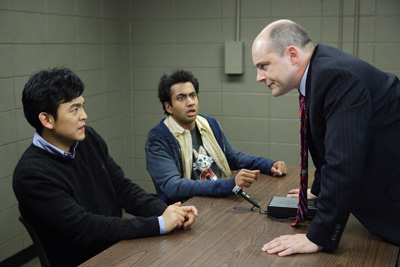 Like the effects of the marijuana laced with cocaine smoked by a world leader near the end of this movie, the sequel to
  combines a literally dopey stoner comedy buzz with an electric sting of sharp satire. The first film was surprisingly popular with audiences and even more surprisingly popular with critics, who found that making the main characters minorities in an otherwise unambitious druggie comedy gave the interactions as the two stoned college students stumbled toward the fabled little square burgers a new freshness, even an edgy, satiric quality.
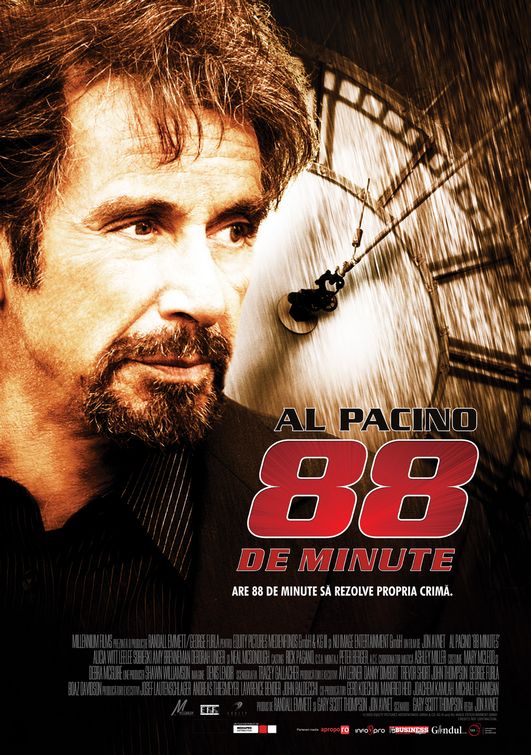 This non-thrilling thriller is so full of howlers and slippery plot holes that it should slide off the screen, which would be a relief to everyone there. It is at least 88 minutes too long.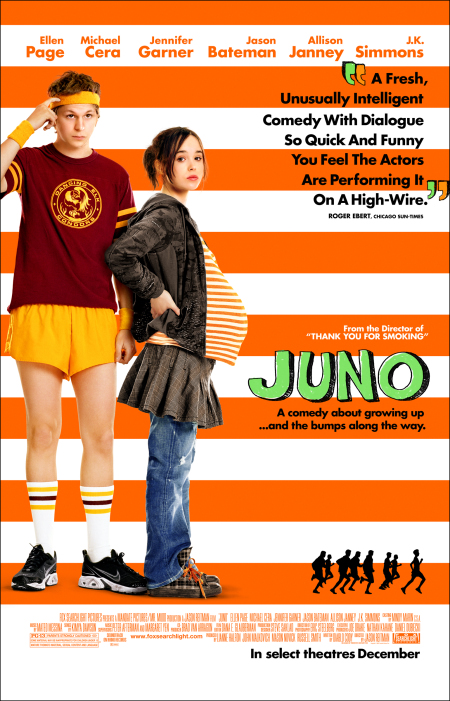
 was called “this year’s
  . And in 2007, ever since it premiered at the Toronto International Film Festival, “Juno” has been called this year’s