Three Thousand Years of Longing

Three Thousand Years of Longing

Posted on August 25, 2022 at 5:44 pm

B +
Lowest Recommended Age: Mature High Schooler
MPAA Rating: Rated R for some sexual content, graphic nudity, and brief violence
Profanity: Some strong language
Alcohol/ Drugs: Drinking and drunkenness
Date Released to Theaters: August 26, 2022
Date Released to DVD: November 14, 2022

Copyright MGM 2022
Like most children, I was fascinated by the power of wishes, and by the fairy tales where wishes never seemed to end with happily ever after. I was fond of a poem by Annette Wynne called “I Keep Three Wishes Ready,” which sensibly advised the readers to think ahead of time of what wishes we would want so we would be prepared and careful to avoid impulses and loopholes.

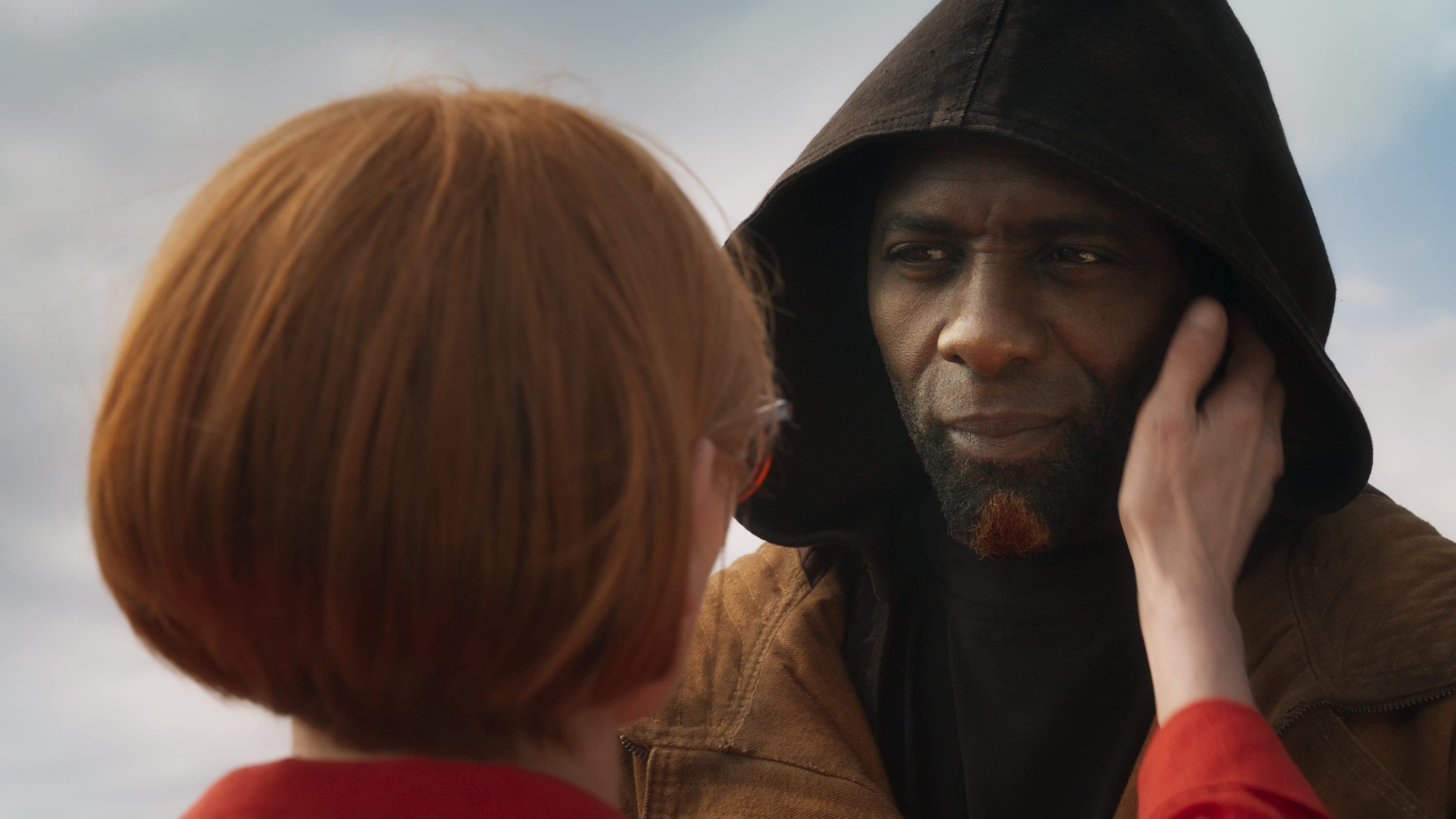
But, as Alithea (Tilda Swinton), a distinguished professor of stories (narrative) who specializes in fantasy, explains, there is no story about wishes that is not a cautionary tale. And thus, when she has the opportunity to use three wishes to fulfill her heart’s desire, she instead sits down with the djinn (genie) who has come out of her bottle, to hear his stories. As they sit, improbably, in white terrycloth robes in a luxurious Istanbul hotel room, he tells her of the wishes he has granted and the people who made them. And yes, they are all cautionary tales. Is wishing itself, the idea that we can escape the reality of time and the laws of physics and the limits of human power, so inevitably doomed by hubris?

Alithea tells us that the story we will hear is true, but that we will better receive it as fantasy. She also tells us that she is a solitary person, and happy to be so. That, in itself may be a fantasy, though she may not be willing to acknowledge it. I note here that the name Alithea is from the Greek word for fact or truth. And that this story is based on The Djinn in the Nightingale’s Eye, the title story in a book of fairy tales for adults by A.S. Byatt. Alithea begins by telling us of magical-sounding wonders, humans hurtling through the air on metal wings or walking under water with webbed feet, with images reminding us of Arthur C. Clarke’s observation that “Any sufficiently advanced technology is indistinguishable from magic.”

On her way to the conference, Alithea sees, or thinks she sees, a small, possibly magical person. And then, when she is on stage, she sees another mythical being. Is she jet-lagged? Is she losing her mind? Or is she opening herself to what the rest of us refuse to see?

She buys an antique glass bottle, telling the seller that it looks like it has a story. Back in her hotel room, she begins to clean it with her electric toothbrush. The stopper falls out, smoke appears, and a giant hand reaches into the bathroom. It is a djinn (Idris Elba), and he has been inside the bottle for a very long time. Alithea would rather hear his stories than make a wish.

George Miller, the visionary writer/director behind the Mad Max and Babe movies, has a gift for wonder. Somewhere between the dystopian world of Fury Road and the endearing charm of “That’ll do, pig,” is this film, with striking, gorgeous images and swoon-worthy stories of passion — romantic, ambitious, angry, jealous, lustful passions.

Three Thousand Years of Longing goes back and forth between the hotel room conversation and the stories of the wishes the djinn has granted, his repeated returns to confinement and how his adventures have forms his view of humanity, The djinn needs Alithea to make three heartfelt, personal wishes to gain his freedom. She insists that she has no wishes and certainly no wish to become ensnared as those who have tried to gain without effort.

The stories are dark at times, but always gorgeously filmed and resonant. And the end is surprisingly tender, perhaps reflecting the one wish all people share if we are brave enough to admit it.

Parents should know that this film has nudity and sexual references and situations, drinking and drunkenness, and violence, some grisly.

Family discussion: What would you wish? What is your favorite fairy tale and why?

If you like this, try: the book by A.S. Byatt, “The Wonderful World of the Brothers Grimm”

Related Tags:


DVD/Blu-Ray Fantasy Movies -- format Movies -- Reviews Romance
Where the Crawdads Sing

Where the Crawdads Sing

Posted on July 14, 2022 at 5:25 pm

C-
Lowest Recommended Age: Mature High Schooler
MPAA Rating: Rated PG-13 for substance abuse, strong language, suggestive material, and smoking.
Profanity: Strong language
Alcohol/ Drugs: Alcohol and drunkenness
Violence/ Scariness: Domestic violence, attempted rape, murder
Diversity Issues: None
Date Released to Theaters: July 15, 2022
Date Released to DVD: September 12, 2022

Copyright 2022 Sony Pictures
I have to begin by apologizing to the vast group of readers who adore the book, Where the Crawdads Sing, by Delia Owens, a record-breaking publishing phenomenon that remains on the best-seller list four years after it was released. Those fans are hoping the film will deliver the essential elements of the book, the lyrical narration, supplemented with exquisitely filmed images of the natural world so beloved by the main character, and a diligent presentation of the storyline as it appears in the book, and it is fair to say that it does. The cinematography by Polly Morgan is exquisite and the song by Taylor Swift is evocative and haunting. But viewed entirely as a film, the translation to the screen does not work, and those who do not already have a strong emotional commitment to the story are likely to come away finding the film superficial at best and morally bankrupt at worst. While some of the book’s more troubling portrayals of race and class have been softened for the film, the characters and storyline are thinly conceived and it relies much too heavily on Owens’ poetic descriptions of the science she knows well. This is her first novel but she has had decades of experience as a zoologist and conservationist. The works better on paper, when the reader can fill in the blanks, than in a film, which cannot help but be more literal. The actors, production and costume designers, composer, and cinematographer can only try their best to create the same magic.

The book is a fantasy along the lines of Green Mansions or Tarzan, or Blue Lagoon or The Jungle Book, where beautiful children and young people live in nature, free from the corruption of the so-called civilized world.

Kya lives in a remote cabin in the marshes of North Carolina. Her father was drunk and abusive, and so her mother left, and then her older sisters, then her brother. Her father briefly cared for her, giving her his old army pouch to collect the shells and plants she was observing so closely, but then he left, too, and she was alone.

She supports herself by collecting mussels and selling them to the local store, run by a kindly couple. She leaves school after one day because the other children make fun of her and call her “marsh girl.” And she grows up to be movie-star gorgeous (Daisy Edgar-Jones of “Under the Banner of Heaven”) with shiny hair, robust health, and perfect teeth. She is befriended by a gentle boy named Tate (Taylor John Smith), who also lives on the marsh and loves the natural world. He teaches her to read and promises he will not desert her when he goes to college. But he does.

And then a young man from the town, romances her. His name is Chase (Harris Dickinson), and he, too makes promises. She is not sure how she feels about him but she is tired of being alone. HINT (this movie is not subtle): one of these young men supports her passion for drawing and writing about the nature around her and the other, when she sends her work to the publishers, the first one suggested and one accepts with enthusiasm, tells her not to get a big head about it. One is scrupulous about consent, one is not. Hmmm.

Kya’s knowledge of the world is very limited except when it is not. Never having seen a painting or illustration, she somehow creates exquisite drawings of plants and insects with an apparently endless supply of watercolor paints left behind by her mother. She is shy except when she isn’t.

As the movie begins, in 1969, Chase is dead. Kya is arrested for murder, based on circumstantial evidence and the town’s contempt for “marsh girl.” Her backstory is interlaced with the trial. I will not spoil the outcome, which is revealed earlier in the book than in the movie, except to say the coda at the end is both preposterous and, in my view, undermines everything that has gone before.

Parents should know that this has strong material for a PG-13 including explicit sexual situations, attempted rape, domestic abuse, alcoholism, abandonment, and murder. Characters use strong language and drink alcohol and get drunk.

Family discussion: What can you observe in the nature around you? Why did Tom Milton defend Kya? How did Tate feel about his discovery?

If you like this, try: “Green Mansions” and “The Jungle Book” and the book by Owens

Related Tags:


Based on a book Drama DVD/Blu-Ray movie review Movies -- format
Thor: Love and Thunder

Thor: Love and Thunder

Posted on July 7, 2022 at 8:10 am

B +
Lowest Recommended Age: Middle School
MPAA Rating: Rated PG-13 for intense sci-fi violence, action, language, partial nudity and some suggestive material
Profanity: S-words, mild language
Alcohol/ Drugs: Some alcohol
Violence/ Scariness: Extended comic book/action-style peril and violence, characters injured, sad death
Diversity Issues: None
Date Released to Theaters: July 8, 2022
Date Released to DVD: September 26, 2022

Copyright 2022 Disney
Taika Watiti’s sly, understated. offbeat humor is a great match for Thor, a superhero who is literally a god with a post British accent. Thor could come across as stiff and stuffy if not for the combination of Watiti and Chris Hemsworth, who has the rare ability to be effortlessly hilarious while still being a completely believable superhero god. I’ve often said that superhero movies are made or lost based on the villains, not the heroes. On that basis, “Thor: Love and Thunder” is less successful. But it is so much fun along the way, and often genially goofy, two words that don’t usually apply to superhero movies, that it is satisfyingly entertaining.

The last time we saw Thor he was looking more like The Big Lebowski than a god of Asgard and his planet had been destroyed. He pulled himself together for “Avengers: Endgame” and New Asgard is now up and running under the rule of King Valkyrie (Tessa Thompson). Thor spends his days in quiet contemplation until he is called upon to save the world again, which he does with brio and then returns to his solitude. Asgard is a quaint little town by the water and has become a favorite tourist destination. One popular attraction is the re-enactment of some of the highlights of Asgardian history, with performers played by Matt Damon and Luke Hemsworth plus two I won’t spoil).

Meanwhile, Thor’s ex, Jane Foster (Natalie Portman), has Stage 4 cancer. And somehow she is called to or by the legendary Mjolnir, the once-shattered hammer that has re-assembled itself like the silvery guy in “Terminator 2.” This makes her into Thor, apparently in addition to, not instead of the Thor who was named by his father, Odin. One of the most endearingly goofy elements of the film is the way original Thor’s new weapon, the axe called Stormbreaker, is sensitive and a bit worried about its predecessor returning. Original Thor is better at sharing his feelings with his weapons than he is with human beings. I predict that Brene Brown will be using clips from this movie to illustrate future lectures about the importance of vulnerability.

And then, the bad guy. Christian Bale plays Gorr, who we first see as a devoted acolyte in a destroyed world. He has lost everything, including his daughter, but believes in the salvation and afterlife his religion has promised. When he learns that his god cares nothing for humans and there is no eternal life he grabs the Necrosword and the combination of grief, anger, betrayal, and the sword’s magic turns him into something of a Terminator of his own (though looking more like zombie Voldemort), with just one imperative — killing all the gods.

The action scenes are great fun and there are a lot of delightful small details you might miss the first time through, but is it the humor, the characters, and the warmth of their connection that stand out. Watiti returns as Thor’s sidekick Korg, his quiet, tentative voice an amusing counterpart to his enormous rock body. In the vast assemblage of gods, Russell Crowe appears as a lightning bolt-throwing Zeus. Thompson and Portman have great chemistry and Hemsworth is as good at comedy as he is at looking like a Norse god, which is as good as it gets. Korg tells us that coming out of his depression, Thor went from dad bod to god bod. It is good to see him here going from sad guy to, well, you’ll see.

NOTE: Stay through the end of the credits to see two extra scenes.

Parents should know that this movie has many s-words and extended peril and comic-book style action violence with many characters injured, cancer treatment, and a sad death. There is also a brief flash of rear nudity.

Family questions: What would you choose for your catch phrase? How do you make sure you don’t wall off your feelings after being hurt?

If you like this, try: the other “Thor” movies and Watiti’s “What We Do in the Shadows” film and television series

Related Tags:


Comic book/Comic Strip/Graphic Novel DVD/Blu-Ray Movies -- format Movies -- Reviews Scene After the Credits Series/Sequel Superhero
Elvis

Elvis

Posted on June 20, 2022 at 9:00 am

B +
Lowest Recommended Age: Middle School
MPAA Rating: Rated PG-13 for substance abuse, strong language, suggestive material and smoking
Date Released to Theaters: June 24, 2022
Date Released to DVD: September 12, 2022

Copyright Warner Brothers 2022
Director Baz Luhrmann is a natural choice for the story of Elvis Presley, both known for the ultimate in showmanship, making excess into an asset. Right off the bat, the nearly-three-hour movie opens with a bedazzled version of the Warner Brothers logo, as though it was designed by the tailor who did Elvis’ late-career wardrobe. Unabashedly theatrical, even more unabashedly on the side of its title subject, “Elvis” is a love letter, not a history lesson. It celebrates excess; it almost wallows in it. But it does so joyfully.

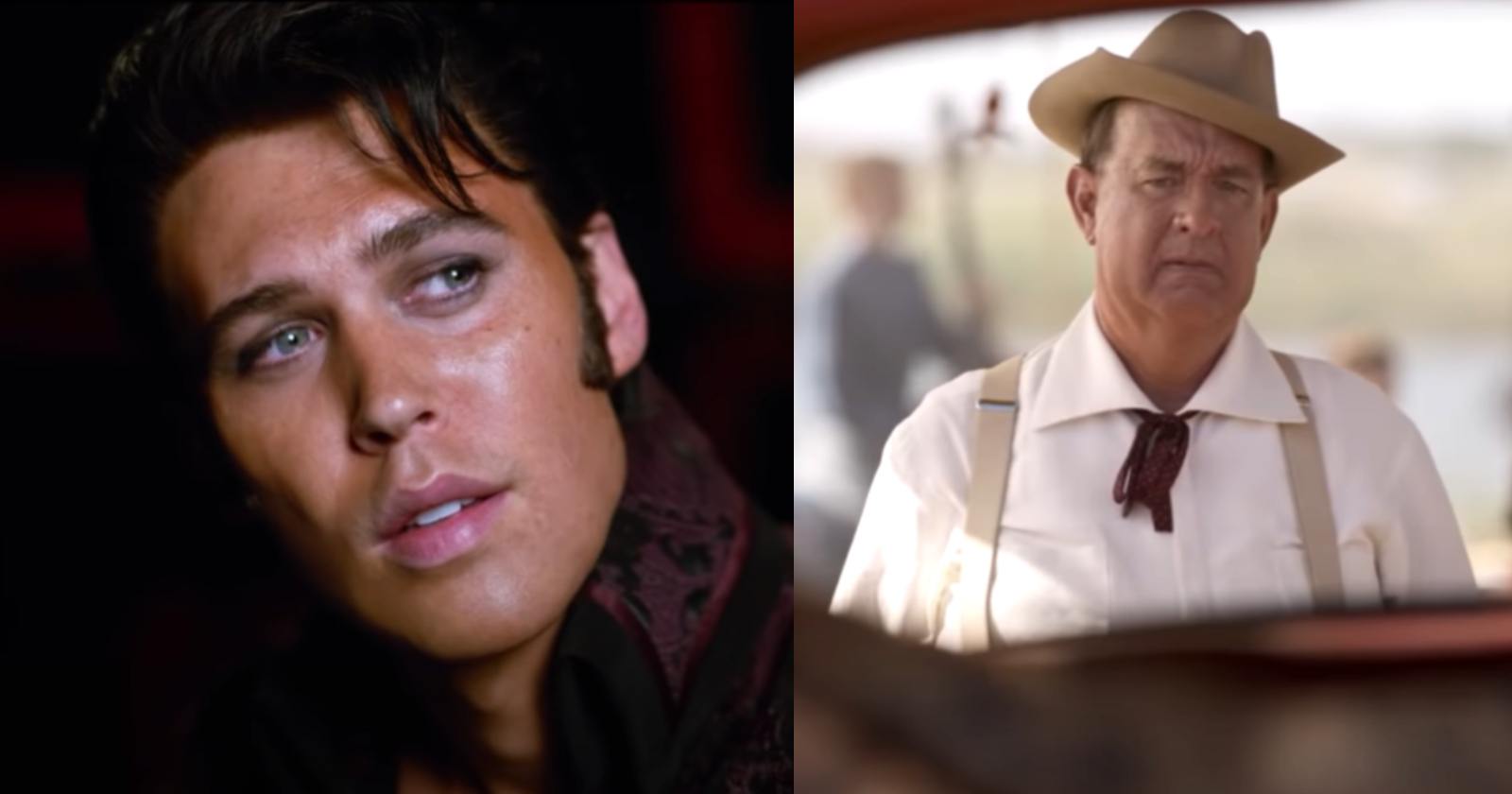
It begins with Colonel or rather “Colonel” Parker (Tom Hanks in a fat suit, with a weird accent and fake nose. “Citizen Kane” style, on what could be his deathbed, reminiscing about what he has loved and lost. As we hear his narration, we see him, in his hospital gown, wandering through a deserted Las Vegas casino, telling us about his connection to the young singer from Tupelo.

Elvis (played as a boy by Chaydon Jay) lives with his parents Vernon (Richard Roxburgh) and Gladys (Helen Thomson) in a Black neighborhood, where he is thrilled by the music around him, the sacred (gospel) and the profane (down and dirty blues). He is also immersed in country music, and somehow he (played as a teen and adult by a terrific Austin Butler) finds a way to synthesize all three into proto-rock and roll. Colonel Parker, a carny promoter, hears his music and realizes that he has the opportunity of the century, a white singer who sounds Black. Elvis is on the bill with a country star. He’s nervous at first on stage in his flamboyant pink suit, but then, like the revival meeting attendees struck by the spirit, he is, well, all shook up. And so is the audience. It’s almost like the Conrad Birdie “Sincere” scene in “Bye Bye Birdie.” Luhrmann brings a palpable, kinetic energy to the scene that is cheekily over the top.

The musical numbers (all but the very early ones with Elvis’ own voice) are dynamic, and an extended section where Colonel Parker sells the television network and the sponsor on an Elvis Christmas special featuring Elvis in a Christmas sweater singing carols and “Here Comes Santa Claus.” Elvis, still true to his muse, insists on wearing a black leather suit (now iconic, as is that entire 1968 special. The world changed around him but Elvis was never less than a thrilling performer, as we see at the end of film, with a short clip of his last performance, clearly ill and impaired, but nailing one of the most difficult songs of all, “Unchained Melody.”

The musical numbers: great. The romance with teenage Priscilla: not given much attention. The relationship with Colonel Parker: the central focus of the movie and the weakest part of the movie. We get no real insight into the internal lives of either characters; there’s an emptiness to the film when Elvis is not on stage. That could be the point of the movie, but it never acknowledges it. Tom Hanks never disappears into Colonel Parker. Compare him to Paul Giamatti in the similarly themed “Love and Mercy,” where the individuals and the manipulative, enticing, and abusive elements of the relationship were much more clearly defined.

I enjoyed the film. But then I came home and watched a half hour of clips of Elvis, and I enjoyed that a lot more.
.
Parents should know that this movie includes sex (non-explicit), drugs, and of course rock and roll, along with some bad behavior, relationship conflicts, and sad deaths.

Family discussion: Why was it so hard for Elvis to break off his relationship with Colonel Parker? How did Colonel Parker manipulate him? How is celebrity different today and how is it the same?

If you like this, try: Some of Elvis’ best movies like “Jailhouse Rock” and “Viva Las Vegas”

Related Tags:


Based on a true story Biography DVD/Blu-Ray movie review Movies -- format
Lightyear

Lightyear

Posted on June 16, 2022 at 5:54 pm

B +
Lowest Recommended Age: 4th - 6th Grade
Profanity: None
Alcohol/ Drugs: None
Violence/ Scariness: Extended sci-fi peril and cartoon-style violence, sad death
Diversity Issues: Diverse characters
Date Released to Theaters: June 17, 2022
Date Released to DVD: September 12, 2022

Copyright Disney 2022
Watch carefully in Lightyear for a moment just for those kids born in in the 80s who were the first digital natives. A cartridge inserted into a computer deck is not working correctly, and Buzz Lightyear (Chris Evans taking over from Tim Allen) has to fix it. What does he do? Say it with me, people in their 30s: He blows on the exposed tape side and re-inserts it. Now, that may not have worked in real life, but thankfully, it works for Buzz.

This kind of detail is what we expect from Pixar, along with superbly crafted films that make us laugh, gasp, and cry. We’re reminded at the beginning of “Lightyear” that in 1995 Andy was given a Buzz Lightyear toy from his favorite movie. And then we’re told that this, what we ae about to see, is that movie. It doesn’t need to overdo the 90s references, but once in a while, like the blowing on the cartridge, we get a reminder that the lovable nerds at Pixar know us all too well.

This is not the toy Buzz Lightyear who has some existential confusion and thinks he is the actual character. This is the actual character, a lantern-jawed space ranger, the All-American boy next door type, brave, loyal, extremely good at his job, and stubbornly independent. His closest friend is fellow Ranger Alisha Hawthorne (Uzo Aduba). But he does not work well with others, especially rookies.

Buzz and Alisha are on a long-term space journey. They stop to investigate an uncharted planet and, as anyone who has ever clocked a red shit on “Star Trek” knows, it turns out to be much more treacherous than they expected (though, thankfully, to have breathable air). As they are on their way back to “the turnip,” which is what they call their rocket due to its shape, the rocket is so badly damaged they are stuck. All of the 1200 passengers who have been in suspended animation will have to be awakened to find that they are marooned, with no way to return to the mission or go home.

Buzz is determined to save the day. He undertakes a very dangerous test flight. For him, it is four minutes. But, due to the difference between time on a planet and time in space, he returns to find that four years have passed for Alicia and everyone else. Things have changed. The space travelers have built a community. Alicia is engaged to a scientist. People have adapted. Buzz feels responsible for getting them stuck and he is determined to keep trying until he gets the necessary mix of elements to give the rocket the fuel it needs. But each test run means another four years. He comes back and Alecia and her wife are expecting a child. He comes back again and the child is four years old. His life is passing in minutes and his friend’s is passing in years, in decades.

Other than Alicia, Buzz’s only companion is a robot cat. Think a combination of R2D2, C-3Po, and Captain Marvel’s Flerken. Ultimately he will find a group of people who do not have the training, discipline, or skills Buzz has always relied on in his missions. All of the difficulty he has had in relying on others is multiplied just as it has become necessary to trust them.

The reveal near the end did not work as well for me, but I especially liked the way it deals with two issues we don’t often see in movies for children, how to move on after making a mistake, learning to see the best in people, and learning to rely on others. As always with Pixar, the movie is filled with endearing characters and witty and telling details, brilliantly designed settings, sublime silliness, and exciting action scenes and yes, you will cry. It is easy to understand why this was Andy’s favorite movie.

Parents should know that this film has extended sci-fi peril and violence with scary robots and sci-fi weapons. There is a very sad death. A devoted gay couple is portrayed in an admirably matter-of-fact, low-key manner with grace and dignity.

Family discussion: Why was it hard for Buzz to accept help? What is the best way to make up for mistakes?

If you like this, try: The “Toy Story” movies, “Galaxy Quest,” and the old Flash Gordon serials.

Related Tags:


Action/Adventure Animation DVD/Blu-Ray movie review Movies -- format Scene After the Credits Series/Sequel
THE MOVIE MOM® is a registered trademark of Nell Minow. Use of the mark without express consent from Nell Minow constitutes trademark infringement and unfair competition in violation of federal and state laws. All material © Nell Minow 1995-2026, all rights reserved, and no use or republication is permitted without explicit permission. This site hosts Nell Minow’s Movie Mom® archive, with material that originally appeared on Yahoo! Movies, Beliefnet, and other sources. Much of her new material can be found at Rogerebert.com, Huffington Post, and WheretoWatch. Her books include The Movie Mom’s Guide to Family Movies and 101 Must-See Movie Moments, and she can be heard each week on radio stations across the country.

Website Designed by Max LaZebnik